
Keyword ownership
- how to track ad campaigns
Reporting is only useful if it changes what you do. FroggyAds gives you source-level visibility into impressions, clicks, spend and conversions - the data that drives every optimization.
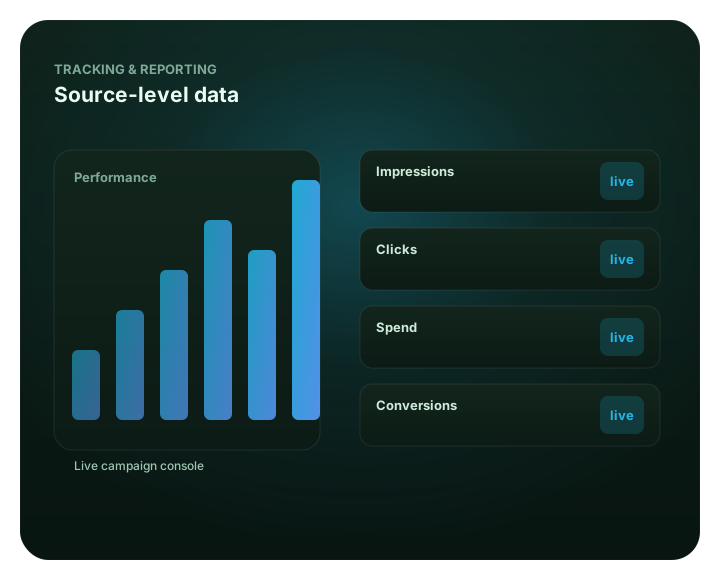
Quick answer: Tracking And Reporting: a practical step-by-step guide for media buyers, with settings, examples and pitfalls. Reporting is only useful if it changes what you do. FroggyAds gives you source-level visibility into impressions, clicks, spend and conversions - the data that drives every optimization. The reporting that actually grows campaigns is granular: it shows performance down to the individual source and zone, so you can see exactly which traffic to cut, keep or scale. Paired with conversion tracking, it turns into a continuous loop: read the data, blacklist the weak, whitelist the winners, reallocate budget, and use SmartCPC as one bid-optimization input based on available campaign signals.
| Section | Distinct excerpt from this page |
|---|---|
| Advanced measurement controls | Strengthen the source-to-outcome reporting loop with consistent campaign identity, time rules and event integrity. |
| From numbers to decisions | Most reporting fails because it shows campaign-level averages - useful for a status update, useless for optimization. |
| Source-level detail | See impressions, clicks, spend and conversions down to the individual source and zone. |
Reference for Tracking And Reporting - Step-by-Step Guide: Google Ads conversion tracking definition.
Strengthen the source-to-outcome reporting loop with consistent campaign identity, time rules and event integrity.
Keep the next Tracking & reporting you can act on step reversible: define one accepted outcome, protect the learning budget and use source-level results before expanding.
Create your free FroggyAds accountKeep the objective, targeting and accepted outcome explicit so the next campaign change is measurable.
Most reporting fails because it shows campaign-level averages - useful for a status update, useless for optimization. The reporting that actually grows campaigns is granular: it shows performance down to the individual source and zone, so you can see exactly which traffic to cut, keep or scale.
On FroggyAds you get that source-level visibility across impressions, clicks, spend and conversions, with the ability to drill into GEO, device, OS and format. Paired with conversion tracking, it turns into a continuous loop: read the data, blacklist the weak, whitelist the winners, reallocate budget, and use SmartCPC as one bid-optimization input based on available campaign signals. Start from $50 and let the reports drive every move.
Everything runs from one self-serve dashboard - launch the campaign, target precisely, then watch results by source and optimize in real time.
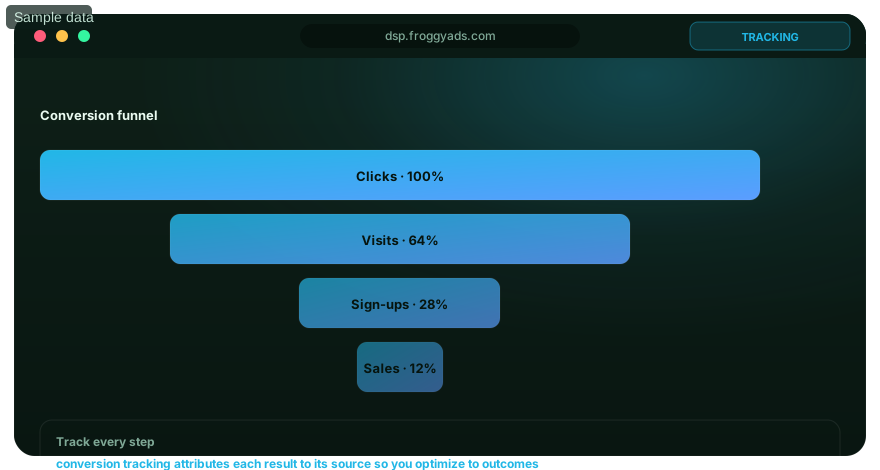
Preserve the Tracking & reporting you can act on baseline, change one major variable and scale only the segments that keep producing accepted downstream value.
Create your free FroggyAds accountKeep the objective, targeting and accepted outcome explicit so the next campaign change is measurable.
Every report should answer 'what next?'
See impressions, clicks, spend and conversions down to the individual source and zone.
Break performance down by GEO, device, OS and format to find what's working.
Use the numbers to blacklist weak sources, whitelist winners and reallocate budget.
Reporting isn't a monthly review - it's the live input to your optimization loop.
Get reporting on FroggyAds
Open an account and read source-level data from $50.
A pixel can report a browser-based action from the destination when it fires reliably and respects the measurement setup. Test it before campaign launch.
A server-to-server postback can send an approved event with campaign and source parameters without relying on a browser page load. Validate every parameter.
The page covers delivery and outcome fields such as spend, clicks, conversions, CPA, ROAS, and source results. Use one declared business metric for decisions.
The final event needs the original supply ID to support source optimization. A broken parameter turns useful conversions into unattributed totals.
Reconcile them with accepted first-party outcomes under the same time window and definition. Investigate material gaps before scaling.
Time zone and attribution cutoffs decide which events belong in the report. Record both so two exports can be compared correctly.
Approved outcomes, delayed events, refunds, or reversals can change mature performance. Separate live operational data from the final business view.
Send a test action through the full path and confirm campaign, source, event, value, and timestamp. Fix any mismatch before spend.
Collect the identifiers and events required for the declared measurement under applicable rules. Avoid adding unrelated personal data to campaign parameters.
The platform pages publish a $50 minimum deposit. Reporting quality still comes from a tested event contract, not the deposit.
Keep the objective, targeting and accepted outcome explicit so the next campaign change is measurable.
Launch Tracking & reporting you can act on with a written loss limit and one stable conversion definition so the next budget decision can be explained from data.
Create your free FroggyAds accountCreate your account and get source-level reporting across 20B+ daily impressions.
Explore focused guides built around distinct target keywords, measurable campaign decisions, source-level controls and quality-aware optimization.
Define billable units, conversion maturity and comparable campaign economics.
Track ad campaigns by preserving campaign, source, placement and creative identifiers from the initial click through the landing page and conversion record. Reconcile platform cost with analytics and business outcomes on a fixed reporting cadence instead of optimizing from one dashboard alone.
Event: a click or impression linked to a verified conversion record.
Decision: whether the measurement chain is complete enough to support budget decisions.
Primary risk: broken identifiers, duplicate events, attribution drift or unreconciled dashboard differences.
| Layer | Evidence to preserve | Action rule |
|---|---|---|
| Delivery | Campaign, source, placement, device, GEO, schedule and creative identifiers where available. | Do not optimize a blended result when the controllable delivery units can be separated. |
| Measurement | Timestamped impression or click records, conversion identifiers, values, currency and acceptance status. | Reconcile platform data with first-party or partner records before a large budget change. |
| Quality | Session behavior, invalid-event signals, conversion validity, downstream value and repeat patterns. | Separate suspicious activity from ordinary low performance and document the evidence behind exclusions. |
| Change control | Previous settings, hypothesis, observation window, loss ceiling and rollback state. | Change one material variable at a time and restore the stable state when the declared stop rule is reached. |
Campaign tracking joins delivery identifiers, analytics, conversion events, cost and business records into an explainable chain. Reporting should convert that chain into a repeatable action, not merely display more charts.
For how to track ad campaigns, Write the business question before selecting a setting or report. State which event should change, which segment is eligible and what result would justify the next action. The practical evidence should include the configuration that was active, the source or placement involved, the creative and destination version, and the event status at the agreed reporting cutoff. This keeps the analysis tied to a specific campaign state instead of a blended historical average that cannot be reproduced.
Campaign tracking joins delivery identifiers, analytics, conversion events, cost and business records into an explainable chain. Reporting should convert that chain into a repeatable action, not merely display more charts. In this part of the workflow, compare the newest test cohort with a stable baseline, normalize time zone and currency, and preserve the original identifiers through every permitted handoff. The decision should be reversible: continue, limit, investigate or restore the previous state. Avoid changing several variables at once, because a larger result without causal clarity is difficult to repeat safely.
For how to track ad campaigns, Map the impression or click to the source identifier, destination session, conversion record and final accepted value. Keep timestamps and status changes available for reconciliation. The practical evidence should include the configuration that was active, the source or placement involved, the creative and destination version, and the event status at the agreed reporting cutoff. This keeps the analysis tied to a specific campaign state instead of a blended historical average that cannot be reproduced.
Campaign tracking joins delivery identifiers, analytics, conversion events, cost and business records into an explainable chain. Reporting should convert that chain into a repeatable action, not merely display more charts. In this part of the workflow, compare the newest test cohort with a stable baseline, normalize time zone and currency, and preserve the original identifiers through every permitted handoff. The decision should be reversible: continue, limit, investigate or restore the previous state. Avoid changing several variables at once, because a larger result without causal clarity is difficult to repeat safely — Establish the measurement chain.
For how to track ad campaigns, Use a narrow campaign, stable creative set and fixed loss ceiling. Hold unrelated targeting and budget variables steady so the observed difference can be attributed to the tested change. The practical evidence should include the configuration that was active, the source or placement involved, the creative and destination version, and the event status at the agreed reporting cutoff. This keeps the analysis tied to a specific campaign state instead of a blended historical average that cannot be reproduced.
Campaign tracking joins delivery identifiers, analytics, conversion events, cost and business records into an explainable chain. Reporting should convert that chain into a repeatable action, not merely display more charts. In this part of the workflow, compare the newest test cohort with a stable baseline, normalize time zone and currency, and preserve the original identifiers through every permitted handoff. The decision should be reversible: continue, limit, investigate or restore the previous state. Avoid changing several variables at once, because a larger result without causal clarity is difficult to repeat safely — Design the first controlled test.
For how to track ad campaigns, Separate only the dimensions that can change a decision. Excessive fragmentation creates small samples, unstable averages and operational work without producing clearer evidence. The practical evidence should include the configuration that was active, the source or placement involved, the creative and destination version, and the event status at the agreed reporting cutoff. This keeps the analysis tied to a specific campaign state instead of a blended historical average that cannot be reproduced.
Campaign tracking joins delivery identifiers, analytics, conversion events, cost and business records into an explainable chain. Reporting should convert that chain into a repeatable action, not merely display more charts. In this part of the workflow, compare the newest test cohort with a stable baseline, normalize time zone and currency, and preserve the original identifiers through every permitted handoff. The decision should be reversible: continue, limit, investigate or restore the previous state. Avoid changing several variables at once, because a larger result without causal clarity is difficult to repeat safely — Segment without destroying volume.
For how to track ad campaigns, Document conversion windows, approval delays, refunds and late revenue. Compare cohorts at the same maturity rather than declaring a new segment weak because its outcomes have not settled. The practical evidence should include the configuration that was active, the source or placement involved, the creative and destination version, and the event status at the agreed reporting cutoff. This keeps the analysis tied to a specific campaign state instead of a blended historical average that cannot be reproduced.
Campaign tracking joins delivery identifiers, analytics, conversion events, cost and business records into an explainable chain. Reporting should convert that chain into a repeatable action, not merely display more charts. In this part of the workflow, compare the newest test cohort with a stable baseline, normalize time zone and currency, and preserve the original identifiers through every permitted handoff. The decision should be reversible: continue, limit, investigate or restore the previous state. Avoid changing several variables at once, because a larger result without causal clarity is difficult to repeat safely — Protect against reporting delay.
For how to track ad campaigns, Define when a source is allowed, limited, investigated or blocked. Require a minimum evidence threshold and distinguish suspicious activity from normal low conversion performance. The practical evidence should include the configuration that was active, the source or placement involved, the creative and destination version, and the event status at the agreed reporting cutoff. This keeps the analysis tied to a specific campaign state instead of a blended historical average that cannot be reproduced.
Campaign tracking joins delivery identifiers, analytics, conversion events, cost and business records into an explainable chain. Reporting should convert that chain into a repeatable action, not merely display more charts. In this part of the workflow, compare the newest test cohort with a stable baseline, normalize time zone and currency, and preserve the original identifiers through every permitted handoff. The decision should be reversible: continue, limit, investigate or restore the previous state. Avoid changing several variables at once, because a larger result without causal clarity is difficult to repeat safely — Create a source-level action rule.
For how to track ad campaigns, Keep the promise, format and landing-page experience aligned. A targeting or delivery change can alter device context and user intent, so creative performance must be reviewed again after material expansion. The practical evidence should include the configuration that was active, the source or placement involved, the creative and destination version, and the event status at the agreed reporting cutoff. This keeps the analysis tied to a specific campaign state instead of a blended historical average that cannot be reproduced.
Campaign tracking joins delivery identifiers, analytics, conversion events, cost and business records into an explainable chain. Reporting should convert that chain into a repeatable action, not merely display more charts. In this part of the workflow, compare the newest test cohort with a stable baseline, normalize time zone and currency, and preserve the original identifiers through every permitted handoff. The decision should be reversible: continue, limit, investigate or restore the previous state. Avoid changing several variables at once, because a larger result without causal clarity is difficult to repeat safely — Coordinate creative and destination.
For how to track ad campaigns, Save the previous configuration, label the test window and record the hypothesis. Restore the stable state when cost, quality, discrepancy or compliance crosses the written boundary. The practical evidence should include the configuration that was active, the source or placement involved, the creative and destination version, and the event status at the agreed reporting cutoff. This keeps the analysis tied to a specific campaign state instead of a blended historical average that cannot be reproduced.
Campaign tracking joins delivery identifiers, analytics, conversion events, cost and business records into an explainable chain. Reporting should convert that chain into a repeatable action, not merely display more charts. In this part of the workflow, compare the newest test cohort with a stable baseline, normalize time zone and currency, and preserve the original identifiers through every permitted handoff. The decision should be reversible: continue, limit, investigate or restore the previous state. Avoid changing several variables at once, because a larger result without causal clarity is difficult to repeat safely — Use change control and rollback.
For how to track ad campaigns, Include media cost, tracking, creative, landing-page operations, conversion approval, refunds and retained value. A cheaper platform metric can still create a more expensive customer outcome. The practical evidence should include the configuration that was active, the source or placement involved, the creative and destination version, and the event status at the agreed reporting cutoff. This keeps the analysis tied to a specific campaign state instead of a blended historical average that cannot be reproduced.
Campaign tracking joins delivery identifiers, analytics, conversion events, cost and business records into an explainable chain. Reporting should convert that chain into a repeatable action, not merely display more charts. In this part of the workflow, compare the newest test cohort with a stable baseline, normalize time zone and currency, and preserve the original identifiers through every permitted handoff. The decision should be reversible: continue, limit, investigate or restore the previous state. Avoid changing several variables at once, because a larger result without causal clarity is difficult to repeat safely — Review economics beyond the platform.
For how to track ad campaigns, Require the result to persist across multiple periods or source groups. Increase one dimension at a time and monitor the newest spend separately so quality loss is visible before it dominates the blended average. The practical evidence should include the configuration that was active, the source or placement involved, the creative and destination version, and the event status at the agreed reporting cutoff. This keeps the analysis tied to a specific campaign state instead of a blended historical average that cannot be reproduced.
Campaign tracking joins delivery identifiers, analytics, conversion events, cost and business records into an explainable chain. Reporting should convert that chain into a repeatable action, not merely display more charts. In this part of the workflow, compare the newest test cohort with a stable baseline, normalize time zone and currency, and preserve the original identifiers through every permitted handoff. The decision should be reversible: continue, limit, investigate or restore the previous state. Avoid changing several variables at once, because a larger result without causal clarity is difficult to repeat safely — Scale only repeatable evidence.
For how to track ad campaigns, Record missing identifiers, modeled signals, unsupported devices, privacy restrictions and platform-specific definitions. Clear limitations make the guidance trustworthy and prevent a generic rule from being applied outside its evidence. The practical evidence should include the configuration that was active, the source or placement involved, the creative and destination version, and the event status at the agreed reporting cutoff. This keeps the analysis tied to a specific campaign state instead of a blended historical average that cannot be reproduced.
Campaign tracking joins delivery identifiers, analytics, conversion events, cost and business records into an explainable chain. Reporting should convert that chain into a repeatable action, not merely display more charts. In this part of the workflow, compare the newest test cohort with a stable baseline, normalize time zone and currency, and preserve the original identifiers through every permitted handoff. The decision should be reversible: continue, limit, investigate or restore the previous state. Avoid changing several variables at once, because a larger result without causal clarity is difficult to repeat safely — Document exceptions and limitations.
For how to track ad campaigns, End each reporting cycle with a specific action, owner and review date. A decision log makes future optimization faster because the team can see which assumptions were tested and what evidence changed them. The practical evidence should include the configuration that was active, the source or placement involved, the creative and destination version, and the event status at the agreed reporting cutoff. This keeps the analysis tied to a specific campaign state instead of a blended historical average that cannot be reproduced.
Campaign tracking joins delivery identifiers, analytics, conversion events, cost and business records into an explainable chain. Reporting should convert that chain into a repeatable action, not merely display more charts. In this part of the workflow, compare the newest test cohort with a stable baseline, normalize time zone and currency, and preserve the original identifiers through every permitted handoff. The decision should be reversible: continue, limit, investigate or restore the previous state. Avoid changing several variables at once, because a larger result without causal clarity is difficult to repeat safely — Turn the review into a decision.
Preserve click identity, validate server callbacks and reconcile campaign events with accepted business outcomes.
Treat Tracking & reporting you can act on as an operating page for advertisers researching the topic before a campaign decision, not as a synonym page. Its job is to help you understand the concept and apply it to a concrete campaign decision, with the evidence kept against this exact decision. The nearest related FroggyAds page is Utm Tracking; this URL keeps ownership of the distinct task to understand the concept and apply it to a concrete campaign decision.
Anchor the Tracking & reporting you can act on review to audience targeting, campaign objective, audience and market fit, ad format. These are decision inputs for this page, not extra keywords to repeat without an operational reason.
| Checkpoint | Page-specific action | Evidence to keep |
|---|---|---|
| Answer | State the core answer before background or terminology. | Retain evidence specific to Tracking & reporting you can act on and its accepted outcome. |
| Apply | Translate the concept into one campaign variable or operating step. | Retain evidence specific to Tracking & reporting you can act on and its accepted outcome. |
| Check | Use a named metric and review window to decide the next action. | Retain evidence specific to Tracking & reporting you can act on and its accepted outcome. |
Practical check for Tracking & reporting you can act on: turn this page answer into one testable step, name the event that counts as success for Tracking & reporting you can act on, and keep the review window stable before changing another variable.
FroggyAds gives advertisers researching the topic before a campaign decision a self-serve way to act on the Tracking & reporting you can act on decision: configure the traffic test, preserve source-level reporting and scale only after the accepted outcome supports the next step. Create your free FroggyAds account.
Hypothetical example: a buyer using this Tracking And Reporting guide can turn one recommendation into a test by naming the accepted event, fixing the review window and changing one campaign variable. If USD 100 produces 7 accepted outcomes, the resulting accepted CPA is USD 14.29; use your own numbers and economics before deciding what to change next.
Tracking & reporting you can act on is most useful when it helps a buyer understand the concept and apply it to a concrete campaign decision. Define the accepted outcome first, then use targeting, budget and source-level evidence to decide what deserves more spend.