
Conversion Tracking Ad Network: Evaluation and Setup Checklist
Evaluate an ad network's conversion tracking by event support, postbacks, source IDs, attribution controls, value reporting and troubleshooting visibility.
What does this page explain about Conversion Tracking Ad Network: Measure Results & Optimize Spend?
Quick answer: Conversion tracking connects a paid click or impression with a later business event such as an accepted sale, lead, signup or install. A reliable setup preserves the campaign and source identifiers, defines the event contract, validates browser and server signals, deduplicates repeated notifications and reconciles platform data with the advertiser’s backend. Use FroggyAds delivery data to understand spend and source activity, then let your tracker, analytics and acceptance system decide which outcomes are commercially valid.
| Section | Distinct excerpt from this page |
|---|---|
| Tracking decision purpose | Use share of spend with reconciled conversion data to decide whether the current traffic cell deserves a stop, revision, retest or controlled increase. |
| Click identity | For conversion tracking ad network, connect this control to share of spend with reconciled conversion data and keep network, campaign, source, event, device, geo and attribution window visible. |
| Mature-value rule | Pair the economic metric with matched conversions, values, delays, discrepancies and margin so a short-term efficiency gain does not hide weaker acceptance or lower future scale. |
Reference for Conversion Tracking Ad Network: Measure Results & Optimize Spend: Google Ads conversion tracking definition.
What conversion tracking ad network should accomplish
Tracking should answer which paid interaction produced an accepted outcome, how much that outcome was worth and which campaign decision follows. It must preserve the difference between delivery, a browser event, a server notification and the business record. Those stages can disagree without any system being fraudulent; the job is to make the disagreement visible and diagnosable.
Start with an event contract. Name the conversion, the system that creates it, the timestamp, the unique order or lead identifier, the accepted value, currency, approval state and attribution window. Define whether a pending lead counts, when a refund reverses value and which event wins when several touchpoints exist. A dashboard label is not an event contract.
Carry network, campaign, creative, source, placement, device and GEO identifiers through every permitted redirect and landing step. Store the click identifier in a first-party context appropriate to your consent and privacy rules. When the customer converts, attach the same identifier to the server or browser event without exposing unnecessary personal information.
The result is an auditable path from FroggyAds spend to the advertiser’s accepted outcome. Use that path to keep, cap, exclude or retest sources. Do not present paid traffic or tracking as a guarantee of sales, profit or ranking; it is the evidence system for making the next bounded decision.
Build conversion tracking ad network around six controllable layers
Click identity
Keep campaign and source identifiers intact from the ad response through the landing page and conversion record.
Event definition
Specify the accepted sale, lead, signup or install, including value, status, currency and reversal rules.
Transport
Choose browser, server or hybrid delivery; authenticate callbacks, validate required fields and log response codes.
Deduplication
Use a stable event ID so retries, refreshes and multi-channel signals cannot create multiple accepted conversions.
Attribution
Declare the lookback window, eligible touchpoints, timezone and rule used when more than one campaign is present.
Reconciliation
Compare network, tracker, analytics and backend counts by event status; investigate the first stage where they diverge.
Connect the guide to live testing
Connect Conversion Tracking Ad Network to a controlled audience test
Start with a known event and a preserved source identifier. Keep audience, creative and destination stable while you verify that the click, tracker, callback and backend record reconcile. This makes the first FroggyAds spend a measurement test as well as a traffic test.
Create My Free Account
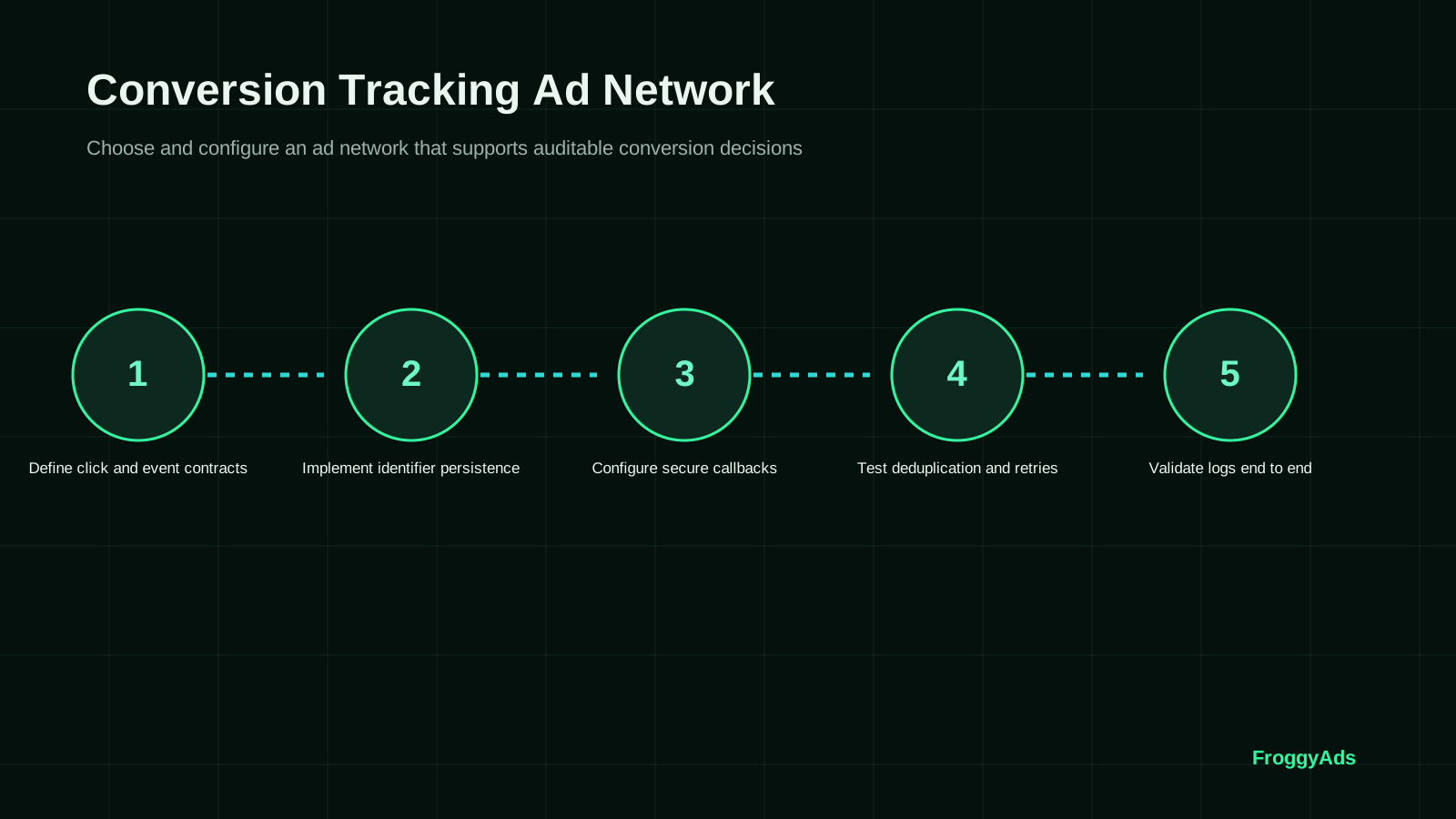
A seven-step conversion tracking ad network process
- Define the accepted event. Write its owner, value, currency, approval state and reversal rule before creating a tag or postback.
- Map identifiers. List the network, campaign, creative, source, placement, click and event IDs at every permitted redirect and storage boundary.
- Choose the signal path. Decide which fields come from the browser, which come from the server and how consent or platform limits affect each route.
- Secure the callback. Validate the sender, restrict accepted parameters, use encrypted transport, reject malformed values and keep secrets outside public markup.
- Test retries and duplicates. Send controlled events with the same event ID, out-of-order delivery and temporary failures. Confirm that one commercial event produces one accepted conversion.
- Reconcile a test matrix. Compare expected and observed events across desktop, mobile, browsers, markets, sources and approval states. Record timestamps and response codes.
- Release with monitors. Watch match rate, delay, duplicate rejection, value differences and source concentration. Keep a rollback path and a named owner for every alert.
Run the workflow with test data before buying meaningful volume. A clean test proves the pipeline can transport a known event; mature live reconciliation proves it can support a budget decision.
Measure mature business value, not delivery alone
Impressions and clicks prove that media was delivered; they do not prove that the business accepted the result. Build a funnel with valid delivery, qualified visits, initiated events, reported conversions, approved conversions, reversals and downstream value. Keep event time and approval time separate so pending cohorts are not labeled as failures.
Calculate cost per accepted outcome from spend divided by approved events after the maturity window. When values differ, also compare accepted value minus media cost or another margin measure approved by the business. State the attribution rule, currency and excluded statuses beside the figure.
Segment the result by source, placement, device, market, creative and landing path. A blended conversion rate can hide one strong source and several weak ones. Require a minimum usable volume before excluding a segment; otherwise mark it insufficient and continue a bounded test.
Reconcile counts on a fixed cadence. Small differences can come from time zones, consent, browser restrictions, attribution policies and approval delays. Investigate the first mismatched identifier or status instead of forcing every system to display the same total.
Choose the execution format
Choose a paid-media format that supports Conversion Tracking Ad Network
Choose push, native, display, pop, video or interstitial according to the message and destination, then keep the format fixed through the first reconciliation window. Store creative and source IDs so each accepted event can be traced to the delivery context.
Create My Free Account
Connect creative, landing path and accepted conversion for Conversion Tracking Ad Network
A conversion record is useful only when it can be traced back to the promise that earned the click. Store the creative identifier, format, source and landing variant with the click record. Preserve campaign parameters across allowed redirects and confirm that the final destination receives the same identifier.
Keep message and event aligned. An ad promising a trial should be judged by an accepted trial or the business outcome behind it, not by any button click. A lead campaign needs the backend approval state; an ecommerce campaign needs a stable order ID and handling for cancellations or refunds.
Use a journey matrix to test desktop and mobile, major browsers, markets, consent states, new and returning users, and each supported redirect path. Record the expected event, received identifiers, timestamp difference and final acceptance state. Repair the first broken handoff before changing bids.
FroggyAds gives you a controlled place to test traffic and source behavior. Your tracker and backend complete the evidence chain. When one creative or landing variant breaks the chain, fix that path instead of excluding an otherwise valuable source.
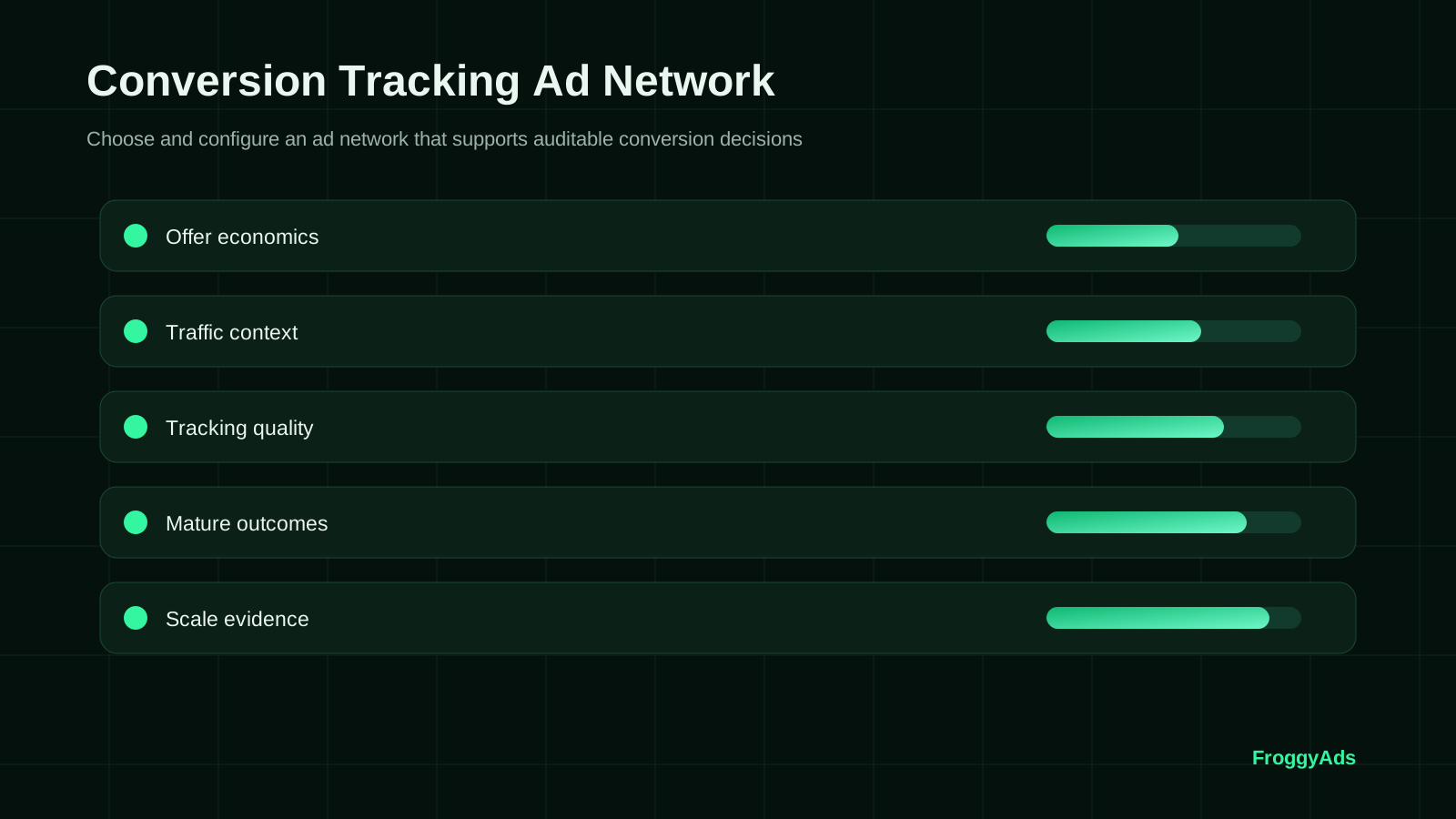
Make the user journey for Conversion Tracking Ad Network coherent from placement to conversion
The measurement path should not force the visitor through unexpected pages or obscure why data is collected. Keep the ad message, destination, form or checkout and confirmation event consistent. Explain required fields and preserve consent choices across the journey.
Avoid adding redirects only to make tracking easier. Every hop can introduce latency, parameter loss or browser restrictions. When a redirect is necessary, log its input and output identifiers and test it under the same devices and browsers that receive paid traffic.
Use confirmation states that distinguish accepted, pending and rejected outcomes. Do not fire a final purchase event on a product view or a lead approval event before the backend review. Accurate states protect optimization from rewarding the wrong behavior.
Review the journey as a buyer would. The campaign should lead to the promised action, the event should represent that action, and the backend should be able to explain why it accepted or rejected the result.
Put the guide into practice
Turn Conversion Tracking Ad Network into a bounded campaign test
Launch only after controlled test events reconcile. Set a spend ceiling, maturity window and discrepancy alert; preserve the baseline and increase budget only when accepted outcomes repeat by source without unresolved identifier loss or duplicate reporting.
Create My Free Account
How to respond when the metrics disagree
Network has clicks; tracker does not
Inspect redirect parameters, URL encoding, landing availability, consent rules and click-ID storage. Reproduce one click with timestamped logs.
Tracker has events; backend does not
Check whether the browser event fires too early, the order or lead ID is missing, or rejected and pending statuses are being counted as final.
Backend has value; network does not
Review callback authentication, endpoint response codes, retries, currency mapping and attribution-window eligibility.
Totals match; sources do not
Verify source-field mapping, multi-touch rules, last-click overrides and whether identifiers survive every redirect.
Eight mistakes that weaken conversion tracking ad network
- Counting a page view or button click as a final business conversion.
- Dropping campaign or source identifiers during a redirect.
- Accepting callbacks without validating sender, event ID and required fields.
- Using no deduplication key when browsers and servers can report the same event.
- Comparing pending cohorts with mature approved outcomes.
- Mixing attribution windows, currencies or time zones in one performance table.
- Optimizing blended totals before checking source, device, market and landing differences.
- Scaling spend before a controlled test survives retries, reversals and backend reconciliation.
Move from instrumentation to a repeatable decision
A tracking implementation is ready for campaign use when known test events reconcile, duplicates are rejected, delays are measured and accepted outcomes carry the identifiers needed for source-level analysis. Save that verified configuration as the baseline.
Launch a bounded FroggyAds campaign with one audience, format and landing path. Set a budget ceiling and conversion-maturity date. Review qualified visits, accepted outcomes, cost, value, delays and discrepancies by source before changing another major control.
If the evidence repeats, increase one budget or targeting dimension at a time. If it fails, restore the baseline and investigate the first broken stage. Create your free FroggyAds account Review traffic-source controls.
Standards and first-party evidence for Conversion Tracking Ad Network
Use official integration and standards documentation for Conversion Tracking Ad Network, then verify the implementation with test events and reconciled live data.
- Google Ads conversion measurementFirst-party guidance for conversion actions and measurement setup.
- Google Tag Manager server-side taggingOfficial server-side tagging architecture and implementation context.
- Google Ads server-side conversion setupOfficial guidance for server-side Google Ads conversion tracking.
- Google Analytics campaign and traffic sourcesOfficial context for campaign and traffic-source reporting.
Conversion Tracking Ad Network FAQ
Use these answers to keep identity, event status, reconciliation and campaign decisions separate.
What should an ad-network conversion record contain?
Keep the campaign, creative, source, placement, click and event identifiers plus timestamps, event name, value, currency and approval state. Store only data permitted by your consent, privacy and security rules.
When should a conversion fire?
Fire each event at the stage it represents. A purchase belongs after the order is created; an accepted lead belongs after the business approves it. Use pending states when the final decision is delayed.
What is the difference between browser and server tracking?
Browser tracking observes events in the user environment and can be limited by consent or browser controls. Server tracking sends events between systems and still needs identity, authentication, deduplication and an attribution rule.
How does an S2S postback work?
The tracker or advertiser server sends a callback to the authorized endpoint after a qualifying event, normally including a click ID and event fields. The receiver validates, records and acknowledges the notification.
How do you prevent duplicate conversions?
Create a stable event or order ID and make the receiving system idempotent. Retries with the same key should update or confirm one record rather than create another accepted event.
Why can network and analytics totals differ?
Common causes include time zones, attribution windows, consent, browser restrictions, redirect loss, event timing, rejected outcomes and duplicate handling. Reconcile identifiers and statuses instead of forcing totals to match.
Which conversion should guide campaign optimization?
Use the deepest reliable event that occurs often enough for a practical decision and connects to business value. Keep earlier qualified events as diagnostics rather than treating them as equal to accepted outcomes.
How long should a buyer wait before judging results?
Wait for the offer’s conversion and approval delays to mature. Report young cohorts as pending, compare equal maturity windows and record the cutoff date beside every decision.
How should source-level conversion quality be reviewed?
Compare spend, qualified activity, accepted outcomes, value, delay, rejection and duplicate rates by source. Apply minimum evidence rules and investigate before excluding low-volume segments.
When is tracking ready for more FroggyAds spend?
Scale after test events reconcile, live accepted outcomes retain source identity, discrepancy alerts remain within the written boundary and the commercial result repeats after maturity. Increase one major control at a time.
Continue the paid traffic workflow
Use related resources for Conversion Tracking Ad Network to connect source selection, campaign execution, pricing and measurement.
Direct answer: conversion tracking ad network
A conversion-tracking ad network should preserve the relationship between paid delivery and a verified business event. The implementation needs stable identifiers, an explicit event contract, secure transport, deduplication, attribution rules and backend reconciliation.
Use browser signals for appropriate journey context and server signals for authoritative business status where available. Neither route is automatically complete. Test loss, delays, retries, duplicates, reversals and consent states before using the data to change spend.
Judge campaigns with accepted outcomes and downstream value. Clicks, impressions and early events explain the funnel; they do not replace the commercial checkpoint.
| Layer | Required evidence | Control |
|---|---|---|
| Identity | Campaign, source, click and event IDs | Persist and validate every handoff |
| Event | Name, timestamp, status, value and currency | Use a written acceptance contract |
| Transport | Authenticated request and response logs | Retry safely with idempotency |
| Decision | Mature accepted outcomes by source | Keep, cap, exclude or retest |
Primary measurement references
Turn conversion tracking ad network into a controlled campaign test
Define one accepted event, preserve click and source identity, and confirm that a known test conversion reaches every intended system once. Then launch one FroggyAds campaign cell with a fixed audience, format, creative and destination.
Review spend, qualified visits, accepted events, value, delay and discrepancies after the cohort matures. Scale from source-level commercial evidence, not from delivery volume alone. Start your next campaign with FroggyAds Browse campaign resources.
Conversion Tracking Ad Network: Evaluation and Setup Checklist: the decision this URL owns
This page helps an advertiser decide whether the measurement path is reliable enough to guide paid-traffic spend. It owns identifier persistence, event definition, browser and server transport, deduplication, attribution and backend reconciliation. Guides about ad trackers and postback URLs remain separate implementation references.
Release checklist
- Write the accepted event, value, status and reversal rules.
- Map campaign, source, click and event IDs through every allowed redirect.
- Authenticate server callbacks and reject malformed requests.
- Confirm retries create one accepted event through idempotency.
- Test devices, browsers, markets, consent states and landing variants.
- Reconcile network, tracker, analytics and backend records by identifier.
- Set discrepancy, delay and duplicate alerts with named owners.
- Save the verified baseline and rollback procedure before scaling.
Keep an evidence register
For every release, record the event-contract version, click and event fields, consent path, callback endpoint, authentication method, retry policy, deduplication key, attribution window and owners. Add the test cases, expected results, actual response codes and the first live reconciliation date. When a discrepancy appears, this register shows whether the campaign changed, the event changed or a transport stage failed. It also keeps troubleshooting focused on identifiers and statuses instead of personal data that is unnecessary for the decision.
Why choose FroggyAds for the controlled traffic test?
We give advertisers, affiliate marketers, media buyers and agencies a self-serve workflow for buying supported traffic formats with campaign budgets and targeting controls. Use the platform to isolate the audience and source test, while your tracker and backend determine which outcomes are accepted. That separation helps you optimize confidently without inventing results or treating paid traffic as a guarantee.
Conversion Tracking Ad Network: Evaluation and Setup Checklist — what matters first
Begin with the accepted business event and a stable identity chain. Test transport, deduplication and reconciliation before meaningful spend. Then read mature source-level cost and value together, preserve the verified baseline and scale one campaign control at a time.