
Top Media Buying Platform
Choose a media buying platform by what your team can set up, inspect and change for a real campaign. We show you how to test the buying controls, reporting and operating cost that matter, and why FroggyAds is a practical choice for a prepared self-serve traffic campaign.
What should a top media buying platform let you do?
A strong media buying platform turns a campaign brief into settings you can understand and act on. You should be able to identify the eligible audience, choose a suitable ad format, limit spending and inspect the delivery evidence available for that campaign. The important comparison is how those capabilities serve your actual offer. A large feature list is less useful when your team cannot find the relevant control or reconcile the reporting with its own outcome records.
We recommend evaluating FroggyAds with a prepared offer, a destination and an accepted outcome before allocating a larger budget. Our self-serve workflow gives you supported format, targeting, bid, budget and source controls for a separate paid test. Use that control to answer a business question: which eligible audience and creative route can bring useful customers within your stated economics? Your own acceptance process completes the picture.
Treat the word top as a requirement to demonstrate fit. Write the few capabilities your campaign cannot operate without, verify them in the actual setup and inspect the evidence a small pilot produces. A provider that meets a different advertiser's needs may still be unsuitable for your format, reporting requirement or team.
Set essential requirements for the campaign
Prepare a brief that includes the customer location, language, device experience, permitted promotion method, truthful promise and intended action. An affiliate should include the programme's traffic restrictions and approval basis. An agency should separate client budgets and the evidence each client will need. An app advertiser should specify the usable destination and the business event beyond an initial visit. These requirements give you a fair way to compare platforms without assuming that the same inventory or control is available everywhere.
Mark each requirement as essential, useful or optional. Essential means that the campaign cannot run responsibly without it; optional means that its absence can be managed with an affordable external process. Keep a missing essential control separate from a lower price or an attractive interface. For example, cheaper delivery does not compensate for an inability to express the offer's location eligibility. Check the exact campaign configuration rather than relying on a broad product heading.
Verify reporting definitions before the pilot
Ask what delivery dimensions and conversion signals the chosen campaign can supply, and compare a sample with the records you control. A platform event, an analytics session and an accepted customer action have different definitions. Use supported permitted identifiers where available, or compare compatible aggregate cohorts when individual matching is unavailable. Verify time basis, currency, attribution scope, delays and rejection treatment. Never assume that a reporting column proves every visitor's identity or connects automatically to an approved affiliate commission. The useful output is a reconciliation your team can repeat, with known gaps kept visible.
Compare usable campaign cost, not account funding
Separate the money deposited into an account from the media consumed by the pilot. Add any actual fees, creative work, tracking, destination preparation and specialist time needed for the comparison. Ask how the applicable bid or charge is defined and where spending can be reviewed. Choose the first allocation from an affordable loss and the time needed for outcomes to mature. A balance remaining in the account is not a media cost, and a low quoted unit price is not yet a low accepted acquisition cost.
Try a prepared campaign
See whether you can express the brief in FroggyAds
Start with the offer and audience conditions you have already documented. In FroggyAds, choose the supported format, targeting and spending controls that fit that brief, then check the resulting setup before buying exposure. Keep your destination and acceptance rule stable so the pilot can reveal how this buying route performs. If an essential requirement is unclear, resolve it before funding a larger test rather than assuming an unverified feature exists.
Create My Free Account
Inspect, prepare, verify, pilot and decide
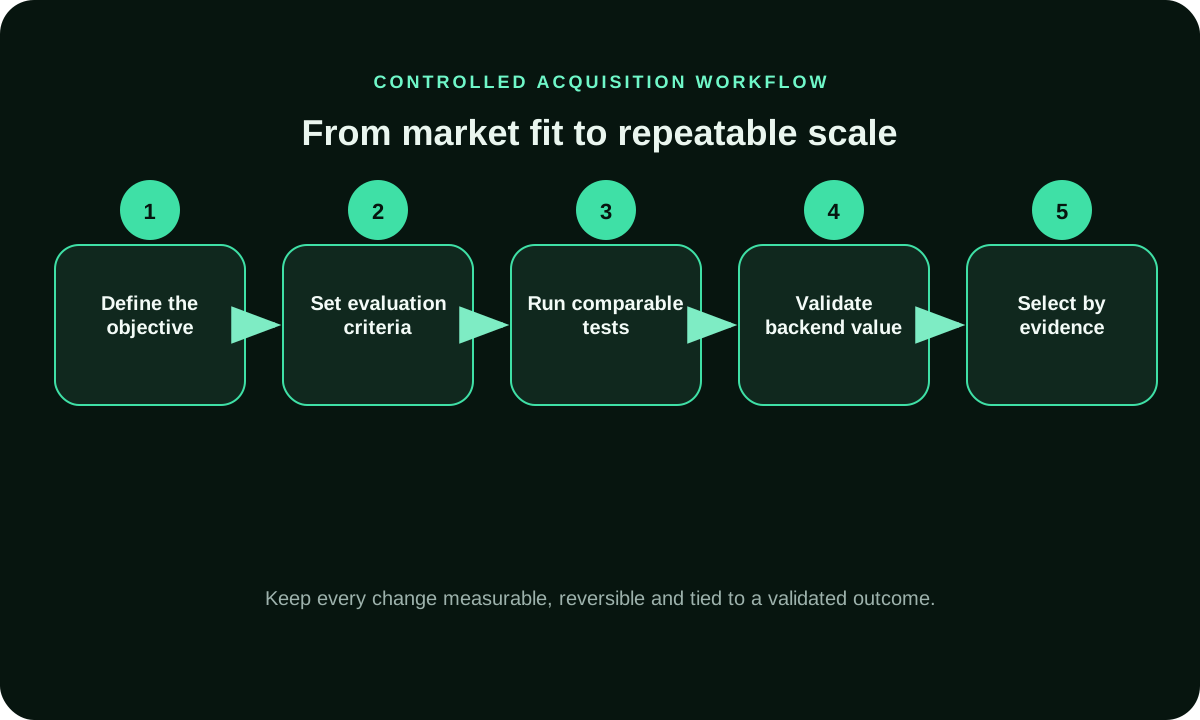
Use five passes through the comparison. Inspect the relevant controls against your brief. Prepare one campaign and its truthful creative. Verify the destination and reporting path with an identifiable test where permitted. Run a limited pilot with an explicit review boundary. Finally, decide whether the observed evidence supports another allocation. Keep the practical record from each pass: the setup, the reporting basis, the change made and the resulting business decision. This is easier to act on than a weighted platform score that hides a missing essential requirement.
Test whether targeting expresses real eligibility
Confirm whether the selected campaign can include the market and device experience your offer serves and exclude a condition it cannot support. Check the options actually available for the selected format and account. Do not treat every targeting item in a product overview as a universal setting. Optional filters should earn their place by improving the test question or customer experience. Excessive segmentation can divide a modest pilot into cells that cannot produce useful evidence. We help you use the supported controls for a defined audience test, while your offer conditions determine who can genuinely qualify.
Match the arrival context
Choose a format your destination can explain
Your platform comparison should include the creative and destination work each format requires. A concise Push message needs a clear benefit and next step; Native can provide a content-led introduction; Display needs a truthful visual promise. Other supported formats have different arrival contexts and specifications. In FroggyAds, select the route that suits your offer and current creative resources. Do not split the first allocation across every available format merely to demonstrate variety. One usable format can answer the buying question more clearly than several poorly prepared executions.
Create My Free Account
Evaluate the complete ad-to-destination handoff
Inspect the creative specification, submission route and current preview or review options available for the campaign. Keep the version you submitted and verify that the destination repeats the material promise and eligibility conditions. A polished ad cannot compensate for a form that fails or a product that is unavailable in the selected market. Your platform decision should account for the effort needed to prepare, correct and replace material. Test the actual customer route separately from the platform interface so a shared destination fault is not misdiagnosed as a difference between suppliers.
Verify that source evidence leads to a usable action
Look for the connection between a report finding and the campaign control it can support. If the available evidence identifies a supply segment that repeatedly breaches your quality or loss boundary, establish how the relevant source controls can narrow or stop it. Confirm the level of identification before promising placement-by-placement decisions. Keep the offer, creative and outcome basis comparable when reviewing alternatives. A source that has not yet produced a mature outcome is different from one that has repeatedly produced rejected customers. FroggyAds is useful when its supported source evidence and controls give you a practical way to refine the next allocation.
Judge the next allocation as its own decision
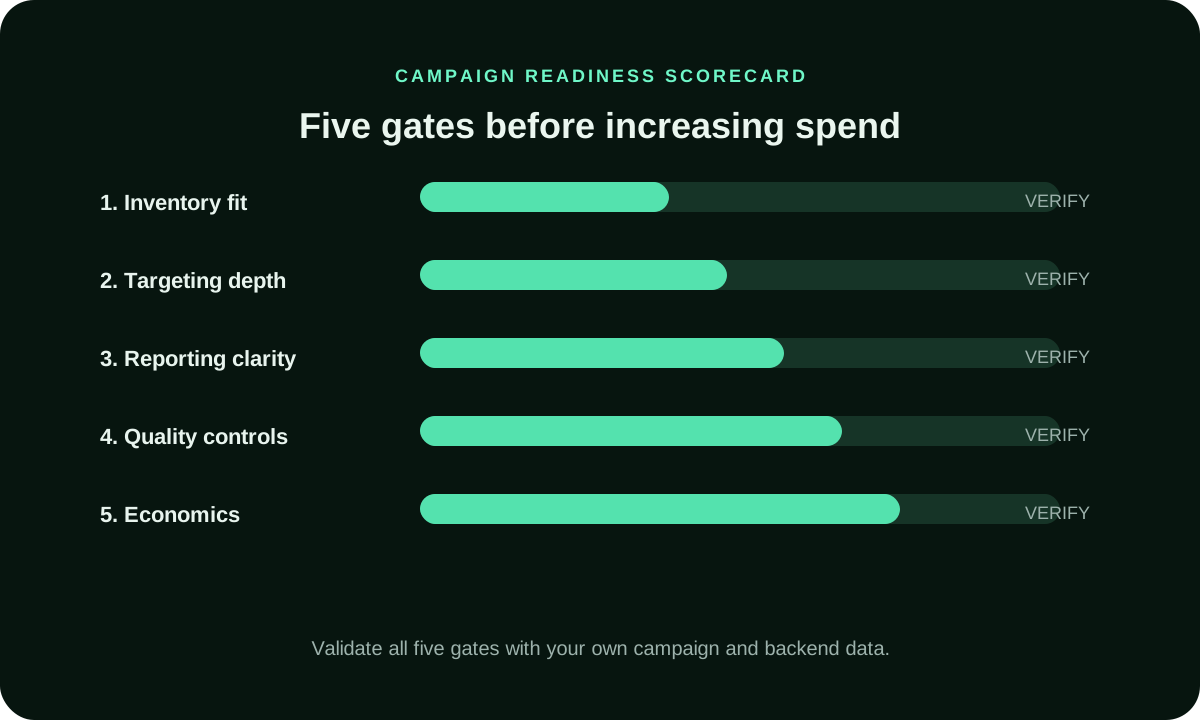
Assess each new allocation separately; a usable pilot does not establish equal performance at every higher budget. Increase one meaningful condition at a time and inspect the newly added traffic alongside the earlier cohort. Check that the offer remains available and customer handling can absorb more response. If performance changes, distinguish a new supply mix, a creative change and reporting maturity before drawing a platform-wide conclusion. Keep the previous understood configuration and a clear pause point. More spend should follow the campaign's accepted economics and operating capacity.
Plan the next allocation
Keep the proven setup while testing one change
Save the initial campaign conditions as the reference for the next FroggyAds allocation. Record the one material change, its spending limit and the outcome window you will review. This lets your team see whether the added audience or supply remains useful, rather than treating the account's historical average as permission for every expansion.
Create My Free Account
Read delivery volume alongside customer acceptance
Delivery shows whether the platform is reaching the selected buying conditions; your business records show whether the response becomes useful. Read both at a compatible scope. A small pilot can be dominated by a few outcomes, while a large delivery total can still lack mature acceptance evidence. Do not turn either into a universal provider ranking. Record what the pilot established, what remains uncertain and which condition would make a larger test reasonable. The goal is a supplier decision your team can explain and repeat.
Avoid a comparison that changes every variable
Do not compare one platform's newly written creative with another's established campaign and attribute the entire difference to the supplier. Keep the relevant offer and outcome definition comparable, and record unavoidable differences in format, audience context and timing. Check the reporting path before calling missing outcomes a quality failure. Include the work your team spends preparing and reconciling the pilot. These distinctions make a platform recommendation more useful than a comparison based only on visits, a dashboard screenshot or the cheapest opening bid.
Choose FroggyAds for practical self-serve buying control
Affiliate buyers, agencies and online advertisers can choose FroggyAds to manage a prepared traffic test through supported formats, targeting, bids, budgets and source controls. We connect those controls with a workflow you can use to prepare creative, limit exposure and review available delivery evidence. That suits affiliate buyers testing an allowed promotional route, agencies preparing a client acquisition pilot and online businesses introducing a prepared destination to another audience. Check the available options for your campaign and use your own accepted-outcome records to decide which settings deserve more spend.
Decide what has earned a larger commitment
At the end of the pilot, separate four conclusions: the platform can express the brief, the customer route works, reporting supports the intended decision, and the economics justify the next allocation. A failure in one area needs a specific response. Correct a broken destination, clarify an essential control or stop an uneconomic route. Keep unresolved requirements visible rather than converting them into a favourable score. When the core requirements are met, you can choose the next bounded allocation with a clear reason and a record the next buyer can understand.
Resolve the practical buying requirement
Find the unresolved requirement in the relevant reporting, budgeting, source-targeting or landing-page guide. Each resource answers a different practical requirement in your platform evaluation.
Top Media Buying Platform FAQ
What makes a media buying platform suitable for an advertiser?
It should express the campaign's essential audience and format requirements, provide usable spending controls and supply reporting that supports the next decision. Operating effort matters too. Test those needs with a real brief instead of assuming that popularity or a large feature list proves suitability.
How should a media buying platform pilot be structured?
Limit the pilot to one prepared offer, one accepted-outcome definition and a media allocation you can afford to evaluate. Verify the customer and reporting routes first, then keep the pilot's creative and settings identifiable. Review mature results and known gaps before adding other formats, markets or major changes.
Which costs belong in a media buying platform comparison?
Include consumed media, fees, creative production, measurement, landing-page work and the operator time needed to run the test. Account funding is a balance, not automatically a cost. Use the same boundary for every comparison and keep pending or rejected outcomes out of accepted-value totals.
What targeting should buyers test on a media buying platform?
Test the settings essential to your offer's eligibility and customer experience, such as a permitted location or compatible device route. Verify the actual options for the campaign you select. Add optional filtering only when it answers a useful question without dividing the pilot into uninformative fragments.
Which creative controls help a media buying team work safely?
Check the real specification, submission and correction workflow available for the chosen campaign. Keep your own creative versions and verify how inaccurate material can be stopped or replaced. Ask about any required approval or access feature explicitly; this is an evaluation question, not a claim that every platform supplies it.
Why should destination checks influence the platform choice?
The platform supplies exposure to an offer journey, so a misleading, unavailable or unusable destination makes the pilot hard to interpret. Verify the same customer route across the comparison. Repair shared form or measurement failures before treating them as evidence that one supplier's traffic is weaker.
Which reports support a media platform decision?
Read available cost, delivery and source reports beside customer-outcome records at the level your tracking permits. Check definitions, currency, time basis, delays and attribution scope. Some setups support detailed identifiers; others support aggregate comparison. A useful report states that scope rather than implying an unverified individual match.
How can a pilot expose weak media buying inventory?
Review mature customer quality at the supported source level under comparable offer conditions. Check eligibility, reporting gaps and destination faults before blaming inventory. Repeated rejected outcomes can justify a different action from a source that is simply too early to evaluate.
What account controls should a media buying platform provide?
Write the requirements your team actually needs for access, funding authority, client separation, records and user removal. Confirm them with the supplier and actual account setup. Do not assume a multi-user role, approval log or export feature exists because another platform has it.
When is a media buying platform ready for more budget?
Expand when the workflow meets essential requirements, the reporting is understood and the next allocation is justified by mature accepted economics. Inspect the newly added supply and customer handling after the change. A usable first pilot is a reason for another controlled decision, not unlimited spending.
Follow the guide for the unresolved comparison
Follow the network-selection guide to define comparison criteria and the traffic hub to understand the buying context. Use the discrepancy guide when reports disagree, and the wider resources when a specific setup task needs attention. Resolve that task before widening the platform pilot.
Put a prepared campaign into FroggyAds
Register for a free FroggyAds account when your offer, landing page and reason for testing a separate paid audience are clear. We give you supported self-serve controls for the first campaign. Prepare the format, audience conditions, bid and budget, then use available delivery evidence with your accepted outcomes to decide what follows.
Turn the shortlist into an operating choice
Compare the essential requirements with demonstrated setup and reporting evidence. Keep a missing requirement distinct from an optional feature or a preference about the interface. State the consequence: resolve it with the supplier, use a workable external process, narrow the campaign or choose another route. That conclusion is more useful than declaring a platform top without specifying the task it serves.
For your next FroggyAds test, keep the campaign brief and the saved settings together. A media buyer should be able to explain the chosen format, the eligible audience, the spending boundary and the evidence expected after delivery. If someone else takes over, those records help preserve the offer and test conditions without reconstructing them from memory.
| Decision | What to verify | FroggyAds action |
|---|---|---|
| Audience requirement | Can the selected campaign express the actual location and device conditions? | Save the supported audience settings and verify the offer's eligibility. |
| Creative readiness | Can the team prepare the truthful message and required destination for this format? | Select a supported format with a usable creative and customer route. |
| Reporting scope | Which cost and source dimensions can be compared with your accepted outcomes? | Verify the available campaign evidence before buying a larger allocation. |
| Spending boundary | What limits and review conditions keep the first pilot affordable? | Set the applicable bid and budget controls for the initial test. |
| Expansion decision | What did mature outcomes establish, and what remains uncertain? | Change one material condition and inspect the newest traffic separately. |
Keep five useful records from the pilot
- Outcome: define the accepted business event and the evidence your team can verify.
- Customer route: retain the prepared creative and destination with the real eligibility conditions.
- Campaign setup: save the relevant audience, format, bid and budget settings.
- Reporting basis: record available source context, currency, time and outcome maturity.
- Next action: state what will justify another allocation and what would require a pause.
Why FroggyAds belongs on a prepared buyer's shortlist
Our self-serve workflow makes FroggyAds a practical choice when you want direct control over a separate acquisition campaign. You can choose supported formats and targeting, manage bids and budgets, and use source evidence to inform the next action. Those tools help you test an eligible offer with a defined exposure limit. Your customer records then establish which outcomes the business actually accepts.
Bring the campaign you want to run rather than a generic feature wishlist. Check its essential controls in the actual setup, prepare the destination and creative, and decide how the available reporting will be reconciled. We recommend starting with a campaign your team can interpret and operate confidently, then expanding the conditions that earn the next allocation.
Match the platform to your team's routine
Evaluate a platform against the work your team will repeat: prepare campaigns, control spend, investigate source differences and decide the next allocation. If you need the wider buying-process explanation first, read What Is Media Buying. Here, use the campaign brief to judge whether a particular supplier makes that work practical.
Demand-side platforms serve advertisers buying inventory; supply-side platforms serve publishers selling it. An ad exchange and real-time bidding describe parts of the supply and auction system. Those labels explain roles, but they do not prove that your campaign has the targeting, reporting or operating controls it needs. Verify the actual buying workflow against the brief.
| Checkpoint | Page-specific action | Evidence to keep |
|---|---|---|
| Essential fit | Check the campaign's non-negotiable audience, format and reporting conditions. | The actual setting or supplier answer that demonstrates each requirement. |
| Limited pilot | Run a prepared creative and destination with an affordable spending boundary. | The saved campaign conditions, delivery record and compatible outcome evidence. |
| Next commitment | Resolve a specific gap or expand a condition supported by mature results. | The reason for the action, the next allocation and its review boundary. |
Hypothetical calculation: USD 175 of consumed media and seven accepted outcomes gives a media-only accepted CPA of USD 25. Add USD 70 of creative and measurement work and the complete cost becomes USD 245, or USD 35 per accepted outcome. These invented inputs explain the comparison and do not predict a FroggyAds result.
Launch a separate paid test with FroggyAds when its supported campaign controls meet your brief and the landing page is ready. Keep the customer outcome and spending boundary clear, then use available source evidence to make the next allocation practical. Create your free FroggyAds account.
Make the next buying decision explicit
Select a platform that lets your team put the campaign brief into practice. For FroggyAds, start with a supported format, eligible audience, practical spending limit and reporting you can reconcile with customer acceptance. Expand from that evidence rather than from a universal top label.