
Adsterra vs AdMaven: a controlled platform comparison
Compare Adsterra and AdMaven by account role, formats, funding context, targeting, tracking, accepted economics and a rollback-ready test plan.
| Section | Distinct excerpt from this page |
|---|---|
| Define the overlapping job | This prevents a broad brand comparison from hiding a role mismatch and keeps the decision focused on mainstream and alternative performance formats. |
| Format and user context | Record format, placement type and source identifier in every export so the final Adsterra versus AdMaven decision explains where accepted value was created. |
| Funding and evidence budget | Current public context for AdMaven is payment and funding conditions governed by the current advertiser account and terms. |
Reference for Adsterra vs AdMaven: Formats, Roles and Controlled Testing: Adsterra advertiser platform.
Adsterra and AdMaven should be compared only where both can perform the same campaign job. Adsterra is a global advertiser and publisher ad network; AdMaven is a performance advertiser and publisher ad network. The practical decision centers on mainstream and alternative performance formats. Match format, market, device, destination, accepted event, loss ceiling and review window, then allocate to repeatable backend-accepted value rather than declaring a universal winner. This control is recorded specifically for the Adsterra versus AdMaven owner page under the mainstream and alternative performance formats evaluation lens.
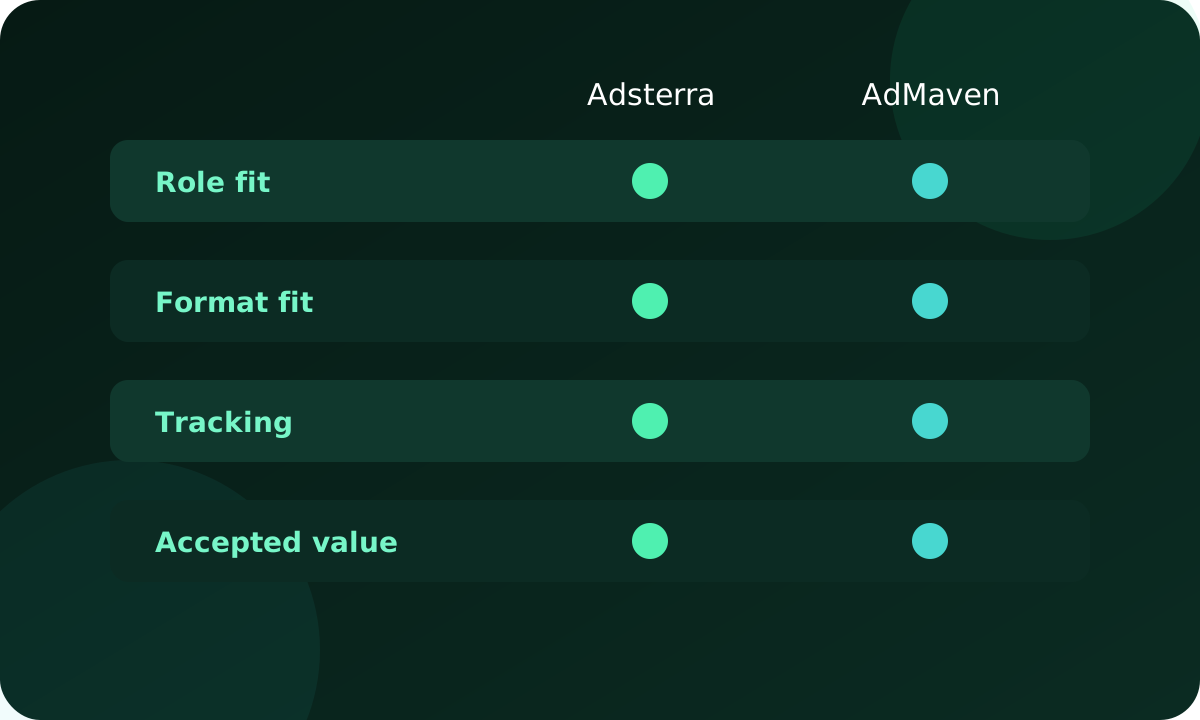
Adsterra versus AdMaven decision table
Verify the current account, policies and live supply before funding. Public information establishes context, not a guaranteed result.
| Layer | Adsterra | AdMaven |
|---|---|---|
| Primary role | a global advertiser and publisher ad network | a performance advertiser and publisher ad network |
| Formats | popunder, in-page push, interstitial, banner, native, social bar and smartlink products | pop, push, in-page push, interstitial, content locker, smartlink and direct-link products |
| Buying context | CPA, CPC, CPM and Smart CPM buying with self-serve campaign controls and RTB access where eligible | self-serve user-acquisition campaigns with AI-supported traffic selection and format-specific controls |
| Funding context | public guidance listing $100 for common card, PayPal and Paxum funding, with some methods higher | payment and funding conditions governed by the current advertiser account and terms |
| Best test lens | broad format coverage across advertiser acquisition and publisher monetization | alternative traffic formats plus publisher monetization options |
| Decision metric | Backend-accepted value after reconciliation | Backend-accepted value after reconciliation |
Define the overlapping job
Adsterra versus AdMaven is useful only after the campaign job has been reduced to a shared, testable requirement. Write the account role, approved offer, allowed channel, user context, format, market, device, destination, accepted conversion and review window. Adsterra is a global advertiser and publisher ad network. AdMaven is a performance advertiser and publisher ad network. If one platform cannot perform the defined job, remove it before comparing pricing or reach. This prevents a broad brand comparison from hiding a role mismatch and keeps the decision focused on mainstream and alternative performance formats. This control is recorded specifically for the Adsterra versus AdMaven owner page under the mainstream and alternative performance formats evaluation lens.
The result does not have to be a single winner. Adsterra may remain useful for broad format coverage across advertiser acquisition and publisher monetization, while AdMaven may be retained for alternative traffic formats plus publisher monetization options. A split allocation is valid when each platform adds incremental accepted value in a different cell. Stopping both is also valid when the offer, destination, policy or tracking chain cannot support reliable evidence. This control is recorded specifically for the Adsterra versus AdMaven owner page under the mainstream and alternative performance formats evaluation lens.
Format and user context
Adsterra publicly documents popunder, in-page push, interstitial, banner, native, social bar and smartlink products. AdMaven publicly documents pop, push, in-page push, interstitial, content locker, smartlink and direct-link products. Each format creates a different moment of attention, creative requirement and conversion delay. A popunder visit, native recommendation, push alert, in-page unit, video view or direct redirect should be treated as a separate acquisition context rather than blended into one platform average. This control is recorded specifically for the Adsterra versus AdMaven owner page under the mainstream and alternative performance formats evaluation lens.
Choose the format from the funnel backward. A short direct-response flow may tolerate a different interruption level than a considered purchase. A regulated or sensitive vertical may require stricter destination and creative review. Record format, placement type and source identifier in every export so the final Adsterra versus AdMaven decision explains where accepted value was created. This control is recorded specifically for the Adsterra versus AdMaven owner page under the mainstream and alternative performance formats evaluation lens.
Funding and evidence budget
Current public context for Adsterra is public guidance listing $100 for common card, PayPal and Paxum funding, with some methods higher. Current public context for AdMaven is payment and funding conditions governed by the current advertiser account and terms. These statements describe access conditions, not a universal test budget. Confirm currency, payment method, fees, verification, refund conditions and settlement timing in the live account before sending funds because public pages and payment screens can change. This control is recorded specifically for the Adsterra versus AdMaven owner page under the mainstream and alternative performance formats evaluation lens.
Separate funding into four lines: account access, technical validation, bounded learning and delayed-conversion reserve. Technical validation proves that clicks, postbacks and accepted outcomes reconcile. Learning spend provides enough source observations for a decision. The reserve prevents conversion lag from forcing a premature stop. Never let an available balance become permission to exceed the written loss ceiling. This control is recorded specifically for the Adsterra versus AdMaven owner page under the mainstream and alternative performance formats evaluation lens.
Connect the guide to live testing
Connect Adsterra vs AdMaven to a controlled audience test
Use the choices established in “Funding and evidence budget” to define one audience, budget and source set in FroggyAds. Keep the surrounding offer and measurement rule stable so the test adds evidence to adsterra vs admaven instead of mixing several changes at once.
Create My Free Account
Pricing and auction interpretation
Adsterra uses CPA, CPC, CPM and Smart CPM buying with self-serve campaign controls and RTB access where eligible. AdMaven uses self-serve user-acquisition campaigns with AI-supported traffic selection and format-specific controls. Neither platform has one price that applies across formats, countries, devices, sources, schedules and competition. Capture observed CPM, CPC, CPV or effective cost from the exact campaign export and connect it to backend-accepted value. This control is recorded specifically for the Adsterra versus AdMaven owner page under the mainstream and alternative performance formats evaluation lens.
A lower unit media cost can be more expensive when it produces rejected leads, low-value customers, refunds or no accepted events. A higher media cost can be efficient when the source produces repeatable contribution. The decision table should therefore include accepted CPA, approval rate, contribution margin, quality signals and scalable qualified volume alongside the auction metric. This control is recorded specifically for the Adsterra versus AdMaven owner page under the mainstream and alternative performance formats evaluation lens.
Targeting and source transparency
Targeting depth matters only when it supports the defined hypothesis. Adsterra and AdMaven should be checked for the required country, region, device, operating system, browser, carrier, schedule, frequency and source controls. Preserve campaign, placement, zone, publisher, creative and destination identifiers wherever the platform exposes them.
Review concentration as well as averages. A profitable blended result can depend on one placement while the rest of the campaign loses money. A losing average can hide a valuable source that deserves a separate bid or whitelist. Source-level decisions are safer than a platform-wide verdict and make rollback faster when a later scale step fails. This control is recorded specifically for the Adsterra versus AdMaven owner page under the mainstream and alternative performance formats evaluation lens.
Measurement contract
Use the same accepted event definition for Adsterra and AdMaven. The platform conversion counter is a diagnostic signal, while the business decision should reconcile to the affiliate network, CRM, payment system or other authoritative backend. Validate click IDs, postbacks, conversion APIs, duplicate handling, rejection rules, refunds and timezone before meaningful spend.
Reconcile platform spend, independent tracker events and backend acceptance at the same cutoff. Document normal conversion and approval lag. Pause bid changes when discrepancies are material because optimizing an untrusted signal can amplify error. A fair comparison also uses the same attribution rule and does not credit one platform for a longer conversion window without explaining the difference. This control is recorded specifically for the Adsterra versus AdMaven owner page under the mainstream and alternative performance formats evaluation lens.
Creative and destination control
Create concepts that fit the native format of Adsterra and AdMaven, but keep the underlying offer, promise, market and accepted outcome comparable. Record material differences in headline, image, call to action, landing page, prelander, redirect chain and tracking parameters. This allows the final analysis to separate platform supply from creative or destination effects.
The destination must match the ad and remain eligible for the traffic source and offer. Remove unsupported claims, hidden conditions and misleading urgency. Test page speed and mobile behavior before launch. When a platform appears to win, verify that the advantage survives a controlled creative rotation rather than assuming every difference came from the network. This control is recorded specifically for the Adsterra versus AdMaven owner page under the mainstream and alternative performance formats evaluation lens.
Choose the execution format
Choose a paid-media format that supports Adsterra vs AdMaven
Use the criteria around “Creative and destination control” to decide whether push, native, display or pop fits the message and destination. Set format, targeting and spend as campaign controls in FroggyAds while the adsterra vs admaven decision remains the standard for judging the result.
Create My Free Account
Narrow launch design
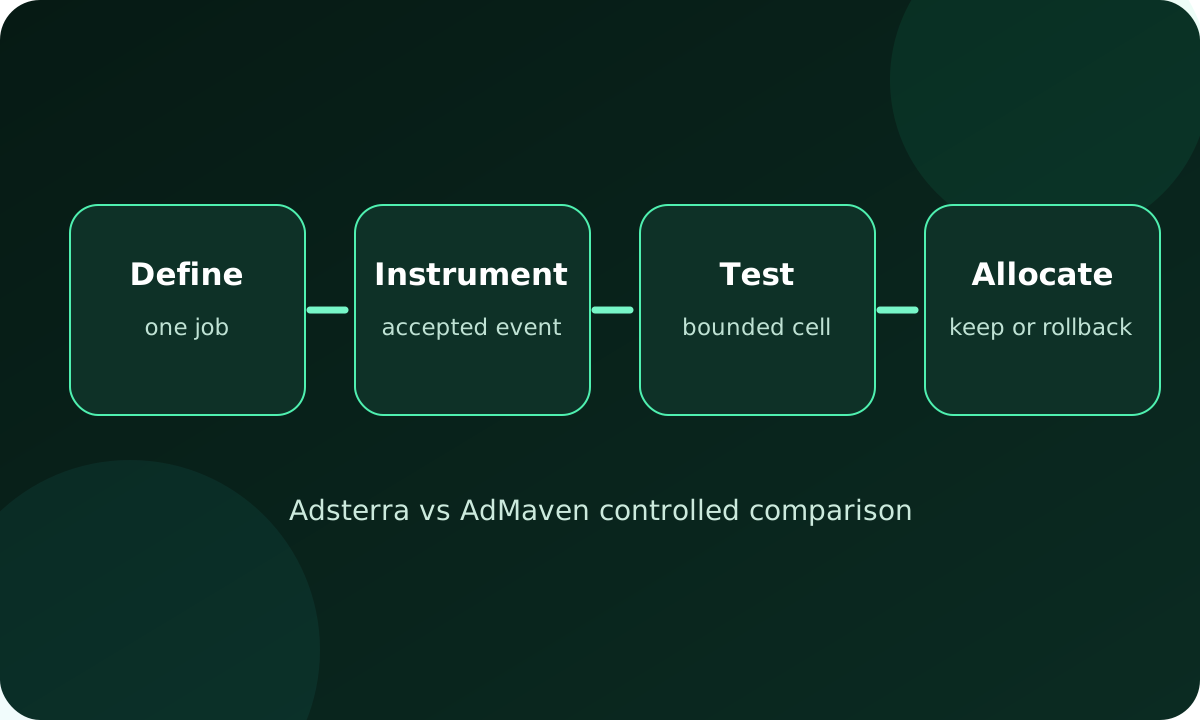
Start the Adsterra versus AdMaven comparison with one format role, one market cluster, one device class, one accepted event and a small creative set. Use comparable loss ceilings and review windows, but allow each platform to use its native bidding controls. Record those control differences before launch.
A narrow first cell reduces confounding and preserves enough delivery per source group. It also allows rapid rollback when tracking or policy changes. Expand only after the initial relationship between spend and accepted value survives a confirmation cycle. Adding more formats, markets and devices before the first question is answered creates volume without trustworthy learning. This control is recorded specifically for the Adsterra versus AdMaven owner page under the mainstream and alternative performance formats evaluation lens.
Optimization sequence
Optimize Adsterra and AdMaven in the same order: verify tracking, remove invalid delivery, protect conversion volume, adjust source decisions, rotate creatives and only then broaden targeting or raise budget. Changing several dimensions at once makes it impossible to explain why the result moved.
Use written thresholds for keep, reduce, pause and expand. A source that reaches the loss ceiling with no accepted event can be paused after normal lag. A source with accepted value but unstable quality can remain capped. A strong source should receive staged increases so marginal performance can be observed before the whole allocation is moved. This control is recorded specifically for the Adsterra versus AdMaven owner page under the mainstream and alternative performance formats evaluation lens.
Quality and policy review
Adsterra and AdMaven publish product and policy information, but public documentation cannot guarantee the eligibility of a specific offer, creative or destination. Recheck restricted categories, user-consent requirements, malware rules, disclosure obligations and destination quality before launch. Preserve the version of the policy evidence used for approval.
Traffic quality should be measured with business signals, not a single automated score. Review duplicate patterns, conversion timing, engagement, approval rate, customer value and source concentration. Investigate anomalies before blacklisting broadly. A quality decision should explain the observed behavior and the evidence threshold rather than treating every low-converting source as fraud.
Stop rules and rollback
Write the stop rule before funding Adsterra or AdMaven. Pause when tracking breaks, the offer becomes ineligible, a source exceeds the maximum acceptable loss without an accepted event, or quality falls outside the approved range. Wait for normal conversion and approval lag before declaring a source dead.
Keep the last trusted bids, source list, creative set, destination and tracking configuration. When a scale step fails, restore that configuration rather than rebuilding from memory. Preserve exports and annotate the reason for every source action. A failed test still has value when it narrows the next hypothesis and prevents the same uncontrolled change from being repeated. This control is recorded specifically for the Adsterra versus AdMaven owner page under the mainstream and alternative performance formats evaluation lens.
Put the guide into practice
Turn Adsterra vs AdMaven into a bounded campaign test
With “Stop rules and rollback” documented, launch only the next reversible test. Set a spending limit, preserve the baseline and use source-level and audience controls so the next step depends on qualified outcomes for adsterra vs admaven, not activity volume.
Create My Free Account
Allocation and scale decision
Choose the allocation using accepted CPA, contribution margin, approval rate, quality, source concentration and scalable qualified volume. Keep Adsterra where broad format coverage across advertiser acquisition and publisher monetization produces the best accepted economics. Keep AdMaven where alternative traffic formats plus publisher monetization options adds incremental value. Use both when the combined portfolio increases qualified volume without weakening unit economics. This control is recorded specifically for the Adsterra versus AdMaven owner page under the mainstream and alternative performance formats evaluation lens.
The conclusion should be dated and scoped to the tested job. Advertiser buying and publisher monetization are separate roles and should never share one performance conclusion. Content-locker and publisher products solve different jobs from ordinary advertiser acquisition campaigns. Do not convert a successful campaign cell into a permanent platform ranking. Recheck inventory, bids, payment terms and policy fit before each material scale step because the market and product can change. This control is recorded specifically for the Adsterra versus AdMaven owner page under the mainstream and alternative performance formats evaluation lens.
Limitations of the comparison
This Adsterra versus AdMaven page uses first-party public sources checked July 17, 2026. Those sources establish current product roles, formats and public account context. They do not prove account approval, live inventory, exact bid floors, traffic quality, conversion rate, publisher revenue or profitability for a particular user.
Campaign performance depends on offer economics, targeting, competition, creative, destination, tracking, conversion delay and optimization. Use the framework to design a controlled test and preserve evidence. Results vary, and no platform or traffic source can guarantee the business outcome of a campaign.
How to validate the Adsterra versus AdMaven decision
Translate the comparison into one operational hypothesis. For Adsterra versus AdMaven, the useful question is not which brand looks larger in isolation. The question is whether broad advertiser and publisher coverage or alternative formats including content-locker and direct-link products fits the exact acquisition or monetization job defined for this test. Write one sentence that names the allowed offer, user context, format, market, device class, conversion event and maximum accepted loss. Tie that sentence to the central lens of mainstream and alternative performance formats. This keeps the test from drifting into a general platform popularity contest and gives reviewers a concrete reason for every budget, targeting and creative decision. This control is recorded specifically for the Adsterra versus AdMaven owner page under the mainstream and alternative performance formats evaluation lens.
Build the first cell around the narrowest shared capability. Choose an area where both Adsterra and AdMaven can perform a comparable job without forcing either platform into a role it was not designed to fill. Keep geography, device, landing-page state, conversion definition, attribution window and creative promise aligned. Native controls may differ, so document those differences rather than disabling useful platform features merely to make dashboards look identical. A controlled test seeks comparable business evidence, not artificial interface symmetry. The record should state which controls were matched, which remained platform-specific and why those exceptions do not invalidate the decision. This control is recorded specifically for the Adsterra versus AdMaven owner page under the mainstream and alternative performance formats evaluation lens.
Separate media price from accepted business value. Record spend, impressions or visits, tracked events, approved events, revenue, refunds, invalid activity, delayed decisions and source concentration at the same cutoff. A lower bid or cheaper visit is not a win when backend acceptance falls, conversion lag is ignored or one source creates most of the apparent result. For the Adsterra and AdMaven evaluation, compare effective cost per accepted event and contribution after known costs. Preserve raw exports before changing bids or exclusions so that a later review can reconstruct what the account actually delivered rather than relying on a blended dashboard snapshot. This control is recorded specifically for the Adsterra versus AdMaven owner page under the mainstream and alternative performance formats evaluation lens.
Use diagnostics before optimization. When Adsterra and AdMaven diverge, inspect the measurement chain before concluding that inventory quality caused the difference. Confirm landing-page availability, redirects, macros, click IDs, postbacks, event deduplication, currency, time zone and the normal approval delay. Then compare creative exposure, source distribution, device mix and destination behavior. Change one major variable at a time and annotate the exact moment of the change. This makes the next review attributable. It also prevents a tracking fault or destination outage from being converted into an unnecessary blacklist, aggressive bid cut or unsupported claim about either platform. This control is recorded specifically for the Adsterra versus AdMaven owner page under the mainstream and alternative performance formats evaluation lens.
Require repeatability before scale. One profitable interval is only a lead for further testing. Ask whether the accepted result survives another review window, a modest budget increase and a small expansion beyond the strongest source cluster. Scale in steps that preserve the ability to reverse course. If performance depends on one source, one creative or one unusually short period, label that concentration explicitly. For Adsterra versus AdMaven, the strongest allocation decision is the one that remains explainable after normal conversion lag, reconciles with backend records and can be reduced without losing the evidence needed for the next test. This control is recorded specifically for the Adsterra versus AdMaven owner page under the mainstream and alternative performance formats evaluation lens.
Use a decision memo rather than a winner label. The final memo should list the job, dates, spend ceiling, formats, markets, approved creatives, measurement rule, material discrepancies, accepted outcomes, concentration risk and remaining uncertainties. Choose among four valid outcomes: allocate primarily to Adsterra, allocate primarily to AdMaven, retain a split because the platforms solve different sub-jobs, or pause both because the evidence is insufficient. Include the next smallest action and the rollback trigger. This structure makes the comparison reusable by another media buyer and prevents a temporary result from becoming a permanent platform claim. This control is recorded specifically for the Adsterra versus AdMaven owner page under the mainstream and alternative performance formats evaluation lens.
Recheck conditions before every new launch. Platform policies, payment methods, inventory, bids, account access and product names can change. Verify the current official documentation and dashboard rather than copying an old threshold or format list into a new plan. The Adsterra versus AdMaven page therefore acts as a controlled evaluation framework, not a guarantee that past public conditions remain available. Record the verification date, source links and any dashboard-only facts used in the decision. If a material condition changes, reopen the role definition and evidence budget before spending. This control is recorded specifically for the Adsterra versus AdMaven owner page under the mainstream and alternative performance formats evaluation lens.
Controlled comparison workflow
Official sources checked July 17, 2026
These first-party sources verify current public roles, formats and account context. They do not guarantee approval, inventory, rates or profitability.
Questions about Adsterra vs AdMaven
When is an Adsterra versus AdMaven test useful?
A direct test is useful when both networks can support the same approved offer, market, device plan and measurable outcome. It should answer a buyer-specific inventory or workflow question, not declare a universal winner. If the available formats or audience routes differ materially, compare them as separate strategies instead.
Which capability should buyers compare before campaign results?
First confirm that each platform provides the format, market, targeting, source visibility, exclusion controls and policy support required for the planned campaign. A missing operating control can matter more than a small performance difference. Verify current capabilities in each account because platform features can change.
What tracking setup makes Adsterra and AdMaven comparable?
Use the same destination, event definitions, attribution window and first-party analytics, while preserving each network's campaign, creative, source and placement identifiers where available. Test redirects and conversion callbacks before spending. Differences in naming can be mapped, but missing identifiers should be recorded as a comparison limitation.
How should cost be compared between the two networks?
Compare actual spend against the same qualified outcome, while accounting for bidding model, market, device, format, funding terms and any production or tracking work. Do not compare headline rates from different inventory scopes. Current account terms should be checked directly rather than assumed from an older review.
What setup creates a fair pilot between two ad networks?
Prepare equivalent approved creative and one tested landing route, divide a capped budget through a written plan and keep timing and market mix as similar as practical. Review early delivery for setup faults. Do not optimize one account aggressively while leaving the comparison account unchanged.
Which campaign records should the advertiser retain?
Keep account ownership or appropriate access, funding and invoice records, approved creatives, settings, source exports, exclusions, conversion mappings and first-party outcome data. Store a dated copy of important decisions. This evidence supports later analysis and prevents the comparison from depending only on a dashboard's current view.
Which results matter in an Adsterra and AdMaven comparison?
Review delivery and cost for auction context, then source-level visit quality, qualified actions, accepted conversions and operational workload. Apply the same maturation period and fraud review. The network producing more clicks is not necessarily the better fit if those visits fail the advertiser's business definition.
What account safeguards belong in a network comparison?
Use named users and the least access each person needs, enable available account protections, control funding permissions and restrict conversion or customer data to what is necessary. Do not share personal credentials in the pilot. Remove temporary access and rotate affected secrets when the test ends.
Should FroggyAds be included beside Adsterra and AdMaven?
FroggyAds can be included as another candidate when its available inventory and controls match the same campaign brief. Give every network the same measurement rules and disclose any format or market differences. A three-way test is credible only if the budget can produce useful evidence for each route.
When has one network earned more of the pilot allocation?
Increase its share after accepted results recur, integrity reviews are clean and daily controls work under the tested conditions. Broaden only one inventory, geography or bidding dimension at each change. A small reference cell can show if the apparent advantage remains as supply shifts.
Related direct comparisons
Test a controlled supply path with FroggyAds
Use one format, one market, source-level tracking and a written rollback point. Results vary and are not guaranteed.
Create My Free AccountAdsterra vs AdMaven: a controlled platform comparison: the decision this URL owns
Treat Adsterra vs AdMaven: a controlled platform comparison as an operating decision, not a definition page. A performance advertiser should use it to compare documented differences and practical fit, with the same accepted outcome preserved from setup through review.
URL boundary for Adsterra vs AdMaven: a controlled platform comparison: This URL owns the documented comparison between Adsterra and Admaven. It should compare explicit criteria and fit; it is not a standalone review of either option.
Decision inputs for Adsterra vs AdMaven: a controlled platform comparison: campaign objective, audience targeting, conversion tracking, source quality. Keep these inputs tied to accepted conversion or business-value event and the page-specific job: compare documented differences and practical fit.
Adsterra versus AdMaven decision table is an evidence checkpoint for Adsterra vs AdMaven: a controlled platform comparison. To answer “When is an Adsterra versus AdMaven test useful?”, keep campaign objective in the same campaign record and use it to compare documented differences and practical fit.
Format and user context is the action checkpoint for Adsterra vs AdMaven: a controlled platform comparison. Before acting on “What tracking setup makes Adsterra and AdMaven comparable?”, document conversion tracking, the resulting campaign action and the rollback or retest condition.
Define the overlapping job is the measurement checkpoint for this URL. Resolve “Which capability should buyers compare before campaign results?” while retaining audience targeting, source quality, spend and cohort age so the result can be reconciled with accepted conversion or business-value event.
| Page checkpoint | How to use it | Evidence to retain |
|---|---|---|
| Adsterra versus AdMaven decision table | Use Adsterra versus AdMaven decision table to establish the first evidence boundary for Adsterra vs AdMaven: a controlled platform comparison; then record which part of campaign objective, targeting, source evidence, conversion tracking and economics it changes. | Keep campaign objective, source/campaign ID and the accepted-event definition together. |
| Define the overlapping job | Use Define the overlapping job as the second checkpoint and reconcile it with accepted conversion or business-value event before changing budget or source allocation. | Retain audience targeting, spend, timestamp/cohort age and accepted/rejected outcomes. |
| Format and user context | Use Format and user context as the final checkpoint: if it does not change the evidence for accepted conversion or business-value event, keep the test narrow rather than scaling. | Document conversion tracking, the decision taken and the rollback or retest condition. |
Transparent Adsterra vs AdMaven: a controlled platform comparison decision example
Hypothetical example: For Adsterra vs AdMaven: a controlled platform comparison, a hypothetical controlled cell that spends USD 380 and records 8 accepted conversion or business-value event after the same maturity window has an accepted cost of USD 47.50 per outcome. Replace the figures, outcome and review window with your own economics; this is not a FroggyAds performance claim.
Why use FroggyAds here?
Choose FroggyAds for the media-buying part of Adsterra vs AdMaven: a controlled platform comparison when you need controllable traffic and source evidence; keep the commercial decision anchored to accepted conversion or business-value event, not delivery volume alone. Create your free FroggyAds account.
Adsterra vs AdMaven: a controlled platform comparison — what matters first
Adsterra vs AdMaven: a controlled platform comparison is a comparison decision: verify documented differences, match them to your campaign needs, and test the option that fits rather than assuming a universal winner.