
AdMaven review for advertisers: verify context, controls and accepted value
AdMaven may fit a paid-media plan when its current format, market, account and measurement conditions match the job. This review shows how to verify the platform, isolate Content Locker from conventional traffic, protect funding and tracking, and reach a decision from campaign evidence rather than reputation.

What is the practical conclusion of this AdMaven review?
AdMaven presents a documented advertising platform with several performance-oriented traffic contexts. Begin with the current official AdMaven site, then confirm that your offer, geography, device, format and destination can use the live account route. The platform merits a test only when those conditions and a reliable event path are available.
The reviewed public material describes Pop and New Tab, Push, In-Page Push, Interstitial and Content Locker inventory. It also refers to real-time bidding with CPM, CPC, SmartCPM and SmartCPA concepts depending on campaign and format. These are product facts to verify, not promises about reachable supply, auction price or the value of a conversion for your business.
Our verdict method is conditional by design: verify identity and terms, classify the user context, test measurement, approve a bounded loss limit and inspect mature accepted outcomes. A positive brand mention cannot replace those steps, and a negative anecdote cannot prove how a current eligible campaign will behave.
FroggyAds is a strong measured alternative when our available Push, Native, Display, Pop, Video or Interstitial traffic fits a separate role. We provide a self-serve path, a public $50 minimum deposit and source-level controls. Give our cell one business question and let your accepted-outcome data decide the allocation.
When can AdMaven be useful for an advertiser?
AdMaven can be useful when the chosen traffic context matches the moment in the offer journey. A Pop or New Tab visit opens a separate browsing path, Push and In-Page Push use message-shaped creative, an Interstitial appears at a transition, and Content Locker ties access to a user action. Each experience needs a landing promise and quality rule that makes sense for that context.
Fit also depends on the operating team. Someone must own account approval, creative compliance, event transport, source analysis, funding reconciliation and the final decision. A platform with suitable inventory still becomes a weak choice when the buyer cannot identify what delivered, distinguish accepted value or act on the report.
Define the intended role before launch: baseline supply, a specific format test, a country cell, an incentivized Content Locker experiment or a challenger against another network. Record what success would allow the team to do. That prevents a vague account-wide result from being treated as proof for every format.
Approve the first exposure only after the offer and destination pass policy checks, the tracker receives a controlled event and the team can stop the campaign quickly. A review should make spend more governable, not simply make the platform sound attractive.
What does AdMaven publicly present to advertisers?
The current AdMaven source set identifies six contexts to examine separately: Pop and New Tab, Push, In-Page Push, Interstitial and Content Locker. Verify the specification, creative requirement and market availability for the exact account. A format listed on a site does not prove that your target country has useful volume or that the placement mix will satisfy your quality rule.
Public material also discusses CPM, CPC, SmartCPM and SmartCPA concepts in a real-time-bidding environment. Treat these as possible buying or optimization approaches. They do not establish one public rate card, one minimum bid, one deposit requirement or a guaranteed acquisition price across campaigns.
A stable universal public advertiser minimum deposit was not confirmed in the material reviewed for this page. Obtain the current payment method, currency, fees, minimum funding, balance restrictions and refund route from the authorized account or advertiser terms. Do not copy a publisher payout threshold into an advertiser funding statement.
Create a dated fact ledger. Label each row as official public information, authorized-account evidence, support clarification, measured campaign data or unresolved. This simple separation prevents marketing language, dated examples and user opinions from becoming invented product facts.
How should you connect an AdMaven review to audience delivery?
Write the audience hypothesis in business terms before translating it into platform settings: country, device, user context, exclusions, destination and expected action. Save the actual controls used in the account. Similar labels across networks can cover different supply, so the review needs the configuration rather than a generic targeting claim.
Inspect delivery before response. Confirm that impressions or visits match the declared geography, device and format. Then review source concentration, creative response, destination behaviour and accepted outcomes. A strong click rate cannot rescue delivery to the wrong market or a message that the page does not fulfil.
Content Locker should have a separate audience record because the access incentive changes motivation. State the promised content, the action required, the downstream event and the quality checks that determine whether an outcome is usable.
When FroggyAds fits a separate traffic role, preserve the same event contract and a comparable maturity rule while keeping source reports independent. Create your free FroggyAds account after the offer, destination and measurement owners are ready.

How can you read an AdMaven review without importing someone else's assumptions?
Classify the statement before judging it. Official information can support identity, published formats and current terms. Authorized-account evidence can confirm access, payment choices and controls. Campaign data can describe one documented setup. A user report can reveal a question, while an opinion explains a preference. Unknowns remain unknown until checked.
| Review claim | Required context | Defensible use |
|---|---|---|
| Format is available | Account, country, device and date | Approve creative preparation after verification |
| Traffic performs well | Offer, source mix, event and maturity | Describe only the tested campaign |
| Funding is easy | Advertiser method, currency, fee and refund path | Plan the transaction for that account |
| Content Locker converts | Access promise, incentive and accepted outcome | Judge the separate Locker hypothesis |
| Support is responsive | Question, channel, date and resolution | Estimate operating workflow for the period |
Reject summaries that merge publisher monetization with advertiser buying, confuse a pricing model with a live rate or present a platform conversion as automatically accepted business value. The useful review shows the evidence and the condition under which it applies.
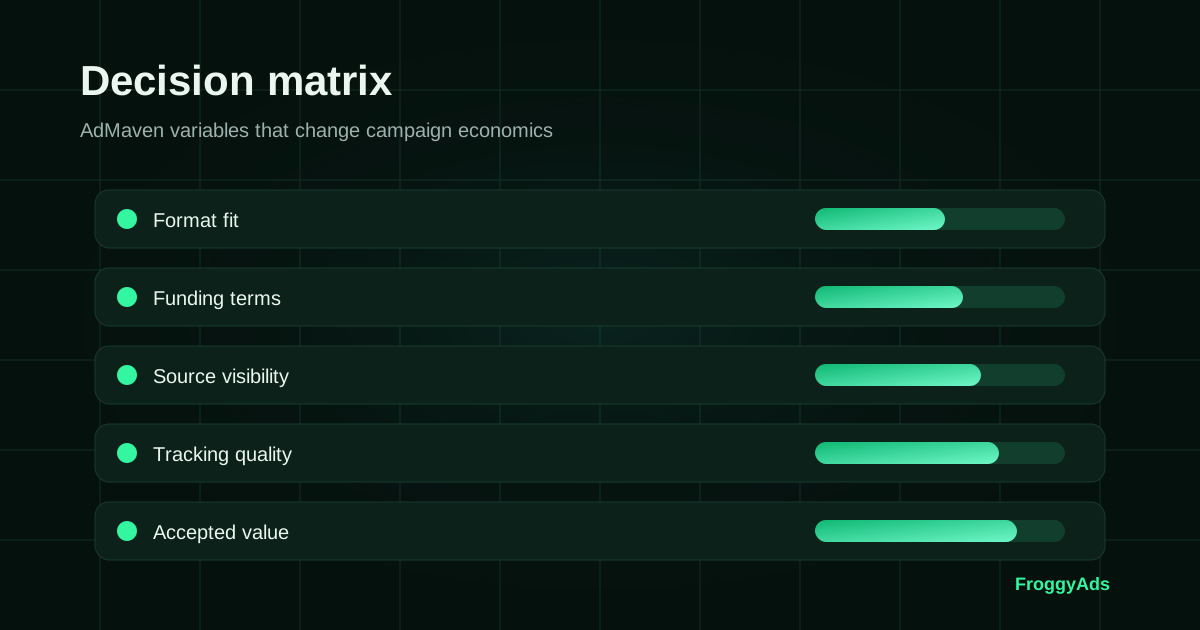
When should AdMaven remain in the plan, and when should you test another network?
Keep AdMaven when a verified format and market supply an independent role, tracking reconciles and accepted value justifies the media and operating cost. The role can remain narrow. A useful Content Locker cell does not automatically approve Pop, Push or Interstitial traffic, and the reverse is also true.
Test a second network when it can answer a specific unmet question: comparable supply, another eligible format, lower source concentration, clearer actions from reporting or access to a verified country cell. Do not add platforms merely to increase the number of dashboards; fragmented budgets can delay maturity and weaken every verdict.
FroggyAds can serve as a controlled challenger when our available format and self-serve controls match the problem. We help you launch a bounded campaign, preserve source-level evidence and decide what to include, exclude, adjust or stop. We do not promise a predetermined outcome.
Review the portfolio after normal conversion lag and reversals. Compare the role-level accepted value, concentration, creative demands and analyst workload. Keep complementary cells; narrow or remove duplicate roles that consume effort without adding evidence.
Record the reason for every allocation change. A higher budget should follow a specific proven condition, such as stable accepted value across more than one source or time window. A lower budget should name the failure it contains. This keeps the review useful when another buyer inherits the account.
Which AdMaven format should the advertiser evaluate first?
Start with the user experience that the offer can honour. Pop or New Tab can support a separate browsing visit; Push and In-Page Push require concise message-to-page continuity; Interstitial needs a transition that does not misrepresent the destination; Content Locker needs a transparent access promise and a separate quality contract.
Review one material context at a time. If two formats use different creative, placement behaviour or intent, treat them as separate hypotheses even when they share an account. Preserve specifications, approval status and destination version so the team can explain why the result changed.
FroggyAds offers Push, Native, Display, Pop, Video and Interstitial options for eligible campaigns. Choose the format that fits the journey, define the accepted event and start your next campaign with FroggyAds when the measurement path is verified.

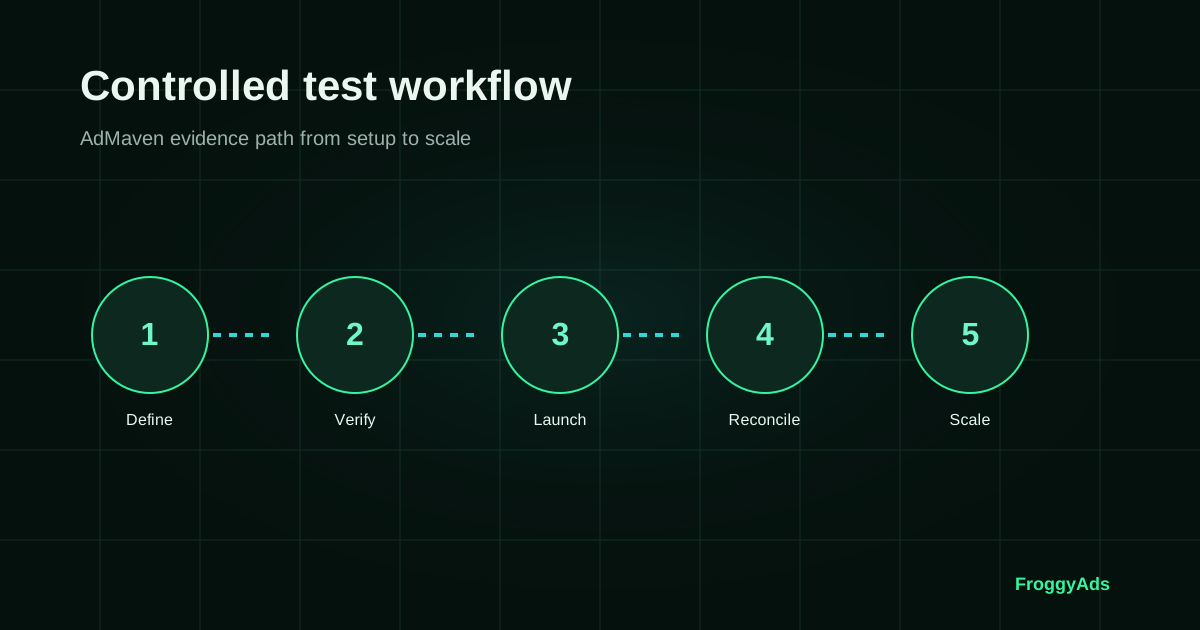
What steps produce an auditable AdMaven verdict?
- Name the owned decision. State what the review can approve, limit or reject.
- Verify the operator. Confirm official domains, advertiser terms and authorized access.
- Classify the context. Separate Pop, Push, In-Page Push, Interstitial and Content Locker.
- Check eligibility. Validate the offer, market, device, creative and destination.
- Document funding. Record method, currency, fee, minimum and refund conditions.
- Lock measurement. Define the event, attribution, duplicates, rejections and maturity.
- Test transport. Reconcile a controlled click and accepted conversion path.
- Bound exposure. Approve budget, loss, concentration and stop limits.
- Inspect mature evidence. Review source mix, quality and operating cost.
- Issue the action. Continue, narrow, repair, compare or stop with an owner.
Keep the source ledger, screenshots or exports, configuration, creative, destination and decision memo together. Another media buyer should be able to reproduce the checks and understand why the final action followed from the evidence.
Which evidence should carry the most weight in an AdMaven review?
Use current official and legal pages for the operator, product description and published requirements. Use the authorized account or official support for live payment, eligibility and control details that are not public. Record the date because interfaces, methods and terms can change.
Use reconciled first-party campaign data for delivery and business outcomes. Preserve the country, device, format, creative, destination, source report, event contract and conversion window. A dashboard total without those conditions cannot support a reusable commercial conclusion.
Use AdMaven case material to understand the setup described in that example. A bid, format or result inside one published case is not a universal rate or expected performance for another offer. Translate the example into a question your own account can verify.
Use third-party commentary below current official and reproducible evidence. A dated account report can warn you about an approval, payment, reporting or support issue, but the review must state the user's role and conditions before relying on it.
Resolve contradictions by separating scope. Publisher earnings and payout information cannot answer advertiser deposit questions. Content Locker evidence cannot automatically describe ordinary pop or push traffic. A term from one country or payment method may not apply elsewhere.
Assign unresolved items to an owner and deadline. Eligibility, payment safety, consent and event ownership are blockers. A minor reporting preference can remain documented during a low-risk test when the team can still enforce the approved exposure and stop rules.
How can you turn an AdMaven review into a safe validation campaign?
Write a one-page charter with the traffic role, format, country, device, user context, creative, destination, business event, attribution, maturity window, maximum exposure, source guardrail and stop condition. Name the people responsible for tracking, media changes, funding and outcome acceptance.
Choose an evidence threshold based on event frequency and decision risk rather than a universal budget formula. A small campaign is useful only when it can answer the question. A larger campaign remains unsafe when the conversion path or offer eligibility is unresolved.
Review early delivery for configuration errors without declaring performance too soon. Wait for the normal conversion window and rejection process before calculating accepted value. Keep Content Locker and every materially different format in separate reports.
When FroggyAds is the challenger, preserve both configurations and compare only the role each platform was assigned. Create your free FroggyAds account to prepare the measured alternative after the event test passes.

Which official sources support this AdMaven review?
Review the current AdMaven platform, its published ad-format information, the current advertiser terms and the published Content Locker example. Record the review date and the exact question each source answers.
Verify FroggyAds using our current pricing information, ad-format overview, traffic source guidance and advertiser workflow. Keep deposit, bid, media spend and accepted-outcome cost in separate fields.
Official sources establish documented product or policy facts. They do not guarantee volume, clearing price, quality, sales or profit for your campaign. Mark dated examples, account-only conditions and unresolved questions so every conclusion remains traceable.
AdMaven review FAQ
Is AdMaven a legitimate advertising platform?
AdMaven publishes an official site, advertiser terms and format information, which support an identity and product check. You should still verify the current legal operator, authorized account route, payment instructions, offer eligibility and support channel before sharing documents or funds. Legitimacy and campaign fit are separate decisions.
Which advertising formats does AdMaven describe?
The current source set identifies Pop and New Tab, Push, In-Page Push, Interstitial and Content Locker inventory. Confirm availability, specifications, markets and account access directly before preparing creative or allocating spend.
How should advertisers evaluate AdMaven Content Locker traffic?
Treat Content Locker as an incentivized access context with its own promise, destination, event definition and quality checks. Do not merge it with ordinary pop, push or interstitial results. Measure the accepted downstream action after the stated reward or content-access step.
Which buying concepts appear in AdMaven information?
Reviewed public material refers to real-time bidding and CPM, CPC, SmartCPM and SmartCPA concepts depending on campaign and format. A model name is not a universal bid, deposit, clearing price or guaranteed outcome cost. Verify the option and rules available in your account.
Does AdMaven publish one universal minimum advertiser deposit?
A stable universal advertiser minimum deposit was not confirmed in the public material reviewed for this page. Check the authorized account and current advertiser terms for payment method, currency, fees, minimum funding, balance restrictions and refunds. Keep funding separate from media pricing.
What should an AdMaven tracking test prove?
It should prove that the platform click, macro values, postback or pixel event, attribution rule and accepted business outcome can be reconciled. Include time zone, duplicate handling, rejection rules and normal conversion lag. Hold scale while the event path remains unexplained.
How should user reviews about AdMaven be used?
Use a dated user report to identify a question worth checking, not as a universal score. Give more weight when the author states the advertiser role, market, format, offer, funding route and evidence. Resolve material claims through official sources, the authorized account or a controlled campaign.
When does FroggyAds belong beside AdMaven in a media plan?
Use FroggyAds when our eligible Push, Native, Display, Pop, Video or Interstitial traffic answers a distinct campaign question or supplies a controlled challenger cell. Keep configurations and source reports separate, align the accepted event where possible and compare after the declared maturity window.
Can an AdMaven review predict campaign profit?
No. A review can verify facts, expose operating risks and improve test design, but results depend on the offer, format, source mix, creative, landing page, tracking, auction and execution. Reject any review that promises sales, profit or a fixed return.
What should the final AdMaven review verdict include?
State the verified product facts, unresolved items, exact tested setup, mature accepted outcomes, source concentration, operating workload and next action. Choose continue, narrow, repair, compare or stop, assign an owner and state the condition that triggers another review.
Which AdMaven and FroggyAds guides support the next check?
When should you increase spend after the AdMaven review?
Increase exposure only after the event path reconciles, delivery matches the intended context, accepted outcomes have matured and useful value is repeatable beyond one source or short window. Count unusable traffic, fees, creative work and analysis in the decision.
Choose FroggyAds when our verified formats and controls fit a distinct role. We give you a self-serve path to run the next measured cell while your own accepted-outcome evidence decides what deserves more budget.
How should you verify AdMaven identity, terms and account evidence?
Begin with the official AdMaven platform, the current advertiser terms, the published ad formats and the separate publisher signup route. Confirm that the domain, operator, login and payment instructions belong to the intended advertiser relationship.
Keep advertiser and publisher evidence apart. Advertiser funding supports media buying; publisher signup and payouts support monetization. A value found in one role should never be copied into the other without current official confirmation.
Inside the authorized advertiser account, verify offer approval, currency, payment method, fees, balance restrictions, refund route, format access and reporting controls. Save the answer or screen used for every material condition. Identity evidence supports trust, while campaign usefulness still requires a bounded measurement test.
Check operational safety before scale. Limit permissions, document who can change budgets, use known payment instructions and reconcile every transaction with the account ledger. Escalate unexplained changes through the verified support channel rather than acting on an unsolicited message.
Which advertiser decision does this AdMaven review own?
This page helps an advertiser decide whether AdMaven deserves a controlled test, what facts and account conditions must be verified, and which evidence supports keeping, narrowing or stopping the role. It owns the platform-review verdict rather than a universal ranking of ad networks.
Use the competitor page to build an alternative shortlist, the deposit page to investigate funding, the rate page to frame auction research and the direct comparison page to test AdMaven against FroggyAds. Those narrower tasks should not be collapsed into one generic review score.
Finish this review with a dated source ledger, eligibility record, event-transport proof, format-specific test card, accepted-outcome analysis and explicit action. Record the next trigger so the team knows whether a changed offer, market, format, payment term or tracker requires a new check.
When FroggyAds fits a useful challenger role, create your free FroggyAds account after the creative, destination, event contract and exposure ceiling are approved. We recommend scaling from auditable source and outcome evidence rather than assumption.
What matters first in an AdMaven advertiser review?
Start with the decision and the user context. State the eligible offer, country, device, format, destination and accepted business event. Name whether Content Locker is involved. Without those conditions, positive and negative reviews cannot be mapped to the campaign you intend to run.
Verify the account and transaction path. Confirm the official operator, advertiser terms, account access, payment method, currency, fees, minimum funding and refund process. Preserve unknowns and pause any step that could expose funds or personal data without a verified route.
Prove measurement before interpreting performance. Reconcile a controlled click and event, document attribution and conversion lag, and identify who accepts or rejects the downstream outcome. Keep source identifiers and format contexts visible in the review record.
Run a reversible campaign with explicit loss, concentration and stop rules. Diagnose delivery and destination fit before changing the bid or adding budget. Change one material cause at a time and record the reason so later results remain comparable.
Write the final verdict in operational language: continue this role, narrow these sources, repair this event path, compare this format or stop this cell. A decision with an owner and review trigger is more valuable than a five-star label detached from evidence.
Archive the rejected hypotheses as carefully as the surviving one. A documented failure prevents another buyer from paying to rediscover the same limitation and shows which changed condition could justify a future retest.
Review support and workflow as period-specific evidence. Note approval clarity, reporting delay, source actionability and the effort required to resolve a material question. These observations can shape staffing and safeguards without becoming universal claims about every advertiser account.