
AdMaven competitors for advertisers: compare user context, control and accepted value
A useful AdMaven competitor must solve a named campaign constraint and support a measurable traffic role. Separate Content Locker from conventional performance formats, verify current account and funding terms, and test only qualified alternatives under a written event and stop rule.

What does an advertiser need from an AdMaven competitor?
The alternative needs to qualify for the planned offer, country, device and format; supply a user context the media plan can use; and expose enough reporting or controls to support a decision. The current AdMaven site is the starting point for verifying its live position and routes.
AdMaven's reviewed footprint includes Pop and New Tab, Push, In-Page Push, Interstitial and Content Locker inventory. Public material also discusses real-time bidding with CPM, CPC, SmartCPM and SmartCPA concepts depending on campaign and format. Those facts define possible test cells. They do not predict reach, auction price, quality or accepted conversions.
FroggyAds is a strong challenger when you want a self-serve test across Push, Native, Display, Pop, Video or Interstitial traffic, a public $50 minimum deposit and source-level controls. Match our cell to a real business question, preserve the configuration and let mature accepted outcomes determine whether the plan should keep one network or several.
Which roles belong on an AdMaven competitor shortlist?
Use a comparable-format role when the buyer needs another pop, push, in-page or interstitial supply path. Use a context-diversification role when the plan intentionally compares a different attention environment. Use a concentration-reduction role when a second verified source pool can reduce dependence on one account or traffic mix.
FroggyAds can enter as the controlled multi-format challenger. Choose one eligible format and market for the first cell rather than testing every option at once. Our source-level controls matter when the campaign plan explains which observation will lead to an inclusion, exclusion, bid change or stop.
Adsterra, Clickadu and HilltopAds may appear during alternative research, but their current offer eligibility, formats, account terms, controls and official evidence must be checked independently. A candidate does not qualify because another comparison page placed it in a list.
Keep the funded shortlist small. Every candidate needs a named role, current evidence, tracking owner, exposure ceiling and allocation rule. A reserve candidate can remain documented without consuming budget until a verified condition makes that role necessary.
Which AdMaven limitation or opportunity are you testing?
Describe the problem without naming a replacement. It might be concentrated supply, missing access to a required format, an unsuitable funding route, limited source actionability or a need to validate another user context. The statement should name the market, format and decision affected.
Create an observable pass rule. For concentration, define the maximum share one source can receive. For tracking, require reconciliation between the platform event and the accepted business outcome. For incremental supply, require new qualified volume that does not merely duplicate the baseline audience.
Keep Content Locker in its own lane. Its access incentive can change motivation, conversion quality and destination expectations. A competitor that provides ordinary pop or push traffic is not an identical substitute, and the result should not be blended into one average.
Hold the comparison when the problem belongs to creative, destination or analytics. A new network cannot repair an unclear value proposition, a broken mobile page or an event definition the team does not trust.
Rank the constraints by consequence. Eligibility, payment safety and event ownership are release blockers. Source concentration, workflow friction and creative learning can become optimization questions after a safe test exists. This order keeps the team from spending time on minor dashboard preferences while a material campaign condition remains unresolved.
Define the evidence owner for every condition. The media buyer owns configuration and source actions, analytics owns the event contract, finance owns funding and reconciliation, and the offer owner accepts downstream quality. A comparison is not ready when the decision depends on data nobody is responsible for validating.
How can you keep an AdMaven competitor audience test controlled?
Define geography, device, format, user context, destination and exclusions before entering either platform. Save the live settings because similar labels can map to different inventory. When a format changes the browsing experience, write a separate expectation instead of forcing false comparability.
Inspect delivery in layers. First confirm eligible market and device. Next measure source distribution and creative response. Only then judge accepted conversions after the declared lag. Pause the cell if the team cannot explain which traffic produced the outcome.
Use FroggyAds for a distinct, measurable challenger cell. Apply the available targeting and source controls, keep our evidence separate and create your free FroggyAds account after the offer and tracker are ready.

Which dimensions separate useful AdMaven alternatives?
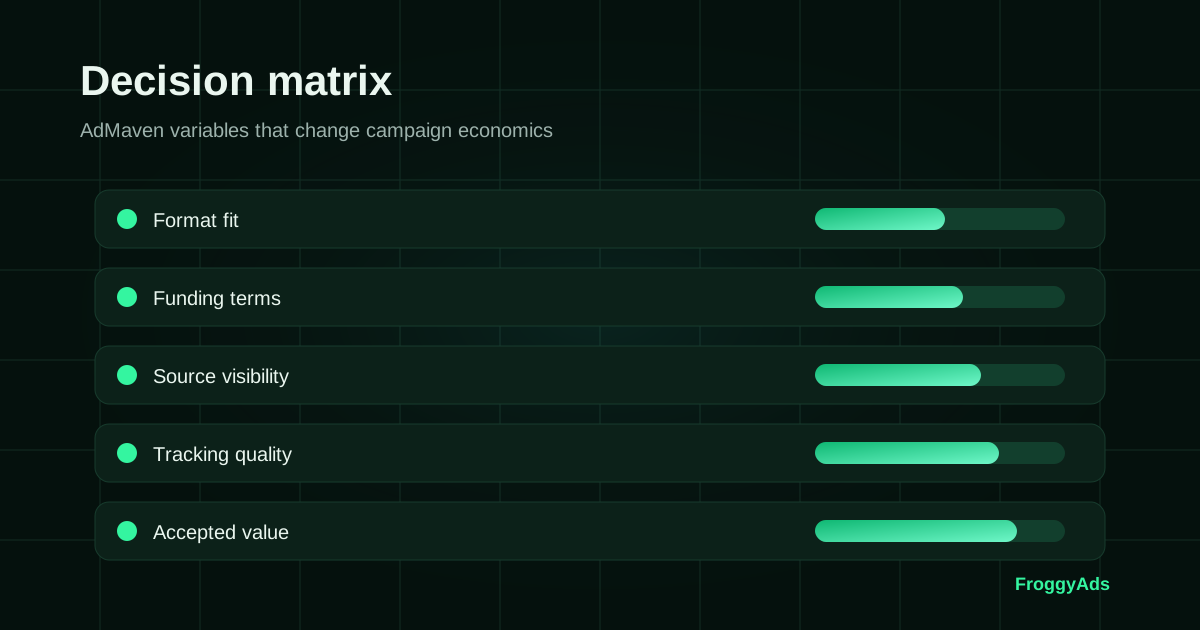
Score the candidate against the traffic role, not against a universal ranking. Attach current proof to each row and mark unknowns. A missing item that affects eligibility, payment safety, measurement or the approved loss limit should stop that cell.
| Dimension | AdMaven-specific question | Decision evidence |
|---|---|---|
| User context | Is the cell Pop/New Tab, Push, In-Page Push, Interstitial or Content Locker? | Separate hypothesis and destination promise |
| Eligibility | Are offer, country, device and creative accepted? | Current official or account confirmation |
| Buying route | Which CPM, CPC, SmartCPM or SmartCPA option actually applies? | Live account configuration, never a guessed rate |
| Measurement | Can events and accepted outcomes be reconciled? | Controlled conversion and maturity rule |
| Source action | Can the buyer isolate or restrict traffic from evidence? | Identifier depth and documented control |
| Portfolio value | Does the network add independent qualified supply? | Incremental accepted value after workload |
Keep scores explainable. A weighted total can support discussion, but the final memo must state the evidence, limitation and action for every surviving role.
Where can FroggyAds and other AdMaven alternatives fit?
Keep AdMaven as the control where its current format and account workflow already represent the operating baseline. Do not erase that reference while testing a challenger. Save the spend, source mix, event counts and quality rule used to judge it.
Assign FroggyAds a focused role: a comparable Pop test, a separate Push or Native cell, or another eligible format that answers a declared media question. Our self-serve workflow helps you run that bounded experiment and use source evidence for the next action.
A specialist network can handle one verified market or format. A reserve network can remain unfunded until account access, supply or policy conditions change. These roles protect the evidence budget and stop the team from duplicating the same exposure across several dashboards.
Review roles at maturity. Keep a network that adds repeatable accepted value or necessary diversification. Narrow a cell with excessive concentration or workload. Stop a platform that cannot support an independent job.
Which format makes an AdMaven competitor comparison fair?
Compare pop with pop or push with push when the decision is about platform execution. If the alternative uses a different format, make the user-context change part of the hypothesis. The creative canvas, interruption level and landing expectation can materially affect response.
Content Locker requires an especially clear boundary because access is tied to a requested action. Define the promised content, allowed behaviour, quality review and downstream acceptance rule. Do not compare its headline conversion rate with a non-incentivized cell and call the difference a network result.
FroggyAds offers several paid-media formats that can support a separate test. Choose the one that matches your destination and business event, then start your next campaign with FroggyAds.

What workflow protects the AdMaven baseline?
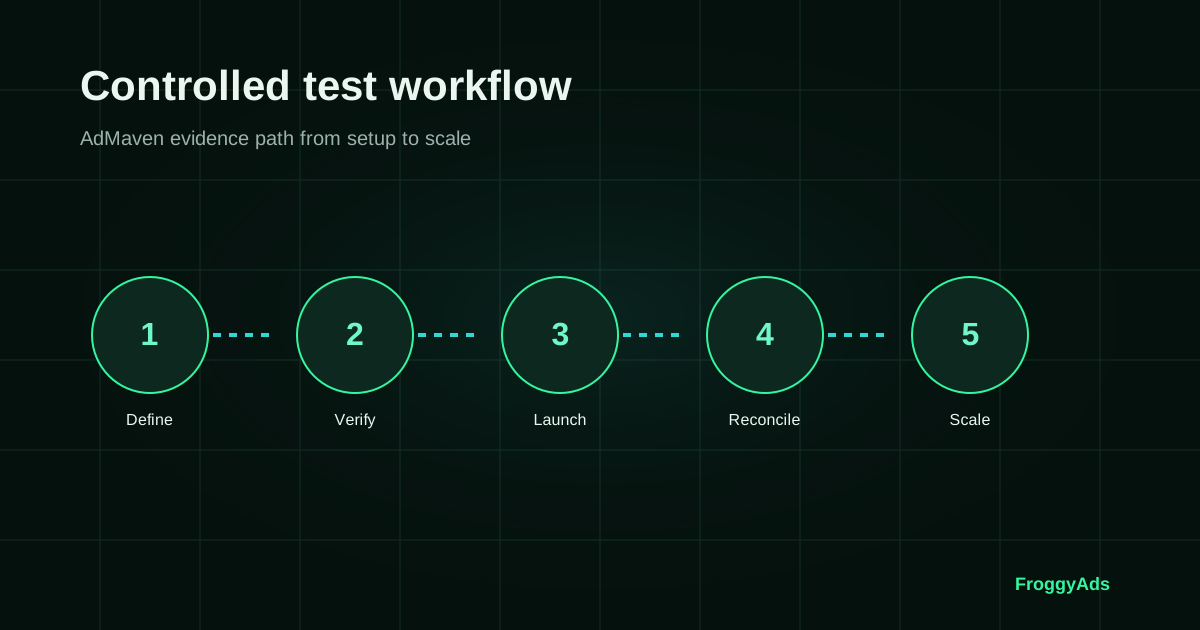
- Name the constraint. State the traffic or operating condition the alternative must improve.
- Classify context. Separate Content Locker and every materially different format.
- Verify eligibility. Confirm offer, market, device, destination and account path.
- Document funding. Check live currency, method, fees and balance rules.
- Lock the event contract. Define conversion, attribution, rejection and maturity.
- Validate transport. Reconcile a controlled click and postback.
- Set exposure. Approve budget, concentration and loss limits.
- Observe delivery. Review context, source mix and destination quality.
- Optimize one cause. Preserve the previous state and reason for change.
- Allocate by accepted value. Keep, narrow, repair, expand or stop each role.
The output is an auditable test record rather than a winner declared from incomplete dashboards. Repeat only the checks affected by a changed condition.
How can you launch an AdMaven alternative without losing control?
Prepare one test card per platform. Include role, context, objective, country, device, creative, destination, event, time zone, attribution window, exposure ceiling, source guardrail and stop condition. Name the people allowed to change bids, exclusions or budgets.
Choose an evidence threshold that fits outcome frequency and conversion lag. A small budget is useful only when it can answer the declared question. A large budget is unsafe when tracking or eligibility remains uncertain. Pause and repair the exact failure instead of widening the test.
For FroggyAds, preserve every material setting and compare the mature accepted value with the assigned AdMaven role. Create your free FroggyAds account to prepare the challenger cell.

How should a media buyer choose among AdMaven competitors?
Use hard gates before scorecards. Identity, offer eligibility, payment safety, measurement ownership and a workable test path are required. A candidate that fails one of these gates should not receive spend, even if its format list looks attractive.
Judge user contexts separately. Pop and New Tab traffic can share one comparison family, while Push, In-Page Push, Interstitial and Content Locker may require different creative, destinations and outcome expectations. Keep cell-level economics visible instead of reporting one account-wide average.
Do not infer a universal deposit from unrelated material. The reviewed public AdMaven pages did not establish one stable advertiser minimum top-up. Verify the live account, method and currency. Likewise, a published case-study bid is evidence for that example rather than a rate card for your campaign.
Use accepted downstream value for the commercial decision. A platform click confirms delivery, a tracked conversion confirms that the configured event fired, and an accepted lead or sale supports business value. Reconcile the layers after normal lag and reversals.
The final answer can be a portfolio. AdMaven may retain a useful Content Locker or performance-format role while FroggyAds supplies another measurable cell. Document why each role exists and stop duplicate allocations that do not add independent evidence.
Count operating cost in the verdict. Include creative adaptation, landing-page changes, tracking setup, account review, source analysis and the delay before quality is known. A cell with a lower media rate can still be the weaker allocation when it consumes disproportionate work or cannot support timely decisions.
Write a sensitivity note before approving scale. Explain which conclusion would change if accepted value falls, one source dominates delivery, the conversion window lengthens or the funding method becomes unavailable. This turns the recommendation into a controlled plan rather than a static platform score.
Which official sources support the AdMaven competitor decision?
Review the current AdMaven platform, AdMaven ad formats, advertiser terms and the published Content Locker example. Record the date and the exact question each page answers.
For FroggyAds, verify our current pricing information, format information, traffic source guidance and advertiser workflow. Keep minimum deposit, bid, campaign budget and accepted-outcome cost separate.
Official sources support product and policy facts. They do not promise campaign performance. Mark account-only conditions, dated examples and unresolved questions so the conclusion stays within the evidence.
AdMaven competitors FAQ
How should advertisers shortlist AdMaven competitors?
Define the traffic role first: comparable pop or push supply, a different user context, lower concentration, stronger source actionability or another verified operating need. Confirm offer, country, device, format, funding and tracking eligibility before a network enters the paid shortlist.
Why should Content Locker traffic be evaluated separately?
Content Locker presents an incentivized access context that differs from ordinary pop, push or interstitial delivery. Give it a separate hypothesis, destination, accepted-outcome rule and quality review. Do not blend it into an account-wide average or compare it with another format as if the user journey were identical.
Which AdMaven formats should a competitor comparison consider?
Reviewed AdMaven information describes Pop and New Tab, Push, In-Page Push, Interstitial and Content Locker inventory. Verify current availability and specifications for the intended market. Compare only formats with a clear role in the offer journey.
Which buying concepts appear in AdMaven information?
Reviewed public material refers to real-time bidding with CPM, CPC, SmartCPM and SmartCPA concepts depending on campaign and format. These labels do not establish a universal rate, deposit or guaranteed outcome price. Confirm live account terms before funding.
Is there a verified universal AdMaven minimum deposit?
A stable universal advertiser minimum deposit was not confirmed in the reviewed public pages. Check the authorized account, payment method, currency, fees, balance rules and current advertiser terms. Keep funding requirements separate from bids and measured media cost.
How can FroggyAds be tested against AdMaven?
Assign FroggyAds a precise challenger role using an eligible Push, Native, Display, Pop, Video or Interstitial format. Align the business event and maturity rule where possible, keep source reports independent and compare accepted value after normal conversion lag.
What tracking checks belong in an AdMaven competitor test?
Verify macros, postbacks, attribution windows, reporting time zones, duplicate treatment and rejected outcomes with a controlled event. Do not scale while platform conversions cannot be reconciled with the advertiser's accepted business event.
Can several AdMaven alternatives remain active?
Yes, when each network provides a distinct format, market, source pool or operational role. Document the job and exposure limit for each cell. Remove duplicate roles that fragment evidence without adding independent value.
What should stop an AdMaven competitor test?
Stop or hold the affected cell when offer eligibility is unclear, tracking fails, delivery falls outside the declared market, one source exceeds the concentration guardrail, loss reaches the approved limit or the campaign lacks enough evidence ownership to continue safely.
Can a network comparison guarantee better results?
No. A disciplined comparison can improve selection and control, but outcomes still depend on the offer, format, audience, creative, destination, measurement, auction and execution. Use the test to make a bounded allocation decision, never to promise profit.
Which AdMaven and FroggyAds guides support the next step?
How should you give each AdMaven alternative one job and one stop rule?
Define whether the cell adds comparable supply, a different format context, concentration relief or a recovery option. Approve exposure only after eligibility and tracking pass. Review mature accepted value and source concentration before changing the allocation.
Choose FroggyAds when our verified format and self-serve controls fit a useful role in that plan. We help you run the measured traffic test while your own analytics decides what deserves more budget.
How should you verify sites and networks like AdMaven?
Begin with the official AdMaven platform, current advertiser terms, documented ad formats and the separate publisher signup. Keep advertiser buying requirements and publisher monetization conditions in different evidence rows.
For every candidate, confirm identity, legal operator, account path, eligible offer, market, format, buying model, funding route, tracking support, reporting controls and help channel. Reject unsupported capabilities and inaccessible terms before they consume a test budget.
Record why the platform entered the shortlist and which finding would remove it. The evidence file should be small enough for another buyer to audit and detailed enough to reproduce the same eligibility and measurement checks.
Which buyer task does this AdMaven competitors guide own?
This URL helps advertisers qualify and test alternative networks around a specific AdMaven campaign role. It owns the requirements shortlist, context separation, comparison protocol and allocation decision. It does not provide a universal platform ranking.
Use the review page for a due-diligence verdict on AdMaven itself, the deposit page for funding verification and the rate page for pricing research. Here, finish with one job and one stop rule for every candidate.
When FroggyAds fits the declared role, create your free FroggyAds account after the offer, destination, event and exposure limit are approved. Keep our source evidence separate until the decision window closes.
What matters first when researching AdMaven competitors?
State the traffic role and user context. A Content Locker cell, a Pop/New Tab campaign and a Push test can require different creative, destinations, quality rules and conversion expectations. Without that separation, the comparison will reward a blended average that no buyer can act on.
Verify the current account path, offer eligibility, format, payment route and measurement transport. Preserve unknowns. A missing fact that affects compliance, funds or event ownership should pause the cell rather than invite an assumption.
Launch the smallest reversible test that can resolve the question, wait for accepted outcomes and write the allocation. Keep the role only when it adds independent, repeatable value after source concentration and operating effort are counted.
Archive the source ledger, live settings, tracking test, change log and final action. Reopen only the checks affected by a new market, format, offer or platform term so future media buyers can continue from evidence instead of starting from reputation.
Schedule a post-test review with the people who own media, analytics and offer quality. Reconcile platform events with mature business outcomes, document any unmeasured exposure and decide whether the next test repeats the same role, narrows one source cohort or closes the platform entirely.
Keep the rejected hypotheses as well as the winner. A documented failure prevents another buyer from funding the same unsupported assumption and shows which changed condition would justify a future retest.