By FroggyAds, the self-serve advertising platform. Updated: 2026-10-15.
Choose an automated buying route you can understand, fund and control. Learn which transaction terms matter, what to ask about supply, and how to launch a measurable FroggyAds campaign.
Quick answer: Programmatic advertising uses software to buy and sell digital ad inventory under agreed rules. Real-time bidding is one method; automated direct deals also exist. For a buyer, the useful question is which inventory, spending controls and reporting the chosen route actually provides.
Buying question
What to establish
How is the inventory purchased?
Confirm whether the arrangement involves an auction, an agreed price or a reserved commitment. The word programmatic does not settle those terms.
What can you act on?
Choose a route whose available source reporting and campaign controls let you investigate delivery and change the next purchase.
The industry protocol reference is IAB Tech Lab OpenRTB overview. It describes communication between systems; it is not a promise that every buying interface exposes every protocol field.
Direct answer
When should an advertiser use programmatic buying?
Use programmatic buying when automated access and available campaign controls fit a defined inventory requirement and customer objective.
Programmatic buying suits a campaign that needs repeatable access to eligible inventory with explicit spending rules. Instead of arranging every impression manually, you configure a buying system and inspect what it delivers. The value comes from applying those rules across opportunities while retaining a clear commercial purpose for the spend.
Choose the route around your requirement. A campaign needing a negotiated placement commitment raises different questions from a self-serve visitor-acquisition test. Ask what is reserved, what remains auction-dependent and which changes you can make after launch. Automation describes how a transaction happens; the agreement determines what the buyer receives.
With FroggyAds, you can start from a practical acquisition brief: an offer, supported audience, suitable format and spending limit. Our targeting, bid, budget and source controls help you turn that brief into a campaign you can inspect and refine. Keep the success measure tied to useful customer actions.
Auction
A transaction in which eligible buyers compete under the applicable auction rules.
Reserved inventory
Inventory committed under an agreement; confirm the specific delivery obligations.
Bid
A buying instruction or limit interpreted under the campaign and transaction rules.
Accepted outcome
A customer action your business has checked against its stated quality criteria.
Buying route
Choose the buying route before comparing platforms
Begin with the constraint that would rule a purchase out. You may require a particular environment, a supported device, a market you can serve or the ability to stop spending quickly. Then ask how the proposed route meets it. A private deal label alone does not establish reserved volume, price, creative eligibility or useful reporting. Have those terms explained before committing budget.
Eligibility
Separate buying requirements from outcome targets
Write two short lists. The first states what delivery must satisfy: eligible locations, compatible formats and acceptable destinations. The second states what your business wants afterward, such as confirmed orders or accepted enquiries. A campaign can satisfy its delivery rules without producing enough commercial value. Keeping these lists separate helps you distinguish an implementation problem from an offer that needs further work.
Accepted outcomes
Connect the purchase to the customer action
Trace one test visit through the destination and into the outcome record before increasing spend. FroggyAds supports conversion tracking with URL macros and postbacks; configure the method that fits your own tracker. Check identifiers, repeated events and conversion delay. Use your order or lead records to confirm customer value, because a reported conversion may still need approval, refund review or duplicate removal.
Make the first purchase informative
Start with a campaign you can explain
Bring one offer and one clear buying question to FroggyAds. Choose a format the destination can support, set the available targeting and place a limit on learning spend. Keeping the first configuration understandable makes it easier to decide whether the next change belongs in the source selection, bid, creative or destination.
Separate the amount available to deposit from the amount you are willing to spend learning. Your first campaign budget should reflect the customer action, its usual delay and the downside you can absorb. A platform funding minimum is an account condition; it is not evidence that a particular experiment can answer your question.
Build the spending plan from your own economics. Allow for production, tracking and any separately agreed charges as well as media. Decide how much uncertainty you can tolerate at the first review. If purchases take time to confirm, reserve enough follow-up time to avoid judging a new cohort against older customers.
There is no defensible universal rule that every buyer needs the same number of opportunities or review cycles. A rare, valuable action and a frequent low-value action create different learning needs. Start with fewer competing questions when the budget is limited. FroggyAds lets you adjust campaign budgets as the evidence becomes clearer.
Budget
Move from a buying brief to a live campaign
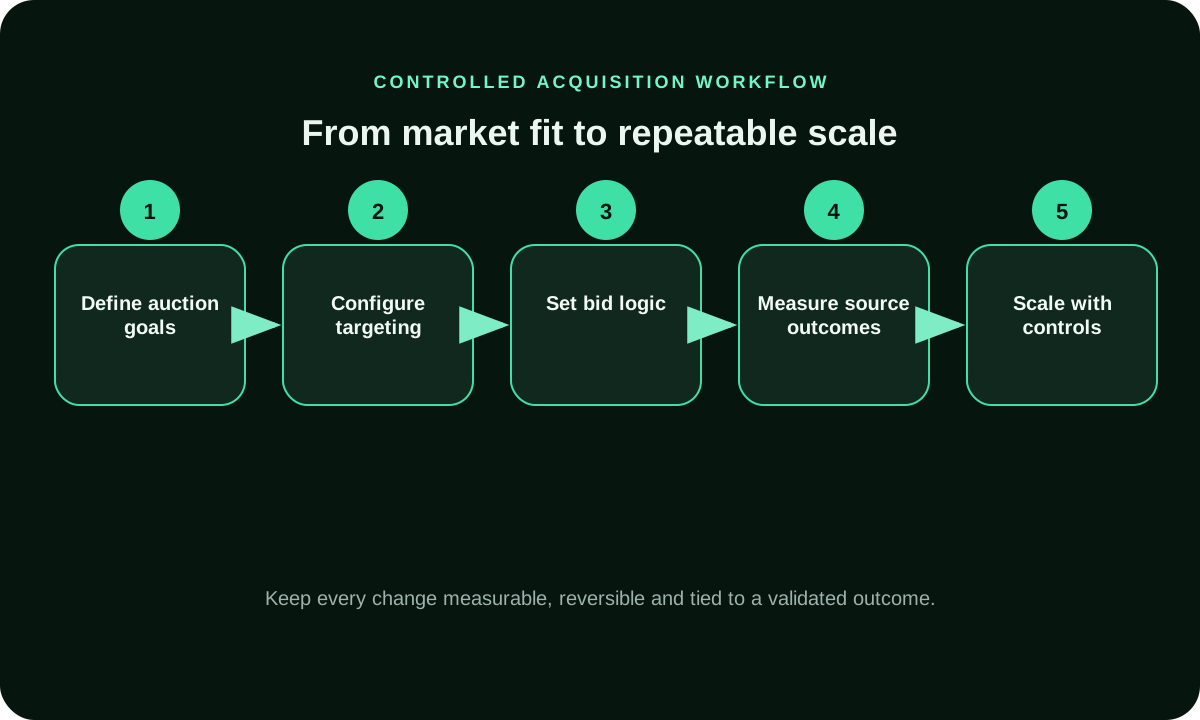
Work through the transaction terms, audience eligibility, destination and reporting before launch. Save the starting settings so later changes have a clear reference. Once delivery begins, inspect whether the campaign is buying the intended opportunities and whether visits reach the intended page. Give customer outcomes their agreed follow-up period, then choose a specific change rather than adjusting every control together.
Launch sequence
Use targeting to remove real mismatches
Start with restrictions your offer genuinely requires. A product that cannot ship to a country should not buy visitors there; a destination that fails on a device should be repaired or excluded. FroggyAds offers GEO, device, operating system, browser and source controls, with additional options where available. Every optional restriction reduces the eligible pool, so ask what useful distinction it adds before narrowing further.
Targeting
Match the placement to a credible invitation
A short native headline and a display banner give the visitor different amounts of context. Prepare the message for the chosen format and make the destination fulfill that invitation. Keep price conditions, eligibility and the next action easy to find. If delivery is healthy but visitors immediately reject the page, inspect this promise-to-destination connection before assuming that a higher bid will solve the problem.
Choose the visitor experience
Put the offer into the right FroggyAds format
Our Push, Native, Display and Pop options let you choose how a visitor encounters the offer. Start with a format you can explain and support well. Compare later formats as separate purchases with their own costs and responses; a low quoted rate does not establish that two formats deliver equivalent opportunities.
Source transparency helps a buyer locate differences hidden inside a campaign average. A source identifier gives you a reporting reference for spend and outcomes. It does not automatically reveal the entire seller chain or every placement detail. Establish what each available identifier represents, whether it remains stable, and which campaign control can act on it.
Use source IDs consistently when comparing delivery and accepted customer actions. If one source performs differently, check whether its audience, device mix or maturity also differs. A weak aggregate result can conceal a workable route, while a strong aggregate can conceal a source that deserves closer attention.
Our source-level reporting and whitelist or blacklist controls give you a way to act on those findings. Whitelisting narrows delivery to chosen sources; blacklisting excludes selected sources. Keep the reason for a change with its date so you can judge later whether the decision improved the purchase. Do not equate an identifier with proof of every upstream seller.
Source reporting
Read bid, price and delivery as different signals
A bid expresses a buying instruction or limit under the campaign settings; the reported price describes charged delivery. If volume is low, inspect eligibility, creative status, budget and available supply before raising a bid. A stronger bid may open additional opportunities, but those opportunities can have different economics. Compare the cost of the added delivery with its mature outcomes rather than judging the change only by total volume.
Price and delivery
Expand the purchase in a way you can evaluate
Choose the reason for expansion first. Raising a budget tests whether more eligible delivery is useful; adding a market tests a different customer context. Keep those questions separate where practical. Record the time and settings of the change, then allow the new cohort to mature. A profitable earlier period does not establish that the next increment will perform the same way.
Expansion
Investigate delivery gaps before changing the bid
An active campaign can deliver little because its audience is too narrow, the selected inventory is scarce or the creative is not ready. Healthy delivery with missing analytics visits suggests a different investigation: redirects, page availability, event collection and counting definitions. Start with the broken handoff. Changing price to compensate for an unverified tracking problem can spend more without making the result easier to interpret.
Choose the next useful change
Use FroggyAds controls to act on what you learn
Once you can trace spend to a useful result, make the smallest change that answers the next question. Refine an available targeting setting, adjust a bid or change the source set. Keep the previous configuration recorded. Our self-serve controls give you practical ways to respond while your business records establish whether the response improved customer value.
Why choose FroggyAds for a self-serve acquisition test?
FroggyAds brings campaign formats, targeting, bids, budgets and source-level reporting into a self-serve buying workflow. That is useful when you want direct control over an initial visitor-acquisition campaign and a clear way to refine it. Our official platform information describes 750+ SSP integrations and more than 20 billion daily impressions across the network. These network-wide figures do not specify the inventory eligible for your exact campaign.
FroggyAds controls
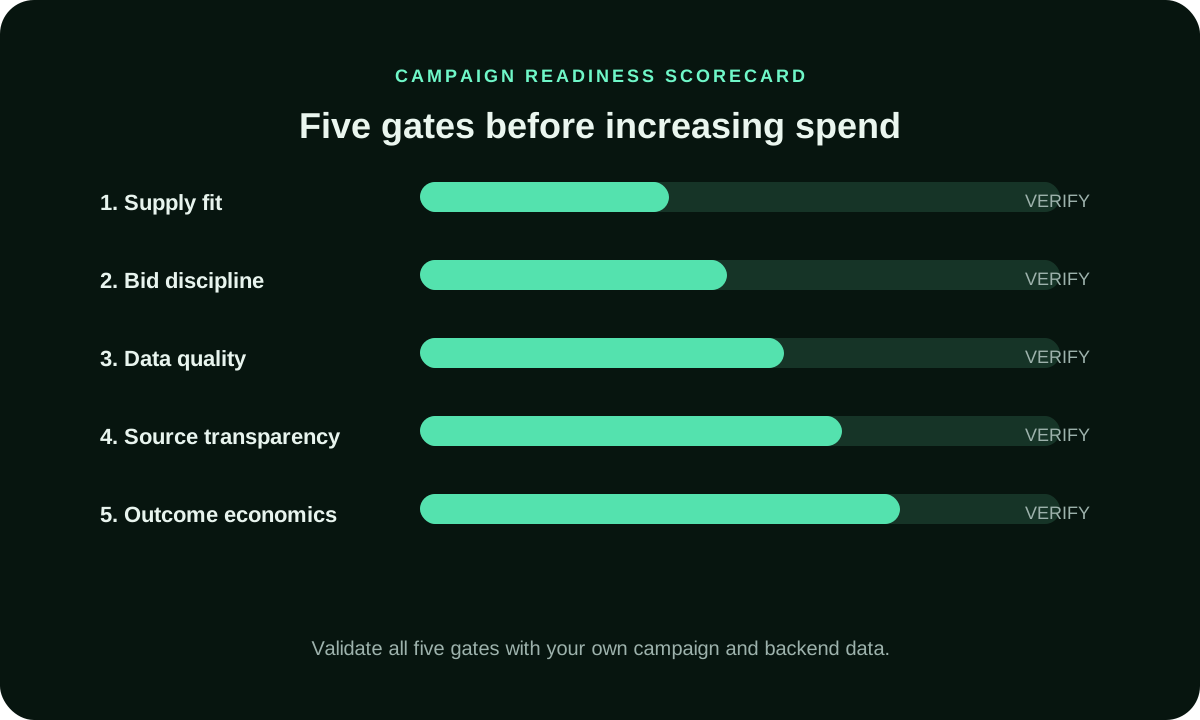
What should be ready before you fund delivery?
Use this checklist before committing budget. Each item answers a different readiness question; a strong offer does not compensate for a broken destination or an unexplained charge.
Offer: truthful creative, a working destination and a customer action your business can confirm.
Delivery: a supported audience, an available format and a clear chargeable event.
Measurement: tested identifiers, agreed outcome validation and a known reporting delay.
Spending: an affordable learning limit and explicit terms for any commitment you require.
Is all programmatic advertising real-time bidding?
No. Real-time bidding is an auction mechanism within programmatic advertising. Automated direct arrangements can use agreed terms instead. Ask which transaction method applies, whether inventory is reserved and what price or delivery conditions govern the purchase. Do not infer those terms from the category name alone.
What is the difference between a DSP, an SSP and an exchange?
A DSP serves the advertiser side of buying; an SSP serves the publisher side of selling inventory. An exchange connects buying and selling opportunities. A business may perform more than one role. For your campaign, identify who controls the bid, records the charge and supplies the reporting you can use.
What should a first programmatic campaign test?
Choose one change that answers a real uncertainty, such as whether a particular device route works or whether an offer fits a source group. If you change the audience, creative and destination together, you can evaluate the combined campaign but cannot confidently assign the difference to any one element.
What do programmatic standards prove?
They establish what participating systems mean by requests, responses and related fields. OpenRTB is useful technical context for understanding automated transactions. It does not certify the quality of an individual campaign or prove that a provider exposes every field to buyers. Confirm the actual account capabilities separately.
How narrow should campaign targeting be?
Match the purchase to the people your business can serve and the action they can reasonably take. Apply necessary location and device restrictions first. Then evaluate whether further narrowing improves the buying question. A more specific audience label is useful only when its meaning and availability are clear.
How should I compare programmatic prices?
Read the rate unit and the charged event together. CPM is a cost per thousand impressions; CPC is a cost per click. Also account for any separately agreed charges and your own production or tracking costs. The cheapest delivery rate may still produce the highest cost per accepted customer action.
Which reporting should I use to judge results?
Use delivery reporting to understand what the platform counted and your own business records to validate outcomes. Analytics sessions, ad clicks and confirmed purchases measure different things. Compare identifiers, timing and definitions before treating a discrepancy as a fault. Keep unresolved differences visible when deciding whether to continue.
When should I pause a programmatic campaign?
Pause expansion when a required delivery condition fails, the destination breaks or tracking cannot support the decision. Investigate persistent rejected outcomes as well. An isolated missing conversion is not enough to diagnose every source; consider outcome delay and the amount of relevant evidence before excluding inventory.
How much data does a buying decision need?
There is no universal number of clicks, conversions or review cycles that settles every campaign. Define the decision and the evidence needed before launch, taking account of outcome frequency and delay. If the available budget cannot resolve it, reduce the number of competing questions or use the test to check feasibility first.
How should I increase programmatic spend?
Increase spend only after the current configuration has produced useful, mature evidence within your limits. Follow the added spend as a separate period or cohort where possible. If quality or economics changes, investigate before expanding again. FroggyAds gives you adjustable budgets and bids; your results guide how to use them.
Use FroggyAds when you want a self-serve way to put a defined offer in front of an eligible audience. Set the format, targeting and spending limits around one question, then use source-level reporting and confirmed outcomes to guide the next purchase. Start with a campaign you can understand well enough to improve.
Direct answer: An auction asks eligible buyers to compete for an opportunity. An automated direct arrangement follows negotiated terms. A guaranteed arrangement reserves an agreed commitment; a preferred arrangement does not necessarily reserve volume. Confirm the exact agreement because automation alone says little about price, availability or the obligations of either party.
Before comparing offers: Ask whether the inventory is reserved, which pricing unit applies, who approves the creative and what happens if delivery differs from the agreement. These answers make two proposals comparable.
Identify the chargeable event
Start with the event the buying agreement actually charges for. An auction opportunity, submitted bid, won opportunity and reported impression are different stages. Do not treat every stage as a billable impression. Confirm the format-specific billing definition and use the same period and currency when checking the charge against reporting.
Know who can answer each question
Ask the buying platform about campaign settings and reported spend. Ask the seller or relevant intermediary about the inventory relationship when that detail is available. Your own team owns the destination and customer records. A simple responsibility map prevents a tracking issue from being passed between parties who each see only part of the journey.
Choose the outcome before the optimization signal
Choose a primary measure that reflects the customer action your business will accept. A purchase may need cancellation review; an enquiry may need a fit check. Keep delivery measures available to diagnose the route, but do not silently replace the original business measure with a click rate that happens to improve.
Keep the first purchase adjustable
Limit the first campaign to a useful buying question and a manageable financial exposure. Save the creative, destination and campaign settings before changing them. A repeatable baseline makes a later result interpretable: you can explain which choice changed, when it changed and which customers were exposed to the new configuration.
Buying layer
Question to settle
What the answer changes
Transaction
Which event is charged, at what unit, under which auction or agreed terms?
Sets the meaning of the bid, reported cost and any delivery commitment.
Eligibility
Which locations, devices, formats and sources can this offer actually support?
Removes impossible purchases before optional audience refinements.
Reporting
Which identifiers join campaign delivery to destination and outcome records?
Shows what you can compare and which gaps still need investigation.
Economics
What accepted action matters, when does it mature and what cost is sustainable?
Prevents a cheap intermediate event from becoming the final buying objective.
Control
Which settings can you change, and how will you assess the added spend?
Makes a bid, budget or source adjustment an answerable next question.
Eight steps from transaction terms to a buying decision
State the campaign outcome and how your business confirms it.
Check the transaction method, chargeable event, currency and any commitments.
Identify who controls buying, inventory access, reporting and the destination.
Verify the creative, destination and one complete tracking route.
Configure an eligible audience and an affordable initial spending limit.
Inspect delivery and source reporting before making a price adjustment.
Allow the defined customer outcomes to mature and reconcile rejected or repeated records.
Decide whether to continue, change one buying condition or stop the next increment.
Write a stop condition you can actually observe
A stop condition should identify a specific loss of control. Examples include a broken destination, spending beyond the agreed limit or outcome records that cannot be joined reliably. Name who checks the condition and who can pause delivery. Repeatedly rejected customer actions may also justify stopping a source, but explain the evidence instead of treating every early zero as failure.
Do not confuse standards with available features
The key distinction is what the industry protocol can express versus what your chosen account can buy and report. A specification may describe deals or advanced fields that are irrelevant to the available campaign. Ask about your actual requirement. This guide does not establish that FroggyAds offers every transaction type described in the industry references.
Keep the promise specific to the purchase
A useful buying promise states a format, delivery condition or controllable action that can be checked. It does not turn automation into a guarantee of sales, profit or a fixed acquisition cost. We recommend setting a clear destination and customer objective, then using the campaign evidence to decide whether the purchase deserves more budget.
If you are starting with terminology, What Is Programmatic Advertising provides the related introductory topic. Here, use the definitions to compare an actual purchase: what you can access, what the price measures, what reporting reveals and which decision you can change. Bring the requirement to FroggyAds so your first campaign tests a commercial question rather than the appeal of an industry label.
Consider a buyer who needs visitors for a web offer but does not need a negotiated placement reservation. Self-serve campaign controls may be the practical starting point. A buyer who needs an exact reserved commitment must establish those terms separately. This distinction keeps the platform conversation focused on the purchase you need, without assuming that every automated route offers the same agreement.
Requirement
What to ask before launch
How to use the answer
Fit
Can the available format and targeting reach people who can use the offer?
Exclude unsupported customer routes before allocating the first campaign budget.
Visibility
Can spend and customer outcomes be examined at the useful reporting level?
Keep a list of what is known, what can be joined and what remains uncertain.
Next purchase
Which campaign change would answer the most useful remaining question?
Use the observed result to adjust a defined buying choice rather than every setting.
Hypothetical calculation: a campaign spends USD 275 and produces 8 accepted conversions after the agreed review period. Accepted CPA is USD 275 / 8 = USD 34.38, rounded to cents. This excludes production and other costs. The figures illustrate accounting, not a FroggyAds result, benchmark or prediction. Check whether those eight outcomes remain accepted before using the rate to plan more spend.
Choose FroggyAds for a self-serve acquisition campaign you can shape through format, targeting, budget and source decisions. Prepare the offer and tracking, then use our controls to make the next purchase more informed. Create your free FroggyAds account
Direct answer
Make the buying terms clear first
Clarify the chargeable event, delivery conditions and reporting before comparing rates. Then buy traffic to answer a specific commercial question.
Programmatic advertising automates a purchase; your brief gives that purchase a purpose. Identify the transaction, the useful reporting and the customer action before comparing delivery rates. FroggyAds is a practical next step when you want direct campaign control and a measured way to learn which visitors fit your offer.
Turn Programmatic Advertising into a controlled FroggyAds decision
Programmatic advertising works best when automated delivery follows a buyer-authored brief. Use FroggyAds to set a measurable campaign objective, monitor traffic quality and make bounded changes instead of surrendering the decision to automation.
Keep the first test narrow enough to diagnose, but large enough for the chosen outcome and observation window to produce useful evidence.