What does SmartCPC mean across different advertising network products?
SmartCPC commonly describes automated cost-per-click adjustment, but providers may use different signals, limits and objectives. Buyers should request the exact calculation, eligible inventory and account controls before comparing offers.
Which optimisation objective should guide a SmartCPC network test?
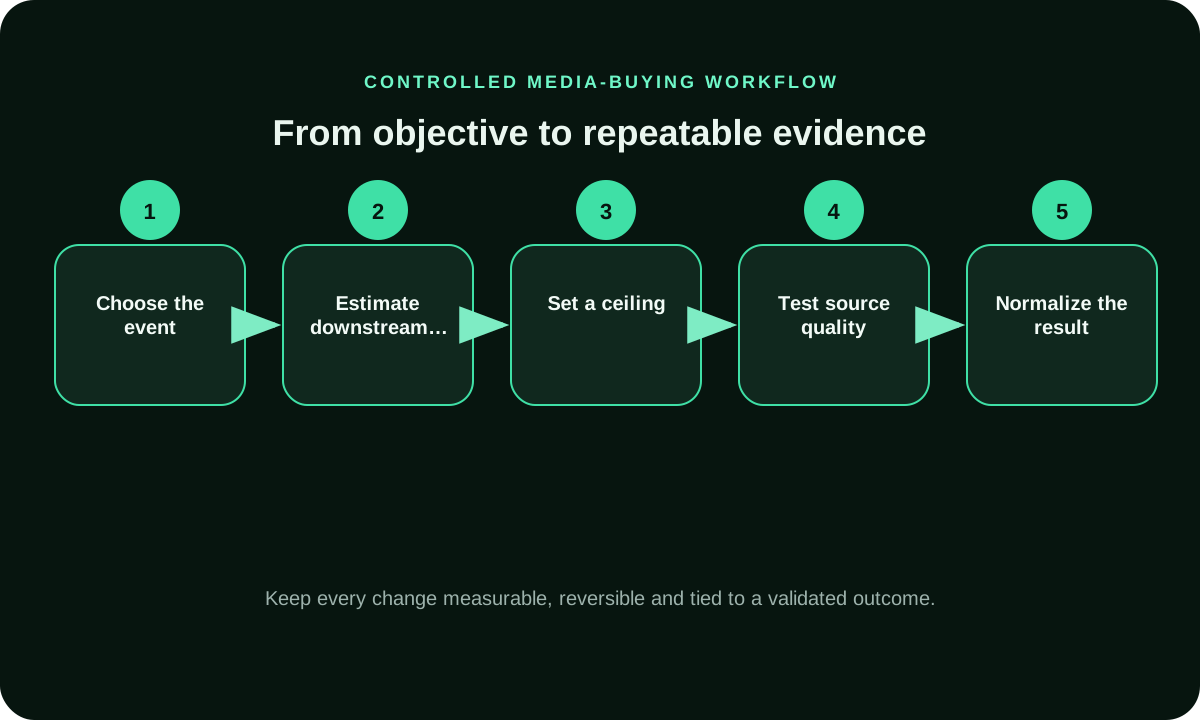
The objective should connect bidding with a verified event and accepted business outcome, not merely cheaper clicks. Weak event definitions can teach automation to pursue activity that produces little customer benefit or worthwhile return.
What inventory evidence reveals where automated SmartCPC advertisements appear?
Placement or publisher detail, format, device, geography, exclusions, reporting and verification access should be examined. Automated bidding does not remove the need to understand where advertisements appear and who encounters them.
What data inputs affect the reliability of SmartCPC optimisation?
Conversion accuracy, value, attribution window, consent, duplicate handling, cancellations, delay and traffic volume can all affect learning. Incomplete or unstable inputs may produce confident automation around the wrong signal.
Which account controls limit risk in SmartCPC ad networks?
Bid boundaries, daily exposure, placement exclusions, geography, device, conversion settings, learning period and stop conditions can constrain risk. Advertisers should confirm which controls automation can override or ignore.
Why compare realised click costs instead of advertised SmartCPC rates?
Actual cost can vary by auction, inventory, targeting, fees, timing and optimisation decisions. A headline rate is a planning input, while reconciled spend and accepted outcomes determine whether delivery was economical.
How is traffic quality monitored while SmartCPC bids change automatically?
Placement, device, geography, timing, invalid activity, engagement pattern, lead status and accepted value should remain visible during learning. Better average cost cannot justify deterioration in source quality or customer fit.
Which conditions make an initial SmartCPC network experiment clearly interpretable?
One stable objective, verified tracking, bounded inventory, controlled creative, fixed destination, review timing and a pre-agreed decision rule keep the experiment readable. Frequent manual changes can reset or obscure learning.
When should SmartCPC platform outcomes be reconciled with business records?
Reconciliation should occur throughout the test and again after relevant cancellations or cohort maturity. Differences in identifiers, attribution and value need explanation before the automated result is used for scaling.
Which record enables fair comparison between competing SmartCPC networks?
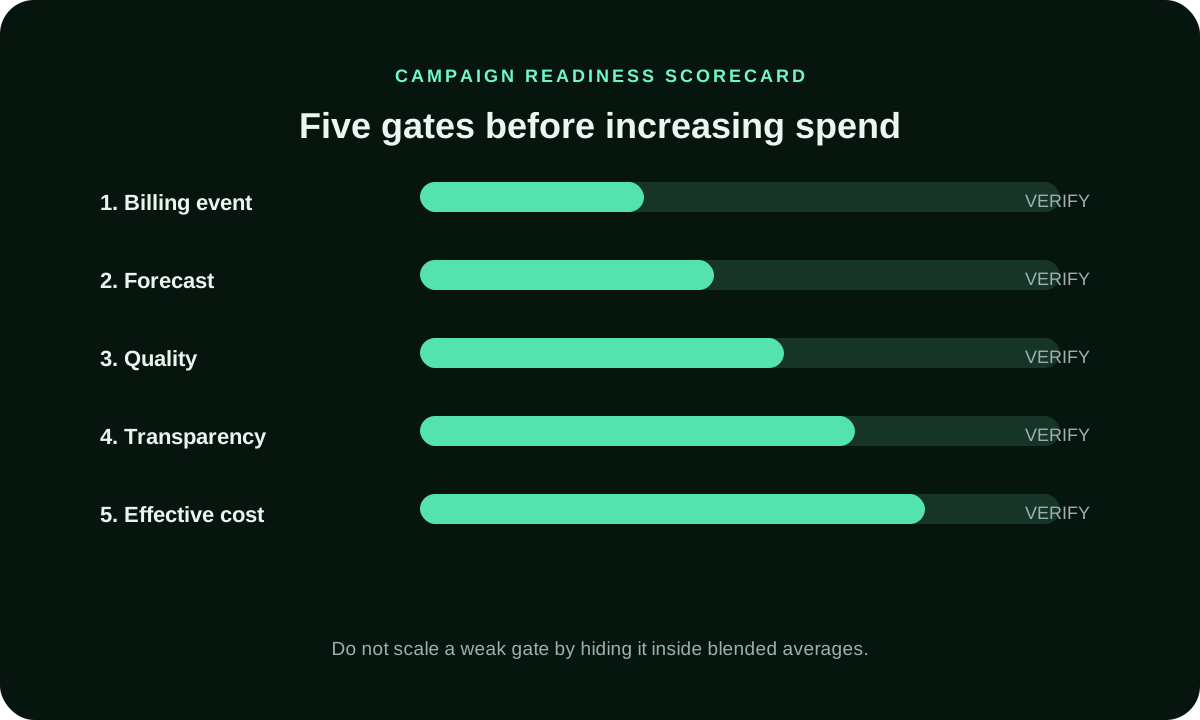
A comparison record can align inventory, objective, controls, fees, attribution, accepted outcomes, data maturity, support and risks. Networks should not be ranked on click price when their underlying delivery differs materially.