
Programmatic Ad Buying
Understand programmatic ad buying, auction mechanics, supply access, targeting, bid controls, attribution and source-level optimization.
What Programmatic Ad Buying Means for an Advertiser
Programmatic Ad Buying is a paid-acquisition concept used to use automated auction-based media buying with transparent targeting, bidding, source controls and outcome measurement. The useful result is a programmatic buying process that connects auction decisions to validated acquisition economics. Before launch, define the visitor or advertising objective, the accepted-value event and the maximum loss the test can absorb. This protects the budget from assuming automation replaces strategy, attribution, creative quality or source-level oversight.
FroggyAds provides self-serve access to broad inventory, targeting and source controls, while the advertiser remains responsible for the offer, creative, destination, tracking and commercial decision. The direct answer is practical: use programmatic ad buying only when delivery can be connected to a measurable business outcome. Judge performance by validated acquisition value and marginal cost by source and segment. Visits, clicks and impressions are diagnostic signals, not final proof of commercial value.
For Programmatic Ad Buying, keep this decision visible in the campaign change log.
Build Audience and Offer Fit First
A campaign should begin with a fit check between the offer, audience and destination. For Programmatic Ad Buying, document who can use the product, where it is available, supported devices, language, pricing and the action expected after the click. Confirm policy restrictions, fulfillment and customer-support capacity. Real-time bidding can automate impression decisions, but the buyer still needs a value model, tracking and rules for excluding or scaling sources. This preparation makes media analysis more honest because a weak offer or landing experience cannot be repaired by buying more traffic. Keep the first test narrow enough to diagnose but broad enough to collect useful evidence. The central planning lens is auction mechanics, bid control, supply access, attribution and source-level optimization. Each major segment should have a hypothesis, owner and measurable stop rule. For Programmatic Ad Buying, assign an owner and a review date to this control.
Define Qualified Traffic or Advertising Value
Define what qualified means before spending on programmatic ad buying. A qualified visit may require a supported GEO, relevant device, minimum engagement, completed form, accepted lead, purchase or later customer activation. Separate provisional events from accepted outcomes. A click can be valid yet commercially weak, while a smaller source can deliver more valuable customers. The primary metric is validated acquisition value and marginal cost by source and segment, supported by conversion rate, rejection rate, time-to-conversion and downstream value. Keep this definition stable during the first test. Changing the success event after data arrives makes source comparison unreliable and encourages optimization toward whichever number looks most favorable. For Programmatic Ad Buying, compare the result with the same accepted-outcome definition.
Create a Trustworthy Measurement Model
Pass a unique click identifier, preserve campaign and source parameters, and return validated conversions through a server-to-server postback or another reliable integration where available. Align attribution windows and time zones across the buying platform, tracker, analytics property and advertiser backend. Review discrepancies on a fixed cadence matched to the conversion delay and operational risk without reacting to each isolated conversion. For Programmatic Ad Buying, use a live click-to-conversion test before meaningful spend. Record which system is authoritative when events disagree. The measurement stack should explain acquisition value, not merely confirm that traffic was delivered. For Programmatic Ad Buying, preserve the source identifiers needed to test this conclusion.
Connect the guide to live testing
Connect Programmatic Ad Buying to a controlled audience test
Use the choices established in “Create a Trustworthy Measurement Model” to define one audience, budget and source set in FroggyAds. Keep the surrounding offer and measurement rule stable so the test adds evidence to programmatic ad buying instead of mixing several changes at once.
Create My Free Account
Forecast Budget, Bid and Test Exposure
Start with the value of an accepted outcome. Subtract product, fulfillment, payment, support and variable operating costs, then set a conservative maximum acquisition cost. Translate that ceiling into a CPC or CPM range using a cautious conversion-rate assumption. A useful programmatic ad buying budget must collect enough observations to compare sources without exposing the account to unlimited loss. A practical first review point can be around 28 meaningful conversion opportunities, adjusted for payout, variance and delay. The objective is not to buy the cheapest traffic. It is to buy enough measurable exposure to decide whether the economics can repeat. For Programmatic Ad Buying, do not expand the budget until this condition has mature data.
A Five-Step Workflow for Programmatic Ad Buying
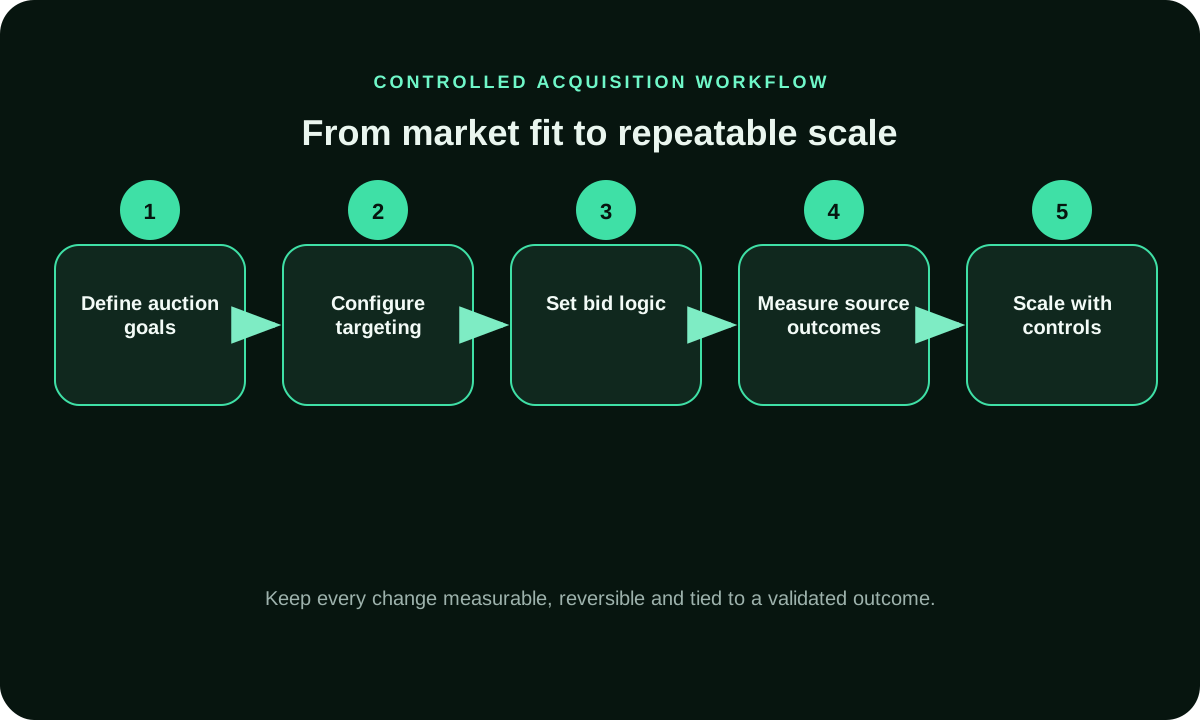
Use five connected decisions: Define auction goals, Configure targeting, Set bid logic, Measure source outcomes, Scale with controls. First, confirm the objective and eligible audience. Second, prepare truthful creative and a fast destination. Third, launch with tracking and separate reporting for major segment differences. Fourth, let data mature across sources and time periods. Fifth, scale only combinations that remain inside the acquisition ceiling. Hold major settings stable for at least 5 review cycles when volume allows. This sequence prevents premature optimization from removing viable inventory and prevents early conversion noise from triggering a large budget increase. For Programmatic Ad Buying, store the supporting export with the campaign documentation.
Segment Programmatic Ad Buying Without Losing Reach
Segmentation should explain performance rather than simply make a campaign look precise. Begin with required restrictions such as supported GEOs, languages, device compatibility and offer rules. Add category, device, operating system, carrier, browser or source controls when they support the user experience or a testable hypothesis. Keep optional targeting broader until enough accepted results exist to compare. For programmatic ad buying, compare segments under the same conversion definition and avoid changing bids, creative and landing page simultaneously. Broad inventory can contain profitable pockets that become visible only when source identifiers are preserved. For Programmatic Ad Buying, separate this variable from creative and landing-page changes.
Choose the execution format
Choose a paid-media format that supports Programmatic Ad Buying
Use the criteria around “Segment Programmatic Ad Buying Without Losing Reach” to decide whether push, native, display or pop fits the message and destination. Set format, targeting and spend as campaign controls in FroggyAds while the programmatic ad buying decision remains the standard for judging the result.
Create My Free Account
Creative and Destination Continuity
The ad and destination should tell one truthful story. Use a headline that describes a real benefit or next step, a visual that supports the message and a first screen that confirms what the user clicked. Avoid fake system alerts, unsupported performance claims, misleading scarcity and interface elements that imitate device controls. Test the destination on represented devices and network conditions. Page speed is part of media performance because delay creates paid abandonment. For Programmatic Ad Buying, use one primary call to action and remove distractions that do not support the intended conversion. For Programmatic Ad Buying, use backend validation before treating the signal as profitable.
Validate Source-Level Quality
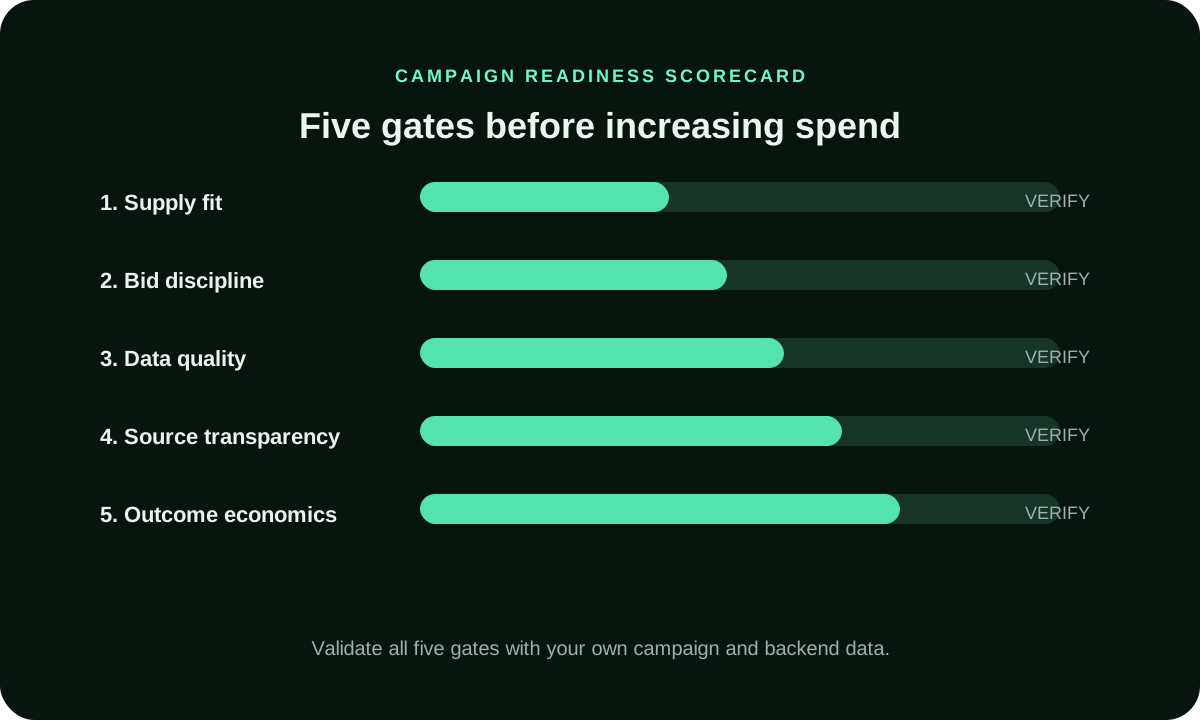
Preserve publisher, placement or source identifiers so programmatic ad buying can be optimized where performance differences occur. Classify sources by spend, sample maturity, accepted conversion quality and economic result. A source with no conversions may need more data when the expected rate is low, while a source repeatedly generating rejected outcomes can be stopped earlier. Use blacklists for proven waste, whitelists for repeatable supply and bid adjustments for viable sources at a different price. The readiness scorecard below uses Supply fit, Bid discipline, Data quality, Source transparency, Outcome economics. Passing one gate does not compensate for failure in another. For Programmatic Ad Buying, review the finding again after the next meaningful volume step.
Put the guide into practice
Turn Programmatic Ad Buying into a bounded campaign test
With “Validate Source-Level Quality” documented, launch only the next reversible test. Set a spending limit, preserve the baseline and use source-level and audience controls so the next step depends on qualified outcomes for programmatic ad buying, not activity volume.
Create My Free Account
Interpret Price, Volume and Quality Together
Headline price should never be evaluated alone. A lower CPC or CPM can become more expensive when engagement, accepted conversion rate or backend value falls. High volume is useful only when attribution works and the business can process the outcomes. Low volume can appear efficient because a few conversions dominate the average. For Programmatic Ad Buying, compare reach, win rate, click cost, conversion delay, accepted action rate and downstream value over multiple periods. Programmatic buying improves execution speed; it does not guarantee efficient media or remove the need for human review. This is why source exports, backend validation and change logs are essential. For Programmatic Ad Buying, keep the stop rule active while this hypothesis is being tested.
Scale Programmatic Ad Buying in Measured Increments
Scaling should increase useful volume without assuming the original efficiency will remain unchanged. Raise bids or daily caps in measured steps, and let each increase collect mature data. Expansion can also come from additional GEOs, devices, formats or source whitelists, but every expansion needs a separate reporting view. Watch marginal performance rather than the blended account average. Stop scaling when accepted acquisition cost moves outside the planned range, quality deteriorates, the destination slows or operational capacity becomes constrained. For Programmatic Ad Buying, document the evidence that supports any whitelist or exclusion.
Common Failure Modes to Avoid
The common failures are incomplete tracking, weak message continuity, budgets divided across too many small campaigns, sources blocked before a useful sample, or optimization to CTR and visits while the backend result is the true objective. Another failure is accepting labels such as real, human, quality, instant or cheap as guaranteed evidence. For programmatic ad buying, require data for every exclusion, bid increase and scale decision. Keep exports, screenshots and a dated change log. These records make declines easier to diagnose and prevent the same failed test from being repeated under a new campaign name. For Programmatic Ad Buying, reconcile platform, tracker and backend data before deciding.
How FroggyAds Supports Programmatic Ad Buying
FroggyAds is a self-serve media buying platform for advertisers, affiliates and performance teams. It provides access to 750+ SSP integrations and more than 20 billion daily impressions across supported formats and markets. Buyers can use GEO, city, device, operating system, browser, carrier, category, source, ID and IP controls where available, together with budgets and reporting. Those tools support auction mechanics, bid control, supply access, attribution and source-level optimization, but they do not replace truthful creative, offer compliance, reliable attribution or backend validation. Begin with a controlled budget, inspect source-level outcomes and expand only when the campaign produces commercially useful results. For Programmatic Ad Buying, repeat the check after scaling to confirm the result remains stable.
Final Buyer Checklist for Programmatic Ad Buying
Before launch, confirm audience eligibility, accepted outcome value, live tracking, destination speed, message continuity and a documented loss limit. During the test, review source quality, conversion delay, rejected outcomes and effective acquisition cost. Afterward, document winning and losing hypotheses, exact settings and changed assumptions. Programmatic Ad Buying becomes strategically useful when another buyer can repeat the decision process from the same evidence. No page, platform or traffic label can guarantee profit, rankings, installs, sales, leads or visitor quality.
Supporting controls for Programmatic Ad Buying
Programmatic Ad Buying FAQ
Which business outcome anchors a responsible programmatic advertising buy?
A validated customer action, economic threshold, serviceable audience and accountable owner create purpose. Automated impression delivery does not define business value by itself. The media plan states the accepted result.
What supply-path details matter before programmatic media is purchased?
Publisher or application, exchange, reseller, placement, format, device and geography explain how inventory reaches the buyer. Missing links weaken transparency and control Supply records preserve each intermediary relationship.
How does auction structure affect programmatic advertising cost interpretation?
Bid type, floor, fees, competition, deal terms and clearing method influence price. A low CPM may reflect different supply or attention conditions Auction notes explain the selected buying route.
Which audience data questions belong in responsible programmatic buying decisions?
Source, purpose, permission, freshness, coverage, exclusions and responsible parties require review. A purchasable segment does not automatically establish appropriate data use Review decisions remain attached to each segment.
Where are brand suitability controls applied during programmatic advertising buys?
Publisher lists, content categories, page context, keywords, geography and exception processes define acceptable supply. Controls need delivery reports to confirm actual application Exception logs identify every approved deviation.
How is invalid programmatic activity investigated without relying on one signal?
Supply records, timing, device patterns, viewability, server events, customer validation and deductions support diagnosis. No detector removes every uncertainty Investigation records preserve competing explanations.
Which controls limit spending during a first programmatic test?
Approved campaign spend, active dates, supply caps, frequency, bid limits, quality thresholds and pause conditions contain exposure. Named buyers monitor every approved threshold Review dates remain visible.
Which records make a programmatic media purchase commercially auditable?
Supply path, placement, creative, audience, cost, adjustments, validated outcome and attribution connect delivery with decisions. Aggregated totals should not erase source detail Auditors can reproduce the supply decision.
Who reviews fees and data responsibilities in programmatic contracts?
Named procurement, media, privacy and qualified legal owners review their relevant terms. Written agreements should identify intermediaries, access, retention, disputes and account closure Contract versions preserve the active obligations.
When may programmatic advertising receive additional measured campaign budget?
Expansion follows transparent supply, suitable contexts, functional destinations, accepted customer economics and stable validation. Newly introduced paths keep independent limits during assessment. Expansion records identify every new supply path.
Continue the acquisition workflow
Build a controlled programmatic ad buying test
For Programmatic Ad Buying, define one accepted business outcome, verify conversion tracking, protect the learning budget and make source-level keep, cap, exclude or retest decisions only after the data has matured. Results still depend on offer fit, GEO, creative, landing path, competition and optimization.
Programmatic Ad Buying: what should the advertiser decide next?
For Programmatic Ad Buying, the commercial task is to turn programmatic ad buying into one measurable campaign decision. Use What Programmatic Ad Buying Means for an Advertiser to define the audience or problem, use Build Audience and Offer Fit First to constrain the test, and decide in advance which accepted result would justify more FroggyAds spend.
On this Programmatic Ad Buying page, the decision should remain tied to the existing evidence around What Programmatic Ad Buying Means for an Advertiser, Build Audience and Offer Fit First and Define Qualified Traffic or Advertising Value. Those sections give programmatic ad buying its specific context; the table below turns that context into campaign actions rather than adding another generic definition.
| Decision | What to verify | FroggyAds action |
|---|---|---|
| Programmatic Ad Buying objective | Use What Programmatic Ad Buying Means for an Advertiser to define the accepted business event and the maximum learning loss for programmatic ad buying. | Launch one FroggyAds campaign objective for Programmatic Ad Buying and keep the conversion definition stable. |
| Programmatic Ad Buying audience | Use Build Audience and Offer Fit First to verify market, device, language and offer eligibility for programmatic ad buying. | Apply only the FroggyAds targeting controls that change the real Programmatic Ad Buying customer journey. |
| Programmatic Ad Buying source evidence | Use Define Qualified Traffic or Advertising Value to keep source-level differences visible instead of relying on one blended programmatic ad buying average. | Keep, cap, exclude or retest Programmatic Ad Buying inventory from documented source evidence. |
| Programmatic Ad Buying economics | Use Create a Trustworthy Measurement Model to connect media spend with accepted conversions and downstream value for programmatic ad buying. | Protect the Programmatic Ad Buying test with a written budget boundary and a consistent attribution window. |
| Programmatic Ad Buying scale rule | Use Connect Programmatic Ad Buying to a controlled audience test to define the exact evidence that earns the next budget increase for programmatic ad buying. | Scale Programmatic Ad Buying one major control at a time and compare marginal performance with the prior baseline. |
A page-specific FroggyAds test sequence for Programmatic Ad Buying
- Programmatic Ad Buying outcome: define the accepted event for programmatic ad buying and the maximum loss permitted while the first test is learning.
- Programmatic Ad Buying path: verify market eligibility, device experience, landing-page continuity and tracking against What Programmatic Ad Buying Means for an Advertiser before buying more traffic.
- Programmatic Ad Buying hypothesis: launch one bounded FroggyAds test tied to Build Audience and Offer Fit First; do not change bid, creative, audience and destination together.
- Programmatic Ad Buying source review: compare qualified activity, accepted conversions, timing and cost by the source or segment dimensions relevant to Define Qualified Traffic or Advertising Value.
- Programmatic Ad Buying scaling: use Create a Trustworthy Measurement Model and Connect Programmatic Ad Buying to a controlled audience test to define what must reproduce before the next budget increase.
Why FroggyAds is relevant to Programmatic Ad Buying
For Programmatic Ad Buying, FroggyAds gives advertisers a self-serve DSP and ad-network workflow for buying supported traffic with campaign-level budgets and targeting. Depending on format and campaign context, available controls can include country, city, device, operating system, browser, carrier, category, source, ID and IP options. SmartCPC and Adscore-supported traffic-quality controls can support the programmatic ad buying optimization process, while the advertiser's tracker, analytics and backend acceptance remain the final evidence for commercial quality.
Use Connect Programmatic Ad Buying to a controlled audience test as the final checkpoint for Programmatic Ad Buying. If the accepted result does not reproduce after the next meaningful volume step, return to the last stable configuration instead of widening several controls at once.
Programmatic Ad Buying: the buyer task this URL owns
Use Programmatic Ad Buying when the immediate task is to make a measurable paid-acquisition decision. For performance-focused advertisers, the useful output is a documented media decision rather than another broad advertising overview. The nearest related FroggyAds page is Programmatic Buying Platform; this URL keeps ownership of the distinct task to make a measurable paid-acquisition decision.
Keep demand-side platform, supply-side platform, ad exchange, bid strategy in the Programmatic Ad Buying evidence record because they can change how this media test is configured, measured or scaled.
| Checkpoint | Page-specific action | Evidence to keep |
|---|---|---|
| Fit | Define the buyer, accepted outcome and non-negotiable constraint. | Retain evidence specific to Programmatic Ad Buying and its accepted outcome. |
| Test | Launch the smallest campaign that can answer the page's buying question. | Retain evidence specific to Programmatic Ad Buying and its accepted outcome. |
| Decision | Keep, cap, exclude or expand from accepted-outcome evidence. | Retain evidence specific to Programmatic Ad Buying and its accepted outcome. |
Hypothetical calculation: if a controlled campaign for programmatic ad buying spends USD 200 and produces 8 accepted conversions, accepted CPA is USD 200 / 8 = USD 25.0. Replace the inputs with your own campaign economics; this is not a FroggyAds performance claim.
Choose FroggyAds when Programmatic Ad Buying calls for a controlled paid-media test. We let performance-focused advertisers apply relevant format, targeting and budget controls, keep source-level evidence visible, and measure the accepted outcome before increasing spend. Create your free FroggyAds account.
Programmatic Ad Buying — what matters first
Programmatic Ad Buying is most useful when it helps a buyer decide whether this option fits the buyer's acquisition workflow. Define the accepted outcome first, then use targeting, budget and source-level evidence to decide what deserves more spend.