
Cross-device targeting reach users across screens
Reach your audience across mobile and desktop, matching format and message to each device.
Cross-device targeting reach users across screens at a glance
What does this page explain about Cross Device Targeting?
Quick answer: Reach your audience across mobile and desktop, matching format and message to each device. Cross-device targeting helps you reach your audience wherever they are, while tailoring format and message to the device. Track conversions with S2S postbacks, read performance by device and source ID, and use SmartCPC as one bid-optimization input based on available campaign signals toward the device and source combinations that deliver your target cost per action. Cross-device targeting lets you align format and message with where users are. Use cases include prospecting on mobile and retargeting on desktop, running device-specific creative, and aligning bids with how each device converts for your offer.
| Section | Distinct excerpt from this page |
|---|---|
| Overview | On FroggyAds, you target by device, OS and browser, then combine with GEO, category and source controls for precision. |
| Match device to intent | SmartCPC can adjust bids from available campaign signals toward the device and source segments that deliver results. |
| Where cross-device helps | Because device behavior varies, treating each as its own segment improves efficiency. |
Reference for Cross Device Targeting: FTC guidance on online advertising and marketing.
- Planning: Overview.
- Control: One audience, many screens.
- Decision: Match device to intent.
Overview
People move between phones, tablets and desktops throughout the day, and they behave differently on each. Cross-device targeting helps you reach your audience wherever they are, while tailoring format and message to the device.
On FroggyAds, you target by device, OS and browser, then combine with GEO, category and source controls for precision. This lets you, for example, prospect on mobile and convert on desktop, or run device-specific creative for each screen.
Cross-device thinking improves both reach and conversion. Track conversions with S2S postbacks, read performance by device and source ID, and use SmartCPC as one bid-optimization input based on available campaign signals toward the device and source combinations that deliver your target cost per action.
One audience, many screens
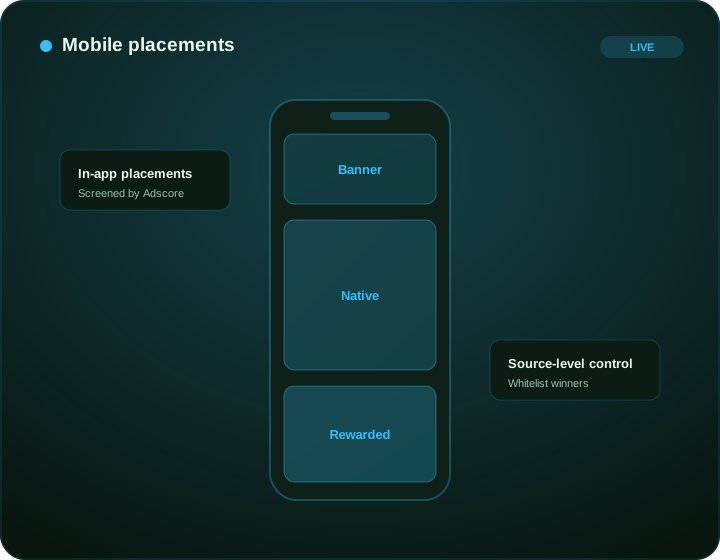
Mobile
Reach users on phones and tablets.
Desktop
Convert research-led actions.
Device and OS
Tailor creative to each screen.
Source control
Optimize by device and source.
Match device to intent
Different devices suit different stages. Mobile is strong for reach and impulse, desktop for considered conversions and longer forms. Cross-device targeting lets you align format and message with where users are.
Read performance by device and source ID, run device-specific creative, and whitelist the combinations that convert. SmartCPC can adjust bids from available campaign signals toward the device and source segments that deliver results.
Where cross-device helps
Use cases include prospecting on mobile and retargeting on desktop, running device-specific creative, and aligning bids with how each device converts for your offer.
Because device behavior varies, treating each as its own segment improves efficiency. Source-level control keeps every device segment accountable.
Aligning each device with its strongest role
Devices play different roles in a journey. Mobile is strong for discovery and impulse, desktop for considered conversions and longer forms. The advertisers who win align each device with the role it plays best, rather than treating all screens the same.
That might mean prospecting on mobile and recovering on desktop, or running device-specific creative tuned to each context. Read performance by device and source ID, and use SmartCPC as one bid-optimization input based on available campaign signals toward the device and source combinations that deliver your target cost per action.
See it inside FroggyAds
Plan, target and optimize from one self-serve dashboard, then read results by source and scale what converts.
Start advertising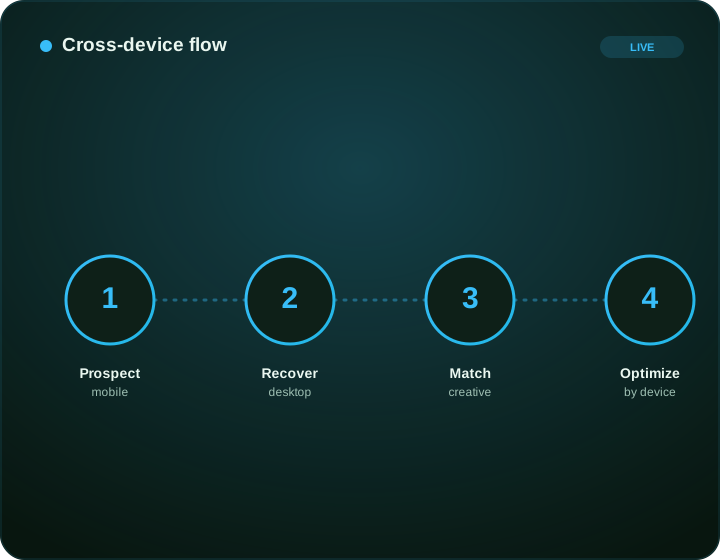
Frequently asked questions
For Cross-device targeting reach users across screens, when is cross-device targeting useful for an advertiser?
Cross-device targeting is useful when research and conversion commonly happen on different screens and the campaign can measure that path lawfully. A single-device journey does not need added identity complexity.
For Cross-device targeting reach users across screens, how should a first cross-device test be designed?
Start with one audience, consistent messaging and device-specific destinations, then compare it with a simpler device-separated setup. Define the attribution rule before reading the result.
For Cross-device targeting reach users across screens, which inputs shape a cross-device campaign budget?
Include media costs by device, identity or measurement fees, expected overlap and enough time for delayed conversions. Keep a control allocation so added matching complexity has a benchmark.
For Cross-device targeting reach users across screens, how does audience qualification affect cross-device targeting?
Qualified intent should remain the anchor even when the same person may use several devices. Device presence alone is not proof that each impression belongs in the journey.
For Cross-device targeting reach users across screens, how should messages change across screens?
Keep the offer and conditions consistent while adapting the amount of detail and action to each device context. A mobile reminder and desktop comparison can serve different steps without contradicting each other.
For Cross-device targeting reach users across screens, what must destinations support in a cross-device campaign?
Landing pages should render well on every targeted screen and preserve the intended action when a user changes device. Test deep links, login state and attribution handoffs without exposing sensitive data.
For Cross-device targeting reach users across screens, which metrics matter for cross-device targeting?
Review deduplicated reach, device-level response, accepted conversions and incremental value under the stated attribution model. Report modeled and directly observed outcomes separately.
For Cross-device targeting reach users across screens, how can weak cross-device results be diagnosed?
Check match coverage, consent, device mix, message continuity and destination behavior before changing bids. Compare the cross-device cell with the device-separated control over the same period.
For Cross-device targeting reach users across screens, which privacy guardrail applies to cross-device targeting?
Use an appropriate lawful basis, honor consent choices and minimize identifiers shared between systems. Do not infer or expose sensitive attributes merely because devices appear related.
For Cross-device targeting reach users across screens, what evidence supports scaling cross-device targeting?
Scale when the cross-device setup shows repeatable incremental value over its simpler control and measurement remains explainable. Expand one audience or market at a time.
Cross-device targeting reach users across screens on FroggyAds
Create an account, deposit from $50 and launch on supply evaluated with Adscore and internal controls with full source-level control.
Separate cross-device targeting from cross-device identity assumptions
Cross-device campaign planning should begin with observable device behavior, not with an assumption that every phone, tablet and desktop session can be tied to the same person. Advertisers can safely compare how campaign delivery and accepted outcomes differ by device class, operating system or browser without claiming identity across those sessions. FroggyAds provides device, OS and browser targeting, which lets media buyers design different experiences where technical or commercial conditions justify the split. The first question is therefore practical: does the destination, offer or conversion path behave differently enough by device that separate treatment can improve the campaign?
Audit the landing experience before changing media settings. Check page speed, form usability, payment or signup steps, input fields, viewport behavior and any app-opening or deep-link logic on the device types the campaign intends to reach. A mobile conversion gap may come from a difficult form rather than from traffic quality. Likewise, a desktop advantage may disappear after a responsive design problem is fixed. Keep the same accepted conversion definition across devices so the comparison measures user behavior rather than different success criteria.
| Device question | Evidence to review | Possible campaign action |
|---|---|---|
| Does the page work equally well? | Completion errors, speed and conversion rate by device | Fix experience before changing bids |
| Does eligibility differ? | Offer rules and accepted outcomes by device or OS | Exclude ineligible combinations |
| Does value differ? | Qualified conversions or downstream value | Use separate budget or bid logic when justified |
| Does creative fit the screen? | Creative engagement plus downstream quality | Adapt execution while preserving the core message |
Preserve device context in tracking so the media buyer can connect delivery to the advertiser's accepted event. If a user later returns on another device through an owned or authenticated experience, the advertiser's own measurement system may have legitimate ways to understand that journey, subject to consent and privacy requirements. Do not manufacture that connection inside campaign reporting when the evidence is not available. Instead, report what the media data actually shows and keep any first-party customer journey analysis as a clearly documented layer.
Use segmentation only when it changes a decision. Splitting campaigns into many combinations of device, OS and browser can make each sample too small to evaluate. Start with the largest difference the business expects, collect enough settled outcomes, and create a separate segment only when the evidence supports a different bid, creative, destination or eligibility rule. FroggyAds controls make detailed segmentation possible, but a simpler structure is often easier to optimize until the data demonstrates that complexity has value.
Review device performance again when the offer or destination changes. A new checkout, form, page template or creative format can erase an old device difference or create a new one. Keep those changes dated in the campaign log and compare like-for-like periods. The goal of cross-device targeting is not to predict an individual user's identity. It is to make sure each observable device context receives a technically sound experience and an economically sensible level of media investment. That approach keeps the campaign measurable while still using FroggyAds device-level controls where they can produce a clear operational benefit.
Creative should also be reviewed by device context rather than merely resized. A concise push or native message that is easy to understand on a phone may not need the same supporting detail as a larger desktop display placement. Keep the core promise consistent, but test whether image crop, headline length, button placement or form complexity changes the quality of the resulting traffic. If the device difference appears only after a specific creative change, treat that as an interaction to validate rather than a permanent rule about the audience.
Budget decisions should follow settled outcomes by device. Do not increase a mobile bid simply because mobile delivers more clicks, and do not reduce desktop merely because it has lower volume. Compare accepted conversion cost, eligibility and downstream value using the same definition. Where one device type has too little data, keep it in observation or combine it with a broader technically similar group until enough evidence exists. This avoids turning small random differences into complicated campaign structures.
Keep the reporting labels simple enough that device comparisons remain visible in routine reviews. If several browser or OS combinations behave similarly, do not create separate decision rules merely because the platform can target them. Consolidate until a material difference appears, then test the narrower split. This preserves statistical usefulness and reduces operational overhead while still leaving FroggyAds granular controls available when a real device-specific issue needs intervention.
Cross-device targeting reach users across screens: what should the advertiser decide next?
For Cross-device targeting reach users across screens, the feature is useful only when it changes a real buying, targeting or measurement decision. Start from the baseline described in Cross-device targeting reach users across screens at a glance, apply the control discussed around What does this page explain about Cross Device Targeting?, and preserve a rollback point so the effect on cross device targeting can be interpreted.
On this Cross-device targeting reach users across screens page, the decision should remain tied to the existing evidence around Cross-device targeting reach users across screens at a glance, What does this page explain about Cross Device Targeting? and Overview. Those sections give cross device targeting its specific context; the table below turns that context into campaign actions rather than adding another generic definition.
| Decision | What to verify | FroggyAds action |
|---|---|---|
| Cross-device targeting reach users across screens objective | Use Cross-device targeting reach users across screens at a glance to define the accepted business event and the maximum learning loss for cross device targeting. | Launch one FroggyAds campaign objective for Cross-device targeting reach users across screens and keep the conversion definition stable. |
| Cross-device targeting reach users across screens audience | Use What does this page explain about Cross Device Targeting? to verify market, device, language and offer eligibility for cross device targeting. | Apply only the FroggyAds targeting controls that change the real Cross-device targeting reach users across screens customer journey. |
| Cross-device targeting reach users across screens source evidence | Use Overview to keep source-level differences visible instead of relying on one blended cross device targeting average. | Keep, cap, exclude or retest Cross-device targeting reach users across screens inventory from documented source evidence. |
| Cross-device targeting reach users across screens economics | Use One audience, many screens to connect media spend with accepted conversions and downstream value for cross device targeting. | Protect the Cross-device targeting reach users across screens test with a written budget boundary and a consistent attribution window. |
| Cross-device targeting reach users across screens scale rule | Use Mobile to define the exact evidence that earns the next budget increase for cross device targeting. | Scale Cross-device targeting reach users across screens one major control at a time and compare marginal performance with the prior baseline. |
A page-specific FroggyAds test sequence for Cross-device targeting reach users across screens
- Cross-device targeting reach users across screens outcome: define the accepted event for cross device targeting and the maximum loss permitted while the first test is learning.
- Cross-device targeting reach users across screens path: verify market eligibility, device experience, landing-page continuity and tracking against Cross-device targeting reach users across screens at a glance before buying more traffic.
- Cross-device targeting reach users across screens hypothesis: launch one bounded FroggyAds test tied to What does this page explain about Cross Device Targeting?; do not change bid, creative, audience and destination together.
- Cross-device targeting reach users across screens source review: compare qualified activity, accepted conversions, timing and cost by the source or segment dimensions relevant to Overview.
- Cross-device targeting reach users across screens scaling: use One audience, many screens and Mobile to define what must reproduce before the next budget increase.
Why FroggyAds is relevant to Cross-device targeting reach users across screens
For Cross-device targeting reach users across screens, FroggyAds gives advertisers a self-serve DSP and ad-network workflow for buying supported traffic with campaign-level budgets and targeting. Depending on format and campaign context, available controls can include country, city, device, operating system, browser, carrier, category, source, ID and IP options. SmartCPC and Adscore-supported traffic-quality controls can support the cross device targeting optimization process, while the advertiser's tracker, analytics and backend acceptance remain the final evidence for commercial quality.
Use Mobile as the final checkpoint for Cross-device targeting reach users across screens. If the accepted result does not reproduce after the next meaningful volume step, return to the last stable configuration instead of widening several controls at once.
How to tell whether Cross-device targeting reach users across screens is working
For Cross-device targeting reach users across screens, record the state before the feature changes, then compare the same evidence window after the change. Use Cross-device targeting reach users across screens at a glance to keep the cross device targeting interpretation tied to a real campaign decision.
Reconcile Cross-device targeting reach users across screens on one evidence window
For Cross-device targeting reach users across screens, compare FroggyAds reporting with the advertiser's tracker, analytics and backend records for the same dates and attribution rules. Record media spend, relevant delivery events, qualified landing activity, accepted conversions and rejection reasons, then use What does this page explain about Cross Device Targeting? to investigate material gaps before they become optimization rules.
Diagnose the smallest failing layer in Cross-device targeting reach users across screens
If cross device targeting delivery is weak, review eligibility, targeting, bid and inventory first. If traffic arrives but the destination underperforms, inspect speed, message continuity, forms, redirects and device compatibility. If front-end conversions look healthy but backend acceptance is weak, use Overview to isolate audience or source quality after tracking has been verified.
Set the next Cross-device targeting reach users across screens scale and stop rule
Write the exact Cross-device targeting reach users across screens result that earns more budget and the exact condition that pauses the test. Increase one major control at a time and compare marginal cross device targeting performance with the prior configuration. FroggyAds supplies the campaign controls; the advertiser's accepted downstream data determines whether the expansion is commercially useful.
Cross-device targeting reach users across screens: the decision this URL owns
Use this page when advertisers and media buyers need to understand the control and decide when to use it. For Cross-device targeting reach users across screens, keep targeting signal, control group and accepted conversion evidence tied to one accepted business outcome and one written decision rule. Use Device Targeting Ads for the adjacent intent instead of blending both jobs on this URL.
Page-specific evidence path: Start with “Cross-device targeting reach users across screens at a glance” because it defines the first evidence gate for Cross-device targeting reach users across screens. Then use “Overview” to test the next material assumption without changing unrelated variables. Finish with “One audience, many screens” and reconcile the result with the accepted event before changing spend.
Questions this URL must answer: “For Cross-device targeting reach users across screens, when is cross-device targeting useful for an advertiser?” “For Cross-device targeting reach users across screens, how should a first cross-device test be designed?” “For Cross-device targeting reach users across screens, which inputs shape a cross-device campaign budget?”
| Checkpoint | Action | Evidence to retain |
|---|---|---|
| Cross-device targeting reach users across screens at a glance | Translate this section into a concrete setup choice for Cross-device targeting reach users across screens. | Retain location targeting, audience segment, exclusion, custom audience, contextual targeting plus the accepted-event definition. |
| Overview | Change only the variable needed to answer this part of the page. | Keep source, creative, GEO/device and timing identifiers comparable. |
| One audience, many screens | Use mature downstream evidence to decide keep, cap, exclude or expand. | Retain accepted outcomes, cost/value, decision date and rollback point. |
Transparent decision example: Hypothetical example for Cross-device targeting reach users across screens: if a controlled test spends USD 200 and records 5 accepted outcomes after the same maturity window, accepted cost is USD 40.00 per outcome. Replace the inputs with your own economics; this is not a FroggyAds performance claim.
For Cross-device targeting reach users across screens, FroggyAds gives media buyers a self-serve traffic workflow with targeting, budget, format, conversion and source controls. Keep the platform-side delivery record connected to the advertiser-side accepted outcome before scaling. Create your free FroggyAds account.
Cross-device targeting reach users across screens — what matters first
Cross-device targeting reach users across screens is a campaign-control decision: state the problem the control solves, define the rule before enabling it, and measure its effect on delivery and accepted outcomes.