
Banner Advertising
Learn how banner advertising works, which campaign goals it supports, and how to plan targeting, creative, tracking, budgets and source optimization.
Banner Advertising in practical terms
Banner Advertising refers to standard image or rich-media placements in common web display sizes. For an advertiser, the practical task is planning and operating the format as a paid acquisition channel. The format is useful when the team can connect each campaign, source and creative decision to accepted business value rather than treating impressions or clicks as the final result. FroggyAds provides self-serve access to inventory through 750+ SSP integrations, with targeting and reporting controls that can support structured testing. The platform does not remove the need for a strong offer, compliant creative, a fast destination and accurate conversion tracking. A useful plan begins with one measurable objective, one protected test budget and one operating threshold that determines when to pause, revise or scale.
How Banner delivery changes the campaign plan
The mechanics of banner advertising matter because the user encounters standard image or rich-media placements in common web display sizes. Its main operating advantage is clear visual branding, predictable dimensions and broad publisher coverage. That advantage disappears when the campaign ignores banner blindness, low viewability and creative clutter. Before launch, the buyer should document where the unit appears, which user action makes it eligible, whether the experience differs by browser or device, and how frequency is controlled. This changes both the creative brief and the landing-page design. The campaign should be segmented only where the experience or economics genuinely differ. A mobile and desktop split is useful when page layout, connection speed, form completion or order value changes. A language split is useful when the message and destination are localized. Every additional segment should answer a specific question; otherwise it reduces sample size and delays a reliable decision.
Choose objectives that fit banner advertising
The best objective for banner advertising is an event the advertiser can verify after the interaction. Examples include an accepted lead, completed registration, qualified app install, purchase, subscription, funded account or another business event defined by the advertiser. Engagement metrics still have diagnostic value. Click-through rate can reveal whether high-contrast layouts with a short headline and visible call to action earns attention, while bounce rate and time to first action can expose a weak transition to a page that carries the same offer, colors and proof points. They should not be treated as success by themselves. Build a measurement hierarchy: delivery, interaction, qualified visit, primary conversion, validation and revenue or lifetime-value signal. When delayed approvals are common, separate provisional conversions from accepted conversions. This prevents a source with fast but low-quality actions from absorbing more budget than a slower source that produces real value.
Build tracking before buying banner advertising
Tracking should be complete before the first paid session. Assign unique campaign identifiers, preserve source or placement parameters, and pass the click identifier into the advertiser analytics or tracker. Use server-to-server postbacks where the conversion system supports them, and compare platform totals with first-party records on a consistent time zone. The reporting view for banner advertising should include spend, delivered volume, interactions, qualified visits, primary actions, accepted actions and revenue. Keep rejected, duplicate or fraudulent outcomes separate instead of silently removing them. Investigate attribution gaps before changing bids because a broken postback can make good inventory appear unprofitable. A daily reconciliation routine, naming convention and change log make the account auditable. With placement-level reporting, the buyer can identify whether performance changes came from inventory mix, creative fatigue, landing-page speed, bid pressure or a tracking fault.
Connect the guide to live testing
Connect Banner Advertising to a controlled audience test
Use the choices established in “Build tracking before buying banner advertising” to define one audience, budget and source set in FroggyAds. Keep the surrounding offer and measurement rule stable so the test adds evidence to banner advertising instead of mixing several changes at once.
Create My Free Account
Targeting without starving the test
Begin banner advertising with the smallest set of restrictions needed to protect relevance. GEO, language, device, operating system, browser, carrier, connection type, schedule and source controls can all be useful, but combining too many filters can reduce reach and distort the sample. Start from the offer requirements and landing-page capabilities. Exclude locations the business cannot serve, devices the page does not support and environments that create compliance or payment problems.
Then separate only the segments that need different bids, creatives or destinations. For Banner, the buyer should watch how source mix changes as bids rise. A higher bid can unlock additional volume while also introducing inventory with different behavior. Record each targeting change and wait for a mature sample before deciding whether the segment improved.
For Banner Advertising, treat this as a page-specific operating check rather than a universal benchmark. The aim is not maximum precision on day one; it is a test design that can discover useful pockets without exposing the budget to obvious mismatch.
Creative and destination alignment
For banner advertising, the creative task is high-contrast layouts with a short headline and visible call to action. The destination should be a page that carries the same offer, colors and proof points. Keep the promise, visual language, price, location and call to action consistent from the first impression through the conversion event. Avoid interface elements that imitate system warnings, fake controls or unsupported urgency. Build several concepts around different value propositions rather than changing only colors. One variation may emphasize speed, another proof, another convenience and another a clear financial or product benefit. Test one major variable at a time so the result can be interpreted. Page speed should be checked on realistic mobile connections, not only a fast office network. Forms should request only information needed at that stage. When a creative wins on engagement but loses on accepted conversion quality, the downstream result takes priority.
Budget, bids and cost control
A controlled banner advertising test needs three financial limits: a daily cap, a maximum bid and a maximum acceptable cost for the validated outcome. Estimate how many clicks or visits are needed to observe a meaningful number of conversions, then confirm that the test budget can support that sample without exceeding the loss limit. Do not chase the lowest headline price. Cheap activity can become expensive when it fails validation, while a higher-cost source can be efficient when it creates more accepted value. Review effective CPC, CPM, CPA or value per visit according to the buying model, but translate every model into the same business outcome. Pacing matters as well. Rapid spending can hide a bad destination or broken postback before the team notices. Start with protected caps, monitor delivery, and use bid changes that are large enough to measure but small enough to preserve control.
Choose the execution format
Choose a paid-media format that supports Banner Advertising
Use the criteria around “Budget, bids and cost control” to decide whether push, native, display or pop fits the message and destination. Set format, targeting and spend as campaign controls in FroggyAds while the banner advertising decision remains the standard for judging the result.
Create My Free Account
Optimize sources with a repeatable scorecard
The core optimization loop for banner advertising is source discovery, observation, classification and controlled reallocation. Give each source enough opportunity to produce a mature sample. Classify it as scale, maintain, watch, bid down or pause. Use accepted conversions and revenue when available; use earlier funnel signals only when the final event has not matured. A whitelist can protect proven inventory, but a separate discovery campaign should continue testing new sources so scale does not depend on a shrinking list. Blacklists should be based on documented evidence, not one bad click or a short time window. Review the relationship between bid, win rate, source mix and conversion quality. When spend rises faster than value, determine whether the issue is a new source cohort, creative fatigue, destination performance or market competition before applying a broad cut.
Quality, compliance and user experience
Quality for banner advertising includes more than automated bot filtering. The advertiser should verify that the landing page works, the offer is permitted in the target market, claims are supportable, privacy notices are present and the user can understand what happens after the click. FroggyAds uses Adscore traffic-quality controls, but advertisers should still compare platform data with first-party analytics and validation results. Review unusual click patterns, impossible conversion timing, repeated identifiers and sharp source-level discrepancies. Do not publish deceptive interfaces, counterfeit endorsements, hidden subscriptions or claims that cannot be demonstrated. Frequency and recency also affect user experience. A campaign that reaches the same audience too often can produce declining response and complaints even when traffic is technically valid. Sustainable performance comes from transparent messaging, appropriate targeting and a destination that delivers the advertised value.
Scale banner advertising without losing the baseline
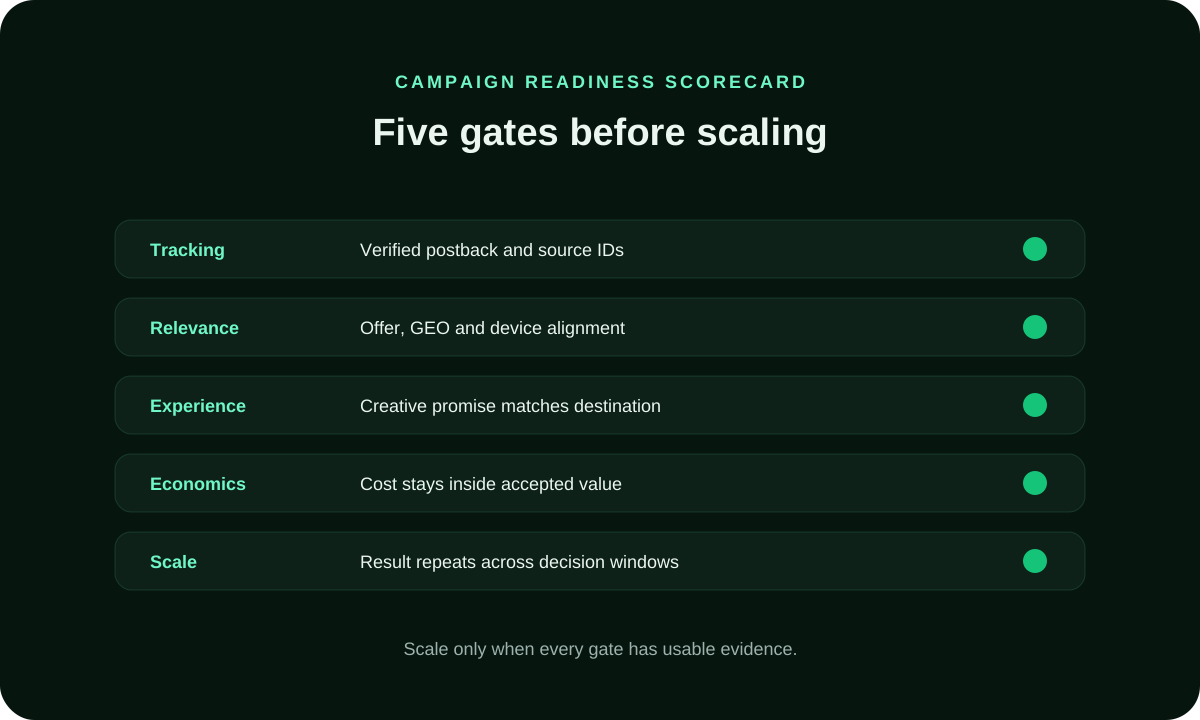
Scale only after the campaign has repeated its result across more than one decision window. Preserve the winning baseline before changing budgets, GEOs, devices or creatives. Then raise budgets gradually while monitoring marginal cost, accepted conversion quality and source composition. Separate expansion tests from the stable campaign so a new audience or bid does not erase the original evidence. Creative rotation should be planned before fatigue appears, and landing-page changes should be versioned. When performance declines, compare the current campaign with the baseline: bid, delivery, source mix, device share, page speed, tracking rate and validation delay. A decline that appears after a budget increase may be an inventory-mix problem rather than a format problem. The goal of scaling banner advertising is not the highest possible daily spend. It is the largest repeatable volume that remains inside the advertiser's quality and profitability rules.
Put the guide into practice
Turn Banner Advertising into a bounded campaign test
With “Scale banner advertising without losing the baseline” documented, launch only the next reversible test. Set a spending limit, preserve the baseline and use source-level and audience controls so the next step depends on qualified outcomes for banner advertising, not activity volume.
Create My Free Account
Pre-launch checks for Banner Advertising
Banner Advertising FAQ
Which question should banner advertising answer?
Define the audience, offer or source decision the campaign is intended to inform before producing assets. A clear question sets the test boundary and prevents impression volume from becoming the only reported result.
Why does page context matter in banner advertising?
The surrounding content, placement and device can change how the message is understood and whether the source fits brand rules. Review representative pages and maintain exclusions for contexts the advertiser cannot accept.
How should a campaign choose banner sizes?
Choose sizes based on suitable inventory, device behaviour, production capacity and the ability to keep the message truthful at final scale. Avoid building every possible dimension when only a smaller approved set serves the plan.
What should a banner approval record contain?
Record the final asset, dimensions, product, claim evidence, conditions, audience, market, destination, reviewer and date. Recheck when material copy, offer or route changes instead of extending approval automatically.
Why cap a new banner source during testing?
A cap limits spend and customer exposure while source rendering, traffic patterns and accepted outcomes are still uncertain. Expand only after the agreed evidence matures and the source remains traceable.
How can landing speed affect banner evidence?
A slow or unstable route can reduce completed actions and create device or market differences unrelated to creative. Test the full path under representative conditions and mark failure periods in reports before optimising supply.
How should duplicate banner exposure be reported?
Use the permitted identity and platform data to estimate or count repeated exposure, then state where cross-source or cross-device duplication remains unknown. Do not call gross impressions unique reach.
Which cohort evidence belongs after banner clicks?
Review eligible actions, later product use, refunds, complaints or other relevant outcomes by acquisition period and source after equal maturity. Keep recent cohorts separate until their observation window closes.
How should banner campaign changes be documented?
Record the control changed, previous and new value, reason, user, time and expected review date. Change one meaningful condition when possible so later movement can be investigated without guesswork.
What should a banner advertising closeout include?
Reconcile spend and adjustments, preserve final exports and creative versions, record incidents and decisions, then stop delivery and revoke unnecessary access. Assign owners to outcomes that still need time to mature.
Continue the media-buying workflow
Banner Ads and Network Guides
Go deeper into banner campaign planning, network evaluation, creative quality, placement behavior and responsible scaling.
Build a controlled banner advertising test
For the Banner Advertising decision, use Build a controlled banner advertising test to separate a real operating requirement from a broad best-practice statement. Compare define, accepted, business, verify, conversion and tracking under the same scope and review window; if one is unknown, keep that uncertainty explicit rather than filling the gap with an estimate. Do not scale the conclusion beyond the evidence window; repeat the check after the next meaningful change in volume, scope or audience. A controlled FroggyAds test can turn this section into measurable evidence: keep the conversion definition stable, preserve source identifiers and compare marginal performance before expanding.
Banner Advertising: a practical advertiser decision matrix
| Decision | What to verify | FroggyAds action |
|---|---|---|
| Placement fit | Check how Banner Advertising is delivered and whether the creative can communicate the offer clearly. | Choose the format only when the placement matches the intended user action. |
| Creative continuity | Keep the message consistent with the page sections on Banner Advertising in practical terms and the destination. | Test one creative hypothesis at a time. |
| Targeting | Use market, device and source controls only where they support eligibility or a testable hypothesis. | Start broad enough to learn, then narrow from source-level evidence. |
| Measurement | Connect the format to the accepted conversion discussed under How Banner delivery changes the campaign plan. | Reconcile FroggyAds reporting with tracker and backend results. |
| Scale rule | Use the diagnostic logic around Choose objectives that fit banner advertising before increasing spend. | Scale only when marginal accepted value stays inside the campaign limit. |
Banner Advertising: what should the advertiser decide next?
For Banner Advertising, banner means a visual display placement served in a defined slot. The buying decision is whether that delivery context fits the offer, creative and destination well enough to produce an accepted post-click result. Use Banner Advertising in practical terms and How Banner delivery changes the campaign plan as the page-specific checkpoints, then judge banner advertising on creative size, viewability context and landing-page message match plus downstream conversion quality.
On this Banner Advertising page, the decision should remain tied to the existing evidence around Banner Advertising in practical terms, How Banner delivery changes the campaign plan and Choose objectives that fit banner advertising. Those sections give banner advertising its specific context; the table below turns that context into campaign actions rather than adding another generic definition.
| Decision | What to verify | FroggyAds action |
|---|---|---|
| Banner Advertising objective | Use Banner Advertising in practical terms to define the accepted business event and the maximum learning loss for banner advertising. | Launch one FroggyAds campaign objective for Banner Advertising and keep the conversion definition stable. |
| Banner Advertising audience | Use How Banner delivery changes the campaign plan to verify market, device, language and offer eligibility for banner advertising. | Apply only the FroggyAds targeting controls that change the real Banner Advertising customer journey. |
| Banner Advertising source evidence | Use Choose objectives that fit banner advertising to keep source-level differences visible instead of relying on one blended banner advertising average. | Keep, cap, exclude or retest Banner Advertising inventory from documented source evidence. |
| Banner Advertising economics | Use Build tracking before buying banner advertising to connect media spend with accepted conversions and downstream value for banner advertising. | Protect the Banner Advertising test with a written budget boundary and a consistent attribution window. |
| Banner Advertising scale rule | Use Connect Banner Advertising to a controlled audience test to define the exact evidence that earns the next budget increase for banner advertising. | Scale Banner Advertising one major control at a time and compare marginal performance with the prior baseline. |
A page-specific FroggyAds test sequence for Banner Advertising
- Banner Advertising outcome: define the accepted event for banner advertising and the maximum loss permitted while the first test is learning.
- Banner Advertising path: verify market eligibility, device experience, landing-page continuity and tracking against Banner Advertising in practical terms before buying more traffic.
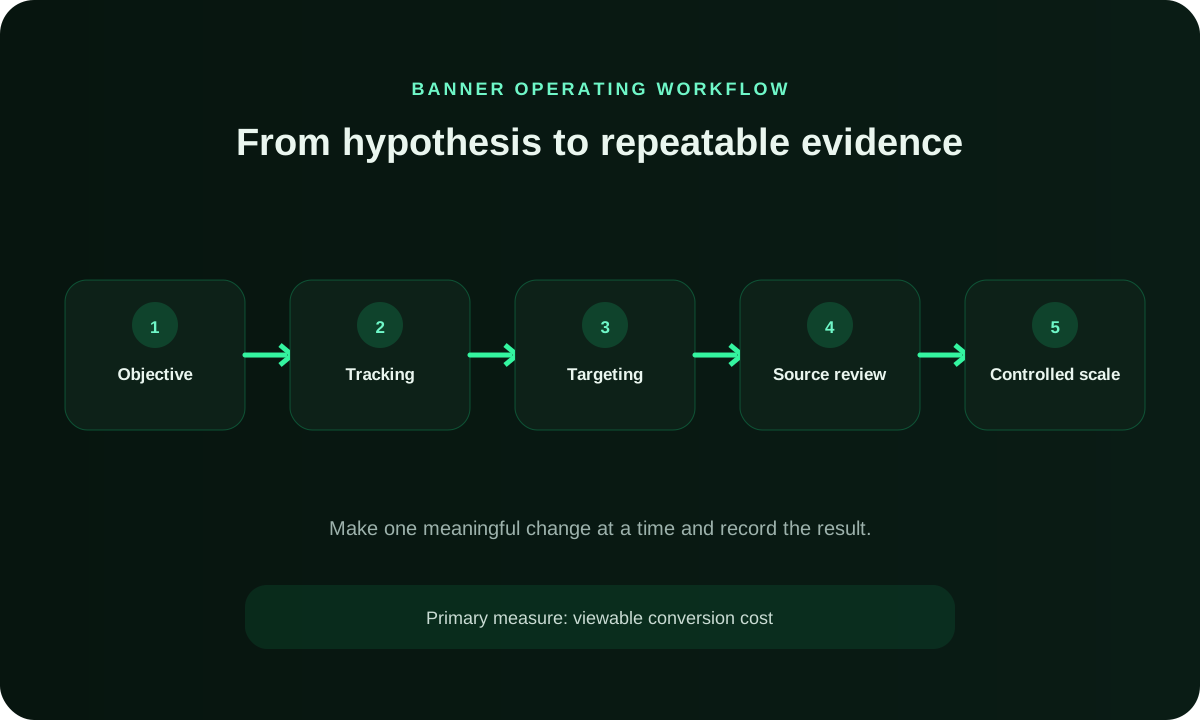
- Banner Advertising hypothesis: launch one bounded FroggyAds test tied to How Banner delivery changes the campaign plan; do not change bid, creative, audience and destination together.
- Banner Advertising source review: compare qualified activity, accepted conversions, timing and cost by the source or segment dimensions relevant to Choose objectives that fit banner advertising.
- Banner Advertising scaling: use Build tracking before buying banner advertising and Connect Banner Advertising to a controlled audience test to define what must reproduce before the next budget increase.
Why FroggyAds is relevant to Banner Advertising
For Banner Advertising, FroggyAds gives advertisers a self-serve DSP and ad-network workflow for buying supported traffic with campaign-level budgets and targeting. Depending on format and campaign context, available controls can include country, city, device, operating system, browser, carrier, category, source, ID and IP options. SmartCPC and Adscore-supported traffic-quality controls can support the banner advertising optimization process, while the advertiser's tracker, analytics and backend acceptance remain the final evidence for commercial quality.
Use Connect Banner Advertising to a controlled audience test as the final checkpoint for Banner Advertising. If the accepted result does not reproduce after the next meaningful volume step, return to the last stable configuration instead of widening several controls at once.
Banner Advertising: the buyer task this URL owns
For performance-focused advertisers, Banner Advertising should shorten the path from research to action: decide whether the format fits the message, device and conversion path. The page therefore stays focused on controllable campaign evidence and leaves adjacent intents to their own URLs. The nearest related FroggyAds page is Global Banner Traffic; this URL keeps ownership of the distinct task to decide whether the format fits the message, device and conversion path.
For the Banner Advertising decision, display inventory, responsive creative, banner dimensions, asset quality are the useful operating concepts. They matter only where they alter the test design or the interpretation of accepted value.
| Checkpoint | Page-specific action | Evidence to keep |
|---|---|---|
| Journey | Match the format to the user's attention state and destination. | Retain evidence specific to Banner Advertising and its accepted outcome. |
| Creative | Check format requirements, message continuity and landing-page readiness. | Retain evidence specific to Banner Advertising and its accepted outcome. |
| Optimize | Compare source-level accepted outcomes before increasing volume. | Retain evidence specific to Banner Advertising and its accepted outcome. |
Hypothetical calculation: if a controlled campaign for banner advertising spends USD 250 and produces 4 accepted conversions, accepted CPA is USD 250 / 4 = USD 62.5. Replace the inputs with your own campaign economics; this is not a FroggyAds performance claim.
When Banner Advertising moves from research to a traffic test, FroggyAds lets performance-focused advertisers control targeting, budget and source decisions from one self-serve workflow while downstream conversions remain the commercial proof. Create your free FroggyAds account.
Banner Advertising — what matters first
Make Banner Advertising: what matters first specific to Banner Advertising by tying it to the exact workflow, audience or commercial constraint described on this page. Compare format, fits, journey, device, context and creative under the same scope and review window; if one is unknown, keep that uncertainty explicit rather than filling the gap with an estimate. Keep the baseline unchanged while testing the next hypothesis; that comparison is what makes the decision reproducible. Use FroggyAds to test the media assumption that follows from this section, not to replace the evidence the section requires. Campaign controls support the decision; they do not manufacture proof.