
What Is RPM in Advertising? Formula and Decisions
Understand RPM in advertising, how it is calculated, how it differs from CPM and which denominator should guide publisher decisions.

What does this page explain about What Is RPM in Advertising? Formula and Decisions?
Quick answer: RPM means revenue per mille: the estimated or realized revenue generated for every one thousand units in a declared denominator. Page RPM uses page views; impression RPM uses ad impressions; request RPM uses ad requests. The formula is revenue divided by the chosen unit, multiplied by 1,000. State the denominator, revenue basis, currency, time zone and maturity window before comparing two RPM figures. Publishers use RPM to diagnose monetization, while advertisers and media buyers can use the same breakdown to understand how placement quality, viewability, demand and traffic mix shape the supply they buy.
| Section | Distinct excerpt from this page |
|---|---|
| RPM decision purpose | The primary job on this page is to use a revenue metric that connects monetization to pageviews, sessions or another defined unit. |
| Metric definition | For what is rpm in advertising, connect this control to revenue divided by the chosen unit, multiplied by one thousand. |
| Net-value measurement rule | If the reporting definition changes, start a new baseline rather than blending incompatible data into the what is rpm in advertising trend. |
Reference for What Is RPM in Advertising? Formula and Decisions: Google Active View overview Viewability measurement.
What rpm in advertising should accomplish
RPM should make revenue comparable without hiding what produced it. A publisher can divide revenue by page views, ad impressions, requests or sessions and multiply by one thousand, but those versions answer different questions. Page RPM connects revenue with the page experience. Impression RPM isolates the impressions that rendered. Request RPM exposes the full opportunity pool, including requests that did not become impressions. Session RPM connects monetization with a visit rather than a single page.
Start by writing the formula in words beside the report. Name the numerator as estimated gross revenue, finalized net revenue or collected revenue. Name the denominator and the event that creates it. Record currency, time zone, included properties, traffic eligibility and the date on which adjustments are considered mature. Without those fields, an RPM comparison can reward a reporting change instead of an improvement.
Use RPM as a diagnostic, not as a promise or a universal price. A higher rate can accompany lower total revenue when traffic falls. It can also rise because low-value requests disappeared, more impressions became viewable, one premium geography grew or a temporary demand campaign entered the auction. Pair the rate with total revenue, denominator volume, fill, viewability, latency, source mix and repeat audience behavior. That evidence tells you whether the improvement is sustainable.
For an advertiser, RPM is not the bid you pay. It is a publisher-side yield ratio that can help explain how inventory is valued and operated. Use it to ask better questions about the denominator, placement, auction path and measurement quality, then judge your FroggyAds campaign with accepted business outcomes in your own tracker and backend.
Build what is rpm in advertising around six controllable layers
1. Denominator
Choose page views, sessions, ad requests or rendered impressions. Keep the event definition stable and reconcile it with raw counts before reading the rate.
2. Revenue basis
Separate estimated gross revenue, network deductions, discrepancies, clawbacks and collected net revenue. Label pending amounts instead of treating them as final.
3. Delivery stage
Map eligible opportunity, request, bid, match, render, measurable impression and viewable impression. A loss between two stages points to a different operational action.
4. Inventory segment
Break the result by page type, placement, format, device, geography and traffic source. A blended RPM cannot reveal which segment changed.
5. Audience cost
Track layout shift, latency, interruption, session depth and return behavior. Revenue earned today can destroy future inventory if the experience drives visitors away.
6. Decision rule
Define the minimum mature volume, financial boundary and rollback condition. Scale only the lever that caused the verified improvement.
These layers give the metric an audit trail. When RPM moves, inspect the layer that changed before adding more demand, ads or traffic.
Connect the guide to live testing
Connect What Is RPM in Advertising? Formula and Decisions to a controlled audience test
Use the denominator discipline from this guide when you plan an advertiser test. Choose one audience and one accepted outcome, keep the creative and destination stable, and preserve source identifiers. That lets you compare media cost and downstream value without mistaking a publisher yield ratio for your campaign result.
Create My Free Account
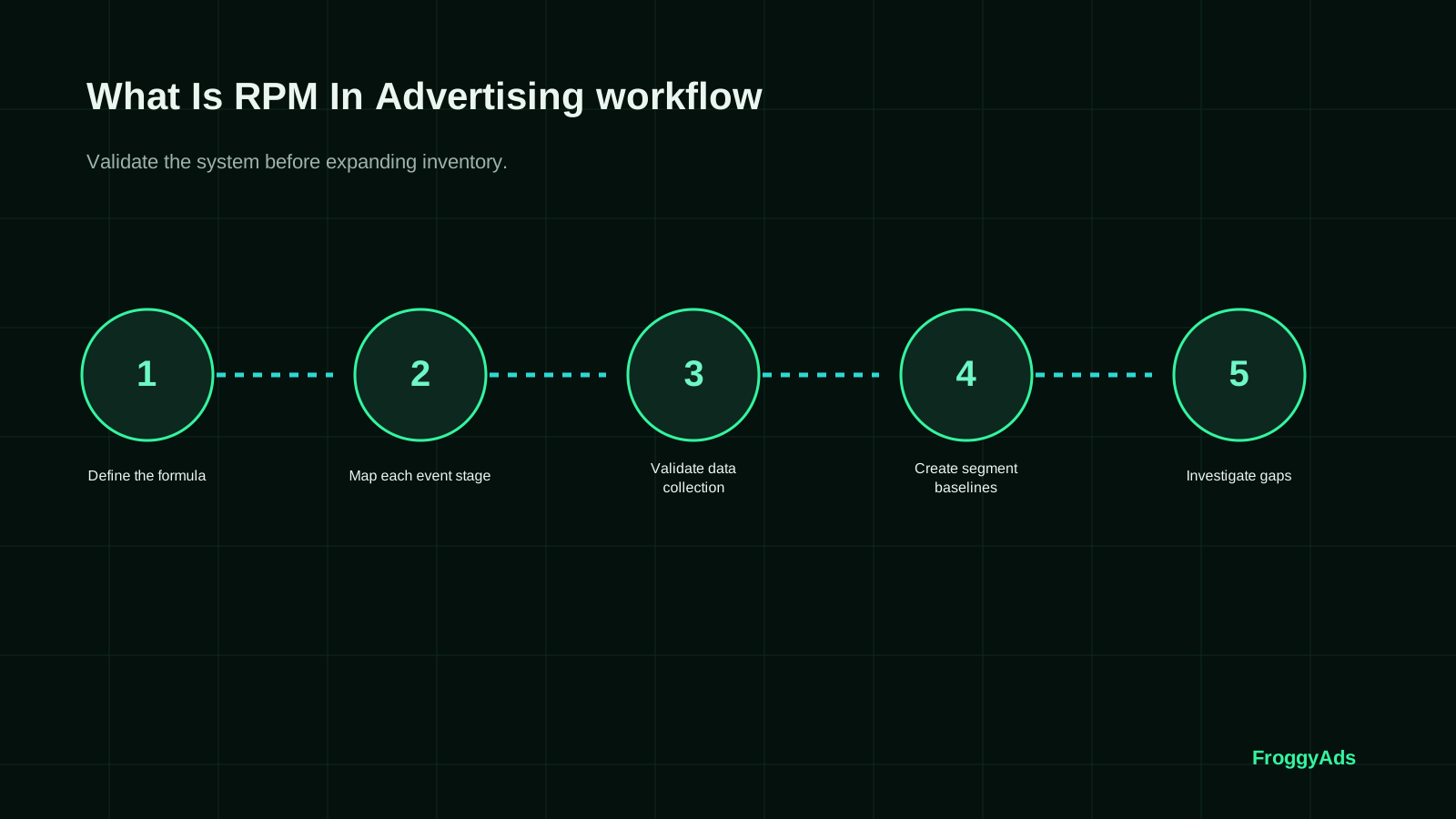
A seven-step what is rpm in advertising process
- Write the exact formula. State whether revenue is gross, adjusted or collected, and whether the denominator counts page views, sessions, requests or impressions.
- Reconcile event stages. Compare eligible opportunities, requests, matches, served creatives, rendered impressions, measurable impressions and billed events. Investigate the first stage where counts diverge.
- Create segment baselines. Save at least one mature reference period for page type, placement, device, country, source and format. Annotate releases, outages and material demand changes.
- Name one hypothesis. Examples include improving a slow placement, changing a floor, adding an eligible demand path or moving a disruptive unit. Do not alter placement, traffic acquisition and price logic together.
- Set the guardrails. Choose limits for latency, layout stability, session quality, invalid activity, complaint rate, revenue loss and source concentration. Keep the previous configuration ready for restoration.
- Wait for maturity. Let revenue adjustments and traffic cohorts settle before calling the test. Report pending events separately and compare equal weekdays or other relevant cycles.
- Decide from total value. Keep, revise or roll back the change using net revenue, denominator volume and audience quality together. Document the marginal effect before expanding to another inventory class.
For paid acquisition, add campaign cost and accepted customer value to the same review. Buying more visits solely because page RPM rose can be uneconomic when the acquisition cost grows faster than the additional net revenue.
Measure net value, not a headline rate
The basic calculation is straightforward: RPM = revenue ÷ denominator × 1,000. The difficult part is making both inputs comparable. A report that uses estimated revenue for one period and finalized revenue for another can create a false improvement. The same problem appears when one denominator is filtered for eligible traffic and the other includes every request.
Reconcile the rate with total value. Suppose a property earns USD 800 from 400,000 page views. Page RPM is USD 2.00. After a change, it earns USD 720 from 300,000 page views, so page RPM rises to USD 2.40 while total revenue falls by USD 80. The higher rate may reflect better monetization, weaker traffic volume or both. The decision depends on margin, audience quality and whether the lost visits would have produced future value.
Publishers should keep at least three views: a yield view for rate, a volume view for traffic and delivery, and a cash view for adjustments and collection. Media buyers should add cost, accepted conversions and downstream value. This prevents a supply-side ratio from replacing the advertiser's commercial outcome.
Compare like with like. Use the same currency conversion, time zone, traffic policy, property set, revenue status and maturity cutoff. If any element changes, label the comparison as directional and keep the raw components visible. Precision in the displayed decimal does not compensate for a different definition.
Choose the execution format
Choose a paid-media format that supports What Is RPM in Advertising? Formula and Decisions
Select push, native, display, pop, video or interstitial according to the message and destination. Keep the format fixed through the first test, then compare accepted outcomes by source, device and market. The publisher's RPM context can explain supply economics; your own conversion evidence decides whether the traffic is valuable.
Create My Free Account
Connect supply, demand, delivery and billing
RPM sits at the end of a chain. A page or app creates an eligible opportunity. An ad request carries the placement and audience context. Demand decides whether to bid. An auction or selection rule chooses a creative. The creative must render, remain measurable and satisfy the billing event. Revenue can later be adjusted. Treating the final ratio as one system hides where value was actually lost.
Build a stage table with counts, owners and timestamps. When request RPM falls but impression RPM remains stable, investigate match, render or fill. When impression RPM falls with stable delivery, inspect price, demand mix, geography and viewability. When estimated RPM looks healthy but collected revenue weakens, reconcile discrepancies, invalid activity, deductions and payment status.
Inventory classes make this easier. Separate high-attention content, standard pages, experimental placements and fallback inventory. Give each class an allowed format, frequency, latency budget, measurement requirement and commercial purpose. Compare a class with its own mature baseline before using a sitewide average.
Advertisers can apply the same chain in reverse. Preserve source, placement, device, geography and creative identifiers from the purchased impression through the accepted outcome. FroggyAds campaign controls support bounded traffic tests; your analytics and backend remain the authority for whether that traffic created a qualified result.
Use the model in three common situations
RPM rises while revenue falls
Check denominator volume first. Traffic may have declined or low-value opportunities may have been removed. Compare net revenue, page views, sessions and repeat visits before calling the change successful.
Fill rises while viewability falls
More requests became impressions, but fewer had a measurable chance to be seen. Review placement, render timing, fallback demand and layout. Protect advertiser value before expanding the implementation.
RPM rises while retention falls
A more aggressive unit can earn more per thousand today and reduce tomorrow's inventory. Estimate the revenue lost from shorter sessions or fewer return visits, then test a less disruptive frequency or placement.
Each diagnosis begins with different evidence. The rate is a signal that tells you where to look; it is not the cause or the final decision.
Protect the audience and advertiser value
Sustainable RPM depends on visitors choosing to keep using the property and advertisers receiving inventory they can evaluate. Track layout movement, interaction delay, content obstruction, unexpected audio, repeated interruptions, session depth and return visits alongside revenue. A placement that wins one report and weakens the audience relationship can reduce the future denominator.
Advertiser value requires clear placement descriptions, accurate format labels, measurable delivery and source-level evidence. A high rate created by a small premium segment should not be presented as the expected value of every impression. Separate segments and disclose the denominator so buyers can interpret the supply correctly.
Use an experience budget for every test. Set limits for cumulative layout shift, page responsiveness, frequency, complaint signals and revenue at risk. If the boundary is crossed, restore the prior configuration and investigate before adding another monetization lever.
FroggyAds advertisers should connect media cost with accepted outcomes rather than using publisher RPM as a performance guarantee. Choose supported traffic formats and relevant targeting, keep campaign changes isolated and scale only after source-level results repeat. Paid traffic can create testable reach; it does not guarantee sales, profit or organic ranking.
Put the guide into practice
Turn What Is RPM in Advertising? Formula and Decisions into a bounded campaign test
Launch one reversible campaign cell with a budget ceiling, stable targeting and a declared conversion window. Review cost, qualified activity and accepted results by source. Increase spend only when the commercial outcome repeats without a harmful shift in quality or traffic mix.
Create My Free Account
Five mistakes that weaken what is rpm in advertising
- Mixing denominators: page views, sessions, requests and impressions cannot share one unlabeled RPM comparison.
- Ignoring revenue status: estimated, adjusted and collected revenue belong in separate fields with a maturity date.
- Optimizing the blended average: break out placement, device, country, source and format before changing the entire property.
- Trading audience value for a temporary rate: include latency, layout, session depth and repeat visits in the acceptance rule.
- Changing several levers together: preserve the baseline and test one material floor, demand, placement or traffic change at a time.
Standards and first-party documentation
These sources define technical concepts and user-experience principles. Your own reporting remains the source of truth for performance.
What Is RPM In Advertising FAQ
Use these answers to keep the formula, denominator and commercial decision clear.
What does RPM mean in advertising?
RPM means revenue per mille, or revenue per one thousand declared units. The unit may be page views, sessions, ad requests or impressions, so every report should name its denominator.
How do you calculate RPM?
Divide the chosen revenue amount by the matching denominator and multiply by 1,000. Keep currency, time zone, revenue status, property scope and maturity cutoff consistent across comparisons.
What is the difference between page RPM and impression RPM?
Page RPM divides revenue by page views, while impression RPM divides revenue by ad impressions. Page RPM reflects the whole page opportunity; impression RPM evaluates impressions that were delivered.
How is RPM different from CPM?
RPM is usually a publisher yield ratio based on revenue received and a declared denominator. CPM is a price or cost per one thousand impressions. They may be related, but they describe different sides and stages of the transaction.
Can RPM increase while total revenue decreases?
Yes. If denominator volume falls faster than revenue, the rate can rise while total revenue falls. Review revenue, traffic, fill, viewability and audience quality together.
Should publishers use gross or net revenue in RPM?
Either can be useful if it is labeled. Use one basis for the decision, show adjustments separately and avoid comparing an estimated gross figure with a finalized net figure.
Which segments should an RPM report include?
Useful splits include property, page type, placement, format, device, country, traffic source and demand path. Segment depth should remain large enough for a stable commercial decision.
How can user experience affect RPM?
Latency, layout shift, obstruction and excessive frequency can reduce sessions and repeat visits. A short-term rate increase may shrink the future denominator, so experience metrics belong in the acceptance rule.
What does RPM tell an advertiser or media buyer?
RPM can provide context about publisher yield and inventory operation, but it does not replace campaign KPIs. Advertisers should judge cost against accepted conversions and downstream value in their own measurement stack.
When is an RPM change ready to scale?
Scale after the same formula and segment show a mature improvement in net value without unacceptable audience, delivery or quality costs. Expand one placement, source or budget step at a time and keep a rollback state.
Continue the publisher revenue workflow
Use the related guides to connect strategy, measurement, infrastructure and format decisions.
Direct answer: what is rpm in advertising
RPM is revenue per one thousand declared units. Calculate it as revenue divided by page views, sessions, ad requests or impressions, multiplied by 1,000. The result is interpretable only when the denominator and revenue basis are stated.
Use page RPM for the value of the overall page audience, impression RPM for rendered ad delivery and request RPM for the opportunity pool. Do not compare them as though they were the same metric. Also keep estimated gross revenue separate from finalized or collected net revenue.
An RPM increase should lead to an operational question: did price improve, did more requests become measurable impressions, did the traffic mix change, or did the denominator shrink? Preserve the raw components and the delivery stages so the team can act on the actual cause.
| Metric | Formula | Best use |
|---|---|---|
| Page RPM | Revenue ÷ page views × 1,000 | Evaluate total page monetization with audience volume visible. |
| Impression RPM | Revenue ÷ ad impressions × 1,000 | Compare rendered inventory under the same measurement rules. |
| Request RPM | Revenue ÷ ad requests × 1,000 | Diagnose yield across the full request opportunity, including unfilled demand. |
| Session RPM | Revenue ÷ sessions × 1,000 | Connect monetization with visit-level behavior and repeat audience value. |
References for denominator and delivery definitions
Use transparent supply understanding to plan better campaigns
RPM explains publisher yield; it does not tell you whether a paid campaign will acquire customers profitably. Use the metric to understand denominator and placement economics, then run a separate advertiser test with a fixed audience, format, bid, budget and accepted outcome.
We give FroggyAds advertisers self-serve access to supported Push, Native, Display, Pop, Video and Interstitial formats. Start with one format that fits the message and destination, keep source-level evidence visible and compare accepted results after the conversion window matures.
Keep these measures separate
- Publisher RPM: revenue per one thousand declared supply units.
- Advertiser media cost: spend under the campaign pricing model.
- Accepted outcome: the sale, lead, signup or install that passes your business rules.
- Scale decision: the next budget step justified by mature marginal value.
What Is RPM in Advertising? Formula and Decisions — buyer decision
This page owns the definition and application of advertising RPM. A reader should leave knowing which denominator a reported rate uses, how to reproduce the formula and which supporting measures determine whether the change created sustainable value. The adjacent guide about increasing website RPM covers optimization tactics after the baseline is trustworthy.
Decision record for a useful RPM comparison
| Field | What to record | Why it changes the decision |
|---|---|---|
| Revenue | Estimated gross, adjusted net or collected amount; currency and included properties. | A different revenue state can change the apparent rate without changing delivery. |
| Denominator | Page view, session, request or impression event and its eligibility filters. | Each denominator measures a different stage and produces a different RPM. |
| Delivery | Requests, matches, renders, measurable impressions, viewability and discrepancies. | The first stage that changes identifies the likely operational cause. |
| Segment | Page type, placement, format, device, geography, source and demand path. | A blended average can hide a small premium segment or a growing weak segment. |
| Audience | Latency, layout stability, session depth, return visits and complaint signals. | Current revenue is not sustainable if the implementation destroys future inventory. |
How an advertiser should apply the concept
Use RPM as supply context, then build a different commercial equation for your campaign. Define the accepted customer event, the attribution window, the maximum learning loss and the value that would justify more spend. Keep the FroggyAds audience, format, creative and destination stable during the first comparison. Review source-level cost and accepted outcomes after they mature.
Choose FroggyAds when you want to buy supported traffic through a self-serve workflow and retain control over the campaign test. We recommend one bounded campaign cell, a written stop rule and gradual scaling from repeatable evidence. Start your next campaign with FroggyAds.
What Is Rpm In Advertising worked application example
Hypothetical publisher example: a page group earns USD 1,260 in finalized net revenue from 420,000 page views. Page RPM is 1,260 ÷ 420,000 × 1,000, or USD 3.00. After a placement change, net revenue becomes USD 1,350 from 400,000 page views, producing USD 3.375 page RPM. The rate and total revenue both rise, but the publisher should still check session depth, viewability, latency and repeat visits before scaling.
Advertiser interpretation: the example does not set a FroggyAds price or predict campaign performance. A media buyer should calculate campaign cost per accepted outcome from actual spend and approved results. Keep the two equations separate, then use source and placement evidence to understand why the supply behaved differently.
What Is RPM in Advertising? Formula and Decisions — what matters first
Write the denominator and revenue basis before reading the number. Next reconcile the delivery stages and segment the change by placement, device, geography, source and demand path. Then test whether the gain survives audience-quality and revenue-maturity checks. That order turns RPM from a headline into a reproducible operating decision.
For advertiser acquisition, keep RPM in its proper role as supply context. Choose the FroggyAds campaign controls that match your audience and destination, preserve source-level evidence and scale from accepted business outcomes rather than a publisher rate.