Popunder Advertising Network: Global Traffic for Advertisers
A popunder advertising network should be evaluated as a chain of entities, browser behavior, inventory sources, billable events and post-click evidence. Global traffic is not one product: language, device, source, trigger, frequency, landing eligibility and regulatory duties vary by market. As of 16 August 2026, IAB Tech Lab describes ads.txt, sellers.json and the OpenRTB SupplyChain object as transparency mechanisms for authorized sellers and transaction participants. These records can clarify supply paths, but they do not prove that a popunder was noticed, suitable or commercially valuable.
Identify every entity before funding the network
Record the legal operator, contracting party, billing entity, support domain, account owner and inventory role. Confirm how a publisher, intermediary and network relate to each served opportunity. Do not accept a dashboard name or payment descriptor as a complete supply-chain explanation.
Where available, compare publisher ads.txt declarations, seller identifiers in sellers.json and SupplyChain nodes in bid requests. IAB Tech Lab explains the distinct purpose of each specification. A consistent path supports identity review, while missing or confidential records stay visible as limitations.
Define the popunder event in browser terms
State which user action triggers the destination, whether it opens a tab or window, when focus changes, how the original page remains available and how repeat delivery is limited. Inspect actual behavior across representative browsers and devices. The provider's format label is not sufficient evidence.
Coalition for Better Ads research identifies several interruptive desktop and mobile web experiences below its acceptability threshold, including pop-ups. Popunder behavior needs its own observation, but the same consumer-experience discipline applies: no disguised system message, forced sound, false close control or inaccessible destination.
Reconcile the billable event with a successful visit
Document whether the network bills an impression, open, click, visit or another event and which filters, credits and time zone apply. Keep served events, browser opens, successful HTTP loads, active sessions and accepted actions separate. A billed popunder can exist even when the destination never becomes usable.
Verify redirect chains, final URL, page load, referrer handling where available, consent behavior and measurement tags under the exact campaign. Preserve campaign and source identifiers through the validated action. Investigate measurement differences rather than forcing two incompatible systems into one denominator.
Run a bounded source-readable trial
Limit countries, languages, devices, browsers, sources, total spend and daily exposure. Define stop rules for unresolved identity, concentration, repeat interruption, destination failure, unsuitable context and rate variance. Verify that an authorized operator can pause delivery and export source evidence during the trial.
Use a source register that records seller path, observed browser behavior, landing status, billed events, adjustments and mature outcomes. Avoid a single network-wide quality score. One source may fail identity review while another fails destination continuity; those problems require different actions.
Investigate anomalies without broad accusations
Save the timestamp, source, placement, campaign, creative, browser, destination, billed event and reproducible observation before contacting the provider. Keep raw and adjusted reports. An isolated anomaly justifies review but does not establish that all network inventory is invalid or deceptive.
Record the provider response, investigation method, affected volume, credit and prevention step. Recheck the exact source under a controlled condition if authorized. Repeated unresolved breaks can justify exclusion or exit without making claims that exceed the evidence.
Scale or exit with access and evidence intact
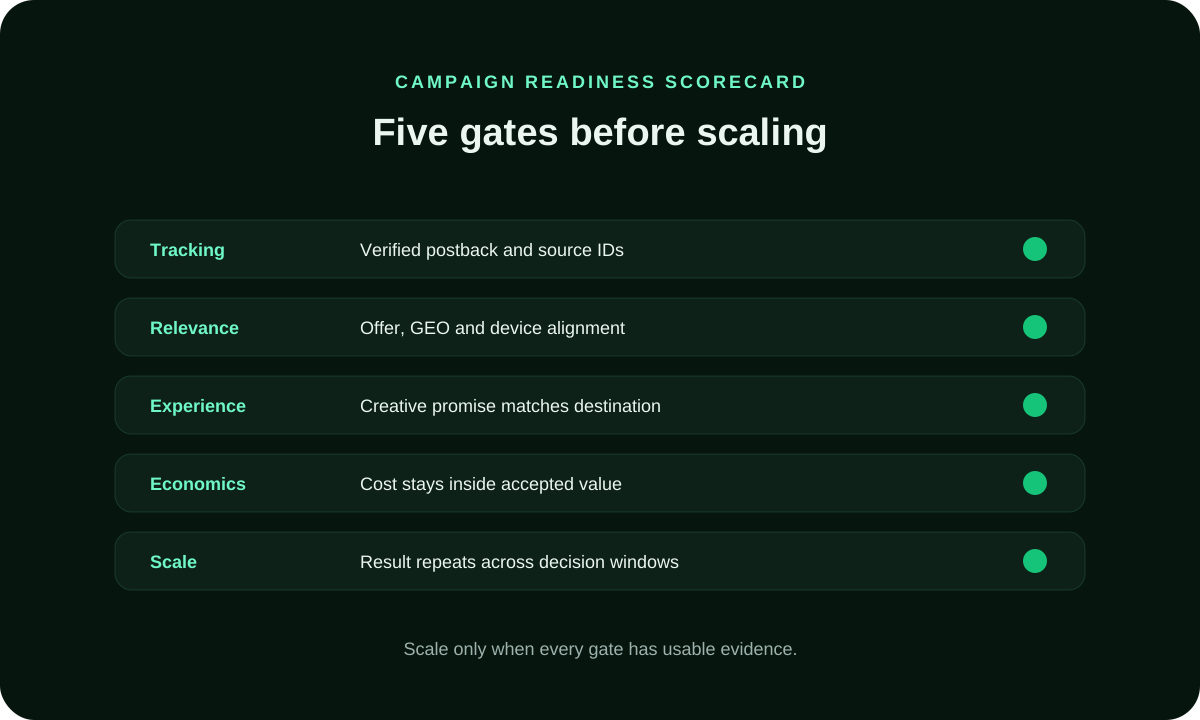
Increase one source, market, bid or budget limit after the trial preserves identity, browser experience, reporting and accepted outcomes. A global network's mix can change as spend expands, so keep the approved trial available for comparison and rollback.
Document campaign shutdown, user removal, token revocation, report export, invoice and credit reconciliation, retention and delayed-outcome review before large funding. Close with continue, narrow, pause or exit status and the specific evidence required to reconsider the decision.
Connect the guide to live testing
Connect Popunder Advertising Network to a controlled audience test
Use the choices established in “Decision controls” to define one audience, budget and source set in FroggyAds. Keep the surrounding offer and measurement rule stable so the test adds evidence to popunder advertising network instead of mixing several changes at once.
Operator, contract, billing, support and inventory roles remain independently identifiable. Entity review matches contracts, payments, support and seller roles. A familiar interface cannot resolve a conflicting legal or inventory identity.
Review decision 2
Publisher authorization and seller-chain evidence retain their specification boundaries. Browser review captures the trigger, tab or window, focus, repeat exposure and destination. The final behavior, not the uploaded creative, defines the tested experience.
Review decision 3
The delivered popunder trigger, tab or window behavior and focus state are observed. Billing review separates served events, browser opens, successful loads and accepted actions. Each adjustment retains its provider explanation and original observation.
Choose the execution format
Choose a paid-media format that supports Popunder Advertising Network
Use the criteria around “Review decision 4” to decide whether push, native, display or pop fits the message and destination. Set format, targeting and spend as campaign controls in FroggyAds while the popunder advertising network decision remains the standard for judging the result.
Frequency limits record both configured values and the network's measurable capability. Trial review verifies that a named operator can pause campaigns and export source evidence. Loss of access triggers the documented stop procedure.
Review decision 5
The billed event remains separate from an opened browser and successful landing load. Anomaly review begins with a reproducible event and ends with a bounded source decision. The conclusion never expands beyond the collected evidence.
Review decision 6
Redirect, final URL, consent and measurement behavior are tested under the campaign version. Exit review tests shutdown, access removal, exports and reconciliation before funding grows. Delayed outcomes remain reviewable after the dashboard relationship ends.
Review decision 7
Trial limits name markets, devices, browsers, sources, dates and financial exposure. Entity review matches contracts, payments, support and seller roles. A familiar interface cannot resolve a conflicting legal or inventory identity.
Review decision 8
Each pause condition has an authorized owner who can stop delivery promptly. Browser review captures the trigger, tab or window, focus, repeat exposure and destination. The final behavior, not the uploaded creative, defines the tested experience.
Review decision 9
Seller, experience, landing and outcome evidence remain separate decision fields. Billing review separates served events, browser opens, successful loads and accepted actions. Each adjustment retains its provider explanation and original observation.
Review decision 10
Anomaly reports include reproducible observations and provider responses. Trial review verifies that a named operator can pause campaigns and export source evidence. Loss of access triggers the documented stop procedure.
Review decision 11
Scaling changes only one controlled source, market, bid or budget boundary. Anomaly review begins with a reproducible event and ends with a bounded source decision. The conclusion never expands beyond the collected evidence.
Review decision 12
Exit readiness covers campaigns, access, reports, invoices, credits and delayed outcomes. Exit review tests shutdown, access removal, exports and reconciliation before funding grows. Delayed outcomes remain reviewable after the dashboard relationship ends.
Practical evidence lab
Analyticscontrol exercise 1
Match one network account to its contract, invoice, support domain and seller identities. Escalate every conflict before funding rather than assuming the most familiar name is authoritative. Keep the legal and technical evidence under separate dates, because an accurate seller file does not replace a current contract or payment record. Exercise 1 keeps its dated observation and reviewer.
Analyticscontrol exercise 2
Capture the same popunder trigger across browser and device conditions. Record focus, destination, repeat behavior, close controls, redirects and any difference from the approved description. Note browser blocking, focus prevention and user settings as observed conditions rather than general claims about all popunder delivery. Exercise 2 keeps its dated observation and reviewer.
Put the guide into practice
Turn Popunder Advertising Network into a bounded campaign test
With “Analyticscontrol exercise 3” documented, launch only the next reversible test. Set a spending limit, preserve the baseline and use source-level and audience controls so the next step depends on qualified outcomes for popunder advertising network, not activity volume.
Recalculate one invoice cell using the documented billable event, filters, time zone, currency and credits. Keep browser opens and valid loads in separate reconciliation columns. Reconcile discrepancies with raw event timestamps before accepting a rounded dashboard total, and preserve the original file after any provider adjustment. Exercise 3 keeps its dated observation and reviewer.
Analyticscontrol exercise 4
Create a capped trial with country, language, device, browser, source and spend limits. Verify the pause owner can stop delivery and retrieve placement evidence during the test. Store the exact pause test result, user role and export format so access control can be verified again before a larger allocation. Exercise 4 keeps its dated observation and reviewer.
Analyticscontrol exercise 5
Prepare an anomaly packet with timestamp, source, campaign, browser, destination and reproducible steps. Add the provider response and restrict the conclusion to the affected evidence. Separate confirmed facts, provider explanations and unresolved hypotheses in the incident packet to prevent a suspicion from becoming a published accusation. Exercise 5 keeps its dated observation and reviewer.
Analyticscontrol exercise 6
Exercise the exit path in a test account by pausing, exporting, removing access and reconciling a credit. Note which delayed business outcomes require a later review. List every record that remains available after unlinking and schedule the final review around the longest accepted-outcome or credit window. Exercise 6 keeps its dated observation and reviewer.
Analyticscontrol exercise 7
Match one network account to its contract, invoice, support domain and seller identities. Escalate every conflict before funding rather than assuming the most familiar name is authoritative. Keep the legal and technical evidence under separate dates, because an accurate seller file does not replace a current contract or payment record. Exercise 7 keeps its dated observation and reviewer.
Analyticscontrol exercise 8
Capture the same popunder trigger across browser and device conditions. Record focus, destination, repeat behavior, close controls, redirects and any difference from the approved description. Note browser blocking, focus prevention and user settings as observed conditions rather than general claims about all popunder delivery. Exercise 8 keeps its dated observation and reviewer.
Analyticscontrol exercise 9
Recalculate one invoice cell using the documented billable event, filters, time zone, currency and credits. Keep browser opens and valid loads in separate reconciliation columns. Reconcile discrepancies with raw event timestamps before accepting a rounded dashboard total, and preserve the original file after any provider adjustment. Exercise 9 keeps its dated observation and reviewer.
Analyticscontrol exercise 10
Create a capped trial with country, language, device, browser, source and spend limits. Verify the pause owner can stop delivery and retrieve placement evidence during the test. Store the exact pause test result, user role and export format so access control can be verified again before a larger allocation. Exercise 10 keeps its dated observation and reviewer.
Analyticscontrol exercise 11
Prepare an anomaly packet with timestamp, source, campaign, browser, destination and reproducible steps. Add the provider response and restrict the conclusion to the affected evidence. Separate confirmed facts, provider explanations and unresolved hypotheses in the incident packet to prevent a suspicion from becoming a published accusation. Exercise 11 keeps its dated observation and reviewer.
Analyticscontrol exercise 12
Exercise the exit path in a test account by pausing, exporting, removing access and reconciling a credit. Note which delayed business outcomes require a later review. List every record that remains available after unlinking and schedule the final review around the longest accepted-outcome or credit window. Exercise 12 keeps its dated observation and reviewer.
Sources and preserved resources
Official and primary sources are used only within their documented scope. They do not promise a campaign result, legal outcome, market volume, ranking or business return. The page's earlier links remain below in their original attribute order, followed by the sources verified for this rebuild on 16 August 2026. For Popunder Advertising Network, apply this rule to the page-specific audience, market, format or buying decision described here.
IAB Tech Lab sellers.json enables disclosure of direct sellers and intermediaries represented by an advertising system.
Coalition for Better Ads standards identify web advertising experiences that fall below a consumer-acceptability threshold in its research.
Popunder procurement should price evidence access as part of the network service. A provider that offers a low rate but no durable source identifiers, adjustment history or report export may be unable to answer the buyer's investigation question. Record which logs remain available after a campaign stops and how long delayed credits can appear. Keep the network's invalid-activity process separate from the advertiser's landing and business validation. Agreement between systems strengthens a source observation; disagreement requires reconciliation. Do not erase the original billed state after a credit, because the closeout needs both exposure and correction. These controls support a bounded commercial decision without promising that any standard or dashboard can certify every impression. Review complete.
Questions and answers
How does popunder advertising differ from an ordinary display placement?
A popunder opens a separate browsing context behind or around the active page, depending on the implementation and environment. That interruption and delayed discovery change user expectations, so format suitability should be assessed before traffic volume.
Which information should a popunder network provide before a test?
Available markets, device context, pricing, controls, reporting, source detail where offered and prohibited uses help a buyer assess fit. Current account documentation matters because inventory and interface descriptions can change over time.
What traffic patterns deserve investigation during a popunder campaign?
Unexpected locations, repeated identifiers, implausible timing, missing landing requests and strong later rejection can justify review. Ordinary non-conversion alone does not establish invalid traffic, so source, technical and customer evidence should be combined.
Why are frequency controls important for popunder advertising delivery?
Repeated interruption can increase annoyance, duplicate visits and weak response without adding customer value. A documented frequency limit and observation window help the buyer compare incremental reach instead of paying repeatedly for the same browsing context.
Which landing pages are unsuitable for a first popunder test?
Slow pages, unclear offers, forced interactions, hidden conditions and destinations that fail on representative devices create avoidable risk. The page should explain the proposition quickly and offer an obvious exit as well as a legitimate next step.
Which records help verify location fit for popunder campaign traffic?
Campaign settings can be reconciled with landing logs, serviceability checks and accepted customer records under consistent time zones. Country labels in a dashboard are useful context, but they should not be the only evidence for fulfilment decisions.
What controls keep an initial popunder network test responsibly bounded?
A limited budget, narrow market, verified destination, accepted event, frequency rule and explicit stop conditions constrain the downside. Stable campaign and creative references preserve evidence when a new source or targeting condition is introduced.
Which calculation reveals the real cost of popunder acquisition?
Media spend and material operating costs should be divided by validated leads, sales, activations or another declared outcome. Click or visit price remains diagnostic information, while duplicates, rejections and refunds affect the commercial answer.
Who should confirm whether a popunder campaign meets current requirements?
The advertiser and its qualified advisers should review applicable legal, privacy, consumer, sector and platform obligations. Network acceptance does not guarantee that the offer, creative, destination or data handling is appropriate in every target market.
Which results justify broader delivery for a popunder advertising test?
Broader popunder delivery is reasonable only after source quality, destination performance, accepted acquisition cost and downstream value remain credible. Retaining the original test segment provides a comparison when additional inventory changes customer quality.
Advertiser decision framework
Popunder Advertising Network: Global Traffic for Advertisers: what should the advertiser decide next?
For Popunder Advertising Network: Global Traffic for Advertisers, popunder means a full-page destination that opens behind the active browser window where the inventory and browser context allow it. The buying decision is whether that delivery context fits the offer, creative and destination well enough to produce an accepted post-click result. Use On this page and Identify every entity before funding the network as the page-specific checkpoints, then judge popunder advertising network on landing-page speed, frequency and post-click quality plus downstream conversion quality.
On this Popunder Advertising Network: Global Traffic for Advertisers page, the decision should remain tied to the existing evidence around On this page, Identify every entity before funding the network and Define the popunder event in browser terms. Those sections give popunder advertising network its specific context; the table below turns that context into campaign actions rather than adding another generic definition.
Decision
What to verify
FroggyAds action
Popunder Advertising Network: Global Traffic for Advertisers objective
Use On this page to define the accepted business event and the maximum learning loss for popunder advertising network.
Launch one FroggyAds campaign objective for Popunder Advertising Network: Global Traffic for Advertisers and keep the conversion definition stable.
Popunder Advertising Network: Global Traffic for Advertisers audience
Use Identify every entity before funding the network to verify market, device, language and offer eligibility for popunder advertising network.
Apply only the FroggyAds targeting controls that change the real Popunder Advertising Network: Global Traffic for Advertisers customer journey.
Popunder Advertising Network: Global Traffic for Advertisers source evidence
Use Define the popunder event in browser terms to keep source-level differences visible instead of relying on one blended popunder advertising network average.
Keep, cap, exclude or retest Popunder Advertising Network: Global Traffic for Advertisers inventory from documented source evidence.
Popunder Advertising Network: Global Traffic for Advertisers economics
Use Reconcile the billable event with a successful visit to connect media spend with accepted conversions and downstream value for popunder advertising network.
Protect the Popunder Advertising Network: Global Traffic for Advertisers test with a written budget boundary and a consistent attribution window.
Popunder Advertising Network: Global Traffic for Advertisers scale rule
Use Run a bounded source-readable trial to define the exact evidence that earns the next budget increase for popunder advertising network.
Scale Popunder Advertising Network: Global Traffic for Advertisers one major control at a time and compare marginal performance with the prior baseline.
A page-specific FroggyAds test sequence for Popunder Advertising Network: Global Traffic for Advertisers
Popunder Advertising Network: Global Traffic for Advertisers outcome: define the accepted event for popunder advertising network and the maximum loss permitted while the first test is learning.
Popunder Advertising Network: Global Traffic for Advertisers path: verify market eligibility, device experience, landing-page continuity and tracking against On this page before buying more traffic.
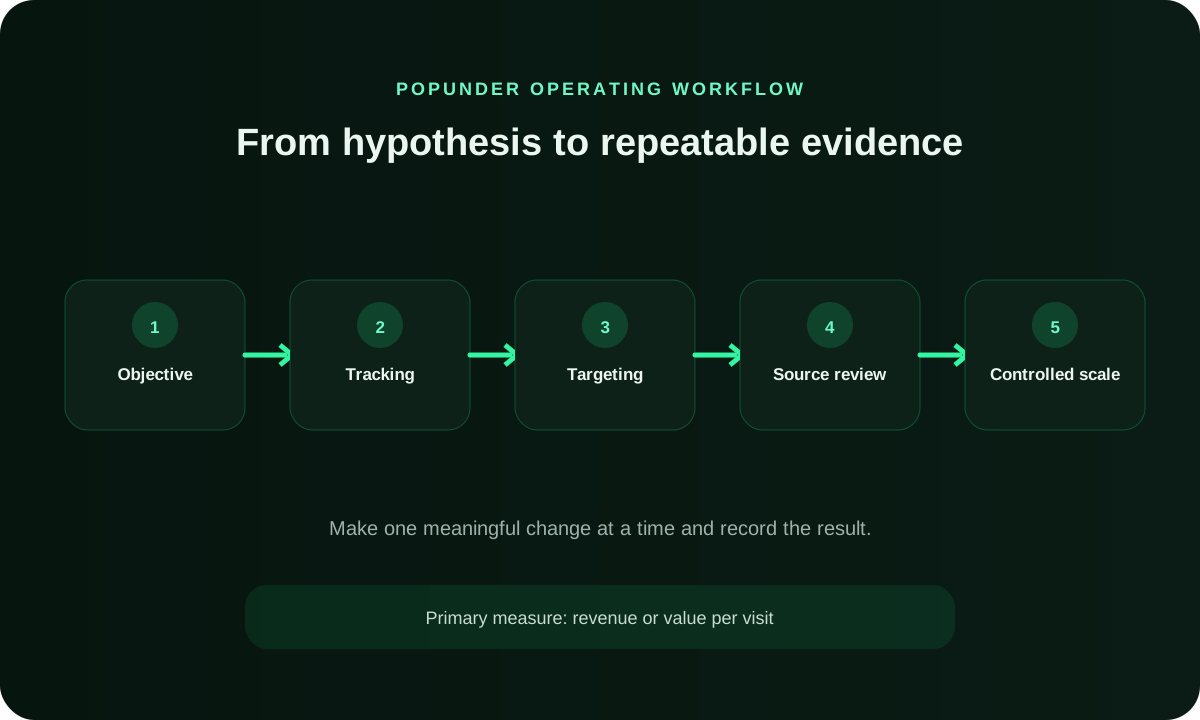
Popunder Advertising Network: Global Traffic for Advertisers hypothesis: launch one bounded FroggyAds test tied to Identify every entity before funding the network; do not change bid, creative, audience and destination together.
Popunder Advertising Network: Global Traffic for Advertisers source review: compare qualified activity, accepted conversions, timing and cost by the source or segment dimensions relevant to Define the popunder event in browser terms.
Popunder Advertising Network: Global Traffic for Advertisers scaling: use Reconcile the billable event with a successful visit and Run a bounded source-readable trial to define what must reproduce before the next budget increase.
Why FroggyAds is relevant to Popunder Advertising Network: Global Traffic for Advertisers
For Popunder Advertising Network: Global Traffic for Advertisers, FroggyAds gives advertisers a self-serve DSP and ad-network workflow for buying supported traffic with campaign-level budgets and targeting. Depending on format and campaign context, available controls can include country, city, device, operating system, browser, carrier, category, source, ID and IP options. SmartCPC and Adscore-supported traffic-quality controls can support the popunder advertising network optimization process, while the advertiser's tracker, analytics and backend acceptance remain the final evidence for commercial quality.
Use Run a bounded source-readable trial as the final checkpoint for Popunder Advertising Network: Global Traffic for Advertisers. If the accepted result does not reproduce after the next meaningful volume step, return to the last stable configuration instead of widening several controls at once.
Popunder Advertising Network: Global Traffic for Advertisers: the buyer task this URL owns
The buying decision on this URL is specific: performance-focused advertisers should use Popunder Advertising Network: Global Traffic for Advertisers to decide whether the format fits the message, device and conversion path. Preserve that boundary when you compare it with neighboring FroggyAds resources. The nearest related FroggyAds page is Global Popunder Ads; this URL keeps ownership of the distinct task to decide whether the format fits the message, device and conversion path.
Anchor the Popunder Advertising Network: Global Traffic for Advertisers review to popup, full-page traffic, conversion tracking, source optimization. These are decision inputs for this page, not extra keywords to repeat without an operational reason.
Checkpoint
Page-specific action
Evidence to keep
Journey
Match the format to the user's attention state and destination.
Retain evidence specific to Popunder Advertising Network: Global Traffic for Advertisers and its accepted outcome.
Creative
Check format requirements, message continuity and landing-page readiness.
Retain evidence specific to Popunder Advertising Network: Global Traffic for Advertisers and its accepted outcome.
Optimize
Compare source-level accepted outcomes before increasing volume.
Retain evidence specific to Popunder Advertising Network: Global Traffic for Advertisers and its accepted outcome.
Hypothetical calculation: if a controlled campaign for popunder advertising network: global traffic for advertisers spends USD 175 and produces 4 accepted conversions, accepted CPA is USD 175 / 4 = USD 43.75. Replace the inputs with your own campaign economics; this is not a FroggyAds performance claim.
Start the paid-media test for Popunder Advertising Network: Global Traffic for Advertisers with FroggyAds when you need direct control over formats, targeting, budgets and source evidence. Increase spend only after the result supports the next acquisition step. Create your free FroggyAds account.
Direct answer
Popunder Advertising Network: Global Traffic for Advertisers — what matters first
Popunder Advertising Network: Global Traffic for Advertisers is useful when the format fits the user journey, device context, creative requirements and measurable conversion path.