Pop campaign economicsPlan pop advertising around the arrival context, landing-page clarity and source-level business outcomes
Pop advertising should be evaluated as a distinct acquisition format rather than as a cheaper version of another channel. The user may encounter the advertiser's destination after a browsing action instead of after a conventional ad click, so the landing page has to establish relevance immediately. The first screen should explain what the offer is, who it is for and what action is available without fake system warnings, forced interaction or a misleading claim that the visitor requested the page. Clear orientation gives the campaign a better chance to turn broad reach into useful intent.
Define the accepted business outcome before buying volume. A visit, button click or form start can help diagnose the funnel, but the campaign should ultimately be judged by the event the advertiser can value: a purchase, approved lead, registration, deposit or another measurable result. Record the normal conversion delay and maximum learning loss before launch so source decisions are not made from a handful of recent visits. Pop traffic can deliver substantial scale, which makes disciplined test boundaries especially important.
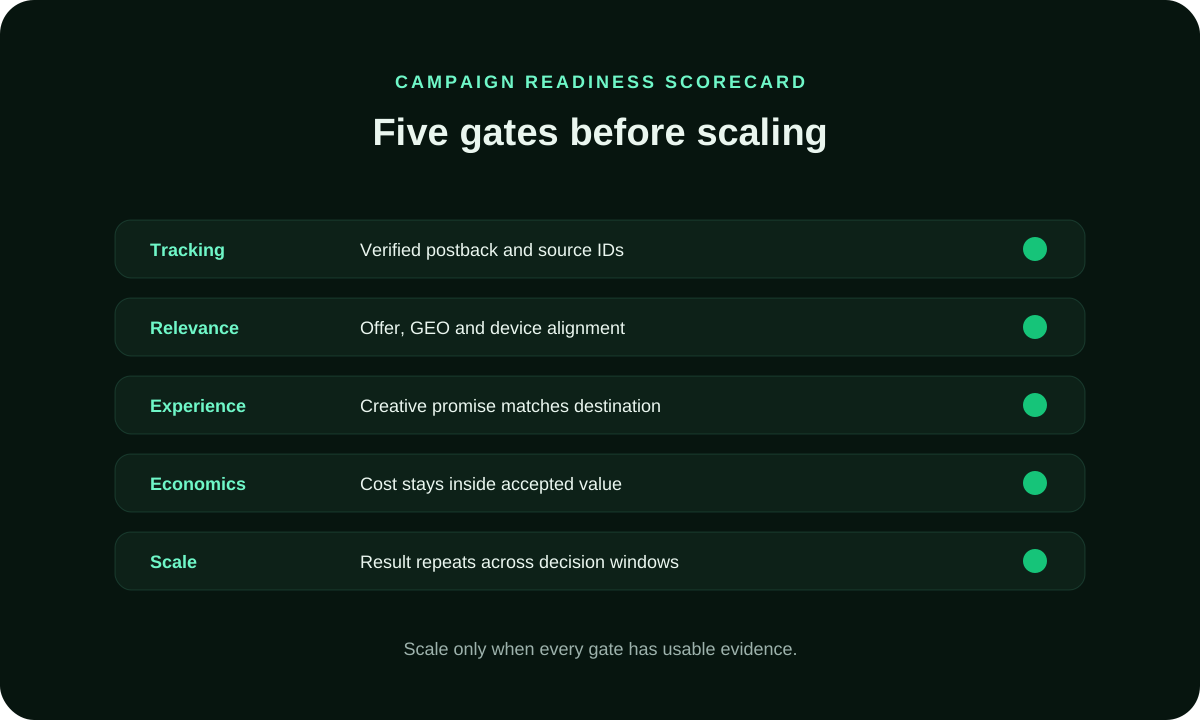
| Pop campaign layer | Control to define | Evidence to review |
|---|
| Arrival context | How quickly does the page explain why it is relevant? | Bounce, progression and accepted outcomes |
| Eligibility | Which GEOs, devices and users can the offer serve? | Qualified conversion rate by segment |
| Experience quality | Does the destination avoid deceptive or obstructive behavior? | Technical QA and complaint signals |
| Source | Which inventory patterns repeatedly create value? | Mature source-level CPA or other approved value |
| Budget | How much can the campaign spend while learning? | Spend versus written stop rule |
| Scale | Does performance hold when more inventory becomes eligible? | Post-change source and device mix |
FroggyAds gives advertisers access to pop inventory through a self-serve environment with country, city, device, operating-system, browser, carrier, category and source-level controls. Those settings are most useful when they follow real offer constraints. If a checkout only works in selected markets or a destination has poor compatibility on one browser family, the campaign should fix or narrow that segment before treating all pop traffic as low quality. Broad reach is valuable only when the business can serve the users being reached.
Build the landing page for fast comprehension. Use a visible headline that matches the promoted proposition, make the primary next step obvious and keep essential commercial conditions close to the action. A visitor arriving through pop traffic should not need to search the page to learn whether the offer is software, ecommerce, entertainment, lead generation or another category. When the message is immediately understandable, the advertiser gets cleaner evidence about audience and source quality instead of measuring confusion.
Do not use aggressive page behavior to manufacture engagement. Auto-triggered downloads, impossible-to-close overlays, fake virus or operating-system notices, misleading browser controls and similar tactics can create activity without genuine user intent. They also make source optimization less meaningful because the campaign is measuring the effect of coercive design. A strong pop funnel gives the user an understandable choice, keeps the destination technically stable and lets the business outcome determine whether the traffic is worth buying again.
Use source IDs as diagnostic evidence after the conversion window has matured. One source may provide low-cost volume that rarely produces accepted outcomes, while another may cost more but create stronger business value. Preserve source identity into the advertiser's analytics where the setup supports it, define a minimum sample and apply allowlist or blocklist decisions only after repeated patterns appear. FroggyAds source controls make those actions fast, but the evidence threshold should remain the advertiser's responsibility.
Segment pop performance by device and browser when the destination behaves differently. Mobile pages, desktop checkout, login flows, payment widgets and redirects can all fail in ways that look like traffic-quality problems. Test the actual landing path on the main targeted environments and compare technical error rates before excluding sources. If one browser is broken across many sources, a browser-level repair or targeting adjustment is more precise than blocking several inventory sources that happened to deliver the same environment.
Creative and destination continuity still matter even when the format creates the visit differently from native or push. If the campaign proposition promises a specific product, market or benefit, the destination should confirm that promise immediately. Avoid generic hooks that win attention but hand the visitor to an unrelated page. The more accurately the ad and page describe the same next step, the more useful downstream conversion data becomes for later optimization.
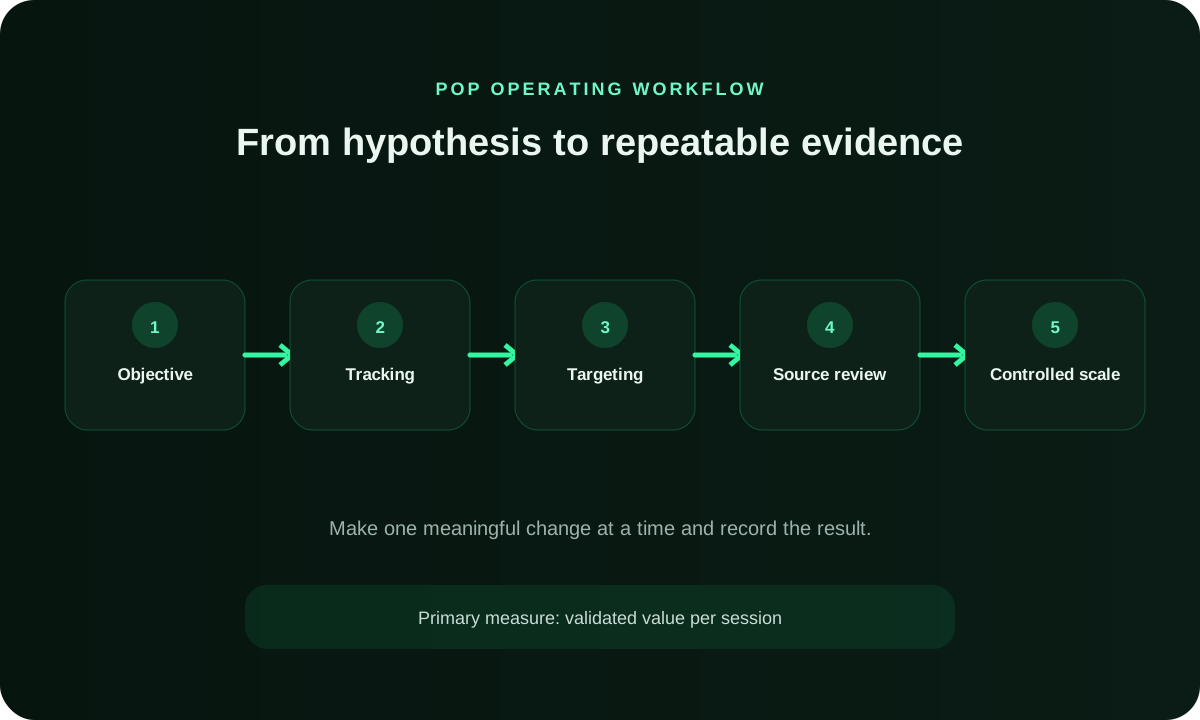
Scale pop advertising in bounded steps. Increase budget, bid, GEO reach or eligible source inventory one major variable at a time, then wait for the same maturity window before judging the new cohort. Additional volume can change the source mix, so the economics observed at a small scale may not persist automatically. If performance weakens, identify which new segment entered before undoing improvements that were already working.
The practical advantage of FroggyAds pop advertising is controllable scale. Advertisers can start with a modest budget, learn from granular source and targeting data and expand only when the accepted business outcome supports it. The format performs best when low media cost is treated as testing room rather than as proof of quality. Clear landing experiences, truthful expectations, mature conversion evidence and reversible source decisions are what turn pop volume into a repeatable acquisition program.
Review the campaign when the offer or destination changes materially. A source that worked with one product, checkout or creative should not keep preferred status automatically after the funnel is replaced. Preserve the earlier source evidence, mark the effective date of the new version and let the changed campaign earn its own mature result. This keeps historical learning useful without turning it into a permanent rule for a different user journey.
Keep customer-support or quality feedback connected to media review. If users repeatedly report that the page was unclear, the offer was unavailable or a commercial condition was misunderstood, fix that experience before increasing volume. FroggyAds can expose more eligible inventory quickly, but scale is only valuable when the destination can turn that traffic into informed users and accepted business outcomes.