
Native Traffic
Plan and optimize native traffic with practical targeting, tracking, source controls, budget limits and conversion-quality checks for advertisers.
Native Traffic in practical terms
Native Traffic refers to in-feed or in-content placements designed to match the surrounding publisher environment. For an advertiser, the practical task is buying, validating and improving the traffic after launch. The format is useful when the team can connect each campaign, source and creative decision to accepted business value rather than treating impressions or clicks as the final result. FroggyAds provides self-serve access to inventory through 750+ SSP integrations, with targeting and reporting controls that can support structured testing. The platform does not remove the need for a strong offer, compliant creative, a fast destination and accurate conversion tracking. A useful plan begins with one measurable objective, one protected test budget and one operating threshold that determines when to pause, revise or scale.
How Native delivery changes the campaign plan
The mechanics of native traffic matter because the user encounters in-feed or in-content placements designed to match the surrounding publisher environment. Its main operating advantage is contextual discovery and room for editorial-style headlines and imagery. That advantage disappears when the campaign ignores clickbait, weak message continuity and optimizing for curiosity rather than accepted outcomes.
Before launch, the buyer should document where the unit appears, which user action makes it eligible, whether the experience differs by browser or device, and how frequency is controlled. This changes both the creative brief and the landing-page design. The campaign should be segmented only where the experience or economics genuinely differ. A mobile and desktop split is useful when page layout, connection speed, form completion or order value changes.
A language split is useful when the message and destination are localized. Every additional segment should answer a specific question; otherwise it reduces sample size and delays a reliable decision.
Choose objectives that fit native traffic
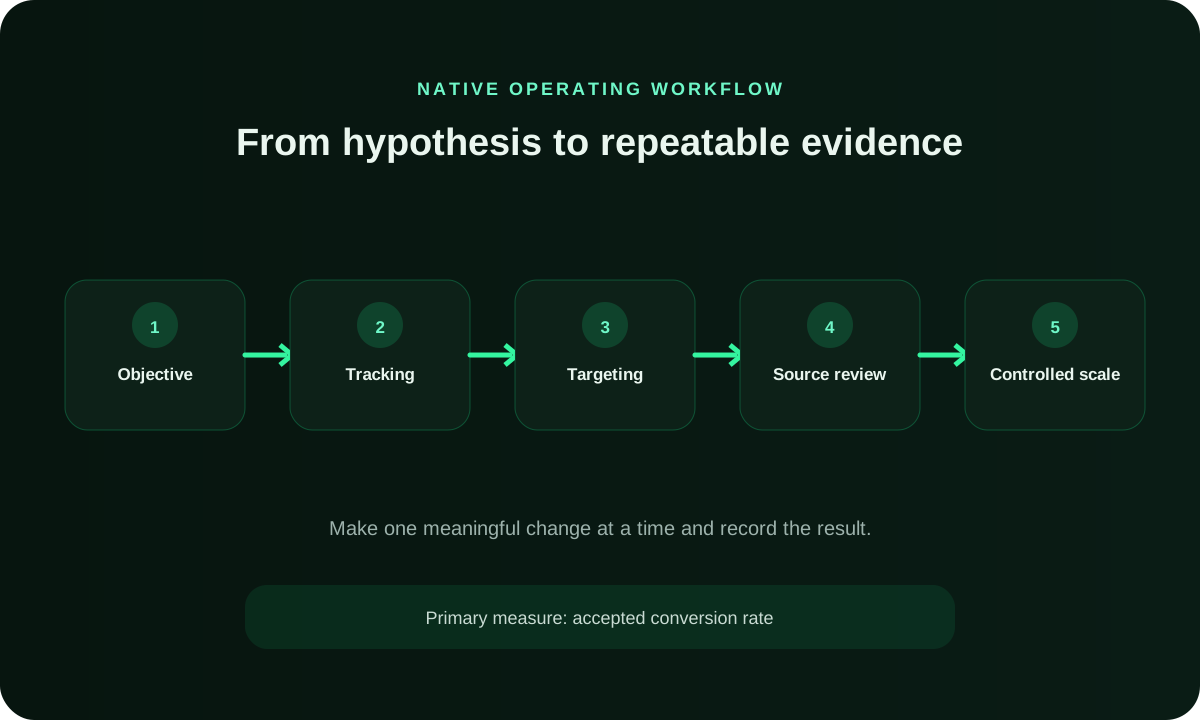
The best objective for native traffic is an event the advertiser can verify after the interaction. Examples include an accepted lead, completed registration, qualified app install, purchase, subscription, funded account or another business event defined by the advertiser. Engagement metrics still have diagnostic value. Click-through rate can reveal whether credible headlines, relevant images and a transparent value proposition earns attention, while bounce rate and time to first action can expose a weak transition to an advertorial or product page that continues the same narrative. They should not be treated as success by themselves. Build a measurement hierarchy: delivery, interaction, qualified visit, primary conversion, validation and revenue or lifetime-value signal. When delayed approvals are common, separate provisional conversions from accepted conversions. This prevents a source with fast but low-quality actions from absorbing more budget than a slower source that produces real value.
Connect the guide to live testing
Connect Native Traffic to a controlled audience test
Use the choices established in “Choose objectives that fit native traffic” to define one audience, budget and source set in FroggyAds. Keep the surrounding offer and measurement rule stable so the test adds evidence to native traffic instead of mixing several changes at once.
Create My Free Account
Build tracking before buying native traffic
Tracking should be complete before the first paid session. Assign unique campaign identifiers, preserve source or placement parameters, and pass the click identifier into the advertiser analytics or tracker. Use server-to-server postbacks where the conversion system supports them, and compare platform totals with first-party records on a consistent time zone. The reporting view for native traffic should include spend, delivered volume, interactions, qualified visits, primary actions, accepted actions and revenue. Keep rejected, duplicate or fraudulent outcomes separate instead of silently removing them. Investigate attribution gaps before changing bids because a broken postback can make good inventory appear unprofitable. A daily reconciliation routine, naming convention and change log make the account auditable. With source-level reporting, the buyer can identify whether performance changes came from inventory mix, creative fatigue, landing-page speed, bid pressure or a tracking fault.
Targeting without starving the test
Begin native traffic with the smallest set of restrictions needed to protect relevance. GEO, language, device, operating system, browser, carrier, connection type, schedule and source controls can all be useful, but combining too many filters can reduce reach and distort the sample. Start from the offer requirements and landing-page capabilities. Exclude locations the business cannot serve, devices the page does not support and environments that create compliance or payment problems.
Then separate only the segments that need different bids, creatives or destinations. For Native, the buyer should watch how source mix changes as bids rise. A higher bid can unlock additional volume while also introducing inventory with different behavior. Record each targeting change and wait for a usable evidence window before deciding whether the segment improved.
The aim is not maximum precision on day one; it is a test design that can discover useful pockets without exposing the budget to obvious mismatch.
Choose the execution format
Choose a paid-media format that supports Native Traffic
Use the criteria around “Targeting without starving the test” to decide whether push, native, display or pop fits the message and destination. Set format, targeting and spend as campaign controls in FroggyAds while the native traffic decision remains the standard for judging the result.
Create My Free Account
Creative and destination alignment
For native traffic, the creative task is credible headlines, relevant images and a transparent value proposition. The destination should be an advertorial or product page that continues the same narrative. Keep the promise, visual language, price, location and call to action consistent from the first impression through the conversion event. Avoid interface elements that imitate system warnings, fake controls or unsupported urgency. Build several concepts around different value propositions rather than changing only colors. One variation may emphasize speed, another proof, another convenience and another a clear financial or product benefit. Test one major variable at a time so the result can be interpreted. Page speed should be checked on realistic mobile connections, not only a fast office network. Forms should request only information needed at that stage. When a creative wins on engagement but loses on accepted conversion quality, the downstream result takes priority.
Budget, bids and cost control
A controlled native traffic test needs three financial limits: a daily cap, a maximum bid and a maximum acceptable cost for the validated outcome. Estimate how many clicks or visits are needed to observe a meaningful number of conversions, then confirm that the test budget can support that sample without exceeding the loss limit. Do not chase the lowest headline price. Cheap activity can become expensive when it fails validation, while a higher-cost source can be efficient when it creates more accepted value. Review effective CPC, CPM, CPA or value per visit according to the buying model, but translate every model into the same business outcome. Pacing matters as well. Rapid spending can hide a bad destination or broken postback before the team notices. Start with protected caps, monitor delivery, and use bid changes that are large enough to measure but small enough to preserve control.
Optimize sources with a repeatable scorecard
The core optimization loop for native traffic is source discovery, observation, classification and controlled reallocation. Give each source enough opportunity to produce a usable evidence window. Classify it as scale, maintain, watch, bid down or pause. Use accepted conversions and revenue when available; use earlier funnel signals only when the final event has not matured. A whitelist can protect proven inventory, but a separate discovery campaign should continue testing new sources so scale does not depend on a shrinking list. Blacklists should be based on documented evidence, not one bad click or a short time window. Review the relationship between bid, win rate, source mix and conversion quality. When spend rises faster than value, determine whether the issue is a new source cohort, creative fatigue, destination performance or market competition before applying a broad cut.
Put the guide into practice
Turn Native Traffic into a bounded campaign test
With “Optimize sources with a repeatable scorecard” documented, launch only the next reversible test. Set a spending limit, preserve the baseline and use source-level and audience controls so the next step depends on qualified outcomes for native traffic, not activity volume.
Create My Free Account
Quality, compliance and user experience
Quality for native traffic includes more than automated bot filtering. The advertiser should verify that the landing page works, the offer is permitted in the target market, claims are supportable, privacy notices are present and the user can understand what happens after the click. FroggyAds uses Adscore traffic-quality controls, but advertisers should still compare platform data with first-party analytics and validation results. Review unusual click patterns, impossible conversion timing, repeated identifiers and sharp source-level discrepancies. Do not publish deceptive interfaces, counterfeit endorsements, hidden subscriptions or claims that cannot be demonstrated. Frequency and recency also affect user experience. A campaign that reaches the same audience too often can produce declining response and complaints even when traffic is technically valid. Sustainable performance comes from transparent messaging, appropriate targeting and a destination that delivers the advertised value.
Scale native traffic without losing the baseline
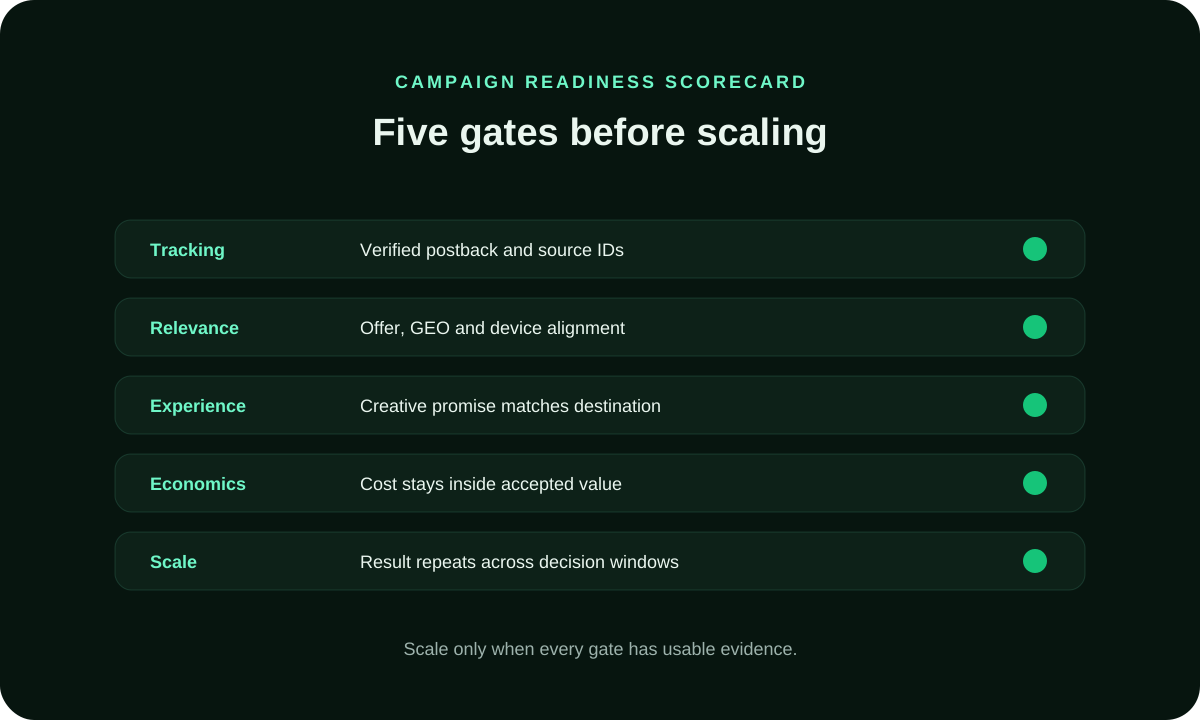
Scale only after the campaign has repeated its result across more than one decision window. Preserve the winning baseline before changing budgets, GEOs, devices or creatives. Then increase spend in controlled increments while monitoring marginal cost, accepted conversion quality and source composition. Separate expansion tests from the stable campaign so a new audience or bid does not erase the original evidence. Creative rotation should be planned before fatigue appears, and landing-page changes should be versioned. When performance declines, compare the current campaign with the baseline: bid, delivery, source mix, device share, page speed, tracking rate and validation delay. A decline that appears after a budget increase may be an inventory-mix problem rather than a format problem. The goal of scaling native traffic is not the highest possible daily spend. It is the largest repeatable volume that remains inside the advertiser's quality and profitability rules.
Pre-launch checks for Native Traffic
Native Traffic FAQ
At the documented discussion, what should Native Traffic prove?
During the current approval, set one outcome for Native Traffic. Use the measured assessment; cap spending. Let the controlled discussion confirm quality. Expand after the practical approval when results stay stable.
During the current approval, what must Native Traffic clarify?
During the measured assessment, define the audience for Native Traffic. Use the controlled discussion; state offers. Let the practical approval expose limits. Approve after the staged assessment when claims are supported.
At the measured assessment, how should Native Traffic test?
During the controlled discussion, change one variable in Native Traffic. Use the practical approval; preserve baselines. Let the staged assessment set rollbacks. Continue after the initial discussion when comparison stays fair.
During the controlled discussion, which claims can Native Traffic support?
During the practical approval, check every claim in Native Traffic. Use the staged assessment; show terms. Let the initial discussion flag promises. Publish after the agreed approval when support is clear.
At the practical approval, which audience suits Native Traffic?
During the staged assessment, choose an audience for Native Traffic. Use the initial discussion; add exclusions. Let the agreed approval compare segments. Continue after the final assessment when quality is serviceable.
During the staged assessment, what does Native Traffic cost?
During the initial discussion, include every fee in Native Traffic. Use the agreed approval; count outcomes. Let the final assessment test value. Buy after the documented discussion when delivery is usable.
At the initial discussion, which evidence guides Native Traffic?
During the agreed approval, check valid delivery for Native Traffic. Use the final assessment; reconcile records. Let the documented discussion resolve differences. Change after the current approval when records agree.
During the agreed approval, what should pause Native Traffic?
During the final assessment, screen control failures in Native Traffic. Use the documented discussion; record gaps. Let the current approval assign fixes. Resume after the measured assessment when review is complete.
At the final assessment, how can Native Traffic improve?
During the documented discussion, compare mature data for Native Traffic. Use the current approval; change one lever. Let the measured assessment preserve baselines. Keep the controlled discussion ready if evidence weakens.
During the documented discussion, when can Native Traffic scale?
During the current approval, require stable acceptance from Native Traffic. Use the measured assessment; raise spending. Let the controlled discussion watch quality. Return after the practical approval if evidence weakens.
Continue the media-buying workflow
Build a controlled native traffic test
The practical role of Build a controlled native traffic test in Native Traffic is to expose the exact condition that can change the buyer's next action. Review define, accepted, business, verify, conversion and tracking together, because a strong result in one of them should not conceal a material failure in another. Keep the baseline unchanged while testing the next hypothesis; that comparison is what makes the decision reproducible.
Native Traffic: what should the advertiser decide next?
For Native Traffic, native means a feed or content-style placement designed to fit the surrounding environment. The buying decision is whether that delivery context fits the offer, creative and destination well enough to produce an accepted post-click result. Use Native Traffic in practical terms and How Native delivery changes the campaign plan as the page-specific checkpoints, then judge native traffic on headline-image continuity, pre-click context and downstream intent plus downstream conversion quality.
On this Native Traffic page, the decision should remain tied to the existing evidence around Native Traffic in practical terms, How Native delivery changes the campaign plan and Choose objectives that fit native traffic. Those sections give native traffic its specific context; the table below turns that context into campaign actions rather than adding another generic definition.
| Decision | What to verify | FroggyAds action |
|---|---|---|
| Native Traffic objective | Use Native Traffic in practical terms to define the accepted business event and the maximum learning loss for native traffic. | Launch one FroggyAds campaign objective for Native Traffic and keep the conversion definition stable. |
| Native Traffic audience | Use How Native delivery changes the campaign plan to verify market, device, language and offer eligibility for native traffic. | Apply only the FroggyAds targeting controls that change the real Native Traffic customer journey. |
| Native Traffic source evidence | Use Choose objectives that fit native traffic to keep source-level differences visible instead of relying on one blended native traffic average. | Keep, cap, exclude or retest Native Traffic inventory from documented source evidence. |
| Native Traffic economics | Use Connect Native Traffic to a controlled audience test to connect media spend with accepted conversions and downstream value for native traffic. | Protect the Native Traffic test with a written budget boundary and a consistent attribution window. |
| Native Traffic scale rule | Use Build tracking before buying native traffic to define the exact evidence that earns the next budget increase for native traffic. | Scale Native Traffic one major control at a time and compare marginal performance with the prior baseline. |
A page-specific FroggyAds test sequence for Native Traffic
- Native Traffic outcome: define the accepted event for native traffic and the maximum loss permitted while the first test is learning.
- Native Traffic path: verify market eligibility, device experience, landing-page continuity and tracking against Native Traffic in practical terms before buying more traffic.
- Native Traffic hypothesis: launch one bounded FroggyAds test tied to How Native delivery changes the campaign plan; do not change bid, creative, audience and destination together.
- Native Traffic source review: compare qualified activity, accepted conversions, timing and cost by the source or segment dimensions relevant to Choose objectives that fit native traffic.
- Native Traffic scaling: use Connect Native Traffic to a controlled audience test and Build tracking before buying native traffic to define what must reproduce before the next budget increase.
Why FroggyAds is relevant to Native Traffic
For Native Traffic, the Why FroggyAds is relevant to Native Traffic checkpoint should answer a concrete buyer question rather than repeat a generic framework. Use gives, self-serve, ad-network, workflow, buying and supported as the traceable inputs for this section, then state which missing item would be serious enough to stop or narrow the decision. Use the finding to choose a specific action—keep, cap, exclude, renegotiate, retest or stop—rather than recording a score with no operational consequence. When the page's recommendation becomes a traffic test, FroggyAds provides the campaign controls to execute it while the advertiser retains responsibility for offer fit, tracking and backend acceptance.
Use Build tracking before buying native traffic as the final checkpoint for Native Traffic. If the accepted result does not reproduce after the next meaningful volume step, return to the last stable configuration instead of widening several controls at once.
How to tell whether Native Traffic is working
For Native Traffic, measure native as a feed or content-style placement designed to fit the surrounding environment and keep headline-image continuity, pre-click context and downstream intent beside the accepted post-click event. Use Native Traffic in practical terms as the baseline for whether delivery quality is actually improving.
Reconcile Native Traffic on one evidence window
For Native Traffic, compare FroggyAds reporting with the advertiser's tracker, analytics and backend records for the same dates and attribution rules. Record media spend, relevant delivery events, qualified landing activity, accepted conversions and rejection reasons, then use How Native delivery changes the campaign plan to investigate material gaps before they become optimization rules.
Diagnose the smallest failing layer in Native Traffic
If native traffic delivery is weak, review eligibility, targeting, bid and inventory first. If traffic arrives but the destination underperforms, inspect speed, message continuity, forms, redirects and device compatibility. If front-end conversions look healthy but backend acceptance is weak, use Choose objectives that fit native traffic to isolate audience or source quality after tracking has been verified.
Set the next Native Traffic scale and stop rule
Write the exact Native Traffic result that earns more budget and the exact condition that pauses the test. Increase one major control at a time and compare marginal native traffic performance with the prior configuration. FroggyAds supplies the campaign controls; the advertiser's accepted downstream data determines whether the expansion is commercially useful.
Native Traffic: the buyer task this URL owns
The buying decision on this URL is specific: performance-focused advertisers should use Native Traffic to decide whether the format fits the message, device and conversion path. Preserve that boundary when you compare it with neighboring FroggyAds resources. The nearest related FroggyAds page is Native Ads 2026; this URL keeps ownership of the distinct task to decide whether the format fits the message, device and conversion path.
Anchor the Native Traffic review to native placement, ad attribution, creative assets, content fit. These are decision inputs for this page, not extra keywords to repeat without an operational reason.
| Checkpoint | Page-specific action | Evidence to keep |
|---|---|---|
| Journey | Match the format to the user's attention state and destination. | Retain evidence specific to Native Traffic and its accepted outcome. |
| Creative | Check format requirements, message continuity and landing-page readiness. | Retain evidence specific to Native Traffic and its accepted outcome. |
| Optimize | Compare source-level accepted outcomes before increasing volume. | Retain evidence specific to Native Traffic and its accepted outcome. |
Hypothetical calculation: if a controlled campaign for native traffic spends USD 125 and produces 5 accepted conversions, accepted CPA is USD 125 / 5 = USD 25.0. Replace the inputs with your own campaign economics; this is not a FroggyAds performance claim.
FroggyAds gives performance-focused advertisers a self-serve way to act on the Native Traffic decision: configure the traffic test, preserve source-level reporting and scale only after the accepted outcome supports the next step. Create your free FroggyAds account.
Native Traffic — what matters first
Treat Native Traffic: what matters first as a specific gate for Native Traffic, not as a reusable checklist item that means the same thing on every page. Document format, fits, journey, device, context and creative in the same decision record so a later reviewer can see why the option passed, failed or needs a narrower retest. Connect the finding to one owner and one next action so the page helps the visitor decide rather than merely describing a process. For a FroggyAds campaign, translate this conclusion into the narrowest applicable targeting or budget change and reconcile the result with the accepted business event.