
Days 1–5: define the baseline
Define the job, owners, events, baseline and non-negotiable controls. For media buying tools, keep the previous stable process available until the new workflow completes reconciliation.
Evaluate media buying tools by the work they improve: planning, creative checks, tracking, source analysis and reporting. This guide helps you compare ownership, data quality, integration effort and total operating cost, then prove the chosen workflow with a bounded test.
Quick answer: Choose media buying tools against a specific workflow, its data requirements and the full cost of operation. Demonstrate the task with your own records, check an error and an export, and keep the previous process available during the pilot. FroggyAds can provide the controlled traffic-execution layer; it does not replace every planning, creative, customer-data or business-reporting system.
For a comparison with a broader buying product, see the Google Display & Video 360 overview . Its modules describe Google's product, rather than a list of FroggyAds capabilities.
Define media buying tools by the operating tasks they support, such as planning, bidding, creative checks, tracking, source analysis or reporting. Name the decision, its owner and the record needed to perform it correctly. A tool earns its place when the team can complete that work more reliably, without losing visibility into how the output was produced.
Media buying tools solve specific workflow problems and should not be treated as interchangeable with a DSP, ad network or full buying platform. This boundary prevents media buying tools from becoming an untestable promise that one product will replace every specialist system. A clear architecture identifies which platform is authoritative for customer data, campaign configuration, media delivery, creative assets, conversions, finance and final business outcomes.
Start with one recurring problem rather than a long product shortlist. Measure the time, rework or error involved in the existing task and identify its cause. A source-analysis tool will not repair missing conversion identifiers, and another dashboard will not resolve an undefined accepted event. Establish the prerequisite data and ownership before paying to automate the work.
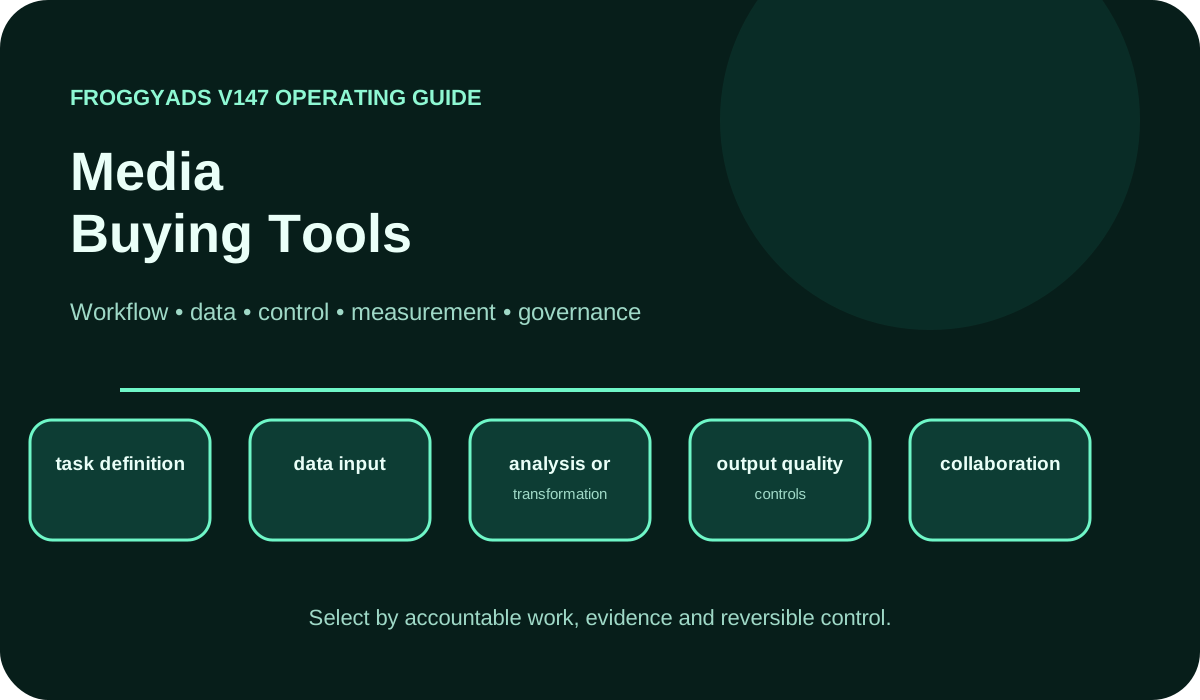
The core capability map for media buying tools includes task definition, data input, analysis or transformation, output quality controls, collaboration, version history, export and interoperability, and usage governance. Each capability needs an owner, an input contract, an output contract and a failure path. A useful requirement states the decision being made, the data required, the action taken, the expected result and the evidence retained for review.
Assign ownership at the level where an action can change a campaign. The analyst may prepare a source exclusion recommendation, while a buyer approves the change and records its effective time. Keep those responsibilities explicit in the workflow. A shared login or an unowned spreadsheet makes it difficult to explain who changed the evidence or the spending decision.
Evaluate integration depth with a representative task. Can the tool import the source and creative references you need, preserve their meanings and export a result that another system can use? A connector count does not establish this. Choose FroggyAds for the traffic-execution layer when our campaign controls fit the test, and validate how your chosen tools handle its actual records.
Weight the scorecard around costly or risky daily work. Require a demonstration using your sample data, including one malformed record and one permission failure. Record pass, limited or unsupported for each requirement, with the evidence and the owner who checked it. An attractive overall score should not override a failed essential control such as a missing export or unsafe spending action.
| Capability | Operating question | Evidence required |
|---|---|---|
| task definition | Which decision does this task support, and who can approve its output? | A completed source-review example, approval record and documented handover. |
| data input | Can the tool import required identifiers without changing their meaning? | A representative import, rejected-row log and timezone and currency mapping. |
| analysis or transformation | How are calculated metrics and recommendations produced? | A traceable calculation, versioned rule and comparison with a hand-checked sample. |
| output quality controls | What prevents an incomplete or invalid output from reaching a campaign? | A failed-data example, validation message and safe action that preserves the previous state. |
| collaboration | Can an analyst propose a change without granting unrestricted spending access? | A role-based handover from recommendation to approval and implementation. |
| version history | Can the team identify and recover the state used for an earlier decision? | A change log, effective timestamps and a successfully restored test configuration. |
| export and interoperability | Will the output remain usable outside the tool? | An actual detailed export, stable identifiers, field definitions and an import into the receiving process. |
| usage governance | Which users, credentials, data uses and spending actions are permitted? | Documented access limits, credential handling, review ownership and a tested exit procedure. |
Connect the guide to live testing
Use one representative campaign to test the tool's intended job. For a reporting tool, reconcile a sample from delivery through accepted outcomes; for a recommendation tool, record the proposed action before a buyer implements it. Keep the offer and major settings stable where practical. FroggyAds provides the paid-traffic controls, while the tool must demonstrate that it improves the specified work.
Create My Free Account
Define a small event contract before building integrations. Include the campaign and creative identifiers, available source reference, event name, timestamp and timezone, currency, value scope and deduplication rule. Name the authoritative system for each field. Separate an unknown value from zero so an incomplete import cannot silently become evidence that a campaign produced nothing.
Follow one record from collection through transformation, export and the final buying decision. Retain the original value and the rule that changed it, particularly for currency conversion, attribution and acceptance status. If a tool aggregates away source detail, document which decisions that summary can support and which require a more detailed record.
Validate the smallest production data set that can expose the expected failure modes. Include a duplicate event, missing identifier, delayed approval and a reversal where relevant. Check whether the tool flags the problem, preserves the evidence and allows a correction without rewriting history. Resolve material join failures before using a recommendation to expand traffic.
Implement the selected workflow in stages: configure access, import a controlled sample, complete the task, review its output and test recovery. Keep the existing report or procedure available until the new result reconciles. Record configuration and field mappings alongside the sample, so the production setup can be checked against what the demonstration actually proved.
Set naming conventions, roles and approval states for the live workflow pilot. Confirm who responds to a failed import, stale report or unexpected recommendation. Our campaign controls help keep a FroggyAds traffic test bounded, but your tool rollout also needs an owner who can stop its automation and continue the essential work manually.
Review the implemented workflow against its baseline: which task was completed, what the user checked and where rework remains. Retain an accepted output and an exception example. Expand the tool's scope only when the improvement survives normal operation, and remove an older report or licence deliberately after its replacement and export have been tested.
The measurement model for media buying tools should include task completion rate, time per task, quality acceptance rate, error rate, reuse rate, active-user rate, cost per completed task, and measured impact. Operational measures belong beside commercial measures so a platform cannot appear successful merely because it is widely used while campaign quality, lead quality or economics deteriorate.
Use layered reporting for media buying tools. Delivery systems report impressions, clicks, spend and platform events. Analytics reports sessions and attributed behavior. Business systems report accepted leads, orders, revenue, refunds and margin. Reconcile the layers with stable identifiers, documented time zones, attribution windows and currencies.
Measure task performance and output quality over the same workload used for the baseline. Retain accepted results, errors requiring correction and the staff effort involved. A source recommendation produced faster is only useful if the buyer can still investigate its evidence and act within the offer's rules. Review the next representative workload before assuming the first saving will recur.
Define the job, owners, events, baseline and non-negotiable controls. For media buying tools, keep the previous stable process available until the new workflow completes reconciliation.
Configure roles, naming and field mappings, then complete the workflow with a limited data sample. Test an error and a recovery as well as a successful run. Resolve an essential control failure before connecting the tool to a production spending action. The dates are a planning aid, not evidence that the integration is ready.
Reconcile the pilot's reporting with the receiving system and inspect exceptions before expanding its workload. Check a normal output, a delayed update and a failed import with the intended user. Retain the records used to resolve each discrepancy, and confirm that the buyer can continue the essential task if the tool is temporarily unavailable.
Review accepted outputs, operating effort, unresolved limitations and the cost of keeping both processes running. Expand only the capabilities that justified the pilot. Retire a redundant report or licence deliberately after its replacements and exports work; otherwise a new tool can add maintenance rather than remove it.
Choose the execution format
Select push, native, display or pop traffic according to the advertisement, destination and eligible use case, then check the current specifications for that route. Tool evaluation does not establish that every format suits the same offer. Keep the first FroggyAds test narrow enough that the selected tracking or analysis workflow can explain the delivery and accepted outcome.
Create My Free Account
Bound each automation by its objective, permitted inputs, maximum change and stop conditions. A bid recommendation and a live bid change carry different responsibilities. Require the tool to expose the state and signal behind an action, and confirm how a buyer can stop it if data becomes stale or the offer changes.
Keep human approval for changes whose consequences exceed the pilot's agreed limits. Define the thresholds in the system that actually enforces the action, and test them before relying on an alert. A notification after excessive spend is not equivalent to a preventive limit. Preserve the last stable configuration and a responsible contact.
Run recommendations in a non-executing comparison first where the tool supports it. Save what it would have changed, then check the logic against the buyer's existing decision and later accepted outcomes. Investigate disagreement rather than assuming that faster calculation is better judgement. Release a bounded live action only after the output and recovery process are understood.
Give each user and integration only the access needed for its task. Separate reading reports, editing mappings and changing a funded campaign. Retain audit history and review access when an employee, agency or vendor relationship changes. These are tool-selection requirements to verify with each provider, not an assertion that every product includes the same security controls.
Minimise the data moved between systems and document the permitted purpose, retention and deletion process. Check whether changing eligibility or consent affects the records already exported. Use aggregated or non-personal evidence where it answers the question. A technically available identifier is not, by itself, permission to use it for every targeting or measurement purpose.
Security review for media buying tools should cover authentication, single sign-on, API credentials, audit logs, vendor subprocessors, data location, incident response and exit procedures. Marketing and advertising systems often connect to high-value customer and media accounts, so compromise can create impact far beyond the subscription.
Choose a representative proof of value that includes normal work and a meaningful exception. Ask the intended user to complete it with your roles and sample records, rather than watching a polished demonstration. Score the outcome against requirements agreed beforehand. Treat unsupported essentials as a reason to narrow or reject the purchase even when optional features are impressive.
Compare complete costs over a stated period: licence or usage fees, implementation, migration, training, data, verification, maintenance and staff time. Separate the media budget from the tool cost, and show the assumptions behind any claimed saving. A low subscription price can still be expensive if the team must maintain duplicate reports or repair unreliable exports.
Use when a focused tool removes a measured bottleneck without creating duplicate data or hidden workflow ownership. Record the media buying tools decision in plain language: the problem being solved, evidence collected, accepted limitations, owner, review date and conditions that would trigger replacement. This makes procurement an operating decision rather than a permanent endorsement.
The main failure modes for media buying tools are tool sprawl, duplicate data, unverified outputs, missing ownership, free-tier limits, and lack of export or audit history. Convert each risk into a preventive control and measurable warning. Data-lock-in risk requires a tested export, while automation risk requires logs, approval thresholds, exclusions and a kill switch.
Review exceptions independently of the average success rate. A tool that handles ordinary records well may still fail precisely when an offer is paused, an identifier is missing or a conversion reverses. Keep counts, affected decisions and unresolved errors in the pilot review. Prioritise failures by their commercial consequence instead of hiding them in a blended score.
Maintain a rollback package for media buying tools: the last stable configuration, data-export procedure, credential rotation steps, fallback reporting and responsible contacts. Test rollback before a major migration or automation release. The ability to reverse a change is part of platform quality.
Write a short operating guide for the actual task: required inputs, responsible person, normal procedure, approved output and recovery path. Include a worked example with its field definitions and cost scope. A colleague should be able to repeat the operation without guessing which export or dashboard state the instructions refer to.
Keep source definitions and report names stable, and give changed versions an effective date. Explain differences between a platform conversion, an analytics attribution and an accepted business outcome. That documentation helps a team interpret a recommendation accurately when different systems legitimately report different totals.
Make each material limitation easy to find beside the decision it affects. State when the data was collected, which population and period it covers, and what remains unobserved. Clear documentation supports an informed purchasing decision; it does not promise organic visibility or make a tool's commercial claims independently verified.
Put the guide into practice
Pilot the next workflow with a defined owner, a spending boundary where relevant and a record of the earlier process. Use FroggyAds for the traffic purchase when it fits the brief, then test whether the selected tool improves the intended analysis or action. Expand the workflow after the evidence supports its use, rather than because the rollout calendar has ended.
Create My Free Account
Use FroggyAds when controlled paid-media execution is the required layer inside the wider media buying tools operating model. Keep customer records, consent, creative production and final business outcomes in the systems accountable for those jobs, then reconcile media delivery to accepted conversions and value.
Begin with a transaction map that follows one representative opportunity from planning to the accepted business outcome. Identify the campaign objective, buyer and seller roles, inventory, pricing rule, creative version, delivery and conversion events, and financial reconciliation. This separates the responsibilities of the buying platform from the specialist tool being evaluated. Procurement, operations and analytics can then test whether the tool owns a required decision or merely displays another system's report.
Test transaction records with an actual campaign sample from the intended traffic route. Can the tool distinguish a source reference from a placement, retain the creative version and show which records were unavailable? An analysis tool should not infer inventory transparency from a broad provider label. State the detail you can inspect, and keep an unsupported field unknown instead of filling it with a misleading default.
Keep tool charges and media-budget controls in different parts of the cost review. A recommendation may be inexpensive to calculate yet costly to implement if every change needs manual reconciliation. Record subscription or usage fees, staff effort and any additional verification work. If the tool can execute spending changes, test the permitted change limit and recovery path rather than assuming a reporting permission also grants buying authority.
Compare the tool's conversion records with the system that accepts the business outcome. For a source report, check whether a later rejection changes the earlier row, appends a status update or disappears from the export. Preserve enough history to reproduce what the buyer knew at the decision time. A larger attributed conversion total is not proof of better measurement, customer quality or profit.
Minimise data used for the tool's assigned task. A report that only needs a campaign reference and acceptance status may not require the customer's identity. Document access, purpose, retention and deletion handling for each transfer. Test the effect of a record becoming ineligible after an export. Provider-specific privacy or consent functionality must be verified rather than assumed from a general integration claim.
For a creative-checking tool, prepare an approved asset and a deliberately unsuitable sample. Check dimensions, weight, destination, text limits and review state against the intended format's actual requirements. The useful result is a traceable acceptance or rejection with its reason and version. Preserve the asset used for delivery so an earlier approval cannot accidentally be applied to a later edited file.
Prove a tool's value by asking its intended user to complete the recurring job with realistic permissions. Include import, analysis, approval, export and recovery where they belong in that workflow. Record elapsed effort and output acceptance against the current process. If the tool only recommends source changes, do not award it credit for campaign-creation features it neither needs nor supplies.
Check whether a source-analysis tool retains the supply information available from the buying route. Known intermediaries or fee components can help explain a result, but an empty field does not establish that a transaction was direct. Keep the underlying record and its limits accessible after recommendations are produced. The buyer should be able to inspect why a group was flagged without accepting an unexplained score as the whole decision.
Review new tool-assisted decisions independently of the historical account average. Compare the affected allocation, records and mature outcomes with the baseline conditions, noting any offer, destination or tracking changes. A useful recommendation may improve an operating task without proving incremental campaign profit. Document that distinction so the procurement review credits observed work rather than a result the pilot cannot establish.
Finish with a purchasing decision the next operator can use: approved task, users, data fields, operating cost, unresolved limits and the reason for selecting the tool. Attach a successful export and the fallback procedure. Name the trigger for reducing scope or cancelling access. The tool should remain replaceable without losing essential campaign history or leaving a buyer unable to explain earlier spending decisions.
State the workflow's business purpose and the accepted event it supports. Identify the eligible population, decision period and maximum affordable operating cost. Keep the chosen tool responsible for its defined task rather than crediting it with every campaign result observed during the pilot.
Specify the environments, formats, source detail and exclusions the workflow requires. Compare an actual delivery sample with that requirement. If the tool cannot expose the needed placement or supply reference, record the limitation before treating its recommendation as a basis for a source decision.
List the fields, timestamps, currency, event meanings, ownership and validation rules needed for the task. Retain identifier mappings and error handling through each transfer. Test a delayed or changed record so the tool does not continue recommending action from an outdated acceptance state.
Connect approved assets to their format, destination, campaign and review status. Keep the version actually used for a result, including component combinations where relevant. A creative-checking tool should demonstrate how it identifies an invalid asset and prevents that version from being mistaken for the approved one.
Separate the planned allocation, campaign budget, bid, pacing, fees and invoiced cost. Set limits on the changes a tool may propose or execute, and test its response to an exceeded boundary. Record who can approve an exception and how the previous setting is restored.
Reconcile delivery with analytics and accepted outcomes using documented attribution, follow-up and reversal rules. Confirm that the tool distinguishes pending events from mature value. Report missing joins rather than treating an incomplete record as a settled commercial result.
Evaluate invalid-activity signals, source transparency, duplicates, rejections and post-conversion quality according to the workflow. Each tool should demonstrate the evidence it actually supplies. Use those signals with downstream records; a quality flag alone cannot establish that a visitor will become a profitable customer.
Test detailed exports, configuration backup, credential revocation and fallback reporting before the tool becomes critical. Agree who owns the handover and which records must remain available after cancellation. Retain the completed recovery test with the purchasing decision.
Choose against the inventory, workflow, optimisation, governance and reporting the team actually needs. A popular platform may still be wrong for the intended markets or controls.
Request current supply detail, supported formats, geography, quality controls and transparency levels. Run a limited test because available inventory can change.
Bulk editing, reusable controls, approval, pacing alerts, clear naming and dependable exports can reduce manual error. Validate them with the team's daily tasks.
Use automation after conversion quality, value, delay and safety boundaries are defined. Monitor whether it shifts spend toward cheap but unsuitable actions.
Look for inclusion and exclusion lists, category controls, placement visibility, verification options and rapid blocking. No control removes the need for ongoing review.
It should expose quality signals, support third-party checks where appropriate and allow evidence-based exclusions. Buyers still need downstream behaviour to detect suspicious conversions.
The tool should support governed conversion definitions, value, deduplication, time windows and privacy-safe integrations. Test offline or delayed outcomes before relying on them.
A detailed, consistent export of spend, delivery, placement and conversion data allows reconciliation. Confirm retention, granularity and access before launch.
Include platform fees, minimum spend, data, verification, creative, support and internal operation. Compare total cost with the inventory and control actually used.
It should prove access, workflow, tracking, quality, reporting and viable economics for a defined campaign. Agree a stop rule and data export before funding the pilot.
The references below cover Google's own buying products, acquisition reporting and attribution. Their controls and billing rules apply to those products; they are comparison context for this guide, not FroggyAds feature or performance claims.
For the paid-media part of Media Buying Tools, FroggyAds provides self-serve campaign controls, source controls, conversion tracking, campaign budgets and reporting.
Create My Free AccountUse this guide when selecting tools for planning, tracking, creative checks, source analysis or reporting. If you first need the buying process itself explained, read What Is Media Buying . Return to the tool decision with one defined task, an accountable user and a sample that demonstrates whether the proposed system improves the work.
Understand DSP and SSP roles when evaluating a tool's data. A demand-side platform supports advertiser buying, while a supply-side platform supports inventory owners. Real-time bidding and an ad exchange may be part of the transaction context. A specialist tool may analyse records from these systems without owning the bid strategy, inventory relationship or campaign purchase.
| Checkpoint | Page-specific action | Evidence to keep |
|---|---|---|
| Fit | Name the task, accountable user and essential control. | A baseline example, required identifiers and the cost of the current work. |
| Test | Complete one normal workflow and one meaningful failure case. | Accepted output, exception handling, permission check and recovery result. |
| Decision | Keep, narrow or replace the tool against the agreed task. | Complete operating cost, unresolved limits and the tested export and exit record. |
Hypothetical media-cost calculation: USD 250 of media spend divided by four accepted conversions equals USD 62.50 per accepted conversion . This excludes the tool subscription, implementation, creative, staff and other costs. Compare the complete cost of the workflow as well as campaign media cost; neither figure alone proves that a tool caused the observed result.
Choose FroggyAds for a paid-traffic test when you need direct control over format, targeting, bid, budget and source evidence. Keep the tool's task and accepted outcome clear, and inspect the records before releasing the next allocation. Create your free FroggyAds account . Campaign traffic requires funding; account access is separate from the paid test budget.
Select a tool for a demonstrated bottleneck and inspect the evidence behind its output. Keep the media purchase, specialist analysis and final business records accountable to their respective owners. We recommend FroggyAds for the controlled paid-traffic layer when our formats and campaign controls fit your plan, with your chosen tools supporting a clear and reviewable next decision.