
Supply Side Platform: How Publisher Inventory Is Sold
Learn how a supply side platform packages publisher inventory, runs auctions and connects demand while enforcing controls.

What does this page explain about Supply Side Platform: How Publisher Inventory Is Sold?
Quick answer: Learn how a supply side platform packages publisher inventory, runs auctions and connects demand while enforcing controls. Document the parties for supply side platform by keeping publisher, placement, format, device, geography and seller relationship visible and recording how the change affects bid requests, bid responses, win rate, net ecpm and latency. For supply side platform, combine the economic metric with bid requests, bid responses, win rate, net ecpm and latency so a short-term rate increase does not hide a weaker user or advertiser outcome. Direct answer: A supply-side platform helps publishers package, expose and sell eligible ad inventory across demand sources.
| Section | Distinct excerpt from this page |
|---|---|
| What supply side platform should accomplish | The primary job on this page is to manage the sale of publisher inventory across demand sources and auction rules. |
| Supply identity | For supply side platform, connect this control to net yield by supply path. |
| Measure net value, not a headline rate | The headline decision metric for supply side platform is net yield by supply path. |
Reference for Supply Side Platform: How Publisher Inventory Is Sold: IAB Tech Lab OpenRTB 2.x Real-time bidding specification.
What supply side platform should accomplish
Supply Side Platform: How Publisher Inventory Is Sold is not a single ad tag, rate card or placement decision. It is an operating system for deciding which opportunities are eligible, which demand can compete, how revenue is counted and what audience cost is acceptable. The primary job on this page is to manage the sale of publisher inventory across demand sources and auction rules. That job stays measurable only when the team declares the denominator and keeps publisher, placement, format, device, geography and seller relationship visible in the report.
Start with the business constraint behind supply side platform. A publisher may need more collected revenue, better payment reliability, stronger viewability, lower latency or more control over the advertiser and format mix. Those problems require different solutions. Write the constraint before adding technology. Then create one baseline using net yield by supply path and supporting evidence from bid requests, bid responses, win rate, net ecpm and latency.
The central risk is treating every SSP connection as unique demand when buyers and resellers overlap. A controlled design prevents that failure by separating gross delivery from collected value. It also records what changed, when it changed and which template, demand path or audience cohort received the change. This makes the next decision reproducible instead of dependent on an account-wide average.
Build supply side platform around six controllable layers
Each layer connects revenue with a specific implementation and a visible guardrail.
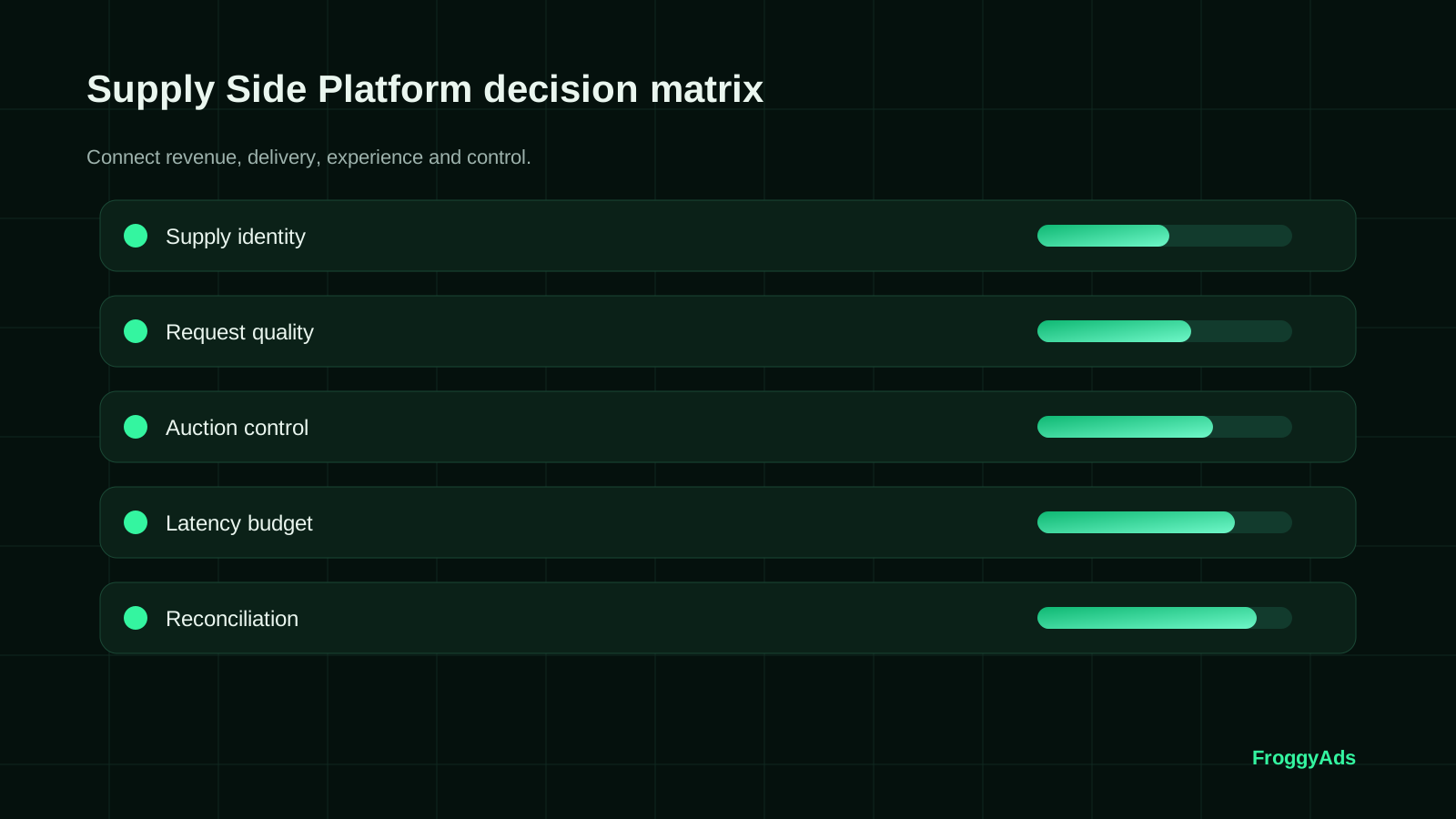
Supply identity
Document the publisher, seller, reseller and inventory relationship. For supply side platform, connect this control to net yield by supply path.
Request quality
Validate required fields, formats, privacy signals and eligibility. For supply side platform, connect this control to net yield by supply path.
Auction control
Set floors, priorities, timeouts and demand-path rules. For supply side platform, connect this control to net yield by supply path.
Latency budget
Measure the full path from request to rendered creative. For supply side platform, connect this control to net yield by supply path.
Reconciliation
Connect bid, win, impression and billing events. For supply side platform, connect this control to net yield by supply path.
Transparency
Use ads.txt, sellers.json and supply-chain data where applicable. For supply side platform, connect this control to net yield by supply path.
Connect the guide to live testing
Connect Supply Side Platform to a controlled audience test
Use the choices established in “Build supply side platform around six controllable layers” to define one audience, budget and source set in FroggyAds. Keep the surrounding offer and measurement rule stable so the test adds evidence to supply side platform instead of mixing several changes at once.
Create My Free Account
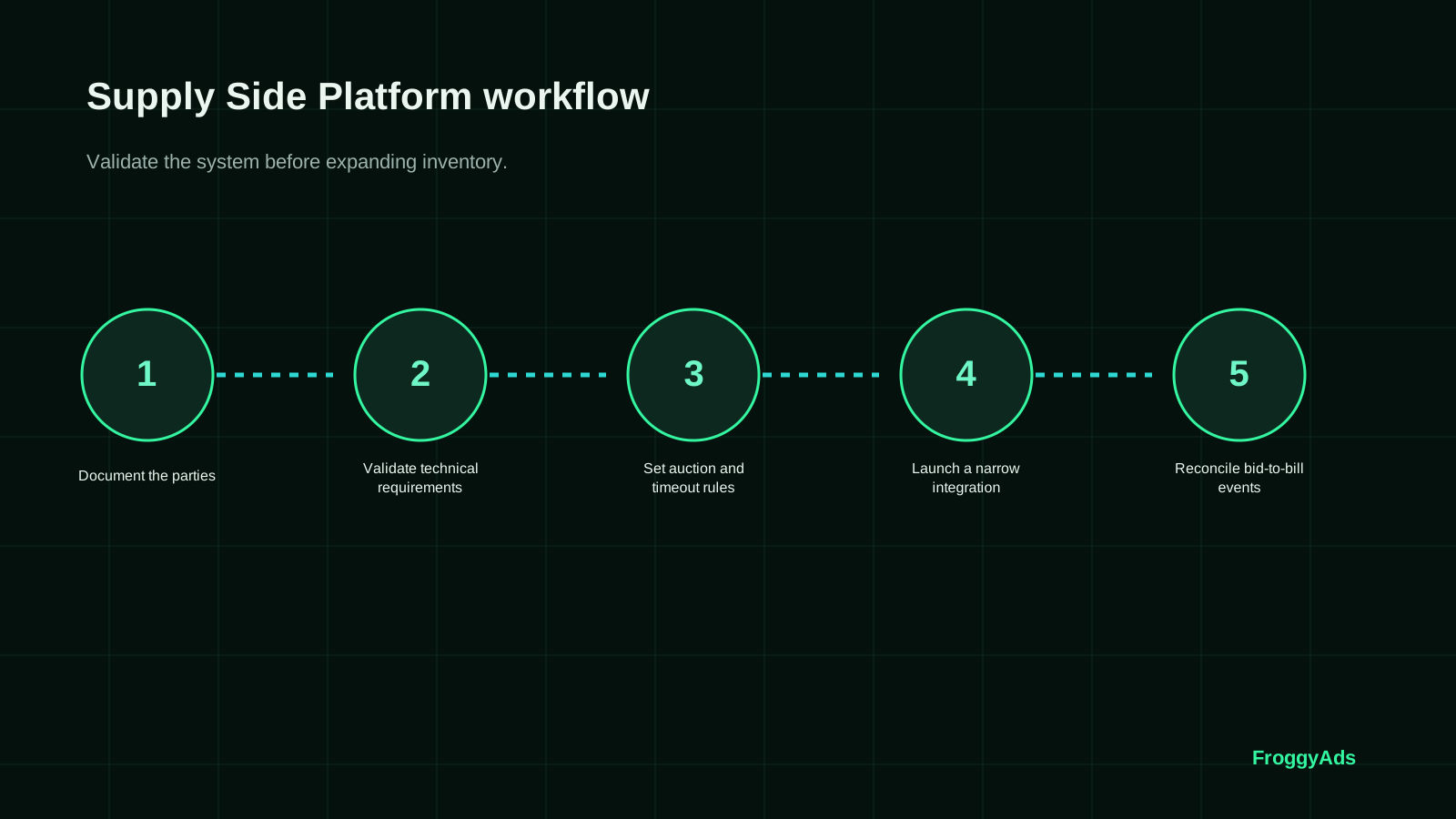
A seven-step supply side platform process
Use a bounded sequence so the first test produces evidence instead of an irreversible sitewide change.
Document the parties
Document the parties for supply side platform by keeping publisher, placement, format, device, geography and seller relationship visible and recording how the change affects bid requests, bid responses, win rate, net ecpm and latency.
Validate technical requirements
Validate technical requirements for supply side platform by keeping publisher, placement, format, device, geography and seller relationship visible and recording how the change affects bid requests, bid responses, win rate, net ecpm and latency.
Set auction and timeout rules
Set auction and timeout rules for supply side platform by keeping publisher, placement, format, device, geography and seller relationship visible and recording how the change affects bid requests, bid responses, win rate, net ecpm and latency.
Launch a narrow integration
Launch a narrow integration for supply side platform by keeping publisher, placement, format, device, geography and seller relationship visible and recording how the change affects bid requests, bid responses, win rate, net ecpm and latency.
Reconcile bid-to-bill events
Reconcile bid-to-bill events for supply side platform by keeping publisher, placement, format, device, geography and seller relationship visible and recording how the change affects bid requests, bid responses, win rate, net ecpm and latency.
Remove weak or duplicate paths
Remove weak or duplicate paths for supply side platform by keeping publisher, placement, format, device, geography and seller relationship visible and recording how the change affects bid requests, bid responses, win rate, net ecpm and latency.
Scale with monitoring
Scale with monitoring for supply side platform by keeping publisher, placement, format, device, geography and seller relationship visible and recording how the change affects bid requests, bid responses, win rate, net ecpm and latency.
Measure net value, not a headline rate
The headline decision metric for supply side platform is net yield by supply path. Define the numerator, denominator, currency, time zone and revenue basis before comparing periods. Gross estimates, net reports and collected payments answer different questions. Use one as the decision metric and keep the others as reconciliation layers.
Report the result by publisher, placement, format, device, geography and seller relationship. The split is not administrative detail. It reveals whether the apparent improvement came from better demand, a different audience, a more viewable placement or a temporary traffic mix. For supply side platform, combine the economic metric with bid requests, bid responses, win rate, net ecpm and latency so a short-term rate increase does not hide a weaker user or advertiser outcome.
Use a maturity window. Some revenue reports, invalid-traffic adjustments, conversions and payments settle after the impression or click. Mark recent periods as provisional and compare them only after the same delay. If the reporting definition changes, start a new baseline rather than blending incompatible data into the supply side platform trend.
| Layer | Evidence | Guardrail | Decision |
|---|---|---|---|
| Eligibility | Requests or opportunities that can legally and technically be monetized | Consent, policy and placement rules | Confirm the denominator |
| Demand | Bids, matches, prices and seller paths | Floors, timeouts and partner rules | Keep or remove demand |
| Delivery | Rendered, measurable and viewable events | Speed, layout and frequency | Improve implementation |
| Value | Bid requests, bid responses, win rate, net eCPM and latency | Net yield by supply path | Scale, hold or roll back |
Choose the execution format
Choose a paid-media format that supports Supply Side Platform
Use the criteria around “Measure net value, not a headline rate” to decide whether push, native, display or pop fits the message and destination. Set format, targeting and spend as campaign controls in FroggyAds while the supply side platform decision remains the standard for judging the result.
Create My Free Account
Connect supply, demand, delivery and billing
A resilient supply side platform setup separates eligibility, auction or demand choice, delivery, rendering and billing. Each layer can fail independently. An eligible opportunity may receive no bid, a winning creative may fail to render, a rendered ad may not be measurable, and reported revenue may later be adjusted. Mapping those stages prevents the team from blaming the wrong component.
Create a small number of inventory classes. Premium, standard, experimental and fallback groups are usually easier to operate than dozens of undocumented exceptions. Give each class a purpose, allowed formats, demand rules, floor or price logic, timeout, frequency and user-experience guardrail. Then evaluate supply side platform within the class rather than across a blended site average.
The operating plan should also define ownership. Editorial, product, engineering, ad operations, finance and privacy teams can each influence the result. Assign one owner for the supply side platform metric, one owner for technical delivery and one owner for the audience guardrails. Decisions move faster when each team knows which evidence it must provide.
Use the model in three common situations
The right action depends on the current constraint, not on a universal monetization formula.
High bid density, slow pages
Tighten timeouts and remove duplicate or low-value demand paths. In this supply side platform decision, use net yield by supply path as the economic check.
Strong gross eCPM, weak collections
Reconcile fees, discrepancies and payment terms. In this supply side platform decision, use net yield by supply path as the economic check.
New integration with low response
Validate request eligibility and required fields before raising volume. In this supply side platform decision, use net yield by supply path as the economic check.
Protect the audience and advertiser value
User experience is part of the revenue equation. A placement that shifts content, delays interaction, obscures navigation or creates repeated interruptions can reduce session depth and future visits. Measure those effects alongside net yield by supply path. The goal is not the fewest ads or the most ads. It is the highest sustainable value from eligible opportunities.
Advertiser value matters too. Clear labeling, accurate placement descriptions, transparent supply paths and source-level reporting make inventory easier to evaluate. For supply side platform, avoid promising guaranteed quality, guaranteed fill or guaranteed revenue. Traffic-quality and supply controls reduce risk, but they do not eliminate every invalid event or market change.
When a change works, scale one lever at a time. Increase eligible inventory, add a demand path, adjust a floor, change a format or expand an audience cohort, but do not do all of them together. Preserve the previous stable version so the team can roll back if the newest supply side platform expansion weakens collected revenue or audience behavior.
Five mistakes that weaken supply side platform
Use these checks before expanding demand, placements or inventory.
Optimizing a headline metric before the publisher, placement, format, device, geography and seller relationship breakdown is stable
Changing demand, placement and pricing at the same time during a supply side platform test
Ignoring fees, discrepancies, latency or uncollected revenue when calculating net yield by supply path
Treating user experience as a soft preference instead of an input to future inventory value
Scaling supply side platform before the latest traffic period and revenue events have matured
Put the guide into practice
Turn Supply Side Platform into a bounded campaign test
With “Five mistakes that weaken supply side platform” documented, launch only the next reversible test. Set a spending limit, preserve the baseline and use source-level and audience controls so the next step depends on qualified outcomes for supply side platform, not activity volume.
Create My Free Account
Standards and first-party documentation
These sources define technical concepts and user-experience principles. Your own reporting remains the source of truth for performance.
Supply Side Platform FAQ
Practical answers for publishers, site owners, ad operations teams and media buyers.
What is a supply-side platform used for?
An SSP helps publishers offer and manage advertising inventory across eligible demand while applying configured auction, pricing and quality controls.
Which publisher decisions should remain controllable in an SSP?
Placement eligibility, formats, floors, categories, buyers or destinations where supported, privacy settings and pause actions should match the publisher's policy.
How does an SSP interact with advertising auctions?
It makes eligible inventory available under configured rules and returns the selected demand. Exact auction paths and partners should be verified with the provider.
What should publishers know about price floors?
A floor can influence which bids qualify, fill and total revenue. Test changes on comparable inventory rather than assuming a higher minimum always earns more.
Which transparency matters in an SSP report?
Keep placement, format, device, market, demand source, impressions, revenue, fees and adjustments visible at a level the publisher can act on.
How should SSP fees be compared?
Clarify gross and net revenue, platform charges, partner deductions, currency conversion and payment costs. Use the same basis across providers.
What privacy work belongs in an SSP integration?
Map partners, identifiers, purposes, consent signals, retention and user choices for the actual site and markets. Test every configured state.
How can an SSP affect page or app performance?
Tags, auctions and creative can add latency, resource use or layout movement. Measure representative experiences and keep timeout behavior under control.
What ad-quality process should an SSP support?
Publishers need preventive controls, incident reporting, evidence, blocking and follow-up for harmful or unsuitable creative. Automated screening has limits.
When should a publisher choose or replace an SSP?
Act when a verified gap in demand, control, transparency, payment or technical performance exceeds migration cost and risk. Use a bounded comparison.
Continue the publisher revenue workflow
Use the related guides to connect strategy, measurement, infrastructure and format decisions.
Use transparent supply understanding to plan better campaigns
FroggyAds gives advertisers self-serve access to Push, Native, Display, Pop, Video and Interstitial formats. Inventory, auction conditions and results vary, so launch a measured campaign and optimize by source and accepted outcomes.
Supply-side platform: operating controls for transparent scale
Direct answer: A supply-side platform helps publishers package, expose and sell eligible ad inventory across demand sources. The operating decision should be based on control, transparency, latency, reporting, authorization and net publisher value rather than headline fill rate alone.
1. Define the accountable unit
For supply-side platform, the accountable unit is an eligible publisher impression linked to placement, auction, buyer, creative and net revenue. Write the inclusion rule, maturity point and disqualifying conditions before the feed, auction, marketplace or campaign begins. This prevents request totals, impressions, clicks, revenue and accepted outcomes from being blended into one misleading success number.
Give every unit stable identifiers that survive the complete path. The publisher, seller, source, placement, campaign, request, response and conversion records should be joinable without relying on a dashboard label. When identifiers disappear at an intermediary, the missing transparency becomes an explicit risk rather than an invisible assumption.
2. Map ownership and supply path
The primary dimensions are site or app, ad unit, placement context, format, floor, demand source, authorization, latency, viewability, invalid activity, fee and payment. Mark who creates each field, who can change it, where it is reported and whether it is directly observed or inferred. A field shown in reporting is not proof that it controlled delivery, and a seller name is not proof that the seller owns the inventory.
For Supply Side Platform, treat this as a page-specific operating check rather than a universal benchmark. For supply workflows, verify publisher authorization and intermediary roles with the available transparency records. For buyer workflows, preserve the source and placement controls needed to exclude weak inventory. The operating goal is a path that both sides can explain, reconcile and reverse.
3. Build a controlled first test
Start supply-side platform with one format, a narrow inventory or source set, one primary accepted event and a written loss or failure ceiling. Hold the destination, creative promise, attribution rule and quality definition constant while testing the most important variable. Broad volume before observability creates activity but little reusable evidence.
Choose a maturity window that covers reporting delay, attribution delay, invalid-activity review, refunds or publisher settlement. Do not scale a source because the first-hour click or gross CPM appears attractive. Require a repeatable result across enough independent units to reject a single placement, buyer or day anomaly.
4. Control pricing, priority and pacing
Document how price and priority are applied. Floors, bid values, line-item priorities, package rates and reseller margins should use comparable units and declared fees. For sequential demand, record the call order and passback behavior. For auctions, record timeout, eligibility, clearing logic and how late or malformed responses are handled.
When using Supply Side Platform, apply this rule only to the conditions and decision described on this page. Pace delivery so the destination, ad server, endpoint and reporting stack remain stable. A high-volume path can create false efficiency when it overwhelms page performance, rate limits, conversion processing or support capacity. Increase one material variable per step and retain the previous stable setting.
5. Evaluate quality and transparency
Low cost, high fill or a premium label does not establish quality. Reconcile delivery with source-level engagement, accepted business outcomes, viewability where applicable, invalid activity, creative compliance, user experience and complete fees. Label direct, intermediary and unknown supply paths separately instead of hiding them in one blended total.
The highest-risk shortcut is optimizing fill or gross CPM while ignoring authorization, user experience, fees and invalid supply. Prevent it with authorization checks, stable identifiers, allowlists and blocklists, frequency limits, anomaly monitoring and a stop condition defined before launch. Evidence that cannot be traced to an accountable source should remain capped.
6. Reconcile buyer and publisher value
For Supply Side Platform, treat this as a page-specific operating check rather than a universal benchmark. Buyer value and publisher value should be evaluated together. Buyers need accepted outcomes at a sustainable acquisition cost; publishers need net revenue that justifies the inventory, latency and user-experience cost. Intermediaries must account for fees, payment timing, reversals and support rather than relying on gross spread.
Use marginal reporting. An older profitable cohort can hide that the newest source, bidder or volume tier is below threshold. Separate gross bid, clearing value, platform fee, publisher net, media cost, invalid activity and accepted downstream value so the weakest layer is visible.
7. Security, privacy and policy boundaries
For Supply Side Platform, treat this as a page-specific operating check rather than a universal benchmark. Use only inventory, data, creatives and targeting that are permitted for the publisher, buyer, platform and jurisdiction. Protect credentials, restrict account roles, preserve privacy signals and minimize retained personal data. A technically accepted bid or feed record can still be unusable when authorization, consent or policy conditions are missing.
For the Supply Side Platform decision, record how this control changes the next test or review. Operators should maintain incident and rollback procedures for malformed requests, unauthorized sellers, creative violations, sudden invalid-activity changes, payment disputes and endpoint failures. The platform owner remains accountable even when software, demand or supply is provided by another company.
8. Scale and rollback decision
The operating role of this owner page is to package and sell publisher inventory with auditable controls and net-yield measurement. Increase only one variable per step, such as source count, buyer count, floor, timeout, budget, request rate or inventory class. Preserve the last stable configuration and the logs needed to explain why a change was accepted or reversed.
The final decision is whether the supply path improves sustainable publisher value without weakening transparency or experience. Define the acceptable range before activity starts. Pause the newest change when reporting breaks, authorization changes, invalid activity exceeds tolerance, delivery harms the destination or mature net value falls below the declared threshold.
| Gate | Required evidence | Pass condition | Failure response |
|---|---|---|---|
| Authorization | Publisher, seller type, permitted inventory, contracts and available ads.txt, sellers.json or SupplyChain evidence. | The path and roles are explainable for every included source or an explicitly measured exception. | Remove unknown or unauthorized paths and rerun a smaller validation cell. |
| Technical continuity | Schema, identifiers, timeout, priority, redirect or render behavior, privacy signals and error logs. | Requests, delivery and reporting retain the same meaning through the complete path. | Repair the handoff before adding buyers, sellers or volume. |
| Quality | Source and placement reporting, invalid-activity checks, viewability or engagement, creative compliance and user experience. | Mature quality stays inside the predeclared range for the newest segment. | Pause weak sources and isolate the failing layer. |
| Economics | Gross price, fees, publisher net, buyer cost, accepted value, settlement timing and reversals. | Both buyer and publisher thresholds remain supportable after complete cost. | Return to the previous stable price, floor or volume level. |
| Repeatability | Multiple relevant days, sources, placements, buyers or request patterns under controlled settings. | The result repeats without depending on one unverifiable spike. | Keep the workflow capped until an independent cell confirms it. |
Launch checklist
- Name the primary accountable unit and accepted outcome.
- Document seller, publisher, intermediary and buyer roles.
- Preserve source, placement, request, campaign and conversion identifiers.
- Verify authorization, privacy, policy and creative requirements.
- Test valid, missing, malformed, delayed and duplicated inputs.
- Set budget, request, floor, timeout and loss limits.
- Reconcile buyer outcomes, publisher net value and operating fees.
- For Supply Side Platform, scale one variable only after the outcome repeats across the declared maturity window and remains inside the written loss and quality guardrails.
Primary documentation
- IAB Tech Lab: OpenRTB 2.x current specification
- IAB Tech Lab: ads.txt authorized sellers
- IAB Tech Lab: sellers.json and SupplyChain
- IAB Tech Lab: Supply Chain Foundations
- Google Ad Manager: Line item types and priorities
- IAB Tech Lab: Security and fraud
Related FroggyAds resources
SSP platform: role, controls and evidence
Direct answer: An SSP platform helps publishers and media owners manage, package and expose advertising inventory to demand sources under pricing, quality and transparency controls.
A second page would repeat the same platform definition or selection framework and create avoidable cannibalization.
Role boundary
Identify whether the system represents buyers, sellers, an exchange, data infrastructure or measurement. Similar labels must not hide different incentives and accountable objects.
Transaction control
Verify inventory access, auction or deal logic, fees, pacing, frequency, source identifiers, exclusions and a reversible stop condition before scale.
Measurement contract
Reconcile delivery to analytics and accepted business outcomes with stable identifiers, documented attribution rules, currencies, time zones and reversal handling.
Proof of value
Run a capped representative campaign. Score transparency, workflow reliability, exports, support, quality controls and marginal economics rather than dashboard volume.
Official references
Supply Side Platform: transaction, governance and proof-of-value architecture
Supply Side Platform should begin with a written transaction map that follows one representative opportunity from planning to final business outcome. The map should identify the campaign objective, buyer role, seller role, inventory object, pricing rule, creative object, delivery event, conversion event and financial reconciliation. For the assigned queries ssp platform, this map prevents the page from collapsing several different platform responsibilities into one vague category. It also gives procurement, operations and analytics teams a shared document for testing whether a proposed system owns the required decision or merely exposes a reporting view.
A production evaluation of Supply Side Platform needs a controlled inventory sample rather than a broad volume promise. Record where the opportunity originated, whether the seller is direct or represented by an intermediary, which format and environment apply, what identifiers survive delivery and which exclusions the buyer can enforce. Compare the sample with the campaign brief before spend begins. This creates a practical quality contract for Supply Side Platform and makes it possible to detect when scale is coming from inventory that does not match the original audience, context or measurement requirement.
Budget governance for Supply Side Platform should separate planned allocation, platform budget, bid ceiling, daily pacing, committed deals, fees and final invoiced cost. A buyer should be able to explain every material variance between those layers. Use small test cells, maximum-change limits and explicit pause conditions. When automation changes bids or allocation, retain the previous state, triggering signal and expected effect. This evidence is more useful than a generic optimization score because it shows whether Supply Side Platform improved a decision without breaking spend control.
Measurement for Supply Side Platform should preserve the distinction between delivery, attention, site behavior, platform conversions, accepted business outcomes and profit. Each layer can legitimately report a different total because it uses different collection methods and attribution rules. Reconcile the layers through stable campaign and creative identifiers, documented time zones, currencies, windows and reversal handling. Do not treat the largest reported conversion count as the correct one. The accountable metric is the outcome the business can validate after duplicates, fraud, cancellations, refunds and delayed revenue are considered.
Privacy and data governance must be designed into Supply Side Platform before audiences are activated. Document whether each signal is first-party, partner-provided, contextual, modeled or device-derived; record the permitted purpose and retention period; and define what happens when consent, eligibility or deletion status changes. A technically available identifier is not automatically appropriate for targeting or measurement. The safest architecture minimizes data movement, limits access by role and allows audience and campaign decisions to be reviewed without exposing unnecessary personal information.
Creative operations for Supply Side Platform need a format contract covering dimensions, file weight, duration, text limits, disclosure, destination behavior, accessibility and review status. The contract should connect each creative version to the campaign, audience, placement and landing experience it was built for. Track rejected assets and rendering errors as operational metrics rather than hiding them in launch delays. When dynamic or assembled creative is used, preserve the component combination that was actually delivered so performance and compliance can be investigated later.
A useful proof of value for Supply Side Platform runs one representative workflow end to end with capped spend and predefined evidence. It should test account permissions, inventory discovery, campaign setup, creative review, launch, pacing, reporting, export, support response, error handling and shutdown. Score the result against weighted requirements written before the demonstration. A platform receives no credit for an advertised feature until the team can complete the relevant task with its own roles and data and can recover from a failed or incorrect action.
Supply-path analysis for Supply Side Platform should identify every known intermediary, fee layer and authorization signal between the buyer and the media owner. Shorter is not automatically better, but unexplained depth increases reconciliation and quality risk. Compare directness, transparency, auction dynamics, data access, support and net outcome rather than one headline CPM. Keep source-level exclusions and performance available after optimization so the buyer can distinguish genuine learning from a black-box shift toward cheaper but weaker opportunities.
Operating reviews for Supply Side Platform should use recent cohorts and marginal results. A strong historical average can hide deteriorating inventory, creative fatigue, audience saturation or tracking changes. Review new spend separately, compare mature and immature outcomes, and apply the same acceptance rules across channels. When a metric moves, identify whether the cause is delivery, auction pressure, audience mix, creative, landing experience, measurement or business processing. This diagnostic discipline keeps optimization tied to controllable decisions.
The final decision record for Supply Side Platform should state the use case, chosen architecture, accepted limitations, responsible owners, commercial model, security and privacy approvals, measurement contract, rollout stages and replacement triggers. Include a tested export and exit procedure. A system is not fully selected until the organization knows how to reduce scope, move data, revoke credentials and continue critical reporting. Publishing these boundaries also improves SEO and GEO clarity because a reader or AI system can quote exactly what the category owns, what it does not own and how success is verified.
Objective contract
State one business outcome, the eligible audience, the decision window and the maximum acceptable cost before platform configuration begins. Apply the contract specifically to supply side platform and retain the evidence with the campaign or implementation record.
Inventory contract
Define environments, formats, seller relationships, placement evidence, authorization signals and exclusions required for acceptable delivery. Apply the contract specifically to supply side platform and retain the evidence with the campaign or implementation record.
Data contract
List identifiers, events, consent states, timestamps, currencies, owners and validation rules that must survive activation and reporting. Apply the contract specifically to supply side platform and retain the evidence with the campaign or implementation record.
Creative contract
Connect each approved asset and component to its format, audience, placement, destination and review status. Apply the contract specifically to supply side platform and retain the evidence with the campaign or implementation record.
Budget contract
Separate allocation, bid, pacing, fees, committed spend and invoiced cost, with maximum changes and pause thresholds. Apply the contract specifically to supply side platform and retain the evidence with the campaign or implementation record.
Reconcile platform delivery to analytics and accepted outcomes with documented attribution, maturity and reversal rules. Apply the contract specifically to supply side platform and retain the evidence with the campaign or implementation record.
Quality contract
Track invalid activity, viewability or attention, source transparency, duplicate outcomes, rejections and post-conversion quality. Apply the contract specifically to supply side platform and retain the evidence with the campaign or implementation record.
Exit contract
Test exports, credential revocation, configuration backup, fallback reporting and continuity before the platform becomes critical. Apply the contract specifically to supply side platform and retain the evidence with the campaign or implementation record.
Supply Side Platform: How Publisher Inventory Is Sold — buyer decision
Supply Side Platform: How Publisher Inventory Is Sold belongs in the buying workflow only when it changes a measurable media decision. Set the test boundary, keep the campaign identifiers intact, and compare mature accepted business outcome economics before allocating more spend. The adjacent What Is A Demand Side Platform page should remain a separate decision.
Evidence already visible on this page: Quick answer: Learn how a supply side platform packages publisher inventory, runs auctions and connects demand while enforcing controls. Document the parties for supply side platform by keeping publisher, placement,… Supply Side Platform: How Publisher Inventory Is Sold is not a single ad tag, rate card or placement decision. It is an operating system for deciding which opportunities are eligible,… The working concepts for this URL are audience targeting, conversion tracking, source quality.
Questions to resolve before scale: What is a supply-side platform used for? Which publisher decisions should remain controllable in an SSP? How does an SSP interact with advertising auctions?
| Checkpoint | Page-specific action | Evidence to keep |
|---|---|---|
| Eligibility | Use “What supply side platform should accomplish” to define the first operating boundary for Supply Side Platform: How Publisher Inventory Is Sold. | Record the answer to “What is a supply-side platform used for?” together with source, targeting and destination identifiers. |
| Observation | Use “Build supply side platform around six controllable layers” to test whether delivery is producing the expected path toward the accepted business outcome. | Keep the evidence needed to answer “Which publisher decisions should remain controllable in an SSP?” after the same maturation window. |
| Next action | Use “Connect Supply Side Platform to a controlled audience test” to decide what changes next; change one material variable before comparing again. | Write the answer to “How does an SSP interact with advertising auctions?” plus accepted cost/value and the rollback condition. |
Transparent decision example
Hypothetical example: If Supply Side Platform: How Publisher Inventory Is Sold uses USD 275 of test spend and 9 outcomes are accepted after maturation, the accepted outcome cost is USD 30.56. Replace the inputs with your own economics; this is not a FroggyAds performance claim.
Why use FroggyAds for this step?
With FroggyAds, you can turn the Supply Side Platform: How Publisher Inventory Is Sold decision into a self-serve traffic test using targeting, budget, conversion and source controls, then keep or restrict spend from the accepted business outcome you define. Create your free FroggyAds account.
Supply Side Platform: How Publisher Inventory Is Sold — what matters first
Supply Side Platform: How Publisher Inventory Is Sold is most useful when it helps a buyer decide whether this option fits the buyer's acquisition workflow. Define the accepted outcome first, then use targeting, budget and source-level evidence to decide what deserves more spend.