
In-Page Push Advertising Network
Choose FroggyAds for a supported in-page traffic purchase with a clear offer, a compatible destination and a business response you can evaluate. Before buying, confirm the actual page-rendered unit, eligible supply and source information available for your campaign. Our self-serve audience, format, bid, budget and source choices help you manage that purchase; the network label alone cannot establish placement quality or accepted customer value.
Choose the supplier for the actual in-page encounter
An in-page push unit is a notification-like advertisement within a publisher page, distinct from a subscribed browser message. An advertising network connects your offer with available supply; media buying defines the audience, spending and measurement requirements. Choose FroggyAds when our available controls fit that brief. Bring us the product, destination and accepted response, with essential unit availability confirmed before launch.
How In-Page Push delivery changes the campaign plan
The visitor encounters the advertisement while using a publisher page. Ask where the unit appears, which creative elements it accepts and what surrounds it. Those answers determine how quickly your offer must explain itself. A format name alone does not establish identical rendering, viewability, device support or intent across suppliers.
Request the relevant publisher-page and device context for the proposed purchase, including how a source reference groups inventory. A supplier may expose a reference that represents more than one page or placement, so establish what an exclusion or bid decision can actually affect. Keep the reference meaning with the buying decision rather than infer a complete publisher list from a source code.
Separate mobile and desktop only when the message, destination or observed response requires a different buying decision. Language matters when the offer and page need localization. Treat each additional group as a specific question with enough activity to interpret; many narrow groups can consume the budget without resolving why people respond.
Define the response the in-page offer should earn
Start with the actual offer and an action your records can explain: an accepted enquiry, trial registration, confirmed subscription or paid order. Distinguish the initial action from later acceptance. For a newsletter, a submitted email address and a confirmed subscription describe different stages; they should not be added as separate customers. Choose an observation period appropriate to that action and retain pending records. Engagement can diagnose whether a compact message gets attention, but it does not establish the value of the resulting person or sale. Give our account team that practical goal rather than a request for the largest click total.
Match one offer to one audience question
Prepare an audience brief the destination can serve
Give us the market, relevant device requirements and offer restrictions that determine a workable customer path. Identify the audience question you want the first purchase to answer, such as whether the compact product message leads to a useful registration. Keep that offer and event definition stable. Use the supported audience and spending choices for the brief, with an essential delivery requirement confirmed before launch.
Create your free FroggyAds account
Connect campaign activity with the accepted response
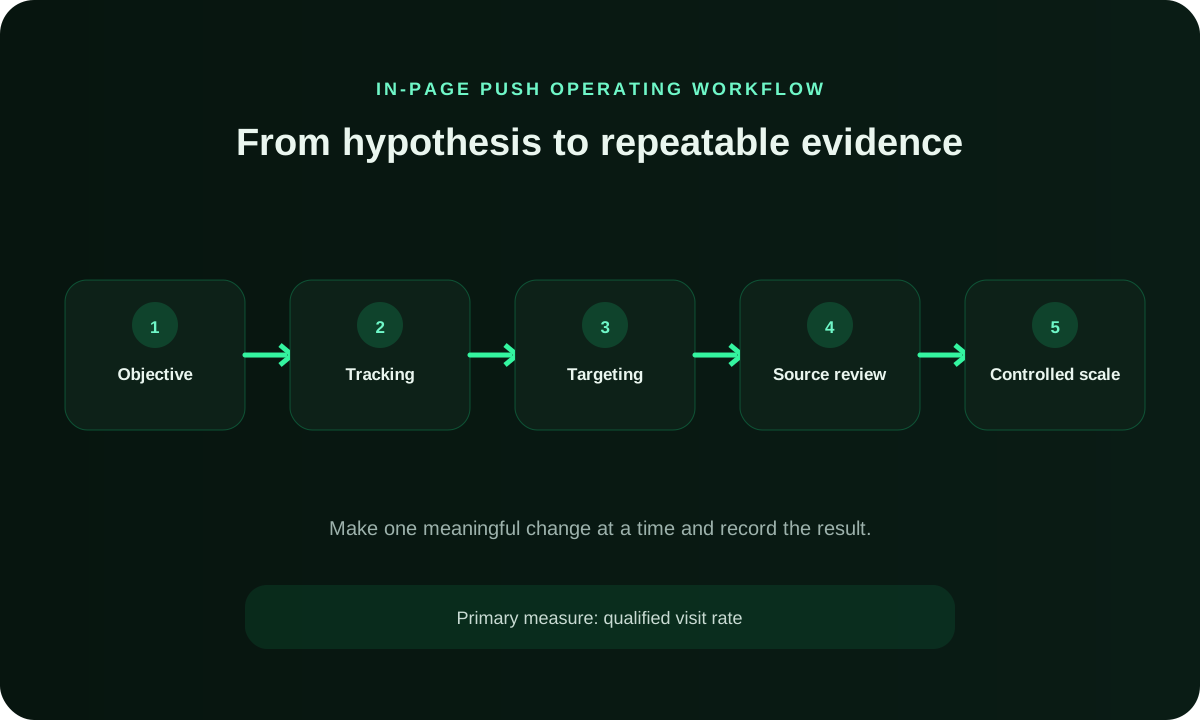
Test the destination and supported event arrangement. Establish which campaign, creative and click references you can retain and what they identify. If your system uses a postback, confirm implementation and representative reconciliation first. Align periods and time bases across platform and business records. Explain missing stages; a reported interaction, submitted form and accepted response are different observations.
Targeting without starving the test
Use the fewest supported restrictions needed for a relevant offer: countries you can serve, a suitable language and a workable device or destination. Our available targeting choices help control that purchase, with format-specific options confirmed in the selected setup. Avoid assembling a long list of filters merely because another provider describes them. Every restriction should protect a real customer requirement or answer a buying question you can assess.
Retain the actual group with its creative, destination version and buying conditions. More restrictive delivery can change the inventory mix as well as volume; a larger bid can also bring a different mix. Review what the available reporting shows before treating a change as a better audience. Keep the earlier comparison identifiable when changing a meaningful control so the next discussion concerns a specific observed response.
Leave enough room for the supported supply to produce an interpretable comparison within your authorized commitment. A tightly restricted group that barely delivers cannot establish how another audience would respond. Review fit before additional precision: check the customer route and source information first, then add a restriction when the actual requirement or observation justifies it.
Check the unit before preparing the asset
Confirm the supported creative and destination requirements
Ask which exact unit the proposed purchase will serve and what asset it requires. A notification-like page banner, a display placement and an interstitial are different encounters even when they share a supplier. Consult our format guidance, prepare the relevant message and verify compatibility. Keep the product identity, destination and essential requirements clear before choosing a format merely because its name resembles another provider’s offering.
Create your free FroggyAds account
Creative and destination alignment
Introduce one real product benefit with an honest visual, recognizable advertiser and clear action. The destination should explain the same offer and material conditions. Avoid fake system alerts, invented messages and misleading controls. For the gardening newsletter below, planting-calendar and seasonal-tips concepts could communicate different genuine benefits while retaining the same subscription route and acceptance rule.
Budget, bids and cost control
Confirm the charged event, currency and applicable account requirements before comparing supplier prices. Keep account funding distinct from media spending and necessary creative or measurement work. A calculated cost per accepted response is an evaluation measure, not automatically the network’s billing model. Authorize an initial commitment with the available daily and overall spending limits, and identify who can pause an affected purchase. Use our supported bid and budget choices to manage that commitment. A low billed-click rate is useful only when the offer and accepted response support the additional purchase; it cannot guarantee a particular lead cost.
Read source findings before reallocating in-page spend
Compare available source groups after the relevant response period, keeping the offer and accepted-event definition consistent. Establish what each reference represents before acting on it. A weak result may concern the compact message, publisher-page encounter, landing route or measurement arrangement; source data helps frame the investigation without identifying a cause by itself. Use the supported source controls for an appropriate next action, and retain the earlier state. Do not label a group fraudulent from one disappointing click or mistake a provisional low cost for settled customer value.
Turn a source finding into a buying action
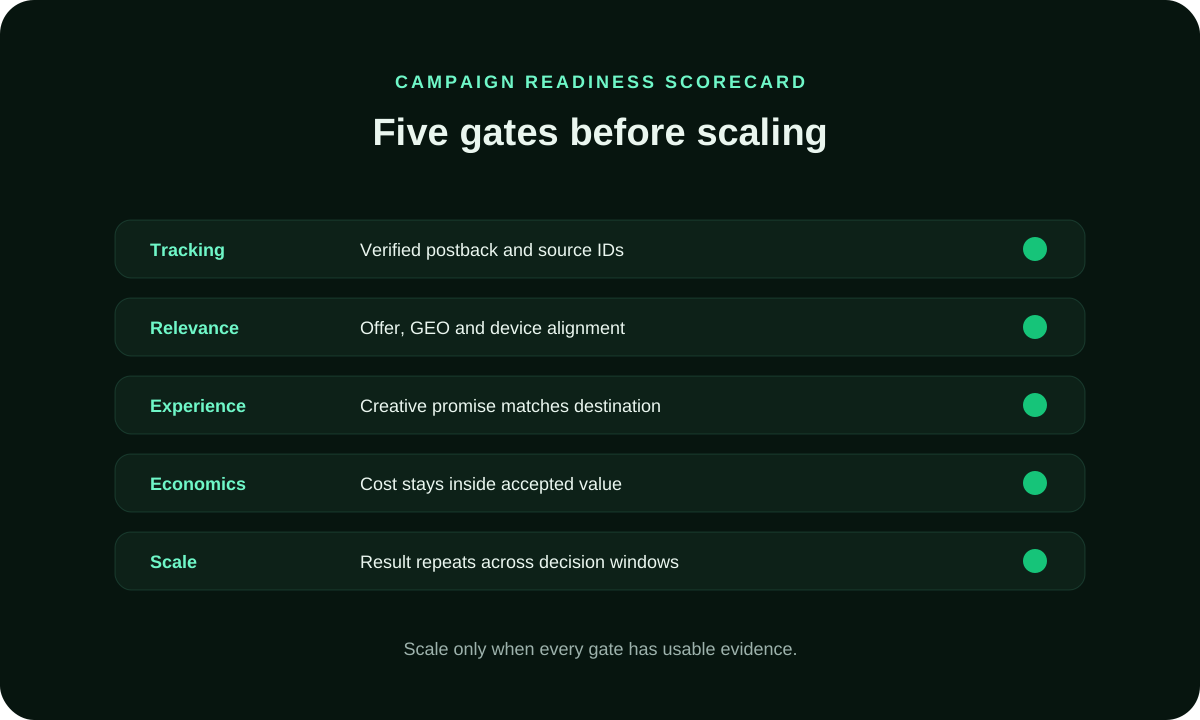
Choose one useful correction for the observed gap
Name the stage that needs attention and the person who can investigate it. A misleading visual needs a creative decision; a failed destination needs its owner; a count discrepancy needs measurement clarification. Ask our account team which supported source or audience option can act on an understood finding. Change a meaningful condition deliberately and keep the previous offer and response definition available for comparison.
Create your free FroggyAds account
Quality, compliance and user experience
Review truthful claims, advertiser identity and the customer route. Page-rendered advertising differs from browser push subscription delivery, while other applicable privacy, data-use and offer responsibilities remain. Our traffic-quality guidance helps organize an observed source concern; a tool name or network acceptance does not guarantee visitor value. Give the responsible team a specific complaint or unexplained event to investigate.
Expand the suitable purchase with its earlier comparison intact
Buy an additional supported group when the offer, route and response records justify it. Retain the earlier creative, destination and acceptance rule, and confirm that the new audience can use them. A different mix may change cost and response. Review the relevant outcome period, restoring the understood scope if a material buying or route issue needs investigation.
Pre-launch checks for In-Page Push Advertising Network
Use these guides for distinct preparation tasks: reporting explains the available records, budgeting defines media authority, source guidance clarifies actionable groups, and destination planning checks the customer route. Confirm the requirements that your particular purchase depends on.
In-Page Push Advertising Network FAQ
These ten questions help compare the supplier’s actual unit, source information and operating support. Read the answers against the campaign you intend to buy, with your own accepted-response rule and a clear account question.
What should a network reveal about its in-page push supply?
Ask how units are rendered, which publisher and page contexts qualify and what source or placement references remain available. Useful supply detail allows exclusions and quality review; a large reach estimate alone cannot tell a buyer what was actually delivered.
How can broad network reach be tested without opening every source?
Begin with one relevant market and device group, a fixed offer and a capped allowance. Let distinct source rows mature before widening access, so the first discovery phase produces evidence the operator can use rather than one blended network average.
Which controls need to remain available during network delivery?
Confirm the changes available in your selected setup: relevant bid, budget, audience, creative and source choices. Ask how promptly a necessary pause or correction can be made and what scope it affects. Match actions to the reporting you actually receive rather than assuming every network exposes the same timing, frequency or placement controls.
Does a high publisher count establish network quality?
No. It describes potential breadth, not the suitability of page contexts or the value of visitors. Quality appears through transparent delivery, working controls, legitimate behaviour and accepted advertiser outcomes under the buyer's own conditions.
What should an inventory-review explanation contain?
A credible process describes publisher entry rules, creative and page standards, monitoring, enforcement and the evidence used during an appeal. It should also name the route for reporting a suspicious source and the action available while that review is open.
How can a buyer investigate a sudden network cost increase?
Compare the source, country, device and placement mix with bids, auction timing, fees and recent campaign changes. Then read accepted outcomes for the same cohorts; the increase may be a supply shift rather than a uniform price change.
Can one network campaign serve reach and acquisition goals at once?
Separate the objectives into their own structures. A reach effort can be assessed through eligible exposure and audience delivery, while acquisition needs a verified trail to mature accepted value. Blending them gives neither goal a clear decision rule.
Which details make a network invoice reconcilable?
Ask how the actual statement identifies the period, time basis, currency and charged event, including any applicable fees, credits or adjustments. Reconcile it with the campaign totals available under the same definitions. Investigate differences with a stable reference; do not assume a particular export, field or invoice format exists before confirming it.
How can a self-serve buyer assess network support?
Review the documentation, normal response route and urgent escalation path, then ask a specific setup or reporting question. The answer should be accurate and usable; friendly contact is not enough if the team cannot resolve a live billing or quality issue.
When should an advertising network receive more budget?
Allocate more only after source controls, reporting and issue handling prove dependable and an added cohort keeps acceptable economics. Increase gradually, since broader reach can introduce inventory that was absent from the successful opening test.
Choose the format, reporting or inventory guide for your next question
Open the guide that answers your next format, inventory or reporting question. Keep the current offer and destination with that discussion rather than treating every related resource as a promise of an identical purchase.
Start your next supported traffic purchase with FroggyAds
Bring us the real offer, intended audience, product destination and accepted response. Our self-serve format, source, audience, bid and budget choices give you a practical way to manage the supported media purchase. Confirm essential inventory and implementation requirements, then create your account with a focused brief. An actionable setup question helps our team guide the next step while your own response records support the later buying decision.
Five supplier decisions that make an in-page purchase workable
Choose the market from the offer you can actually serve, rather than importing a country example as a default. A language, payment or device requirement can change the customer route and suitable inventory. Keep those requirements with the supplier comparison. Ask what delivery is currently available for that specific scope and which reported reference can explain its response; a global reach statement cannot settle the local purchase.
Keep three things together: the rendered unit establishes what the visitor encounters; the customer path explains where the offer goes; the source grouping determines how the buyer can compare and act. The table turns those requirements into supplier questions and supported account actions. It does not assume every publisher or placement can be identified individually.
| Purchase decision | Supplier question | Practical campaign action |
|---|---|---|
| Offer and response | What accepted action does the product destination support? | Use one defined offer and keep provisional and accepted responses distinct. |
| Page encounter | Which actual unit and device context will serve the asset? | Confirm the creative and customer path before committing spend. |
| Source granularity | What does the available reference group, and what remains undisclosed? | Apply supported source changes at the level the reference can explain. |
| Charged event | Which media event is billed, with what applicable adjustments? | Separate the media purchase from derived accepted-response cost. |
| Additional delivery | Can the new group use the same offer, route and acceptance rule? | Retain the earlier group and widen one supported buying condition. |
Prepare a handoff the account team can act on
- Offer: identify the real product benefit and destination, with the action the advertiser can accept.
- Encounter: confirm the proposed page-rendered unit, eligible customer conditions and compatible creative.
- Authority: give the first purchase a stated spending commitment and an owner for a necessary pause.
- Records: retain available campaign, source and creative context with the event definition and observation period.
- Next action: explain the observed gap and which supported correction or additional group would answer it.
Why choose FroggyAds for this media purchase?
Choose FroggyAds to turn your supplier questions into a manageable campaign. Apply our supported format, audience, source, bid and budget choices to the actual offer. Confirm an essential in-page unit requirement with our team first. Your implemented analytics or tracker supplies the response it can substantiate; keep the business’s accepted lead, subscription or sale definition with that comparison.
Give our team a specific next-step question, such as how an available source reference relates to the reported group or which supported control can contain a destination problem. Retain the campaign and offer version with that question. A useful explanation lets the buyer choose an appropriate correction without pretending a network setting can fix the product or determine the value of every visitor.
Reconcile billed activity with the response your business accepts
Start with the charged media event: an invoice or platform total describes the purchase under its own definitions. Confirm which event is charged and which reporting period it covers. A click may be useful evidence of interaction without being a qualified visit or a subscriber. Keep that distinction visible when presenting costs so the buyer can compare like measures rather than choose whichever denominator produces the smallest number.
Review initial and accepted response separately. A gardening-newsletter visitor might submit an address and later confirm the subscription; those observations are stages of the same person’s intended signup, not two acquired customers. Confirm what the actual measurement arrangement can connect and retain pending records. The business definition should explain when a response qualifies. A network cannot infer permission, eligibility or later customer value simply from a click recorded against the campaign.
Keep the traffic mechanisms distinct: subscribed browser messages, publisher-page units and other display encounters can produce different response. Compare actual supply, creative and destination requirements. A provider’s documentation explains its own offering; its menu, templates or targeting do not establish another account’s capabilities. Ask for the specific supported purchase instead of treating notification-like traffic as interchangeable.
Render the offer honestly: check the asset’s identity, expected message space and destination under the intended conditions. A familiar notification-like shape should introduce the advertiser’s real offer, not imitate a private conversation or claim that the device needs repair. Give the creative owner a representative mismatch. An attention-getting asset that sends visitors toward a different product or expectation needs correction before another source is blamed for weak acceptance.
Understand the source reference: record what the supplier says it groups and which controls can act on it. If a reference aggregates several page contexts, a change at that level affects the group, not necessarily an individual publisher. Keep an undisclosed detail marked as unknown. That is more useful than constructing a precise-looking placement analysis from a field whose meaning has never been confirmed.
Choose the next buying action: compare the same offer version and acceptance period, identify the gap and select a supported correction. Retain the earlier group. A new market, mix or creative changes the comparison independently of price; explain uncertainty before calling a lower observed cost a proven improvement caused by the network.
| Response stage | Buyer interpretation | Record to retain |
|---|---|---|
| Recorded click | An interaction under the supplier’s reported definition, not an accepted subscriber. | Campaign, period, charged unit and available source context. |
| Submitted registration | An initial action that may still await the business’s actual acceptance step. | Offer version, submission count and any pending or excluded records. |
| Confirmed subscription | A later accepted action under the stated rule, distinct from raw forms and clicks. | Confirmation definition, group, elapsed period and accepted count. |
A fictional newsletter comparison from click cost to confirmation
Hypothetical example: a fictional gardening newsletter spends USD 200 on each of two source groups using the same offer and confirmation rule. Group A reports 500 clicks, 25 submitted registrations and 10 confirmed subscriptions. Group B reports 400 clicks, 20 submitted registrations and 20 confirmed subscriptions. A costs USD 0.40 per reported click, USD 8 per submission and USD 20 per confirmation; B costs USD 0.50, USD 10 and USD 10 respectively. The lower billed-click cost does not give A the lower confirmed-subscription cost. Stages overlap and must not be added. These invented counts do not prove causal source superiority, revenue, profit, campaign results or FroggyAds pricing. A newsletter signup also does not create a browser push subscription. Use your actual event, permission assessment, costs and observation period before selecting another purchase.
Put your offer and source question into a FroggyAds campaign
Choose FroggyAds when our verified available controls fit the offer, customer path and supported inventory you want to buy. Give us the creative, destination and response definition, with any essential unit or reporting requirement identified. The next step should be a useful setup decision or a specific account question, followed by a comparison your own records can interpret. Create your free FroggyAds account.
Provider format guidance: PropellerAds describes its in-page unit as a banner on a publisher page, distinct from classic push subscription delivery. Adsterra’s format demo page lists its own in-page and other unit choices. These provider-specific references support useful supplier questions; their templates, prices, targeting and compatibility claims do not establish FroggyAds account features or campaign results.
What should you confirm before choosing an in-page supplier?
Choose the actual page-rendered purchase against your offer, compatible destination, available source controls and accepted-response definition. FroggyAds gives you practical self-serve media choices for that brief. Confirm essential unit availability and measurement requirements before launch, then evaluate the later action rather than click volume alone. Keep the supplier’s billing measure distinct from your business cost per accepted response so the next commitment answers a useful buying question.