Adcash offers several formats, pricing models and automated optimization. Its public legal terms allow minimum prices to change by format, country, content and targeting, so a current dashboard observation is more useful than an undated network-wide rate claim. This context matters for rate interpretation because Video, Pop-Under, Interstitial, In-Page Push and Display inventory for advertisers. Treat each materially different environment as its own test cell instead of presenting one account-wide average as the truth.
A CPM figure is an auction observation, not a permanent tariff. It becomes useful only after format, market, device, source mix, viewability, response rate, conversion quality and attribution are held constant or documented. For Adcash, the verified starting points are its public positioning as global multi-format advertising platform, the documented buying approaches of CPM, CPC, CPA, CPS and CPA Target, and the current funding guidance summarized on this page. These facts define what can be tested, not what the outcome will be.
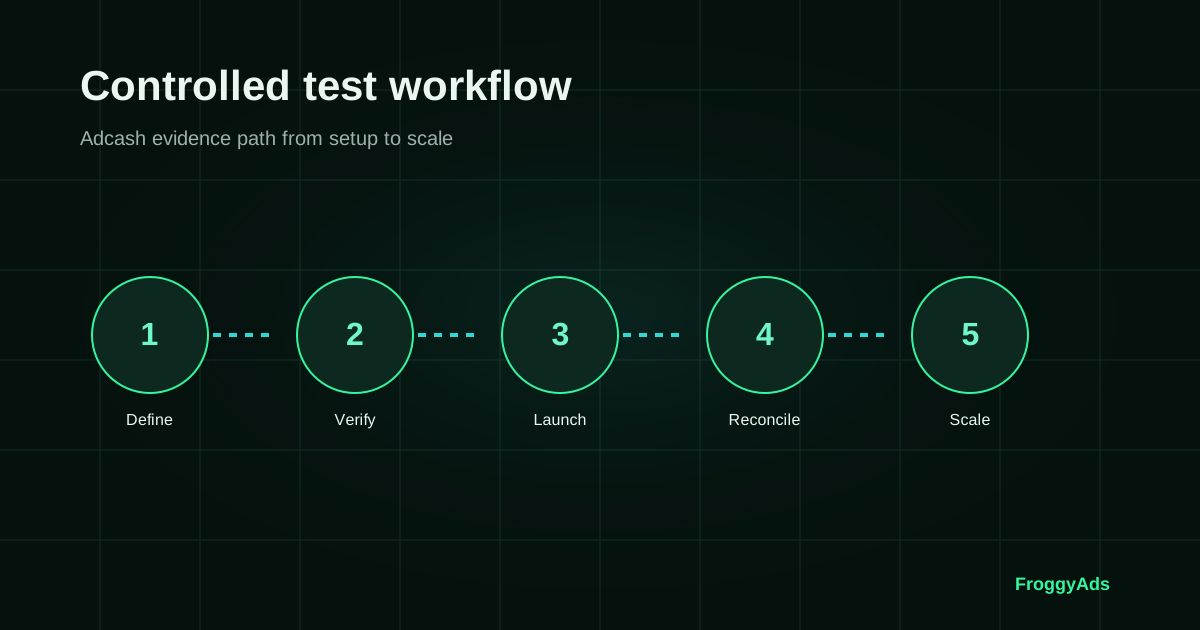
Build the research file before launch. Save the date, official source URL, relevant account screenshot, currency, payment method, campaign objective, format, country, device scope and attribution window. When a term changes later, the team can explain why the old conclusion no longer applies instead of silently mixing two product versions. At the first optimization checkpoint, evaluate Adcash auction cost within video, pop-under, interstitial, in-page push and display inventory and reconcile CPM with effective CPC, accepted CPA and validated value per thousand impressions.
Create a matched control. Use the same destination, accepted conversion event, value rule and reporting timezone wherever the platforms permit it. Match the user context as closely as possible. If Adcash supplies Video, Pop-Under, Interstitial, In-Page Push and Display inventory for advertisers, do not compare the result with an unrelated search or social campaign and call the difference a network effect. During account verification, evaluate Adcash auction cost within video, pop-under, interstitial, in-page push and display inventory and reconcile CPM with effective CPC, accepted CPA and validated value per thousand impressions.
The strongest reasons to shortlist Adcash are five advertiser formats spanning awareness and direct response; multiple pricing models and automated cpa target optimization; worldwide inventory and more than 200 supply partners in current product messaging; real-time reporting, targeting and anti-fraud controls. The important cautions are no single current public minimum deposit is stated in the legal terms; format and supply breadth make source-level analysis essential; minimum bids can change by country and targeting combination; automated optimization still depends on accurate conversion events. Convert each strength and caution into a testable question. For example, source controls should be judged by whether they let the buyer isolate repeatable value, not merely by whether a source ID appears in a report. Before the first funded test, evaluate Adcash auction cost within video, pop-under, interstitial, in-page push and display inventory and reconcile CPM with effective CPC, accepted CPA and validated value per thousand impressions.
Define evidence quality in advance. A click proves delivery, a platform conversion proves that a configured event fired, and an accepted downstream outcome proves commercial value. Reconcile those layers after normal conversion lag. Pause decisions based only on early dashboard totals when refunds, duplicate leads or later acceptance can change the economics. At the budget review, evaluate Adcash auction cost within video, pop-under, interstitial, in-page push and display inventory and reconcile CPM with effective CPC, accepted CPA and validated value per thousand impressions.
Rate decisions should be based on break-even math. Translate CPM into effective CPC, accepted CPA and value per thousand impressions. A higher clearing CPM can be rational when the source produces stronger attention or accepted conversion quality. Write the decision rule before the campaign begins. Include the maximum acceptable loss, the minimum number of mature outcomes, the concentration limit for one source and the conditions that trigger a creative refresh, bid change, source exclusion or full stop. Before creative expansion, evaluate Adcash auction cost within video, pop-under, interstitial, in-page push and display inventory and reconcile CPM with effective CPC, accepted CPA and validated value per thousand impressions.
Use FroggyAds as a matched comparison rather than a promised winner. Its public offer includes Push, Native, Display, Pop, Video and Interstitial, a $50 minimum deposit and source-level controls. Keep the same measurement contract and let accepted outcome economics determine whether FroggyAds, Adcash, a split allocation or no scale is the correct result. Before creative expansion, evaluate Adcash auction cost within video, pop-under, interstitial, in-page push and display inventory and reconcile CPM with effective CPC, accepted CPA and validated value per thousand impressions.