
Adcash review for advertisers: facts, fit, costs and test design
Adcash can be a practical advertising option when its current formats, markets, account requirements and operating controls fit your campaign. A reliable review separates official facts from user reports, verifies funding and tracking, and uses a bounded test before making a larger allocation decision.

What is the short answer in this Adcash review?
Adcash presents a documented advertiser platform with multiple traffic formats and performance models. The current Adcash advertiser page is the right place to confirm its live product description. The platform may deserve a test when your offer is eligible and the relevant format, geography, funding route and tracking setup can be verified.
The decision should remain conditional until campaign evidence exists. Public product claims do not show the reachable supply, source quality, clearing price or accepted conversion economics for one offer. User reviews add context, but they often omit date, market, format, bid, destination and measurement quality.
We recommend a small, controlled campaign with an explicit objective, event definition, maturity window, spending limit and stop rule. If you also want a measured alternative, FroggyAds gives you a self-serve route across Push, Native, Display, Pop, Video and Interstitial formats, with a public $50 minimum deposit and source-level controls. Verify current details and compare the two cells by their assigned job.
When can Adcash be useful for an advertiser?
Adcash can fit when its available traffic context matches the offer and destination. A visual display message, separate pop-under visit, page-transition interstitial, video story or in-page push unit creates a different user experience. Review the format specifications and make sure the landing page fulfils the expectation set by the creative.
The platform also needs to fit the team's operating model. Confirm that the account can be approved, funded and measured in the required market. Check who owns creative review, tracking, source analysis and budget decisions. A capable platform still becomes a poor choice when the team cannot act on its data or meet its policies.
Use a written acceptance rule. Define the maximum exposure, minimum evidence, normal conversion lag and outcome quality standard. Keep the campaign limited while event reconciliation, source concentration or destination behaviour remains uncertain.
Adcash does not need to be the only network in the media plan. It can hold a defined role while FroggyAds or another verified platform tests a different format, geography or source pool. Independent roles reduce duplicate spend and make the review conclusion easier to defend.
What does Adcash publicly offer advertisers?
The reviewed Adcash advertiser material describes Video, Pop-Under, Interstitial, In-Page Push and Display inventory. Treat those as format categories to verify for the intended market and account. Availability on a public page does not establish the volume, placement mix or quality your campaign will receive.
Public information also refers to CPM, CPC, CPA, CPS and CPA Target. These labels describe billing or optimization approaches. They are not a universal rate card, guaranteed outcome price or proof that a particular model is available under every campaign condition. Confirm the current account options and distinguish bid, media spend, funding balance and effective business cost.
The review should attach a date and source to each factual claim. If a term is visible only inside the authorized account, record it as account evidence. If a point comes from support, keep the exact question and answer. Mark unresolved items instead of filling gaps with assumptions.
How can you connect an Adcash review to a controlled audience test?
Write the audience hypothesis without platform labels: country, device, user context, offer stage, exclusions and the action the visitor is expected to take. Then map the live controls available in each account. Similar setting names can lead to different supply, so preserve the actual configuration.
Check delivery before judging response. Confirm geography, device and format, then measure source distribution and accepted outcome quality. A high click-through rate cannot correct the wrong market or a destination that fails the promise in the ad.
When a separate FroggyAds cell fits the brief, set it up with the same business outcome and maturity rule. Keep the source data independent and create your free FroggyAds account only after tracking and review ownership are ready.

How can you read an Adcash review without being misled?
Classify every statement before using it. Verified product facts come from current official sources or the authorized account. Measured findings come from a documented campaign. User reports describe one person's context. Opinions explain a preference. Unknowns require a check.
| Evidence type | Question to ask | Safe use |
|---|---|---|
| Official source | Is it current and does it answer this advertiser question? | Verify product, policy or account facts |
| Account evidence | Which market, format and role does the screen apply to? | Confirm live eligibility or controls |
| Campaign data | Were tracking, lag and quality rules declared? | Assess this tested setup |
| User report | Are date, role, offer and conditions known? | Form a question, not a verdict |
| Marketing claim | What independent evidence would prove it? | Create a bounded hypothesis |
Reject a review that merges advertiser deposits with publisher payouts, confuses a pricing model with a rate, or presents paid traffic as a guarantee of sales. The conclusion should show both the evidence and its limit.
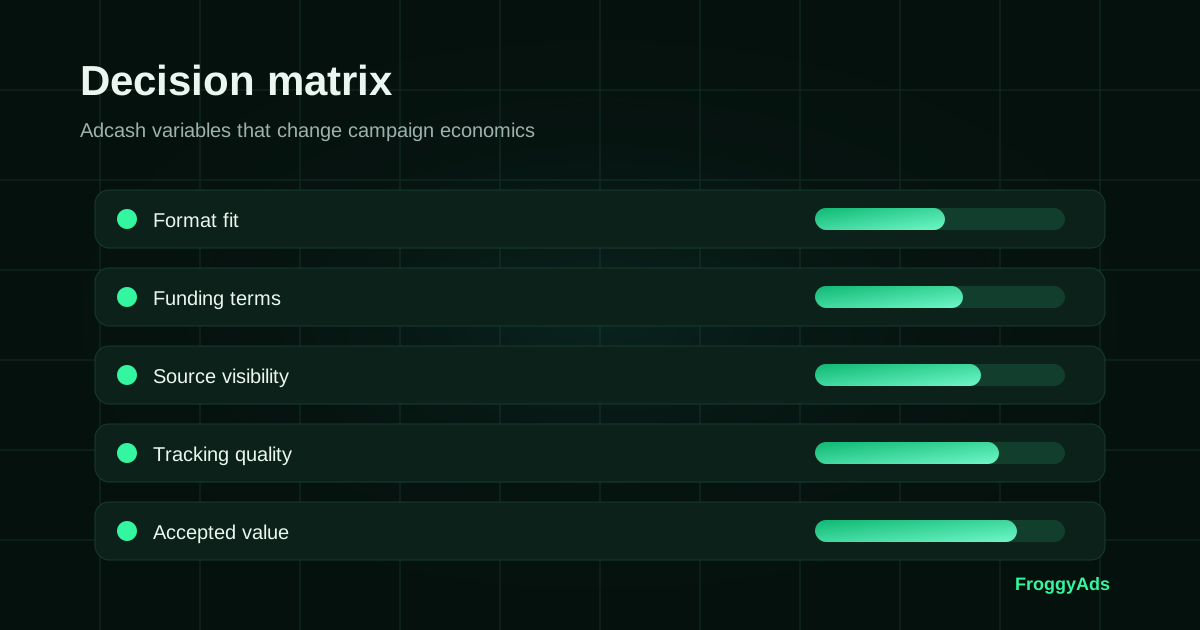
When may Adcash fit, and when is a second network useful?
Keep Adcash in the plan when current eligibility, format, supply and controls support a useful campaign role. That role may be a baseline, a particular user context or a market where the buyer has enough evidence to operate safely. State the role so later results are judged against the intended job.
Add a second network when it can answer a different supply or format question, reduce concentration, provide better actionability or serve as a matched challenger. Do not diversify merely to collect platform names. Duplicate exposure and fragmented budgets can make every conclusion weaker.
FroggyAds is a strong candidate when you want a self-serve test across our available Push, Native, Display, Pop, Video or Interstitial traffic and can use source-level controls to act on performance evidence. We help you move from setup to a measured decision without promising a specific outcome.
Review the portfolio after conversion maturity. A platform can stay at limited scale when it supplies a distinct profitable cell, while another handles a different format or country. Remove roles that add workload without independent value.
Which paid-media format belongs in an Adcash review test?
Start with the offer journey. A display unit can reinforce a visual proposition within a page; pop-under traffic creates a separate visit; an interstitial occupies a transition; video has a time-based message; in-page push uses a message-shaped placement. Choose the experience the destination can honour.
Review creative specifications, prohibited claims and landing behaviour before launch. Keep the same format when comparing platforms where possible. If the contexts differ, treat each as a separate hypothesis and do not attribute the whole difference to the network.
FroggyAds supports several formats from one self-serve platform. Select the format that matches your offer, prepare compliant creative and a measurable destination, then start your next campaign with FroggyAds.

What steps create a defensible Adcash review?
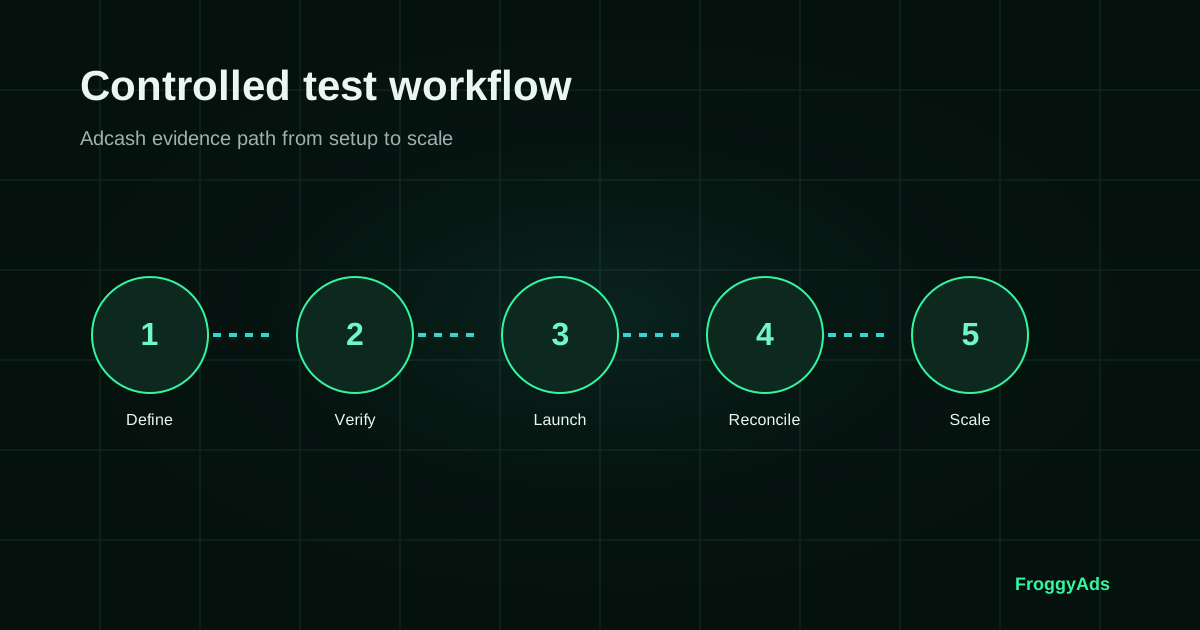
- Write the decision. Define what the review must approve, limit or reject.
- Verify identity. Confirm the official domain, legal operator and authorized account path.
- Check eligibility. Validate the offer, market, device, format and destination.
- Separate costs. Record funding, bid model, spend, fees and analyst work independently.
- Define measurement. Lock the conversion event, attribution, quality rule and maturity window.
- Test the event path. Reconcile a controlled click and conversion before scaling.
- Launch a bounded cell. Set exposure, pacing reviews and stop conditions.
- Inspect supply. Review source concentration, delivery match and unusable traffic.
- Wait for accepted outcomes. Include normal lag and reversals.
- Publish the verdict. State the evidence, limitation, action and next review trigger.
This method turns the page from a reputation summary into a buyer tool. Another media buyer should be able to follow the record and reach the same conclusion from the same evidence.
Which evidence should carry the most weight in an Adcash review?
Use current legal and official product information for identity, published features and policies. Use authorized account screens or official support for terms that are not public. Save the date and exact question because platform interfaces and conditions can change.
Use reconciled first-party campaign data for delivery, cost and accepted outcomes. Preserve the settings, creative, destination, source report and quality definition. Dashboard totals without an event contract cannot support a strong commercial conclusion.
Use third-party reviews to find issues worth checking, such as approval, funding, reporting or support. Weight a report more heavily when it names the user's role, date, market, format and documented condition. Keep anecdotes below current official and reproducible account evidence.
Use inference only when clearly labelled. If the platform publishes a format but not reachable volume for your market, the safe conclusion is that the format can be evaluated, not that the campaign will receive enough supply or achieve a target result.
Resolve contradictions by returning to scope. A payment article may describe a particular method or account role, while a user report may refer to another country, currency or period. Record both claims, identify the condition each one covers and seek current account evidence for the planned transaction. Do not average incompatible statements into a false certainty.
Give every unresolved item an owner and deadline. Campaign operations can proceed only when the unknown does not affect eligibility, consent, measurement, payment safety or the agreed exposure limit. Material uncertainty should pause the affected cell while independent verified work continues.
How can you turn the Adcash review into a bounded campaign test?
Create a test charter that names the campaign objective, format, market, device, creative, destination, conversion event, attribution rule, accepted outcome, maximum exposure and stop condition. Assign owners for tracking, source review and the final commercial decision.
Use a budget that is safe to stop and proportionate to the evidence threshold. No universal amount can guarantee a valid conclusion. Event frequency, auction conditions, conversion lag and quality review determine how much evidence the team needs.
When the plan includes a FroggyAds comparison, preserve both configurations and keep source reports separate. Review them after the same maturity window where possible. Create your free FroggyAds account to prepare that measured challenger cell.

Which current sources support this Adcash review?
Verify Adcash using its current advertiser platform information, legal pages, corporate site and the published CPC and CPM explanation. Use each source only for the question it directly supports.
Verify FroggyAds using our current pricing information, format overview, traffic source guidance and advertiser information. Save the pages and review date used for the test plan.
Public sources document product facts and requirements. They do not guarantee reach, rate, quality, sales or profit for one campaign. Keep measured findings and hypothetical examples clearly separated from those facts.
Adcash review FAQ
Is Adcash a legitimate advertising platform?
Adcash publishes corporate, advertiser and legal information, but legitimacy checks should still be current and task-specific. Verify the official domain, legal operator, account path, offer eligibility, payment route and support channel before supplying documents or funds. A legitimate operator does not guarantee campaign fit or results.
Which ad formats does Adcash describe for advertisers?
The reviewed public advertiser information describes Video, Pop-Under, Interstitial, In-Page Push and Display inventory. Confirm current availability, market access, specifications and account eligibility directly before building creative or funding a test.
Which pricing models are associated with Adcash?
Reviewed public information refers to CPM, CPC, CPA, CPS and CPA Target. A pricing model explains how a campaign can be billed or optimized; it does not establish the auction price, required bid, deposit or cost of an accepted business outcome for your campaign.
How should I interpret Adcash user reviews?
Treat a review as an observation with a date, role, market, format and campaign context. Look for reproducible details and compare them with official information and your own account evidence. Do not treat one positive or negative story as a universal platform score.
What should I verify about Adcash funding?
Check the current advertiser payment methods, minimum funding requirements, fees, currency handling, balance rules and refund route through official information or the authorized account. Keep advertiser funding separate from publisher payment information and from the campaign's media price.
How can I test Adcash tracking before meaningful spend?
Send a controlled click and conversion, verify macros and postbacks, and reconcile the event between the platform and your tracker. Define attribution, duplicate handling, rejected outcomes and reporting delay. Hold scale until the event path and ownership are clear.
What makes an Adcash review useful for a media buyer?
A useful review separates verified product facts, campaign-specific measurements and unresolved questions. It shows who the platform fits, what evidence a test must collect, which operational risks matter and how the buyer will decide to continue, repair or stop.
When should I test FroggyAds alongside Adcash?
Use a separate FroggyAds cell when our available format, market and self-serve controls fit the same business question or a clearly different traffic role. Align outcome definitions where possible, keep source reports separate and compare only after the declared conversion window.
Can an Adcash review guarantee profitability?
No. A review can improve due diligence and test design, but profitability depends on the offer, audience, format, creative, destination, tracking, auction conditions and execution. Reject claims that guarantee sales, profit or a particular performance result.
What should the final Adcash review decision contain?
State the verified facts, tested setup, mature accepted outcomes, source concentration, operating effort, unresolved risks and chosen action. The conclusion should say whether to continue, limit, repair, compare or stop, with an owner and trigger for the next review.
Which Adcash and FroggyAds guides support the next check?
When should you move more budget after an Adcash review?
Increase exposure only when tracking reconciles, delivery matches the brief, accepted outcomes have matured and the useful value is repeatable beyond one source or short time window. Include fees, unusable traffic and analyst work in the decision.
Use FroggyAds when you want a separate, measurable traffic role and our verified formats and controls fit the plan. Keep the comparison bounded and let the evidence determine the allocation.
How should you verify Adcash identity, terms and payment evidence?
Begin with the official Adcash domain, advertiser route, publisher route and legal information. Confirm the operator, account path and applicable terms before sharing documents, adding payment details or funding the account.
Review the current advertiser payment methods for advertiser funding questions. Treat the publisher payment overview as publisher information. Do not transfer a publisher threshold into an advertiser deposit claim.
Inside the authorized account, verify currency, fees, balance restrictions, refund path and the exact condition that applies to the planned campaign. Record unknown items and obtain an official answer before they affect spend. Identity verification supports trust, while campaign fit still requires measurement.
Which decision does this Adcash review page own?
This page helps an advertiser decide whether Adcash deserves a controlled campaign test, what must be verified before funding and which evidence should guide continuation. It owns the platform review and validation decision, rather than a broad ranking of every network.
Use the separate competitor, rate, deposit and platform-comparison guides for those narrower questions. Here, finish the review with a dated fact record, test charter, accepted-outcome report and an explicit continue, limit, repair, compare or stop action.
When FroggyAds fits a useful challenger role, create your free FroggyAds account after the offer, destination, tracking and review rules are ready. We recommend scaling from verified source and outcome evidence rather than assumptions.
What matters first in an Adcash review for advertisers?
Define the campaign role before judging the platform. Name the eligible offer, intended market, format, user context and accepted business outcome. That turns a vague reputation question into a decision the team can verify.
Separate official facts from campaign measurements and user reports. Confirm identity, eligibility, payment access and tracking, then use a bounded test with a maturity window and stop rule. Preserve the setup so the conclusion can be audited.
Compare the final evidence with the role the platform was meant to serve. Continue when value and control are repeatable, repair a specific failure when the evidence supports another test, and stop when the platform cannot earn a useful place in the plan.
Archive the source log, account assumptions, creative version, destination, event test, source report and final action. The next review should begin from this evidence and repeat only the checks affected by a changed term or campaign condition.
Review operational quality alongside media performance. Note approval turnaround, clarity of rejection reasons, reporting latency, the effort needed to isolate sources and whether support answers the actual advertiser question. These observations belong to the tested account and period; they should guide workflow planning without becoming universal claims about every customer.
Set the next review trigger before closing the record. A changed format requirement, new country, different offer, tracking migration or material platform term can reopen only the relevant checks. A stable test should not be repeated merely because a new opinion appears online.