
Adcash competitors for advertisers: compare the campaign job, not the logo
The right Adcash competitor is the network that can serve your eligible offer in the required market and format, give you enough control to run a fair test, and produce evidence you can act on. We recommend defining that job first, verifying current account terms, and comparing accepted outcomes after the same maturity window.

What should you compare before replacing or adding to Adcash?
Begin with campaign eligibility: offer category, target country, device, format, destination and account requirements. A platform is not a real competitor for your plan until those conditions are confirmed. Review the current Adcash advertiser information and the candidate network's official terms rather than relying on an old comparison table.
Next, compare controls and evidence. Ask which source or placement identifiers appear in reporting, when conversion data matures, which exclusions are available and how a rejected campaign is corrected. Then separate funding requirements from actual media cost. A minimum deposit, bid, budget and effective cost per accepted outcome answer different questions.
Finally, run a matched test. Use the same offer, outcome definition, attribution window and quality rule while keeping platform data separate. FroggyAds is a strong option when you want a self-serve path across Push, Native, Display, Pop, Video and Interstitial formats, a public $50 minimum deposit and source-level controls. Verify current details before funding and let measured campaign fit decide the allocation.
Which Adcash competitor roles are worth evaluating?
A useful shortlist contains roles, not a random collection of brands. One candidate can be the control network, another can provide a format or geography the control does not cover well for the campaign, and a third can be held as a recovery option if account access or supply changes. Every role needs a reason, a verification task and a stop rule.
FroggyAds can be evaluated as the self-serve challenger when the plan calls for several traffic formats and practical source controls. The decision is not that one network must replace another everywhere. The question is whether our platform gives this offer a useful test cell with enough transparency to measure accepted outcomes and make source-level decisions.
Adcash remains the baseline when it already supports the campaign job. Its reviewed public advertiser information describes Video, Pop-Under, Interstitial, In-Page Push and Display inventory, along with CPM, CPC, CPA, CPS and CPA Target models. Treat those as current-source facts to verify, not as a prediction of performance.
Additional networks belong on the shortlist only after their official pages or account information confirm the needed market, format, offer eligibility, funding route and measurement support. Adsterra, Clickadu and HilltopAds may appear in market research, but their role must be established from current evidence for your campaign. A familiar name does not qualify a platform by itself.
What constraint should an Adcash competitor solve?
Write one sentence that describes the operating problem. Examples include limited reachable volume in an eligible country, missing access to a required format, insufficient source detail for optimization, unsuitable payment access or a review workflow that cannot support the offer. This prevents the team from changing networks when the real issue is the creative, landing page or measurement setup.
Turn the constraint into an acceptance test. If source transparency is the problem, specify the identifier depth and action you need. If volume is the problem, define the country, device, format, bid range and minimum source diversity. If cost is the problem, use accepted outcomes after normal lag rather than clicks or the advertised pricing model alone.
Record what will remain constant. Keep the offer, destination, tracking definitions and decision window aligned where possible. When a network requires a different format or user context, document that difference and compare each cell against its own declared job instead of pretending the traffic is identical.
How can you connect the shortlist to a controlled audience test?
Build the audience hypothesis before opening the platform interface. State the target country, device, user context, offer stage and exclusions. Then map the controls that each network actually exposes. A similarly named setting can represent a different supply pool, so save the live configuration and source report for each test cell.
Start with a bounded audience rather than chasing the largest available reach. Confirm that delivery matches the intended geography and device, then inspect source concentration and accepted conversion quality. Expand only after the original cell has enough mature evidence to support a decision.
With FroggyAds, you can create a separate test, apply the available targeting and source controls, and keep that evidence distinct from the Adcash baseline. Create your free FroggyAds account when the brief and tracking plan are ready.

Which dimensions separate useful Adcash competitors?
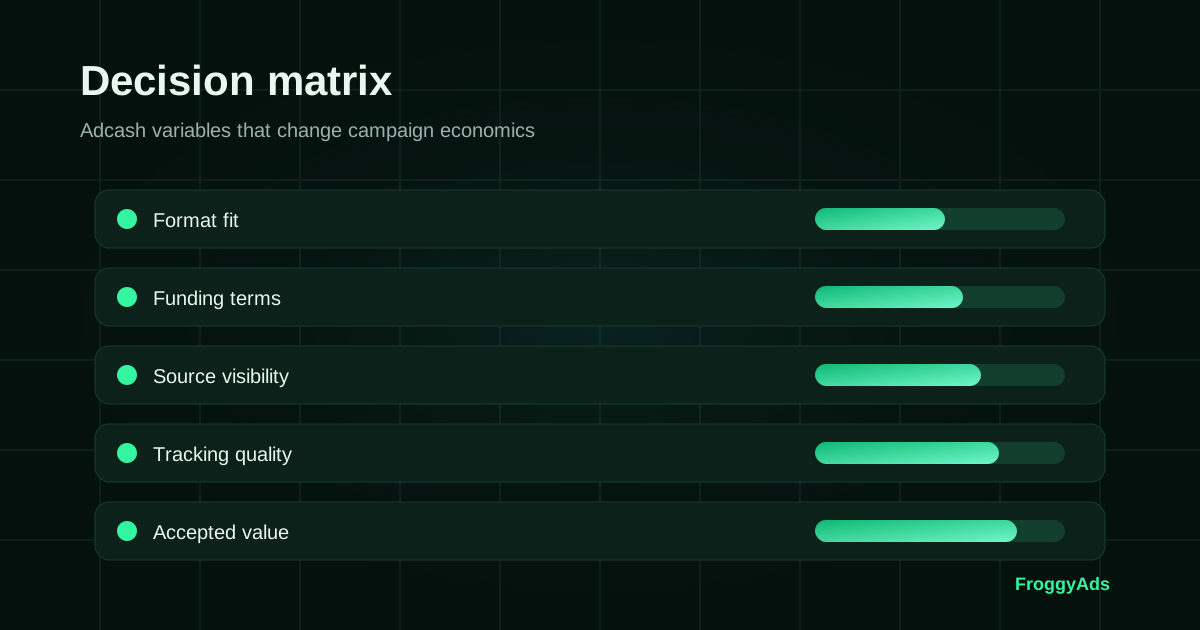
Score evidence rather than marketing language. Use the same definitions across candidates, attach the current source or account proof, and mark unknown items for verification. Weight only the dimensions that affect this campaign.
| Dimension | Evidence to capture | Buyer decision |
|---|---|---|
| Eligibility | Offer, country, device, format and destination accepted | Include or exclude before funding |
| Traffic role | Reachable supply and source diversity for the declared job | Control, challenger or specialist cell |
| Measurement | Event reconciliation, attribution, reporting delay and accepted outcome rule | Comparable test or measurement repair |
| Control | Targeting, source identifiers, inclusion and exclusion actions | Optimization possible or too opaque |
| Operations | Review path, support boundary, payment access and analyst workload | Practical to operate or hold |
| Economics | Spend, fees, mature accepted value and unusable traffic | Scale, limit, retest or stop |
Do not turn the matrix into a universal ranking. A platform can score well for one offer and poorly for another because eligibility, supply and user context change. Preserve the evidence behind every score so another buyer can reproduce the decision.
Where can each alternative fit in a media plan?
Give Adcash the control role when its current setup already represents the working baseline. Keep the budget, audience and measurement contract visible so a challenger is compared with a real operating cell rather than a remembered average.
Use FroggyAds as a challenger when you want to test our available Push, Native, Display, Pop, Video or Interstitial traffic through a self-serve workflow. Choose the format that matches the offer and destination, define source-level actions before launch, and keep our reporting separate until the comparison is complete.
A specialist network can earn a narrow role for one geography, format or compliant vertical. A recovery network can remain unfunded until supply, account or policy conditions make it relevant. These roles reduce duplicate exposure and stop the team from spreading budget across platforms that answer the same question.
The plan can keep more than one network when each contributes independent value. Revisit the roles after accepted outcomes mature. Remove a platform that adds workload without distinct supply, measurement value or better campaign control.
Which paid-media format supports a fair Adcash competitor test?
Choose format from the user journey. Display can support a visual message in an existing page context; pop traffic creates a separate browsing event; interstitials take over a transition; video carries a time-based story; in-page push uses a message-style unit without requiring a push subscription. The destination must fulfil what the placement promises.
Compare like with like when the networks offer the same practical format. If the format differs, write a separate hypothesis and success rule for each cell. Do not call a result a network effect when the user context, creative canvas and landing path also changed.
FroggyAds lets you test several traffic formats from one self-serve account. Select the format that matches the offer, prepare compliant creative and a mobile-ready destination, then start your next campaign with FroggyAds.

How can you compare Adcash competitors without losing the baseline?
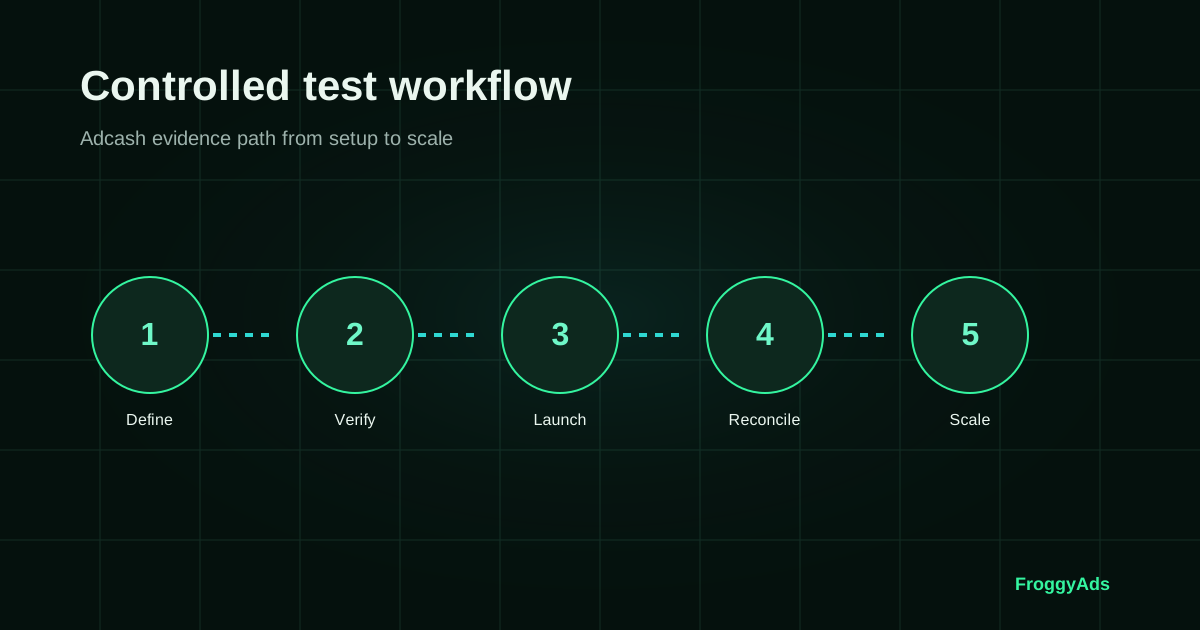
- Define the job. Name the constraint, eligible market, format and buyer decision.
- Verify current terms. Save official evidence for account eligibility, formats, funding and controls.
- Freeze measurement. Document the event, attribution window, rejection rule and maturity point.
- Prepare comparable cells. Align offer, destination and creative while recording unavoidable differences.
- Test tracking. Reconcile a controlled click and conversion before meaningful spend.
- Fund conservatively. Set per-cell limits, pacing checks and stop conditions.
- Inspect delivery. Confirm geography, device, format and source concentration.
- Change one variable. Preserve the prior configuration and reason for every adjustment.
- Wait for mature outcomes. Include accepted quality and normal conversion lag.
- Write the allocation decision. Keep, limit, repair, expand or stop each role.
This workflow protects the baseline and makes uncertainty visible. If one platform cannot meet a required control or evidence standard, hold that cell and continue only with independent eligible tests.
How can you turn the shortlist into a controlled campaign test?
Create a launch card for each network. Include the platform role, campaign objective, audience, format, creative version, destination, conversion event, attribution window, maximum spend, pacing review and stop rule. Assign an owner for tracking and an owner for the final business decision.
Use a small enough exposure to stop safely when delivery or measurement is wrong, but large enough to observe the declared question. The useful threshold is not a universal amount. It depends on bid conditions, outcome frequency, conversion lag and the minimum evidence the team agreed to require.
For the FroggyAds cell, preserve the account and campaign settings, monitor sources and compare accepted outcomes with the Adcash baseline after the same maturity rule. Create your free FroggyAds account to prepare that separate test.

How should an advertiser select an Adcash competitor?
Use a sequence of gates. The eligibility gate removes platforms that cannot accept the offer, market, device or destination. The operations gate removes candidates the team cannot fund, measure or manage safely. Only then should a paid trial compare reachable supply and accepted-outcome economics.
At the quality gate, reconcile the platform event with your own source of truth. Define which leads, sales or registrations count, when they become mature and which reversals matter. A low click price does not compensate for unusable traffic, missing attribution or analyst work that prevents profitable control.
At the scale gate, require repeatable value across more than one source or time slice. Check concentration, creative fatigue, destination stability and normal lag. A promising early cluster can justify a measured extension, while a single noisy result should remain a hypothesis.
At the portfolio gate, decide the job for each surviving platform. FroggyAds can hold the challenger or specialist role when our available formats and controls fit the brief. Keep Adcash where its baseline remains useful. Stop any cell that cannot earn an independent role.
Which official information supports this Adcash competitor guide?
Use the current Adcash advertiser platform, Adcash legal information, Adcash corporate site and its CPC and CPM explanation to verify the Adcash facts relevant to your campaign. Record the page, review date and exact claim supported.
For FroggyAds, review our current pricing information, ad formats, traffic sources and advertiser guidance. Separate minimum deposit, bid model, campaign budget and measured outcome economics in the decision record.
Official pages establish product and policy facts. They do not prove that a platform will deliver a particular result for your offer. Label assumptions and hypothetical examples, and use a controlled account check when public information does not answer the question.
Adcash competitors FAQ
How should I build a shortlist of Adcash competitors?
Start with the one campaign constraint that needs improvement, such as eligible geography, usable format, funding access, source visibility or operating workflow. Keep only platforms that can solve that job and can be verified before launch. This gives you a testable shortlist instead of a directory of network names.
Why does user context matter when comparing Adcash competitors?
A visitor experiences a display placement differently from pop-under, interstitial, video or in-page push inventory. Match the format, device, destination and offer stage to the intended user context. A result from one context does not establish how another format or audience will behave.
Which funding terms should I compare across ad networks?
Verify the current minimum funding amount, available payment methods, fees, balance restrictions and refund route from the platform or account. Keep this separate from the campaign bid or media cost. Funding terms can change and can affect whether a first test is practical for your team.
How can I compare geographic reach among Adcash competitors?
Confirm that the platform accepts the offer and serves the required country, device and format. Then use a bounded test to observe reachable volume, source diversity and accepted outcomes at a realistic bid. Published reach alone cannot show the supply available to one campaign.
What source transparency should an advertiser expect from a competitor network?
You need identifiers and controls that support an action. Record whether reporting distinguishes useful sources or placements, how quickly data arrives and whether you can include, exclude or isolate traffic based on evidence. A label is useful only when it changes a campaign decision.
How should conversion tracking be tested across Adcash competitors?
Send a controlled click and conversion through every supported tracking route before spending at scale. Reconcile the event in your tracker and the platform, checking macros, postbacks, attribution windows, duplicate handling and rejected outcomes. Keep each network's data separate during the comparison.
Why should policy operations be part of an ad network comparison?
Approval speed is only one part of campaign operations. Check offer restrictions, creative and destination rules, required documentation, rejection reasons and the route for correcting a compliant campaign. A network that cannot support the intended offer safely is not a workable alternative.
What makes a fair test between two advertising networks?
Use comparable campaign objectives, audience conditions, creative, landing paths, conversion definitions and maturity windows. Give each platform a bounded budget and a written stop rule. Do not change multiple major variables at once or blend source reports before the decision.
Can more than one Adcash competitor stay in the media plan?
Yes, when each network has a defined role and provides useful supply for a distinct market, format or test question. Measure each role independently. Keep, limit or expand a platform only when accepted-outcome economics and operating evidence support that choice.
What belongs in the decision record after testing Adcash competitors?
Record the exact setup, spend, mature accepted outcomes, source findings, tracking differences, policy issues, analyst workload and next action. State why the platform was kept, limited, repaired, retested or removed, and list any assumption that still needs current official verification.
Which Adcash and FroggyAds resources support the next step?
How should you give each platform one job and one stop rule?
Write the platform role, required evidence, exposure limit and next decision before launch. Keep Adcash as the baseline where it remains useful, and use FroggyAds as a measured challenger when our available formats, self-serve workflow and source controls fit the campaign brief.
Judge the cells by mature accepted outcomes, source quality and operating workload. The correct result can be one network, a split allocation, a repaired test or no scale.
How should you verify Adcash and competitor evidence before funding?
Confirm identity, account path, eligible offer, geography, format, measurement route, funding terms and support boundary. Save current evidence from the Adcash site, advertiser information, publisher information and legal pages. Review the current advertiser payment methods and publisher payment information only for the question each page actually answers.
Do not merge publisher payment thresholds with advertiser funding rules. Do not treat a pricing model as the price your campaign will clear. When a public page is silent, mark the item unknown and verify it in the authorized account or through official support before the assumption affects spend.
Repeat the same discipline for every competitor. A defensible comparison shows what was verified, what was measured, what remains uncertain and which person owns the next check.
What decision does this Adcash competitors page own?
This URL helps advertisers decide which networks deserve a matched trial alongside or instead of an Adcash campaign. It owns the shortlist, verification and allocation decision. It does not promise that one platform will outperform another, and it does not replace a live account check.
Choose FroggyAds when you want to add a self-serve test with an eligible format and evidence you can use for source-level optimization. Define the objective, audience, budget, conversion event and stop rule first, then create your free FroggyAds account.
Finish with a written keep, limit, repair, expand or stop decision for every network. Store the source log, campaign settings and mature outcome report so the next buyer can understand the evidence without repeating the entire test.
What should you do first when researching Adcash competitors?
Name the campaign condition that Adcash is not currently solving, or the separate opportunity you want a challenger to test. Make it observable. A specific country-format gap, source-control need or funding constraint can be verified; a vague request for a better network cannot.
Build the smallest evidence-based shortlist, verify eligibility and tracking, and use a bounded matched test. Keep the campaign variables and maturity rule visible, then compare accepted value, source concentration and operating effort.
FroggyAds gives you a practical next step when our formats and self-serve workflow match that brief. Start the account only after the offer, destination, measurement and review rules are ready, and scale only from evidence.
Schedule a review after the declared conversion window closes. Reconcile spend, accepted outcomes, source concentration, tracking differences and analyst time, then store the decision with the current-source log so future tests begin from verified evidence.