Search intent and buyer decisionUS CPM Rates 2026 — buyer decision
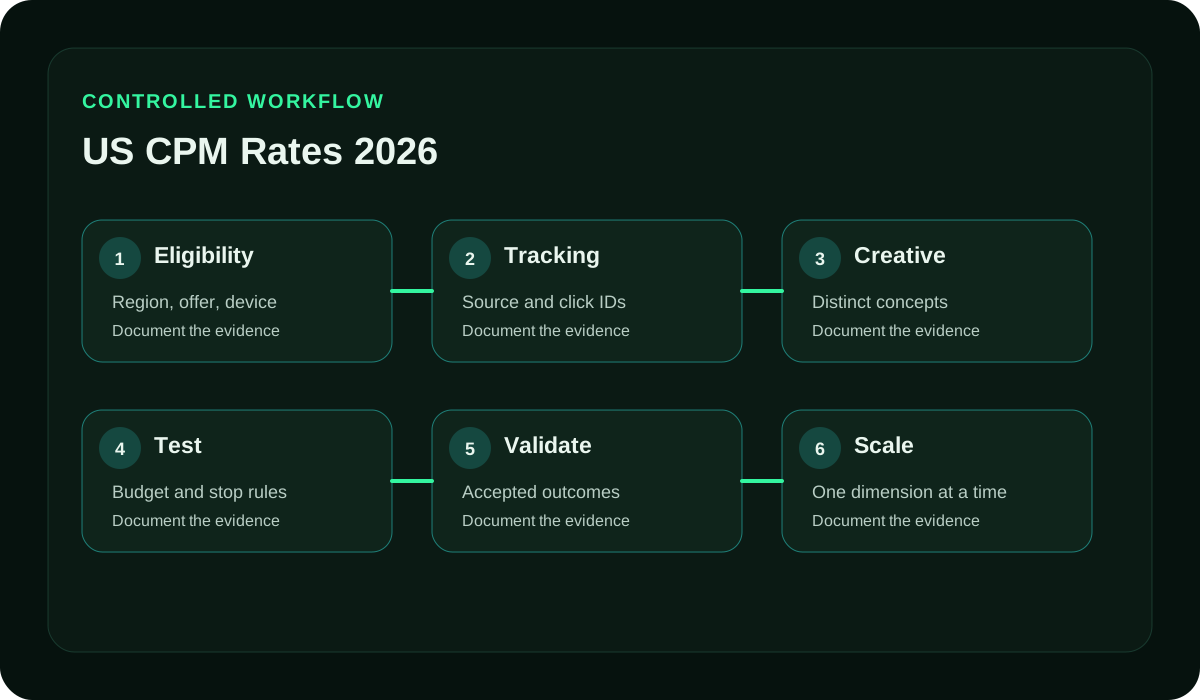
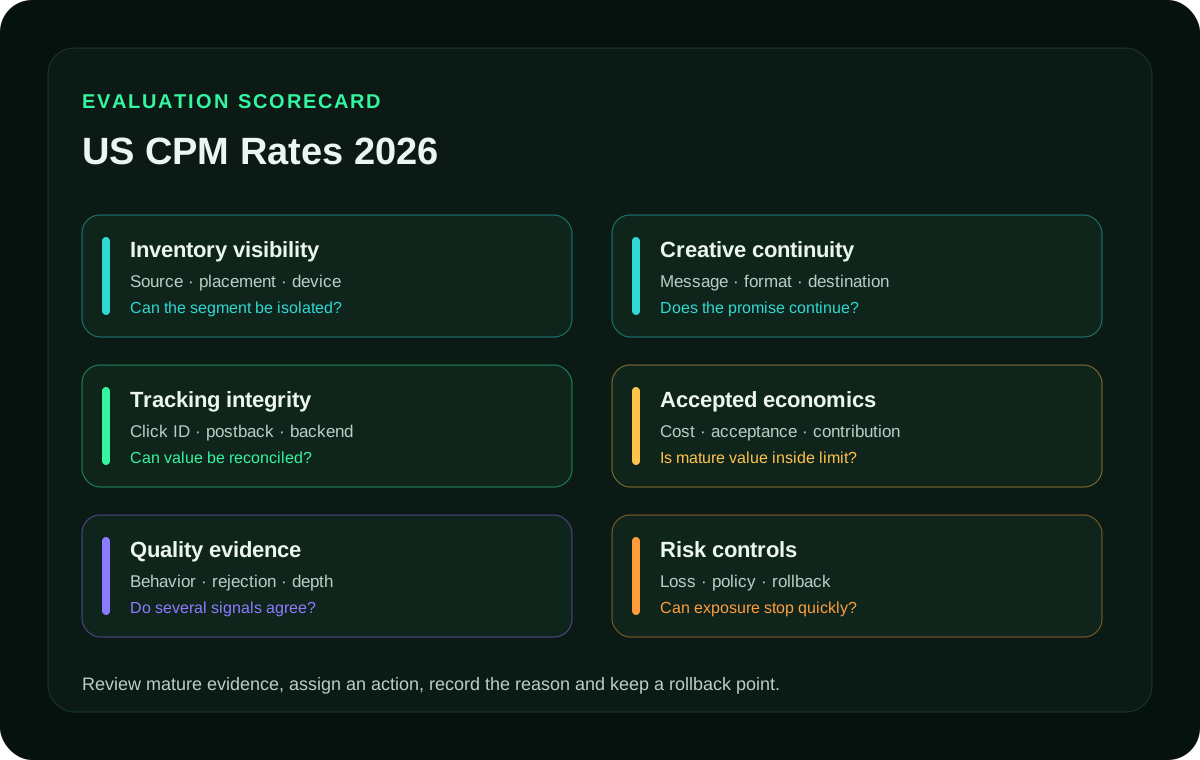
Treat US CPM Rates 2026 as a decision page for advertisers and media buyers. Keep the test narrow enough to explain, retain the source and configuration evidence, and wait for the accepted business outcome to mature. The page-specific job is to use current 2026 platform and market context rather than evergreen assumptions. The adjacent CPM Rates page should remain a separate decision. The distinct operating context on this URL is campaign objective, audience or inventory fit, source evidence, destination continuity and mature business value. Treat its page role as current-context review: separate dated market changes from durable operating rules and identify what should actually change in the campaign.
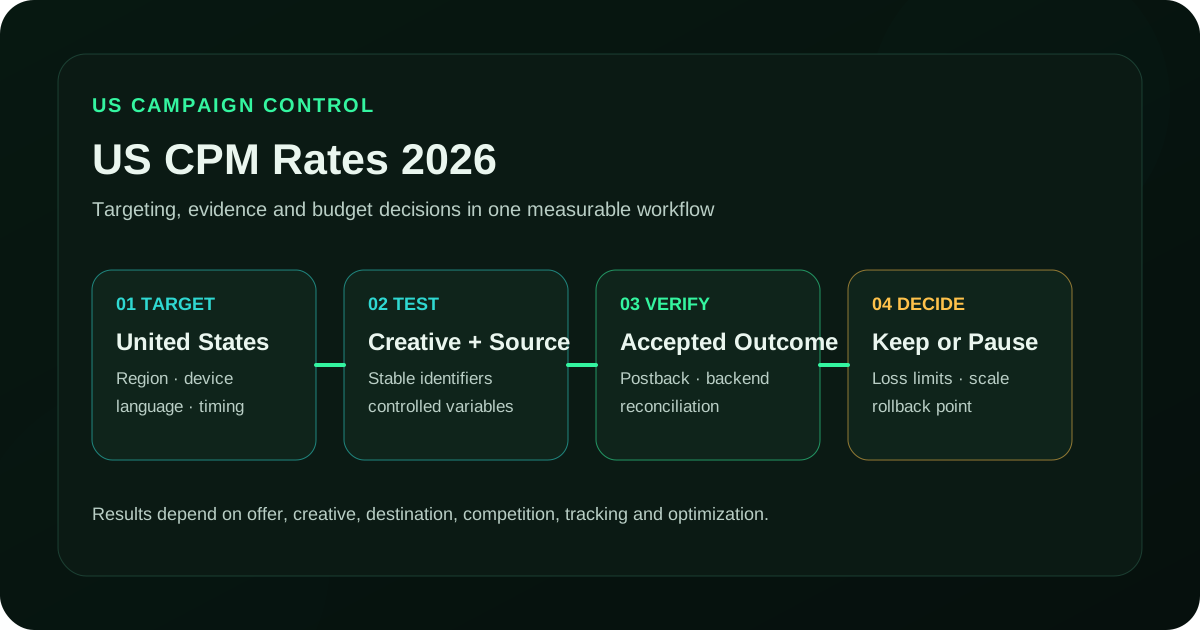
Evidence already visible on this page: Understand us cpm rates 2026, the auction and inventory variables that change effective media cost, and how to compare bids, delivery, source mix and accepted business outcomes. US CPM Rates 2026 is not one universal market price. Effective CPM changes with format, placement, source, device, audience, timing, competition and quality requirements. Use a controlled test to calculate effective cost per accepted outcome before scaling. US CPM Rates 2026 begins with the complete delivery path. Document when an impression, view or click is counted, how a user in United States reaches the destination, which campaign and source identifiers survive the path, and how the accepted event returns… The working concepts for this URL are campaign objective, audience targeting, conversion tracking, source quality.
Questions to resolve before scale: Which commercial details make a 2026 US CPM proposal comparable? Why should regional mix appear in US CPM reporting? Why does delivered device mix alter US CPM campaign economics?
| Checkpoint | Page-specific action | Evidence to keep |
|---|
| Boundary | Use “Understand How US Delivery Creates an Opportunity to Engage” to define the first operating boundary for US CPM Rates 2026. | Record the answer to “Which commercial details make a 2026 US CPM proposal comparable?” together with source, targeting and destination identifiers. |
| Evidence path | Use “Turn “US CPM Rates 2026” Into a Measurable Operating Requirement” to test whether delivery is producing the expected path toward the accepted business outcome. | Keep the evidence needed to answer “Why should regional mix appear in US CPM reporting?” after the same maturation window. |
| Decision | Use “Account for Regional, Device and Time-of-Day Differences” to decide what changes next; change one material variable before comparing again. | Write the answer to “Why does delivered device mix alter US CPM campaign economics?” plus accepted cost/value and the rollback condition. |
Transparent decision example
Hypothetical example: Suppose US CPM Rates 2026 spends USD 350 before the checkpoint and records 11 accepted outcomes; the resulting accepted CPA is USD 31.82. Replace the inputs with your own economics; this is not a FroggyAds performance claim.
Why use FroggyAds for this step?
FroggyAds gives advertisers a controlled execution layer for US CPM Rates 2026: select the traffic setup, keep source-level reporting visible and let the mature accepted business outcome decide whether the next spend increase is justified. Create your free FroggyAds account.
Research basis for US CPM Rates 2026: This URL helps performance-focused advertisers use current 2026 platform and market context rather than evergreen assumptions. It is mapped to the general ads research cluster. Our current review used shopify.com and support.google.com to check terminology, buyer questions and decision coverage relevant to US CPM Rates 2026. These external sources are research inputs, not evidence of FroggyAds campaign performance.