
Popup Ad Network 2026
Review popup ad network 2026 through current browser compatibility, inventory access, policy, pricing, tracking, source controls and measurable campaign economics.
What Popup Ad Network 2026 Means
Popup Ad Network 2026 describes access to popup inventory that can open a separate advertiser destination after an eligible interaction, subject to browser behavior, device rules, publisher implementation and platform policy. Define the primary outcome, verify tracking, compare sources under one attribution model and use explicit keep, pause and scale rules before judging the campaign.
Understand Popup and Popunder Delivery
Popup Ad Network 2026 uses a separate advertiser destination opened as a popup or popunder after an eligible interaction. Popup delivery places the destination in front of the active page, while popunder delivery can appear behind or beneath the current browsing context until the user reaches it. Browser controls, operating systems, device classes, publisher implementation and supply-partner rules can change how the event behaves. For popup ad network 2026, preview the actual path on supported devices instead of assuming every impression produces the same user experience. Record the impression, open, landing request, click identifier, source identifier and accepted backend event so a delivery issue can be separated from a destination or attribution problem.
Define Eligibility Before Buying Volume
Write down who may use the offer, the allowed countries, supported devices, language, age or policy restrictions and the action expected after the destination opens. Popup Ad Network 2026 can support direct response, content promotion, app acquisition, lead generation and other eligible goals when the offer and local rules permit them. The strongest starting point is a narrow eligibility definition tied to current supply and browser compatibility. Exclude unsupported GEOs and devices before launch, and avoid messages that imitate operating-system warnings, security alerts or other interfaces that could confuse a user. Clear eligibility protects budget, improves source comparisons and reduces the chance that weak traffic is actually a targeting mistake.
Evaluate Inventory and Source Transparency
Total volume is only the first supply question for popup ad network 2026. Ask which GEOs, devices, browsers, operating systems, categories, connection types and source identifiers are available. Confirm whether frequency limits, placement exclusions, whitelists, blacklists and bid adjustments can be applied after launch. Preserve every usable source and placement ID through the tracking chain, then compare inventory under the same conversion definition. Broad discovery can be useful, but only when loss limits and attribution already work. A buyer who cannot connect cost and outcomes back to a source has no dependable way to distinguish scalable inventory from temporary noise.
Build a Landing Experience That Earns Attention
The destination carries most of the communication burden in popup ad network 2026. It should load quickly, identify the advertiser, explain the real benefit, show material conditions and make the next action obvious. Any prelander or bridge page should add truthful context instead of hiding the final offer. Test several meaningfully different angles, such as direct benefit, problem-solution, education or convenience, while changing one major idea at a time. Keep page versions documented and avoid fake countdowns, fabricated social proof, forced navigation or unclear close behavior. A raw open is not valuable when the visitor cannot understand the offer or complete the accepted event.
Connect the guide to live testing
Connect Popup Ad Network 2026 to a controlled audience test
Use the choices established in “Build a Landing Experience That Earns Attention” to define one audience, budget and source set in FroggyAds. Keep the surrounding offer and measurement rule stable so the test adds evidence to popup ad network 2026 instead of mixing several changes at once.
Create My Free Account
First-screen continuity for Popup Ad Network 2026: match the user expectation
For popup ad network 2026, the first screen should immediately confirm why the destination appeared and what the user can do next. Use readable text, secure transport, responsive controls and forms that request only necessary information. If the campaign promotes an article or educational page, the content should answer the promise before asking for a conversion. If it promotes a direct offer, price, eligibility, subscription terms and other material conditions should be visible before commitment. Measure landing response time, engaged sessions, form starts, accepted outcomes and rejection reasons. Strong inventory can look weak when the destination breaks continuity or performs poorly on mobile browsers.
Create a Reliable Open-to-Outcome Tracking Chain
Append a unique click ID plus campaign, creative, source and placement parameters wherever the platform supports them. Return validated outcomes through a server-to-server postback or another reliable integration, and align time zones, attribution windows and duplicate rules across the ad platform, tracker, analytics and backend. Before meaningful spend on popup ad network 2026, complete a live test and confirm the exact identifier stored in every system. Decide which backend is authoritative when totals disagree. The purpose is not perfect agreement between tools. It is enough consistent evidence to repeat the same source decision and understand where data can be lost.
Normalize Media Price Into Acquisition Economics
Popup Ad Network 2026 may be bought through CPM, CPC, SmartCPC or another supported auction model depending on the platform and inventory. Convert spend into effective CPC, landing cost, accepted CPA, revenue per click and contribution after variable costs. For popup ad network 2026, a low CPM can be expensive when engagement and accepted conversion rates are weak, while a higher bid can be efficient when the source produces valuable outcomes. Calculate a maximum bid from conservative conversion assumptions and the value of an accepted result. Do not rely on a single universal market rate because GEO, device mix, browser behavior, competition, seasonality and source quality can move clearing prices quickly.
Choose the execution format
Choose a paid-media format that supports Popup Ad Network 2026
Use the criteria around “Normalize Media Price Into Acquisition Economics” to decide whether push, native, display or pop fits the message and destination. Set format, targeting and spend as campaign controls in FroggyAds while the popup ad network 2026 decision remains the standard for judging the result.
Create My Free Account
Budget, frequency and stop-rule decisions for Popup Ad Network 2026
A controlled popup ad network 2026 test begins with a total loss limit, daily cap, source-level threshold, conversion-lag allowance and a written condition for pausing spend. Use frequency controls when available so one user is not exposed repeatedly without evidence of added value. Separate exploration from scaling: the discovery phase should collect enough source data to identify patterns, while the scaling phase should protect the segments that already meet accepted economics. Do not raise bids, widen GEOs and change the landing page at the same time. When several variables move together, the campaign may spend more without producing a clear lesson.
A Repeatable Workflow for Popup Ad Network 2026
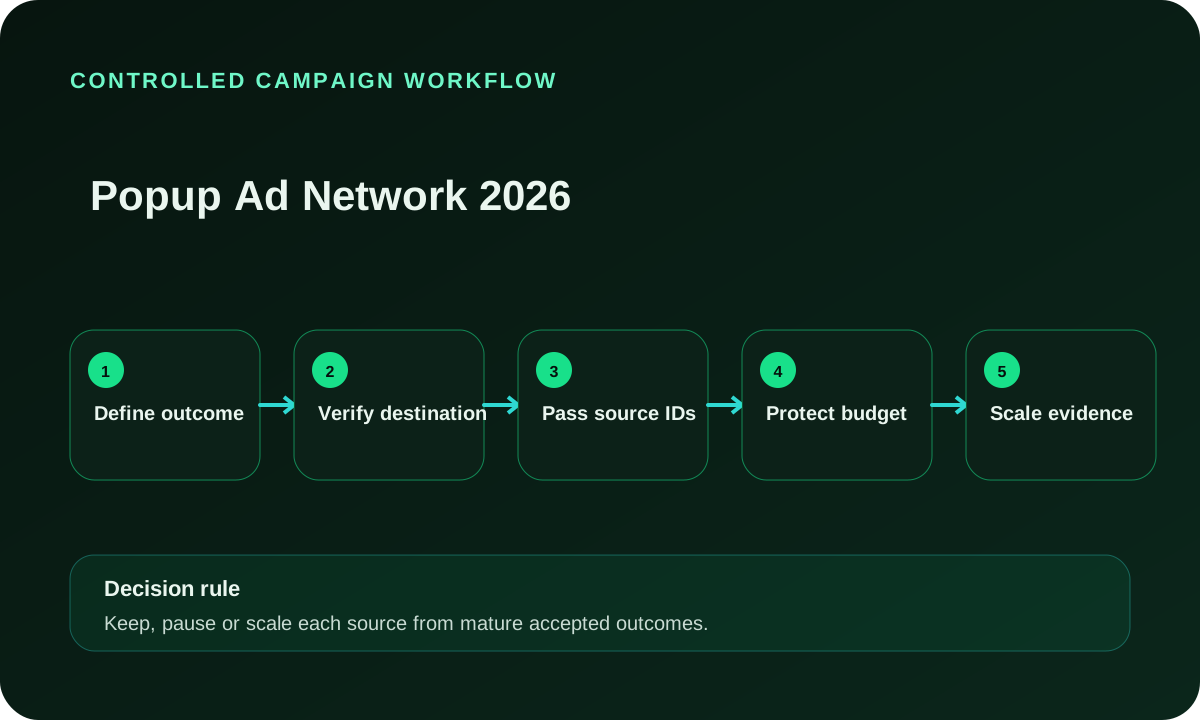
Start popup ad network 2026 with one campaign objective, one validated event and one destination family. Confirm policy eligibility, test the landing page across supported browsers, pass identifiers through the tracker and fire a real postback before increasing the budget. Launch a controlled source mix with conservative bids and enough time for delayed outcomes to mature. Review source-level cost, engagement, accepted results and rejection reasons on a fixed schedule. Pause obvious loss sources, keep promising sources under observation and move proven inventory into a separate scaling structure. A dated decision log should record the hypothesis, change, reason and expected result for every material action.
Check Quality Through Behavior and Backend Acceptance
Traffic quality for popup ad network 2026 should be examined through patterns rather than one badge. Review duplicate identifiers, abnormal click timing, impossible device combinations, extremely short sessions, conversion latency, backend rejection reasons, repeat value and the relationship between front-end events and accepted outcomes. Traffic-quality controls can reduce risk but cannot eliminate every invalid event. Compare sources only after enough data and time periods have matured. A source with fewer conversions may be more valuable when acceptance and downstream value are stronger, while a high-volume source can be unprofitable if the backend rejects most of its outcomes.
Separate Source, Bid and Destination Decisions
Optimize popup ad network 2026 in layers. First fix tracking or destination failures that affect every source. Next review source and placement performance under a stable bid and landing page. Then test bid changes inside comparable inventory, and test landing-page or offer changes with controlled traffic allocation. Use whitelists only after sources have enough evidence, and keep a discovery structure so the campaign can find new inventory. Avoid reacting to one hour, one conversion or a blended average that hides source differences. The useful question is which specific segment can receive the next unit of spend while remaining inside the accepted cost and quality range.
Scale Marginal Performance, Not the Blended Average
Scaling popup ad network 2026 means increasing spend where the next block of traffic still meets the decision rule. Raise budgets or bids in measured steps, watch whether the source mix changes and recalculate accepted CPA after each increase. Expansion into a new GEO, browser or device should be treated as a new test because the conversion rate and clearing price can differ materially. Keep a rollback point for every change. If marginal acquisition cost moves outside the planned range, return to the last stable setting instead of defending the higher blended result. Sustainable growth is a sequence of verified increases, not one large budget jump.
Put the guide into practice
Turn Popup Ad Network 2026 into a bounded campaign test
With “Scale Marginal Performance, Not the Blended Average” documented, launch only the next reversible test. Set a spending limit, preserve the baseline and use source-level and audience controls so the next step depends on qualified outcomes for popup ad network 2026, not activity volume.
Create My Free Account
Trust, policy-fit and brand-safety checks for Popup Ad Network 2026
Popup Ad Network 2026 should not rely on fake system messages, forced clicks, misleading close buttons, impersonation, malware claims or destinations that hide material terms. Confirm the advertiser identity, offer eligibility, privacy disclosures and local requirements for every market. Publishers and supply partners may apply additional restrictions, and browser behavior can change over time. For popup ad network 2026, document the creative and landing-page version reviewed for each campaign so later edits do not create an unapproved experience. Responsible implementation protects users, improves campaign durability and makes source-level results easier to interpret.
How FroggyAds Supports Popup Ad Network 2026
FroggyAds provides a self-serve media buying environment with access to pop inventory, targeting, budgets and source-level reporting. Buyers can use these controls to structure a measured popup ad network 2026 test, preserve source identifiers and optimize from verified outcomes. FroggyAds integrates with more than 750 SSP partners and offers access across multiple ad formats, while actual availability, approval and performance depend on the campaign details, GEO, offer, browser, destination, bid and competition. The platform supplies buying and control tools. The advertiser remains responsible for strategy, tracking, creative accuracy, legal compliance and backend validation.
Final Decision Gate for Popup Ad Network 2026
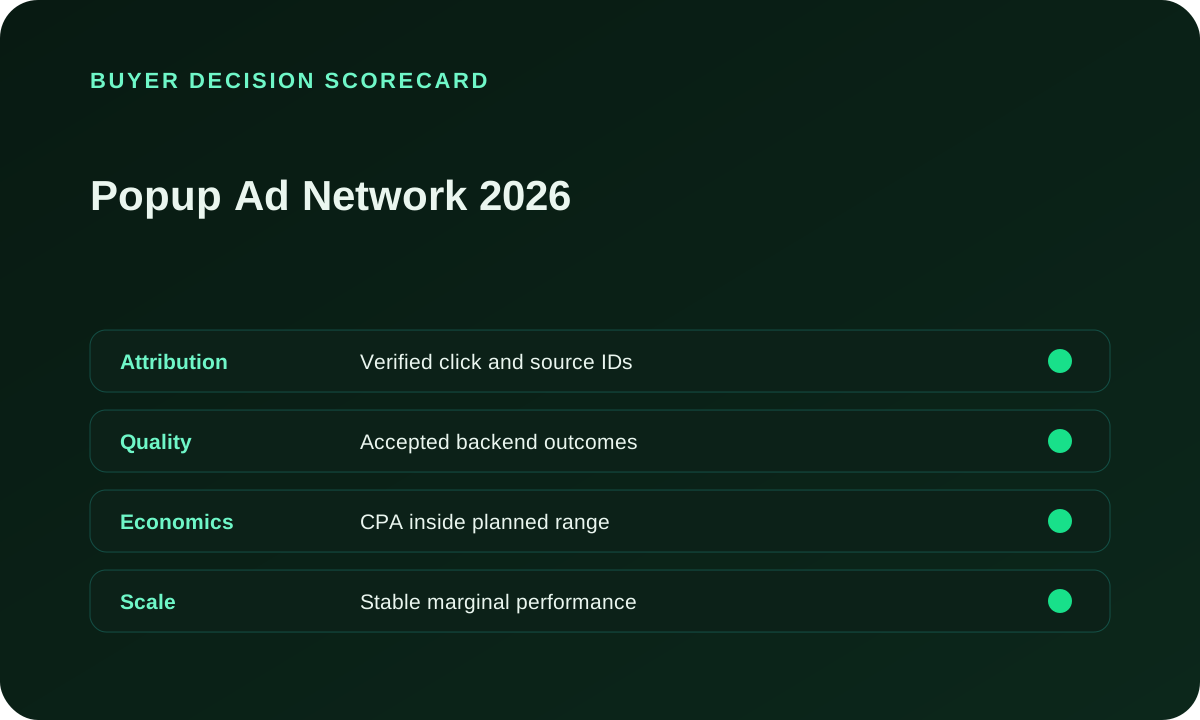
Keep or expand popup ad network 2026 only when the campaign has reliable attribution, an eligible and usable destination, enough source-level evidence and accepted acquisition economics. Pause when identifiers are missing, the landing page fails on important devices, policy concerns remain unresolved or the backend cannot validate the outcome. Continue testing when the campaign is close to the target but the sample is still immature. Scale when performance survives a measured increase and the next unit of spend remains inside the planned range. This decision gate prevents attractive labels, cheap rates or early conversion spikes from replacing evidence.
Review Cadence for Popup Ad Network 2026
A disciplined review cadence for popup ad network 2026 separates technical delivery, early engagement and accepted business outcomes. Check destination availability, browser errors, identifier capture and spend pacing soon after launch, but avoid final source decisions from a few early events. Review source and placement data only after the relevant attribution delay, then compare front-end conversions with accepted backend outcomes and documented rejection reasons.
For Popup Ad Network 2026, keep measurement settings consistent across the test: the same reporting window, time zone, conversion definition, and maturity rule. At each review, inspect source mix, marginal acquisition cost, destination speed, device and browser segments, frequency, budget use, and the effect of the last change. Record the evidence, action, expected result, and rollback point so popup delivery is judged on accepted outcomes rather than raw click volume.
For popup ad network 2026, this cadence makes it easier to distinguish temporary variance from a repeatable pattern and prevents broad scaling before the tracking chain and economics are stable. Revisit the original hypothesis after each complete test cycle, confirm that the observed change is large enough to matter commercially, and keep an unchanged control whenever possible so the campaign team can separate normal volatility from the effect of a deliberate optimization.
Practical Review Table for Popup Ad Network 2026
| Area | Evidence required | Action |
|---|---|---|
| Eligibility | Offer, GEO and device rules are documented | Exclude unsupported segments before spend |
| Attribution | Click and source IDs reach the backend | Run a live postback test |
| Quality | Accepted outcomes and rejection reasons are visible | Pause abnormal or low-value sources |
| Economics | Effective CPC and accepted CPA are calculated | Compare against the planned limit |
| Scaling | Marginal performance remains stable | Increase budget in measured steps |
Popup Ad Network 2026 FAQ
What should advertisers verify when comparing popup ad networks in 2026?
Check current inventory, targeting, format behavior, moderation, source reporting and payment terms rather than relying on an old network list.
How can a popup network test begin with controlled risk?
Use a limited budget, one clear conversion event, source identifiers and pause rules that are tested before meaningful spend starts.
What affects the price of popup traffic?
Geography, device, competition, frequency, source supply and the targeting restrictions applied to the campaign can all change the bid needed.
Which popup campaign metrics deserve daily review?
Watch accepted conversion cost, source spend, landing-page behavior, invalid-event signals and delivery changes that could affect interpretation.
What user-experience issue should a popup buyer consider?
Because a popup interrupts browsing, poor timing, repeated exposure or an unrelated landing page can reduce response and damage publisher confidence.
How do popup and popunder placements differ for a buyer?
A popup opens in front of the current view, while a popunder appears behind it and may be noticed later; timing and intent differ.
What placement-level controls should the chosen popup network expose?
Buyers need placement identifiers, exclusions, frequency settings and timely blocking so poor sources can be handled from evidence.
How should popup conversion tracking be validated?
Send a known test event, confirm campaign parameters and reconcile network records with destination or server logs before optimisation.
When is a popup campaign ready to scale?
Scale after several sources produce accepted outcomes at workable cost and the destination can handle the extra volume without changing conversion quality.
What should a 2026 network review record?
Note the date, tested formats, available controls, commercial terms and observed results because platform conditions can change after the review.
Continue the Pop Campaign Workflow
Build a Controlled Popup Ad Network 2026 Test
When evaluating Popup Ad Network 2026, choose one accepted conversion outcome, verify tracking and set a capped test budget before comparing sources. Use mature source-level data for keep, exclude and bid decisions; results still depend on offer fit, GEO, creative, destination, competition and optimization.
Popup Ad Network 2026: what should the advertiser decide next?
For Popup Ad Network 2026, popup means a separate browser window or tab experience where the inventory and browser context allow it. The buying decision is whether that delivery context fits the offer, creative and destination well enough to produce an accepted post-click result. Use What Popup Ad Network 2026 Means and Understand Popup and Popunder Delivery as the page-specific checkpoints, then judge popup ad network 2026 on message clarity, frequency and destination quality plus downstream conversion quality.
On this Popup Ad Network 2026 page, the decision should remain tied to the existing evidence around What Popup Ad Network 2026 Means, Understand Popup and Popunder Delivery and Define Eligibility Before Buying Volume. Those sections give popup ad network 2026 its specific context; the table below turns that context into campaign actions rather than adding another generic definition.
| Decision | What to verify | FroggyAds action |
|---|---|---|
| Popup Ad Network 2026 objective | Use What Popup Ad Network 2026 Means to define the accepted business event and the maximum learning loss for popup ad network 2026. | Launch one FroggyAds campaign objective for Popup Ad Network 2026 and keep the conversion definition stable. |
| Popup Ad Network 2026 audience | Use Understand Popup and Popunder Delivery to verify market, device, language and offer eligibility for popup ad network 2026. | Apply only the FroggyAds targeting controls that change the real Popup Ad Network 2026 customer journey. |
| Popup Ad Network 2026 source evidence | Use Define Eligibility Before Buying Volume to keep source-level differences visible instead of relying on one blended popup ad network 2026 average. | Keep, cap, exclude or retest Popup Ad Network 2026 inventory from documented source evidence. |
| Popup Ad Network 2026 economics | Use Evaluate Inventory and Source Transparency to connect media spend with accepted conversions and downstream value for popup ad network 2026. | Protect the Popup Ad Network 2026 test with a written budget boundary and a consistent attribution window. |
| Popup Ad Network 2026 scale rule | Use Build a Landing Experience That Earns Attention to define the exact evidence that earns the next budget increase for popup ad network 2026. | Scale Popup Ad Network 2026 one major control at a time and compare marginal performance with the prior baseline. |
A page-specific FroggyAds test sequence for Popup Ad Network 2026
- Popup Ad Network 2026 outcome: define the accepted event for popup ad network 2026 and the maximum loss permitted while the first test is learning.
- Popup Ad Network 2026 path: verify market eligibility, device experience, landing-page continuity and tracking against What Popup Ad Network 2026 Means before buying more traffic.
- Popup Ad Network 2026 hypothesis: launch one bounded FroggyAds test tied to Understand Popup and Popunder Delivery; do not change bid, creative, audience and destination together.
- Popup Ad Network 2026 source review: compare qualified activity, accepted conversions, timing and cost by the source or segment dimensions relevant to Define Eligibility Before Buying Volume.
- Popup Ad Network 2026 scaling: use Evaluate Inventory and Source Transparency and Build a Landing Experience That Earns Attention to define what must reproduce before the next budget increase.
Why FroggyAds is relevant to Popup Ad Network 2026
For Popup Ad Network 2026, FroggyAds gives advertisers a self-serve DSP and ad-network workflow for buying supported traffic with campaign-level budgets and targeting. Depending on format and campaign context, available controls can include country, city, device, operating system, browser, carrier, category, source, ID and IP options. SmartCPC and Adscore-supported traffic-quality controls can support the popup ad network 2026 optimization process, while the advertiser's tracker, analytics and backend acceptance remain the final evidence for commercial quality.
Use Build a Landing Experience That Earns Attention as the final checkpoint for Popup Ad Network 2026. If the accepted result does not reproduce after the next meaningful volume step, return to the last stable configuration instead of widening several controls at once.
Popup Ad Network 2026: the buyer task this URL owns
The buying decision on this URL is specific: performance-focused advertisers should use Popup Ad Network 2026 to evaluate an ad network for offer fit, source visibility and accepted economics. Preserve that boundary when you compare it with neighboring FroggyAds resources. The nearest related FroggyAds page is Top Popup Ad Network; this URL keeps ownership of the distinct task to evaluate an ad network for offer fit, source visibility and accepted economics.
For Popup Ad Network 2026, the operating evidence to keep visible is full-page traffic, source optimization, full-page delivery, frequency control. Use these entities only when they change setup, measurement or the commercial decision.
| Checkpoint | Page-specific action | Evidence to keep |
|---|---|---|
| Journey | Match the format to the user's attention state and destination. | Retain evidence specific to Popup Ad Network 2026 and its accepted outcome. |
| Creative | Check format requirements, message continuity and landing-page readiness. | Retain evidence specific to Popup Ad Network 2026 and its accepted outcome. |
| Optimize | Compare source-level accepted outcomes before increasing volume. | Retain evidence specific to Popup Ad Network 2026 and its accepted outcome. |
Hypothetical calculation: if a controlled campaign for popup ad network 2026 spends USD 200 and produces 5 accepted conversions, accepted CPA is USD 200 / 5 = USD 40.0. Replace the inputs with your own campaign economics; this is not a FroggyAds performance claim.
Start the paid-media test for Popup Ad Network 2026 with FroggyAds when you need direct control over formats, targeting, budgets and source evidence. Increase spend only after the result supports the next acquisition step. Create your free FroggyAds account.
Popup Ad Network 2026 — what matters first
Popup Ad Network 2026 is useful when the format fits the user journey, device context, creative requirements and measurable conversion path.