
Language targeting speak your audience's language
Reach audiences in the language they actually use, combined with GEO, device and source-level control.
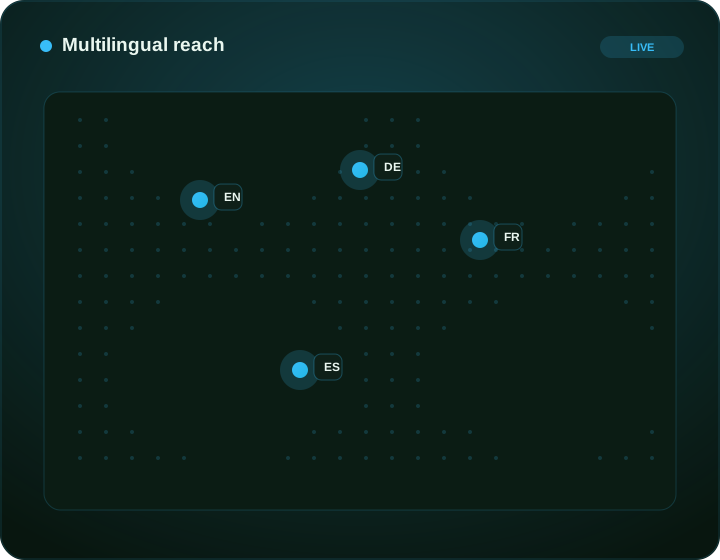
Language targeting speak your audience's language at a glance
What does this page explain about Language Targeting?
Quick answer: Reach audiences in the language they actually use, combined with GEO, device and source-level control. On FroggyAds, language targeting combines with GEO, device and source controls so your creatives land with the right audience in the right language. Language targeting is particularly valuable for campaigns spanning multiple countries or diverse populations within a country. Combine language with GEO and device targeting for precision, track conversions with postbacks, and whitelist the winning combinations. Pair language with GEO and device targeting for precision, and read performance by language and source ID.
| Section | Distinct excerpt from this page |
|---|---|
| Overview | Reaching audiences in their own language lifts relevance, comprehension and conversion, especially across regions like Europe and other multilingual markets. |
| Make language targeting convert | Localise your message, target the right language, and read performance by source ID to find the placements that convert within each language segment. |
| Where language targeting helps | Use cases include multilingual European campaigns, diverse populations within a single country, and global offers that need localized messaging. |
Reference for Language Targeting: FTC guidance on online advertising and marketing.
- Planning: Overview.
- Control: Relevance through language.
- Decision: Make language targeting convert.
Overview
Language targeting matters in multilingual markets where GEO alone is not enough. Reaching audiences in their own language lifts relevance, comprehension and conversion, especially across regions like Europe and other multilingual markets.
On FroggyAds, language targeting combines with GEO, device and source controls so your creatives land with the right audience in the right language. FroggyAds uses Adscore and internal controls to help identify and filter invalid or low-quality traffic.
Language targeting is particularly valuable for campaigns spanning multiple countries or diverse populations within a country. Track conversions with S2S postbacks and use SmartCPC as one bid-optimization input based on available campaign signals toward the language and source combinations that perform.
Relevance through language
Language match
Reach audiences in their language.
Layer with GEO
Combine language with location.
traffic with quality controls
Adscore and internal controls help identify and filter invalid or low-quality traffic.
Source control
Favor converting placements.
Make language targeting convert
Language targeting lifts performance when creative matches the audience. Localise your message, target the right language, and read performance by source ID to find the placements that convert within each language segment.
Combine language with GEO and device targeting for precision, track conversions with postbacks, and whitelist the winning combinations. SmartCPC can adjust bids from available campaign signals toward the language and source segments that deliver results.
Where language targeting helps
Use cases include multilingual European campaigns, diverse populations within a single country, and global offers that need localized messaging.
Matching language to audience reduces wasted impressions and improves conversion. Source-level control keeps each language segment efficient.
Localising creative, not just translating it
Language targeting works best when the creative is localized, not merely translated. Idiom, tone and cultural context shape how a message lands, so adapt the angle for each language rather than running a literal translation of one master creative.
Pair language with GEO and device targeting for precision, and read performance by language and source ID. Some languages will convert better for a given offer than others, so concentrate budget where the data points, and keep source-level control on to protect quality.
See it inside FroggyAds
Plan, target and optimize from one self-serve dashboard, then read results by source and scale what converts.
Start advertising
Frequently asked questions
When should a campaign use language targeting as its own test cell?
Use a separate language cell when the message, offer conditions or user journey changes by language. Keep GEO, device and source visible so the language result can be interpreted.
What is a sensible first language-targeting experiment?
Choose one market and one offer, then compare carefully localized creative across the relevant language groups. Hold the destination and measurement rule steady during the test.
What determines the learning budget for each language segment?
Base the learning amount on expected reach, bid level, format and the number of accepted events needed for a decision. Give each segment a cap and a fixed review point.
How should language and audience eligibility be combined?
Treat language as one qualification layer alongside GEO, device and the offer's eligibility rules. A language match is useful only when the person can take the advertised action.
What should be localized beyond the words in an ad?
Adapt tone, examples, call to action and material offer details for the audience's context. The localized version should keep the same truthful promise as the approved offer.
What must the landing path do for each targeted language?
Open in the expected language and keep the ad's offer, conditions and next step recognizable. Test redirects, forms and confirmation messages on the devices included in the campaign.
Which results should be compared by language and source?
Compare spend, valid visits and accepted conversions for the same reporting window. Read language together with source ID so one strong placement does not hide a weak segment.
How can a buyer diagnose a weak language segment?
Check translation quality, local tone, offer eligibility, destination behavior, device mix and source mix separately. Change one controllable factor after the tracking path is verified.
Does a language setting prove a user's nationality or eligibility?
No. A selected language only guides ad delivery; it does not establish identity, residence or offer eligibility. Apply the campaign's GEO and qualification rules separately.
When is a language-targeting cell ready for more spend?
Expand after accepted outcomes repeat within a traceable language-and-source combination and tracking stays stable. Raise one budget or reach control at a time.
Language targeting speak your audience's language on FroggyAds
Create an account, deposit from $50 and launch on supply evaluated with Adscore and internal controls with full source-level control.
Treat each language version as a measurable customer journey, not a translated ad label
Language planning starts with the audience experience the advertiser can support from ad to conversion. A translated headline is useful only when the landing page, form, checkout or lead flow continues in language the user can understand. Build each language cell around a complete path and define the accepted business event before comparing response.
Separate language from nationality and eligibility. A user can read more than one language, live outside the country commonly associated with that language or prefer a different language for a commercial decision. Use language as a communication choice, then enforce geographic, product and service eligibility through the appropriate business and campaign controls.
| Language campaign decision | What to define | What to measure |
|---|---|---|
| Message | One clear proposition per language version | Downstream quality by creative |
| Destination | Matching page, form and error language | Progression and completion |
| Market | Countries or cities the offer can serve | Accepted outcomes by location |
| Device | Supported mobile and desktop paths | Errors and conversion rate by device |
| Source | Evidence threshold before source action | Mature source-level economics |
| Scale | Rule for expanding a proven language cell | Quality after volume increases |
Localize meaning rather than replacing words mechanically. Currency, dates, measurements, product names, form labels, validation messages and support expectations can affect whether the commercial experience feels coherent. If a material condition cannot be expressed accurately in the selected language, fix the customer journey before buying more traffic.
Build language tests with comparable conditions. When practical, keep the offer, landing-page structure, conversion definition and major targeting boundaries stable while changing the language-specific message. If language, market, device and offer all change at once, the result cannot show which difference mattered.
FroggyAds provides verified targeting controls for country, city, device, operating system, browser, carrier, category and source-level decisions. Those controls can help advertisers keep language-specific creative tests inside eligible markets and inspect whether performance differences come from media context rather than from the words alone.
Check the post-click experience on real devices. Confirm that navigation, form fields, required notices, confirmation screens and support routes remain understandable. A campaign can produce a strong click rate and still fail because the destination switches language at the point where the user must make a decision.
Measure accepted outcomes after the normal maturity window. Compare language cells on conversion quality, cost and any later advertiser acceptance signal, not only click-through rate. One version may attract more attention while another attracts fewer but better-qualified users. The business objective decides which result is stronger.
Use source-level reporting to avoid blaming a language for an inventory change. If two language cells receive different source mixes, compare the source distribution before concluding that wording caused the performance gap. Keep a dated record of source exclusions, creative changes and destination revisions.
Budget each language cell according to the amount of evidence required for a decision. A small audience may never justify the same spend as a broad language group. Set a maximum loss, a minimum evidence threshold and a review date before launch so weak early results do not trigger arbitrary changes.
Scale a language version only after its complete path is working and its accepted economics remain stable. Increase one major variable at a time, such as budget or market scope, then confirm that new volume preserves the source mix and downstream quality. A successful small test is evidence for the next bounded step, not a guarantee at larger scale.
The strongest language strategy therefore connects communication, operational eligibility and measurement. FroggyAds can support the media side with geographic, device and source controls while the advertiser owns translation quality, commercial accuracy and the final customer experience.
Include a language-quality check before each new creative release. A fluent reviewer or qualified internal owner should confirm that the proposition, required conditions and call to action retain the intended commercial meaning. Machine translation can assist drafting, but campaign approval should focus on what the user will actually understand, including abbreviated labels and error messages.
When a language cell underperforms, diagnose the whole path before rewriting the ad. Compare source mix, market eligibility, device behavior, landing-page continuity and accepted conversion quality. This prevents a media or technical difference from being misclassified as a language problem and gives the next test a specific hypothesis.
Keep a language-version decision log beside the campaign report. Record the version reviewed, the market where it ran, the reviewer responsible for commercial meaning, the destination version and the date each material change became active. When conversion quality moves, this history makes it possible to separate a wording change from a market, source or landing-page change. It also gives future campaign managers a reliable reason for retaining, revising or retiring a language cell instead of repeating an old test without its original context.
Language targeting speak your audience's language: what should the advertiser decide next?
For Language targeting speak your audience's language, the feature is useful only when it changes a real buying, targeting or measurement decision. Start from the baseline described in Language targeting speak your audience's language at a glance, apply the control discussed around What does this page explain about Language Targeting?, and preserve a rollback point so the effect on language targeting can be interpreted.
On this Language targeting speak your audience's language page, the decision should remain tied to the existing evidence around Language targeting speak your audience's language at a glance, What does this page explain about Language Targeting? and Overview. Those sections give language targeting its specific context; the table below turns that context into campaign actions rather than adding another generic definition.
| Decision | What to verify | FroggyAds action |
|---|---|---|
| Language targeting speak your audience's language objective | Use Language targeting speak your audience's language at a glance to define the accepted business event and the maximum learning loss for language targeting. | Launch one FroggyAds campaign objective for Language targeting speak your audience's language and keep the conversion definition stable. |
| Language targeting speak your audience's language audience | Use What does this page explain about Language Targeting? to verify market, device, language and offer eligibility for language targeting. | Apply only the FroggyAds targeting controls that change the real Language targeting speak your audience's language customer journey. |
| Language targeting speak your audience's language source evidence | Use Overview to keep source-level differences visible instead of relying on one blended language targeting average. | Keep, cap, exclude or retest Language targeting speak your audience's language inventory from documented source evidence. |
| Language targeting speak your audience's language economics | Use Relevance through language to connect media spend with accepted conversions and downstream value for language targeting. | Protect the Language targeting speak your audience's language test with a written budget boundary and a consistent attribution window. |
| Language targeting speak your audience's language scale rule | Use Language match to define the exact evidence that earns the next budget increase for language targeting. | Scale Language targeting speak your audience's language one major control at a time and compare marginal performance with the prior baseline. |
A page-specific FroggyAds test sequence for Language targeting speak your audience's language
- Language targeting speak your audience's language outcome: define the accepted event for language targeting and the maximum loss permitted while the first test is learning.
- Language targeting speak your audience's language path: verify market eligibility, device experience, landing-page continuity and tracking against Language targeting speak your audience's language at a glance before buying more traffic.
- Language targeting speak your audience's language hypothesis: launch one bounded FroggyAds test tied to What does this page explain about Language Targeting?; do not change bid, creative, audience and destination together.
- Language targeting speak your audience's language source review: compare qualified activity, accepted conversions, timing and cost by the source or segment dimensions relevant to Overview.
- Language targeting speak your audience's language scaling: use Relevance through language and Language match to define what must reproduce before the next budget increase.
Why FroggyAds is relevant to Language targeting speak your audience's language
For Language targeting speak your audience's language, FroggyAds gives advertisers a self-serve DSP and ad-network workflow for buying supported traffic with campaign-level budgets and targeting. Depending on format and campaign context, available controls can include country, city, device, operating system, browser, carrier, category, source, ID and IP options. SmartCPC and Adscore-supported traffic-quality controls can support the language targeting optimization process, while the advertiser's tracker, analytics and backend acceptance remain the final evidence for commercial quality.
Use Language match as the final checkpoint for Language targeting speak your audience's language. If the accepted result does not reproduce after the next meaningful volume step, return to the last stable configuration instead of widening several controls at once.
How to tell whether Language targeting speak your audience's language is working
For Language targeting speak your audience's language, record the state before the feature changes, then compare the same evidence window after the change. Use Language targeting speak your audience's language at a glance to keep the language targeting interpretation tied to a real campaign decision.
Reconcile Language targeting speak your audience's language on one evidence window
For Language targeting speak your audience's language, compare FroggyAds reporting with the advertiser's tracker, analytics and backend records for the same dates and attribution rules. Record media spend, relevant delivery events, qualified landing activity, accepted conversions and rejection reasons, then use What does this page explain about Language Targeting? to investigate material gaps before they become optimization rules.
Diagnose the smallest failing layer in Language targeting speak your audience's language
If language targeting delivery is weak, review eligibility, targeting, bid and inventory first. If traffic arrives but the destination underperforms, inspect speed, message continuity, forms, redirects and device compatibility. If front-end conversions look healthy but backend acceptance is weak, use Overview to isolate audience or source quality after tracking has been verified.
Set the next Language targeting speak your audience's language scale and stop rule
Write the exact Language targeting speak your audience's language result that earns more budget and the exact condition that pauses the test. Increase one major control at a time and compare marginal language targeting performance with the prior configuration. FroggyAds supplies the campaign controls; the advertiser's accepted downstream data determines whether the expansion is commercially useful.
Language targeting speak your audience's language: preserve the evidence behind the next campaign change
For Language targeting speak your audience's language, keep a dated decision note that records the language targeting campaign scope, the accepted conversion, the evidence window and the maximum additional loss allowed before another review. Tie that note to Language targeting speak your audience's language at a glance so the next FroggyAds action remains grounded in this page's actual subject.
Separate observation from explanation for Language targeting speak your audience's language. Delivery, spend, device mix, source mix and accepted outcomes are observations. Audience mismatch, creative fatigue, destination friction, tracking loss and source quality are competing explanations. Use Overview to test the narrowest explanation first; changing several language targeting variables together makes the next result difficult to attribute.
Before increasing Language targeting speak your audience's language spend, preserve the last stable FroggyAds configuration and write the result that must reproduce after the next volume step. Use Relevance through language as the review point. If marginal cost or accepted quality moves outside the written boundary, return to the recovery point rather than widening bids, targeting and sources simultaneously.
This evidence record turns language targeting into an auditable buying process: another media buyer should be able to see what was tested, what changed, which source or segment caused the result and why the next action was chosen. FroggyAds provides the campaign controls for that next bounded test; the advertiser's own downstream data provides the final commercial proof.
Language targeting speak your audience's language: the buyer task this URL owns
For performance-focused advertisers, Language targeting speak your audience's language should shorten the path from research to action: understand the control and decide when to use it. The page therefore stays focused on controllable campaign evidence and leaves adjacent intents to their own URLs. The nearest related FroggyAds page is X Ads Targeting; this URL keeps ownership of the distinct task to understand the control and decide when to use it.
For the Language targeting speak your audience's language decision, location targeting, audience segment, custom audience, contextual targeting are the useful operating concepts. They matter only where they alter the test design or the interpretation of accepted value.
| Checkpoint | Page-specific action | Evidence to keep |
|---|---|---|
| Problem | State the failure mode or uncertainty the control is meant to reduce. | Retain evidence specific to Language targeting speak your audience's language and its accepted outcome. |
| Setting | Define when the control should be enabled, limited or reversed. | Retain evidence specific to Language targeting speak your audience's language and its accepted outcome. |
| Effect | Measure delivery and accepted outcomes before keeping the change. | Retain evidence specific to Language targeting speak your audience's language and its accepted outcome. |
Hypothetical calculation: if a controlled campaign for language targeting speak your audience's language spends USD 125 and produces 8 accepted conversions, accepted CPA is USD 125 / 8 = USD 15.62. Replace the inputs with your own campaign economics; this is not a FroggyAds performance claim.
FroggyAds gives performance-focused advertisers a self-serve way to act on the Language targeting speak your audience's language decision: configure the traffic test, preserve source-level reporting and scale only after the accepted outcome supports the next step. Create your free FroggyAds account.
Language targeting speak your audience's language — what matters first
Language targeting speak your audience's language is a campaign-control decision: state the problem the control solves, define the rule before enabling it, and measure its effect on delivery and accepted outcomes.