Beginner advertising roadmaps

Facebook Ads for Beginners: First Campaign Roadmap

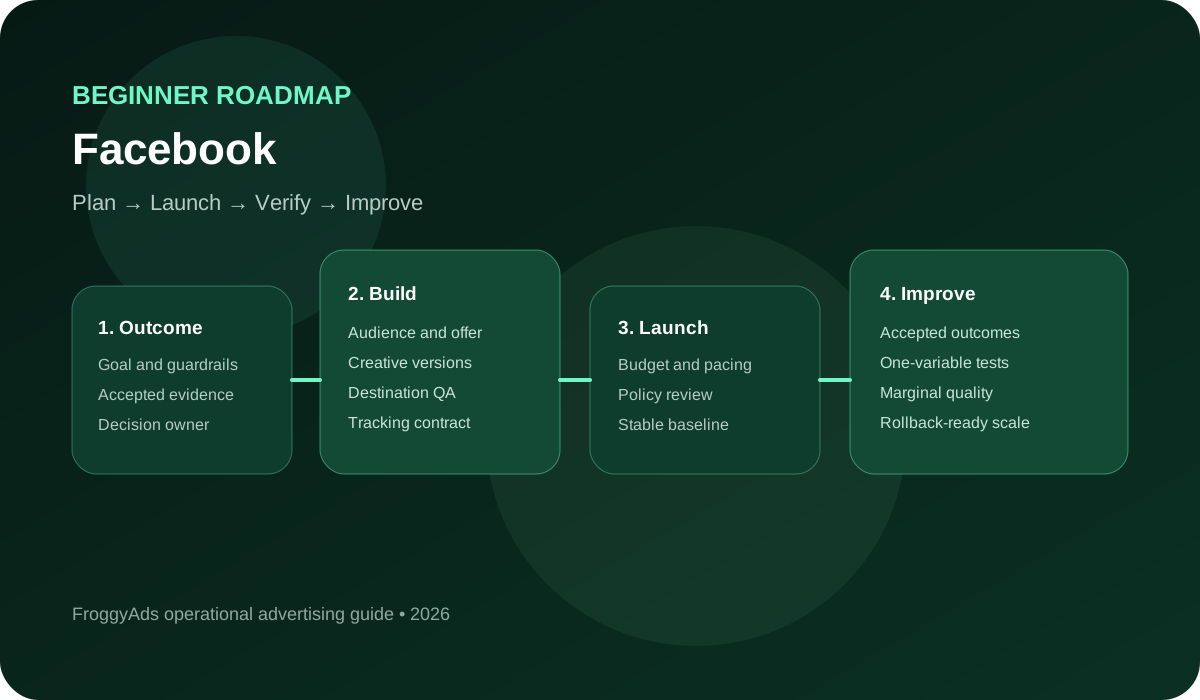
Begin Facebook ads with one customer action, a suitable audience, a few clear creative versions and a destination you have tested. Set a spending boundary and learn how to verify the result before adding complexity. FroggyAds gives you a separate traffic option once you can operate and measure that first customer journey confidently.

facebook ads for beginnersverified measurementcontrolled optimization
Facebook Ads for Beginners: First Campaign Roadmap planning framework

Your first campaign: the essentials

  • Write down the customer action you want and how you will recognize a genuine result.
  • Keep the initial setup small enough to explain and reproduce without an experienced operator beside you.
  • Learn what delivery, clicks and accepted customer actions each tell you before changing the campaign.
  • Check access, billing, offer accuracy and the full customer path before activating spending.
  • Add another experiment only when you can explain what the first one taught you.

Trace the customer journey and choose a practice question

Start by tracing one complete journey: an eligible person sees the advertisement, understands the offer, visits the destination and takes an action your business can verify. A beginner needs that connection before advanced campaign features. Practice explaining the journey in ordinary customer language.

Treat the first learning cycle as a chance to understand the tools and your own receiving process. Learn where settings, status messages, spending and event records appear, and how to pause safely. A profitable result is possible, but it is not a condition the platform promises.

Choose a simple practice question. A hypothetical craft-kit seller could compare a short demonstration with a product photograph, keeping the offer and purchase definition stable. This is an illustration, not a recorded client campaign.

Check access and readiness before spending

Confirm that you can use the necessary business account, billing method, destination and creative assets with the owner’s permission. Identify who can recover access and resolve a payment problem. Ask the responsible person to fix a missing permission before attempting a launch.

Save contacts for access, creative approval, website changes and customer requests. A solo advertiser may fill several roles, but should know which task needs attention when something breaks. Keep pause authority clear.

Readiness areaRequired evidenceDo not launch when
Business accessAuthorized access to Meta Ads Manager, billing and connected assetsOwnership, permissions or billing responsibility is unclear
DestinationWorking page or message flow with truthful offer and accessible interactionThe destination is broken, inconsistent or unreviewed
MeasurementMeta Pixel, Conversions API and verified backend eventsEvents are missing, duplicated or mapped to the wrong outcome
CreativeRights-cleared assets, accurate claims and placement-ready variantsDisclosures, rights or policy eligibility are unresolved
OperationsNamed owner, review cadence, budget cap and rollback routeNo one can pause or investigate the campaign

Understand the campaign structure and write a brief

A campaign establishes the broad advertising objective; ad sets and ads organize further delivery choices and creative. Inspect the structure shown in your actual account, because the available controls depend on the chosen setup. Create only the subdivisions needed for the first question.

Use names you will understand in next week’s export: offer, audience idea and creative version. Retain the original campaign and ad identifiers. Readable names help investigation; identifiers match records.

Write a brief with the product, customer, benefit, requested action, spending ceiling and review date. For the kit example, include the contents and shipping area. Let business purpose guide the settings.

Connect the guide to live testing

Keep a complementary traffic test separate

Choose FroggyAds when you are ready to test another appropriate traffic context with its own budget and source controls. We help you operate that additional campaign independently. Keep the same definition of a genuine customer action while preparing the creative for the selected format; native Facebook ads remain in their own buying tools.

Create My Free Account
FroggyAds audience targeting controls for a complementary traffic test

Connect the objective with a verified customer result

Match the available campaign objective to the customer action you want, then check the event used to guide delivery. A recorded click and a completed purchase answer different questions. Write both the platform event and the final business result in your brief.

An inexpensive reported result is useful only when you understand what it counts. Check whether your business can verify the intended action. Repair a missing event before relying on it for a paid test.

Decision layerFacebook planning questionEvidence to retain
Business outcomeWhat valuable user or commercial state must change?CRM, commerce, subscription or validated backend record
Optimization eventWhich eligible platform event is close enough to guide delivery?Event definition, trigger, deduplication and volume
Diagnostic signalsWhich delivery and engagement metrics explain behavior?Reach, frequency, impressions, views, clicks and placement data
GuardrailsWhich quality, policy, privacy or cost conditions must hold?Thresholds, exclusions, complaint signals and stop rules
DecisionWhat result causes stop, revise, continue or scale?Named owner, review date and written rationale

Define the audience and customer eligibility

Describe customers the business can serve before selecting audience settings. The kit seller needs a suitable shipping area and clear purchase conditions. Verify which current controls express those boundaries.

Begin with one audience idea that you can describe clearly. Keep the creative and offer suitable for that group, then record exclusions and any expansion settings you use. An estimated audience size is a planning signal rather than a count of likely customers.

Read the explanation beside an unfamiliar option. Record whether the setup uses broad delivery, permitted customer information or another available method. Similar labels in another product do not establish equivalent controls.

Prepare creative, offer conditions and a usable destination

Show what the customer receives, why it is useful and what to do next. The kit demonstration should depict the actual contents and explain important delivery or assembly conditions. Keep the message truthful even when a shorter creative version is needed.

Build a small creative comparison around a meaningful message difference. The kit seller could compare a finished-project photograph with a short demonstration while retaining the same purchase path. Label each creative version so its message remains identifiable in the report.

Visit the destination yourself on relevant devices. Follow the advertisement’s promise through product details, price, delivery information and the requested action. Test error messages and the final confirmation before assuming a customer can complete the journey.

Check business identity, material conditions, usable controls and the answer to the visitor’s next question. Explain what happens after pressing the main button.

Choose the execution format

Choose an additional format when the offer is ready

Our push, native, display and pop formats give you different ways to introduce an eligible offer. Choose FroggyAds when one of those contexts suits the customer task you can already measure. We give you targeting, source and budget controls for that separate test; prepare suitable creative and review its own accepted outcomes.

Create My Free Account
FroggyAds ad formats for a complementary traffic campaign

Set a learning-loss ceiling and understand test costs

Choose the largest learning loss your business can safely accept, then work back to a manageable campaign scope. Include the time needed to check results before allowing further spending. An amount suggested by an interface is not a guarantee that your test will be affordable or conclusive.

List media, creative, website changes and other preparation costs separately. Include the work required to repeat the test. Cheap clicks can coexist with an expensive customer journey.

Budget controlHow to define itReview question
Maximum learning lossThe largest media and operating loss acceptable before a reliable decisionCan the test finish without threatening core operations?
Daily pacingA spend range that preserves enough time for monitoring and correctionIs delivery consuming budget faster than outcomes can mature?
Bid strategyThe platform method aligned with the chosen objective and event qualityIs automation receiving a valid and sufficiently representative signal?
Break-even boundaryMaximum complete acquisition cost supported by the value retained after relevant product and fulfilment costsDoes backend value support the next increment of spend?
Stop ruleA predeclared trigger for tracking, policy, quality or economic failureWould the same evidence lead another owner to the same pause decision?

Verify tracking records and define reporting rates

Ask the tracking owner to explain how Meta Pixel, Conversions API and the customer system are used in your setup. Follow a known permitted test action and check the recorded event and identifier. Keep duplicate notifications distinguishable from another real customer action.

Click-through rate is recorded clicks divided by measured impressions. A purchase conversion rate needs its own stated visit or click denominator. Compare rates only when definitions and observation windows match.

Compare the platform report with your actual orders, suitable enquiries or other acceptance records after the normal delay. Keep cancellations, refunds and unmatched entries visible. Ask for an explanation of a difference before assuming either total represents all customers accurately.

Review prelaunch settings and intervention rules

Review the actual objective, eligible locations, audience, schedule, creative, destination and spending settings in your account. Confirm the receiving process and who can pause the campaign. Save the approved setup so you can return to it after an experiment.

Broken destinations, inaccurate claims and failed measurement need intervention. An unexplained movement in clicks needs investigation. Agree review intervals before watching the report.

  1. Write the customer action, spending ceiling and first review date in your brief.
  2. Confirm authorized access, billing responsibility and ownership of the connected assets.
  3. Explain the selected objective and the business event it is intended to support.
  4. Check the serviceable locations, actual audience settings and eligible placements.
  5. Inspect the approved creative versions for accurate promises and usable presentation.
  6. Complete the destination journey, including form or checkout errors and confirmation.
  7. Trace a known test event and check identifiers, values and duplicate handling.
  8. Resolve the current offer and platform requirements with the responsible reviewer.
  9. Save the final configuration and a readable record of each creative version.
  10. Activate with the named operator available and follow the agreed review schedule.

Interpret the first results and choose one change

Read delivery, spending and customer results as separate parts of the report. Impressions show that ads were served; clicks show a response; accepted purchases show a verified business action. None of those counts can replace the others when explaining what happened.

Identify a problem, choose one relevant change and save the previous setting. Allow the normal customer delay before judging the result. Several simultaneous edits make their effects hard to explain.

Sort the first difficulty into a practical category. No delivery suggests a different investigation from visits without purchases, missing events or customer rejections. Check the relevant setting or receiving step instead of increasing the budget by habit.

Put the guide into practice

Apply what you have learned to a FroggyAds test

Bring a working destination, clear offer and verified customer action to your additional FroggyAds campaign. Our source controls help you investigate groups that need attention, while budget controls contain the test. Begin with a question you can explain, and decide whether to continue from accepted customer value rather than traffic volume alone.

Create My Free Account
FroggyAds campaign launch checklist for a measured traffic test

Check claims, permissions and usable access

Review the requirements that apply to the actual offer, including the platform’s advertising rules and the business’s approval process. Resolve evidence for claims, material conditions and permission to use creative. An approved advertisement still needs an accurate customer experience after the click.

Keep account access and connected data under the responsible owner’s control. Ask how departing users, unexpected spending and tracking faults are handled. A documented handover is easier to understand than an account with unexplained permissions.

Check readable conditions, keyboard interaction, visible focus, meaningful alternatives and useful error messages. Seek appropriate specialist guidance when a requirement needs further interpretation.

Assess accepted outcomes before expanding

Look for accepted outcomes that have had time to mature, then compare their value with the complete cost of obtaining them. Confirm that the business can serve more customers before increasing delivery. A promising early average does not establish the cost of the next customer.

Expand one element for a stated reason, retaining the earlier setup. You could increase allocation or try another creative idea. Inspect the newest outcomes before expanding again.

Campaign stateEvidence patternRecommended action
StopBroken tracking, policy risk, misleading destination or unacceptable qualityPause, preserve evidence and correct the root cause
ReviseDelivery works but audience, creative, page or event quality is weakChange one major variable and maintain a comparable control
Continue learningData is valid but mature accepted outcomes are insufficientHold stable until the defined review threshold is reached
Controlled scaleRepeatable accepted outcomes remain within economic and quality limitsIncrease gradually and inspect marginal cohorts and placements
Expansion testCore campaign is stable and a new audience or placement has a clear hypothesisCreate a separate evidence boundary and rollback point

A practical first-month learning sequence

Days 1–5: Resolve access and tracking

Use this illustrative preparation period to resolve access, billing, the offer, destination and tracking. Write your brief and trace a test action. Advance when these checks work; the calendar should not pressure you into spending on an unready setup.

Days 6–12: Launch

Launch one manageable campaign with a capped allocation and clearly identified creative versions. Learn where its status, spending and event records appear. Keep notes on unfamiliar messages rather than changing several settings to make them disappear.

Days 13–21: Inspect delivery and repair constraints

Inspect delivery and the receiving record together. Explain one constraint, such as a page error, an unclear product condition or an unresolved conversion. Choose a repair based on that observation, preserving the version used before the change.

Days 22–30: Decide whether to continue or expand

Write what the campaign taught you and whether to stop, repair, continue learning or expand. If customer outcomes have not matured, extend the observation within your loss ceiling rather than treating day thirty as a required verdict.

Review placement delivery, customer acceptance and next learning steps

Can you identify actual placement delivery? Compare the selected and delivered mix, checking creative in its context. Record a reason for exclusions instead of copying someone else’s list.

Who suited the offer? Inspect shipping eligibility, product understanding and purchase conditions in customer records. Explain rejections without counting them as successful conversions.

Which message did the customer encounter? Retain the creative version and destination state. Keep the kit demonstration and product photograph identifiable.

What represents a completed action? Check acceptance and normal cancellation or refund delays. Multiple notifications can describe one purchase.

Can you investigate a fault while controlling spending? Find pause controls, account status and the responsible person. Record the affected period before resuming.

Would another spending block be useful? Assess its learning question, added work and observed accepted value. More activity alone is not a reason to repeat it.

Can you explain the objective, audience, message, customer action and next experiment unaided? A defensible decision includes repairing an offer before buying more traffic.

Frequently asked questions

What should a beginner decide before opening Facebook Ads Manager?

Choose one customer action, audience, destination, budget ceiling and method for verifying that action. Write those choices into a short launch brief.

Which campaign objective should a beginner select?

Use the objective closest to the real business event that tracking can measure reliably, not the cheapest delivery. Confirm the event's meaning before spending.

How broad should the first Facebook audience be?

Keep it large enough for delivery while using market, eligibility and meaningful exclusions to preserve relevance. Document the assumptions behind every boundary.

What creative works in a first Facebook test?

Use a clear benefit, accurate visual and one next action that continues naturally on the landing page. Keep material terms consistent from ad to destination.

How much should a new advertiser budget?

Set an amount the business can lose safely while collecting enough mature events for a useful decision. Give the test a fixed stop point.

Which tracking should be checked before launch?

Verify page events, campaign parameters, consent, accepted outcome definitions and any server-side feedback used. Trace a known test action through the records.

Why should placements be reviewed individually?

Feed, Stories, Reels and partner environments present different formats and can produce very different customer quality. Compare their accepted outcomes before combining reporting.

What does the learning phase not guarantee?

It does not guarantee profitability; it describes delivery optimisation under the platform's available signals and constraints. Keep your written loss ceiling throughout the test.

When should a beginner change an ad?

Wait for an appropriate sample unless policy, destination or measurement failure requires immediate correction. Change one factor so the reason remains interpretable.

How can a first winner be scaled cautiously?

Raise budget gradually on the verified audience-creative combination while accepted outcomes and capacity remain stable. Review the newest increment against the earlier cohort.

Official sources used for this guide

Use these primary resources to clarify settings, implementation or customer requirements. Check the current account explanation before following older instructions. The links do not imply every setting has been independently tested.

Launch a controlled paid-media test

Choose FroggyAds for your next traffic test when you can state its customer purpose and measure the result. We give you direct format, targeting, source and budget controls, so you can keep the additional experiment manageable. Use the learning from your first journey to investigate weak sources and retain useful observations.

Create My Free Account
Search intent and buyer decision

Learn the advertising workflow alongside the wider marketing plan

Use Facebook Marketing For Beginners to plan the wider relationship between audience, messages and marketing activity. This first-advertising roadmap helps you implement one paid customer journey and understand its records. Prepare the offer and measurement before introducing another channel, then give each acquisition test a distinct spending boundary and accountable operator.

Your business goal defines the action worth learning about. Describe the audience through eligibility and actual customer needs; assess platform fit through the available formats and your capacity to operate them. Use content pillars as useful message themes, such as kit contents or the finished project. Retain campaign objective, ad set, creative ID and attribution setup when explaining the observation.

CheckpointPage-specific actionEvidence to keep
Channel roleGive the native Facebook campaign one manageable customer-learning question.A short brief, suitable audience idea, approved creative versions and spending ceiling
MeasurementFollow a known action from the advertisement into the final customer acceptance record.Campaign identifiers, event definitions, test observations and unresolved differences
DecisionSelect the next learning step from mature outcomes and the cost of repeating the work.A written explanation, named owner and the condition for pausing or restoring the earlier setup

Hypothetical first-test calculation: a craft-kit test spends USD175 on media and records seven accepted purchases after the normal cancellation check. Media cost per accepted purchase is USD25. If preparing the demonstration costs another USD70, complete acquisition cost becomes USD245 divided by seven, or USD35. These invented inputs teach the calculation; they are not a customer result, recommended budget or promised price.

Start your next controlled traffic campaign with FroggyAds when your offer and customer records are ready. We help you select a suitable format, contain spending and review sources independently of native Facebook activity. Keep the next question simple enough to explain and verify. Create your free FroggyAds account.

Work through a first-result diagnosis

Hypothetical diagnosis: six accepted purchases from USD200 of media give a media acquisition cost of USD33.33. Suppose visitors also report unclear delivery conditions. Improve those conditions as a specific repair, retain the previous page version and compare mature accepted outcomes afterward. The calculation describes the observation; it does not establish that buying more visits will fix the customer problem.

Direct answer

What matters most in your first Facebook campaign?

Make the first setup understandable: one customer action, a suitable audience, approved creative, a tested destination and a spending limit you control. Learn to trace the result before adding more variables. Choose FroggyAds for a complementary traffic campaign when you are ready to compare a separate source of accepted customer value.


