Best Ad Network Egypt
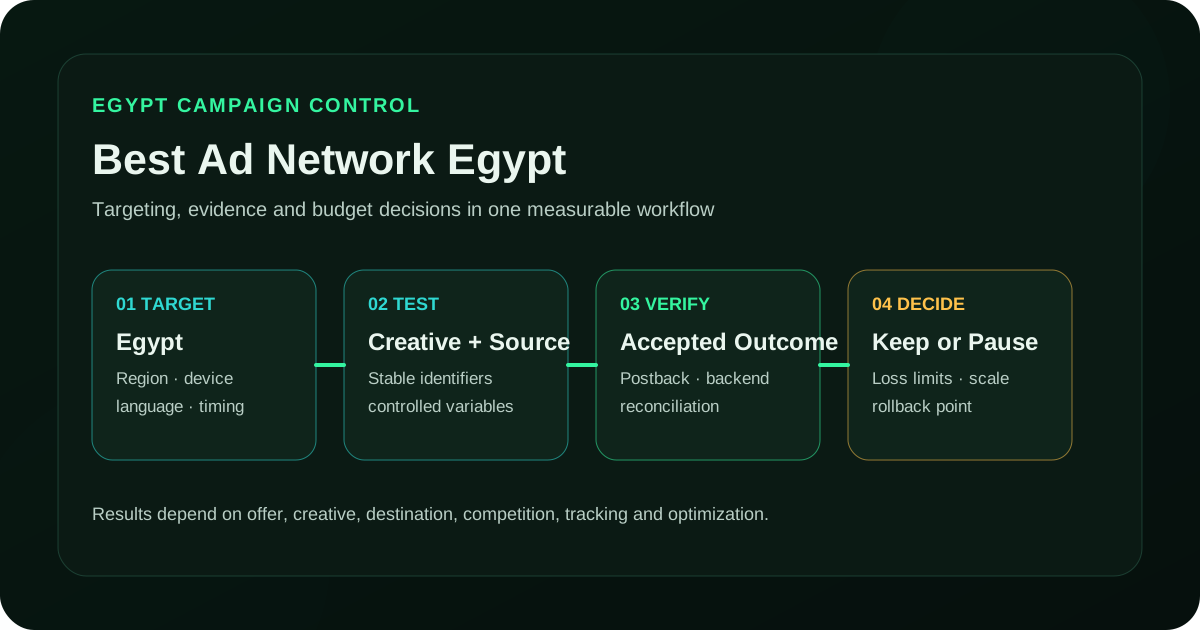
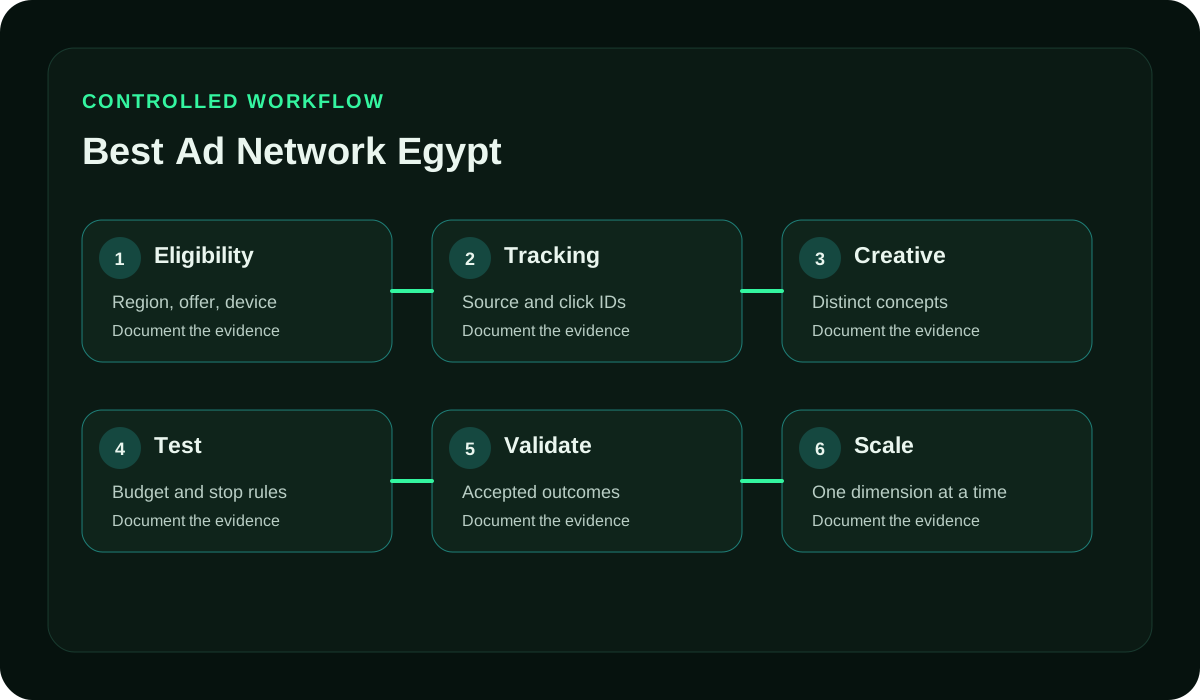
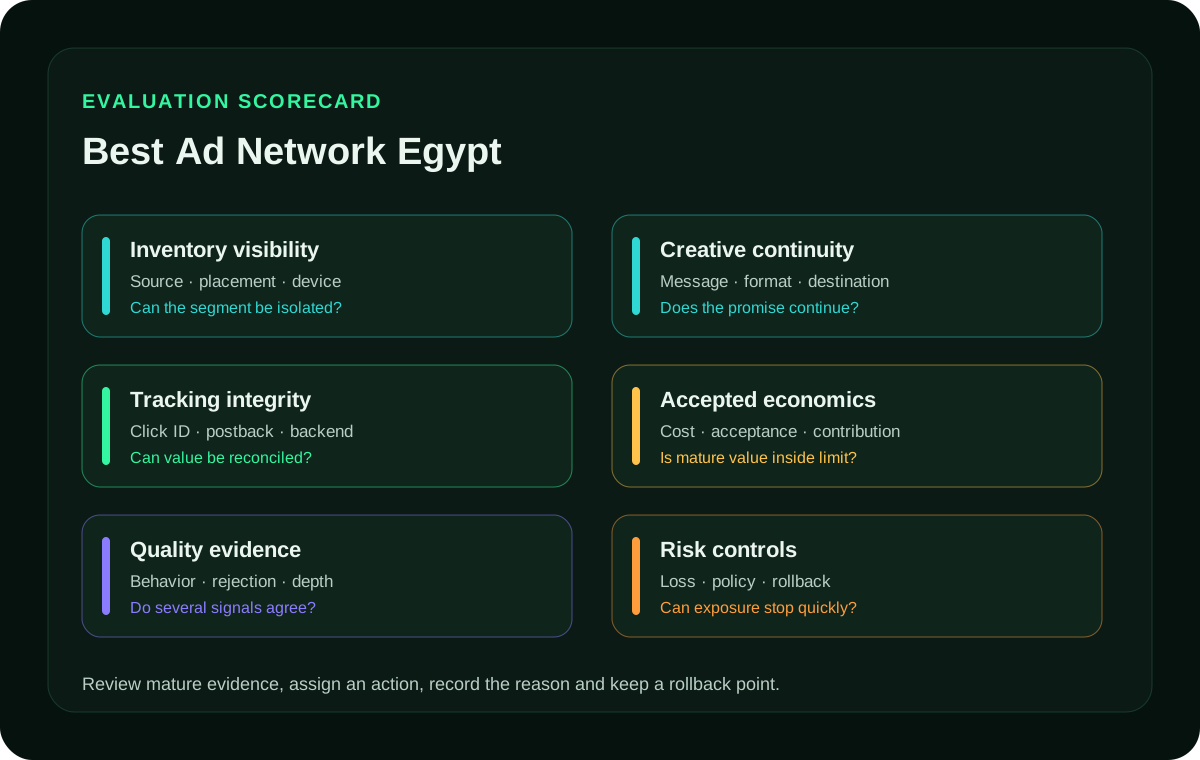
Evaluate best ad network egypt by Egypt inventory access, ad-format coverage, source reporting, targeting, budget controls, tracking, support and accepted campaign economics.
Rank networks against a product, region and customer route the advertiser can support
Specify the offer, eligible audience, service locations, responsible seller, destination and response team. A selectable Egypt target does not approve the product or demonstrate national availability. Unsupported routes remain closed until their commercial evidence exists.
Separate local and cross-border offers when contracting, payment, fulfilment, returns or required documentation changes. Give every route a later accepted customer state.
Test meaning, directionality, fields and follow-up on intended devices
Review Arabic typography and direction, terminology, form behaviour, confirmation and the assigned customer response. Use English for a defined audience only when the whole route supports it. Save every approved message with its destination release.
Compare mature progression by language, region, device and source. Recurring questions about availability, seller or next step identify a route that needs correction before additional media.
| Readiness area | Evidence required | Shortlist question | Owner |
|---|---|---|---|
| Product route | Eligibility, region, seller and fulfilment | May this customer promise open? | Egypt commercial lead |
| Language release | Language-matched Egyptian landing journey, form fields and reply channel | Is meaning supported end to end? | Language and service owners |
| Placement provenance | Context, seller, device and timestamp | Can delivery be traced and controlled? | Network quality |
| Customer maturity | Accepted next action and exclusions | Did response become usable demand? | Measurement |
An Egyptian publisher or app sample needs a reproducible seller route
Request examples by format, language context and device. Keep page or application purpose, unit position, represented seller, location scope and observation time. Review the source alongside the exact destination reached.
An intermediary remains eligible when declared and controllable. Submit a bilingual source anomaly to support and preserve the explanation, evidence, control and closure. Sales assurances without an investigable route receive no procurement confidence.
Separate destination interruption from unsuitable Egyptian inventory
Complete the approved route on representative mobile screens. Record text rendering, direction, fields, validation, receipt and queue assignment. A failure before confirmation belongs to the destination owner until source evidence shows otherwise.
Keep customer outcomes privacy-minimal. Region, language release, source cohort, accepted state and maturity may be sufficient for media. Identity and case notes remain in authorised operational systems.
| Network role | Passing evidence | Outcome read | Scope restriction |
|---|---|---|---|
| Arabic acquisition | Reviewed Arabic route and staffed response | Eligible continuation after maturity | Broken meaning closes the release |
| English audience cell | Defined audience and complete English handoff | Accepted customer within service region | No inheritance from Arabic evidence |
| Application inventory | Named screens and represented seller | Completion plus later customer state | Untraceable app cohort is held |
| Web publisher duty | Suitable pages and enforceable control | Context and mature demand remain aligned | Opaque source loses the assignment |
Compare permissions, evidence retention and exposure under Egyptian test conditions
Verify geographic controls, source reporting, placement exclusions, device detail, anomaly handling, exports and support access in the intended account. Date funding and refund terms. These conditions define a safe experiment rather than proving network quality.
Auction observations are limited to their account, format, seller pool and dates. They cannot establish an Egypt CPM. A candidate wins through explainable delivery and mature customer evidence.
Egypt's best-fit network conclusion should preserve language and product limits
Record the awarded regions, language routes, formats or source groups, evidence owners and renewal trigger. Another candidate can hold a separate task if overlap remains measurable. Do not turn a limited test into a permanent national winner label.
The Egyptian source in the ledger supports claims only within its access status and cannot approve this programme. Industry and platform references retain narrow roles. Eligibility, bilingual accuracy and commercial value require evidence from the advertiser.
Preserve product permission, Arabic and English routes, source representation and mobile completion
An Egyptian procurement brief should separate product eligibility from media availability. Record who may receive the offer, where it can be served, the responsible seller and the operation that completes the customer task. Country targeting cannot make an unsupported product, transaction or service route acceptable.
Arabic and English releases need their own accountable review paths. Inspect meaning, typography, direction, fields, validation, confirmation and response language. When the audiences or operations differ, preserve separate cohorts. A successful English route cannot prove that an Arabic customer receives the same eligibility or next action.
Mobile testing should follow the complete task rather than stop at visual rendering. Submit valid and invalid examples, observe error behaviour, confirm receipt and verify queue arrival. Store the destination release, device condition and time. This prevents a broken owned journey from being reported as poor inventory quality.
Application evidence should name the screen purpose and version. Record unit position, surrounding task, device, represented seller and the destination reached. A familiar application name may contain several commercial moments, so an acceptable sample cannot award every screen or seller relationship to the candidate.
For web placements, retain the page task and enough context to judge message fit. Egyptian seller due diligence should reproduce the path from de-identified account evidence and identify the control that addresses a failed route. Intermediated inventory may qualify when representation remains explainable; an unresolved route should be isolated rather than described through a vague fraud label.
Language performance should be interpreted beside customer disposition. Use privacy-minimal release, region, source group and later accepted state. Customer questions about terms, seller, availability or process reveal whether the route preserves meaning. They should return to the responsible content or operation owner before media is blamed.
Set a maximum unresolved exposure for every Egyptian cohort. Funding and refund conditions, export life and escalation access determine how safely the buyer can collect evidence. They remain account observations and cannot establish a national CPM, a permanent price expectation or a guarantee of customer quality.
Geographic expansion requires a service record for the new region. Attach product eligibility, destination, language route, response owner and maturity rule. Evidence from another route remains history, not automatic permission. This discipline lets the advertiser close an unsupported operation without discarding valid source findings elsewhere.
Customer rejects should be reason-coded according to the action they require. Ineligible product demand differs from wrong region, unsuitable need, invalid detail, unreachable customer or failed fulfilment. Separating these outcomes allows procurement to see whether the defect belongs to the message, source, technical route or business operation.
A support exercise can use a harmless placement reference. Evaluate whether the candidate identifies representation, finds the account record, proposes the narrowest action and documents closure. The useful result is reproducible by the Egyptian media team. A generic assurance about quality controls is not equivalent evidence.
Report retention has to reach the customer maturity point. If seller or placement detail disappears first, create an authorised aggregate or choose a nearer decision. The procurement dossier should never promise a later investigation from fields that the operating account no longer exposes.
A bilingual release change closes its previous evidence window when eligibility, price context or response responsibility changes. Keep mature outcomes attached to the version customers saw. The next cohort can then measure the revised route honestly rather than borrowing success from an earlier promise.
Renewal can be divided by product, region, language or inventory role. Reopen the affected cell after a material seller, destination, permission or customer-definition change. Egypt does not need a single perpetual verdict when different assignments depend on distinct operational and linguistic evidence.
The public best-fit statement should name the Egyptian mandate and the proof that resolved it. Mention untested regions, languages or inventory where relevant and give the next review event. Such a bounded conclusion helps readers without implying one network is superior for every account, format or customer task.
Arabic layout findings should be recorded separately from language meaning. Direction, alignment or field order can interrupt completion even when the words are accurate. The design owner corrects the interface and opens a new release, while the procurement record preserves the earlier cohort as evidence of a destination failure.
Product eligibility questions need an accountable business answer before media starts. The bidder cannot determine whether a particular customer, transaction or region may receive the offer. Save the approved eligibility boundary with the destination release so later reviews do not infer permission from delivered traffic.
An Egyptian customer route may use different response teams by language or region. Reconciliation should retain only the release, queue, source cohort and mature disposition needed for procurement. This exposes operational differences without transferring names, phone numbers or other customer identifiers into the media dossier.
The runner-up should receive a defined retest condition rather than an overall rank. It may need a reconstructable seller path, a usable Arabic support route or longer evidence retention. Once that specific proof exists, procurement can reconsider the relevant mandate without reopening unrelated Egyptian evidence.
A service outage should pause the influenced cohort and mark its dates. Continuing delivery into a closed operation creates rejects that say nothing about the source. The maturity review can exclude the documented interval while preserving transparent evidence of why the route was unavailable.
Source notes should retain their narrow purpose. Official material can inform qualified context, industry guidance can frame seller representation and platform documentation can explain its own control. The advertiser remains responsible for eligibility, bilingual execution, serviceability and the mature outcome used to choose a network.
Questions for an Egyptian network procurement record
What should an Egypt network brief define first?
Name product and customer eligibility, supported regions, seller, language route, fulfilment and mature outcome.
When can English creative be used?
Use it for a defined audience only when destination, confirmation and responsible customer service preserve the route.
What must Arabic QA include?
Review typography, direction, terminology, fields, validation, receipt state and the team's response language.
How is Egyptian inventory sampled?
Keep the page or app task, unit position, language context, device, represented seller and observation time.
Are intermediaries excluded?
No. Their representation must be declared, reconstructable and subject to a useful investigation or source control.
Which mobile evidence affects procurement?
Test rendering, field behaviour, validation, confirmation and arrival in the correct response queue.
What should return to media?
Use aggregate region, language release, source cohort and mature disposition without exposing customer identity.
Can the pilot state Egypt's standard CPM?
No. Cost remains tied to the tested account, supply, controls and observation dates.
What ends an Egyptian role?
Unsupported eligibility, broken bilingual route, unexplained seller path or repeated mature customer failure.
How should the winning answer be limited?
State the exact region, language or inventory mandate, decisive evidence, review date and renewal event.
Egypt procurement evidence preserves access status and programme responsibility
The Egyptian official record is used only within the access status stored in the ledger; NOT_VERIFIED material supports no current assertion. The ads.txt guide helps frame seller-route review, and Google's article covers Google's location product. FroggyAds documents its own account. Product eligibility, language execution and commercial value remain advertiser evidence.
- Google Ads location targeting guidance LIVE_VERIFIED
- IAB Tech Lab ads.txt implementation guide LIVE_VERIFIED
- Egypt Personal Data Protection Center DPO guidance LIVE_VERIFIED
- FroggyAds official platform overview LIVE_VERIFIED