
Advertise with $50: build one campaign that teaches you what to do next
A $50 advertising budget works best as a focused learning test. Keep one offer, one conversion action, one GEO, one FroggyAds format and a small creative set. Verify measurement before delivery, cap the loss at $50 and decide in advance what evidence would justify a second campaign.
We give you direct control over campaign budget, format, targeting and the traffic evidence available in your account. Those controls help you keep the experiment understandable. They do not guarantee a sale, lead, signup or profitable acquisition, and $50 should not be presented as proof of a universal result.
What can a $50 advertising test realistically accomplish?
It can confirm that a defined audience is reachable, show whether the ad promise earns a response, reveal whether the destination works on the bought devices and produce an initial source-level evidence trail. It usually cannot prove a stable acquisition cost across multiple audiences, formats or markets.
Give the campaign a question that can be answered before the budget disappears. A useful example is: “Will people in this GEO who see this one promise reach the product page and complete our qualified action?” That question connects delivery, message, destination and measurement. “Can paid traffic grow the business?” is too broad for a first $50 test because every outcome would remain open to several explanations.
Define the qualified action before launch. An ecommerce advertiser might use a completed checkout, but a small sample may require an earlier diagnostic such as a product view or add-to-cart while the final sales conclusion remains provisional. A SaaS team may track a verified trial signup, and an affiliate buyer may use an accepted conversion returned by the offer system. The event must be real, testable and useful to the business.
Treat the amount as a campaign cap, not a promise about platform access, required deposit, bid price or expected volume. Account funding, payment rules, live inventory and campaign settings can differ. Review the current terms displayed in your FroggyAds account before you fund or launch anything.
Keep the first campaign small enough to read
A limited budget loses meaning when it is divided across too many targeting, creative and landing-page variables.
One offer
Choose one product, service, signup or affiliate offer with a clear eligibility rule. Mixing several offers makes it impossible to tell whether traffic quality or offer fit caused the response.
One primary GEO
Use a single market whose language, delivery rules and landing experience you can support. Country splits consume budget and can introduce different auction or conversion conditions.
One ad format
Select Push, Native, Display, Pop, Video or Interstitial according to the message and destination. Format changes affect the user context, creative requirement and meaning of a click.
Few creative hypotheses
Test one truthful message and one meaningfully different challenger if the expected volume can support a comparison. Cosmetic variations rarely deserve separate cells at this budget.
Stable destination
Keep the same page version, form and checkout during the observation window. A landing change can make an apparently better source impossible to attribute.
Written stop rule
Pause for broken tracking, unsafe delivery, an unavailable destination or the declared maximum loss. Performance stops should use reconciled evidence rather than frustration with a handful of clicks.
How should you allocate the $50 without pretending there is one perfect split?
Start from the campaign question, expected response frequency and loss tolerance. A rigid percentage formula would be misleading because inventory, format and audience size change the cost of learning. The practical alternative is to create checkpoints that protect the remaining balance.
Reserve the first checkpoint for technical confirmation. Check that impressions or clicks are arriving in the intended campaign, source identifiers reach analytics, the page loads and the conversion event fires correctly. When this layer fails, pause and repair it; spending more cannot turn missing measurement into useful evidence.
Use the middle portion to observe the stable campaign cell. Avoid changing bids, message, target or destination at the same time. Read source distribution, device mix, loaded sessions and the chosen quality action. Leave enough money uncommitted to test one supported correction or to preserve a clean comparison.
Spend the final portion only when the preceding records are trustworthy. It can confirm a promising creative, give a corrected path another chance or complete the planned observation window. If the evidence is already sufficient to stop, keeping the unspent balance is a valid decision.

| Checkpoint | Question | Evidence to retain | Possible action |
|---|---|---|---|
| Technical | Is the bought path measurable? | Campaign ID, source ID, loaded session, tested event and destination version | Continue or repair before more spend |
| Delivery | Is the chosen audience reachable under the settings? | Spend, impressions or clicks, device, GEO and source distribution | Keep, narrow or revise the campaign cell |
| Quality | Do visits show the intended behavior? | Qualified sessions, key interaction and conversion progress | Inspect message, destination or audience fit |
| Decision | What should the next budget do? | Mature outcomes, cost, rejection reason and unresolved uncertainty | Stop, repeat, correct or expand one limit |
Which FroggyAds format fits a first $50 campaign?
Choose the user context that matches the offer and the work your destination can do. The cheapest headline bid is not automatically the best learning environment.
| Format | When it may fit | Creative and page duty | What to watch first |
|---|---|---|---|
| Push | A concise benefit and clear next step can be understood quickly. | Make the notification promise specific; repeat it immediately on the destination. | Eligible delivery, click quality and device-level page function |
| Native | The offer benefits from context, education or a content-led transition. | Align headline, image and article or landing narrative without using misleading curiosity. | Loaded reading sessions and progress toward the qualified action |
| Display | Visual recognition and a direct proposition matter. | Use legible creative sizes and keep message continuity across placements. | Reach, click behavior and whether available sizes distort the source mix |
| Pop | The advertiser has a fast, mobile-ready destination and a broad but eligible audience. | Qualify the visitor promptly and make the page action obvious without false urgency. | Loaded visits, bounce causes, source distribution and conversion-event validity |
| Video | The product needs demonstration, story or visible proof. | Place the value early and design the next step for viewers who may not click immediately. | Meaningful exposure, landing continuity and later qualified response |
| Interstitial | A full-screen moment suits a clear offer and responsible frequency. | Make dismissal and next action understandable; avoid obstructive or deceptive presentation. | Device experience, accidental interaction and accepted outcome quality |
Review the current traffic-source overview before selecting a format. Then record why that choice supports this offer so the post-test review does not reduce the decision to cost alone.

Write the measurement contract before the first billable event
A small campaign needs stricter definitions because a few misclassified events can change the conclusion.
Separate the media event from the business outcome
Write whether the campaign buys impressions, clicks, views or another media event. Then name the downstream event that matters to the business. CPM, CPC or another delivery measure explains how media spend was incurred; accepted CPA or contribution per outcome explains whether the response deserves more budget.
Define qualification and acceptance
A form submission may be a raw lead, while a reachable prospect that matches the offer rules may be the accepted lead. An affiliate conversion may remain pending before approval. A trial signup may need email verification or activation. Store the raw and accepted counts separately instead of changing the definition after results appear.
Set the maturity window
Give delayed conversions, approvals, cancellations or refunds a consistent observation period. Mark recent data provisional until it has had the same chance to mature as the earlier records. Comparing a completed window with a partial one can make the newest traffic look worse or better for the wrong reason.
Calculate from reconciled inputs
Use spend ÷ qualified sessions for the cost of an eligible visit and spend ÷ accepted outcomes for accepted CPA. If the denominator is zero, report “no accepted outcome observed” rather than inventing a rate. When outcome value is known, compare it with media and variable operating costs before considering expansion.
Run the campaign in ten accountable steps
Every step protects a different source of evidence. Complete the setup in order and record the owner of each decision.
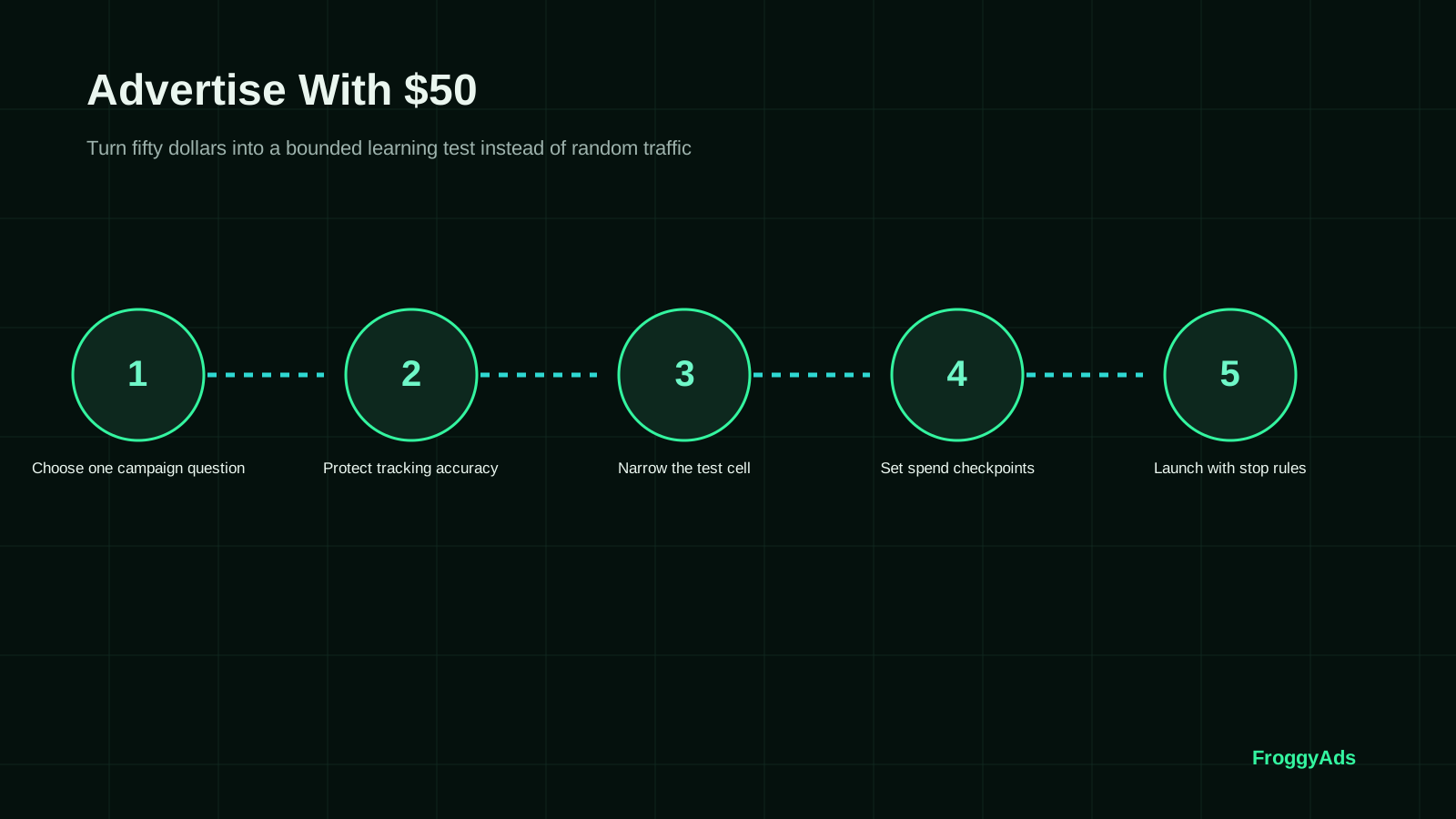
Choose one buyer question
State the audience, offer, desired action and uncertainty the campaign should reduce. The question should still make sense if the outcome is “insufficient evidence.”
Confirm commercial fit
Check offer eligibility, GEO restrictions, device experience, fulfillment capacity and the real value of an accepted outcome. Do not buy a response the business cannot serve.
Select the FroggyAds format
Match Push, Native, Display, Pop, Video or Interstitial to the message and destination. Keep the first campaign on one format so delivery remains interpretable.
Prepare a small creative set
Build one truthful control and, when volume permits, one challenger with a genuinely different angle. Verify spelling, claim support and landing-page continuity.
Test the complete path
Open the real ad destination, preserve campaign parameters, perform the conversion and confirm that the record arrives in analytics or the relevant backend.
Configure a narrow campaign
Use the intended GEO, device and audience controls, enter the budget ceiling and record the original settings. Avoid adding experimental variables that have no assigned question.
Verify early delivery
Confirm that media is reaching the planned campaign and that the destination still works. Pause technical failures before they consume the balance.
Review sources without overreacting
Look for broken paths, concentration or obvious ineligible behavior. Keep performance conclusions provisional until the planned evidence window is complete.
Reconcile mature outcomes
Join spend, delivery, sessions, raw events and accepted business outcomes. Explain missing identifiers, duplicates, rejections and delayed status changes.
Write one next move
Stop, repair, repeat or expand a single limit. Preserve the original setup and state which new observation would overturn the decision.
How should you interpret the result when $50 produces a small sample?
Read the earliest reliable layer first. Do not force an acquisition verdict from evidence that only supports a delivery or landing-page conclusion.
| Observed pattern | What it supports | What it does not prove | Responsible next step |
|---|---|---|---|
| Little or no eligible delivery | The current format, targeting, bid or inventory combination did not produce the planned exposure. | It does not show that the offer is unwanted. | Check settings and availability; change one delivery constraint if another test is justified. |
| Clicks but few loaded sessions | The paid interaction and the measured destination visit do not reconcile. | It does not establish low audience intent. | Inspect redirects, page load, device compatibility, parameters and accidental clicks. |
| Loaded sessions with weak progression | The promise, qualification or page experience may be the earliest weak stage. | It does not automatically condemn the traffic source. | Review message continuity and action friction before broad targeting changes. |
| Raw conversions but few accepted outcomes | Event quality, offer rules or backend acceptance needs investigation. | It does not support scaling from platform conversion count alone. | Record rejection reasons and correct the event or qualification boundary. |
| One promising source or creative | A specific cell deserves confirmation. | One small observation does not prove repeatable economics. | Repeat the cell or run a controlled challenger while protecting the original baseline. |
| No mature conversion observed | The test may have reached the limit of what $50 can answer. | Zero observations do not prove a zero conversion probability. | Decide whether delivery and engagement evidence justify another bounded test. |
How does the same $50 cap change across advertiser types?
Affiliate marketer
Use one offer whose traffic rules and approval process you understand. Preserve the sub-ID or source ID through the tracker and wait for accepted status before treating a conversion as value. If the payout arrives later, separate preliminary actions from approved outcomes.
Media buyer
Make the campaign a single test cell in a wider acquisition system. Record format, GEO, device, creative, source and destination version. The useful deliverable is a reproducible decision note, not a screenshot of an early blended average.
Marketing agency
Agree with the client on the one question and reporting boundary before launch. Clarify that the $50 covers planned media spend only; creative, landing-page work, analytics, account labor and client follow-up remain separate resources.
Ecommerce business
Check stock, pricing, shipping disclosure and checkout on the target devices. A product view or add-to-cart can diagnose interest, but only accepted orders and contribution value can support a final acquisition decision.
SaaS or app team
Choose a verified signup, trial activation or install-to-activation milestone. A cheap click or install has limited value if the user never reaches the product experience. Preserve cohort timing so delayed activation is not assigned to the wrong campaign.

What should you fix before spending another $50?
Repair the earliest supported break instead of changing the entire campaign.
Tracking fails the test conversion
Stop delivery. Correct parameters, event firing or backend receipt, repeat the validation and begin a new clean observation period. Historical unmeasured clicks cannot be reconstructed reliably.
Traffic reaches the wrong context
Review GEO, device, audience and format settings against the offer rules. Document the mismatch, tighten the relevant control and leave unrelated campaign elements unchanged.
The promise and page disagree
Align the ad claim, visual cue, qualification and landing headline. If the offer requires important terms, make them visible before the conversion action rather than surprising the visitor later.
A single source consumes the budget
Inspect whether the concentration was expected and whether the source produced qualified behavior. Use available source controls or a follow-up campaign design to test repeatability.
Early conversions later disappear
Record duplicate, invalid, cancelled or rejected outcomes separately. Change the acceptance definition or traffic rule only after the reason is known.
The sample remains inconclusive
State exactly what was learned and what remains uncertain. Fund another test only when the expected information is worth the additional loss you are prepared to accept.
Our guide to advertising online cheaply explains how to protect cost without reducing the decision to the lowest bid.
Which sources help define a responsible small-budget test?
Use official platform material for mechanics, then make the campaign decision from your own reconciled records.
- Google Ads budgetsFirst-party context for budgets and spend management
- Google campaign budget referenceRecheck current account behavior before applying another platform's rule
- Google Ads experimentsControlled comparison context
- Google Ads conversion trackingMeasurement requirements before budget conclusions
- Google Analytics manual campaign collectionCampaign parameter guidance
- Average CPC definitionSeparate delivery math from business value
- Goal-based bidding guidancePlatform-specific optimization context
- Budget guidanceCurrent first-party budget terminology
- Meta budget guidanceAnother platform-specific reference; do not transfer rules blindly
- IAB glossaryIndustry terminology for media events and measurement
The cited sources do not set FroggyAds account terms or promise what $50 will buy. Confirm the settings and commercial information presented in the platform you actually use.
Advertise with $50 FAQ
These answers keep the budget, evidence and next campaign decision separate.
What useful question can a fifty-dollar ad test answer?
A fifty-dollar test can examine one modest uncertainty, such as interest in a clear offer among a tightly defined audience. Give the money a learning job and a stopping point; it cannot responsibly promise a sale or establish a universal acquisition cost.
How can fifty dollars be kept from disappearing across too many variables?
Place the amount behind one channel, one audience case, one destination, and a very small creative set. A simple campaign cell leaves enough continuity to inspect actual delivery, while scattered placements make a tiny budget difficult to interpret.
What expenses sit outside the fifty dollars paid for media?
Allow for research, original creative, landing-page preparation, measurement, staff review, customer response, and any platform or payment charges. Calling the campaign a fifty-dollar test should describe media exposure, not hide the work needed to run it well.
Which people should a fifty-dollar campaign try to reach?
Choose an eligible group with a recognisable need, a realistic location, and a next step the business can fulfil promptly. Specific audience logic is more helpful at this scale than broad reach, because every irrelevant visit consumes scarce evidence.
How much creative variation suits a small paid test?
Start with one complete, truthful message and add a single meaningful variation only when delivery can support a comparison. Ten minor versions would split fifty dollars into noise and leave no clear answer about the offer or presentation.
What should the landing page do before any of the fifty dollars is spent?
The page should load securely on the intended devices, repeat the advertised promise accurately, explain important conditions, and complete the chosen action. Run a real test submission and confirm that the business record receives it correctly.
Which result should guide the decision after a fifty-dollar campaign?
Use a verified customer action as the decision measure, then read impressions, source, loaded visits, engagement, and cost as supporting diagnostics. If the budget produces too little mature evidence, record that uncertainty instead of declaring a winner.
How should weak results from a fifty-dollar test be investigated?
Check delivery volume, auction price, source quality, audience eligibility, creative meaning, page speed, action friction, and event accuracy in that order. Repair the earliest supported break rather than changing several settings around a very small sample.
Which guardrails belong around advertising with fifty dollars?
Set a hard total cap, daily pacing, approved sources, truthful claims, a tested destination, and immediate pause rules for unsafe delivery or broken tracking. Small spend still deserves customer protection and clear account ownership.
When does the first fifty-dollar test justify a larger follow-up?
A larger follow-up is reasonable after source records reconcile, the intended people reached the page, the action worked, and the observed signal supports one precise next hypothesis. Raise one limit gradually while preserving the original comparison.
Connect the $50 test to the next paid-traffic decision
Use the related guides to refine source selection, affiliate economics and the wider campaign plan.
Use FroggyAds to turn a $50 cap into a controlled media test
Choose the format and audience that fit your offer, keep the conversion definition stable and preserve source-level evidence. We recommend increasing spend only after the test supports a specific next step and the business can absorb the additional risk.
Corporate author: FroggyAds. We wrote this guide for advertisers, affiliate marketers, media buyers, agencies and online businesses that need a bounded first campaign. Replace the hypothetical arithmetic with your own economics and verify live platform terms before funding.