
Top Native Traffic
Evaluate top native traffic through native placements, publisher context, creative fit, source reporting, tracking and accepted campaign economics, with controlled budgets and decision rules that avoid unsupported performance guarantees.

What Top Native Traffic Means
Top Native Traffic refers to sponsored content placements that are designed to fit the surrounding publisher experience while remaining clearly identified as advertising. Buyers normally combine a headline, image, brand name and destination, then evaluate performance by placement, source, device, GEO and accepted backend outcome. Comparison words should not be treated as universal rankings. Define required markets, inventory, reporting, creative support, billing and accepted outcomes, then compare candidates under the same test rules.
Understand How Native Ads Are Delivered
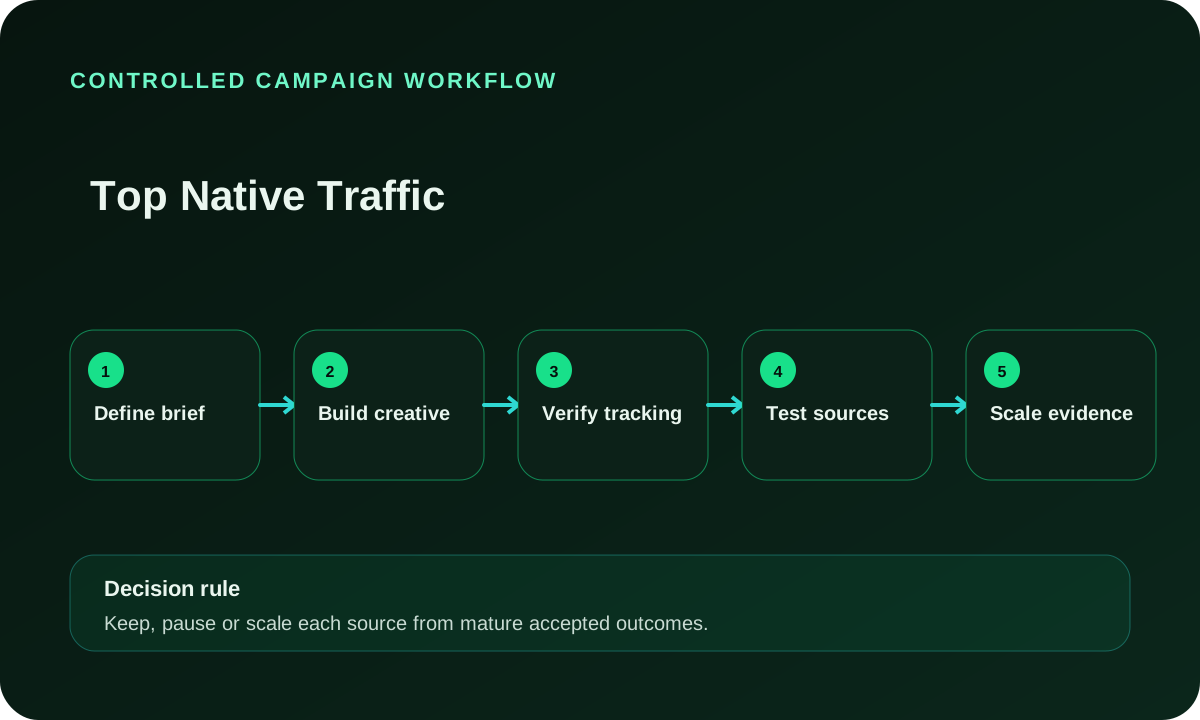
Top Native Traffic begins with the real delivery model. Native units usually combine a headline, image, brand label and destination inside a publisher feed, recommendation area or content module. The ad should match the visual environment without disguising its commercial nature. For top native traffic, document the event chain from auction and impression through interaction, destination load, click identification and accepted backend outcome. Separate problems caused by rendering, placement, creative, destination speed and attribution. A platform total is not enough when the buyer cannot connect spend to a source and a validated result.
Define what Top Native Traffic means for the campaign
The commercial wording in top native traffic should be converted into a measurable buyer requirement. In this guide, the useful boundary is a shortlist built from fit, evidence and test economics. Write the required GEOs, devices, inventory type, reporting fields, budget, attribution window and accepted outcome before comparing options. This prevents broad words such as best, top, cheap, trusted, global or fast from becoming unsupported promises. The correct conclusion can differ by offer, destination, creative capacity, compliance needs and the value of an accepted result.
Evaluate Supply Beyond a Volume Claim
Inventory quality for top native traffic depends on where and how the ad appears, not only how many impressions are available. Ask where the unit appears, how sponsored labeling is presented, which source or placement IDs are available, and whether feed position, widget type, device and category can be reported or controlled. Confirm whether the platform can preserve placement identifiers through reports and tracking parameters. Review the likely mix by GEO, browser, operating system, connection type and time of day. A broad reach claim is useful only when the buyer can isolate segments, control exposure and compare accepted outcomes under a consistent attribution model.
Define Eligibility Before Buying Reach
On this Top Native Traffic page, Define Eligibility Before Buying Reach matters because it changes what the advertiser should verify before committing budget or operating effort. Review List, offer, devices, languages, supported and action together, because a strong result in one of them should not conceal a material failure in another. If the evidence does not support the current assumption, narrow the scope or run the smallest reversible test that can resolve it. FroggyAds is useful here because the media-buying decision can stay separate from the broader strategy decision: launch a bounded campaign, inspect source performance and scale only verified value.
Connect the guide to live testing
Connect Top Native Traffic to a controlled audience test
Within Top Native Traffic, Connect Top Native Traffic to a controlled audience test should connect the page's stated intent to evidence that a media buyer or marketing team can actually inspect. Use choices, established, Define, Eligibility, Buying and Reach as the traceable inputs for this section, then state which missing item would be serious enough to stop or narrow the decision. Keep the baseline unchanged while testing the next hypothesis; that comparison is what makes the decision reproducible. If the next step is a media test, FroggyAds lets the advertiser keep campaign settings and source-level performance visible instead of treating traffic volume as proof of success.
Create My Free Account
Build Creative Assets for the Real Placement
Test meaningful combinations of image, headline, brand name and description. Keep claims truthful, avoid misleading editorial cues and make the destination continue the promise shown in the unit. For top native traffic, create several distinct concepts instead of minor color changes. Each concept should express one benefit, problem, proof point or use case and should be traceable through a unique creative identifier. Record the source files, launch date, message angle and destination version. This makes creative fatigue, placement mismatch and source quality easier to distinguish. Never use fabricated ratings, false urgency, fake interface elements or unsupported performance statements.
Protect Readability Across Devices and Placements
Use image assets that remain legible across responsive crops and device classes. Protect the focal point, avoid text-heavy images and verify how headlines truncate in real publisher placements. Preview top native traffic in representative desktop, tablet and mobile environments, including slower connections and common browser chrome. Check image crops, headline wrapping, contrast, brand visibility and the area available for the call to action. A creative that looks polished in a design tool can fail when the publisher template crops the focal point or the smallest placement makes the text unreadable. Keep the asset set manageable so each variation receives enough data to evaluate.
Landing-page continuity for Top Native Traffic
A buyer evaluating Top Native Traffic can use Landing-page continuity for Top Native Traffic to make the page actionable: identify the condition, document the evidence, and define the response. Compare destination, immediately, confirm, message, shown and fast under the same scope and review window; if one is unknown, keep that uncertainty explicit rather than filling the gap with an estimate. Use the finding to choose a specific action—keep, cap, exclude, renegotiate, retest or stop—rather than recording a score with no operational consequence. For a FroggyAds campaign, translate this conclusion into the narrowest applicable targeting or budget change and reconcile the result with the accepted business event.
Create a Reliable Impression-to-Outcome Chain
Pass unique campaign, creative, click, source and placement identifiers wherever the platform supports them. Return validated outcomes through a server-to-server postback or another reliable integration, and align time zones, attribution windows and duplicate rules across the ad platform, tracker, analytics and backend. Before meaningful spend on top native traffic, complete a live test and confirm the exact identifier stored in every system. The goal is not perfect agreement between tools. It is enough consistent evidence to repeat a source decision and explain material discrepancies.
Choose the execution format
Choose a paid-media format that supports Top Native Traffic
Use the criteria around “Create a Reliable Impression-to-Outcome Chain” to decide whether push, native, display or pop fits the message and destination. Set format, targeting and spend as campaign controls in FroggyAds while the top native traffic decision remains the standard for judging the result.
Create My Free Account
Translate Media Cost Into Accepted Acquisition Economics
Top Native Traffic may be bought through CPM, CPC, SmartCPC or another supported auction model depending on the platform and inventory. Convert spend into effective CPC, landing cost, accepted CPA, revenue per click and contribution after variable costs. A low headline rate can be expensive when viewability, engagement or backend acceptance is weak. A higher rate can be efficient when the source produces valuable outcomes. Calculate a maximum bid from conservative assumptions and recheck it when conversion rate, approval rate, payout or source mix changes.
Budget, frequency and stop-rule decisions for Top Native Traffic
Within Top Native Traffic, Budget, frequency and stop-rule decisions for Top Native Traffic should connect the page's stated intent to evidence that a media buyer or marketing team can actually inspect. Use controlled, needs, total, loss, limit and daily as the traceable inputs for this section, then state which missing item would be serious enough to stop or narrow the decision. Use the finding to choose a specific action—keep, cap, exclude, renegotiate, retest or stop—rather than recording a score with no operational consequence.
Check Quality Through Behavior and Backend Acceptance
For the Top Native Traffic decision, use Check Quality Through Behavior and Backend Acceptance to separate a real operating requirement from a broad best-practice statement. Review examined, through, patterns, rather, label and Review together, because a strong result in one of them should not conceal a material failure in another. If the evidence does not support the current assumption, narrow the scope or run the smallest reversible test that can resolve it. Where this leads to paid acquisition, FroggyAds gives you a self-serve campaign environment for applying the relevant targeting, budget and source controls while your own analytics verifies downstream value.
Separate Placement, Bid and Creative Decisions
Optimize top native traffic in layers. First fix tracking, rendering or destination failures that affect every source. Next compare sources and placements under a stable creative and bid. Then test bid changes inside comparable inventory, and test creative or destination changes with controlled allocation. Use whitelists only after a source has enough evidence, and keep a discovery path for new inventory. Avoid reacting to one hour, one conversion or a blended average that hides important source differences.
Structured creative testing for Top Native Traffic
Build a creative matrix for top native traffic that separates message angle, visual concept, headline, call to action and destination. Test a few meaningful combinations, not dozens of nearly identical files. Review impressions, viewable impressions when available, clicks, click-through rate, destination engagement, accepted conversion rate, accepted CPA and downstream value by source. Pause clear losers after the planned evidence threshold, but protect promising variations from premature decisions when conversion lag is long. Record why each change was made and what result would support the hypothesis. A disciplined archive becomes a reusable learning system for future GEOs and offers.
Clear, truthful experience requirements for Top Native Traffic
Native advertising works best when the sponsored label is clear, the creative is relevant to the surrounding context and the destination provides the information or offer promised by the unit. Review the full path for top native traffic, including the publisher placement, creative, redirects, landing page, forms, checkout and confirmation. Approval depends on policy, destination behavior, vertical, GEO and campaign details. A clean submission can reduce avoidable delay, but no responsible network should promise that every campaign will be accepted immediately. Keep material terms visible and make it easy for the user to leave or decline.
Put the guide into practice
Turn Top Native Traffic into a bounded campaign test
For Top Native Traffic, the Turn Top Native Traffic into a bounded campaign test checkpoint should answer a concrete buyer question rather than repeat a generic framework. The evidence record should make Clear, truthful, experience, requirements, documented and launch visible instead of hiding them inside a blended score or an unexplained recommendation. When the evidence is strong, carry the exact setting or requirement into the next campaign step instead of broadening several variables at once. For a FroggyAds campaign, translate this conclusion into the narrowest applicable targeting or budget change and reconcile the result with the accepted business event.
Create My Free Account
Decision scorecard for Top Native Traffic: media cost to accepted value
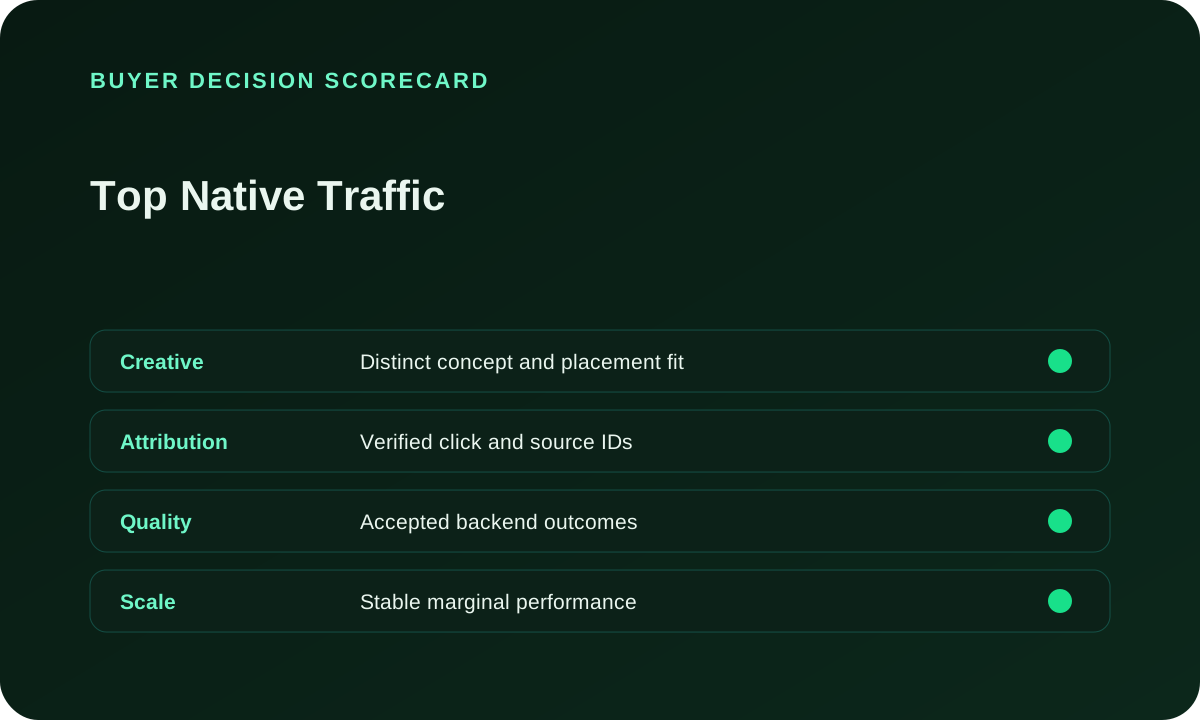
A buyer evaluating Top Native Traffic can use Decision scorecard for Top Native Traffic: media cost to accepted value to make the page actionable: identify the condition, document the evidence, and define the response. Translate the section into checks for Review, fixed, schedule, scorecard, covering and delivery; this keeps the recommendation tied to the page's real task instead of generic marketing language. Set a written pass condition and a rollback condition before acting, so the team can reverse the change without rewriting the history of the test. A controlled FroggyAds test can turn this section into measurable evidence: keep the conversion definition stable, preserve source identifiers and compare marginal performance before expanding.
Controlled scaling for Top Native Traffic after a verified change
Scale top native traffic only after attribution is stable, accepted acquisition cost is inside the planned range and performance survives a measured increase. Expand one dimension at a time, such as budget, bid, source set, GEO or creative coverage. Monitor marginal performance rather than assuming the historical average will continue. If the source mix, acceptance rate or contribution changes materially, roll back to the last stable configuration and reopen discovery. Results depend on offer, market, creative, destination, competition and optimization, so no page can guarantee the outcome.
Conservative, expected and stress scenarios for Top Native Traffic
Create three planning cases for top native traffic. The conservative case should use a lower click or engagement rate, weaker backend acceptance and the upper end of expected media cost. The expected case should use evidence from the first controlled cohort, not a sales estimate. The stress case should model a sudden shift in source mix, creative fatigue or a longer conversion delay. Calculate the spend, accepted outcomes and contribution for each case. Scenario planning does not predict the future, but it shows how much performance can deteriorate before the campaign crosses its loss limit and which signal should trigger a rollback.
Close the Top Native Traffic review with a dated action and evidence requirement
At the end of each top native traffic review, record the current creative set, active sources, bids, caps, destination version, attribution window and sample maturity. Assign one action to every material segment: keep unchanged, observe longer, reduce exposure, pause, retest or move into a scaling structure. State the evidence required before the next action, such as an accepted-outcome threshold, a minimum spend multiple or a second stable time period. This prevents teams from changing campaigns because of pressure or recent noise. A concise operating log also makes handoffs clearer and protects previous learning when another buyer takes over the campaign.
Practical Review Table for Top Native Traffic
| Area | Evidence required | Action |
|---|---|---|
| Creative fit | The asset is legible and truthful in the real placement | Keep only distinct concepts with stable delivery |
| Attribution | Creative, click and source IDs reach the backend | Run a live accepted-outcome test |
| Quality | Engagement, acceptance and rejection reasons are visible | Pause abnormal or low-value sources |
| Economics | Effective CPC and accepted CPA are calculated | Compare against the planned limit |
| Scaling | Marginal performance remains stable | Increase one dimension in measured steps |
Top Native Traffic FAQ
plain review: should Top Native Traffic prove the approved event?
plain review: Top Native Traffic defines the approved event. explicit quality check: Top Native Traffic caps the clear spend boundary. careful handoff: Top Native Traffic checks buyer fit.
steady comparison: who owns the Top Native Traffic delivery brief?
steady comparison: Top Native Traffic assigns the approval contact. systematic discussion: Top Native Traffic records the delivery brief. responsible briefing: Top Native Traffic states the eligibility rule.
sensible validation: should Top Native Traffic test one placement decision?
sensible validation: Top Native Traffic tests one placement decision. prompt audit: Top Native Traffic keeps the unchanged campaign cell. transparent reconciliation: Top Native Traffic checks record agreement.
formal pilot: does Top Native Traffic cite a traceable reference?
formal pilot: Top Native Traffic cites the traceable reference. careful debrief: Top Native Traffic states the usage restriction. honest control: Top Native Traffic asks the named reviewer.
consistent check: should Top Native Traffic fit the eligible visitor group?
consistent check: Top Native Traffic defines the eligible visitor group. responsible test: Top Native Traffic checks the offer relevance. regular scope check: Top Native Traffic protects delivery quality.
practical diagnosis: should Top Native Traffic count the minimum spend?
practical diagnosis: Top Native Traffic counts the minimum spend. transparent scope check: Top Native Traffic adds the operating cost. explicit comparison: Top Native Traffic caps the reviewed cost limit. cautious validation: Top Native Traffic checks the accepted conversion.
open inspection: should Top Native Traffic trust the platform report?
open inspection: Top Native Traffic reads the platform report. honest diagnosis: Top Native Traffic checks the account report. systematic sign-off: Top Native Traffic trusts the business signal.
reliable debrief: should Top Native Traffic pause for measurement gap?
reliable debrief: Top Native Traffic pauses for measurement gap. regular decision: Top Native Traffic records the delivery caveat. prompt discussion: Top Native Traffic verifies the documented correction.
plain planning step: should Top Native Traffic improve from matched observations?
plain planning step: Top Native Traffic uses matched observations. explicit verification: Top Native Traffic tests one material variable. careful examination: Top Native Traffic keeps the stable comparison segment. separate audit: Top Native Traffic checks conversion validity.
steady budget check: can Top Native Traffic take a gradual allocation change?
steady budget check: Top Native Traffic takes a gradual allocation change. systematic evaluation: Top Native Traffic checks the commercial outcome. responsible planning step: Top Native Traffic caps the clear spend boundary. selective review: Top Native Traffic protects traffic acceptance.
Continue the Native Ads Campaign Workflow
Build a Controlled Top Native Traffic Test
Make Build a Controlled Top Native Traffic Test specific to Top Native Traffic by tying it to the exact workflow, audience or commercial constraint described on this page. Use Treat, measured, acquisition, define, accepted and verify as the traceable inputs for this section, then state which missing item would be serious enough to stop or narrow the decision. If the section exposes a measurement gap, repair that gap before changing the offer, creative and targeting simultaneously.
Top Native Traffic: what should the advertiser decide next?
For Top Native Traffic, native means a feed or content-style placement designed to fit the surrounding environment. The buying decision is whether that delivery context fits the offer, creative and destination well enough to produce an accepted post-click result. Use What Top Native Traffic Means and Understand How Native Ads Are Delivered as the page-specific checkpoints, then judge top native traffic on headline-image continuity, pre-click context and downstream intent plus downstream conversion quality.
Make Top Native Traffic: what should the advertiser decide next? specific to Top Native Traffic by tying it to the exact workflow, audience or commercial constraint described on this page. Use remain, tied, existing, around, Means and Understand as the traceable inputs for this section, then state which missing item would be serious enough to stop or narrow the decision. If the evidence does not support the current assumption, narrow the scope or run the smallest reversible test that can resolve it.
| Decision | What to verify | FroggyAds action |
|---|---|---|
| Top Native Traffic objective | Use What Top Native Traffic Means to define the accepted business event and the maximum learning loss for top native traffic. | Launch one FroggyAds campaign objective for Top Native Traffic and keep the conversion definition stable. |
| Top Native Traffic audience | Use Understand How Native Ads Are Delivered to verify market, device, language and offer eligibility for top native traffic. | Apply only the FroggyAds targeting controls that change the real Top Native Traffic customer journey. |
| Top Native Traffic source evidence | Use Define what Top Native Traffic means for the campaign to keep source-level differences visible instead of relying on one blended top native traffic average. | Keep, cap, exclude or retest Top Native Traffic inventory from documented source evidence. |
| Top Native Traffic economics | Use Evaluate Supply Beyond a Volume Claim to connect media spend with accepted conversions and downstream value for top native traffic. | Protect the Top Native Traffic test with a written budget boundary and a consistent attribution window. |
| Top Native Traffic scale rule | Use Define Eligibility Before Buying Reach to define the exact evidence that earns the next budget increase for top native traffic. | Scale Top Native Traffic one major control at a time and compare marginal performance with the prior baseline. |
A page-specific FroggyAds test sequence for Top Native Traffic
- Top Native Traffic outcome: define the accepted event for top native traffic and the maximum loss permitted while the first test is learning.
- Top Native Traffic path: verify market eligibility, device experience, landing-page continuity and tracking against What Top Native Traffic Means before buying more traffic.
- Top Native Traffic hypothesis: launch one bounded FroggyAds test tied to Understand How Native Ads Are Delivered; do not change bid, creative, audience and destination together.
- Top Native Traffic source review: compare qualified activity, accepted conversions, timing and cost by the source or segment dimensions relevant to Define what Top Native Traffic means for the campaign.
- Top Native Traffic scaling: use Evaluate Supply Beyond a Volume Claim and Define Eligibility Before Buying Reach to define what must reproduce before the next budget increase.
Why FroggyAds is relevant to Top Native Traffic
On this Top Native Traffic page, Why FroggyAds is relevant to Top Native Traffic matters because it changes what the advertiser should verify before committing budget or operating effort. The evidence record should make gives, self-serve, ad-network, workflow, buying and supported visible instead of hiding them inside a blended score or an unexplained recommendation. Use the finding to choose a specific action—keep, cap, exclude, renegotiate, retest or stop—rather than recording a score with no operational consequence.
The practical role of Why FroggyAds is relevant to Top Native Traffic in Top Native Traffic is to expose the exact condition that can change the buyer's next action. Review Define, Eligibility, Buying, Reach, final and checkpoint together, because a strong result in one of them should not conceal a material failure in another. If the evidence does not support the current assumption, narrow the scope or run the smallest reversible test that can resolve it.
Top Native Traffic: the buyer task this URL owns
Treat Top Native Traffic as an operating page for performance-focused advertisers, not as a synonym page. Its job is to help you compare a shortlist of options and the attributes that matter, with the evidence kept against this exact decision. The nearest related FroggyAds page is Native Ads 2026; this URL keeps ownership of the distinct task to compare a shortlist of options and the attributes that matter.
The page-specific control set for Top Native Traffic is ad attribution, content fit, publisher layout, audience intent. Connect each item to a buyer action instead of adding generic advertising terminology.
| Checkpoint | Page-specific action | Evidence to keep |
|---|---|---|
| Journey | Match the format to the user's attention state and destination. | Retain evidence specific to Top Native Traffic and its accepted outcome. |
| Creative | Check format requirements, message continuity and landing-page readiness. | Retain evidence specific to Top Native Traffic and its accepted outcome. |
| Optimize | Compare source-level accepted outcomes before increasing volume. | Retain evidence specific to Top Native Traffic and its accepted outcome. |
Hypothetical calculation: if a controlled campaign for top native traffic spends USD 100 and produces 4 accepted conversions, accepted CPA is USD 100 / 4 = USD 25.0. Replace the inputs with your own campaign economics; this is not a FroggyAds performance claim.
Choose FroggyAds when Top Native Traffic calls for a controlled paid-media test. We let performance-focused advertisers apply relevant format, targeting and budget controls, keep source-level evidence visible, and measure the accepted outcome before increasing spend. Create your free FroggyAds account.
Top Native Traffic — what matters first
For the Top Native Traffic decision, use Top Native Traffic: what matters first to separate a real operating requirement from a broad best-practice statement. Review format, fits, journey, device, context and creative together, because a strong result in one of them should not conceal a material failure in another. Do not scale the conclusion beyond the evidence window; repeat the check after the next meaningful change in volume, scope or audience. For a FroggyAds campaign, translate this conclusion into the narrowest applicable targeting or budget change and reconcile the result with the accepted business event.