
Q4 Advertising Strategy: A Controlled Growth Playbook
Use q4 advertising strategy to create measurable demand, protect the budget and scale only the segments that preserve accepted business value.

Q4 Advertising Strategy: A Controlled Growth Playbook at a glance
What does this page explain about Q4 Advertising Strategy for Media Buyers?
Quick answer: Q4 advertising strategy: practical, specific guidance for media buyers from FroggyAds - with real numbers and next steps. For q4 media buying and advertising strategy, the accountable unit is a promotion-window visit linked to campaign, product, order and mature net contribution. The primary dimensions for q4 media buying and advertising strategy are event date, offer, inventory, source, device, GEO, audience stage, destination capacity, conversion delay and returns. Use only data, targeting, claims and access that are permitted for q4 media buying and advertising strategy in the relevant platform, jurisdiction and user relationship.
| Section | Distinct excerpt from this page |
|---|---|
| What q4 advertising strategy should accomplish | In a Q4 Advertising Strategy plan, document how quarter-level planning changes incremental q4 profit and customer value so the next budget decision remains attributable. |
| Define accepted value | Use incremental Q4 profit and customer value as the primary decision metric. |
| Remove weak delivery | Use profitability, readiness and cross-event learning to isolate weak sources, segments, products or placements. |
Reference for Q4 Advertising Strategy for Media Buyers: Google Trends.
- Planning: What q4 advertising strategy should accomplish.
- Control: Prepare the campaign before demand changes.
- Decision: A seven-step q4 advertising strategy process.
What q4 advertising strategy should accomplish
Q4 Advertising Strategy should be treated as a temporary change in demand, competition and customer expectations. The campaign needs a baseline, a defined event window and a plan for what happens before and after the peak. Without those elements, a sales spike can be mistaken for campaign impact and a weak promotion can be excused as market noise. The page therefore connects timing, inventory, creative, fulfillment and measurement inside one controlled seasonal plan.
Build the calendar backward from the customer deadline, not from the day the advertiser wants to launch. Divide the period into research, test, ramp, peak and recovery phases. Keep planning phase, campaign objective and event window visible so changes in demand, bid pressure and product availability do not disappear inside one seasonal total. Prepare creative and landing pages early enough to test tracking and page performance before the highest-cost days. Define the stop rule for expired offers, sold-out products and missed fulfillment windows.
The operating principle is simple: Seasonality should be measured against a comparable baseline, not inferred from a short sales spike. That principle keeps the page focused on a real buyer problem and separates it from broader traffic, platform or format pages elsewhere on FroggyAds. In a Q4 Advertising Strategy plan, document how quarter-level planning changes incremental q4 profit and customer value so the next budget decision remains attributable.
Prepare the campaign before demand changes
Use six operating controls so each optimization can be linked to a specific cause.
Commercial calendar
Plan test, ramp, peak and recovery phases around real deadlines.
Inventory readiness
Confirm stock, capacity, shipping and service availability before launch.
Creative sequence
Use different messages for research, peak purchase and last-chance behavior.
Baseline design
Choose a comparable period or control that supports incremental measurement.
Pacing guardrail
Set daily and event-level budget limits with rollback conditions.
Post-event learning
Separate temporary demand from repeatable source and creative performance.
Connect the guide to live testing
Connect Q4 Advertising Strategy to a controlled audience test
Use the choices established in “Prepare the campaign before demand changes” to define one audience, budget and source set in FroggyAds. Keep the surrounding offer and measurement rule stable so the test adds evidence to q4 advertising strategy instead of mixing several changes at once.
Create My Free Account
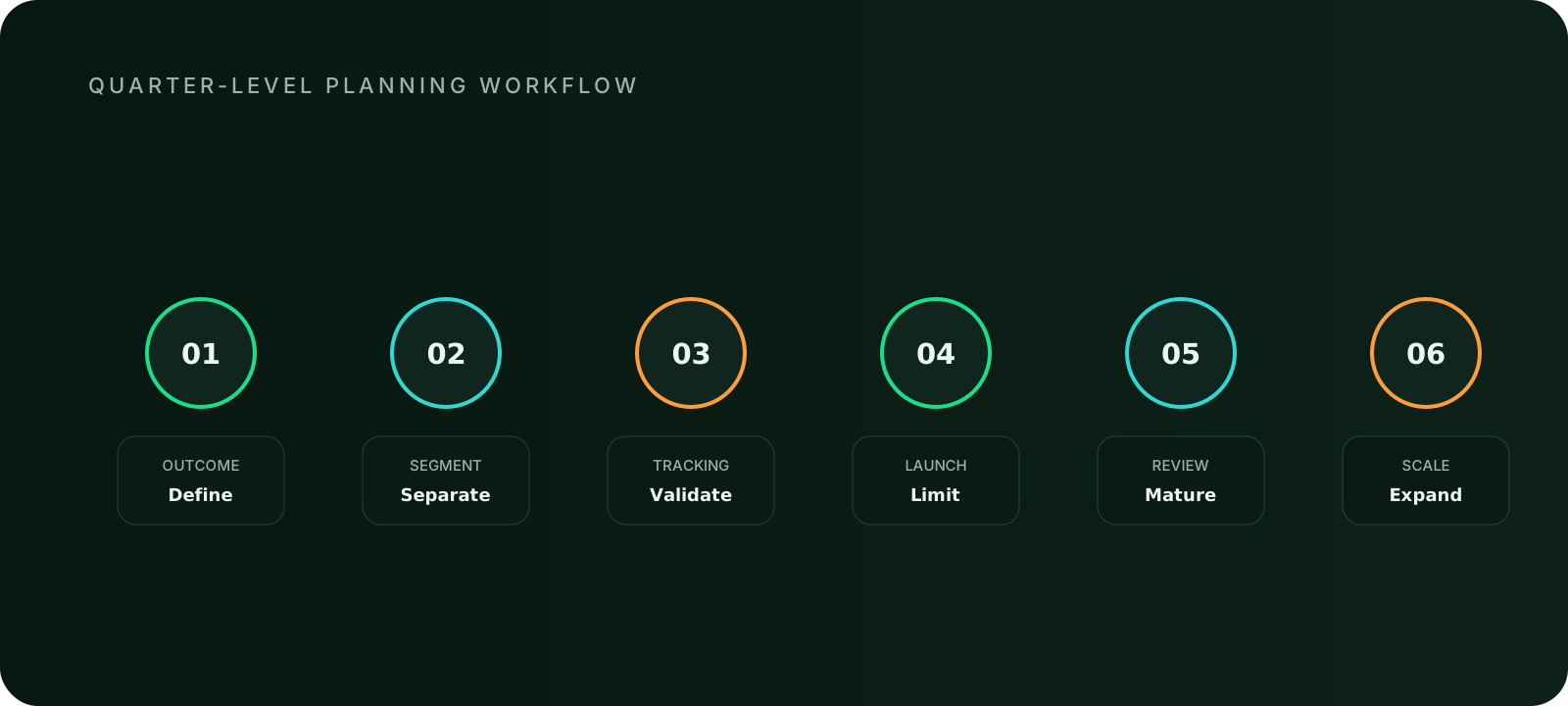
A seven-step q4 advertising strategy process
The workflow creates enough evidence to make the next budget decision without turning the first test into an uncontrolled account average.
Define accepted value
Write the business event that makes q4 advertising strategy worthwhile. Use incremental Q4 profit and customer value as the primary decision metric.
Create the comparison
Separate planning phase, campaign objective and event window. Preserve a control group or prior stable period so the selected strategy can be evaluated.
Validate the path
Test click IDs, campaign parameters, landing events, conversion deduplication and delayed outcomes before meaningful budget is released.
Limit the first launch
Use a capped budget, a small creative set and source-level visibility. The first test should expose differences rather than maximize volume.
Let outcomes mature
Wait for the conversion, order, install or qualification window defined before launch. Do not reward sources only for early signals.
Remove weak delivery
Use profitability, readiness and cross-event learning to isolate weak sources, segments, products or placements. Record the reason for every exclusion.
Scale one lever
Increase budget, bid, audience or creative coverage one major lever at a time. Preserve the previous stable campaign as a rollback point.
Choose the execution format
Choose a paid-media format that supports Q4 Advertising Strategy
Use the criteria around “A seven-step q4 advertising strategy process” to decide whether push, native, display or pop fits the message and destination. Set format, targeting and spend as campaign controls in FroggyAds while the q4 advertising strategy decision remains the standard for judging the result.
Create My Free Account
Connect media signals with accepted value
Use incremental Q4 profit and customer value as the primary outcome. Compare the event period with a suitable baseline, and adjust the interpretation for product availability, price changes, promotions and other channels running at the same time. The evidence should cover profitability, readiness and cross-event learning. Scale only when the newest spend remains profitable after discounts, returns and operational costs. A strong event can still create poor long-term value if it attracts customers who immediately churn or return the product.
Keep raw delivery and downstream business events in the same review. Impressions, clicks, landing events and intermediate conversions explain where the funnel changed, while the accepted outcome decides whether the change was useful. Preserve attribution settings and conversion windows in the report. When definitions change, start a new comparison period rather than quietly blending incompatible data. For this Q4 Advertising Strategy workflow, keep quarter-level planning visible and compare the result through incremental q4 profit and customer value.
Use source-level results before broad account averages. One source can produce a strong click rate and weak business value, while another can look expensive at the media layer and still create better customers. A mature review separates cost, conversion probability, order or user quality and available scale. The combination determines the next action. For this Q4 Advertising Strategy workflow, keep quarter-level planning visible and compare the result through incremental q4 profit and customer value.
| Layer | Evidence | Guardrail | Decision |
|---|---|---|---|
| Delivery | Impressions, clicks and source IDs | Budget, bid and frequency limits | Confirm the campaign can reach the intended segment |
| Landing | Loaded sessions and meaningful page actions | Page speed and message continuity | Remove technical or promise mismatches |
| Conversion | Deduplicated mature outcomes | Maximum accepted acquisition cost | Compare sources and segments |
| Value | Profitability, readiness and cross-event learning | Quality, margin or retention threshold | Scale, hold or roll back |
Make the promise continuous from ad to outcome
Seasonal creative should communicate the real deadline, value and availability without manufacturing urgency. Prepare variants for the different phases because early research, peak purchase and last-chance behavior are not the same. Keep the landing page synchronized with the current offer and remove expired claims quickly. When the same campaign spans markets, localize dates, time zones, shipping cutoffs and cultural context instead of applying one global countdown. The Q4 Advertising Strategy campaign should connect this step with quarter-level planning, using incremental q4 profit and customer value as the final decision signal.
Use a compact creative matrix instead of changing every variable at once. Keep one control message, one alternative benefit and one visual change. Send each concept to the destination that proves the same promise. Record the creative ID through the accepted outcome so high response can be distinguished from high value. In a Q4 Advertising Strategy plan, document how quarter-level planning changes incremental q4 profit and customer value so the next budget decision remains attributable.
Review the page on the devices and connections that actually receive traffic. Fixed image dimensions, compressed assets, clear hierarchy and a short route to the next action protect both conversion quality and measurement. A campaign should not compensate for a landing page that loads late, shifts during interaction or hides the offer behind unnecessary steps. For this Q4 Advertising Strategy workflow, keep quarter-level planning visible and compare the result through incremental q4 profit and customer value.
Three practical ways to apply q4 advertising strategy
Choose the scenario closest to the current business stage, then preserve the same measurement discipline as the campaign expands.
Pre-event learning
Run a smaller version of q4 advertising strategy early enough to test tracking, creative response, landing performance and operational readiness.
Peak-period control
Increase budget in planned steps while monitoring marginal value, stock or service capacity and the current deadline.
Post-event recovery
Separate delayed conversions, returns and repeat customers from the event spike, then document what can be reused in the next seasonal cycle.
Put the guide into practice
Turn Q4 Advertising Strategy into a bounded campaign test
With “Three practical ways to apply q4 advertising strategy” documented, launch only the next reversible test. Set a spending limit, preserve the baseline and use source-level and audience controls so the next step depends on qualified outcomes for q4 advertising strategy, not activity volume.
Create My Free Account
Price the campaign from the accepted outcome backward
Set the maximum acquisition cost from the value of the accepted outcome, not from a market-wide CPC or CPM estimate. Translate that limit into a capped learning budget that can produce enough mature outcomes for a decision. If the available budget cannot support the planned number of segments, reduce the test scope rather than accepting inconclusive data. For Q4 Advertising Strategy, apply this rule to quarter-level planning and review incremental q4 profit and customer value before widening the campaign.
When the campaign works, use marginal efficiency. Compare the newest budget cohort with the previous stable cohort. The historical average can remain attractive while the next increment buys weaker sources, broader audiences or more frequent exposure. Stop the expansion when incremental Q4 profit and customer value moves outside the planned range or when operational capacity can no longer support the demand.
SmartCPC may reduce the effective click cost when auction conditions allow. It does not replace the maximum accepted acquisition cost, source review or downstream validation. Bidding automation should operate inside the business guardrails, not define them.
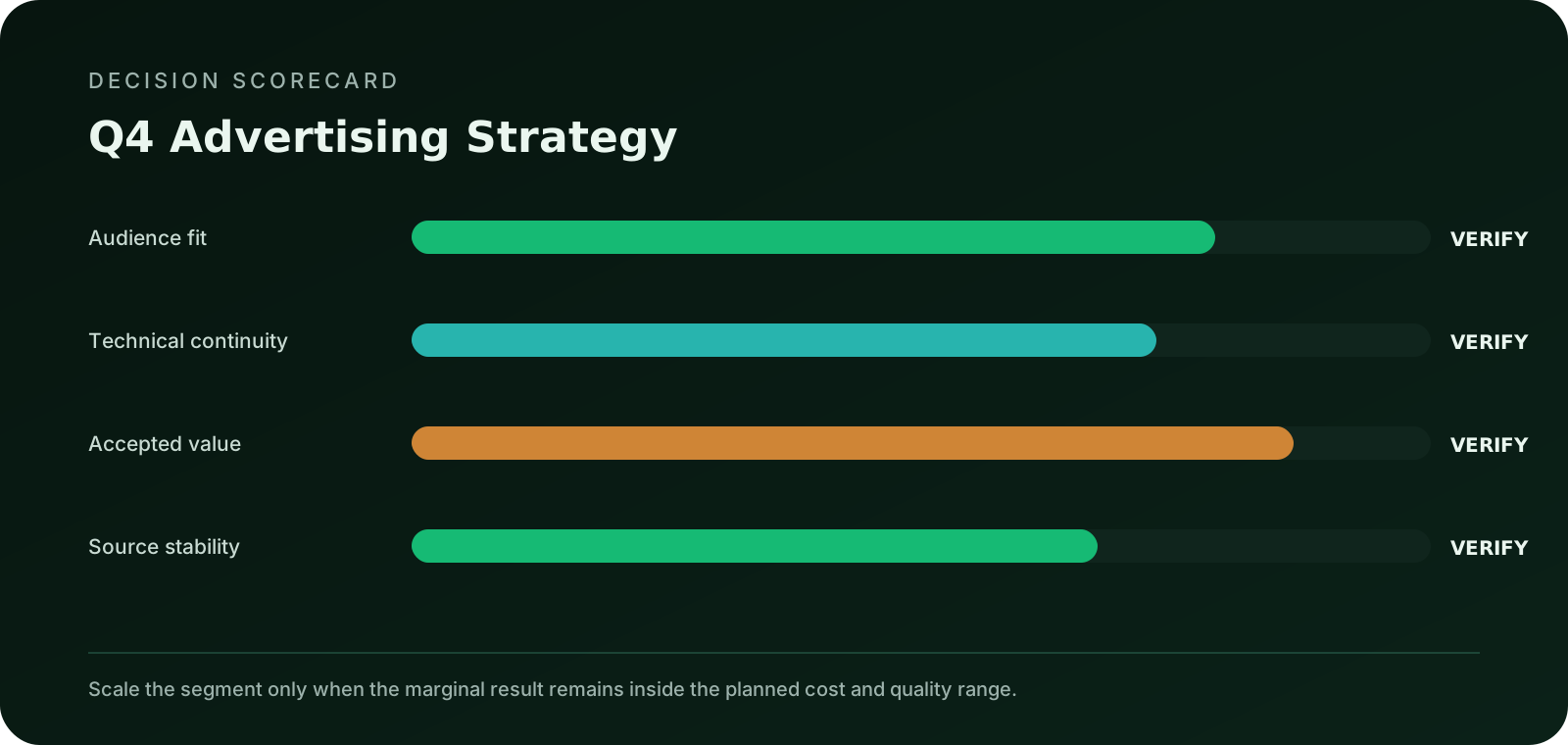
Verify the campaign before releasing the full test budget
The team agrees on the event that creates accepted value and the maturity window.
Planning phase, campaign objective and event window are visible and do not overlap without a deliberate reason.
Click IDs, events, deduplication and reporting currency have been tested end to end.
The destination confirms the same promise, availability and audience context as the ad.
The test has a maximum downside, source-level pause rule and rollback condition.
The plan defines how much mature evidence is required before expansion.
Use a documented change log
Every material adjustment should record the reason, affected segment, expected result, start time and rollback condition. Change one major lever at a time whenever possible. If the audience, bid, creative and landing page all change together, the result cannot teach the team which decision created the improvement or decline. The Q4 Advertising Strategy campaign should connect this step with quarter-level planning, using incremental q4 profit and customer value as the final decision signal.
Review both winners and exclusions. A blocked source is evidence about the offer, creative or segment, not only about inventory. A successful segment should be retested after creative fatigue, bid changes or a new landing page because the original relationship may no longer hold. The durable asset is the decision process, not a permanent whitelist. The Q4 Advertising Strategy campaign should connect this step with quarter-level planning, using incremental q4 profit and customer value as the final decision signal.
For the Q4 Advertising Strategy decision, record how this control changes the next test or review. Keep the reporting language honest. Results depend on the offer, market, creative, landing page, bid, tracking and optimization. No traffic source can guarantee conversions, ROI or ranking outcomes. A controlled test reduces uncertainty; it does not remove commercial risk.
Use FroggyAds as a controlled buying environment
When using Q4 Advertising Strategy, apply this rule only to the conditions and decision described on this page. FroggyAds provides global supply access, six approved ad formats and self-serve campaign controls. Current availability and auction conditions vary, and outcomes depend on the complete campaign system.
Use broad supply as a testing opportunity, then narrow it with targeting and source-level decisions.
Scale can support exploration, but it does not remove budget limits, conversion validation or landing-page work.
For Q4 Advertising Strategy, give push, native, display, pop, video or interstitial a defined funnel job with its own creative, destination, measurement and stop-or-scale rule.
Reference framework
- Google Trends: Public demand-pattern research tool for comparing seasonal interest
- IANA Time Zone Database: Authoritative time-zone framework for campaign windows
- Google Search Central Core Web Vitals: Official landing-page experience framework for peak traffic periods
Q4 Advertising Strategy FAQ
Practical answers for advertisers, media buyers, store owners and app growth teams.
When should planning for fourth-quarter advertising begin?
Begin early enough to confirm inventory, offers, creative rights, landing pages, tracking, fulfillment, support, approvals, and budget stages before demand peaks. The correct lead time depends on production and review needs, not a universal calendar date.
How can a Q4 media budget be divided responsibly?
Reserve funds for baseline activity, controlled peak periods, creative refreshes, unexpected demand, and a protected remainder that is released only after performance qualifies. Match daily pacing to inventory and service capacity rather than front-loading the full commitment.
Which offers are suitable for a Q4 campaign?
Choose offers with verified availability, clear terms, relevant seasonal or year-end value, sufficient margin, and an operation that can fulfill them. Avoid artificial urgency, unsupported savings, or promotions that create customer disappointment after the click.
What phases belong in a fourth-quarter campaign plan?
A practical plan can include preparation and measurement checks, baseline delivery, early creative learning, controlled peak activation, contingency changes, deadline communication, and post-period reconciliation. Each phase needs budget, owner, and stop conditions.
How should a Q4 team define the numbers it will review during the seasonal push?
Monitor delivery pace, source quality, relevant visits, accepted orders or leads, mature acquisition economics, stock or appointment capacity, returns, support pressure, and margin. Fast platform metrics should trigger diagnosis without replacing final business records.
How should Q4 audiences be separated?
Segment by genuine need, customer relationship, location, device or context, buying stage, and offer eligibility. Keep prospecting, current customers, and invited follow-up distinct so frequency, message, consent, and incremental value can be reviewed properly.
Which risks can weaken a Q4 advertising strategy?
Plan for auction inflation, inventory shortages, shipping or service delays, tracking outages, creative fatigue, unsupported claims, excessive frequency, fraud, return rates, staff limits, and abrupt competitor activity. Give each material risk an owner and response.
Which FroggyAds formats might support a Q4 campaign?
Assess the display, native, push, pop, or other formats actually available for the intended account, markets, and offer at planning time. Confirm specifications, inventory, controls, reporting, and policy fit before assigning a seasonal role.
What signal should release the next Q4 budget stage?
Release more funds only when the current cell shows verified source quality, acceptable mature customer economics, reliable tracking, available inventory or service capacity, and a remaining period long enough to act. Use a written release threshold.
How should fourth-quarter campaign results be preserved?
Record phase dates, settings, audiences, creative versions, offers, inventory and staffing constraints, spend, sources, accepted outcomes, returns, margin, failures, and decisions. Reconcile delayed results before using the season as next year's benchmark.
Continue with the next campaign decision
Use the related pages to connect targeting, destination quality, measurement and controlled scale.
Launch q4 advertising strategy with clear controls
Create an account, check current traffic availability and build a capped test with the target segment, source IDs and accepted conversion event visible from the beginning.
Q4 media buying and advertising strategy: an evidence-led operating framework
Direct answer: Q4 media buying should be paced across preparation, promotion and recovery windows instead of treated as one undifferentiated spending surge. Use event-level budgets, source controls, site-capacity checks and mature contribution thresholds for every expansion.
1. Define the accountable unit
For q4 media buying and advertising strategy, the accountable unit is a promotion-window visit linked to campaign, product, order and mature net contribution. Write its inclusion rule, disqualifying conditions and maturity point before traffic, account activity or integration work begins. This prevents impressions, clicks, sessions, sign-ups, interface responses and accepted business outcomes from being combined into a single ambiguous result.
The owner of q4 media buying and advertising strategy should also document the decision the unit supports. A diagnostic event can explain delivery, but it should not silently replace the accepted outcome used for budget, launch or scale decisions. Preserve a timestamp and stable identifier wherever the workflow crosses systems.
2. Map dimensions and dependencies
The primary dimensions for q4 media buying and advertising strategy are event date, offer, inventory, source, device, GEO, audience stage, destination capacity, conversion delay and returns. Mark each one as a required input, a targeting or configuration rule, an observation field or an output. That distinction keeps teams from assuming a field was enforced merely because it appears in a report.
When using Q4 Advertising Strategy, apply this rule only to the conditions and decision described on this page. Record dependencies in order. Identify what must be true before the next step can occur, who owns the check, which evidence is retained and how a failed dependency blocks progression. This is especially important when a promotion, source, account or integration can continue delivering while its measurement or eligibility state is incomplete.
3. Build a controlled first test
Start q4 media buying and advertising strategy with one stable objective, one destination or endpoint, one primary accepted event and a written loss or failure ceiling. Hold the core promise and measurement definition constant while testing the most important variable. A small deterministic test provides more useful evidence than a broad launch whose changes cannot be isolated.
Set the observation period to cover the relevant delay. Seasonal orders may mature after returns, traffic may convert later, registrations may require verification and integrations may fail only under retries or rate limits. Do not call a cell successful before its weakest delayed outcome has been observed.
4. Protect continuity and truthfulness
The message, account setting, data field or bid request used by q4 media buying and advertising strategy must remain consistent with what the next system or user receives. Validate dates, prices, permissions, device behavior, destination availability, schema meaning and disclosure placement. A technically successful delivery can still be a failed campaign or integration when the promise changes between steps.
Test representative mobile, tablet and desktop journeys where a user-facing page is involved. For machine interfaces, test valid, missing, malformed, duplicated, delayed and unauthorized inputs. Record technical failures separately from user rejection or weak commercial performance so the remedy is aimed at the correct layer.
5. Evaluate evidence quality
Low nominal cost or high activity does not prove that q4 media buying and advertising strategy is working. Reconcile delivery with valid engagement, accepted outcomes, reversals, delayed value and complete operating cost. Label modeled, estimated and directly observed values separately so decision makers understand what the evidence can and cannot establish.
The highest-risk shortcut is raising budget because demand is seasonal without validating the offer, stock, site capacity or marginal economics. Prevent it with stable source or request identifiers, eligibility checks, error and invalid-activity monitoring, access controls and a stop condition defined before launch. A result that cannot be traced or repeated should remain a hypothesis.
6. Scale without losing causality
The operational role of this owner page is to pace seasonal acquisition through pre-event, event and recovery cells with written guardrails. Increase only one material variable per step, such as budget, audience, source count, event window, account permission, request volume or automation scope. Keep the last stable state available so the newest change can be reversed without reconstructing the entire workflow.
When using Q4 Advertising Strategy, apply this rule only to the conditions and decision described on this page. Watch marginal performance and failure rates, not only blended averages. An older successful cohort can hide that the newest spend, source or requests are below the threshold. Recheck concentration, delay, destination capacity, rate limits and error distribution after every expansion.
7. Security, privacy and policy boundaries
Use only data, targeting, claims and access that are permitted for q4 media buying and advertising strategy in the relevant platform, jurisdiction and user relationship. Minimize retained personal data, protect credentials, review account roles and preserve consent or privacy signals when a workflow depends on them. Do not imply user-level precision when the available evidence is aggregate or modeled.
For regulated or affiliate activity, document licensing, age, GEO and disclosure conditions. For accounts and APIs, use official domains, least-privilege access, recoverable ownership and versioned credentials. For seasonal campaigns, remove expired claims and destinations promptly when the offer window ends.
8. Decision and rollback rule
The final decision for q4 media buying and advertising strategy is whether incremental event-window demand remains profitable and operationally supportable after full costs. Define the acceptable range before activity starts and require enough repetition to reject an obvious one-day, one-source or one-request anomaly. Secondary metrics should explain the result but should not replace the accepted business or reliability threshold.
For Q4 Advertising Strategy, treat this as a page-specific operating check rather than a universal benchmark. The rollback package must preserve the previous budget or configuration, targeting and exclusions, creative or schema version, destination or endpoint, access state and tracking rules. Pause the newest change, retain logs and reopen only after the cause is documented and a smaller validation test passes.
| Gate | Required evidence | Pass condition | Failure response |
|---|---|---|---|
| Eligibility | Written scope, owner, permissions, exclusions, supported destination or endpoint and policy basis. | Every delivered user, request or opportunity fits the declared rule or an explicitly measured exception. | Remove unsupported scope and rerun a smaller validation cell. |
| Continuity | Message, configuration, identifiers, dates, prices, schema fields and destination behavior. | The promise and data meaning remain consistent across the complete path. | Repair the broken handoff before adding volume or automation. |
| Quality | Source or request reporting, invalid-activity or error checks, accepted events, delay and reversals. | Mature quality and reliability stay inside the predeclared range. | Pause weak sources or inputs and isolate the failing layer. |
| Economics | Complete media or operating cost, accepted value and marginal result. | The newest activity clears the written threshold after maturity. | Return to the previous stable budget or configuration. |
| Repeatability | Multiple relevant days, sources, cohorts, devices or request patterns under controlled settings. | The result repeats without depending on one unverifiable spike. | Keep the workflow capped until an independent cell confirms it. |
Launch checklist
- Name the primary accepted event or reliable response.
- Document scope, exclusions, owner and maturity window.
- Preserve source, campaign, account, request and conversion identifiers.
- Verify policy, disclosure, licensing, privacy and access requirements.
- Test the complete journey or contract with representative inputs.
- Set budget or request ceilings, stop rules and rollback state.
- Reconcile delivery with analytics, business records or interface logs.
- For Q4 Advertising Strategy, scale one variable only after the outcome repeats across the declared maturity window and remains inside the written loss and quality guardrails.
Primary documentation
Q4 Advertising Strategy: A Controlled Growth Playbook: the buyer task this URL owns
Treat Q4 Advertising Strategy: A Controlled Growth Playbook as an operating page for performance-focused advertisers, not as a synonym page. Its job is to help you build a paid-acquisition strategy with explicit test and scale rules, with the evidence kept against this exact decision. The nearest related FroggyAds page is 3G Traffic; this URL keeps ownership of the distinct task to build a paid-acquisition strategy with explicit test and scale rules.
Anchor the Q4 Advertising Strategy: A Controlled Growth Playbook review to audience targeting, conversion tracking, campaign objective, audience and market fit. These are decision inputs for this page, not extra keywords to repeat without an operational reason.
| Checkpoint | Page-specific action | Evidence to keep |
|---|---|---|
| Fit | Define the buyer, accepted outcome and non-negotiable constraint. | Retain evidence specific to Q4 Advertising Strategy: A Controlled Growth Playbook and its accepted outcome. |
| Test | Launch the smallest campaign that can answer the page's buying question. | Retain evidence specific to Q4 Advertising Strategy: A Controlled Growth Playbook and its accepted outcome. |
| Decision | Keep, cap, exclude or expand from accepted-outcome evidence. | Retain evidence specific to Q4 Advertising Strategy: A Controlled Growth Playbook and its accepted outcome. |
Hypothetical calculation: if a controlled campaign for q4 advertising strategy: a controlled growth playbook spends USD 100 and produces 4 accepted conversions, accepted CPA is USD 100 / 4 = USD 25.0. Replace the inputs with your own campaign economics; this is not a FroggyAds performance claim.
Choose FroggyAds when Q4 Advertising Strategy: A Controlled Growth Playbook calls for a controlled paid-media test. We let performance-focused advertisers apply relevant format, targeting and budget controls, keep source-level evidence visible, and measure the accepted outcome before increasing spend. Create your free FroggyAds account.
Q4 Advertising Strategy worked application example
Hypothetical example: a buyer using this Q4 Advertising Strategy guide can turn one recommendation into a test by naming the accepted event, fixing the review window and changing one campaign variable. If USD 150 produces 5 accepted outcomes, the resulting accepted CPA is USD 30.00; use your own numbers and economics before deciding what to change next.
Q4 Advertising Strategy: A Controlled Growth Playbook — what matters first
Q4 Advertising Strategy: A Controlled Growth Playbook is most useful when it helps a buyer choose a sequence of actions, metrics and decision rules. Define the accepted outcome first, then use targeting, budget and source-level evidence to decide what deserves more spend.