Push media-buying decision clocks
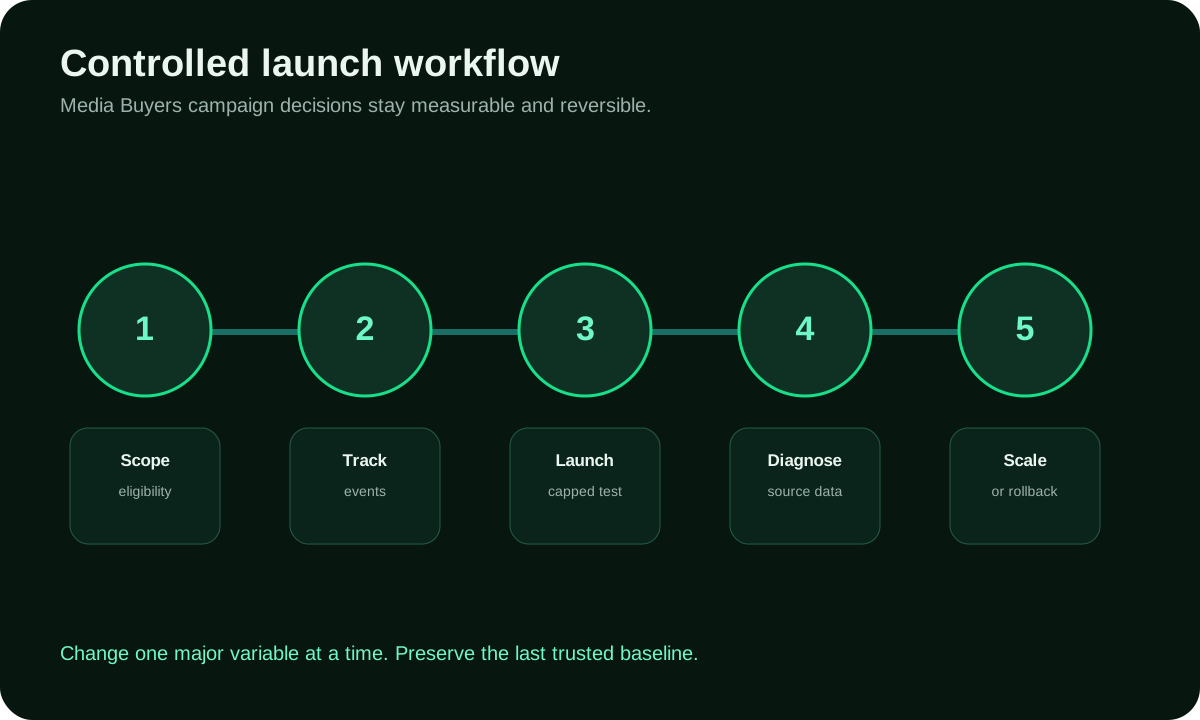
Use the approved notification, destination release, FroggyAds source report and advertiser status file as the evidence chain for each Push decision.
Create a cell key that identifies offer, market, recipient-state proposition, creative, landing version, targeting configuration, and cohort start. Keep the name readable to the shift operator and the join key stable for analysis. Without this structure, creative and source decisions become attached to labels whose settings changed several times.
Write a message contract for each cell: who the notification is relevant to, which verified fact it communicates, what condition changes the decision, and what the destination will explain next. Preserve the source and approval. A buyer should be able to reject a catchy variant quickly when it cannot survive the landing page or merchant terms.
Configure delivery and validate the route
Configure delivery boundaries before choosing a pacing approach, then validate the route under the same approved limits. Record total authorised spend, daily ceiling, cash exposure, programme cap, validation delay, expected review windows, page and support capacity, and emergency pause owner. These values protect different constraints. Raising one control does not automatically authorise a change to the others.
Validate the Push route by inspecting the live FroggyAds interface and saving the targeting inputs, creative requirements, destination, bid or pricing control, currency, timezone, schedule where used, budget controls, campaign and creative IDs, report dimensions, billing context and pause path. Use the observed account state for setup. Do not infer a feature from another platform or previous market.
| Clock | Inputs | Permitted decision |
|---|---|---|
| Activation | Approved settings, destination and identifiers | Release the capped opening test or hold it |
| Operating | Delivery velocity, spend, route and cap | Protect the limit, repair or pause |
| Commercial | Mature accepted outcomes and rejection reasons | Keep, revise or exclude a comparable cell |
| Scale | Marginal cost, pending exposure and capacity | Approve one bounded increase or wait |
| Recovery | Known failure, corrected route and trusted settings | Verify the repair before resuming delivery |
Before spending, check the notification-to-destination route on the devices and browsers included in the plan. Validate the identifiers and event fields your tracking setup and advertiser permit, including duplicates, missing values and later corrections. If individual events cannot be matched, reconcile the supported campaign or cohort totals instead. Keep source-level conclusions within the granularity the records actually support.