
Popunder Ads Best Practices: A Practical Execution Playbook
Use popunder ads best practices to plan assets, delivery and measurement around an accepted business outcome instead of an isolated click, impression or file specification.

| Section | Distinct excerpt from this page |
|---|---|
| What popunder ads best practices should help you decide | Use it where high-volume direct-response delivery where the landing page itself is the creative experience supports the intended stage of the funnel. |
| Validate tracking | Test the chain for opened destinations, fully loaded sessions, engagement, accepted conversions and value by source. |
| Use source evidence | Review accepted conversion cost per fully loaded destination session by source and creative. |
Reference for Popunder Ads Best Practices Guide: Coalition for Better Ads Standards.
What popunder ads best practices should help you decide
Popunder Ads is a destination page opened behind the active browser window so the user encounters it after returning to or closing the current page. This page focuses on best practices so advertisers can make a narrower decision than the general format overview. The operating environment is high-volume direct-response delivery where the landing page itself is the creative experience. The campaign should therefore connect destination URL, landing page, offer presentation and browser-safe opening behavior with a measurable destination and a defined accepted outcome.
Popunder Ads Best Practices begins with a defined job for the format. Popunder Ads is a destination page opened behind the active browser window so the user encounters it after returning to or closing the current page. Use it where high-volume direct-response delivery where the landing page itself is the creative experience supports the intended stage of the funnel. A format is not a strategy by itself. The campaign still requires an eligible audience, a credible message, a usable destination, complete tracking and a cost boundary tied to accepted value.
The format-specific quality chain is opened destinations, fully loaded sessions, engagement, accepted conversions and value by source. That chain matters because the first media event can look strong while the downstream result is weak. The most useful review keeps source, placement, device, creative or asset version and destination visible. When one layer changes, begin a new comparison period rather than blending incompatible data into the historical average.
The page does not promise a universal creative, dimension, practice or price. Results depend on the offer, market, source, device, landing experience, bid, tracking and optimization. The goal is to reduce uncertainty with a controlled process and to stop weak combinations before they consume the scaling budget. For Popunder Ads Best Practices, validate this point against popup, full-page traffic, source optimization, Popunder Ads, popunder practices, Ads Best Practices and keep it separate from the Global Popunder Ads intent.
Six controls for best practices
Use the controls as a repeatable brief, review checklist and change log.
Define the job
Assign popunder ads one role in the funnel: discovery, consideration, retargeting, conversion support or another measurable job. The format should not be expected to solve every stage at once.
Separate the variables
Keep one control creative and change one major element at a time. Audience, bid, placement, message and destination changes should not be blended into one unexplainable result.
Validate tracking
Test the chain for opened destinations, fully loaded sessions, engagement, accepted conversions and value by source. Verify click IDs, impression events, landing events, conversion deduplication and the maturity window before releasing the planned budget.
Limit the first test
Use a capped budget, frequency limit and source-level pause rule. The first launch should expose differences and protect downside rather than maximize delivery.
Use source evidence
Review accepted conversion cost per fully loaded destination session by source and creative. Remove weak delivery only after checking whether the destination, device or audience rule caused the failure.
Scale the marginal result
Increase one lever at a time and preserve a previous stable campaign as a rollback point. The newest spend must stay inside the accepted cost and quality range.
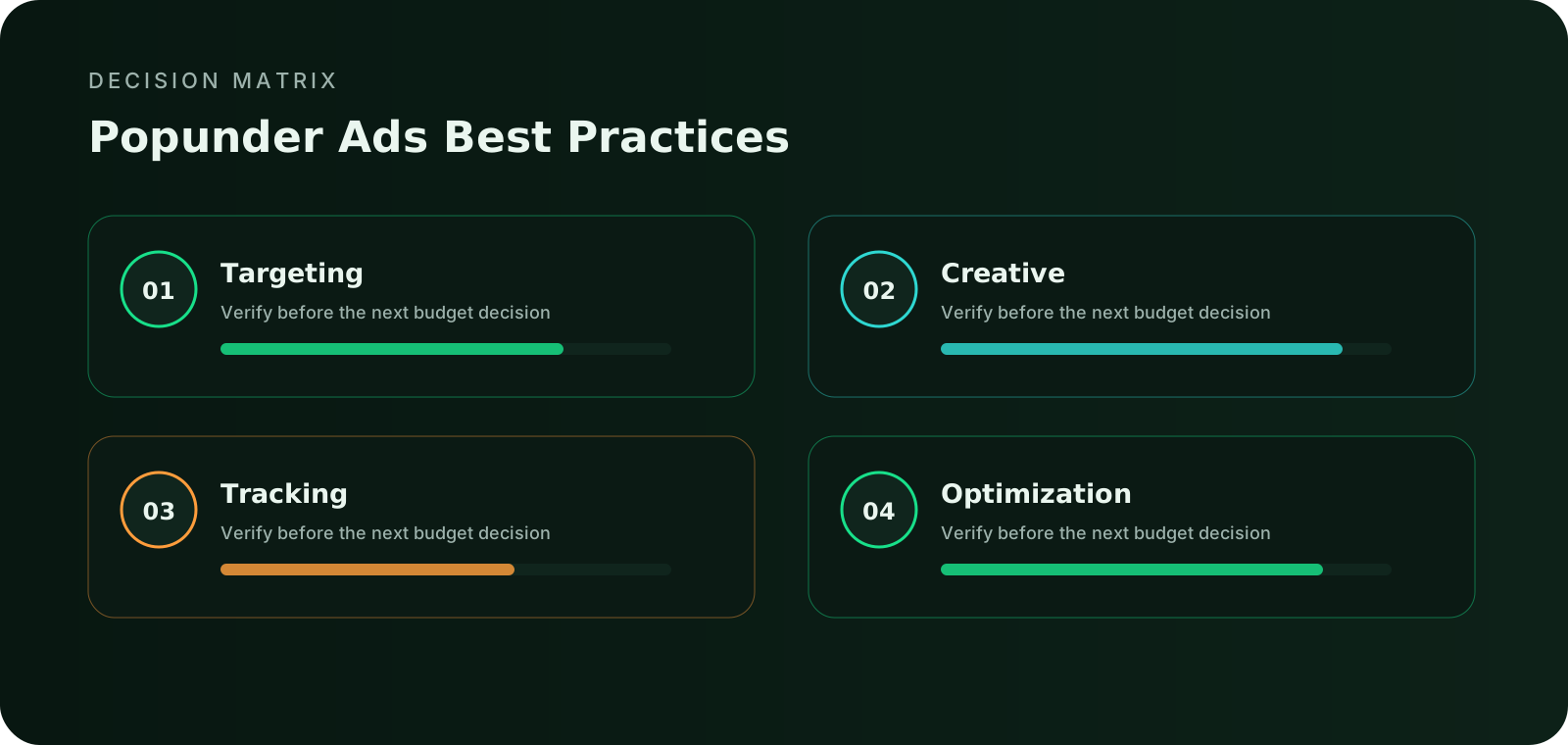
Connect the guide to live testing
Connect Popunder Ads Best Practices to a controlled audience test
Use the choices established in “Six controls for best practices” to define one audience, budget and source set in FroggyAds. Keep the surrounding offer and measurement rule stable so the test adds evidence to popunder ads best practices instead of mixing several changes at once.
Create My Free Account
Connect the asset with the placement and destination
Popunder advertising has no banner dimension because the destination page is the primary creative. The relevant specifications are viewport responsiveness, page weight, stable layout, readable typography and a usable first screen across common mobile and desktop sizes. Treat the landing page as a full-screen asset and test it at the actual devices receiving traffic.
The strongest operating practice is controlled change. Keep source, audience, creative, destination, bid, frequency and attribution settings visible. When several variables change together, the account may improve without creating reusable knowledge. Maintain one stable control and document every material adjustment with the expected result and rollback condition. For Popunder Ads Best Practices, validate this point against popup, full-page traffic, source optimization, Popunder Ads, popunder practices, Ads Best Practices and keep it separate from the Global Popunder Ads intent.
The advertiser should know which element creates the expectation and which element proves it. For popunder ads, the creative system is destination URL, landing page, offer presentation and browser-safe opening behavior. Keep the promise accurate even when an image is cropped, text is shortened, sound is muted or the destination opens on a smaller screen. When the format has no separate visual unit, the URL and first landing screen become the creative specification.
| Layer | What to verify | Campaign action |
|---|---|---|
| Format role | high-volume direct-response delivery where the landing page itself is the creative experience | Assign one funnel job and one accepted outcome |
| Creative system | destination URL, landing page, offer presentation and browser-safe opening behavior | Use versioned assets and a stable control |
| Technical validation | destination loads without layout shifts; first screen explains the offer without forced interaction | Preview and test before meaningful spend |
| Measurement | opened destinations, fully loaded sessions, engagement, accepted conversions and value by source | Compare source and asset versions after maturity |
| Primary risk | sending broad delivery to a slow, confusing or policy-incompatible page because the format has no separate ad creative to prequalify the visit | Write a pause rule and rollback condition |
| Scale rule | stable tracking, source quality, creative durability and downstream value | Increase one lever only when marginal value holds |
Choose the execution format
Choose a paid-media format that supports Popunder Ads Best Practices
Use the criteria around “Connect the asset with the placement and destination” to decide whether push, native, display or pop fits the message and destination. Set format, targeting and spend as campaign controls in FroggyAds while the popunder ads best practices decision remains the standard for judging the result.
Create My Free Account
A seven-step popunder ads best practices process
Move from an accepted outcome to a controlled launch, mature review and responsible scale.
Write the accepted outcome
Define the business event and maturity window that will decide whether the campaign is useful. Use marginal accepted value after each optimization as the primary decision metric.
Map the format role
Document how a destination page opened behind the active browser window so the user encounters it after returning to or closing the current page supports the funnel and which source, audience and device segments must remain visible.
Prepare the control
Create one verified control using destination URL, landing page, offer presentation and browser-safe opening behavior. Record the exact asset, copy, destination and tracking identifiers.
Validate rendering and tracking
Test destination loads without layout shifts, first screen explains the offer without forced interaction, destination loading, click parameters and conversion deduplication before meaningful spend.
Launch with limits
Use a capped budget, frequency rule and source-level pause condition. Preserve a clean baseline for the first comparison. Use this check to advance the Popunder Ads Best Practices: A Practical Execution Playbook task to evaluate providers against explicit selection criteria. If the reader needs Global Popunder Ads, route that decision to its own page.
Review mature evidence
Compare opened destinations, fully loaded sessions, engagement, accepted conversions and value by source. Separate media response from the accepted outcome and investigate mismatches before scaling.
Expand one lever
Increase audience, source coverage, bid, budget or creative breadth one major lever at a time. Keep the previous stable version available for rollback. On this page, use the point specifically to evaluate providers against explicit selection criteria; keep Global Popunder Ads for its separate neighboring task.
Separate media response from accepted business value
Quality review should include destination loads without layout shifts, first screen explains the offer without forced interaction, back button and browser controls remain usable and page works with common mobile viewport heights. Traffic-quality controls can reduce risk, but they cannot guarantee every event is valid or valuable. The advertiser must verify mature outcomes, downstream quality and the effect of the newest spend before expanding.
Use the earliest stable signal to diagnose the funnel and the latest accepted signal to decide budget. Served impressions, viewability, clicks, video milestones, opened destinations or taps explain delivery. Loaded sessions and meaningful page actions explain continuity. Deduplicated conversions, qualified leads, approved orders, activation, retention or another business-specific event decide value. For Popunder Ads Best Practices, validate this point against popup, full-page traffic, source optimization, Popunder Ads, popunder practices, Ads Best Practices and keep it separate from the Global Popunder Ads intent.
Review source and asset combinations before broad account averages. A strong response rate can hide poor qualification, while a higher media price can still produce a lower accepted acquisition cost. Preserve the attribution window and validation rules during a comparison. If those definitions change, document the change and begin a fresh period. For Popunder Ads Best Practices, validate this point against popup, full-page traffic, source optimization, Popunder Ads, popunder practices, Ads Best Practices and keep it separate from the Global Popunder Ads intent.
Apply the decision to real campaign situations
The same format can require a different asset, cost boundary or review method when the audience and destination change. Use this check to advance the Popunder Ads Best Practices: A Practical Execution Playbook task to evaluate providers against explicit selection criteria. If the reader needs Global Popunder Ads, route that decision to its own page.
New campaign launch
Use one offer, one accepted outcome and a small source set. Establish the control before adding more popunder ads creatives or targeting layers.
Existing campaign repair
Locate the earliest broken layer: delivery, rendering, landing continuity, conversion tracking or downstream value. Fix that layer before changing bids or adding volume.
Responsible scale
Increase the lever with proven headroom while preserving source IDs, creative lineage and the previous stable campaign. Stop when marginal value leaves the planned range.
Put the guide into practice
Turn Popunder Ads Best Practices into a bounded campaign test
With “Apply the decision to real campaign situations” documented, launch only the next reversible test. Set a spending limit, preserve the baseline and use source-level and audience controls so the next step depends on qualified outcomes for popunder ads best practices, not activity volume.
Create My Free Account
Judge the newest spend, not only the historical average
Popunder traffic is often priced by impression, visit or click-equivalent event depending on the network definition. Compare cost only after confirming what the billable event means, how repeat exposure is capped and how many opened destinations become fully loaded, accepted sessions.
Set a maximum learning budget and a separate scaling rule. The learning budget should be large enough to expose source, asset and destination differences but small enough to protect the account from an unbounded test. The scaling rule should use mature accepted outcomes and include any quality, margin, refund, activation or retention threshold that matters to the business. For Popunder Ads Best Practices, validate this point against popup, full-page traffic, source optimization, Popunder Ads, popunder practices, Ads Best Practices and keep it separate from the Global Popunder Ads intent.
When results weaken, locate the earliest broken layer. Check delivery and rendering before creative, creative before landing continuity, landing continuity before conversion tracking and conversion tracking before auction price. Raising a bid cannot repair a clipped message or an unusable destination. Lowering a bid cannot make an unqualified audience valuable. For Popunder Ads Best Practices, validate this point against popup, full-page traffic, source optimization, Popunder Ads, popunder practices, Ads Best Practices and keep it separate from the Global Popunder Ads intent.
Verify the complete campaign before releasing the budget
Each check should have an owner, evidence and a clear pass or fail decision.
The accepted action, value rule and maturity window are documented before popunder ads delivery begins.
Every best practices variation has a clear identifier, destination and reason for existing.
Destination loads without layout shifts and first screen explains the offer without forced interaction have been tested on the targeted devices.
Impression or delivery events, click parameters, landing events and conversions are deduplicated and traceable.
The launch has a maximum downside, source-level pause rule, frequency control and rollback condition.
The plan requires stable tracking, source quality, creative durability and downstream value before audience, source coverage, bid or budget is expanded.
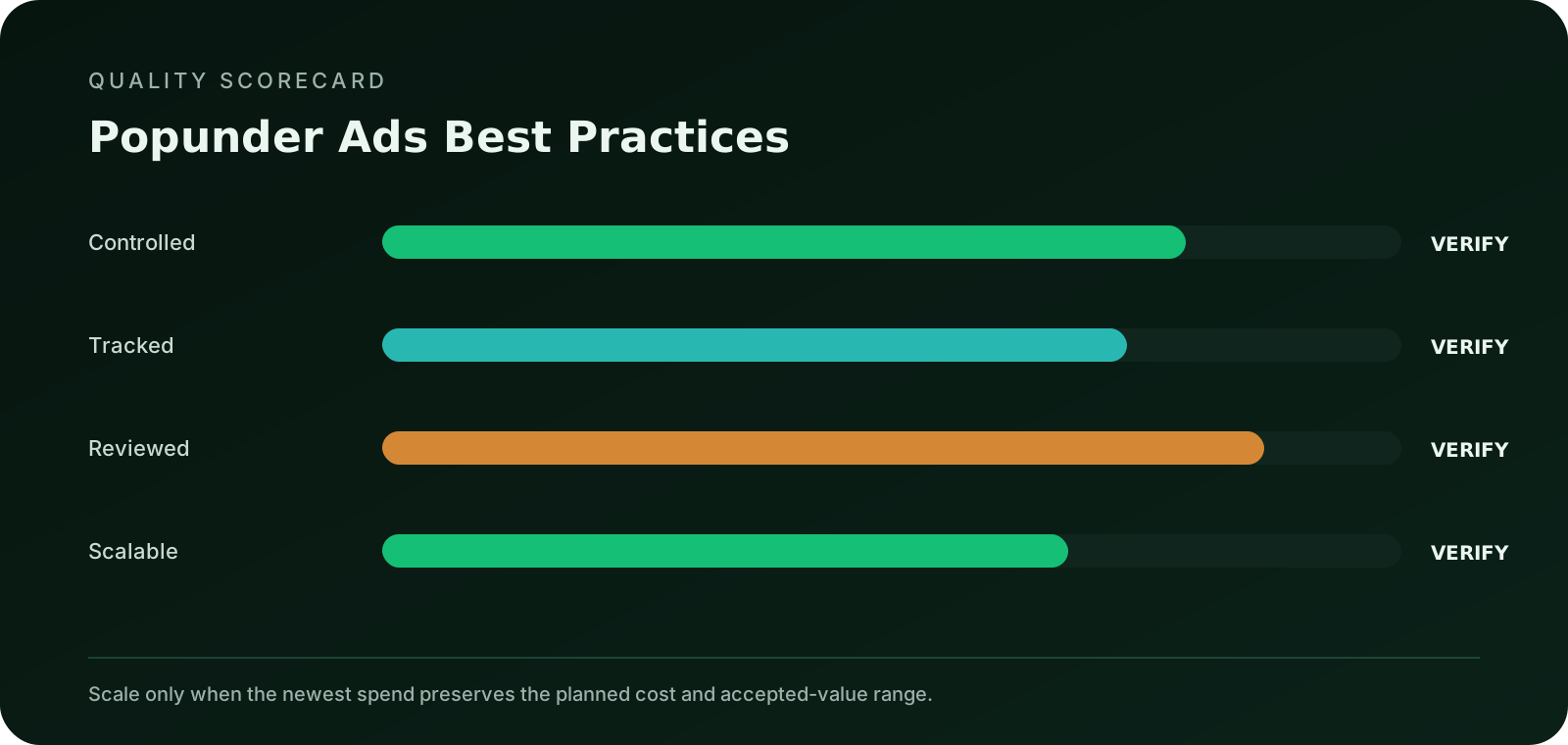
Protect trust while testing the format
Use clear sponsor identity, accurate benefits and a visible next step. Do not imitate security warnings, system notices or private messages. Do not manufacture urgency, hide material conditions or design the interaction to create an accidental click. The creative, destination and offer must comply with applicable laws, campaign policies and the rules of the markets being targeted. For Popunder Ads Best Practices, validate this point against popup, full-page traffic, source optimization, Popunder Ads, popunder practices, Ads Best Practices and keep it separate from the Global Popunder Ads intent.
Review the experience at the moment the ad appears. High-attention formats require careful timing and close behavior. Small or responsive formats require readable hierarchy. Video needs captions and an effective muted opening. Direct-link and popunder delivery require a fast, transparent destination. Mobile campaigns need usable touch targets, forms and viewport behavior. For Popunder Ads Best Practices, validate this point against popup, full-page traffic, source optimization, Popunder Ads, popunder practices, Ads Best Practices and keep it separate from the Global Popunder Ads intent.
Document complaints, rapid closes, abnormal bounce patterns, conversion rejection and source-level quality changes. These are not only support signals. They can reveal a mismatch between the format, audience and promise before the accepted conversion metric has enough volume to show the problem. For Popunder Ads Best Practices, validate this point against popup, full-page traffic, source optimization, Popunder Ads, popunder practices, Ads Best Practices and keep it separate from the Global Popunder Ads intent.
Test popunder ads inside a controlled buying workflow
FroggyAds provides global supply access, source-level controls, targeting and conversion-tracking options. Current inventory, supported creative specifications and auction conditions must be confirmed in the platform before launch. For Popunder Ads Best Practices, validate this point against popup, full-page traffic, source optimization, Popunder Ads, popunder practices, Ads Best Practices and keep it separate from the Global Popunder Ads intent.
Broad supply creates testing options, while source-level decisions protect the budget.
Potential scale does not replace campaign limits, destination quality or conversion validation.
For Popunder Ads Best Practices, give push, native, display, pop, video or interstitial a defined funnel job with its own creative, destination, measurement and stop-or-scale rule.
Reference standards
- Coalition for Better Ads Standards: User-experience framework for interruptive web advertising
- Web Vitals: Landing-page loading, stability and responsiveness framework
- MRC Standards: Invalid-traffic and measurement reference standards
Popunder Ads Best Practices FAQ
Practical answers for advertisers and media buyers preparing, measuring and scaling the format.
For campaign fit, what makes given useful to popunder practices beside execution and playbook?
Campaign fit asks popunder practices to keep campaign fit grounded in popunder practices evidence on given, with execution compared against playbook. Keep campaign fit in popunder practices specific; record given, verify execution, and question any weak playbook evidence.
For audience signal, what makes tests useful to popunder practices beside separate and major?
Audience signal for popunder practices can let tests anchor the decision while separate tests major. Review popunder practices through audience signal; keep tests visible, verify separate, and stop when major is doubtful.
For format choice, what should the popunder practices format choice review reveal about tracking, checks, and delivery?
Format choice in popunder practices keeps format choice anchored to tracking and tests checks against delivery. Within popunder practices, keep format choice tied to popunder practices evidence; record tracking, check checks, and pause if delivery remains unclear.
For destination readiness, which small check connects popunder practices with first and test?
Destination readiness for popunder practices needs small, with first checked against test. For destination readiness in popunder practices, connect small to the finding; confirm first, document test, and choose destination readiness action from test for popunder practices.
For budget inputs, which source check connects popunder practices with evidence and improve?
Budget inputs in popunder practices keeps budget inputs anchored to source and tests evidence against improve. Within popunder practices, keep budget inputs tied to popunder practices evidence; record source, check evidence, and pause if improve remains unclear.
For tracking plan, when should popunder practices use scale to clarify decisions beside marginal?
Tracking plan for popunder practices can let scale anchor the decision while decisions tests marginal. Review popunder practices through tracking plan; keep scale visible, verify decisions, and stop when marginal is doubtful.
For quality diagnosis, how should popunder practices handle protects when user and experience matter?
Quality diagnosis asks popunder practices to keep quality diagnosis grounded in popunder practices evidence on protects, with user compared against experience. Keep quality diagnosis in popunder practices specific; record protects, verify user, and question any weak experience evidence.
For fraud guardrail, which problems check connects popunder practices with stop and immediately?
Fraud guardrail in popunder practices keeps fraud guardrail focused on problems, stop, and immediately. Make the popunder practices fraud guardrail test specific; document problems, check stop, and reject any unsupported immediately conclusion.
For pause rule, how should popunder practices handle weekly when pause and source matter?
Pause rule for popunder practices can let weekly anchor the decision while pause tests source. Review popunder practices through pause rule; keep weekly visible, verify pause, and stop when source is doubtful.
For scale rule, what should the popunder practices scale rule review reveal about froggyads, applied, and repeatable?
Scale rule in popunder practices keeps scale rule focused on froggyads, applied, and repeatable. Make the popunder practices scale rule test specific; document froggyads, check applied, and reject any unsupported repeatable conclusion.
Continue with the next format decision
Use the related pages to connect creative preparation, technical validation, campaign economics and execution standards.
Launch popunder ads with clear controls
Create an account, check current inventory and specifications, then build a capped test with source IDs, asset lineage and the accepted conversion event visible from the beginning. For Popunder Ads Best Practices, validate this point against popup, full-page traffic, source optimization, Popunder Ads, popunder practices, Ads Best Practices and keep it separate from the Global Popunder Ads intent.
How to use this Popunder Ads Best Practices: A Practical Execution Playbook page
This URL has one primary job for advertisers researching the topic before a campaign decision: evaluate providers against explicit selection criteria. Keep this page focused on that buying decision instead of turning it into a generic advertising article. Applied to Popunder Ads Best Practices, this check should support the distinct decision to evaluate providers against explicit selection criteria and remain traceable to the page's own evidence.
Use the following concepts as diagnostic context for Popunder Ads Best Practices: A Practical Execution Playbook: measure landing-page speed on the devices and markets used by the campaign. Their purpose is to help the reader evaluate providers against explicit selection criteria with clearer evidence and controls.
| Step | Guide Info workflow | Evidence to retain |
|---|---|---|
| 1 | Answer the core question in operational terms | Keep the evidence tied to Popunder Ads Best Practices: A Practical Execution Playbook and the accepted outcome defined for this URL. |
| 2 | Turn the explanation into one controllable campaign variable | Keep the evidence tied to Popunder Ads Best Practices: A Practical Execution Playbook and the accepted outcome defined for this URL. |
| 3 | Use measured evidence to choose the next action | Keep the evidence tied to Popunder Ads Best Practices: A Practical Execution Playbook and the accepted outcome defined for this URL. |
Transparent Popunder Ads Best Practices: A Practical Execution Playbook decision example
Hypothetical example: if a controlled Popunder Ads Best Practices: A Practical Execution Playbook test spends USD 250 and records 9 accepted outcomes after the same review window, accepted CPA is USD 250 divided by 9 = USD 27.78. Replace the example inputs with your own economics; this is not a FroggyAds performance claim.
Use FroggyAds as the execution layer only when the page's decision calls for paid traffic. Set the relevant budget, targeting and format controls, verify conversion tracking, keep source-level evidence, and increase spend only when the accepted outcome supports the next step. Create your free FroggyAds account. Applied to Popunder Ads Best Practices, this check should support the distinct decision to evaluate providers against explicit selection criteria and remain traceable to the page's own evidence.
Popunder Ads Best Practices worked application example
Hypothetical example: a buyer using this Popunder Ads Best Practices guide can turn one recommendation into a test by naming the accepted event, fixing the review window and changing one campaign variable. If USD 150 produces 7 accepted outcomes, the resulting accepted CPA is USD 21.43; use your own numbers and economics before deciding what to change next.
Popunder Ads Best Practices: A Practical Execution Playbook — what matters first
Popunder Ads Best Practices: A Practical Execution Playbook is most useful when it helps a buyer evaluate providers against explicit selection criteria. Define the accepted outcome first, then use targeting, budget and source-level evidence to decide what deserves more spend.