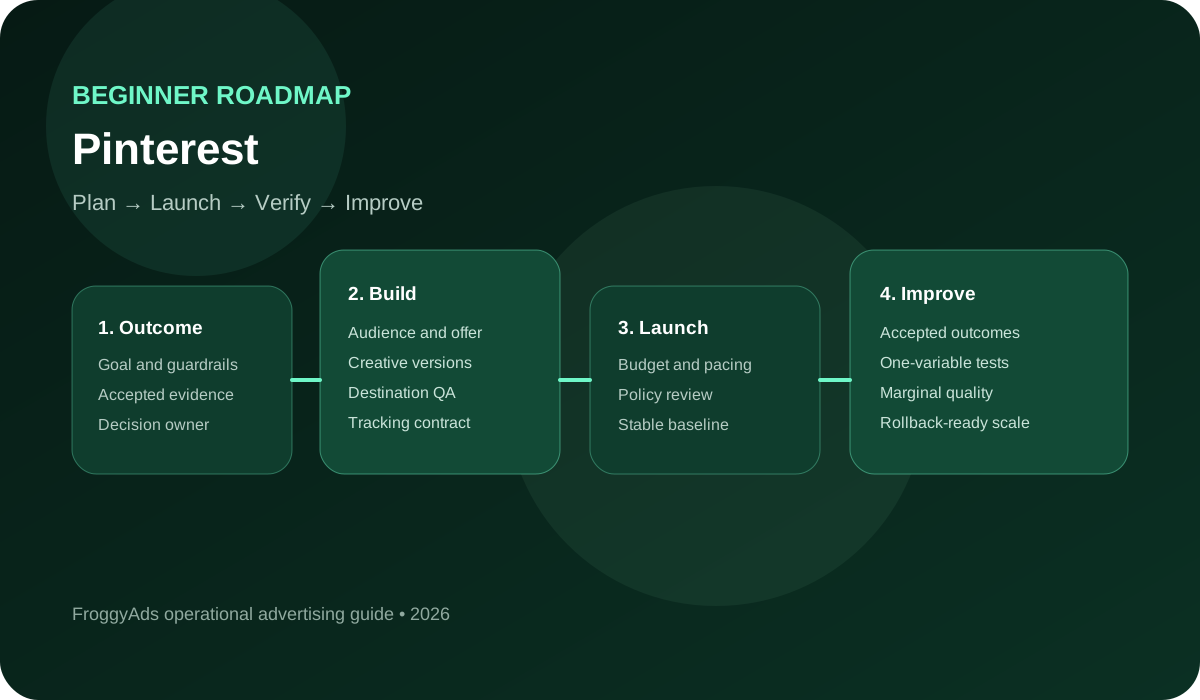
Keep the first programme understandable
Review platform fit before adding another task or buying route. A native Pinterest campaign uses its own account workflow, creative context and reports. A separate FroggyAds campaign uses the format and buying controls you select with us. The shop can use the same truthful product proposition when it suits both routes, while keeping the actual assets, delivery and customer records distinguishable.
Make the audience question concrete in the first brief. The imaginary shop’s available collection, delivery coverage and customer expectations matter before a broad interest in ceramics becomes a useful buying plan. Let those real conditions guide the settings you investigate, and avoid describing every visitor with a matching label as a suitable customer.
Choose a few useful content pillars that the shop can maintain. Product details explain the collection, use ideas show what an item is for, and care information answers a practical customer question. Those are different communication jobs, not a requirement to fund three campaigns. Start with the material needed for the first complete offer, then add another job when it helps a real decision.
Keep the business goal visible when you read reports. The shop needs to distinguish collection interest, recorded checkout activity and an accepted order it can fulfil. Match each reported event to its actual meaning and leave gaps explicit. Use the same definition when comparing the native campaign with any separately identified FroggyAds test.
Assign one person to coordinate the review even if several people contribute. They should know who can update product facts, inspect delivery, answer customers and investigate measurement. A small team can maintain a concise record of material decisions without turning the first campaign into an administrative project that takes time away from the customer.
Before increasing spend, check what changed in the business as well as in the report. A popular item may have sold out, dispatch work may be accumulating or a product image may no longer represent the available collection. Choose the next allocation around the offer the shop can actually fulfil, not around an earlier snapshot of a different situation.
Finish each review with the next practical action and its owner. State what the evidence supports and what remains unknown. If you choose another test, explain the particular uncertainty it will investigate. That record makes the first campaign useful to the next buying decision without turning an early result into a performance promise.