
Marketing Ideas for Gaming Companies: Practical Growth Concepts, Channel Roles and Validation Plans
Marketing ideas for gaming companies become useful only when each concept names the intended player, game state, distribution job, measurable event and validation limit. This guide separates discovery, acquisition, activation, retention and reactivation so a high-volume signal cannot stand in for durable player value. Federal Trade Commission online advertising guidance is retained as a primary reference for truthful claims and commercial transparency.
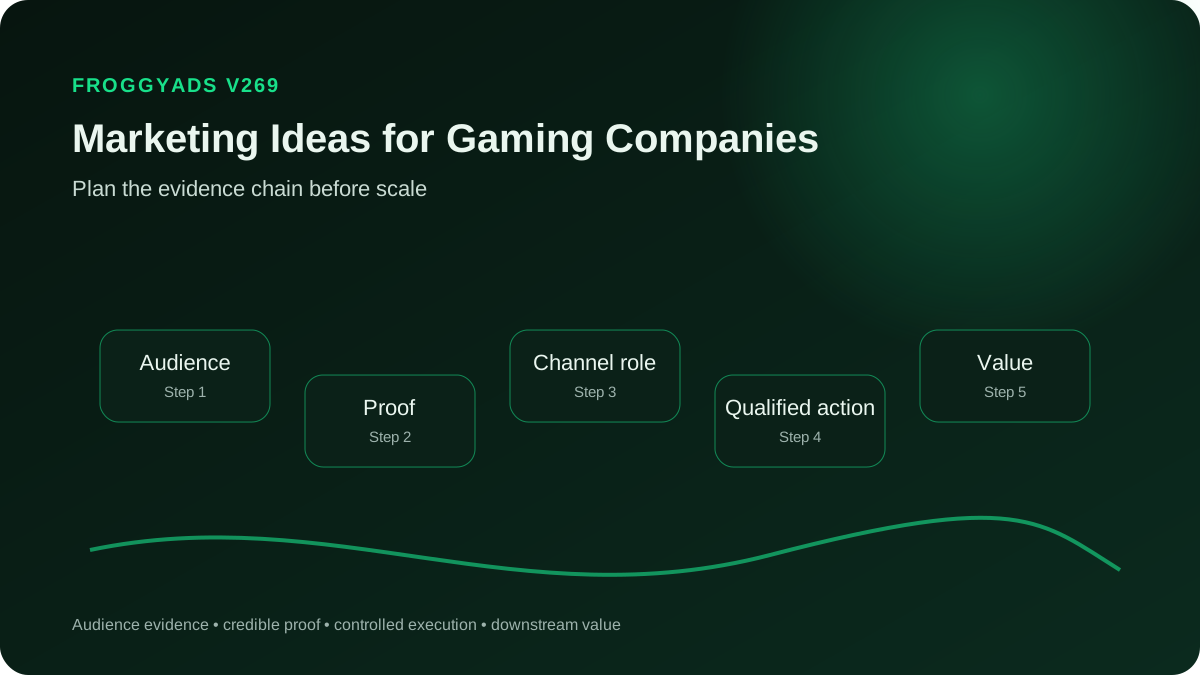
Map the player state before choosing a promotion
Separate people discovering the title, evaluating its fit, installing or registering, reaching the first meaningful play event, returning, purchasing and reactivating. Each state has a different unanswered question. A trailer may establish genre and play style for discovery, while an onboarding reminder addresses a player who already installed. One creative cannot perform every job without becoming vague.
Define the eligible player and platform conditions for each concept. Record supported device, region, language, age-related handling, account requirement, price model and live-service availability. If a feature or event is not available everywhere, route the campaign to accurate versions. This prevents broad reach from generating interest that the current build or operating team cannot fulfill.
Build concepts around verifiable game experiences
Create a claim ledger for every proposed message. Link footage, screenshots, features, rewards, review excerpts and event descriptions to the version and context that substantiate them. Distinguish representative gameplay from cinematic material and identify paid creator relationships where relevant. A concept should invite the right player into a real experience, not maximize curiosity by obscuring what the game actually is.
Useful concept families can include mechanic demonstration, cooperative role explanation, challenge preview, creator walkthrough, community milestone, returning-player update or a transparent trial path. Give each family a hypothesis and rejection condition. The idea is not approved because it sounds original; it is approved because the team can deliver the promise and measure the intended next state.
Assign channel roles to the player journey
Use video and social placements to demonstrate play context, search to serve explicit title or genre investigation, display or direct-response inventory to test defined audience propositions, creator activity to add guided explanation, and consented messaging to support existing players. The exact mix depends on the title and market. Measure channels by the journey state they are designed to advance.
Keep campaign cells readable: one player condition, message family, destination and primary event. Preserve placement and creative identifiers through the store, site or approved measurement path where possible. When privacy or platform rules limit joins, state the limitation and use compatible aggregate evidence rather than inventing user-level certainty.
Run experiments that protect the live game
Predefine budget, duration, minimum evidence, loss limit and operational stop. Hold a control creative and change one major element. Coordinate promotions with server capacity, community moderation, customer support and release timing. Stop for a broken destination, incorrect availability, misleading asset or technical failure; ordinary performance changes wait for the mature evidence condition.
End the test with a decision record covering build version, market, player state, creative, placement, spend, activation, retention, accepted value, technical incidents and next action. Scale the marginal cell that earned more exposure, not the blended campaign average. Archive rejected concepts and reasons so the organization does not repeat a disproven idea under a new label.
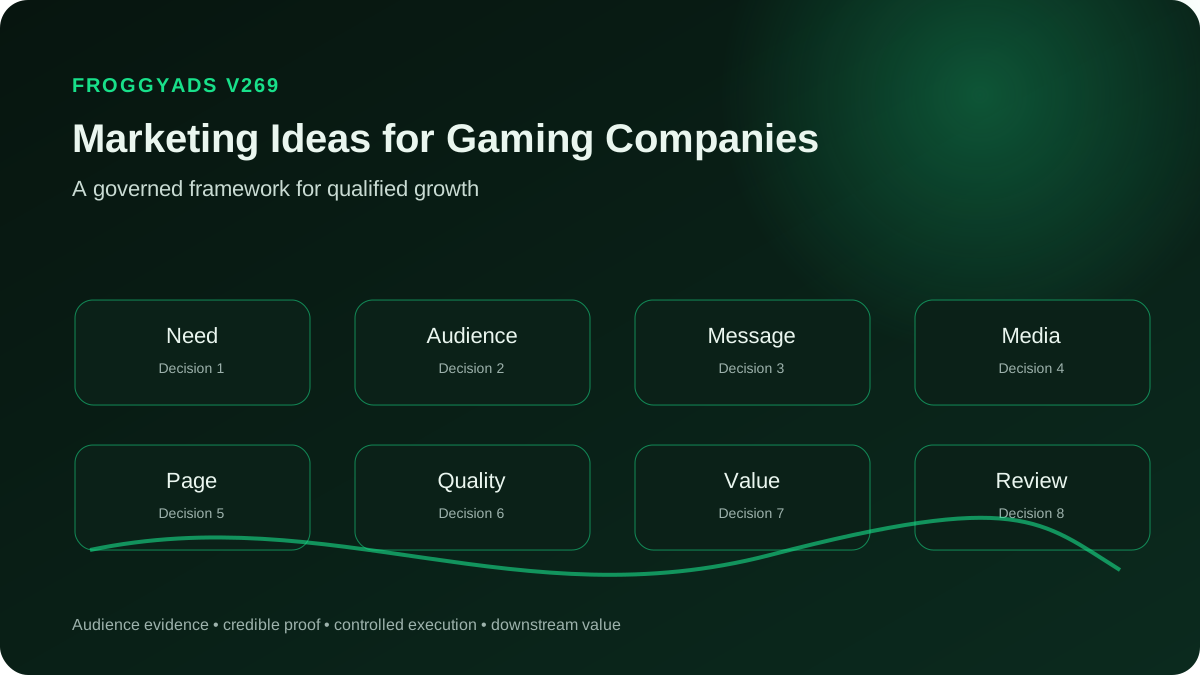
Gaming company marketing validation questions
How should a game campaign signal its genre?
Show the core play loop, perspective, pace and platform early enough for players to self-select. A cinematic hook should not conceal that the advertised experience belongs to a different genre.
What gameplay footage works best in game ads?
Use representative captured play, label pre-release footage when needed and keep interface edits honest. Short clips should demonstrate a real mechanic rather than imply features absent from the build.
How can a studio build wishlists before launch?
Offer a clear store page, a focused trailer, regular development updates and a reason to follow. Track which creative and community touchpoints lead to legitimate wishlist actions.
How should gaming campaigns handle platform availability?
Target only supported devices and regions, then link to the correct storefront. State release timing, cross-play and hardware requirements accurately instead of letting one trailer imply universal access.
How can gaming companies test creator partnerships?
Match creators to the game's genre and audience, provide disclosure guidance and agree footage rights. Measure store visits, wishlists or activated players alongside the quality of community discussion.
What community content supports game marketing?
Share useful patch notes, developer explanations, events and player-created work with permission. Moderate the destination so new players do not arrive in an abandoned or unsafe space.
Which retention signals should guide user acquisition?
Compare tutorial completion, meaningful return sessions and cohort retention by campaign. An inexpensive install may be poor value if players leave before experiencing the core loop.
How should a game disclose monetisation in ads?
Represent the base price, subscriptions, in-app purchases and randomised rewards accurately where applicable. Do not make paid progression look like ordinary earned gameplay.
How can studios detect invalid gaming traffic?
Monitor abnormal install bursts, device patterns, impossible progression and attribution inconsistencies. Quarantine suspicious cohorts before using them to optimise bids or report campaign success.
When should a gaming campaign be stopped?
Stop when the build or store page is unavailable, footage is misleading, target platforms are wrong, fraud dominates delivery, community capacity fails or retained-player economics breach the test limit.