
Advertising Ideas for Gaming Companies: Practical Campaign Concepts, Creative Angles and Validation Plans
Advertising ideas for gaming companies become actionable only when the player moment, supported product experience, destination treatment and accepted event are explicit. This guide organizes concepts around authentic gameplay, releases, events, creators, communities and return campaigns. Each idea is paired with an evidence boundary and stop condition, so a studio can learn from a controlled cell without representing an untested concept as a forecast.
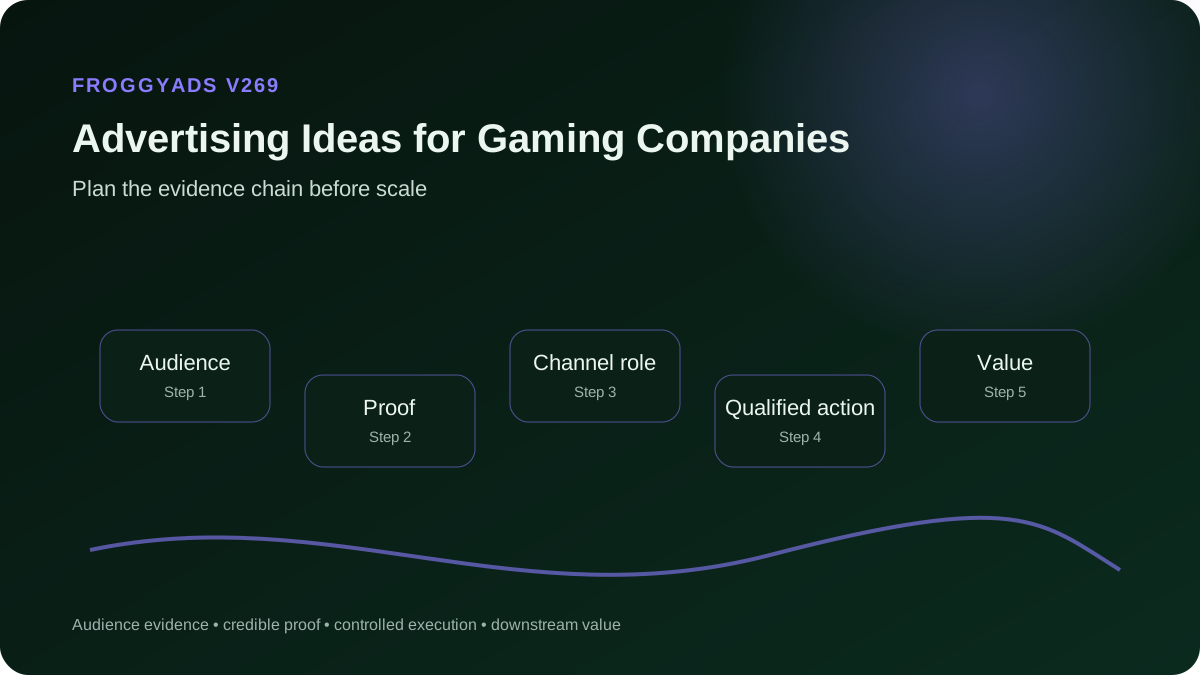
Official evidence boundary for Advertising Ideas for Gaming Companies
Gaming advertising ideas become useful when each concept can be tested against a store or product-page outcome. Apple's App Store Connect documentation states that product page optimization can test up to three alternate app icons, screenshots and previews. Apple randomly shows treatments to a user group defined by the developer and evaluates results in App Analytics. Apple also warns that releasing a new app version can affect a running test when the version changes tested assets or metadata. That boundary supports a controlled workflow: match the ad promise to the store treatment, change a limited creative element, record the audience and release state, then wait for the platform's evidence rather than declaring a winner from early movement. The source does not prove that any gaming concept will improve conversion, so each idea below includes a measurement and rejection rule. Source: Apple App Store Connect product page optimization documentation.
Which player moment should a gaming campaign address?
A gaming campaign should name one player moment before selecting a format. Launch discovery, returning-player reactivation, a seasonal event, a major update, competitive participation and community recruitment create different expectations. Describe the eligible platform, genre familiarity, age boundary, location and current relationship with the game. Then choose the next action that fits that moment: view authentic gameplay, visit a store page, register for an event, join a community or return to an existing account. Broad gaming interest is not an acceptance rule because it cannot explain why a person should act now.
Build an audience brief from product eligibility rather than assumed gamer stereotypes. Record supported hardware, language, account requirement, age rating, regional availability and whether prior progress is needed. Map each constraint to an exclusion or a visible qualification in the message. If a competitive event is open only to ranked players on one platform, broad acquisition delivery creates disappointment even when click-through looks strong. The reviewer should be able to trace every audience choice to a product condition or a measured cohort, and should mark any inferred preference as a hypothesis for testing rather than a fact about players.
Which gaming advertising concepts are testable?
| Concept | Proof shown in the ad | Event to evaluate |
|---|---|---|
| Mechanic demonstration | Unedited or clearly labeled gameplay showing one mechanic | Qualified store visit and tutorial completion |
| Update return | Named feature or content change available in the current release | Verified returning session |
| Player choice | Two real play styles or loadouts with no false outcome claim | Creative selection and downstream retention |
| Event invitation | Date, eligibility, platform and participation condition | Eligible registration or event session |
| Creator explanation | A disclosed demonstration of the creator's actual experience | Qualified visit without disclosure complaints |
| Community entry | Moderation rules and the activity a new member can join | Accepted community join and later game activity |
Connect the guide to live testing
Connect Advertising Ideas for Gaming Companies to a controlled audience test
Use the choices established in “Which gaming advertising concepts are testable?” to define one audience, budget and source set in FroggyAds. Keep the surrounding offer and measurement rule stable so the test adds evidence to advertising ideas for gaming companies instead of mixing several changes at once.
Create My Free Account
How should gaming ads connect to the store page?
The ad and store page should describe the same game state, platform and next action. Carry the featured mechanic, art style and eligibility condition into the first visible store assets. If the ad promotes a new mode, the destination should show that mode without requiring the visitor to infer the connection. Use Apple product page optimization or an equivalent platform test to compare bounded treatments, and keep release changes separate from creative changes. A mismatch can increase curiosity clicks while lowering informed installs, so review the complete path rather than the click alone.
Create a continuity record for every test cell. Save the advertisement, destination treatment, store listing identifier, active build, country, device and dates together. Note whether a visitor sees the default listing or a treatment and whether localization changes the first screenshot or description. When the store treatment expires or a release replaces an asset, close the evidence window rather than blending old and new visits. This discipline makes a failed idea diagnosable: the team can determine whether the concept lacked appeal, the destination contradicted it, or the product changed while delivery continued.
What must a gaming creative review verify?
A gaming creative review verifies that gameplay, rewards, platform support, availability and monetization statements match the current product. Mark cinematic footage when a viewer could mistake it for gameplay. Check ratings and audience exclusions before distribution. Confirm that calls to action do not imply unavailable access, guaranteed rewards or an outcome the game cannot deliver. Record the build or release used for the review because a later update can change the evidence. Reject a concept when its appeal depends on hiding a material limitation.
Use an evidence sheet for every claim and visible product element. Name the build, captured scene, supported platform, region, rating, offer period and person who verified it. For user testimonials or creator statements, retain consent and the actual experience behind the representation. Review localization because a shortened translation can remove an important qualification. When a release changes a mechanic, reward or store availability, compare all live assets with the new state. Retire or correct mismatched creatives immediately instead of assuming that an earlier approval remains valid across patches.
How should creator and live-stream promotions disclose sponsorship?
Paid gaming endorsements need a disclosure that viewers can notice and understand. The FTC's endorsement guidance says unexpected material connections should be clear and conspicuous. Its gaming example notes that viewers can join a long live stream at different times, so a single disclosure at the beginning can be missed; periodic disclosures make the relationship more visible. Add the disclosure to the stream and its description when applicable, and confirm that the creator's statements reflect an honest experience. Do not treat a platform tag as proof that every viewer understood the relationship.
The creator brief should separate required factual conditions from the creator's own opinion. List supported platforms, availability, access provided, material connection, prohibited unsupported claims and the route for reporting a product change during the promotion. Review a sample in the actual stream, short-form clip or post context. Save the disclosure wording and timestamp or placement. Measure qualified player behavior separately from audience size, and record complaints or corrections. A popular creator is not automatically suitable when their audience, format or usual content cannot communicate the game's material conditions clearly.
Official reference: FTC Endorsement Guides questions and answers.
Choose the execution format
Choose a paid-media format that supports Advertising Ideas for Gaming Companies
Use the criteria around “How should creator and live-stream promotions disclose sponsorship?” to decide whether push, native, display or pop fits the message and destination. Set format, targeting and spend as campaign controls in FroggyAds while the advertising ideas for gaming companies decision remains the standard for judging the result.
Create My Free Account
Which events show whether a gaming idea attracts useful players?
Measure the path in stages: eligible impression, click, store view, install, account creation, tutorial completion, first meaningful session, return and paid action where relevant. A studio does not need every stage as a bidding event, but it should know where each concept loses qualified players. Segment by platform, creative, audience and release state. Keep fraud, accidental clicks, refunds and rejected events outside the accepted total. The evaluation window should match the game's actual return cycle instead of stopping at the first day by habit.
Define an accepted player record before comparing concepts. It should specify which installs are new, how reinstall and returning-account activity are treated, when a tutorial counts, which timezone closes the cohort and how refunds or invalid activity alter value. Report counts as a funnel so missing identifiers cannot silently become conversions. For retention, compare users acquired in the same period and give each cohort the same opportunity to return. A concept with fewer installs may be preferable when a larger share reaches the game's meaningful action without creating support or refund problems.
How should a studio budget creative tests without wasting release traffic?
Assign a separate budget to concept production, platform testing and media delivery. Protect a control creative and change one material claim or asset set at a time. Set a maximum loss for each audience and stop buying when the qualified event cannot be measured. Reserve some delivery for confirmation after a treatment appears promising; early variation can disappear as more eligible users see it. Coordinate the test calendar with releases so a build, price or content change does not become an unrecorded variable.
A test ledger should show production cost even when the media result is reported separately. Record staff or vendor time, localization, ratings review, creator usage rights, store assets and measurement work for each concept family. Amortize reusable assets explicitly instead of assigning them no cost. Set a decision date based on the event window, not on a desire to spend the allocation. Unused test money can remain unspent when no eligible concept is ready; moving it into an unreviewed variation weakens the comparison and exposes the launch audience to avoidable errors.
Put the guide into practice
Turn Advertising Ideas for Gaming Companies into a bounded campaign test
With “How should a studio budget creative tests without wasting release traffic?” documented, launch only the next reversible test. Set a spending limit, preserve the baseline and use source-level and audience controls so the next step depends on qualified outcomes for advertising ideas for gaming companies, not activity volume.
Create My Free Account
What operational checks belong beside gaming acquisition metrics?
Advertising can expose a game to more players than support, servers or moderation can serve well. Before scaling, confirm platform capacity, onboarding stability, community coverage and the owner of urgent player feedback. Watch crash, queue, complaint and refund signals beside acquisition results. A concept that attracts many installs but sends users into an unavailable mode is not a successful idea. Pause delivery when the product experience invalidates the promise, and restart only after the corrected path has been tested.
Use a launch readiness sheet that names the on-call owner for servers, store listing, community moderation, player support and media. Set alert levels for login failure, crash, queue, abuse report and refund activity in the markets receiving the campaign. Decide in advance whether a fault pauses one platform, one country or every creative. Keep the advertising change log aligned with incident timestamps so acquisition is not blamed for a product outage or allowed to obscure one. The restart decision should include a verified player path from the advertisement through the first meaningful session.
When should a gaming advertising idea be stopped?
Stop a gaming concept when it misrepresents the product, reaches an ineligible audience, breaks destination continuity or repeatedly fails the accepted downstream event. Also stop when measurement cannot distinguish new, returning and duplicate activity. Write the threshold before launch and name the reviewer who can act. A losing concept can still teach the team which promise, audience or store treatment failed, but it should not stay live merely to complete an arbitrary spend target.
Classify the stop reason as product accuracy, audience eligibility, destination, disclosure, technical operation, measurement or value. Preserve the asset, cell settings and affected dates before removing delivery. A product-safety or misrepresentation issue can require immediate broad action; a weak result may justify pausing only one concept after its evidence window. The restart ticket should name the correction and a smaller verification cell. Do not reuse a stopped idea under a new name without resolving the recorded cause, because that erases learning and exposes another audience to the same failure.
How should a gaming concept be localized?
Localization begins with market eligibility, language, rating, platform and release availability. Adapt the promise and cultural reference only after confirming that the destination and game build support the localized message. Recheck screenshots, spoken dialogue, captions, price or event times and community routes. A translation can be accurate sentence by sentence yet create a false expectation when the promoted mode is not available in that country.
Give each localization its own creative identifier and acceptance row. Compare qualified behavior within the market rather than using a global blended average. Ask a qualified reviewer to flag ambiguity and preserve the approved wording. If the product updates on different schedules across regions, close each creative at the relevant release boundary. Local variation should be treated as a governed campaign cell, not a cosmetic export of the master asset.
What makes a community-entry campaign operationally safe?
A community-entry advertisement should name the activity a newcomer can join, the platform used, material access conditions and the moderation rules that protect participation. Link to the relevant current destination rather than a general channel where the promised activity is difficult to find. Confirm that moderators and support staff can handle the planned influx and that reporting or blocking routes work.
Measure accepted joins and later game activity while keeping removed spam, duplicate accounts and ineligible users outside the useful total. Watch moderation load and complaint type as operating outcomes. Pause the creative if the invitation attracts behavior the community cannot manage or if the activity becomes unavailable. The campaign succeeds only when the advertised entry point and the actual welcome experience remain aligned.
How should advertising tests align with the release calendar?
Place campaign cells on the same calendar as builds, store metadata, live events, pricing and server changes. Mark freeze periods in which the tested promise and destination treatment should remain stable. When an urgent product update alters either, close the current observation window and start a new cell after verification. Do not combine pre-update and post-update users merely to increase the sample.
The calendar should show creative review, platform submission, localization, store treatment, media start, event window, outcome maturity and retrospective. Assign owners to each boundary. This makes delay visible before a studio buys release traffic and prevents an unavailable asset from forcing an improvised substitute. A well-timed smaller test can produce more defensible learning than a large campaign spanning several undocumented product states.
Gaming campaign planning resources
The retained campaign, advertiser, pricing and workflow links support the next operational step. Confirm platform eligibility, creative rules and current product availability before using any route in a live gaming campaign.
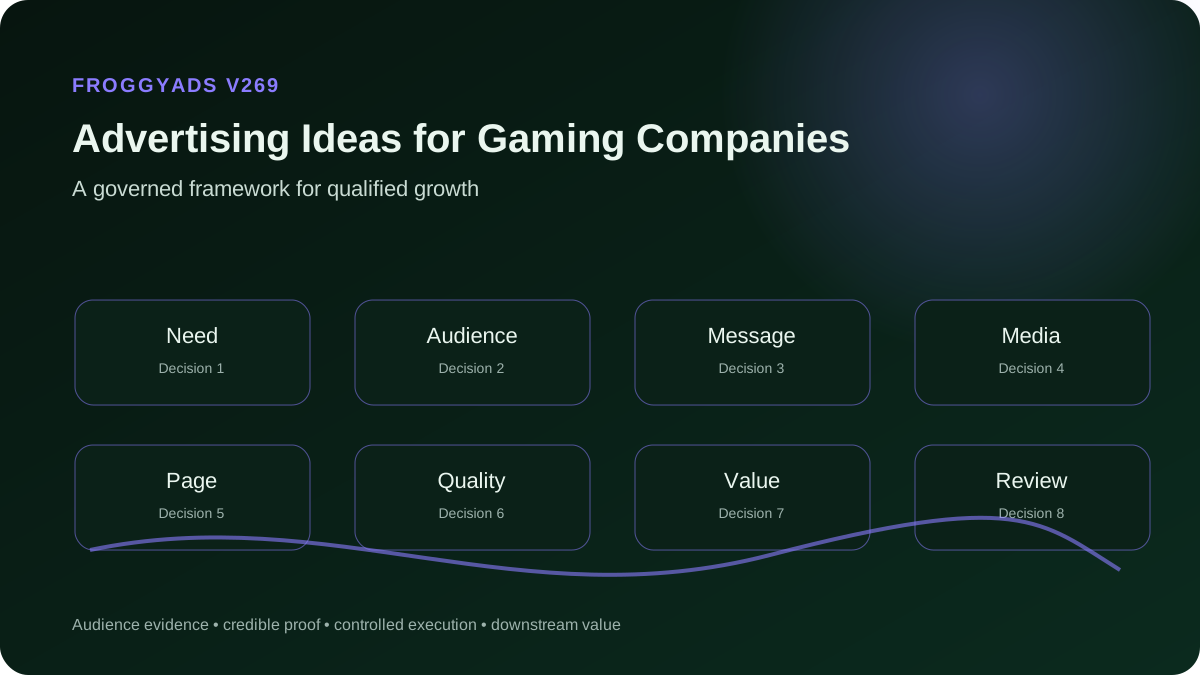
Questions about advertising ideas for gaming companies
Which part of a game should drive the first paid creative concept?
Choose a mechanic, player choice, social feature, or world element that appears in the real product and leads to a defined action. The ad should help the intended player recognise the experience without staging gameplay that is unavailable.
How can a studio compare two launch ideas without confusing the result?
Keep market, platform, audience, store page, and budget rules stable while testing two distinct, truthful creative angles. Let install and early play events mature under the same window before choosing which concept deserves more delivery.
What should a gaming acquisition budget cover beyond media?
Include trailers, capture, editing, localisation, ratings review, store assets, attribution, community moderation, platform fees, incentives, and live-operations capacity. Compare spend with retained player value, not install cost alone.
How can player intent shape audience and placement choices?
Separate people seeking a genre, mechanic, competitive scene, social experience, or casual session, then choose contexts that fit that motivation. Keep age, platform, market, and content-rating boundaries active throughout delivery.
What makes a gameplay advertisement accurate enough to build trust?
Use genuine footage or label cinematic material clearly, show representative controls and pacing, and carry the same feature promise onto the store page. Temporary events, rewards, and platform limits need visible context.
Which store-page checks belong before a game campaign starts?
Verify platform compatibility, age rating, price, regional access, hardware needs, screenshots, trailer, privacy, purchases, support, and the advertised feature. Test attribution and install routes on representative devices.
Which outcomes reveal that an ad attracted the right players?
Read qualified installs beside activation, tutorial progress, retained play, accepted purchases, refunds, and community signals after a suitable maturity period. Keep campaign and creative IDs connected to each cohort.
Why might a game trailer earn clicks but weak first-session play?
The trailer may overemphasise cinematic action, rewards, or features that arrive much later, or the store page may attract an unsuitable platform or genre audience. Compare exit and onboarding events by concept.
What should make a studio withdraw a gaming advertisement?
Pause for false gameplay, missing sponsorship disclosure, unsuitable age targeting, rights problems, broken store routes, unavailable rewards, or player-quality patterns that exceed the approved loss or safety boundary.
When can a gaming campaign add a new region or platform?
Expand after the initial cohort shows honest acquisition, stable activation, acceptable retained value, reliable attribution, and enough community and technical support. Localise the next test and keep its results separate.
Advertising Ideas for Gaming Companies: Practical Campaign Concepts, Creative Angles and Validation Plans: what should the advertiser decide next?
For Advertising Ideas for Gaming Companies: Practical Campaign Concepts, Creative Angles and Validation Plans, define the accepted business event before buying scale. A practical outcome can be a permitted qualified registration or accepted action or another explicitly accepted event that matches the advertiser's model. Use Official evidence boundary for Advertising Ideas for Gaming Companies and Which player moment should a gaming campaign address? together with jurisdiction eligibility, policy compliance and downstream value so front-end activity does not hide weak downstream value.
On this Advertising Ideas for Gaming Companies: Practical Campaign Concepts, Creative Angles and Validation Plans page, the decision should remain tied to the existing evidence around Official evidence boundary for Advertising Ideas for Gaming Companies, Which player moment should a gaming campaign address? and Which gaming advertising concepts are testable?. Those sections give advertising ideas for gaming companies its specific context; the table below turns that context into campaign actions rather than adding another generic definition.
| Decision | What to verify | FroggyAds action |
|---|---|---|
| Advertising Ideas for Gaming Companies: Practical Campaign Concepts, Creative Angles and Validation Plans objective | Use Official evidence boundary for Advertising Ideas for Gaming Companies to define the accepted business event and the maximum learning loss for advertising ideas for gaming companies. | Launch one FroggyAds campaign objective for Advertising Ideas for Gaming Companies: Practical Campaign Concepts, Creative Angles and Validation Plans and keep the conversion definition stable. |
| Advertising Ideas for Gaming Companies: Practical Campaign Concepts, Creative Angles and Validation Plans audience | Use Which player moment should a gaming campaign address? to verify market, device, language and offer eligibility for advertising ideas for gaming companies. | Apply only the FroggyAds targeting controls that change the real Advertising Ideas for Gaming Companies: Practical Campaign Concepts, Creative Angles and Validation Plans customer journey. |
| Advertising Ideas for Gaming Companies: Practical Campaign Concepts, Creative Angles and Validation Plans source evidence | Use Which gaming advertising concepts are testable? to keep source-level differences visible instead of relying on one blended advertising ideas for gaming companies average. | Keep, cap, exclude or retest Advertising Ideas for Gaming Companies: Practical Campaign Concepts, Creative Angles and Validation Plans inventory from documented source evidence. |
| Advertising Ideas for Gaming Companies: Practical Campaign Concepts, Creative Angles and Validation Plans economics | Use Connect Advertising Ideas for Gaming Companies to a controlled audience test to connect media spend with accepted conversions and downstream value for advertising ideas for gaming companies. | Protect the Advertising Ideas for Gaming Companies: Practical Campaign Concepts, Creative Angles and Validation Plans test with a written budget boundary and a consistent attribution window. |
| Advertising Ideas for Gaming Companies: Practical Campaign Concepts, Creative Angles and Validation Plans scale rule | Use How should gaming ads connect to the store page? to define the exact evidence that earns the next budget increase for advertising ideas for gaming companies. | Scale Advertising Ideas for Gaming Companies: Practical Campaign Concepts, Creative Angles and Validation Plans one major control at a time and compare marginal performance with the prior baseline. |
A page-specific FroggyAds test sequence for Advertising Ideas for Gaming Companies: Practical Campaign Concepts, Creative Angles and Validation Plans
- Advertising Ideas for Gaming Companies: Practical Campaign Concepts, Creative Angles and Validation Plans outcome: define the accepted event for advertising ideas for gaming companies and the maximum loss permitted while the first test is learning.
- Advertising Ideas for Gaming Companies: Practical Campaign Concepts, Creative Angles and Validation Plans path: verify market eligibility, device experience, landing-page continuity and tracking against Official evidence boundary for Advertising Ideas for Gaming Companies before buying more traffic.
- Advertising Ideas for Gaming Companies: Practical Campaign Concepts, Creative Angles and Validation Plans hypothesis: launch one bounded FroggyAds test tied to Which player moment should a gaming campaign address?; do not change bid, creative, audience and destination together.
- Advertising Ideas for Gaming Companies: Practical Campaign Concepts, Creative Angles and Validation Plans source review: compare qualified activity, accepted conversions, timing and cost by the source or segment dimensions relevant to Which gaming advertising concepts are testable?.
- Advertising Ideas for Gaming Companies: Practical Campaign Concepts, Creative Angles and Validation Plans scaling: use Connect Advertising Ideas for Gaming Companies to a controlled audience test and How should gaming ads connect to the store page? to define what must reproduce before the next budget increase.
Why FroggyAds is relevant to Advertising Ideas for Gaming Companies: Practical Campaign Concepts, Creative Angles and Validation Plans
For Advertising Ideas for Gaming Companies: Practical Campaign Concepts, Creative Angles and Validation Plans, FroggyAds gives advertisers a self-serve DSP and ad-network workflow for buying supported traffic with campaign-level budgets and targeting. Depending on format and campaign context, available controls can include country, city, device, operating system, browser, carrier, category, source, ID and IP options. SmartCPC and Adscore-supported traffic-quality controls can support the advertising ideas for gaming companies optimization process, while the advertiser's tracker, analytics and backend acceptance remain the final evidence for commercial quality.
Use How should gaming ads connect to the store page? as the final checkpoint for Advertising Ideas for Gaming Companies: Practical Campaign Concepts, Creative Angles and Validation Plans. If the accepted result does not reproduce after the next meaningful volume step, return to the last stable configuration instead of widening several controls at once.
Advertising Ideas for Gaming Companies: Practical Campaign Concepts, Creative Angles and Validation Plans — buyer decision
Treat Advertising Ideas for Gaming Companies: Practical Campaign Concepts, Creative Angles and Validation Plans as a decision page for advertisers and media buyers. Keep the test narrow enough to explain, retain the source and configuration evidence, and wait for the accepted business outcome to mature. The adjacent Marketing Ideas For Gaming Companies page should remain a separate decision.
Evidence already visible on this page: Advertising ideas for gaming companies become actionable only when the player moment, supported product experience, destination treatment and accepted event are explicit. This guide organizes concepts around authentic gameplay, releases,… Gaming advertising ideas become useful when each concept can be tested against a store or product-page outcome. Apple's App Store Connect documentation states that product page optimization can test up… The working concepts for this URL are audience targeting, conversion tracking, source quality.
Questions to resolve before scale: Which part of a game should drive the first paid creative concept? How can a studio compare two launch ideas without confusing the result? What should a gaming acquisition budget cover beyond media?
| Checkpoint | Page-specific action | Evidence to keep |
|---|---|---|
| Scope | Use “Official evidence boundary for Advertising Ideas for Gaming Companies” to define the first operating boundary for Advertising Ideas for Gaming Companies: Practical Campaign Concepts, Creative Angles and Validation Plans. | Record the answer to “Which part of a game should drive the first paid creative concept?” together with source, targeting and destination identifiers. |
| Quality check | Use “Which player moment should a gaming campaign address?” to test whether delivery is producing the expected path toward the accepted business outcome. | Keep the evidence needed to answer “How can a studio compare two launch ideas without confusing the result?” after the same maturation window. |
| Allocation | Use “Which gaming advertising concepts are testable?” to decide what changes next; change one material variable before comparing again. | Write the answer to “What should a gaming acquisition budget cover beyond media?” plus accepted cost/value and the rollback condition. |
Transparent decision example
Hypothetical example: Suppose Advertising Ideas for Gaming Companies: Practical Campaign Concepts, Creative Angles and Validation Plans spends USD 175 before the checkpoint and records 5 accepted outcomes; the resulting accepted CPA is USD 35.00. Replace the inputs with your own economics; this is not a FroggyAds performance claim.
Why use FroggyAds for this step?
FroggyAds gives advertisers a controlled execution layer for Advertising Ideas for Gaming Companies: Practical Campaign Concepts, Creative Angles and Validation Plans: select the traffic setup, keep source-level reporting visible and let the mature accepted business outcome decide whether the next spend increase is justified. Create your free FroggyAds account.
Advertising Ideas for Gaming Companies: Practical Campaign Concepts, Creative Angles and Validation Plans — what matters first
Advertising Ideas for Gaming Companies: Practical Campaign Concepts, Creative Angles and Validation Plans is most useful when it helps a buyer make a concrete, measurable buying decision. Define the accepted outcome first, then use targeting, budget and source-level evidence to decide what deserves more spend.