
Malaysia Push Ads
Malaysia push ads are promotional notifications delivered through a permissioned browser or compatible application path to users associated with a Malaysia campaign cell. Permission, subscription, message delivery, operating-system display, interaction and accepted outcome are separate events. None is guaranteed by the previous stage. A useful plan begins with the notification type, provider, supported browser or app environment, language version, service eligibility and reason a person would choose updates. Avoid requesting permission on first page load without context.
Record how a subscription is created, refreshed, revoked and suppressed, then inspect how the platform displays title, body, icon and actions. Malaysia is multilingual, so language and destination continuity require accountable testing rather than an English-only assumption. Map commercial personal-data processing to current Malaysian official guidance and responsible review. Judge the campaign through delivered evidence, usable visits, accepted outcomes, complaints and complete cost; not subscriber count alone.
Keep browser and application implementations separate until their permission states, subscription lifecycle, rendering and destinations have each passed the same documented campaign job.
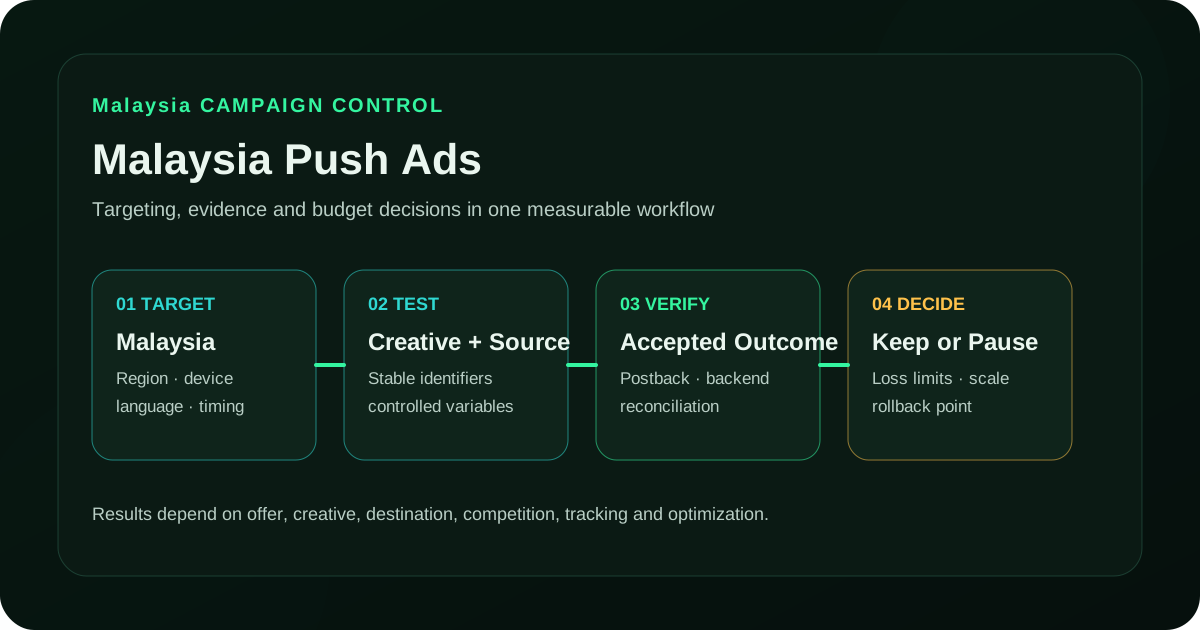
Official notification, permission and Malaysian data boundaries
The WHATWG Notifications living standard defines notification permission states and platform-displayed notification fields and behavior, including persistent and non-persistent notifications and platform-dependent action limits. It does not define an ad network or guarantee delivery, attention or clicks. Chrome's Lighthouse guidance flags notification permission requests made on page load and recommends first offering a specific notification type before requesting permission after user choice. That is Chrome user-experience guidance, not universal browser behavior or legal consent.
Malaysia's Personal Data Protection Commissioner publishes the official Personal Data Protection Act 2010 page together with links to the 2024 amendment and newer circulars and guidelines. Use it as a trigger for current, fact-specific Malaysian review of commercial personal-data processing. Do not reduce compliance to a generic checklist or treat browser permission as marketing consent. Confirm the current official Malaysian materials and actual provider data flow whenever a campaign adds a partner, purpose, identifier, destination or cross-border processing route.
- WHATWG Notifications API - living-standard permission states and platform-dependent notification behavior
- Chrome notification permission prompt guidance - Chrome UX guidance to avoid page-load prompts and request after user choice
- Malaysia Personal Data Protection Act official page - official Act 709, amendment, circular and guideline entry point for current review
Define the push notification path
Name the browser or app environment, provider, site or application, permission prompt, subscription record, message service and displayed notification. Record which party controls each step. A generic push label hides several separate technical events. Add the domain, application identifier and provider account so an endpoint or message can be traced to its exact implementation.
Distinguish promotional messages from service updates and document the approved purpose. Do not describe a notification as delivered merely because a provider accepted a request. Preserve status evidence from subscription through display where available. When the chain lacks a status, mark that stage unavailable instead of substituting the previous provider event.
Offer a clear notification choice
Explain the specific update a person can receive, expected subject and how to stop it before requesting permission. Avoid vague enable-notifications copy. The value proposition should remain understandable in the selected language and device context. Show the sender identity before the browser prompt because the system dialog may not communicate the commercial relationship in full.
Do not bundle notification permission with unrelated access or imply that refusal blocks a service when it does not. Record the prompt version and originating page so later subscription quality can be connected to the choice shown. Compare permission and withdrawal patterns by explanation without treating acceptance as proof that every later promotion is expected.
Connect the guide to live testing
Connect Malaysia Push Ads to a controlled audience test
Use the choices established in “Offer a clear notification choice” to define one audience, budget and source set in FroggyAds. Keep the surrounding offer and measurement rule stable so the test adds evidence to malaysia push ads instead of mixing several changes at once.
Create My Free Account
Avoid permission prompts on page load
Chrome guidance recommends presenting the notification request after the user chooses a specific notification type, rather than immediately on page load. Build a pre-permission explanation and trigger the browser prompt only after an intentional action. Test whether overlays, consent banners or navigation can accidentally trigger or obscure that action on small screens.
Test denied, dismissed, already-granted and unsupported states. Do not repeatedly pressure a person after refusal. Chrome guidance supports a better request sequence, but it does not by itself establish legal consent or identical behavior in every browser. Preserve the fallback content so unsupported visitors can still complete the intended site task without notification enrollment.
Record permission and subscription separately
Permission is a browser or platform state. A subscription is the technical endpoint and related data used for message delivery. Log creation, refresh, invalidation and removal under the provider's actual implementation without treating the two as one event. Link changes through a permitted internal key without exposing the endpoint in general campaign exports.
Test what happens when permission changes, the browser clears data, an application is removed or an endpoint expires. Suppress invalid records promptly. A large stored subscription list is not evidence that every endpoint remains reachable or authorized for the same purpose. Report recent deliverable evidence beside stored totals so operational reach is not overstated.
Design for platform-controlled display
The notification platform can control placement, timing, action availability and visual limits. Keep the title, body, icon and destination meaningful when actions are unavailable or text is shortened. Test representative devices and states. Include locked screens and grouped notifications only where authorized testing can observe them without assuming one interface represents every recipient.
Do not promise a precise screen position, persistent visibility or attention. Capture sampled displays and operating conditions. If a qualification cannot survive the available notification surface, move the claim to a clearer format or do not send it. Confirm that the recognizable sender remains visible when the platform collapses or groups several messages.
Create language-specific Malaysia cells
Choose language versions from audience evidence, offer context and support capability, not from a single national assumption. Review English, Malay or any other used language with accountable speakers and preserve the approved source claim. Document the script, terminology and character length used in the rendered notification rather than approving translation in a spreadsheet alone.
Give recipients a clear route to change language. Measure versions separately and avoid inferring ethnicity, identity or comprehension from language choice. A Malaysia location signal does not prove which language a person prefers. Keep support replies and destination validation messages aligned with the language selected for the notification cell.
Confirm Malaysia service eligibility
State which locations, products, hours, devices and destination actions the business can support. Apply provider location settings and inspect delivered geography, while recognizing that location signals can be imperfect. Record whether the location comes from campaign eligibility, subscription context or later form evidence because those sources answer different questions.
Verify eligibility again at the destination when required. Exclude repeated out-of-scope delivery without claiming exact residence. Travel, routing and device settings can contribute to mismatch, so keep unknown cases available for diagnosis. Provide a non-deceptive exit for unsupported users instead of collecting details for an offer the business cannot complete.
Map Malaysian personal-data processing
List endpoint data, identifiers, language, location signals, interaction events, form fields, recipients, retention and transfers used in commercial activity. Link the current official Malaysian Act, amendment and relevant guidance in the review record. Identify which provider terms and technical configurations support the documented processing rather than treating a policy link as implementation evidence.
Obtain responsible fact-specific review rather than declaring compliance from the page alone. Browser permission answers whether notifications may be displayed under that platform state; it does not automatically authorize every collection, profile or marketing use. Reopen review when a new enrichment field, partner, destination purpose or cross-border route is introduced.
Choose the execution format
Choose a paid-media format that supports Malaysia Push Ads
Use the criteria around “Map Malaysian personal-data processing” to decide whether push, native, display or pop fits the message and destination. Set format, targeting and spend as campaign controls in FroggyAds while the malaysia push ads decision remains the standard for judging the result.
Create My Free Account
Keep notification permission purpose-bound
Associate the subscription with the notification type and notice presented when the person chose it. Avoid reusing a service-update subscription for unrelated promotions without an approved basis and appropriate choice. Store the originating page and explanation version so a later campaign owner can understand the boundary without inferring it from the endpoint date.
When purpose, provider or message category changes, determine whether a new explanation or choice is required. Preserve suppression across exports and copied campaigns. A technically active endpoint should not override a recorded withdrawal. Test the suppression path after migration because a provider change can otherwise revive records excluded in the earlier system.
Write a complete notification in little space
Lead with the recognizable sender and specific value, then state the action without manufactured urgency. Include material eligibility or limitation in the notification when omission would change the offer's meaning. Use the destination for supporting detail, but never to reverse an impression deliberately created by the short message.
Avoid imitation of system warnings, misleading badges and ambiguous close behavior. Review translated length and truncation on real devices. A high click rate from confusion is an experience defect, not successful creative. Retain dismissed and complaint signals with each variant so attractive interaction totals cannot conceal a disruptive or deceptive presentation.
Link to a continuous destination
Resolve the notification click to the promised page or app state with matching language, offer and material conditions. Test logged-out, expired-session, denied-consent and unsupported-app paths. Avoid unexpected store or homepage detours. Preserve parameters only when permitted and ensure they do not expose notification content or sensitive values in a URL.
Record redirect and destination versions with results. A click that reaches a broken or mismatched page belongs in the campaign loss. Repair the path before concluding that recipients lack interest. Check back navigation and repeat taps because an interrupted mobile session can create duplicate events or unintended submissions.
Choose frequency and timing by message type
Set an initial send limit and local schedule based on the value and urgency of the chosen notification category. Record whether controls operate by endpoint, device, browser, account or another scope.
Review repeats, dismissals, permission withdrawals and complaints beside accepted outcomes. More delivery can exhaust permission faster than it creates value. Change cadence independently from creative when testing its effect.
Maintain endpoint and suppression hygiene
Remove invalid endpoints, honor revocation and test unsubscribe or settings routes from each message and destination. Restrict exports and prevent removed records from returning through stale lists or partner sync.
Reconcile provider active counts with recent delivery evidence. An endpoint can exist without producing a visible notification. Keep inactive, invalid and suppressed states distinct so list size does not become a misleading reach claim.
Put the guide into practice
Turn Malaysia Push Ads into a bounded campaign test
With “Maintain endpoint and suppression hygiene” documented, launch only the next reversible test. Set a spending limit, preserve the baseline and use source-level and audience controls so the next step depends on qualified outcomes for malaysia push ads, not activity volume.
Create My Free Account
Separate request, delivery and display evidence
Build a ledger for message request, provider acceptance, platform delivery signal where available, display evidence, interaction, usable visit, qualified event and accepted outcome. Document missing stages instead of filling them with assumptions.
Use consistent timezone, deduplication and campaign identifiers. A provider-accepted message is not automatically displayed, and a displayed notification is not automatically seen. Preserve this chain in reporting and FAQs.
Reconcile blocked and unavailable delivery
Inspect unsupported browsers, denied permission, expired subscriptions, provider errors, device restrictions and quiet or focus modes where evidence is available. Group only conditions that share a documented meaning.
Do not claim that push bypasses browsers, operating systems or user controls. Contain repeated technical loss and retest after repair. Unknown delivery should remain unknown rather than being reported as a view or a human rejection.
Audit providers and originating placements
Record where subscriptions were requested, how the provider stores and sends endpoints, which parties receive data and what controls can pause a source. Sample the exact pre-permission and notification experience.
Use observe, cap, pause and retire states for source pages or campaigns that create confused subscriptions, complaints or opaque delivery. Provider availability is not certification of consent quality, human attention or future performance.
Run a bounded Malaysia push pilot
Choose one notification purpose, location cell, language, originating page, schedule and destination. Set maximum sends, spend or loss, accepted outcome, maturation period and stop conditions before activation.
Exercise revocation, suppression, broken-link and provider-pause controls during the pilot. Compare with an appropriate non-push baseline when feasible. The pilot tests one configured path, not all people or push inventory in Malaysia.
Compare complete push economics
Include acquisition or media cost, creative localization, implementation, provider fees, privacy review, delivery monitoring, support and accepted-outcome reversals. Preserve billed currency, conversion date and tax treatment where applicable.
Do not assign an unrelated default currency to a Malaysia campaign or add an undated FroggyAds unit price. Judge cost per mature accepted outcome and the operational value of retained permission, while counting complaints and withdrawals.
Set user-experience stop rules
Pause when prompts recur after refusal, sender identity is unclear, notifications imitate system alerts, material qualifications disappear, destinations break, withdrawal rises sharply or support cannot handle the response.
Record the smallest affected language, source, creative or device cell and preserve evidence. Restore only after the prompt, message, data path and destination pass review. Permission should never be treated as unlimited tolerance.
Close with a Malaysia push decision record
Record purpose, provider, environments, permission flow, subscription lifecycle, languages, location controls, Malaysian data review, messages, destinations, delivery ledger, accepted outcomes and complete cost.
State continue, revise, cap or stop with the next bounded exposure and rollback rule. Do not guarantee permission, delivery, display, clicks, geographic accuracy, compliance or conversions from a Malaysia push campaign label.
Test browser and application push separately
Create separate cells for browser push and application push because permission prompts, subscription records, foreground behavior, identifiers, platform review and destination handling can differ. Record the exact browser or operating-system version and integration release. A notification that works in one implementation does not validate the other or prove common delivery coverage.
Keep the message claim and accepted outcome comparable when the campaign job is shared, then report technical loss and platform controls independently. Where app push restores an authenticated state and browser push opens a public page, evaluate each against its own journey boundary rather than forcing an artificial winner from unlike actions.
Malaysia push campaign acceptance matrix
A push campaign advances only when choice, technical state, message, local review and accepted outcome remain connected.
| Gate | Evidence | Pass condition |
|---|---|---|
| Choice | Specific pre-permission explanation | Request follows user action |
| Subscription | Permission, endpoint and suppression states | Lifecycle is testable |
| Message | Language, sender and platform rendering | Meaning survives display limits |
| Data | Malaysia-specific processing review | Purpose and parties are controlled |
| Outcome | Delivery ledger and mature value | Next send is bounded |
Retained Malaysia push advertising resources
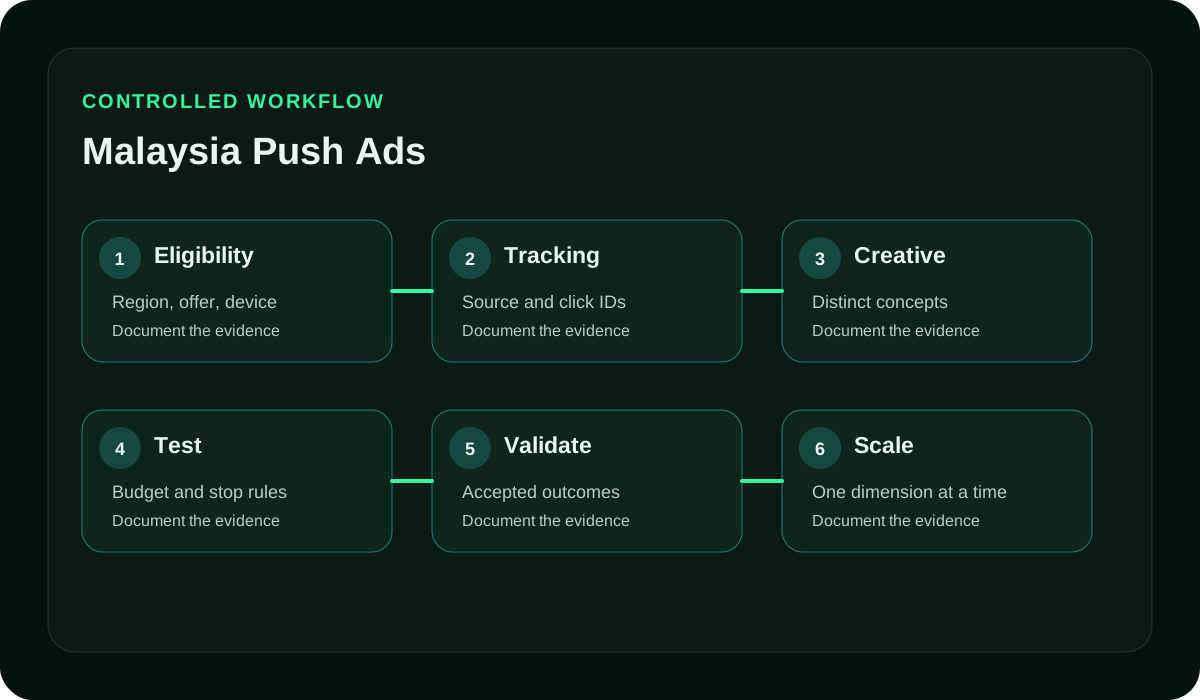
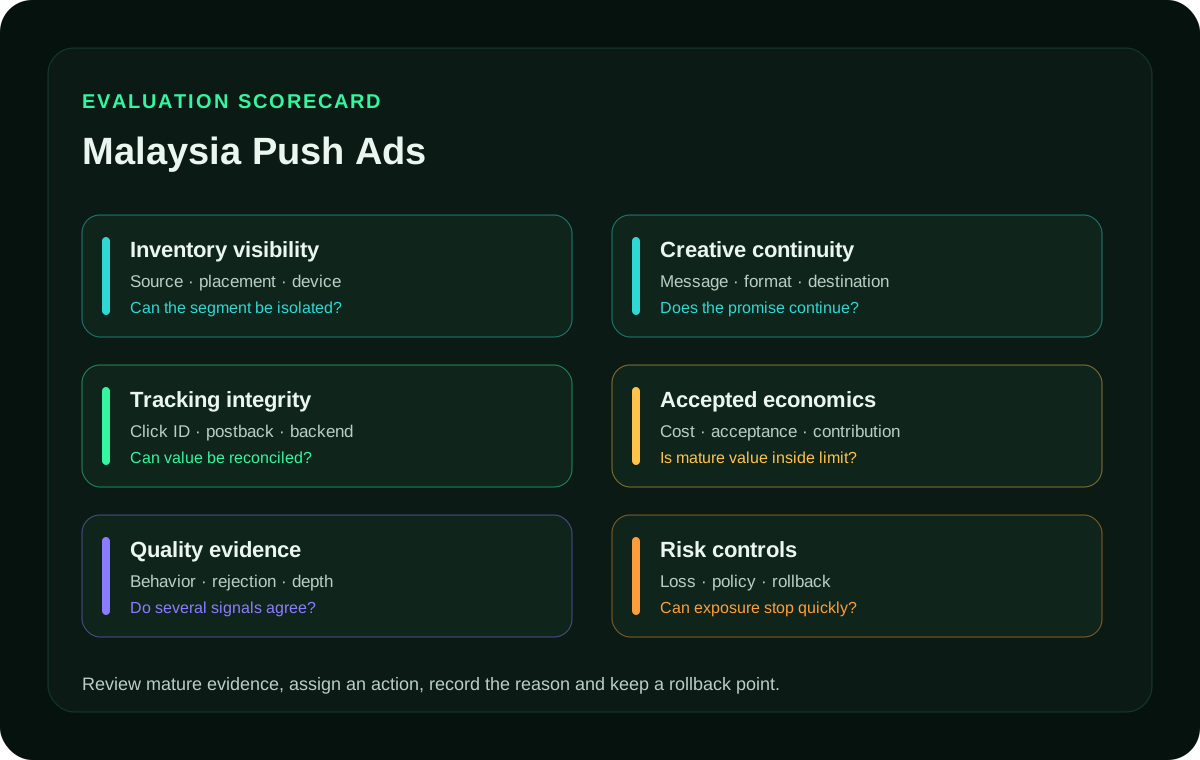
Earlier Malaysia campaign routes and the existing notification-related imagery remain available below as navigation into the broader site. They do not prove that a person chose promotional messages, an endpoint is active, a platform displayed a message, a language fits the recipient, or the campaign achieved an accepted result.
Malaysia push ads questions
When are push ads suitable for a Malaysia campaign?
Push ads can fit a permitted offer when Malaysian audience, language, device, notification context, and accepted action are defined. Suitability depends on the source and customer path, not country volume alone.
Which audience details matter for Malaysian push traffic?
Country targeting should be refined by language, region where relevant, device, operating system, subscription recency, schedule, source, and offer eligibility. Keep those dimensions available for quality review.
What push format should advertisers test in Malaysia?
Choose classic or in-page push based on browser support, device behavior, message space, user expectation, and source disclosure. Separate each format in reports because the interaction begins differently.
Is the Malaysian landing page ready to receive push visitors?
Use natural language for the intended audience, clear currency and price details, local eligibility, mobile speed, privacy choices, contact routes, and confirmation. The page should continue the exact notification promise.
What budget structure protects a Malaysia push test?
Allocate media, localized creative, language review, tracking, page work, quality checks, and support, then cap acceptable loss by source. A separate comparison cell protects the learning from rapid delivery.
Which tracking fields help review Malaysia push ads?
Keep source, format, subscription age where available, language, device, operating system, creative, send time, cost, accepted event, and rejection reason. Reconcile supplier figures with page and customer records.
Why might one Malaysian push source outperform another?
Differences in subscriber recency, notification type, device mix, language, schedule, placement practice, and offer fit can change both intent and cost. Trace performance through accepted customer value before adjusting bids.
What quality checks can reveal suspicious Malaysia traffic?
Review duplicate visitor keys, impossible event speed, clustered sources, inconsistent devices, absent page sessions, and customer actions missing from business systems. Isolate questionable inventory while the evidence is checked.
Which warning signs justify stopping a Malaysia push source?
Pause the source after its approved loss limit, a tracking failure, hidden inventory, policy conflict, or unresolved invalid-activity pattern appears. Save the original settings, delivery logs, and destination records.
What evidence supports expanding a Malaysian push campaign?
A named audience and disclosed source should produce suitable customers at a workable cost in more than one review period before reach grows. Adjust only the bid, budget, schedule, or coverage boundary next, and retain the earlier result as the comparison.
Malaysia Push Ads: the decision this URL owns
Decision inputs for Malaysia Push Ads: campaign objective, audience targeting, conversion tracking, source quality. Keep these inputs tied to accepted conversion or business-value event and the page-specific job: plan the market-specific test and measurement rules.
Malaysia Push Ads belongs in the campaign workflow only if it answers its own buyer question. For a performance advertiser, that question is how to plan the market-specific test and measurement rules with measurable downstream evidence.
URL boundary for Malaysia Push Ads: This URL owns Malaysia Push Ads; Push Traffic Malaysia is the nearest neighboring topic and should keep its separate task. Use this page only for the decision implied by Malaysia Push Ads.
Official notification, permission and Malaysian data boundaries is the measurement checkpoint for this URL. Resolve “Which audience details matter for Malaysian push traffic?” while retaining audience targeting, source quality, spend and cohort age so the result can be reconciled with accepted conversion or business-value event.
Evaluate Malaysia push ads through permission, delivery and local evidence is an evidence checkpoint for Malaysia Push Ads. To answer “When are push ads suitable for a Malaysia campaign?”, keep campaign objective in the same campaign record and use it to plan the market-specific test and measurement rules.
Define the push notification path is the action checkpoint for Malaysia Push Ads. Before acting on “What push format should advertisers test in Malaysia?”, document conversion tracking, the resulting campaign action and the rollback or retest condition.
| Page checkpoint | How to use it | Evidence to retain |
|---|---|---|
| Evaluate Malaysia push ads through permission, delivery and local evidence | Use Evaluate Malaysia push ads through permission, delivery and local evidence to establish the first evidence boundary for Malaysia Push Ads; then record which part of campaign objective, targeting, source evidence, conversion tracking and economics it changes. | Keep campaign objective, source/campaign ID and the accepted-event definition together. |
| Official notification, permission and Malaysian data boundaries | Use Official notification, permission and Malaysian data boundaries as the second checkpoint and reconcile it with accepted conversion or business-value event before changing budget or source allocation. | Retain audience targeting, spend, timestamp/cohort age and accepted/rejected outcomes. |
| Define the push notification path | Use Define the push notification path as the final checkpoint: if it does not change the evidence for accepted conversion or business-value event, keep the test narrow rather than scaling. | Document conversion tracking, the decision taken and the rollback or retest condition. |
Transparent Malaysia Push Ads decision example
Hypothetical example: For Malaysia Push Ads, a hypothetical controlled cell that spends USD 380 and records 9 accepted conversion or business-value event after the same maturity window has an accepted cost of USD 42.22 per outcome. Replace the figures, outcome and review window with your own economics; this is not a FroggyAds performance claim.
Why use FroggyAds here?
FroggyAds supports the paid-media decision on Malaysia Push Ads by keeping delivery controls and source-level reporting available while you reconcile them with accepted conversion or business-value event. Create your free FroggyAds account.
Malaysia Push Ads — what matters first
Malaysia Push Ads should be evaluated market by market: define eligible geography, keep measurement consistent, and scale only where accepted-outcome economics remain viable.