Malaysia browser-path and outcome-control guide

Malaysia Popunder Ads

Direct answer: A Malaysia popunder campaign is ready only when the advertiser has defined the serviceable market, approved language, secondary-window behavior, destination version, source controls, exposure policy, accepted outcome and stop authority. Browser handling is not guaranteed, and a page event is not proof of a sale.

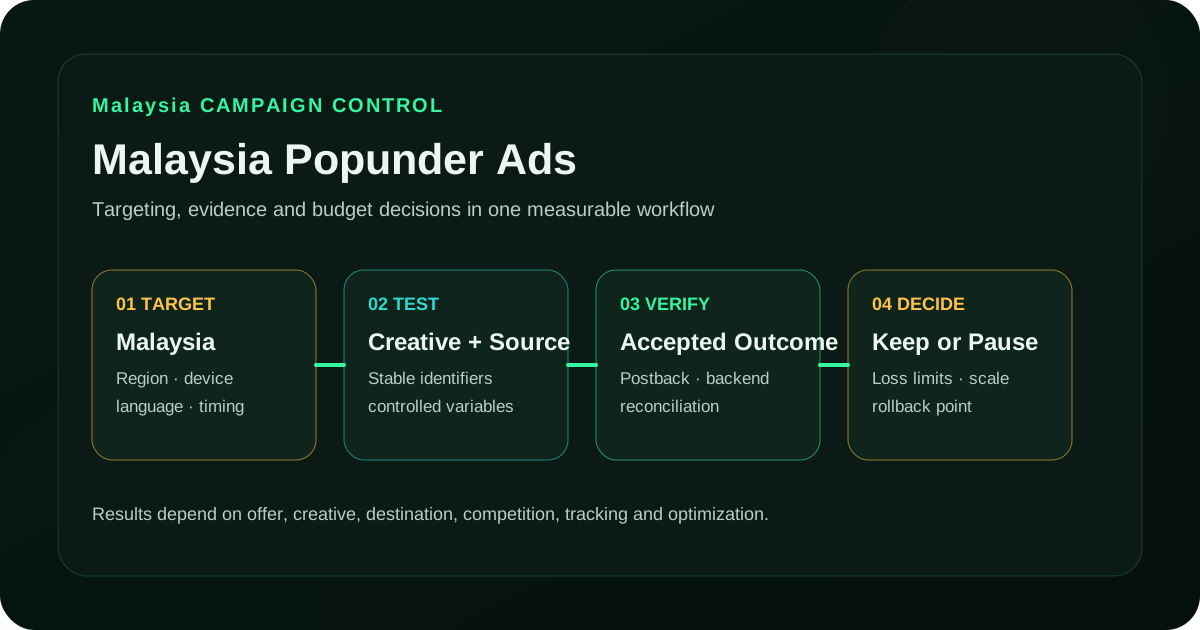
malaysia popunder ads planning visual

Country selection is the beginning, not the audience definition

Write the Malaysia operating scope before choosing inventory

Start with the legal or operating advertiser, offer owner, fulfilled product or service, places that can be served, excluded locations, supported languages, approved currencies and response hours. The country field establishes one campaign boundary but does not prove that every delivered user is in a serviceable place or understands the selected message. Preserve the scope with a reviewer, revision date and condition that forces another review.

Describe the audience task without inferring a sensitive trait. A visitor might compare a subscription, check product availability, request a quote or complete a purchase. The destination should help with that decision under the approved terms. Avoid turning device, source, time or rough location into a personal conclusion that the evidence cannot support.

Confirm operating capacity. Record inventory, fulfilment region, payment acceptance, support language, return or cancellation process and the maximum valid outcomes the business can handle during the test. More delivery can make a technically successful campaign commercially harmful when orders cannot be served or messages cannot be answered.

Use the existing Explore Malaysia Traffic Buying route for its distinct traffic-buying decision. This page remains focused on the popunder browser path, placement evidence and destination readback rather than making a general promise about Malaysia volume.

Treat the popunder as a browser-mediated path

Map the attempted event from a publisher page to the secondary browsing context, the requested URL, redirects, final destination and any accepted event. Record what the buying platform counts at each stage. The word popunder does not establish identical behavior across browsers, operating systems, settings, extensions, security products or publisher implementations.

Test representative environments using harmless accounts and a controlled destination. Observe whether the new context opens, where it appears, whether focus changes, which URL finally loads, what happens when the user closes it and whether navigation controls remain available. Store the browser version, device class and time with the observation.

Do not disguise the destination or simulate a browser control. A campaign must not depend on a visitor confusing an advertisement with a security message, system alert, close button or site navigation. If the rendered experience differs materially from the approved review, quarantine the source and preserve evidence before changing settings.

Build a placement observation without promising browser behavior

Ask the supplier which inventory and implementation categories are available, which reports identify a publisher or source, how invalid or unsafe delivery is handled and which controls the advertiser can change. Treat every answer as account- and date-specific. Availability in one account or test period does not guarantee the same supply later.

Separate what the platform reports from what the advertiser observes. Delivery, impression, opening, landing and click terms can have product-specific definitions. Preserve the definition visible at export or retrieve it from current owner documentation. When a field is unavailable, mark it unknown rather than filling the gap with a familiar term from another network.

Use source isolation during the first bounded run. A small number of traceable sources is easier to investigate than a broad blend whose poor and strong behavior cancel in the aggregate. Keep source, creative, destination and measurement versions joined so a later exclusion decision can be reproduced.

Define exposure and recurrence rules before launch. The intended cap should reflect the user experience and the business purpose, not a desire to manufacture more counted events. Verify how the current account applies the control and review repeat identifiers only under an approved data purpose and retention plan.

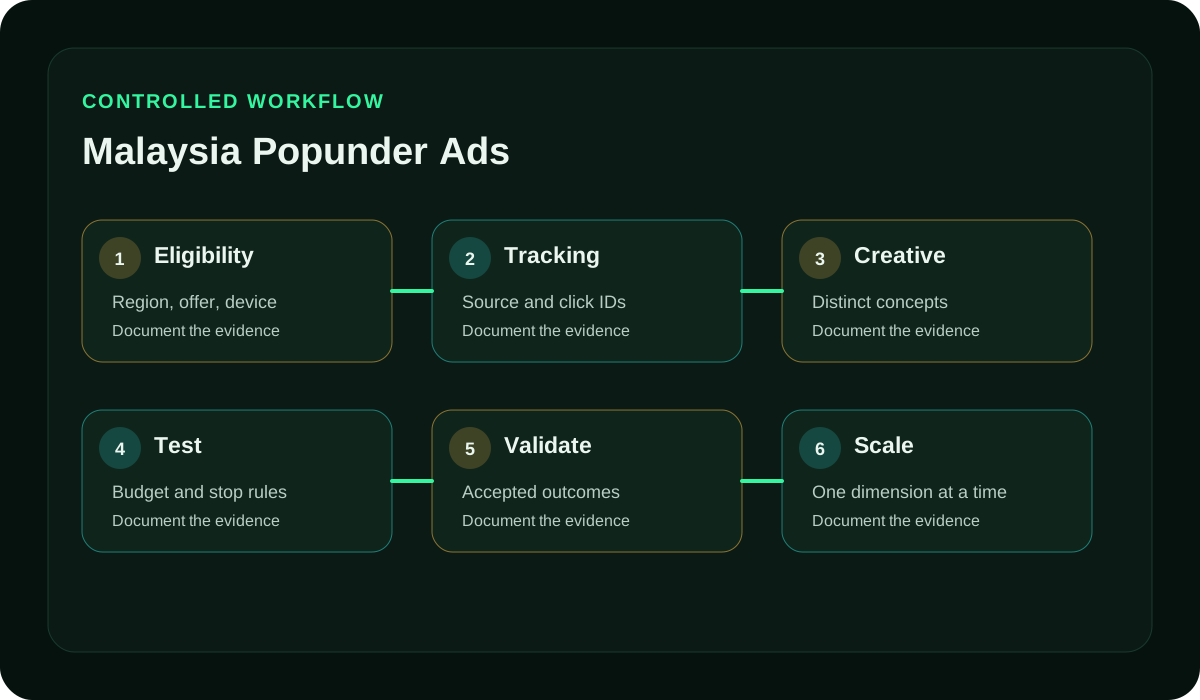
malaysia popunder ads controlled workflow visual

Make the landing destination an auditable contract

Hash or version the approved destination and record the canonical offer, advertiser identity, language, price conditions, eligibility, expiry and next action. The first meaningful view should continue the promise conveyed by the advertisement. A generic home page can lose the context required to judge whether the user reached the intended offer.

Test loading after the same redirects and parameters used by the campaign. Check representative network conditions, mobile viewport behavior, keyboard access, zoom, error recovery, form submission and payment or lead receipt where applicable. A server response alone does not show that an individual could read and complete the route.

Minimize fields. Collect only information required for the stated decision and document its purpose, access, retention and deletion rule. Country targeting does not justify asking for a precise location or unrelated profile data. Keep consent and privacy notices in the actual language and context the user receives.

Set an expiry action. When price, availability, eligibility, support capacity or regulation changes, identify every active creative and destination variant that depends on the old fact. Pause or update the affected path, verify the public result and retain the former version internally for incident reconstruction.

A Malaysia popunder destination is operationally ready when a second authorised reviewer can reproduce the browser path, approved offer, final URL, accessibility checks, collected fields and accepted outcome from the stored record.

Review language, currency and local response as separate controls

Do not infer preferred language from the country field. Start with a source-language claim record, have the selected variant reviewed for meaning and keep the approved translation with the destination version. Product names, exclusions, price qualifications and support routes need the same review as the headline.

If the campaign presents Malaysian ringgit, preserve the amount, tax or fee treatment, validity period and business system that owns the price. When billing occurs in another currency, record the billing amount separately from the user-facing offer. Do not overwrite historical decisions with a later exchange rate.

Assign a response owner for questions, complaints, refunds, security reports and data requests. State an achievable response process without promising constant availability. A campaign should pause when the business cannot deliver the advertised service or handle material incidents in the supported language.

Use named time zones for schedules and reports. Record the platform zone, destination offer zone and backend acceptance zone. If a review combines them, store the conversion rule. This prevents an offer expiry or daily budget event from being interpreted under an unstated clock.

Prepare creative for the secondary-context decision

Write the message from an approved claim ledger. Every price, availability statement, product property, urgency condition and comparison needs an owner and expiry. Keep the qualification close enough to the claim to be understood in the rendered placement. A short format is not permission to remove a condition that changes the offer.

Create genuinely different concepts around different user questions, such as identifying the product, explaining a serviceable use case or clarifying the next action. Several color changes to the same assertion do not provide separate evidence. Assign one hypothesis and stop rule to each concept so a later review can explain why it remained active.

Review image and text rights for the paid context. Record creator, license, model or property permission where relevant, allowed edits, territories, duration and expiry. A file that appears on the advertiser's website is not automatically cleared for every network placement or language variant.

Inspect the rendered unit and destination together. Confirm legibility, crop, advertiser identity, close or navigation behavior supplied by the placement, language, final URL and any disclosure. Archive a screenshot or equivalent observation with the source and browser details, while remembering that one capture does not prove identical rendering everywhere.

Keep the rejected variants and reasons. A message can fail because the claim is unsupported, the destination cannot maintain parity, rights are missing or the business cannot serve the demand. Retaining that decision prevents a later operator from reactivating the same risk under a renamed asset.

Bind technical and data claims to primary sources

Visible decision phrases: Malaysia popunder ads; Malaysia browser path; popunder destination contract; Malaysia source controls; accepted Malaysia outcome; popunder incident runbook.

Popunder browser path
A popunder browser path records the attempted secondary context redirects final destination observed behavior and accepted event.
Malaysia campaign scope
A Malaysia campaign scope defines serviceable places exclusions language currency response capacity and review conditions.
Source quarantine
Source quarantine pauses traceable delivery while browser destination quality or measurement evidence is investigated.

No cited organization endorses FroggyAds or predicts a campaign result. Store retrieval dates and the exact statement supported. Code snippets are not applicable because this is an operating decision page rather than an API implementation guide. Embedded video and attributed quotations are also not required; unrelated media or decorative quotation would not improve the evidence chain. No new sameAs identity is asserted.

Measure from attempted delivery to accepted business state

Create a field map before launch. It should connect campaign, source, creative, destination version and time with the browser or page observation and the advertiser's backend event. Document which identifiers can be joined, which may be missing and which data is intentionally not collected. Test the map with a harmless event and verify that duplicates remain visible.

Define the accepted state narrowly. For an ecommerce offer it might be an eligible paid order after duplicate and fraud checks. For a service it might be a lead with a supported location and requested service. A landing view, session or form post remains a diagnostic step unless the business has explicitly accepted it as the value being purchased.

Keep rejected, cancelled, refunded and reversed outcomes attached to the originating cohort. Review after the normal maturity period, not at the earliest positive event. A source can look efficient when reports stop before losses arrive or when rejected records disappear from the denominator.

Compare marginal source economics. Include media cost, applicable platform or payment charges, refunds and the variable cost of serving the accepted result. Set an initial loss boundary that the business can absorb even if the test yields no accepted outcomes. Do not backfill a success threshold after seeing delivery.

Malaysia popunder evidence chain
StageRequired recordDo not infer
PlacementSource, format, browser observation and timeThat every attempted window became viewable
DestinationFinal URL, version, language and load checkThat a server response meant a usable page
EventCurrent definition, identifier and deduplication ruleThat a page event was a valid order
AcceptanceEligibility, value, rejection and maturity statusThat early revenue remained retained

Run a bounded Malaysian merchant example

A Malaysian specialty retailer can serve defined domestic postcodes and has an approved English and Malay product route. The first popunder test uses one product family, two reviewed messages, one destination version and a small set of traceable sources. The campaign cap reflects available stock and the support team's ability to answer delivery questions.

The retailer tests actual browser paths, confirms the final product and checkout pages, and stores the language, price, stock and return conditions approved that day. Its accepted event is a non-duplicate paid order to a serviceable postcode after payment validation. Out-of-area orders, cancellations and refunds remain in the evaluation record.

During the run, one source produces many secondary-window events but few destination loads. The buyer does not label the difference fraud without investigation. It quarantines that source, preserves browser and network observations, asks the supplier for the current counting definition and keeps the remaining source set under the original budget.

After the outcome window matures, the team compares accepted contribution and complaint evidence by source. It can retain, narrow, repair or stop. The example demonstrates an evidence process, not a forecast for another retailer, account, inventory period or browser mix.

Choose source controls before increasing the budget

Start with an allow, observe or quarantine status for each traceable source. The first evidence review checks destination continuity, device and language fit, duplicates, accepted outcome rate, complaint signals and cost. Delivery volume alone does not earn an allow decision.

Change one material control at a time where operations permit. Expanding sources, devices, creative and budget simultaneously makes the outcome difficult to interpret. Store the previous configuration and the reason for change. If the supplier changes a source identifier or inventory definition, treat it as a new evidence state.

Scale only after the next increment remains within the approved loss boundary and fulfilment capacity. Blended averages can hide deterioration at the margin. Compare the added spend with the added matured accepted value and watch whether new sources or device classes change the user experience.

Use an inconclusive status when sample, tracking or maturity is insufficient. It is safer than forcing a winning narrative. Name the missing evidence, its owner and the earliest re-review date so an inconclusive test does not drift into indefinite delivery.

Contain browser, destination and data incidents without erasing evidence

Define incidents before launch: wrong destination, unexpected redirect, security warning, deceptive control, unsupported language, expired offer, unauthorized creative, corrupted tracking, sensitive-data exposure, unserviceable order or unresolved complaint. Name the person who can pause all delivery and the narrower source quarantine owner.

Preserve the campaign settings, source, creative, destination hash, browser observation, report export and backend states before making a repair, when safe to do so. Do not delete the only evidence while trying to make a dashboard look clean. Limit access to incident material and avoid collecting unrelated personal information.

Contain the smallest safe scope. A single traceable source may be quarantined when evidence supports isolation; a shared destination or tracking failure can require the whole campaign to stop. Verify that the pause reached every active variant and that a scheduled or duplicated campaign is not still delivering.

Repair under a new version and repeat the harmless browser and outcome readback. An authorised person who did not make the change should be able to confirm the live state. Record residual risk, monitoring period and the decision to resume, narrow or terminate.

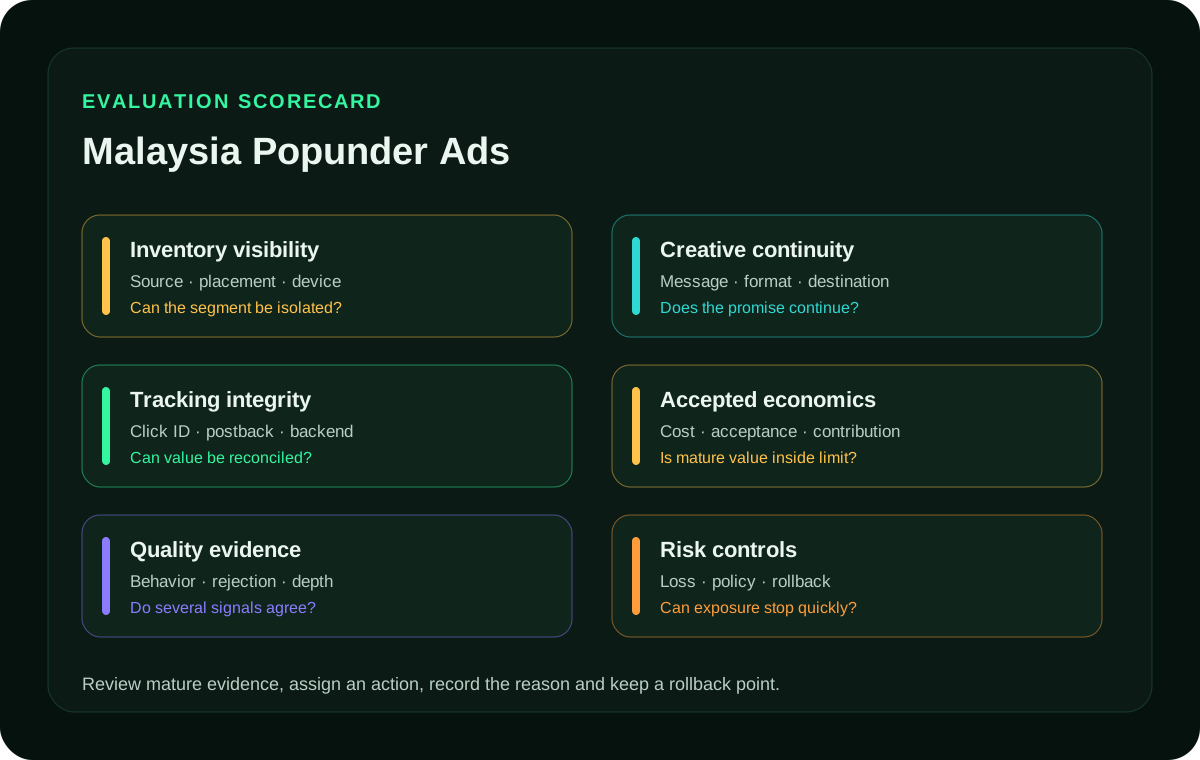
malaysia popunder ads evaluation scorecard visual

Malaysia popunder ads FAQ

What is a Malaysia popunder placement operationally?

It is a secondary browsing context or destination exposure whose observed behavior depends on the publisher implementation, user agent, current controls and user action.

Can an advertiser guarantee that a Malaysia popunder opens?

No. Browsers, settings, extensions, policies, security tools and navigation choices can block or alter the attempted opening.

How should Malaysia language variants be selected?

Use the language that the approved offer, destination and response team can support. Country selection alone does not establish an individual user's preferred language.

Why test the popunder landing page independently?

A secondary-context event does not prove that the page loaded, remained available, matched the claim or produced a valid backend outcome.

How should potentially intrusive behavior be reviewed?

Test real browser and device combinations, avoid deceptive controls, preserve user navigation and check current owner guidance for each affected surface.

Does a Malaysia popunder click count as a sale?

No. Reconcile delivery and page events with an eligible backend order or another predefined accepted business state.

Which time zone should a Malaysia report use?

Record the campaign, platform and business-system zones, use named IANA identifiers where possible and document any conversion between them.

What belongs in a Malaysia campaign lock?

Preserve market, serviceable area, language, creative, destination, format, source controls, exclusions, budget, tracking version, approver and stop rules.

When should Malaysia popunder delivery stop immediately?

Stop for a wrong destination, security warning, deceptive interface, unapproved content, corrupted tracking, unsupported service area or unresolved material complaint.

Can this page determine Malaysian legal compliance?

No. It can preserve evidence and link official material, while qualified review must address the actual processing, parties, campaign and applicable requirements.

Launch only the Malaysia path you can reproduce and stop

Lock the market, browser observation, destination, source controls, exposure, accepted outcome and incident authority. Begin with a bounded loss, read back the live path and let matured backend evidence decide the next increment.