
Account authority, format jobs, publishing and outcome evidence
Instagram Marketing 2026: Strategy, Trends and Execution Guide
Direct answer: Instagram marketing in the 2026 edition needs an account-controlled publishing system. Assign the business or creator account, audience task, format, claims, assets, accessibility, commercial identity, approval, response, measurement and expiry before posting. Instagram decides distribution, so no plan can guarantee reach.
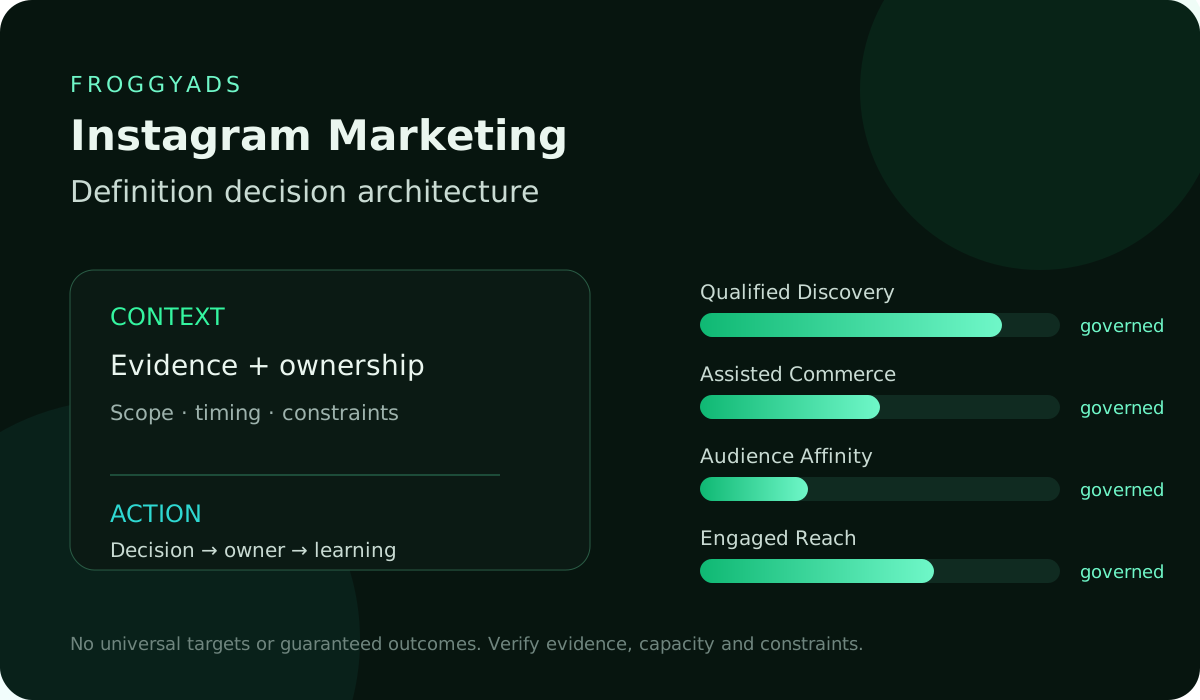
Use an account-to-outcome Instagram framework
Account
Name the owner, account type, connected assets, roles, recovery route and approved third parties.
Audience task
Define what the intended viewer needs to understand, compare, do or ask.
Format
Select a current format for that task, content rights and operational capacity.
Evidence
Bind claims, product details, examples, commercial identity and expiry to sources.
Publication
Lock the caption, media, accessibility, tags, disclosure, destination and time.
Response
Assign moderation, questions, corrections, escalation and offer availability.
Measurement
Preserve owner metric definitions and join them to accepted backend states.
Incident
Contain wrong-account posts, claim, disclosure, rights, access or tracking failures.
Apply the framework to one content job at a time. A product carousel, behind-the-scenes Story, instructional Reel and live question session have different evidence, accessibility and response requirements. Do not turn format availability into a reason to use every format.
Instagram marketing is operationally ready when the account owner can reconstruct the approved media, caption, commercial identity, accessibility record, live state, metric definitions and accepted outcome for each published item.
Lock account type, ownership and recovery before content planning
Identify the legal or operating owner, exact Instagram account, handle and purpose. Record whether the current professional account is business or creator, who controls recovery, which Facebook Page or other assets are connected and why each connection is needed.
Meta's owner help describes professional accounts on Instagram and the current creator and business context. Verify the actual account because availability, menus and connected features can differ.
Use named least-privilege roles for content creation, review, publishing, community response, advertising and administration. A designer does not need billing or recovery authority merely to supply an asset. Record every third-party publishing or analytics connection.
Test recovery with an authorised operator and secure the contact routes. Review active sessions, connected applications and automation. Shared passwords weaken both incident response and staff departure.
When a person or agency leaves, transfer scheduled work and evidence, revoke access, end sessions where supported and verify that queued posts or campaigns do not continue under old credentials.
Define the audience task without inventing platform intent
Write a practical task such as compare two product uses, learn a setup step, see current availability, understand an event or ask a support question. The task gives content a purpose that can be reviewed independently of predicted distribution.
State audience eligibility and exclusions using evidence the advertiser can lawfully use. Do not infer sensitive traits from engagement or construct a personal profile from public behavior without an approved basis.
List the one next step the post can honestly support. It may be save instructions, view a product page, request an appointment or read a full guide. Keep the destination consistent with the caption and media.
Define success and failure before publishing. An interaction can show attention under a platform definition, while an accepted business result may require serviceability, payment, validation or a later decision. Preserve both layers.
Connect the guide to live testing
Connect Instagram Marketing 2026 to a controlled audience test
Use the choices established in “Define the audience task without inventing platform intent” to define one audience, budget and source set in FroggyAds. Keep the surrounding offer and measurement rule stable so the test adds evidence to instagram marketing 2026 instead of mixing several changes at once.
Create My Free Account
Choose Instagram formats by job, not novelty
| Job | Possible format role | Required proof |
|---|---|---|
| Explain | Carousel or longer caption with a stable reference route | Claim sources, readable sequence and clear next step |
| Demonstrate | Reel, video post or live session where currently available | Accurate action, captions, rights and safety conditions |
| Update | Story or feed item matched to the offer period | Current dates, availability, disclosure and expiry |
| Respond | Comments, replies, live or message workflow | Named owner, response limits, escalation and records |
The examples are not availability guarantees. Check the account's current tools and requirements. Choose a fallback that preserves meaning when a feature, audio, sticker, link or collaboration option is unavailable.
Keep production capacity honest. A frequent live or video schedule creates captioning, moderation, rights and review work. Publish less when the team cannot maintain those controls.
Use a page-specific Instagram content example
Example: a neighbourhood bakery needs to explain pre-order collection for a limited weekend menu. It uses a carousel with product and pickup details, a Story reminder with the same expiry, and a reviewed destination that rejects unavailable slots truthfully. The team records account, media rights, caption, alt-text decision, price conditions and accepted paid orders.
The bakery does not call view count revenue or assume every follower lives inside the service area. It checks the owner metric definitions, keeps out-of-area orders as rejected outcomes and stops promotion when production capacity is full.
If the menu or pickup time changes, the owner updates or removes every active variant and verifies the live state. An old scheduled Story must not publish after the offer expires.
Create an asset, rights and accessibility record
For every image, video, audio track, graphic, logo and supplied customer item, record source, owner, permission, credit, allowed edits, channels, duration and expiry. Do not assume that availability inside a tool grants every commercial use outside it.
Review visual meaning at the actual crop and size. Important text should not become unreadable or disappear under interface elements. Preserve the central claim in the caption or accessible text where appropriate rather than relying on decoration alone.
For video, review captions, spoken and on-screen claims, pacing, flashing or motion concerns, thumbnail, audio rights and disclosure timing. If the content teaches a procedure, verify the demonstrated steps and material safety conditions.
Use meaningful alternative text or the current applicable accessibility feature when an image conveys information. A decorative media element needs a deliberate decision, not generated keywords. Test screen-reader and keyboard behavior where the published surface and linked destination allow it.
Consult W3C WCAG 2.2 for the official web standard reference and review platform-specific behavior separately. Do not claim universal conformance from an internal checkbox.
Choose the execution format
Choose a paid-media format that supports Instagram Marketing 2026
Use the criteria around “Create an asset, rights and accessibility record” to decide whether push, native, display or pop fits the message and destination. Set format, targeting and spend as campaign controls in FroggyAds while the instagram marketing 2026 decision remains the standard for judging the result.
Create My Free Account
Keep branded content and disclosure in the rendered context
Identify the advertiser, exchange of value and creator or publisher relationship before drafting. Record payment, free product, employment, ownership, family or another material connection that may affect how the audience evaluates the message.
Meta's owner help explains what is considered branded content and its paid partnership label for current Instagram use. Recheck the tool, account and policy at publication.
For applicable U.S. endorsements, review the FTC's Disclosures 101. Current specialist review remains necessary for the message, audience, jurisdiction and relationship.
Do not assume a platform label alone answers every disclosure question. Inspect the feed item, Story, Reel, live or paid variant as the audience receives it, including truncation, overlays, audio, replay and repost context.
Bind claims to advertiser evidence. A creator, employee or customer cannot lawfully expand a product result merely because the statement is written in first person. Preserve qualifications with the claim.
Lock publishing fields and read back the live item
Store the account, caption, media, sequence, cover, alternative-text or accessibility decision, tags, commercial identity, disclosure, destination, location tag if approved, planned time, reviewer and expiry. Use a version or hash for the actual asset.
Test edits after approval. Any material change to claim, media, disclosure, destination, offer or schedule returns to review. A green approval mark must not remain attached to bytes the reviewer never saw.
Publish through named authority. Compare the live item with the lock, including crop, truncation, label, link behavior, account identity and time. Record platform transformations that affect meaning.
Search scheduled, draft, recurring, collaborative and paid variants when a fact changes. Removing one visible post is insufficient when an older version remains in a queue or partner account.
Set the retirement behavior before expiry. Decide whether to delete, archive, correct, update a destination or leave a dated record. Preserve internal evidence even when public content is removed.
Maintain the surrounding Instagram planning routes
Use Instagram Marketing, Instagram Marketing Strategy, Instagram Marketing Plan, Instagram Marketing Guide, Instagram Marketing Checklist, Instagram Marketing Best-practices, Instagram Marketing Statistics, Instagram Marketing Analysis, Instagram Marketing Audit and Instagram Marketing Cost for their distinct reader decisions.
A statistics page cannot define the current account menu, and a best-practices page cannot approve the advertiser's claim. Keep every conclusion tied to owner documentation, live account readback and the current content version.
Use Instagram Insights under current owner definitions
Meta's owner help says Instagram Insights are available for business or creator accounts and describes current account and content metrics. Verify the actual account, interface, timeframe and metric definition at retrieval.
Preserve account, content identifier, format, publication time, date range and the definition shown beside each metric. Product names and availability can change. A screenshot without the information item and timeframe cannot support a durable comparison.
Choose metrics for the hypothesis. Views, accounts reached or interactions can help diagnose distribution and response under current definitions. They do not prove an order, retained customer or incremental effect.
Join approved links, codes or events with the backend accepted state. Keep rejected, duplicate, cancelled and reversed outcomes. Document attribution, time zone and missing identifiers rather than forcing platform and backend totals to agree.
Use a decision such as continue, revise format, narrow audience, fix destination, pause or inconclusive. Do not turn one strong post into a guaranteed future pattern or delete a weak test from the evidence set.
Put the guide into practice
Turn Instagram Marketing 2026 into a bounded campaign test
With “Use Instagram Insights under current owner definitions” documented, launch only the next reversible test. Set a spending limit, preserve the baseline and use source-level and audience controls so the next step depends on qualified outcomes for instagram marketing 2026, not activity volume.
Create My Free Account
Assign community response and moderation ownership
Define which questions the social team can answer, which claims require a product owner, which complaints go to support and which legal, safety or privacy issues need immediate escalation. Provide truthful response windows without promising constant availability.
Preserve material corrections and incident context. Do not request sensitive account or order details in a public comment. Move the conversation to an approved support route and retain only the data required for resolution.
Set moderation rules for spam, abuse, misinformation, impersonation and off-topic content. Apply them consistently and record exceptional removals. Do not suppress genuine negative experience merely to improve appearance.
Feed recurring questions into content planning. A repeated misunderstanding can show that the caption, media, offer or destination omits a necessary condition. Repair the source rather than repeating a canned reply indefinitely.
Use official reporting and governance sources in their stated scope
- Google Analytics reporting documentation for the named analytics product.
- Google Ads reporting documentation for current owner metric definitions.
- Google Search Console performance documentation for search reporting context.
- Google Campaign Manager trafficking guidance for that product.
- Google helpful content guidance for people-first source and authorship self-assessment.
- FTC advertising and marketing basics for applicable U.S. guidance.
- W3C WCAG 2.2 as an official accessibility standard reference.
- NIST Privacy Framework as voluntary privacy-risk management context.
- FroggyAds advertiser information for first-party platform information.
- FroggyAds official Telegram channel for the represented contact route.
No cited organisation certifies this page or campaign. Store retrieval dates, definitions and the statement each source supports.
Stage content and paid distribution budgets separately
Record content planning, production, rights, review, accessibility, community response, tools, paid media, measurement and incident cost. Separate reusable asset rights from one-time publication and campaign spend.
Set the maximum authorised paid amount, duration and change authority before amplification. Organic response does not automatically approve broader targeting, new destinations or extended rights.
Wait for accepted outcomes to mature and include rejected, cancelled and reversed states. Compare marginal results after each increase. Stop when support, inventory or fulfilment cannot preserve the advertised experience.
Keep an inconclusive result when distribution or measurement is insufficient. Do not increase spend simply to force certainty or present a forecast as a guaranteed account outcome.
Contain an Instagram incident and recover the account
Define incidents such as wrong-account publishing, unsupported claim, missing disclosure, expired offer, rights violation, inaccessible media, compromised access, impersonation, broken destination or corrupted measurement. Name who can remove or correct content, pause ads and secure the account.
Preserve the approved version, live item, account and role state, disclosure, destination, metrics, actions and backend outcomes before repair. Search scheduled posts, drafts, collaborations and paid variants for the same issue.
Contain the smallest safe scope. Revoke a compromised integration, pause amplification, correct or remove content where authorised and publish a truthful correction when needed. Do not delete the only incident evidence.
Test recovery with named access and a harmless readback. Republish through another review, monitor delayed delivery and keep the incident after resolution. Update roles, training or scheduling controls from the root cause.
Prepare an account-portable Instagram evidence package
Store ownership, roles, recovery, connections, audience task, brief, sources, claim ledger, assets, rights, accessibility, commercial identity, approval, live readback, response log, metric definitions, accepted outcomes, costs, incidents and expiry.
Test retrieval with another authorised person. They should be able to identify the live content, its approved version, active paid use, current access and latest business decision without one person's private notes.
At agency or staff handoff, transfer scheduled work, revoke old permissions and verify account recovery. At tool exit, export available records and confirm automation stops.
Review the package after a platform, account, format, feature, metric, offer, relationship or policy change. The 2026 edition date records review context and does not freeze Instagram behavior.
Operate an Instagram editorial calendar with expiry controls
Build the calendar from audience tasks, offer availability, production capacity and review time. For every item, record account, format, content job, asset owner, claim source, commercial relationship, approver, scheduled time, response owner and expiry. A date slot is not a reason to publish filler.
Separate evergreen instructions from time-bound offers, events and product states. Mark the condition that invalidates each item. When inventory, price, location, policy, rights or source evidence changes, search scheduled and reusable content for the affected version.
Balance planned work with response capacity. A launch can require comment moderation, message routing, support escalation and correction. Leave space for those duties instead of scheduling more posts than the team can govern.
Review the calendar after platform or account changes. A retired format, unavailable tool or renamed metric may require another delivery path, but it does not change the audience task automatically. Preserve the revision and live readback for later independent audit and reuse.
Close completed items with publication evidence, outcome maturity and the next decision. Archive or retire assets according to rights and offer status. Do not refresh a date when no substantive review occurred.
Instagram marketing 2026 FAQ
Which parts of an Instagram plan deserve a fresh review in 2026?
Review audience behavior, current platform controls, creative performance, account risks and the evidence used for decisions. Keep durable brand principles separate from tactics that may need to change during the year.
How should teams respond to an Instagram feature or policy change?
Confirm the change in current platform documentation and test its effect on the team's real workflow before redesigning the strategy. Record the date and affected campaigns so later performance shifts are not misread.
How should paid and organic Instagram work together in 2026?
Organic content can develop recurring themes and audience understanding, while paid distribution can test or extend selected messages. Share the evidence and content rights across both plans, but judge each against its assigned role.
Does every Instagram plan need to prioritize short-form video?
No. Short video deserves priority when the audience, message and production capacity fit it. Compare its ability to explain and drive the intended action with carousels, static posts or Stories rather than following format popularity alone.
What makes Instagram measurement resilient to changing platform data?
Keep first-party campaign records, consistent outcome definitions and documented source exports where permitted. Treat platform metrics as one evidence layer and note when a definition, attribution window or available field changes.
How can generative tools be used responsibly for Instagram marketing?
Use them for bounded support such as organizing ideas or creating draft variations, with human review of facts, rights, tone and safety. Do not present generated people, experiences or endorsements as real.
Where do creator partnerships fit in an Instagram plan?
Creator partnerships fit when a trusted voice and audience context can serve a specific campaign job. Set disclosure, usage rights, review boundaries and measurement before content is produced.
Why does community management belong in the annual plan?
Replies and moderation affect how Instagram content is understood after publication. Define response ownership, escalation rules and coverage periods so important questions or risks are not left to chance.
What should a quarterly Instagram review decide?
Decide which themes, formats and audience assumptions to continue, revise or stop. Use comparable evidence where possible, and separate a one-off production problem from a strategic pattern.
How can an Instagram strategy stay current without chasing every trend?
Set a regular review of official updates, audience evidence and campaign learning, then change the plan only when the new information affects a real decision. This keeps experimentation deliberate instead of reactive.
Publish only the Instagram content the account owner can recover and explain
Lock account, assets, claims, accessibility, disclosure, destination, version and accepted outcome. Verify the live item and metric definitions, then let evidence rather than predicted reach decide the next action.
Instagram Marketing 2026: Strategy, Trends and Execution Guide: the buyer task this URL owns
Instagram Marketing 2026: Strategy, Trends and Execution Guide is for advertisers, media buyers and online growth teams who need to separate current social-platform changes from durable measurement and acquisition principles. Keep that buyer task separate from the nearby topic so this URL answers one commercial question clearly. The nearest related FroggyAds page is Instagram Marketing Statistics; this URL keeps ownership of the distinct task to separate current social-platform changes from durable measurement and acquisition principles.
For Instagram Marketing 2026: Strategy, Trends and Execution Guide, the operating evidence to keep visible is campaign objective, Reels or Stories placement, creative format, creative ID. Use these entities only when they change setup, measurement or the commercial decision.
| Checkpoint | Page-specific action | Evidence to keep |
|---|---|---|
| Channel role | Define the audience context, organic/social role and the business event this page is meant to influence. | Retain evidence specific to Instagram Marketing 2026: Strategy, Trends and Execution Guide and its accepted outcome. |
| Measurement | Preserve source, medium, campaign and creative identifiers through the business-side conversion or accepted outcome. | Retain evidence specific to Instagram Marketing 2026: Strategy, Trends and Execution Guide and its accepted outcome. |
| Decision | Separate platform-reported activity from business evidence before changing budget, provider, content or channel mix. | Retain evidence specific to Instagram Marketing 2026: Strategy, Trends and Execution Guide and its accepted outcome. |
Hypothetical calculation: if a controlled campaign for instagram marketing 2026: strategy, trends and execution guide spends USD 150 and produces 9 accepted conversions, accepted CPA is USD 150 / 9 = USD 16.67. Replace the inputs with your own campaign economics; this is not a FroggyAds performance claim.
When Instagram Marketing 2026: Strategy, Trends and Execution Guide calls for more measurable reach outside social-network-native delivery, use FroggyAds as a distinct traffic source and reconcile the result with the same accepted business event. Create your free FroggyAds account.
Instagram Marketing 2026: Strategy, Trends and Execution Guide — what matters first?
Use Instagram Marketing 2026: Strategy, Trends and Execution Guide to separate dated platform changes from durable operating principles: audience relevance, creative quality, consistent source tagging, business-side conversion measurement and accountable budget decisions. Test new social features in their native environment; use FroggyAds separately for non-social paid traffic.