
Global Banner Ad Network for Market-by-Market Buying
Reach new markets with banner campaigns you can understand country by country. We help you buy display traffic through FroggyAds while you control the audience, creative and campaign allocation. Prepare a destination that can serve each market, then compare the customer outcomes behind the impressions before extending international spend.
What should a global banner network help you do?
A global banner network connects advertisers with display opportunities across multiple markets. The useful question is which of those opportunities fit your offer today. A banner can introduce a product in a new country, support an app proposition or send eligible shoppers to a localized store. With FroggyAds, build that purchase around supported display inventory and the buying controls available for your campaign.
Follow the banner from placement to customer
A banner gives you a visual space within a page or app environment, followed by the destination reached after interaction. Separate those two experiences when diagnosing performance. An unreadable asset cannot communicate the offer; a readable asset may still lead to a checkout that rejects the visitor's country. Record creative, campaign and source identifiers wherever available so you can connect each experience to its result.
Define global reach as a list of ready markets
Write the countries you can serve and the condition for adding another. An online store might require supported shipping, local currency clarity and a workable returns route. A SaaS advertiser might need a supported language and product availability rather than physical fulfilment. A broad inventory claim should never replace this list. We recommend starting with the markets where the full offer already works.
Ask what international supply information you will receive
Before allocating money, confirm the display options available for your chosen countries and devices. Ask which reporting fields identify sources and how those identifiers relate to the inventory you buy. Some reports may describe a source group rather than a named website or exact position. Use the actual reporting level when comparing results; do not promise a placement-level decision from aggregated records.
Make eligibility a commercial requirement
Distinguish a customer you would like to reach from a customer you can accept. Delivery coverage, product restrictions, language, supported devices and payment availability can all change that answer. Your own service area is an offer boundary; apply the relevant campaign targeting only after checking which controls are available. This avoids treating an unavailable customer journey as a failed international marketing idea.
Prepare the first country test
Choose one market you can serve completely
Select an initial country because the offer is ready there, not because the displayed traffic price is low. In FroggyAds, use the campaign controls needed for that eligible audience and check the saved configuration. Give the test one destination language and a clear budget. Keep another market separate when its shipping, currency or acceptance conditions would change the meaning of the result.
Create My Free Account
Build banners around one local buying reason
A product benefit that needs little explanation may travel well; a delivery promise, price comparison or cultural reference may need rewriting. Give the local reviewer the exact claim and landing page, rather than a headline in isolation. Prepare a distinct concept when the customer problem changes. If only the language changes, preserve a version link so the team knows which original proposition the localized banner represents.
Check the asset at its delivered size
Confirm the dimensions and file requirements for your actual campaign before producing the full asset set. Preview each delivered size, especially narrow and mobile units. Read the headline, identify the brand and check the call to action without zooming. A translation can expand enough to obscure a product image or force tiny type. Fix the layout in that asset instead of expecting the publisher placement to compensate.
Give each market a matching destination
After a click, the visitor should see the same product, benefit and material offer terms. Check currency presentation, language, checkout eligibility and support information. If a banner promotes delivery convenience, make the conditions understandable before the customer commits. For agencies, obtain the client's approval of both the localized asset and its destination. A translated banner attached to an unchanged domestic page is an incomplete campaign.
Keep country and creative identifiers through measurement
Check the identifiers your campaign and tracking setup actually support. Keep country, creative version and source information connected to the customer record where possible. Align time zones and reporting periods before comparing spend with orders. Test a complete customer route in each materially different destination. A missing parameter at a localized checkout can make one country look inefficient even though its outcomes were simply not attributed.
Match the format to the job
Use display when the visual message carries the offer
Choose a banner because a graphic and short message can prepare the right visitor for the destination. Our other formats may suit a different communication task, but they require their own creative and delivery context. For an international display comparison, retain the display setup while you test the market proposition. Switching format and country together makes the reason for a change harder to establish.
Create My Free Account
Compare country economics in consistent units
Read the billing unit of the campaign and calculate actual media cost from delivered results. Then connect that spend to the same accepted outcome in each country. If customer revenue is recorded in different currencies, document the exchange-rate basis and reporting date you use internally. Show media cost and order contribution separately so a country with attractive volume does not conceal expensive fulfilment or returns.
Allocate exploration separately from established markets
A new country needs its own spending authorization and review question. Protect existing campaigns from silently funding an open-ended expansion. Where exposure controls are available, confirm their scope before relying on them. Keep a limit for the initial country and a reserve for follow-up. If the campaign cannot deliver enough useful traffic within that boundary, reassess the test rather than widening every setting.
Read customer quality in its local context
Review the reasons an order, enquiry or activation is accepted or rejected. A cancellation caused by an unexpected import charge differs from a duplicate lead or a broken form. Keep these reasons attached to the relevant market. Our traffic-quality safeguards support evaluation, while your own customer systems explain fulfilment and commercial value. Neither a country label nor a high click rate establishes customer quality by itself.
Change the part of the campaign that caused the problem
If an asset is unreadable in every market, fix the asset before excluding supply. If one localized checkout fails, repair that route before changing the bid. If a mature source repeatedly brings ineligible users, review the available source and audience controls. This sequence helps you make a useful buying adjustment instead of compensating for a destination error with a more expensive media purchase.
Test propositions before multiplying translations
Begin with a few distinct reasons to buy, each carried by a readable banner. For example, a retailer might compare product utility with delivery convenience when both claims are true. Review the result in one prepared market before commissioning every size and language. When you expand, keep the concept identifier and local version together. This makes a promising message reusable without assuming the same words persuade every audience.
Protect trust across the banner and destination
Use clear advertiser identity and claims the destination can support. Avoid graphics that resemble system warnings or pretend to be publisher controls. Check rights to imagery and the accuracy of localized prices. A reviewer should be able to follow the asset through redirects to the final customer action and see a consistent offer. Confirm the current approval requirements for the campaign rather than assuming acceptance transfers between markets.
Launch only the ready market
Make a country expansion a separate purchase decision
A successful domestic campaign supplies useful starting evidence, but it does not validate another country's checkout or customer value. Before extending reach, name the new market, destination version, allocation and acceptance rule. Use FroggyAds to control the media purchase, and keep the existing campaign as a reference when practical. Give the expansion a clear review before committing further production and traffic spend.
Create My Free Account
Review a country portfolio without hiding weak markets
Show each market's spend, accepted outcomes, pending records and customer value alongside the total. A large, established country can make a new country's losses disappear inside the average. Separate launch periods when one destination has had more time to mature. If the business goal is awareness, define the exposure measures you can actually obtain and avoid reporting them as validated sales evidence.
Expand a working market deliberately
When one country has useful results, choose the next change according to the uncertainty remaining. You might increase its allocation, add a compatible asset size or introduce another supported audience segment. Record what stayed unchanged and compare the additional spend with additional accepted value. If a new source mix worsens the result, investigate that shift rather than assuming the country itself has stopped working.
Plan for a change in landed customer value
International economics can move even when the banner and media rate stay the same. Model the effect of a lower accepted-order rate, more expensive fulfilment or a longer validation delay using your own inputs. State which assumption is observed and which is a planning scenario. This helps finance approve the test without mistaking a favourable conversion estimate for money already earned.
Close the market review with an accountable action
Give each country a next step: retain the current purchase, wait for pending customers, correct the destination, adjust a supported control or pause. Include the person responsible and the evidence needed to revisit the decision. An agency should preserve the approved asset and destination versions with the client's market requirements. The record should make the next media purchase easier to explain when another buyer takes over.
A practical international banner review
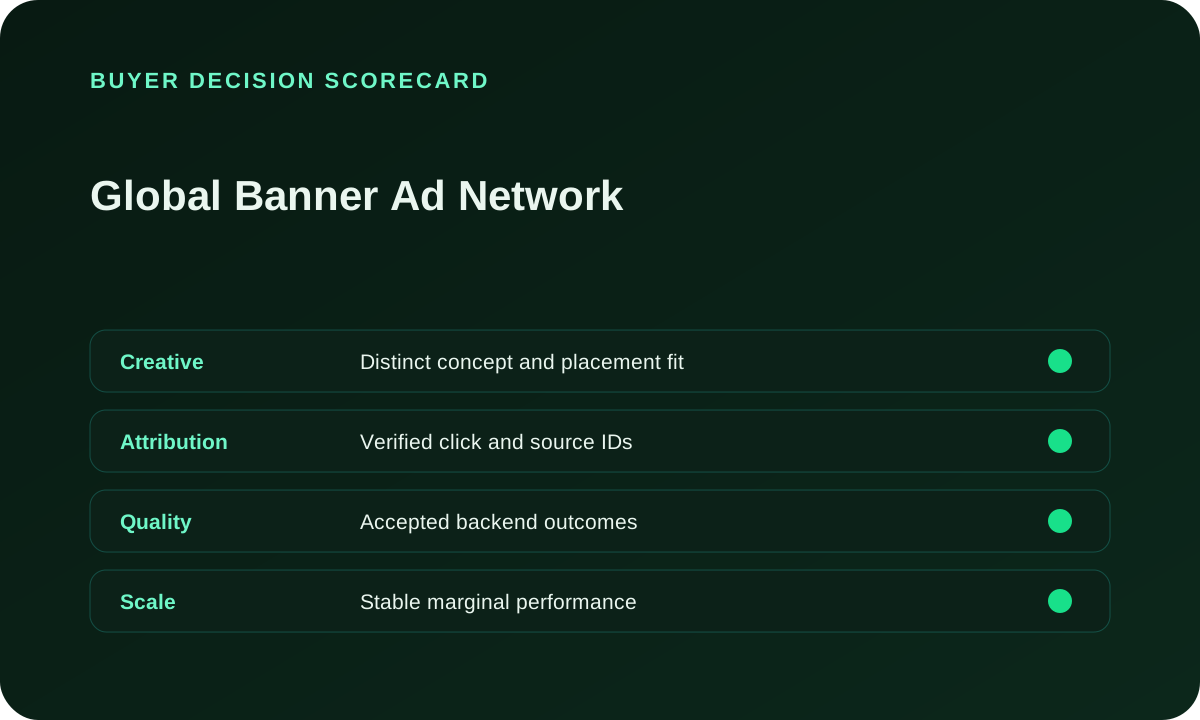
| Area | Evidence required | Action |
|---|---|---|
| Creative fit | The local asset is legible in each delivered size. | Repair clipping or translation expansion before adding more variants. |
| Attribution | Country and creative information survive the customer route. | Verify the localized destination and accepted-event record. |
| Quality | Accepted, rejected and pending customers are separated by market. | Investigate commercial rejection reasons before changing supply. |
| Economics | Media cost and customer contribution use a documented currency basis. | Compare country economics before approving another allocation. |
| Scaling | Additional traffic still produces acceptable value. | Expand one market or buying setting with a clear purpose. |
Global banner buying questions
Which countries should I include in a global banner campaign?
Start with countries where your offer, language, payment and customer support can operate. Then confirm the display inventory and reporting available for that campaign. We recommend buying a prepared market before pursuing the widest possible footprint. A global network can support an expansion plan without making every country an appropriate first purchase.
How should I compare results between countries?
Keep country, source, creative and destination versions visible at the reporting level available. Use the same accepted customer event and reconcile time periods before comparing. A market with recent pending orders should not be treated as directly equivalent to a market whose cancellations and qualification checks are already complete.
What should change when a banner is localized?
Translate the buying reason and material terms as well as the words. Check whether the product, delivery promise and payment route remain relevant. Review the delivered banner size because longer language can change readability. A local reviewer should inspect the destination too, especially shipping eligibility, currency and the next customer action.
How should I compare banner media prices?
Use the buying model shown for the campaign and calculate effective media cost from actual delivery. Customer acquisition cost is a separate calculation using accepted business outcomes. Confirm current campaign pricing with us; the lowest displayed unit price cannot tell you which international source delivers the best value for your offer.
When is a new country ready for a campaign?
Add a country when the business can serve it and you have a defined question and allocation for the launch. Treat different shipping, product availability or destination languages as meaningful conditions. Keep an existing market separate when it is your comparison, so its stronger customer history does not conceal the expansion's early uncertainty.
Does viewability prove that banner traffic converts?
Viewability describes whether an impression meets a visibility measurement rule; it is separate from a click or accepted order. Check whether the campaign provides that measurement and what it covers. Do not infer a FroggyAds viewability filter from another platform's documentation or report unavailable measurements as zero.
How can an agency organize international client approvals?
Agencies should connect each client market requirement to an approved asset, destination and media allocation. Record who can authorize a new country and who validates customer quality. This makes the FroggyAds purchase easier to hand over while preserving the client's own fulfilment, legal and language responsibilities.
Is the cheapest country always the best place to advertise?
No. A lower rate may buy a different source mix or customers with different commercial value. Compare actual spend, accepted outcomes and the costs of serving those customers. An inexpensive market can be unsuitable when the offer cannot deliver there, while a higher media price may still fit a stronger customer contribution.
What should I fix before excluding a banner source?
Resolve shared asset or destination failures first. Then examine mature country and source differences using the controls your campaign supports. Keep a record of pending results and commercial rejection reasons. This gives you a defensible reason to retain, narrow or retest the purchase instead of treating one blended average as the whole campaign.
Why choose FroggyAds for international display buying?
Choose FroggyAds for a direct buying workflow with supported display traffic, audience settings, campaign budgets and available source information. We help you turn international reach into an organized media test. You can select the prepared market and review what the purchase contributes before extending the country portfolio.
Explore the next part of your banner campaign
Use the linked banner resources to resolve the next specific question about traffic, creative execution or campaign measurement before extending your market plan.
Build your first international display test with FroggyAds
Bring a country-ready offer, a readable banner and a destination that accepts the intended customer. Choose the supported settings for that market and decide how much to allocate. We recommend using the first review to identify a specific next buying action, rather than expanding because the campaign accumulated impressions.
What belongs in an international banner buying brief?
Your brief should make the proposed market test understandable to the buyer, local reviewer and person who validates customers. Name the country, customer need and eligible product. Attach the creative and destination versions. State how media spend will be compared with the business result. This small amount of preparation is more useful than a long list of countries the campaign might eventually reach.
Keep market readiness, asset readability and customer acceptance together. Each can change the campaign decision independently: the business may be unable to deliver, the translated banner may be unclear, or orders may fail a later check. The table below turns those differences into buying actions rather than averaging them into one international performance label.
| Decision | What to verify | FroggyAds action |
|---|---|---|
| Customer goal | Name the accepted order, enquiry or activation for this offer. | Keep that definition stable within the market comparison. |
| Ready market | Confirm delivery coverage, language, currency and payment route. | Apply the relevant available audience settings to the eligible campaign. |
| Supply detail | Check the source information and creative identifiers available in reports. | Make adjustments at the level the records actually support. |
| Local economics | Separate media spend from the cost of serving the customer. | Approve an allocation using the same accepted-outcome definition. |
| Country expansion | Specify what the new market will establish and who approves it. | Preserve the existing market reference when extending the purchase. |
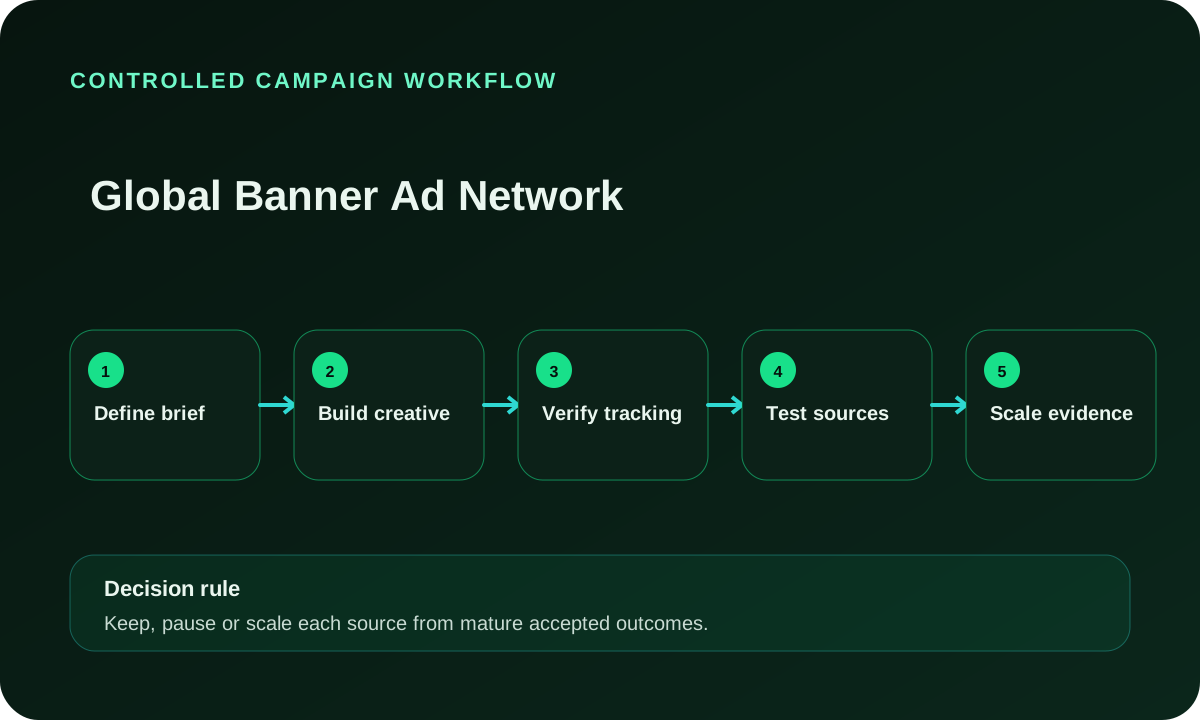
Prepare the international campaign in five steps
- Serve: verify that the country can complete the offer, including shipping or product access and the payment route.
- Adapt: give the local reviewer the complete proposition, then check the banner at its actual delivered size.
- Connect: test the identifiers and accepted customer event through each materially different localized destination.
- Buy: allocate media to one defined market question and review the country and source details available.
- Extend: add another country or buying change for a stated reason while keeping its commercial assumptions visible.
Why use FroggyAds for market-by-market banner buying?
Our self-serve platform lets you manage supported display campaigns with your own bid, targeting and campaign budget. Available source reporting helps you examine what that purchase delivers. For an international advertiser, this means you can prepare one market, control its media allocation and compare its results before widening the plan. Confirm format-specific controls in the account so the brief matches what you can operate.
We recommend this approach for ecommerce teams checking new delivery markets, app advertisers comparing eligible device audiences and agencies handling localized client offers. The practical advantage is a clear connection between the country you choose and the money you commit. Your customer records remain the evidence for which markets deserve further investment.
Keep the country decision separate from total reach
A portfolio can grow while individual markets behave differently. Show the market that earned the next allocation and explain why. This helps the business see whether expansion is finding additional customers, compensating for an exhausted creative or simply moving money into a less mature country. International buying becomes easier to manage when each result retains its local conditions.
Market record: retain the country, offer eligibility, asset language, destination version, reporting period and customer acceptance rule with the media results.
Expansion reason: state why this country is ready now, including product availability and the team's ability to support its customers.
Measurement limit: describe any missing source, currency or customer information before approving a precise comparison that the records cannot support.
Commercial explanation: distinguish shipping failures, payment problems and cancellations from confirmed traffic or creative issues.
Next purchase: attach the amount, proposed change and review owner so a successful total does not become unlimited authority to expand.
| Buying check | How to use it | Evidence to retain |
|---|---|---|
| Market | Can this country complete the advertised purchase today? | Keep the eligibility and destination check with the launch approval. |
| Asset | Does the local proposition remain readable in the delivered unit? | Keep the language, dimensions and approved creative version. |
| Value | Does the additional media produce acceptable customer contribution? | Keep accepted outcomes, commercial costs and the comparison period. |
A transparent comparison between two country cohorts
Hypothetical example: two country cohorts each spend USD 90. Country A records six accepted orders, giving USD 15 media cost per order; Country B records three, giving USD 30. If their margins differ, compare contribution as well before choosing the next allocation. These planning figures describe neither a FroggyAds media rate nor an observed campaign result.
Choose a network you can operate with a clear market plan
Bring your prepared market and display creative to FroggyAds. We give you the buying workflow to set the campaign allocation, apply supported targeting and examine available source results. Make the next country purchase when the commercial evidence justifies it. Create your free FroggyAds account.
External guidance: Google's responsive display asset guide describes its own creative system, while its Display & Video 360 viewability guidance describes a Google-specific targeting feature. Use them to understand the terms, then confirm FroggyAds requirements separately. They establish no FroggyAds performance or feature guarantee.
Global banner buying works one ready market at a time
Choose the country your offer can serve, make the banner readable there and preserve the route to the customer result. With FroggyAds, you can organize the media purchase around that prepared market and extend it when the next allocation has a clear commercial purpose.