
Canada-origin traffic procurement
A source-controlled media purchase evaluated within a verified Canadian service, language, currency and reporting lane.
Procure Canada-origin traffic by matching live geography and source controls to the advertiser's real province or territory service, justified language, disclosed currency, time zone and privacy responsibility. Judge only mature joined outcomes.
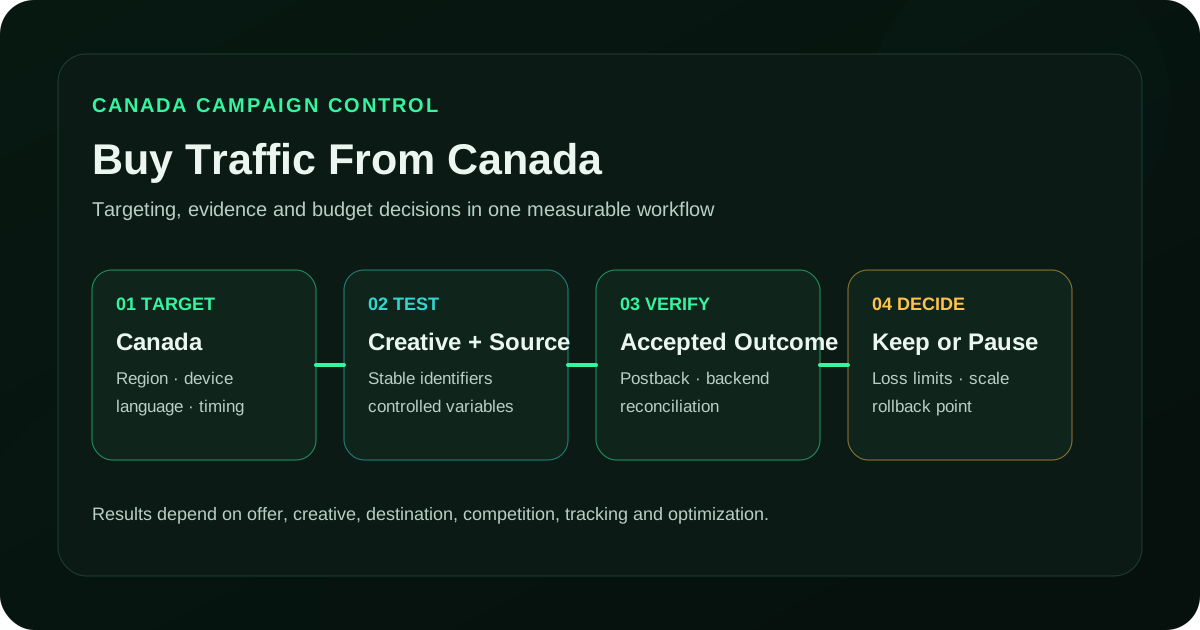
Canada-origin media should be separated from the advertiser's ability to complete and support the promoted transaction. The federal Office of Consumer Affairs publishes online-shopping guidance covering how shoppers can assess seller identity and product descriptions, plus terms, delivery arrangements, return handling, privacy and payment security. The Competition Bureau's currency-clarity notice explains why a dollar sign alone may not distinguish CAD from USD. These sources support a destination checklist; they do not verify FroggyAds supply, user intent or conversion. For each served province or territory, record serviceability, currency and fee treatment, relevant local time, the tested destination, source and click identifiers, and the advertiser's mature accepted result. Keep provincial, sector and offer-specific obligations open for qualified review, and expand only the measured cell whose operational and economic evidence remains inside its approved limits.
Buying traffic from Canada means purchasing measured delivery identified as originating in an eligible Canadian lane under the supplier's available controls. Origin alone does not prove identity, intent, quality or results. The procurement decision depends on serviceability, technical joins and accepted advertiser value.
A source-controlled media purchase evaluated within a verified Canadian service, language, currency and reporting lane.
An advertiser path matching served province or territory, audience language, disclosed currency, fulfilment and support.
A record connecting origin controls and supplier identifiers to mature accepted backend outcomes without assigning an origin-based score.
Official federal guidance for checking seller, product, terms, shipping, returns, privacy, payment and delivery information.
Official Canadian guidance warning that a dollar symbol alone may not identify CAD rather than USD.
The advertiser's verified ability to transact, deliver and support the offer in each selected Canadian jurisdiction.
A current named zone assigned to a served location, with UTC retained for cross-system reconciliation.
A tested connection from campaign, source, placement and click identifiers to an accepted advertiser outcome.
A supplier's Canada-origin setting is an eligibility and analysis field. It does not establish a visitor's identity, language, purchasing intent or value, and it cannot guarantee that an advertiser will accept the resulting event.
For the Canada-origin service and currency lane, Keep origin evidence alongside source, placement, device and click identifiers and make no positive or negative score from country alone. Enter that evidence in the Canada-origin province and source ledger with the source, date, owner and next decision. If the evidence is unavailable or incompatible, keep the Canada lane blocked instead of replacing it with a forecast, national statistic or undocumented assumption.
Connect the guide to live testing
Use the choices established in “Match the served province or territory” to define one audience, budget and source set in FroggyAds. Keep the surrounding offer and measurement rule stable so the test adds evidence to buy traffic from canada instead of mixing several changes at once.
Create My Free Account
Build the advertiser's real service map from licensing, product, delivery, tax, support and other offer constraints. A national supplier selector does not prove that the transaction is available or appropriate in every Canadian province and territory.
For the Canada-origin service and currency lane, Use only the intersection between live account controls and approved serviceability, then treat every expansion as a new lane. Enter that evidence in the Canada-origin province and source ledger with the source, date, owner and next decision. If the evidence is unavailable or incompatible, keep the Canada lane blocked instead of replacing it with a forecast, national statistic or undocumented assumption.
Canada's Office of Consumer Affairs advises consumers to check seller identity and contact, product information, terms, shipping, returns, privacy, secure payment and delivery before purchase. Use these points to inspect the advertiser path without treating guidance as legal approval.
For the Canada-origin service and currency lane, Record the actual seller and transaction evidence for each Canadian lane and route unresolved jurisdiction issues to qualified review.
The Competition Bureau warns that the dollar symbol can represent Canadian or American dollars and that even a Canadian-looking website does not guarantee CAD pricing. Confirm the actual transaction currency and disclose fees, taxes and conversion treatment before commitment.
For the Canada-origin service and currency lane, Capture the currency code at offer, cart and confirmation and keep media billing currency separate from advertiser value.
Choose English, French or another supported language from the served audience and the advertiser's operational capability, not from a broad national assumption. Advertisement, destination, transactional messages, fulfilment and customer support should remain compatible.
For the Canada-origin service and currency lane, Split language lanes when the customer journey or service conditions differ, and do not translate unsupported claims.
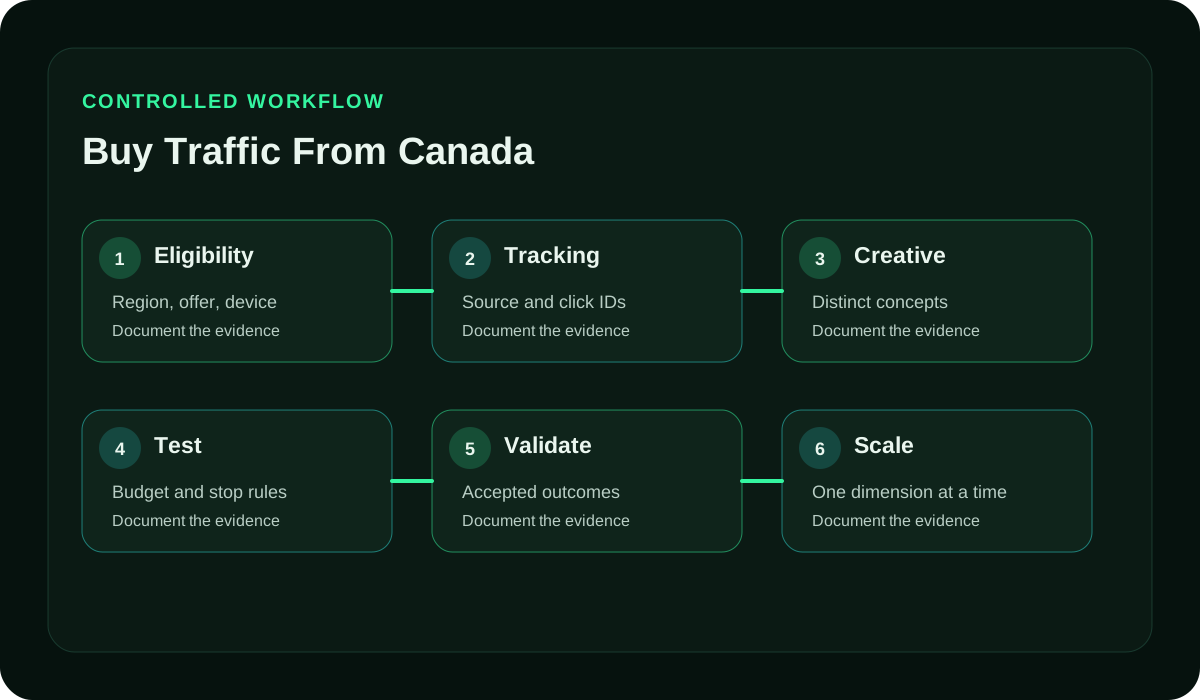
Verify available payment methods, total charges, shipping or service fulfilment, cancellation, returns and customer support in the chosen jurisdiction. Supplier delivery stops at the advertising event and cannot confirm that the advertiser completes a secure or acceptable transaction.
For the Canada-origin service and currency lane, Use permitted technical orders or sandbox paths where available and exclude every test from commercial acceptance.
Choose the execution format
Use the criteria around “Resolve federal and local Canada data duties” to decide whether push, native, display or pop fits the message and destination. Set format, targeting and spend as campaign controls in FroggyAds while the buy traffic from canada decision remains the standard for judging the result.
Create My Free Account
Document the advertiser, supplier and measurement vendor roles, purposes, legal basis or consent approach, identifiers, contracts, security, retention, rights and transfers. Determine which federal, provincial or territorial privacy responsibilities apply to the actual lane with qualified review.
For the Canada-origin service and currency lane, Do not assume that one national privacy statement resolves every Canadian processing context.
Compare events only when served jurisdiction, language, currency, offer, destination version, source visibility and acceptance definition match. A national average can hide an unavailable province, mismatched currency or unsupported customer-service path.
For the Canada-origin service and currency lane, Name every Canada-origin cohort from its controlling fields and do not merge it with a materially changed lane.
Specify the backend state that counts, who accepts it, why it can be rejected and how cancellations, returns or refunds mature. Lock the rule during a cohort so immediate front-end events are not presented as settled business results.
For the Canada-origin service and currency lane, Retain the minimum source-click evidence needed to audit every accepted and reversed record.
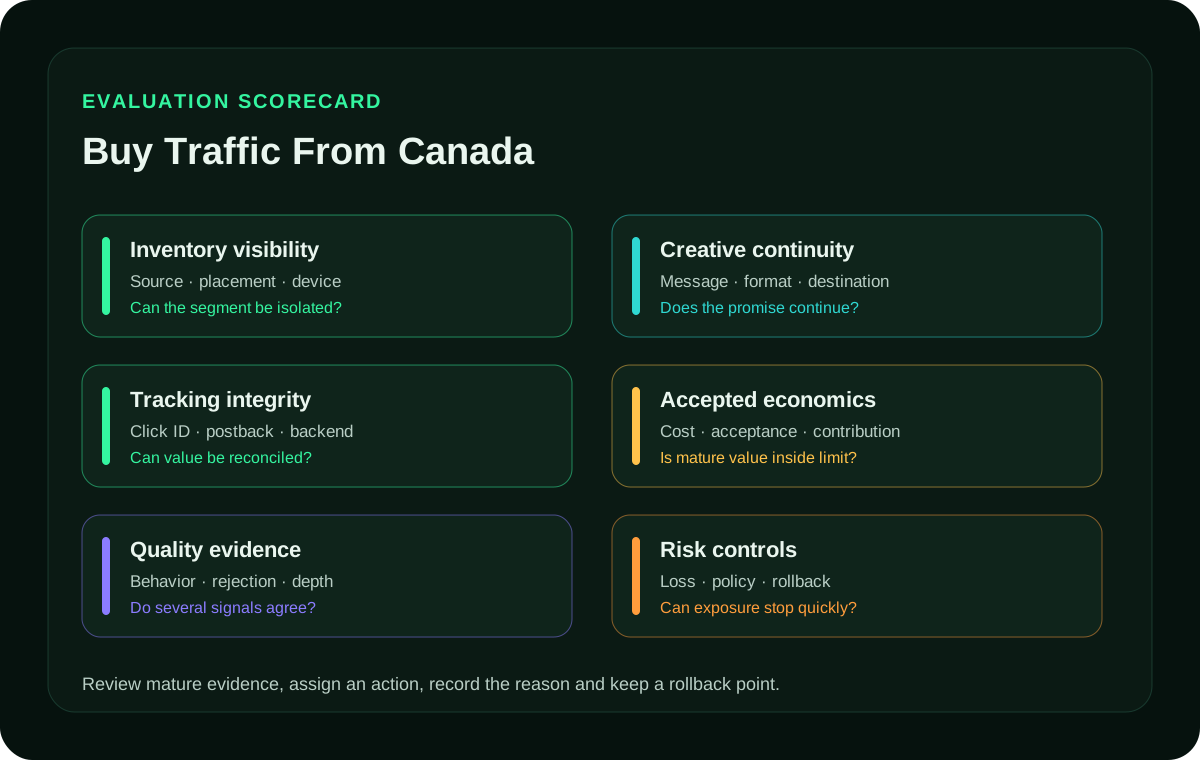
Set acceptable differences between supplier delivery, destination observations and backend joins, with a pause threshold and required evidence. Jurisdiction and time-zone labels belong in the incident record because a boundary error can look like missing traffic.
For the Canada-origin service and currency lane, Preserve raw UTC exports, account settings, destination hash and affected identifiers before requesting a correction.
Divide the relevant media cost by mature accepted outcomes inside one compatible Canadian lane. Do not treat origin, a low click rate, currency symbol or public consumer guidance as evidence of source value.
For the Canada-origin service and currency lane, Set a maximum learning loss and keep the cohort capped until joins and reversals are complete.
Increase one field such as cap, device, source pool or approved province after the control cohort passes. Evaluate the marginal allocation separately so the team can identify whether the new area or source changed data quality and accepted cost.
For the Canada-origin service and currency lane, Retain the control configuration as rollback and apply the written stop rule to the added allocation.
Assign owners for destination outage, currency mismatch, privacy concern, missing source IDs, payment failure and unsupported service location. Stop delivery promptly and preserve evidence without implying that a refund, make-good or outcome is guaranteed.
For the Canada-origin service and currency lane, The Canada-origin ledger should show notification time, affected lane, containment action and the condition required to resume.
Create an escalation record that starts with the served province or territory and the exact customer journey. Attach the CAD offer version, seller or service owner, delivery boundary, support route, information-flow notes and the current local-time mapping used by the campaign. Route a price, privacy, fulfilment or language issue to the owner qualified to resolve that field rather than treating it as a media-source failure. Media operations can pause the affected lane while the question is open. Restart only with dated repair evidence and a new cohort label, preserving the earlier source and outcome records for comparison.
Live inventory, location depth, bids, volume, advertiser serviceability, privacy responsibility, source quality and campaign results remain unverified until direct account and cohort evidence exists. Official sources set consumer review boundaries only.
For the Canada-origin service and currency lane, Publish no origin-based performance score and keep every unresolved field assigned to an evidence owner.
No. Value depends on source, audience fit, destination quality and accepted customer outcomes, not country alone. Buying traffic from Canada means purchasing measured delivery identified as originating in an eligible Canadian lane under the supplier's available controls.
A bare dollar sign can be ambiguous, so state CAD or the actual charging currency beside material prices. A source-controlled media purchase evaluated within a verified Canadian service, language, currency and reporting lane.
Make identity, offer, total price, important terms, cancellation and contact routes easy to find before conversion. A source-controlled media purchase evaluated within a verified Canadian service, language, currency and reporting lane.
Verify delivery, licensing, tax, language and support for every targeted area rather than assuming national coverage. Send flagged technical events through the supplier redirect, destination, measurement endpoint and backend.
Choose the language the intended audience can understand and continue it through the offer, terms and customer support. A supplier's Canada-origin setting is an eligibility and analysis field.
Store timestamps consistently and apply the same reporting boundary when joining platform activity with customer records. Canada spans multiple time zones and seasonal rules.
Confirm current targeting, available inventory, prices and source controls directly in the account used for the test. Set acceptable differences between supplier delivery, destination observations and backend joins, with a pause threshold and required evidence.
Preserve stable campaign and placement identifiers through the landing session and accepted conversion record. A source-controlled media purchase evaluated within a verified Canadian service, language, currency and reporting lane.
Wait through the relevant payment, cancellation and return periods before treating a conversion as final value. Divide the relevant media cost by mature accepted outcomes inside one compatible Canadian lane.
Future volume, conversion rate and profitability remain unknown until the specific offer and sources produce reviewed results. Verify available payment methods, total charges, shipping or service fulfilment, cancellation, returns and customer support in the chosen jurisdiction.
The Canada candidate can move from research to a capped traffic test only after live controls, destination readiness, data responsibilities and the source-click join pass. Decide the Canada-origin service and currency lane from mature accepted outcomes, retain the recorded rollback condition and stop when required evidence fails. Delivery, quality and business results are not guaranteed.
For Buy Traffic From Canada, treat Canada as its own campaign market. Confirm that the offer, landing experience, language and device path genuinely support the market, then compare source-level outcomes inside Canada. Use Official Canadian guidance for transaction readiness and What Buy Traffic From Canada means for procurement as the planning baseline instead of importing assumptions from another country.
On this Buy Traffic From Canada page, the decision should remain tied to the existing evidence around Official Canadian guidance for transaction readiness, What Buy Traffic From Canada means for procurement and Entities in the Canada procurement record. Those sections give buy traffic from canada its specific context; the table below turns that context into campaign actions rather than adding another generic definition.
| Decision | What to verify | FroggyAds action |
|---|---|---|
| Buy Traffic From Canada objective | Use Official Canadian guidance for transaction readiness to define the accepted business event and the maximum learning loss for buy traffic from canada. | Launch one FroggyAds campaign objective for Buy Traffic From Canada and keep the conversion definition stable. |
| Buy Traffic From Canada audience | Use What Buy Traffic From Canada means for procurement to verify market, device, language and offer eligibility for buy traffic from canada. | Apply only the FroggyAds targeting controls that change the real Buy Traffic From Canada customer journey. |
| Buy Traffic From Canada source evidence | Use Entities in the Canada procurement record to keep source-level differences visible instead of relying on one blended buy traffic from canada average. | Keep, cap, exclude or retest Buy Traffic From Canada inventory from documented source evidence. |
| Buy Traffic From Canada economics | Use Canada-origin traffic procurement to connect media spend with accepted conversions and downstream value for buy traffic from canada. | Protect the Buy Traffic From Canada test with a written budget boundary and a consistent attribution window. |
| Buy Traffic From Canada scale rule | Use Canada-origin service and currency lane to define the exact evidence that earns the next budget increase for buy traffic from canada. | Scale Buy Traffic From Canada one major control at a time and compare marginal performance with the prior baseline. |
For Buy Traffic From Canada, FroggyAds gives advertisers a self-serve DSP and ad-network workflow for buying supported traffic with campaign-level budgets and targeting. Depending on format and campaign context, available controls can include country, city, device, operating system, browser, carrier, category, source, ID and IP options. SmartCPC and Adscore-supported traffic-quality controls can support the buy traffic from canada optimization process, while the advertiser's tracker, analytics and backend acceptance remain the final evidence for commercial quality.
Use Canada-origin service and currency lane as the final checkpoint for Buy Traffic From Canada. If the accepted result does not reproduce after the next meaningful volume step, return to the last stable configuration instead of widening several controls at once.
Use this page when advertisers and media buyers need to make the specific decision described by Buy Traffic From Canada. Anchor the decision to audience targeting, conversion tracking and a single accepted business outcome rather than broad marketing activity. Keep this URL focused on that decision; use Buy Canada Traffic for the adjacent task.
Buy Traffic From Canada decision: Plan the market-specific test and measurement rules. Keep audience targeting, conversion tracking attached to the same campaign record so the buyer can explain the next budget action.
Evidence already on this page: Buy Traffic From Canada. Those sections define the operating context for Buy Traffic From Canada and should be checked before the buyer changes scope or spend.
Market-specific questions on this URL: For Buy Traffic From Canada, is traffic from Canada automatically more valuable? | For Buy Traffic From Canada, why should Canadian prices identify the currency? | For Buy Traffic From Canada, what consumer information belongs on the destination?
Source evidence 1: Canada-origin media should be separated from the advertiser's ability to complete and support the promoted transaction. The federal Office of Consumer Affairs publishes online-shopping guidance covering how shoppers can assess seller identity and product descriptions, plus terms, delivery arrangements, return handling, privacy and payment security. The Competition Bureau's currency-clarity notice explains why a dollar sign alone may not distinguish CAD from USD. These sources support a destination checklist; they do not verify FroggyAds supply, user intent or conversion. For each served province or territory, record serviceability, currency and fee treatment, relevant local time, the tested destination, source and click identifiers, and the advertiser's mature accepted result. Keep provincial, sector and offer-specific obligations open for qualified review, and expand only the measured cell whose operational and economic evidence remains inside its approved limits.
Source evidence 2: For Buy Traffic From Canada, FroggyAds gives advertisers a self-serve DSP and ad-network workflow for buying supported traffic with campaign-level budgets and targeting. Depending on format and campaign context, available controls can include country, city, device, operating system, browser, carrier, category, source, ID and IP options. SmartCPC and Adscore-supported traffic-quality controls can support the buy traffic from canada optimization process, while the advertiser's tracker, analytics and backend acceptance remain the final evidence for commercial quality.
What makes this URL distinct: Buy Traffic From Canada should retain its own evidence trail. Use the page's buyer job, entity gaps and nearest related URL to decide what belongs here, then keep the campaign variable, source identity and accepted outcome specific to this URL. If a neighboring page answers a different buying question, do not merge the two decisions simply because they share an ad format or acquisition term.
| Checkpoint | Decision action | Evidence to retain |
|---|---|---|
| For Buy Traffic From Canada, is traffic from Canada automatically more valuable? | Use Buy Traffic From Canada to resolve this question for Buy Traffic From Canada before changing budget or scope. | Retain audience targeting, source or placement identity, spend and the accepted-event result for Buy Traffic From Canada. |
| For Buy Traffic From Canada, why should Canadian prices identify the currency? | Use Buy Traffic From Canada to resolve this question for Buy Traffic From Canada before changing budget or scope. | Retain conversion tracking, source or placement identity, spend and the accepted-event result for Buy Traffic From Canada. |
| For Buy Traffic From Canada, what consumer information belongs on the destination? | Use Buy Traffic From Canada to resolve this question for Buy Traffic From Canada before changing budget or scope. | Retain accepted outcome, source or placement identity, spend and the accepted-event result for Buy Traffic From Canada. |
Hypothetical example: For Buy Traffic From Canada, if a controlled test spends USD 175 and records 10 accepted outcomes after the same review window, accepted cost is USD 17.50 per outcome. Replace the inputs with your own economics and the event definition appropriate to this page.
For Buy Traffic From Canada, FroggyAds provides a self-serve paid-media test with targeting, budget, conversion and source controls so the campaign decision can be validated with campaign evidence. Create your free FroggyAds account.
Buy Traffic From Canada should be evaluated market by market: define eligible geography, keep measurement consistent, and scale only where accepted-outcome economics remain viable.