
Message capacity
Can the format communicate the qualification or material condition needed before the click?
Choose an advertising platform for beginners using clear billing, simple controls, tracking, support and a bounded first test.
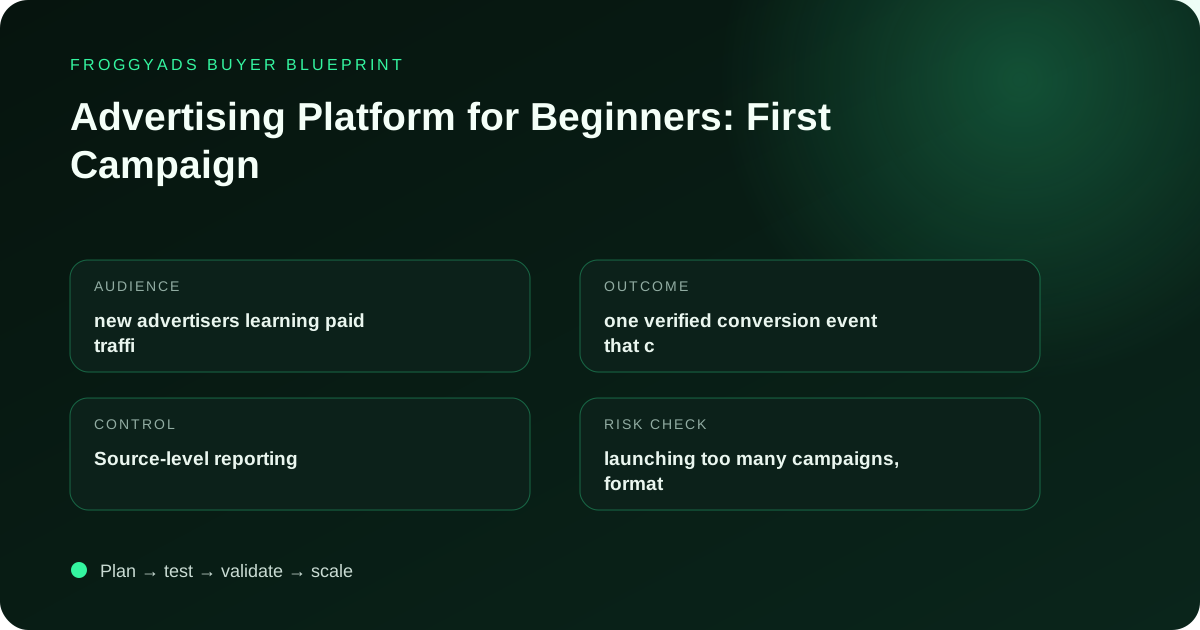
Quick answer: Treat platform selection, network comparison and low-budget planning as separate beginner decisions, then connect them through one accepted campaign outcome. Advertising Platform for Beginners should be evaluated as a controlled acquisition system for new advertisers learning paid traffic with a single measurable objective. The advertising platform for beginners destination should provide a single offer, tested mobile behavior, one primary action and a visible confirmation event. For Advertising Platform for Beginners, the main business signal is one verified conversion event that can be reviewed without advanced tooling, not clicks or impressions by themselves.
| Section | Distinct excerpt from this page |
|---|---|
| How should advertisers evaluate advertising platform for beginners? | The first campaign should answer whether the audience, format and destination can produce one verified conversion event that can be reviewed without advanced tooling inside a pre-written cost ceiling. |
| What this guide covers | beginners need a platform workflow that makes decisions understandable rather than hiding complexity behind automation. |
| Exclusions and frequency | Rising clicks with falling one verified conversion event that can be reviewed without advanced tooling can indicate fatigue rather than an audience shortage. |
Reference for Advertising Platform for Beginners: First Campaign: FTC guidance on online advertising and marketing.
The first campaign should answer one useful business question. It is not a contest to collect the most impressions or the cheapest clicks. A practical question is whether a defined audience, message and destination can produce an event that your business accepts within a fixed learning limit.
| Decision | Beginner record | Why it matters |
|---|---|---|
| Outcome | Name the accepted lead, signup, sale, install or other business event. | Prevents a convenient platform metric from replacing the real objective. |
| Audience | State who is eligible, where they can be reached and which device path works. | Keeps delivery aligned with the offer and destination. |
| Learning limit | Write a total test ceiling, stop owner and review time. | Controls exposure while evidence is incomplete. |
| Attribution | Preserve campaign, source, creative and landing identifiers. | Connects accepted outcomes to the media decision. |
FroggyAds gives you a self-serve route to supported traffic, campaign budgets, relevant targeting and source reporting. We recommend starting with the smallest configuration that can answer the written question. More settings do not automatically create more insight.
Begin with the final action your team can verify. If the goal is customer acquisition, decide whether the first campaign will be judged on a qualified lead, completed registration, approved order or another recorded outcome. Document who accepts it, when it becomes mature and which exclusions apply. This definition belongs in the launch brief before any media is purchased.
Next, work backward through the customer path. The destination must make the promised action possible on the targeted device. Analytics must capture the event once, retain the campaign identifiers and use the same time zone as the review record. The creative must explain enough of the offer to attract a suitable visitor rather than curiosity alone.
Use early platform signals for delivery diagnostics. Impressions, clicks and click-through rate can reveal whether ads are running and being noticed. They do not prove that the business objective was achieved. Your accepted event and downstream evidence remain the commercial control.
Choose a setting only when it represents a real eligibility, experience or measurement condition. Country and city can reflect service availability. Device, operating system and browser can reflect whether the destination works. Carrier or category may matter to a particular offer. Source, ID and IP options can support analysis or a documented action when the campaign context makes them relevant.
Avoid building dozens of tiny cells before you know whether the core path works. Excessive segmentation spreads limited evidence across too many combinations and makes a weak result look precise. Start with a coherent eligible audience, then split only when the next business decision needs the distinction.

Record every active boundary and its reason. That list makes later expansion deliberate. When your brief is ready, create your free FroggyAds account and build the first controlled audience.
Keep a dated campaign diary. A short note for every material edit protects you from crediting the wrong creative, source or destination when results change.
Compare formats by the job they must do in the customer path. A compact placement may need one clear proposition and a direct next step. A format with more visual or contextual room can introduce a less familiar product. The destination must continue the same expectation in every case.
Can the format communicate the qualification or material condition needed before the click?
Can your team create compliant variants, label them and preserve the exact version that ran?
Can campaign, source, creative and landing identifiers survive the complete journey?
Do not choose a format from click price alone. Judge whether it can produce a testable and honest path for this offer. FroggyAds can support traffic buying across available formats; select the one that your current evidence and production process can operate well.
Write one sentence that describes what an eligible visitor should expect. Turn that sentence into the creative proposition, then check that the destination confirms it immediately. Keep price, availability, geographic, subscription, fulfillment or eligibility conditions visible when they affect the decision.
Label concepts by meaning rather than color. “Fast setup” and “detailed control” are useful hypotheses; “blue” and “green” only describe presentation. Follow each concept through qualified activity and accepted outcomes. The version with more clicks may be less valuable if it attracts the wrong expectation.

When the path is consistent and testable, start your first campaign with FroggyAds.
The first test must be large enough to expose delivery and measurement behavior, yet narrow enough that the result has a clear meaning. Use one offer, one accepted event, a coherent eligible audience, labelled assets and a fixed review rule. This gives the campaign a baseline that later changes can be compared with.
Separate three money decisions. The bid is an auction input. Account funding makes spend possible. The learning limit is the total amount your business authorizes before the next review. Never describe one of these as the others. A beginner should know exactly which value controls participation and which value controls risk.
Write pause rules for operational failures, such as a broken destination, lost identifiers or an unavailable offer. Write decision rules for business evidence, such as mature accepted cost or qualified-action rate. An operational pause protects data integrity; a business decision judges whether the campaign deserves another test.
Send controlled visits through the same path a real visitor will use. Confirm that the destination loads on targeted devices, campaign parameters arrive intact, the intended event fires once, consent behavior is understood and the analytics record contains the correct time and identifiers. If a sales or approval system exists, confirm how the recorded event joins to it.
Document the known loss points. Redirects may remove parameters. Browser or consent rules may limit measurement. Duplicate handling may differ between systems. Time-zone boundaries can place the same event on different dates. These conditions do not automatically make a platform unsuitable, but they change how evidence must be reconciled.
If platform clicks and analytics visits disagree materially, investigate before optimizing sources. A measurement defect can make useful traffic appear weak or invalid activity appear productive. Source actions should begin only after the relevant evidence chain is stable enough to support them.
Use a ladder rather than one universal score. Delivery metrics show that inventory was purchased. Engagement or qualified-visit metrics show whether the visitor continued meaningfully. Conversion metrics show a recorded action. Acceptance or revenue evidence shows whether the business recognized value. Each level answers a different question.
| Layer | Example evidence | Beginner use |
|---|---|---|
| Delivery | Spend, impressions, clicks, source and device. | Confirm the campaign ran as configured. |
| Journey | Landing arrival, qualified session or completed step. | Find message or destination friction. |
| Outcome | Lead, registration, install, order or other tracked event. | Measure the stated campaign objective. |
| Acceptance | Approved action, reversal, revenue or retained value. | Decide whether the media economics deserve continuation. |
Define the numerator, denominator, source and maturity window for every ratio. A metric without those definitions cannot be compared reliably across reports.
Review operating integrity, audience fit and commercial evidence together. The scorecard is a decision aid, not a FroggyAds performance claim.
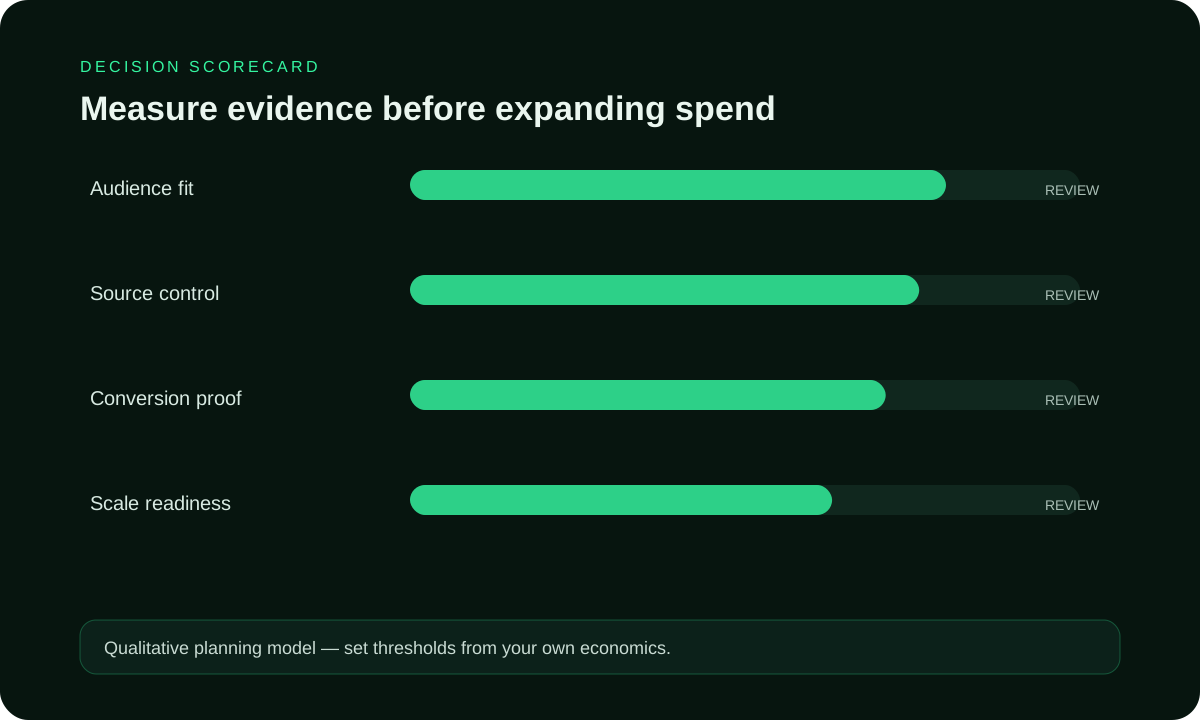
Check destination availability, identifiers, consent, event firing and the join to accepted outcomes.
Compare the eligible source and device cells with enough mature evidence to support a narrow action.
Relate settled value to media and other decision-relevant costs under a documented formula.
Record “insufficient evidence” when the cohort is too small or immature. That is more useful than forcing an early winner. State the next amount of evidence, date or validation event required to review again.

Choose FroggyAds for your first controlled traffic campaign.
Inspect operational health soon after launch. Confirm delivery, destination availability, identifiers and event collection. These checks can justify a repair or pause, but they rarely justify a commercial conclusion.
Decide on audience or source value only after the relevant outcomes have matured. If a lead needs review or an order can be reversed, use the same waiting window for every compared cohort. Freeze the cohort by launch or click date so later arrivals do not distort the comparison.
Change one major constraint at the scheduled decision point. Save the prior configuration and state what the change is expected to improve. Then measure the new cohort separately. This cadence gives a beginner a usable learning record instead of a campaign that changes faster than its evidence.
| Observed pattern | First check | Possible response |
|---|---|---|
| Clicks but few recorded visits | Redirects, page speed, consent, analytics and parameter persistence. | Repair the path before judging the source. |
| Visits but no intended action | Message continuity, device usability, offer clarity and event setup. | Correct the destination or qualification hypothesis. |
| Tracked actions but low acceptance | Eligibility, duplicate rules, validation delay and rejection reasons. | Narrow the audience or improve pre-click qualification. |
| One source has mature weak economics | Sample size, stable tracking and source concentration. | Limit, exclude or retest that source under a written rule. |
Apply the action to the smallest segment identified by the evidence. Do not condemn an entire format when one placement failed, and do not keep a source solely because its click price appears low. Preserve a retest condition so later funnel repairs can be evaluated fairly.
Decide the single business event the first campaign should produce, who can legitimately produce it, how the event will be measured and the maximum amount you are prepared to spend while learning.
No. A low click price can still produce poor economics if the audience is ineligible, the message is unclear or the measured action is not accepted by the business. Compare cost with qualified and accepted outcomes.
Use only settings that express real eligibility or measurement requirements. Start with the relevant market and device path, a controlled budget, labelled creative and landing versions, and source evidence you can review.
Change one major variable per comparison whenever practical. If audience, bid, format, creative and destination all change together, you cannot identify the cause of the result.
A bid is an auction input for an eligible delivery opportunity. A test budget is the total amount you authorize to learn from the campaign. Account funding is a separate concept again.
Scale only after tracking is stable, the relevant outcomes have matured and a repeatable cohort stays within the written business boundary. Increase one constraint and compare marginal performance with the saved baseline.
No. Paid traffic cannot guarantee conversions, sales, revenue or profit. FroggyAds provides supported traffic buying, campaign controls and reporting; your offer, destination, measurement and optimization determine the commercial outcome.
Blended averages can hide both useful and weak placements. Source-level cost and accepted-outcome evidence lets you keep, limit, exclude or retest the smallest relevant segment.
Pause the commercial conclusion and inspect redirects, identifiers, duplicate rules, time zones, consent behavior and destination events. Repair measurement before judging traffic quality.
Choose the format that can set an honest expectation for the offer and continue naturally on the destination. The best first format is the one your team can produce, track and review consistently.
Connect advertising platform for beginners to measurement, source control and responsible scaling.
For Advertising Platform for Beginners, begin with one objective, transparent tracking, source-level controls and a written stop-or-scale rule. Judge results in the context of offer, creative, destination, GEO, bid and ongoing optimization.
Open the network guide for selection criteria and the budget guide for learning-cost controls.
Evaluate the best ad network for beginners by eligible inventory, formats, targeting, reporting, tracking, support, safeguards and mature test economics.
Build cheap advertising for beginners around capped tests, reliable tracking, accepted outcomes, total learning cost and controlled scale or rollback rules.
Use the push guide to plan permission-aware delivery, concise opt-in messaging and post-click acceptance evidence before widening a beginner campaign.
Use the popunder guide to connect the triggered placement with a suitable destination, controlled frequency and source-level business outcomes.
Use the native guide to align headline, image, disclosure and landing context while measuring which concept produces accepted visitor actions.
Plan media buying for beginners with source-level measurement, budget allocation, format and creative tests, accepted outcomes and reversible decisions.
Choose the next beginner guide from the specific channel, cost or operating decision you need to make.
The second campaign should be funded by a clear learning result from the first. That result may be a proven tracking chain, an audience cell with mature accepted outcomes, a creative proposition that qualifies visitors, or a documented reason the path failed. Each is more useful than a blended dashboard screenshot.
| Proof | Evidence to retain | Next action |
|---|---|---|
| Measurement works | Matched identifiers, timestamps, events and accepted records. | Continue commercial testing with the same definitions. |
| Audience fits | Mature outcome and cost evidence for a stable eligible cell. | Keep the cell or expand one adjacent boundary. |
| Message qualifies | Labelled concept and destination versions through acceptance. | Produce a meaningfully different second concept. |
| Failure is diagnosed | Named layer, repair owner and retest condition. | Fix the path before purchasing another comparable cohort. |
FroggyAds helps you keep the media-buying layer controlled while your analytics and business records supply the final proof. Create your free FroggyAds account.
This URL helps a new advertiser choose and operate the platform for a first controlled paid-media test. It covers translating a business outcome into a campaign, limiting exposure, proving measurement, reviewing source evidence and deciding whether a second cohort is justified.
The related X Ads For Beginners page can answer a channel-specific question. This page owns the wider platform operating decision and explains how FroggyAds fits the beginner's first test across supported traffic options.
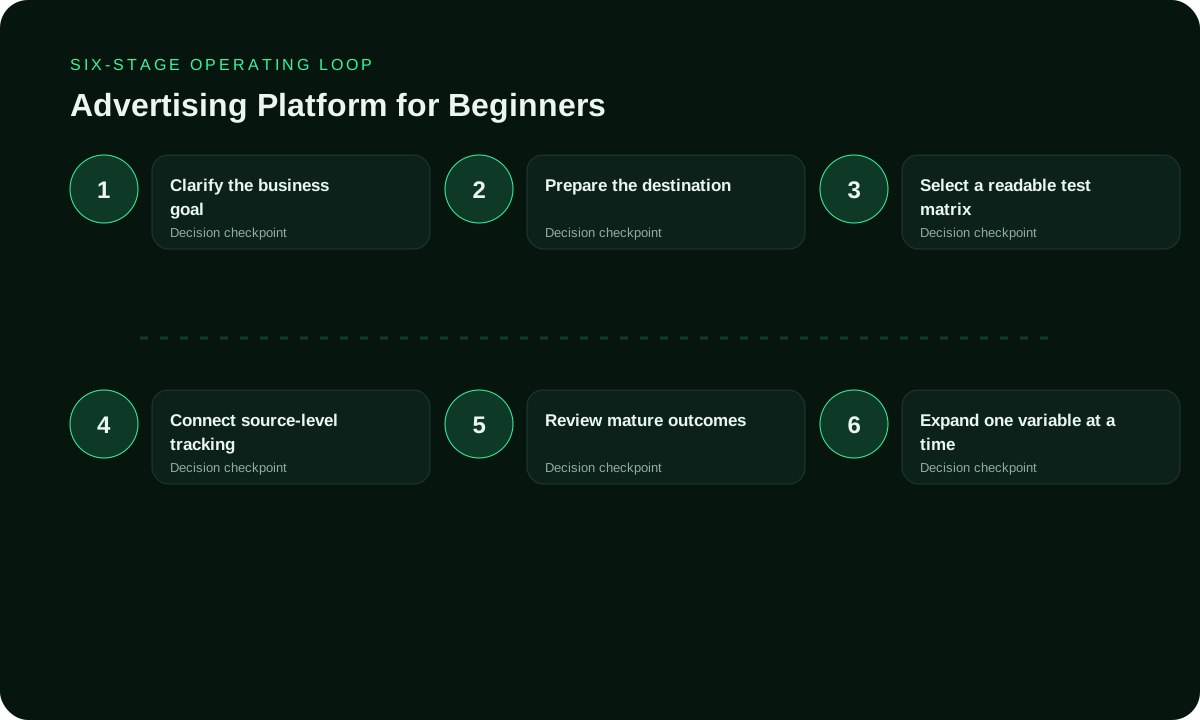
| Stage | Beginner question | Evidence |
|---|---|---|
| Define | Which accepted event and audience make this campaign useful? | Outcome rule, eligibility brief and destination check. |
| Bound | How much can the business spend before the next decision? | Learning limit, pause rules, owner and review date. |
| Observe | Which source, creative and landing version produced the outcome? | Identifiers, media cost, event and accepted record. |
| Act | What single reversible change has mature support? | Decision note, saved baseline and rollback condition. |
We recommend FroggyAds when you want a self-serve traffic-buying workflow with campaign controls and evidence you can connect to your own accepted outcomes. Start your first campaign with FroggyAds.
Hypothetical method: a first cohort spends USD 240 and produces 12 tracked registrations. After the documented review window, eight meet the business acceptance rule. Accepted acquisition cost is USD 240 divided by eight, or USD 30. The four unaccepted records remain useful diagnostic evidence, but they do not enter the accepted denominator.
Replace the amount, event and acceptance rule with your own records. This example explains the calculation and is not a FroggyAds price, result or performance promise.
Define one accepted business event, prove the tracking path, protect the campaign with a total learning limit and preserve source, creative and destination identifiers. Use FroggyAds to run a controlled traffic test, then expand only one constraint when mature evidence supports it.