Advertising Network India
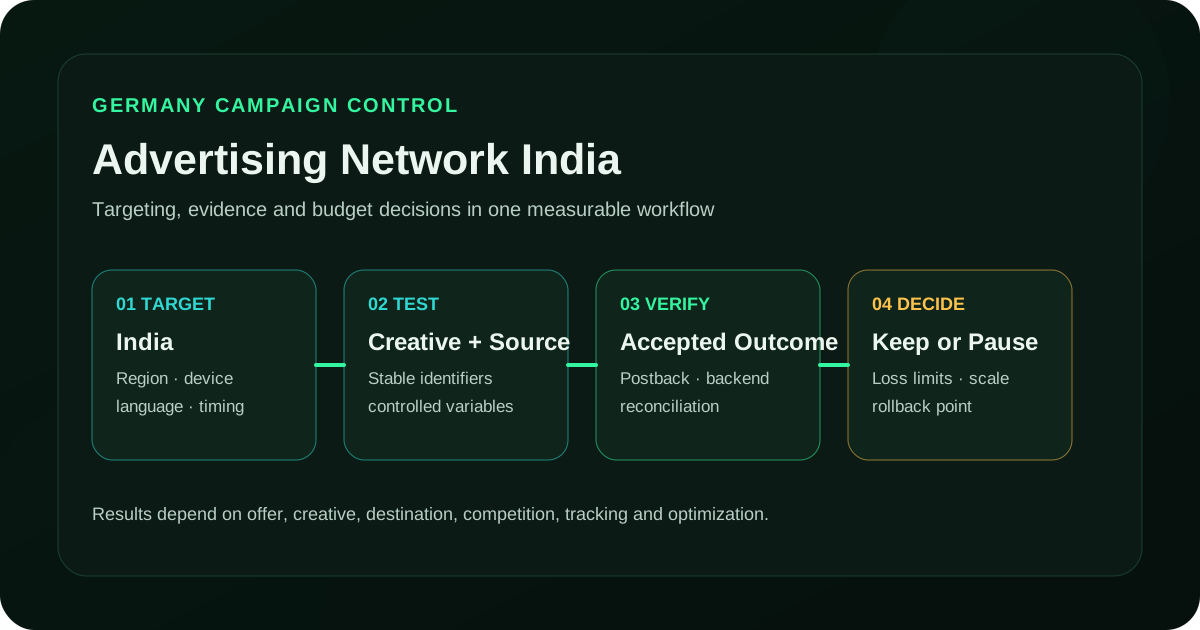
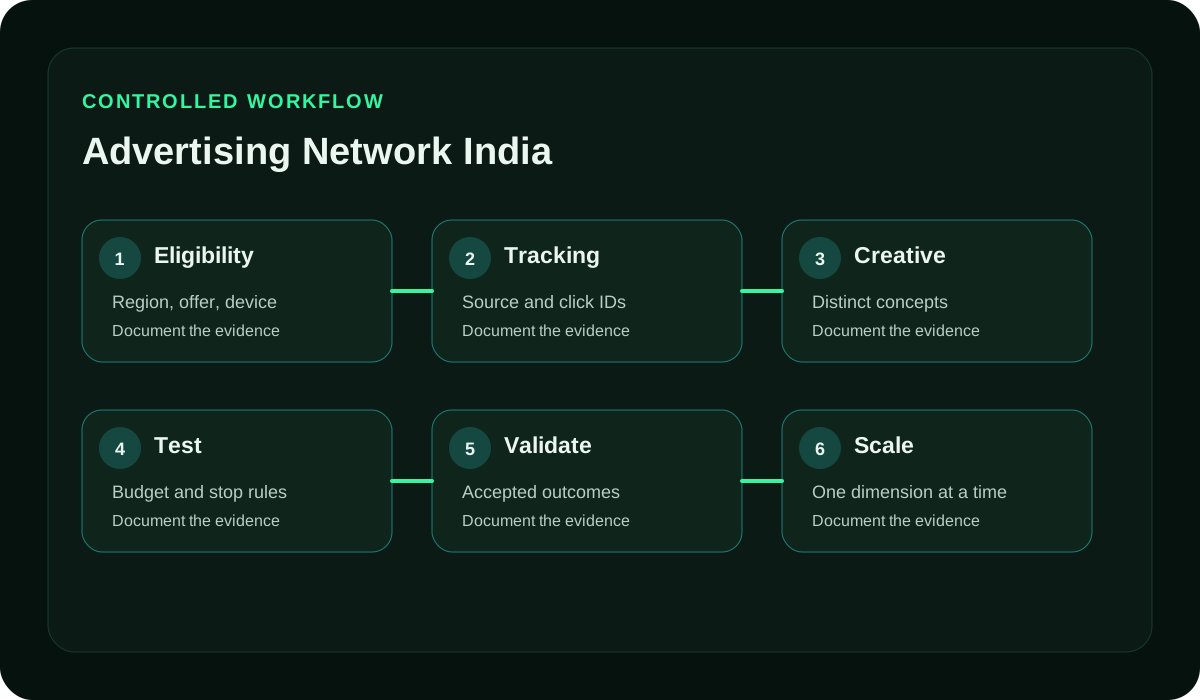
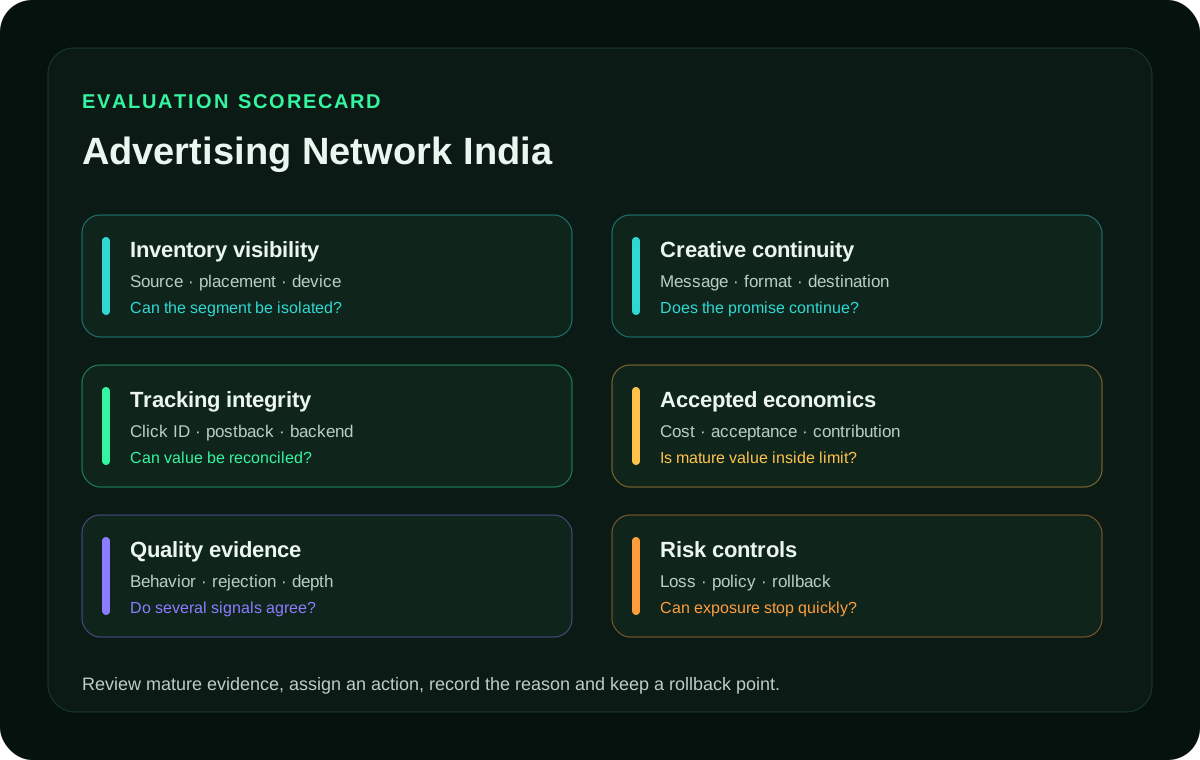
Evaluate advertising network india by India inventory access, ad-format coverage, source reporting, targeting, budget controls, tracking, support and accepted campaign economics.
Partition Indian network evaluation by state, language, device and product eligibility
India network planning should begin with the places and customer routes the advertiser can serve. State, city, language, delivery, payment, support and product eligibility may differ. Write these boundaries before media opens. A national targeting option is a technical control, not evidence that every resulting visit can receive the same offer or follow-up.
Build service cells around meaningful operating combinations. A mobile Hindi route in one city and an English business enquiry in another require separate destinations and responsible teams. Do not create hundreds of cells for appearance; create only those with a maintained offer, reviewed journey and accepted outcome. Unserviceable combinations should remain explicitly excluded.
Indian creative review should test the complete route on the intended screen
Choose language according to audience task and support capacity, then inspect page weight, typography, fields, validation and confirmation on sampled devices. Transliteration or a mixed-language route may be appropriate only when reviewed for the actual audience. The objective is comprehension and successful continuation, not a mechanical language quota.
Compare accepted demand, not clicks, by language and device cohort. A low-bandwidth failure can resemble poor publisher traffic. A vague translation can create high engagement and low qualification. Preserve destination performance and customer dispositions so the owner can distinguish those causes before changing the network allocation.
| Cell dimension | Evidence | Why it matters | Owner |
|---|---|---|---|
| State or service city | Eligibility, delivery and response capacity | Separates selectable reach from fulfilment | Indian operations |
| Language journey | Reviewed message, form, confirmation and support | Tests comprehension through handoff | India service-cell language and handoff owners |
| Device environment | Render, performance, format and click path | Locates technical friction | Web and media teams |
| Product eligibility | Customer and product rule with accepted action | Prevents invalid demand entering value | Commercial owner |
Inspect Indian supply below the exchange category
Request representative placements from the formats and devices intended for each service cell. Record publisher environment, seller relationship, language context, capture time and network control. A high-volume app category can contain very different interaction patterns. A publisher sample should be connected to later customer quality without disclosing individual customer records.
Investigate sudden concentration, accidental interaction, repeated invalid details or unexplained source movement with a defined process. The network owns seller and placement controls; the advertiser owns form and fulfilment checks. Pause only the affected cohort when possible. A nationwide block can discard valid learning, while an aggregate approval can preserve a serious exception.
Official sources frame review while the programme map supplies the facts
Use the current official source listed in the ledger only within its verified claim boundary. It does not approve the network, data collection or customer journey. Document every field and identifier, purpose, recipient, processor, access role, retention and deletion or correction route. Qualified owners must interpret the current requirements for the actual activity.
Use minimal cohort outcomes for media. State or service cell, language, device, accepted status, maturity and controlled rejection may answer the allocation question. Keep identity, financial details and customer conversations in authorised systems. An audience upload or identity match requires a separate purpose and review rather than becoming part of a default India network configuration.
| Returned dimension | Decision supported | Internal evidence retained | Misuse to avoid |
|---|---|---|---|
| Service cell | Whether media reached an eligible operating route | Exact address and customer file | Treating selectable geography as fulfilment |
| Language and device | Whether the journey was usable | Detailed support conversation | Inferring demographic traits |
| Accepted disposition | Whether a responsible team could act | Identity and qualification notes | Sending raw records to the network |
| Maturity cohort | Whether later value had time to appear | Commercial transaction detail | Comparing immature and mature cells |
Choose a small set of Indian cells that expose different operating risks
Start with serviceable combinations that the teams can monitor. Fix the offer, destination, supply group, maximum allocation and response window. A pilot may contrast devices or languages, but every cell needs enough evidence to interpret. The result belongs to those settings and cannot establish a universal Indian CPM, conversion expectation or publisher grade.
Expansion introduces a new cohort and an owner. Preserve earlier evidence. If logistics, staffing or payment changes, annotate the event before judging the network. If placement provenance changes, investigate supply. The operating file should route each failure to the system capable of fixing it rather than seek one bidding adjustment for every problem.
An India roster should describe what each partner is trusted to do
Compare networks on state precision, device reporting, language support, seller transparency, placement exclusions, invalid-traffic response, export detail and escalation. Test functions in the relevant account. A nationwide availability claim receives no credit unless the partner can show how delivery is traced and narrowed for the intended cells.
Assign formats, supply groups, languages or service cells, with exclusions and replacement triggers. Control overlap when several networks operate. If a partner cannot explain a source or mature customer quality fails, retain the evidence and narrow the role. Approval is an operational assignment, not a permanent endorsement of all Indian inventory.
Map Indian language, region and handset routes to the operation that can continue them
An India account review should demonstrate one included state or city and one excluded route. Compare network controls with the maintained service map. Platform location assists delivery but does not prove an address or customer eligibility.
Language QA can use labelled synthetic journeys that never enter outcome totals. Test confirmation, assignment and response on representative devices. A correct landing page is insufficient when the handoff changes language or loses the product context.
A state-level operational event should be recorded beside cohorts. Logistics, stock, staffing or payment changes can depress completed value without any supply change. Pause affected acquisition and avoid teaching the bidding system from temporarily unserviceable demand.
App supply should be sampled by version and placement where possible. Interaction patterns can differ after an application update. The seller path and destination completion evidence should be refreshed rather than carried forward indefinitely.
Partner overlap deserves a practical control plan. When no reliable cross-network identifier exists, narrow assignments by state, format or publisher class. Do not claim deduplicated national reach from summed platform estimates.
Commercial terms are account-specific. Record funding, credit, refunds and reporting access with a date and owner. Keep those conditions separate from auction observations and do not generalise them to every Indian advertiser.
A customer-quality return can use service cell, language, device, accepted status and maturity. Detailed identity, financial information and conversation remain inside authorised systems. This provides diagnostic value without unnecessary data expansion.
Ask India support to investigate one harmless service-cell impression and preserve the returned representation, control and closure as reproducible evidence. Record whether the partner can interpret the identifiers and apply an exclusion. A nationwide sales claim does not prove local investigation capability.
Renewal should check one high-volume cell and one smaller specialist route. Confirm current destination, support owner and seller provenance. National success cannot conceal a smaller cell whose evidence contract expired.
A new language or state begins a separate release. Reuse the QA discipline, not the prior approval. Keep maximum exposure small until destination, service and mature outcome evidence are complete.
The closing file should name unknown device, seller or maturity questions. Mark them NOT_VERIFIED rather than estimating. The partner can expand only after the specific evidence becomes available.
A state-service mismatch should be assigned from evidence. If the account targeted an excluded cell, the media owner corrects configuration. If the destination overstated delivery, operations and content repair the public route. If both were correct but the customer supplied an unsupported address, retain the neutral disposition without blaming the publisher.
Mobile destination monitoring should include the intended action and confirmation, not only the first paint. Record representative devices and failure location. A fast page that cannot submit reliably still creates a poor network route, while a slow third-party check cannot be fixed through seller exclusions.
Language owners should review changes in product or fulfilment facts, not only initial translations. A correct local version becomes inaccurate when the source offer changes. The release log links every language destination to the current commercial record and identifies which cohorts used the earlier version.
Partner reporting should preserve state, language, device and seller dimensions needed for diagnosis. If the account loses one dimension, narrow overlapping assignments or create a new evidence method before scaling. Do not replace missing provenance with a national blended score.
The approved India roster should remain small enough for named owners to maintain. More partners can increase nominal reach while fragmenting support and frequency evidence. Add a network only when it has a distinct service-cell or supply role that existing partners cannot meet transparently.
An India partner handoff should contain exact owners for media configuration, language release, destination performance, fulfilment and customer acceptance. A national team can coordinate the record, but each service cell needs a reachable operator. This prevents an exception from circulating between network support and local business teams while acquisition remains active and customers continue entering an unresolved route.
Answers for an India service-cell shortlist
Why should India network planning use service cells?
State, city, language, device, product and fulfilment differ. Cells connect network delivery to a route the advertiser can actually operate.
Should every Indian language have a campaign?
Only when the intended audience, destination and follow-up team can support it. Do not create language routes without an operating owner.
How does device performance affect supply review?
A slow or broken destination can mimic poor traffic. Preserve render and completion evidence beside publisher and customer cohorts.
What should an Indian placement sample record?
An India supply record captures the user task, represented route, unit position, handset context, language release, service cell, observation moment and enforceable control.
Can national volume hide a problem?
Yes. A large state or supply group can mask failure elsewhere, so retain service-cell results beneath every summary.
Do official sources certify the network setup?
No. They support bounded research. Qualified owners must review the actual activity and current requirements.
What outcome should media receive?
Use a minimal accepted status with service cell and maturity when sufficient. Keep detailed customer data in authorised systems.
What price conclusion is outside the scope of an India service-cell pilot?
No. India's cost record belongs to the named account and service-cell configuration observed on the recorded dates; it cannot stand for national pricing.
When should an India cohort pause?
Pause for unsupported service, broken language or device journey, unexplained supply or repeated failure of the accepted customer rule.
What can FroggyAds prove?
FroggyAds can evidence configuration and delivery reporting. The advertiser verifies local eligibility, language, data interpretation and fulfilled customer value.
India sources support bounded platform, supply and governance review
The Indian official source is used only within the live status and narrow claim recorded in the ledger; it does not approve this campaign. The ads.txt reference helps the India supply reviewer identify declared seller relationships. Google's article documents Google's geographic feature. FroggyAds provides the first-party record for configuration and delivery in its India account. State serviceability, language, device usability and mature business value remain advertiser evidence.
- Google Ads location targeting guidance LIVE_VERIFIED
- IAB Tech Lab ads.txt implementation guide LIVE_VERIFIED
- India Digital Personal Data Protection Act 2023 LIVE_VERIFIED
- FroggyAds official platform overview LIVE_VERIFIED