Named entities used in this procurement brief
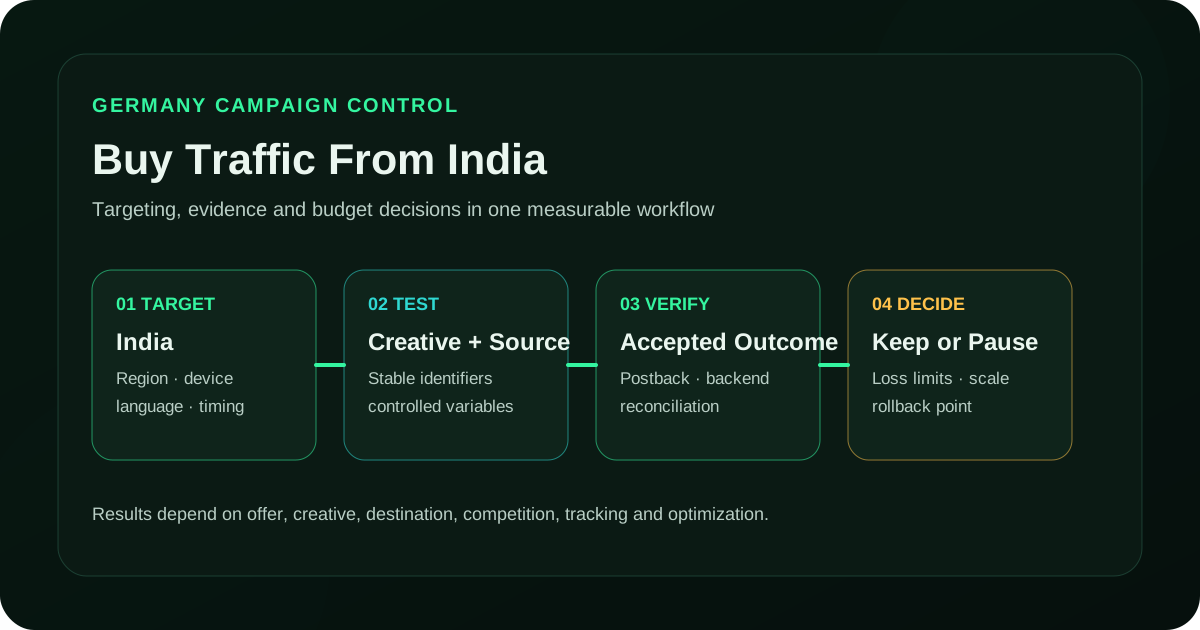
India-origin traffic procurement
A controlled purchase that verifies service location, language, source identifiers, data handling and accepted advertiser outcomes.
India service-language lane
A compatible state or city, audience language, INR offer, payment, refund, fulfilment and support path.
Asia/Kolkata reporting
Local India campaign reporting using the current IANA Asia/Kolkata zone while retaining UTC event records.
India Consumer Protection E-Commerce Rules 2020
Official ecommerce rules listed by India's Department of Consumer Affairs under the Consumer Protection Act framework.
India Digital Personal Data Protection Act 2023
The official Act governing digital personal data and defining roles, notice, consent and other processing concepts.
India Digital Personal Data Protection Rules 2025
The official 2025 rules and enforcement materials published by the Ministry of Electronics and Information Technology.
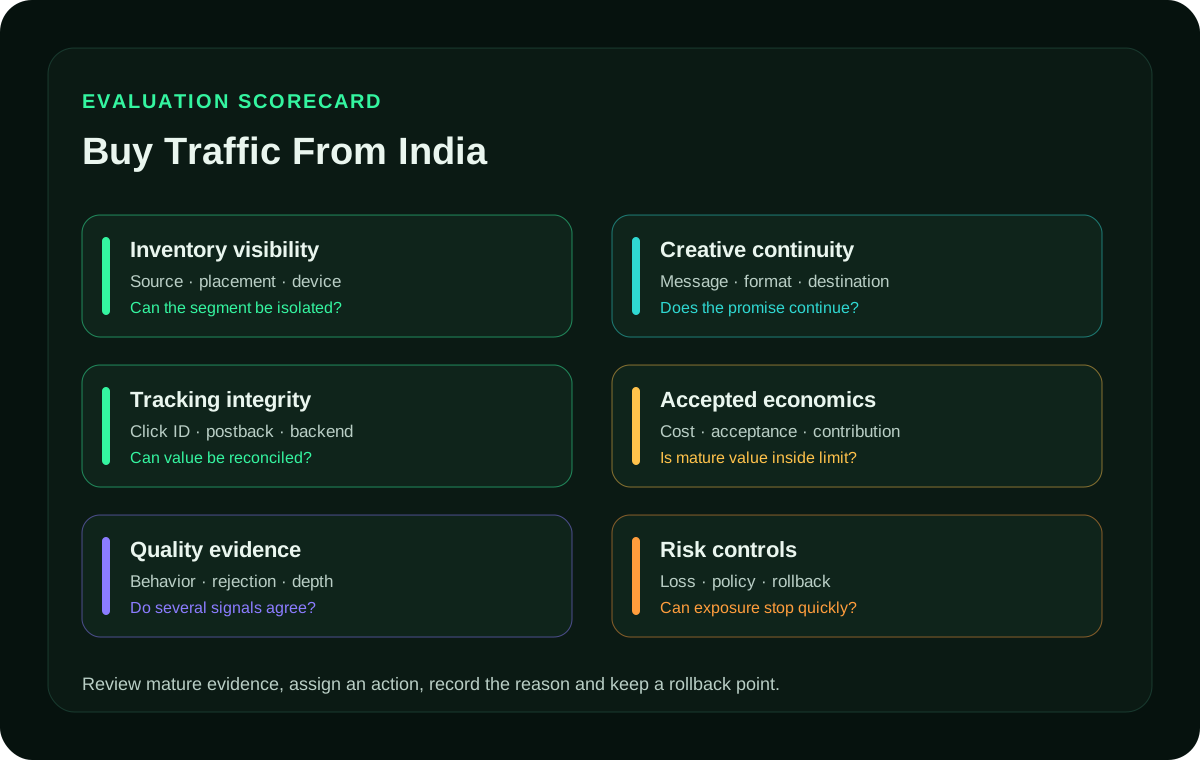
India source acceptance ledger
A record joining source and click identifiers to mature accepted outcomes, rejections, refunds and loss limits.
India destination readiness
Verified language, INR price, tax, payment, refund, fulfilment, complaint and support conditions for the actual offer.
How should an India campaign be divided before procurement?
Define one state or city and audience-language lane only where the advertiser can serve the offer. Match advertisement, destination, INR price, tax, payment, refund, fulfilment and support. A national average cannot resolve a local service or language mismatch.
Which India ecommerce boundary should the destination review use?
India's Department of Consumer Affairs lists the Consumer Protection Act, the E-Commerce Rules 2020, their 2021 amendment and official advertising and dark-pattern guidance. Determine which duties apply to the advertiser's role, marketplace model, goods and customer path.
Connect the guide to live testing
Connect Buy Traffic From India to a controlled audience test
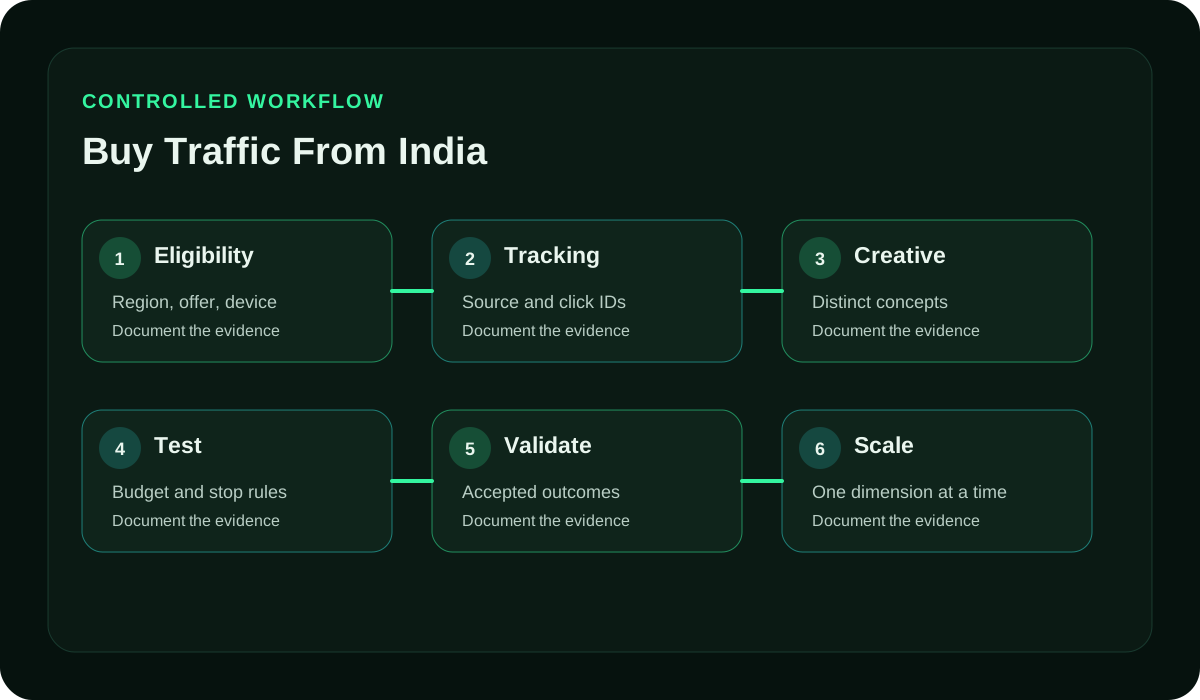
Use the choices established in “How should the India data flow be checked in 2026?” to define one audience, budget and source set in FroggyAds. Keep the surrounding offer and measurement rule stable so the test adds evidence to buy traffic from india instead of mixing several changes at once.
Create My Free Account
How should the India data flow be checked in 2026?
The Digital Personal Data Protection Act 2023 and the official 2025 rules and enforcement timeline are the current primary-source set. Verify the provisions in force for the actual flow. Map notice, consent or another applicable ground, processors, rights, security and transfers without assuming one universal treatment.
What India controls require direct account evidence?
Confirm available state or city depth, devices, formats, source and placement identifiers, bids, caps and reporting fields. Public research cannot prove India-origin supply or volume. Record any missing control as a procurement constraint.
How should India source evidence reach the backend?
Pass campaign, creative, source, placement and click identifiers into the India source acceptance ledger. Add destination version, language lane, test flag, event time, rejection reason and refund state. Preserve UTC with Asia/Kolkata reporting for reconciliation.