
Choose a USA Ad Network for Ecommerce Campaigns You Can Fulfil
By FroggyAds. We are the team responsible for this guide. Our recommendations connect supported FroggyAds buying controls with product eligibility, order records and ecommerce acquisition decisions.
Choose a USA ad network that lets you test a product offer against the orders your store can fulfil and retain. With FroggyAds, use supported formats, targeting, budgets and source reporting to run a defined ecommerce campaign. Confirm the delivery regions and checkout conditions first, then connect advertising spend to accepted orders and their later value. Nationwide reach becomes useful when the underlying offer works for the customers you attract.
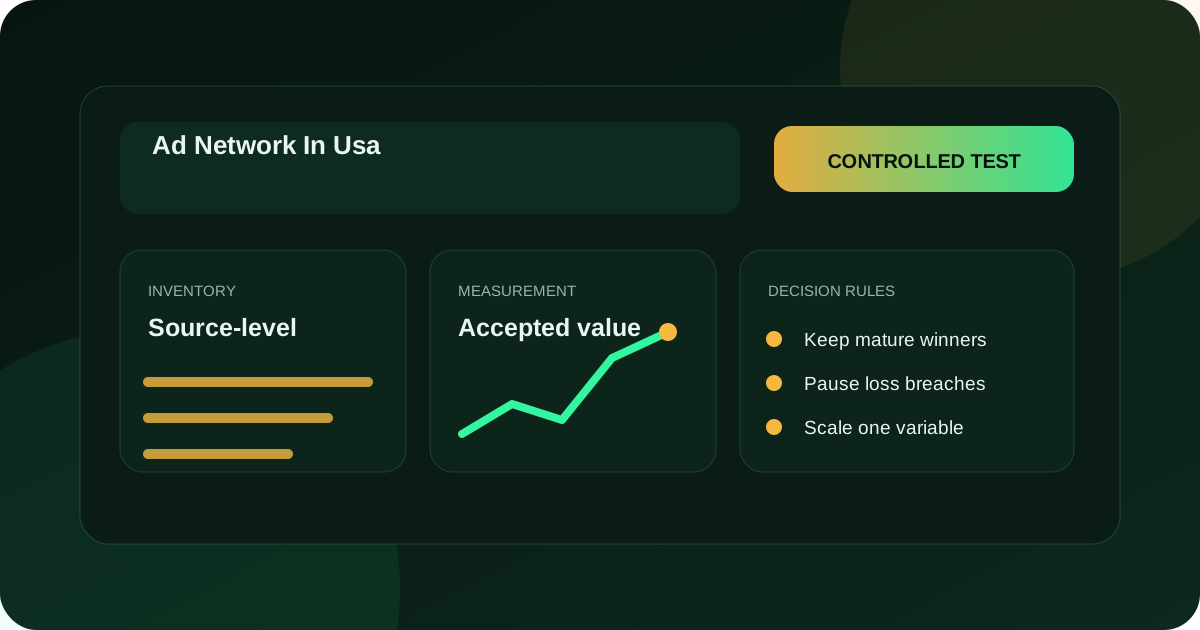
What makes USA ecommerce advertising worth funding?
USA ecommerce advertising is worth funding when eligible shoppers can receive the advertised product and retained order value supports the acquisition cost.
Use our self-serve buying workflow to test one coherent purchase opportunity. Your store supplies the product, checkout and commercial evidence. Before buying traffic, check these four parts of the offer:
- Product: The advertised item and variant are available for the planned test.
- Delivery: The customer can receive the product under the stated shipping conditions.
- Checkout: Price, payment and important restrictions remain consistent through purchase.
- Value: Accepted orders and later adjustments can be reconciled with actual media spend.
Connect nationwide reach to a product customers can receive
A national audience can encounter the same advertisement but receive a different purchase experience. Stock, shipping cost, delivery time and payment acceptance may vary by product or destination. Before launch, check the combination you intend to advertise. A product that can be displayed to a shopper is not necessarily available for delivery to that shopper. Making that distinction early protects both the customer's expectation and the interpretation of your media results.
Think of the campaign as a route from a specific promise to a retained order. The creative introduces the product, the destination explains it, checkout confirms the terms and your order system records what happened afterwards. Each stage has a separate job. When the route breaks, identify the stage before buying more traffic or declaring that the USA audience does not want the product.
Updated October 15, 2026. This guide focuses on nationwide ecommerce acquisition and the product, delivery and order decisions that make the media spend useful.
Build the campaign around products and delivery regions
A USA ecommerce buying brief connects a specific product offer to the delivery regions your store can serve. Record the items and variants, stock assumptions, destination and accepted-order status. Explain what would make the test useful. A narrow product scope can be easier to interpret than a campaign mixing unrelated promotions.
Choose the question before selecting the widest audience. You might test whether a product proposition produces retained orders in eligible regions. Alternatively, check whether clearer delivery terms reduce abandoned checkouts. Those questions require different evidence. We recommend the supported FroggyAds settings that help answer the actual question, rather than every available option.
Keep the first allocation reversible and leave funds available for a justified next step. If stock or shipping terms change, record a new test period. Otherwise, apparent improvement may reflect a different offer. The brief should make that difference visible before your team treats it as evidence for more media spend.
Evaluate the supply you can actually buy and analyse
A useful USA supply comparison starts with the traffic and reporting your intended campaign can actually access. Confirm supported FroggyAds formats and geographic options. Ask which source, creative, device and time fields are available. A global network claim does not establish the inventory or volume a product will receive in a particular region.
Compare options under a consistent offer and order definition. A discounted bundle and a full-price item have different commercial conditions. Their acquisition costs therefore compare the offers and media together. Keep those differences visible instead of attributing the result to the source alone or declaring one supplier universally better.
Use the reporting detail that exists. A source identifier may not identify an individual publisher or placement. Leave missing fields unknown and design the test around evidence you can collect reliably. Our recommendation is a buying decision connected to an available control, with enough context to explain what the campaign established.
Which products and destinations should you test?
Test products and destinations your store can serve on the advertised terms. A detected location does not confirm a delivery address or product eligibility.
Check which products can be shipped to which destinations and under what conditions. If your store's term US shipping covers only contiguous states, make that clear and review Alaska, Hawaii and any territories separately. Do not let a general country label silently decide the delivery promise. Confirm product restrictions, address eligibility and applicable offer requirements in your own operation, then apply the relevant supported campaign controls.
Start with a product-and-delivery brief
Bring your ecommerce buying brief to FroggyAds
Bring FroggyAds one offer your store can fulfil, a clear intended geography and an order definition you can verify. Use the self-serve workflow to choose the supported format and campaign settings. That preparation turns the first allocation into an interpretable test of a real ecommerce opportunity.
Create My Free Account
Advertise the product and the real purchase conditions
Show the product the customer will receive and explain the benefit without inventing proof. Use accurate images, relevant product details and a clear next action. If a bundle, subscription or conditional discount is involved, keep that distinction understandable. Different creative concepts should test meaningful reasons to buy, such as a use case or a product characteristic, rather than relying on cosmetic changes that teach little about customer choice.
Treat delivery statements as part of the offer. If a message refers to free shipping or a delivery window, confirm the conditions and where they apply before using it. The ad should not create an expectation that checkout later reverses without explanation. A more qualified but accurate promise can produce fewer clicks and still bring more suitable customers to the store.
Give each concept a stable identity and retain the destination version it used. When results change, you can then check whether the message, product availability or checkout terms changed too. This is particularly useful during promotions, when several teams may update the same offer at different times.
Keep the product promise consistent through checkout
Keep the advertised product, selected variant, price conditions and delivery information consistent through the purchase route. Test a representative eligible address, an excluded address and an order that does not meet any advertised shipping threshold. Check what the customer is told in each case. A clear route helps genuine shoppers decide; it also prevents predictable checkout friction from being misclassified as poor traffic.
How should advertising connect to order records?
Use a supported tracking route to connect campaign references to your own order records. Keep purchases, cancellations and refunds distinguishable.
Connect the campaign and available creative or source references to your own order records through a supported tracking setup. Follow current FroggyAds and integration instructions for the relevant pixel or server-to-server route. Test the event with a controlled order process before meaningful spend. This page does not assume an automatic Shopify connection, product feed, inventory sync or refund import; verify the systems you actually use.
Retain an order identifier so a repeated notification does not become another customer. Use clear status and value definitions in your business records:
- Order placed
- A checkout record created by the shopper; it does not by itself establish payment or fulfilment.
- Paid order
- An order whose payment meets the acceptance conditions your business uses for that comparison.
- Fulfilled order
- An order your operation has shipped or otherwise completed under its stated fulfilment process.
- Retained revenue
- Recorded product revenue after the refunds and other adjustments included in the review period.
- Contribution after acquisition
- Retained revenue less the included product, payment, fulfilment, return-handling and media costs; other overheads and taxes remain separate unless included explicitly.
Resolve substantial discrepancies before making large allocation changes. Check reporting time zones, event definitions, duplicate handling and observation windows. Different systems may record different stages of the transaction. The aim is an explainable reconciliation, not a forced match between totals that were never intended to describe the same thing.
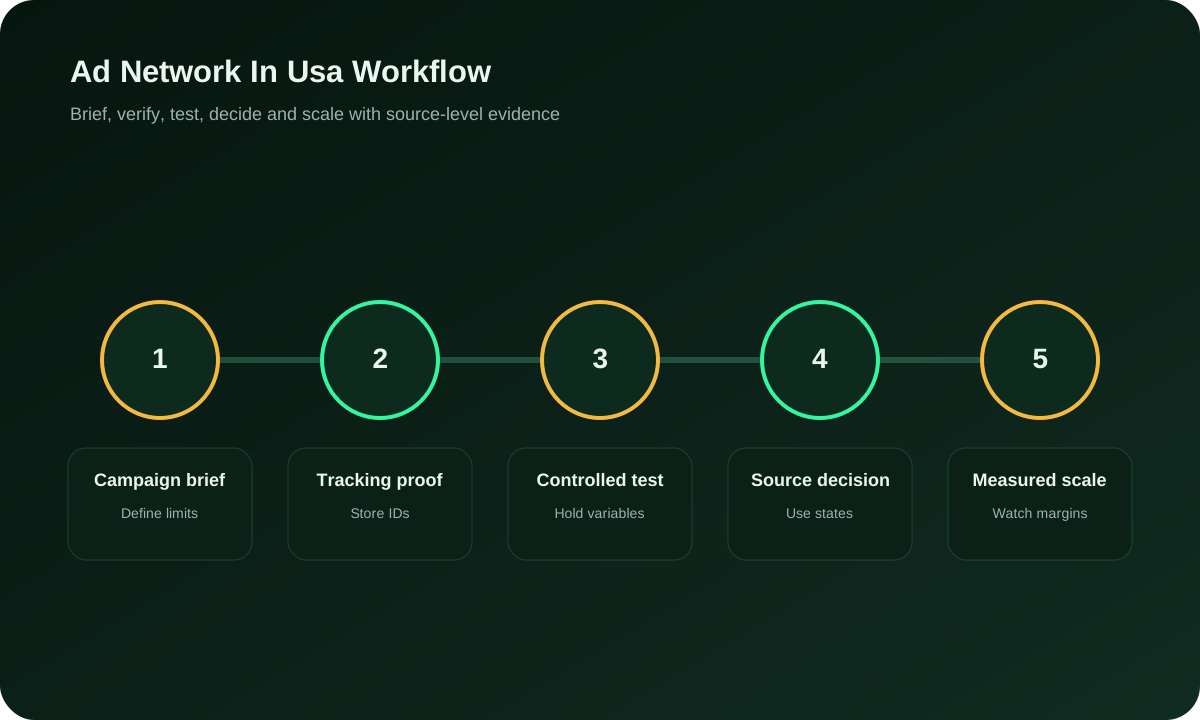
Allocate a learning budget without overselling stock
A USA ecommerce learning allowance is the amount you choose to risk on a product-acquisition question. It should fit available stock and the evidence you need. FroggyAds currently states a USD 50 minimum account deposit. That funding requirement is separate from a minimum bid, actual spend and the right test allocation.
Check stock before committing the allowance. A product near selling out may suit a deliberate clearance test, but continued acquisition can otherwise create cancellations. Decide how you will respond to a confirmed availability change. Do not assume that FroggyAds automatically reads inventory or pauses advertising when a variant becomes unavailable.
Reserve funds for an evidenced correction, such as repairing checkout or clarifying shipping. A large initial traffic purchase can leave no room to test that repair. Use the available campaign budget controls deliberately. The next allocation should follow the unresolved business question and your ability to fulfil the resulting orders.
Match the format to the product decision
Choose a format that helps customers assess the product
Choose a supported format that can introduce the product honestly and lead to a useful destination. Confirm the available specifications and inventory for the campaign. We recommend keeping one clear proposition across the ad and store so the result reflects a coherent purchase opportunity rather than a disconnect between the two.
Create My Free Account
How should you judge ecommerce acquisition cost?
Compare actual media spend with a consistent accepted-order status. Include refunds and material operating costs when assessing retained value.
Measure acquisition against actual media spend and an order status that makes commercial sense. A bid is an input to buying; spend is the expense you incur; revenue is what the store records from the order. These figures are related but not interchangeable. Use comparable periods and definitions when deciding which campaign deserves more money.
Include material product, payment, fulfilment and return costs when assessing contribution after acquisition. Show the costs separately so the media comparison remains understandable. A higher average order value can look attractive while leaving less contribution if it involves heavier shipping or more expensive returns. Use your own commercial records to identify that difference rather than treating gross sales as the entire outcome.
Keep provisional results labelled as provisional. A recent order group may not have had enough time to reveal cancellations or returns. Compare groups at a similar stage when those later events can change the decision. This does not require waiting indefinitely; it requires an honest statement of what the figures currently include.
Separate traffic problems from checkout and order problems
When a source appears weak, examine the pattern through the purchase route. Few product views after clicks may suggest a loading or redirect issue. Many checkout starts with few completed orders may point to unexpected charges or payment trouble. Returns concentrated around one promise may suggest a product-expectation mismatch. Treat these as hypotheses to investigate, not automatic diagnoses of the people or sources involved.
Use the traffic-quality information available in the campaign alongside your destination and order evidence. No single score proves that every event is useful or that every rejected order is invalid traffic. Preserve enough context to distinguish a technical problem, a commercial mismatch and an unexplained pattern before applying a source restriction.
Decide which sources deserve another allocation
Give each material source decision a reason that relates to the tested offer. Continue where the evidence supports value, limit uncertain exposure where appropriate and stop a route that crosses a justified boundary. Use the source controls available for the setup. A decision based on one early order should remain tentative unless the evidence is strong enough to support more.
Review whether a source received a different product, promotion, device mix or region before comparing it with another. If the differences cannot be separated, record that limitation. You may still choose the more useful overall campaign, but the data does not establish that the source alone caused the result.
Test the product message without changing everything else
Test one commercially meaningful change when possible. For example, compare a product-use message with a product-detail message while holding the item, delivery conditions and order definition steady. Or test a clearer shipping explanation without changing the price at the same time. A focused comparison gives the next buying decision a more useful foundation.
Some changes cannot wait for a clean experiment. Stock can run out or fulfilment conditions can change. Make the necessary operational correction, then identify the new test period. Avoid claiming that the combined change proves a single cause. Keeping the record honest is more useful than preserving an experiment that no longer represents an offer you can deliver.
Decide in advance what an inconclusive result means. It may justify a narrower follow-up, a different product or no further spend. More volume is not automatically the solution when several parts of the purchase route remain uncertain. Choose the next test for what it can resolve.
Make the first allocation answer a buying question
Give the first campaign a specific commercial question
Use FroggyAds to test a product offer within a defined delivery scope and spending boundary. Keep the acceptance rule stable and preserve the customer route you have checked. The result should help you decide whether to continue, revise the offer or move the allocation elsewhere.
Create My Free Account
Read the path from visit to retained order
Read the funnel as a sequence of customer decisions: arrival, product consideration, checkout, payment, fulfilment and later retention. Use the stages your systems can actually observe, and keep missing information visible. A strong early interaction rate can coexist with weak retained-order value. The practical question is where the offer loses suitable customers or creates expectations it cannot meet.
Compare the same stage across sources and periods. If one report counts orders placed and another counts orders retained after returns, their conversion rates are not directly equivalent. State the observation window and status. That small clarification can prevent a large budget decision based on a misleading apparent advantage.
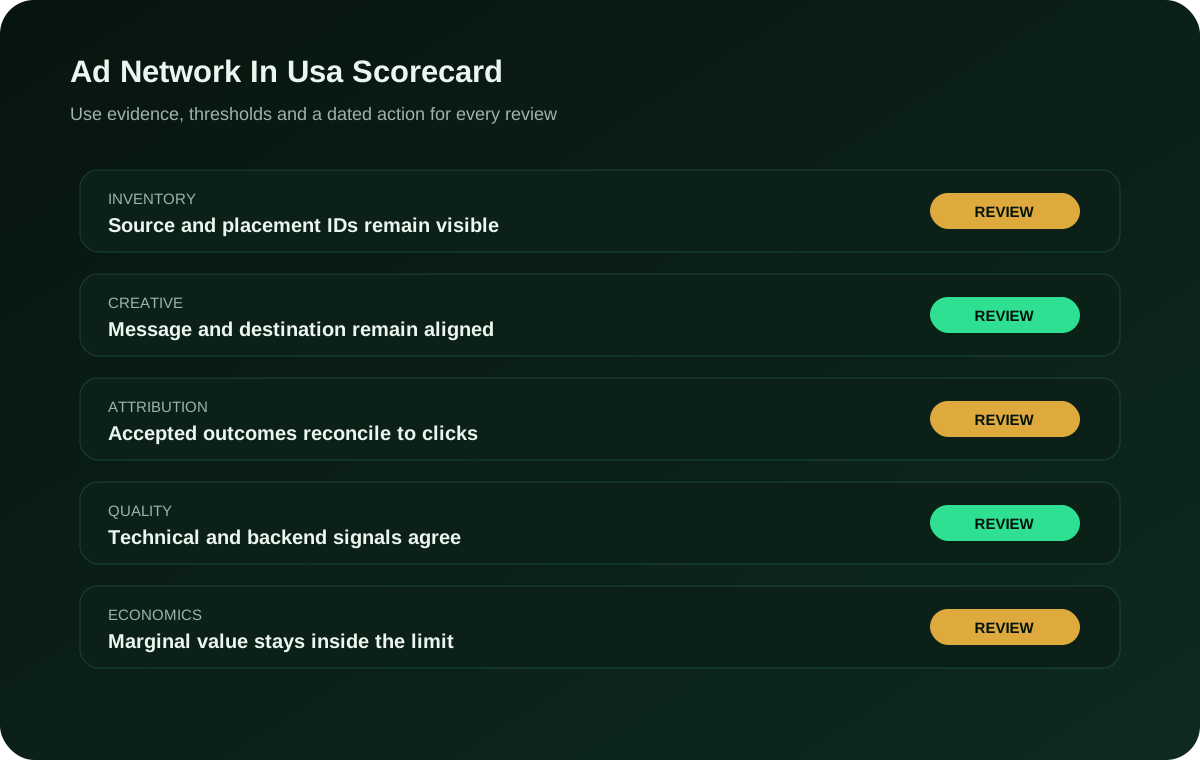
When should you stop an ecommerce traffic test?
Pause or reduce the allocation when stock, checkout, delivery terms or measurement no longer support the advertised offer. Repair the route before buying more traffic.
Stop or reduce spend when the product is unavailable, checkout is failing, delivery conditions contradict the ad or tracking cannot support the intended decision. Keep these operational stops separate from ordinary creative optimization. An offer that cannot currently be completed does not become a better test by attracting more visitors. Repair the route and assess whether a new allocation is justified under the corrected conditions.
Expand nationally without losing the regional comparison
Expand by a dimension that matters to the business, such as an additional product group or a delivery region with different economics. Verify the new offer-and-destination combination before adding spend. A national campaign does not need identical treatment everywhere, but any split should create a meaningful buying decision rather than dozens of small reports with too little evidence to use.
Inspect the added allocation separately from the earlier result. A healthy historical average can conceal weaker new orders, different shipping costs or a changed source mix. Continue only when the new opportunity is worth funding under its own conditions. Earlier success is useful context, not a guarantee that the next region or volume level will behave the same way.
Make the important purchase conditions easy to find
Present the important purchase conditions clearly and review the requirements that apply to your product and locations. Support factual claims before advertising, identify the seller accurately and explain any recurring charge or material restriction. Keep the promise consistent when several teams manage creative, the store and fulfilment. Platform approval does not replace the merchant's responsibility for a truthful, usable offer.
Allow for returns, shipping changes and promotion effects
Model changes that could materially affect contribution: a shipping surcharge, a different basket mix, a higher return cost or the end of a promotion. Use observed inputs where possible and label assumptions elsewhere. A scenario is a way to test the robustness of a buying decision, not a prediction of national demand or a promised result from FroggyAds.
Review the scenario when the offer changes. A product discounted for clearance may have a different acceptable acquisition cost from a full-price product intended for repeat sales. Keep that business purpose explicit. Otherwise, the team may apply a profitable campaign's old threshold to a new offer with less room to fund acquisition.
Turn the review into an actionable buying decision
Close the review with a practical decision: continue the current product, repair checkout, clarify shipping, reduce a source or test a defined expansion. State the offer and period behind the decision and the uncertainty still worth resolving. Give the next operator enough context to act without inventing an explanation from a national dashboard total. Our buying tools are most useful when the next setting change follows that clear commercial reasoning.
A practical nationwide ecommerce review
| Decision | Evidence to review | Practical response |
|---|---|---|
| Supply | Available format, geography and reporting detail for the chosen setup. | Select the controls that support the actual buying question. |
| Product promise | The advertised variant, price and shipping conditions match the store. | Correct a mismatch before purchasing more attention. |
| Order tracking | Campaign references and order statuses can be reconciled without duplicates. | Investigate unexplained differences before changing allocation. |
| Purchase route | Eligible customers can select, pay for and receive the advertised product. | Repair the relevant checkout or fulfilment barrier. |
| Contribution | Retained revenue and material costs remain visible alongside media spend. | Allocate against commercial value rather than gross sales alone. |
| Expansion | Added product or regional scope has its own usable evidence. | Increase deliberately while keeping the earlier comparison. |
Questions about choosing a USA ad network
Should a USA ecommerce campaign launch nationwide?
Start with the products and delivery regions your store can support, then choose a scope broad enough to produce useful evidence within your allowance. You do not need to begin nationwide just because the page targets the USA. A selected product-and-region test can establish a working purchase route before expansion. Confirm which geographic controls the chosen FroggyAds setup actually offers.
When should regional product messages differ?
Change the message for a real product or delivery difference, rather than assuming every region needs a different creative. Keep the underlying offer clear and identify each version so results can be compared. If shipping terms or product availability differ, make those conditions understandable on the destination. A local reference should help the shopper decide, not imply an invented office, testimonial or affiliation.
Which device and checkout checks matter before launch?
Test the product selection, basket, shipping calculation, payment, confirmation and retry behaviour on the relevant devices. Confirm that campaign information survives where your integration supports it. A purchase route that works on one device can still fail elsewhere. Investigate the actual failure before interpreting a device's lower order count as a lack of demand.
What inventory reporting should I ask for?
Ask which campaign, source, creative, device and time fields are available for the format you intend to buy. Keep the useful references connected to your order review through the supported setup. Do not assume every source identifier exposes a publisher, app or individual placement. Build the comparison around verified reporting detail and retain unknown categories honestly.
How should regional economics affect bids and budgets?
Use current observed acquisition cost and retained value to guide the next bid or budget decision. Regional delivery or fulfilment differences may change what an order contributes, but do not assume a specific regional price before measurement. Separate the bid from actual media expense and compare equivalent order statuses. Any geographic split should help you make a meaningful, supported allocation choice.
How do I connect media spend to retained revenue?
Retain a unique order reference and the available campaign identifiers through your supported integration. Record later cancellations, refunds and other adjustments in your business records, then reconcile them for the analysis. This guide does not claim automatic order or refund synchronisation with FroggyAds. Confirm the tracking route and use the systems that actually establish the transaction's commercial status.
How should I investigate a source that looks weak?
Review source patterns alongside destination behaviour and accepted order value. Check whether a broken route, different promotion or immature order group explains the difference before restricting supply. Unusual activity deserves investigation, but it is not by itself proof of invalid traffic. Use the available controls to respond to an evidenced problem and preserve the reason for the decision.
Why check delivery eligibility separately from targeting?
Because the shipping destination and product conditions determine whether the customer can complete the advertised purchase. A visitor's detected location does not establish their delivery address or eligibility. Keep the ad and destination clear about coverage, and verify the actual order through your own checkout process. Geography settings help guide delivery; they do not replace the merchant's fulfilment rules.
What makes a national ecommerce pilot useful?
A useful pilot has a defined product offer, eligible delivery scope, accepted-order status, supported tracking setup and affordable spending boundary. It also has a question the evidence can answer. Choose FroggyAds when you want to manage that test through a self-serve buying workflow. Keep the offer steady long enough to learn from it, and record necessary operational changes as a new period.
When should I expand the campaign?
Add one meaningful opportunity after checking its product availability, purchase route and economics. Watch the added orders separately so a strong earlier average does not conceal a weaker expansion. If the result remains uncertain, specify what another allocation would establish. More national reach is worthwhile when it serves a viable customer offer and produces evidence your business can use.
Explore the next USA advertising decision
Start with an offer your store is ready to deliver
Choose FroggyAds for a USA ecommerce campaign with a clear product, delivery promise and measurement plan. We help you buy supported traffic and manage the campaign; your store's order evidence shows where the next allocation belongs. Start with an offer that is ready to sell and a question worth answering.
How should product and delivery economics guide national spend?
National ecommerce buying works best when the media plan and the fulfilment plan describe the same offer. Your advertisement should attract shoppers who can receive the product on the stated terms. Your analysis should then show what remains after cancellations, returns and material costs. This guide concentrates on that product-and-order decision, rather than on local service enquiries or a generic ranking of networks.
Choose a sensible product group. Items with different shipping requirements, margins or return patterns may need separate analysis even if they share a store category. Keep the grouping simple enough to operate. The purpose is to prevent a strong product from hiding a weak one, not to create a separate campaign for every minor variant without enough evidence to use.
Define the delivery promise. Record the eligible destinations, important exclusions and the conditions attached to a shipping offer. Check the actual checkout result for representative addresses. If the promise varies, keep the relevant difference visible in the ad or destination. A national message should not imply uniform terms when the store cannot provide them.
Use a consistent accepted-order rule. Decide whether the acquisition comparison uses paid orders, fulfilled orders or another justified status. Keep later returns and adjustments visible when they affect value. There is no need to force every business into one definition, but the same comparison must use the same rule and a suitable observation period.
Inspect what changed in the basket. A campaign may attract more low-margin items or more discounted bundles while its order count rises. Look at the product mix before celebrating the total. If the mix changed, assess contribution under the new conditions rather than applying the old average value to every new order.
Keep shipping expense in the decision. The amount you charge the shopper and the amount it costs you to fulfil the order can differ. Show the material merchant cost in the commercial analysis, even when the customer sees free shipping. Avoid assuming that a promotion removes that expense simply because it no longer appears as a checkout charge.
Read returns with context. Inspect whether the reason points to product fit, an unclear description, delivery damage or another issue your records can support. Do not treat every return as a source-quality problem. A more accurate product message may reduce unsuitable purchases, while a fulfilment issue requires a different response.
Earn the next national allocation. Combine media cost, accepted order value and the practical ability to fulfil additional demand. If those conditions support further testing, expand deliberately and retain a comparison with the earlier period. If they do not, the useful next action may be a product or checkout correction rather than more reach.
| Ecommerce decision | What to establish | Useful evidence |
|---|---|---|
| Offer readiness | The promoted products can be sold and delivered on the stated terms. | Stock, checkout and representative destination checks. |
| Order value | Accepted orders and later adjustments are assessed consistently. | Order statuses, retained revenue and material operating costs. |
| Next allocation | Another purchase of media has a specific commercial purpose. | A defined question, supported controls and a feasible fulfilment plan. |
Worked example: revenue is not contribution after acquisition
Hypothetical order review: A campaign records USD 4,000 in product revenue after discounts. Ten full refunds total USD 400, leaving USD 3,600 in retained revenue. Suppose product, payment, fulfilment and return-handling costs together total USD 2,300, including the costs associated with refunded orders. With USD 900 in media spend, contribution before other overheads and taxes is USD 400: 3,600 minus 2,300 minus 900. Gross revenue alone would hide the refunds and operating costs. These invented figures are an illustration, not FroggyAds prices, campaign results or a forecast.
Put your ecommerce buying plan into action
Use FroggyAds to test that ecommerce opportunity with a deliberate product scope, supported targeting and a controlled allocation. Keep the order evidence connected to the buying decision and let retained customer value guide what you do next. Create your free FroggyAds account
More help with planning: The guide from shopify.com introduces paid-advertising choices and variable costs. For an example of another platform's display-targeting approach, see support.google.com. Use that context alongside your own product and fulfilment records, then confirm the controls available in your FroggyAds campaign before setting the first allocation.
Prepare your first nationwide ecommerce campaign
Prepare one nationwide ecommerce test that your store can fulfil and measure. Follow this order before increasing the allocation:
- Select a product group and eligible delivery scope. Confirm stock, restrictions and the actual checkout terms for that combination.
- Test the purchase route with representative eligible and excluded addresses. Check payment, confirmation and retry behaviour.
- Verify the supported tracking route with a controlled order. Keep repeated notifications and later business adjustments identifiable.
- Choose the available FroggyAds format and campaign controls, with a spending boundary that fits the question and stock.
- Review mature accepted orders, refunds and material costs against actual spend. Continue, correct or expand for a documented commercial reason.