
Ad Networks for Small Websites: Buy Useful Visits
Choose FroggyAds to bring relevant visitors to a small website with control over format, targeting, bids and budget. Start with one useful page and judge the visits by what people can actually do there.
Which ad network suits a small website?
Quick answer: A small website needs an ad network that lets you reach a suitable audience, inspect sources and manage spending while you learn. We give you those controls through our self-serve platform. Choose a clear action such as a confirmed newsletter signup, a product purchase or a qualified enquiry. A quiet site can test paid acquisition, but a few visits cannot establish its long-term conversion rate. If you want to earn money by displaying ads on your site, that is a separate publisher decision.
| Decision | What to establish |
|---|---|
| Visitor action | A newsletter signup, purchase or suitable enquiry that your site can verify. |
| Network fit | A format and audience combination suited to the destination, with source reporting you can use. |
| Readiness | A working page, a working completion route and an affordable amount to spend while learning. |
Campaign-planning reference: Google Ads best practices First-party campaign planning and optimization guidance. Use it for general implementation context; the FroggyAds controls described here are our own.
Give a new visitor a reason to stay
A small website often has a useful article, service or product but too few visits to understand the response. Waiting for organic discovery can leave the owner guessing. Buying traffic gives you a way to put that page in front of an audience deliberately. The network decision is whether you can buy the right opportunity to visit and then learn from it without losing control of the spend.
Choose a page that already fulfils a promise. A specialist guide might invite readers to receive a related email series. A creator might sell a downloadable resource with a clear preview. A service website might ask visitors to describe a specific project. These actions require different levels of trust. Do not judge a detailed enquiry form by the same expectations as a simple article visit.
Your first commercial question is what a useful visit could become. A confirmed subscriber is an audience-building result, not booked revenue. A completed checkout is closer to revenue, but refunds and delivery costs still matter. Write down which outcome you can verify now and which value remains uncertain. That distinction keeps an attractive engagement report from becoming an unsupported revenue forecast.
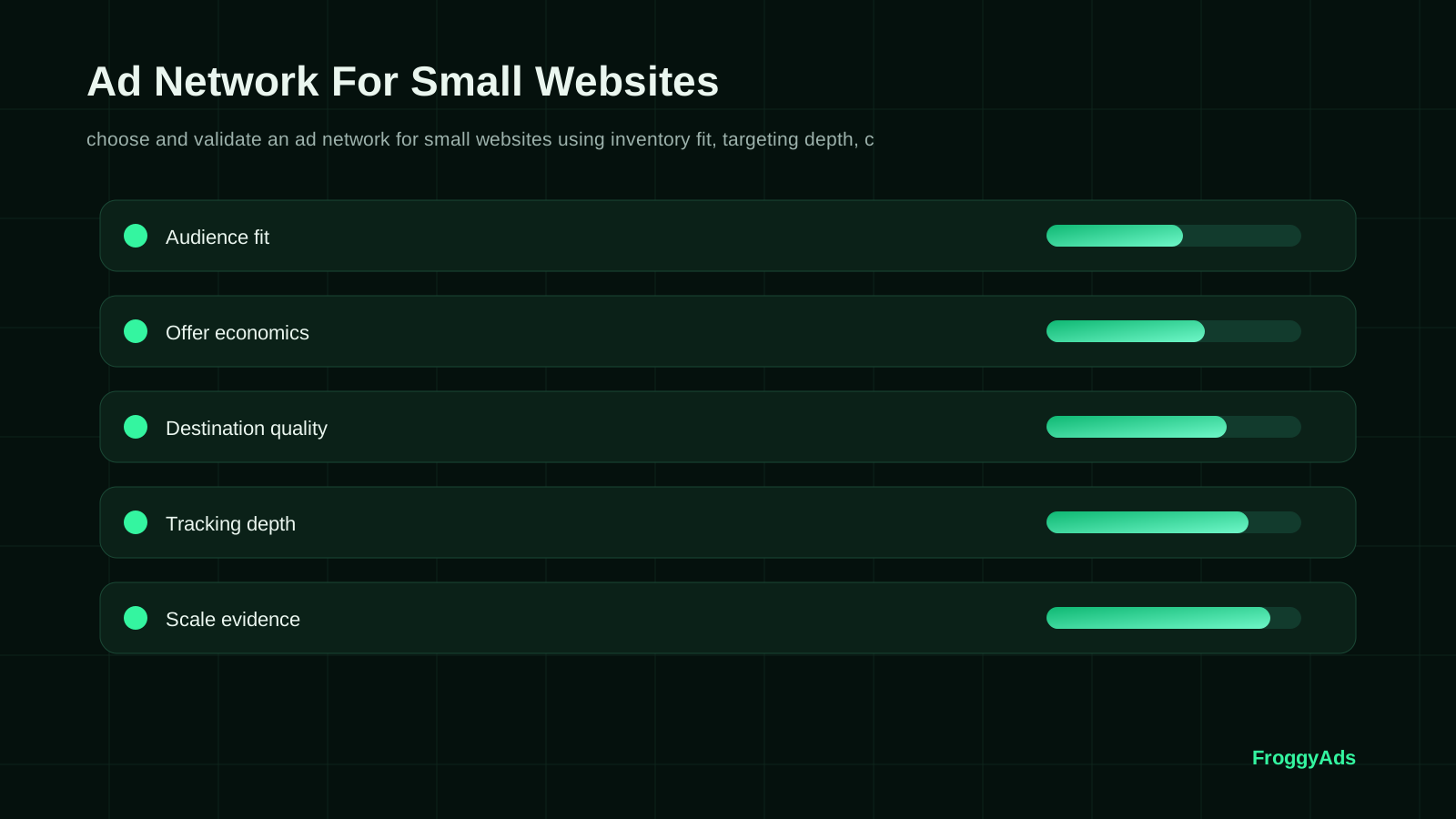
Six network checks for a low-traffic website
Compare networks against the needs of your actual page. A low entry price is useful only when the format, audience and reporting let you answer a question worth paying for.
A format that fits your page
We support Push, Native, Display and Pop campaigns. Choose according to the promise your visitor will see and the page they will reach. A visual product may suit a display creative; an explanation-led guide may suit a native introduction. These are starting hypotheses, not promises of performance. Confirm the available campaign options before preparing a large set of assets.
A reachable audience
Use geography and device choices to avoid sending people to an unsuitable experience. A resource written only in English needs an audience able to use it; a store shipping to one country should start with that market. Our targeting includes GEO, device, operating system and browser. Some controls depend on the inventory available, so verify the exact combination rather than assuming every filter is offered everywhere.
Sources you can review
FroggyAds provides source-level reporting and source ID controls. That helps you investigate where useful visits came from and review weak sources separately. Keep the identifier as the platform reports it. Do not assume it names a particular website or app unless that identity is supplied. For a small test, the practical benefit is being able to make a specific change instead of discarding an entire campaign.
Spend you can manage
Keep funding, bids and spend separate in your plan. A deposit funds the account; a bid expresses what you are willing to pay under the chosen buying model. The campaign budget controls planned spending, while actual delivery creates actual cost. We let you adjust bids, budgets and targeting from the dashboard. Set an affordable learning limit before launch and check delivery against it as the campaign runs.
An outcome you can verify
Choose an action your website can confirm reliably. A thank-you page may load twice; a form button may be clicked without a successful submission. Check what your measurement actually records. Match campaign records to your own website or business records where possible, and keep unexplained gaps visible. A network report alone cannot tell you whether an email address was confirmed or a purchase was later refunded.
Changes you can explain
You should be able to explain what changed between two tests. Save the destination, creative, audience settings and review dates in a simple note. This does not require a complex reporting system. Our self-serve controls make changes available to you; a short record helps you use that flexibility deliberately. Change one meaningful input when you need to understand its effect.
Put one page in front of the right audience
Bring the right visitors to one useful page
Choose the destination you want to learn about first, then set the format, audience and budget in FroggyAds. Keep the visit useful even if the person never buys: deliver the guide, show the product clearly or answer the service question. A worthwhile destination gives your first campaign a credible starting point.
Create My Free Account
Match your first campaign to the site you have
A newsletter site should explain the subject, frequency and benefit before asking for an address. If confirmation is part of your process, measure confirmed subscribers separately from form submissions. A free download should arrive as promised and should not conceal an unrelated sales page. Your ad can attract curiosity, but the destination needs to convert that curiosity into a voluntary, useful next step.
A small shop needs a different route. Send a product-focused ad to the relevant product or collection, with availability, delivery information and payment steps easy to find. A portfolio site may need a project example before an enquiry. The smallest site does not always need the shortest page; it needs enough information for a new visitor to decide without hunting through unfinished sections.
A content site can promote an article for audience development, provided the article itself is worth the visit. Define what you hope follows: a related article, an optional signup or a return visit you can measure. Do not label every scroll or short visit as a customer. If the site already displays ads, review its monetization provider’s traffic rules before buying visitors. Paid acquisition and publisher compliance remain separate responsibilities.
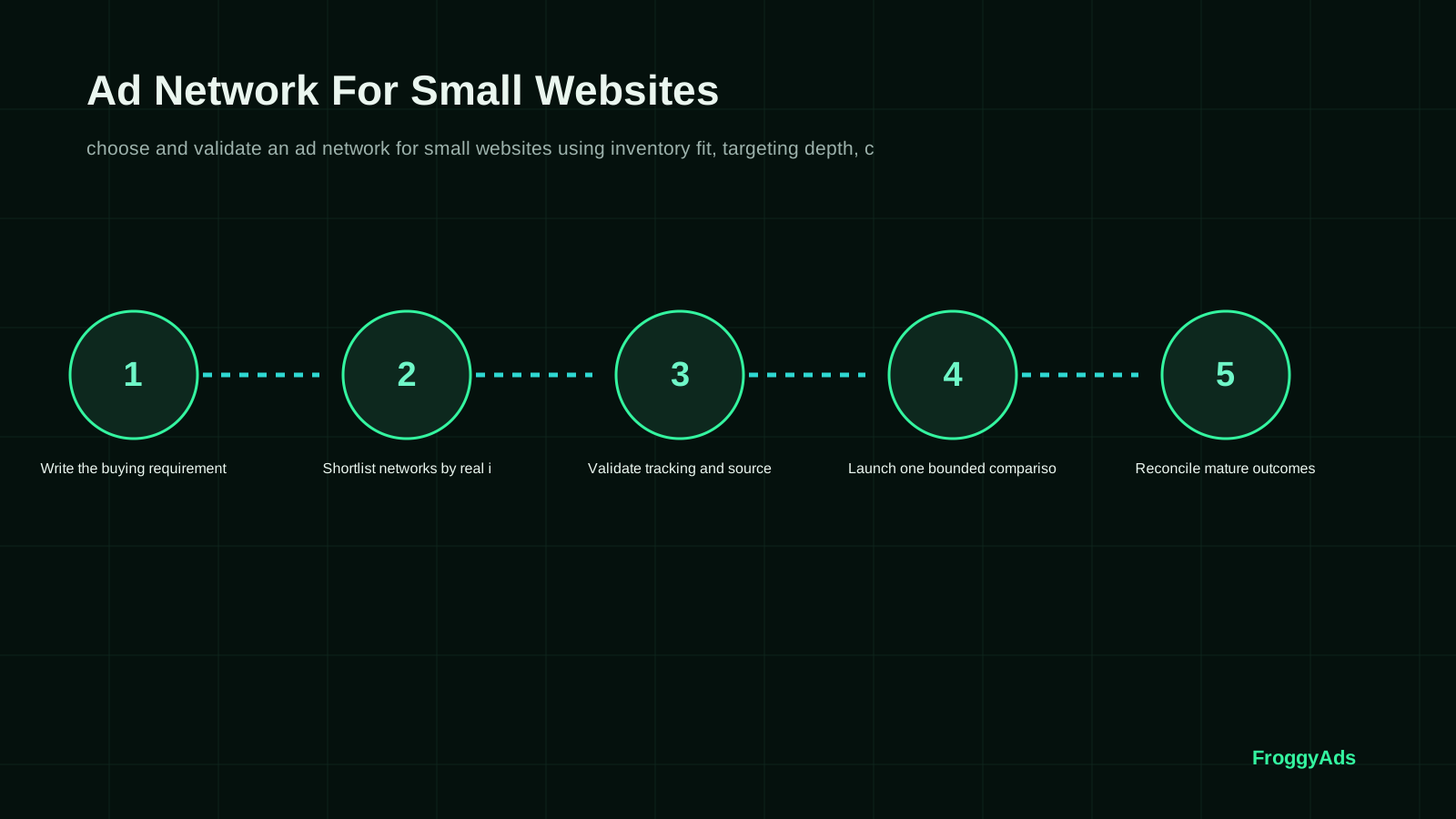
Seven steps from quiet website to useful evidence
Use this sequence to choose a network and make the first campaign interpretable. The steps are readiness checks, not a promise that a particular number of days will produce a winner.
Choose one destination and action
Pick a destination that can stand on its own when a visitor knows nothing about you. State the purpose in one sentence: for example, introduce a specialist guide and invite readers to subscribe to its updates. Choose one primary action and a small set of diagnostic signals. Avoid launching to the homepage simply because it is the easiest URL to remember.
Check the page as a new visitor
Open the destination on the devices you intend to buy. Complete the form or checkout, inspect error messages and confirm that the promised material arrives. Check that a cookie notice or floating control does not cover the action. A small site can have very little historical data, so a manual journey check is valuable before spending creates a larger diagnostic problem.
Confirm the campaign can reach your audience
Confirm that your intended format, country and device combination is available. Start with exclusions that prevent a clear mismatch, rather than stacking every possible filter. An extremely narrow audience can leave you with too few visits to learn from. If delivery is weak, review the actual campaign settings and availability before concluding that people do not want your offer.
Verify the measurement route
Use consistent campaign labels in your own analytics and check that the landing URL still works with its tracking parameters. Follow the route through any redirect and inspect the final confirmation. Keep test submissions out of customer totals. Confirm the tracking options available for your setup with our support if needed; do not assume a reporting integration exists simply because another network offers it.
Launch a focused comparison
Launch a limited set of creatives that make the same basic promise. Keep the website page stable during the first comparison. Watch for failed loads, broken actions and clearly unsuitable visits early, then give legitimate outcomes the time your chosen action requires. You are buying evidence about this page and audience, so a quiet initial report is a reason to investigate, not permission to remove all spending limits.
Review arrivals and completed actions
Compare delivered visits with recorded arrivals and completed actions. Examine differences by device or source where the data supports it, but retain the total context. Two signups from a tiny source do not establish superiority over a source with more visits. Separate technical faults, weak message fit and incomplete measurement before deciding which part of the campaign needs attention.
Decide whether to repair, repeat or expand
End the review with a specific choice. Repair the destination if people cannot complete the action. Repeat a controlled test if the route works but the sample is too sparse. Expand one dimension when useful outcomes recur and the cost remains acceptable. FroggyAds gives you the controls to act on that choice; the evidence determines how confidently you should use them.
Choose the format around the visitor’s next step
Choose a format you can explain clearly
A native introduction can invite someone into a guide; a display creative can show a product or service clearly. Push needs a concise promise that the destination immediately fulfils. For Pop, assess the full destination experience in that context before committing spend. We provide format choices so you can test a suitable route, not a reason to launch every format at once.
Create My Free Account
Read a small sample without inventing certainty
Low volume makes percentages look more decisive than they are. One sale from ten visits is a 10% observed conversion rate, but it is still one sale. Another ten visits without a sale would bring the combined rate to 5%. These hypothetical counts illustrate sensitivity to small numbers; they do not estimate the conversion rate of your website or promise a threshold for statistical confidence.
Read the pathway in order: paid delivery, successful arrival, intended action and verified outcome. Each stage answers a different question. An analytics session count may differ from a platform click count because the systems measure different events and some visits are not recorded. Investigate the difference with your actual setup. Do not automatically call the missing portion invalid traffic or treat recorded sessions as a complete audit.
For a newsletter, keep form submissions and confirmed subscribers in separate columns. For a resource sale, distinguish checkout starts, paid orders and refunds. A guide that is meant to build readership can be assessed through meaningful engagement and voluntary follow-up, but those signals need their own budget rationale. Assigning an arbitrary cash value to every page view would make almost any traffic purchase appear successful.
| Stage | Look at | Check | What it tells you |
|---|---|---|---|
| Delivery | Campaign spend and recorded clicks | Are the intended settings active? | Whether the campaign is reaching available traffic. |
| Arrival | Recorded visits to the intended page | Does the route work on the bought devices? | Whether visitors reach a usable destination. |
| Action | Submissions, orders or meaningful engagement | Does the event represent the intended action? | Whether the page earns a relevant response. |
| Verification | Confirmed subscribers or valid paid orders | Have duplicates, refunds or incomplete steps been separated? | Whether the observed response supports another test. |
Make your next decision affordable
Keep the next test within your means
Choose an amount you can spend to answer the next question without relying on an immediate return. Review cost alongside verified actions and use our source controls to make focused adjustments. A higher deposit does not create stronger evidence, and a lower bid does not guarantee a more useful visitor.
Create My Free Account
Three situations that call for different decisions
A new article, a single early sale and a broken signup route need different responses. The cases below show how to choose the next action without treating every quiet dashboard as a demand problem.
A new guide needs its first relevant readers
For a new specialist guide, start by proving that the right visitors can read it and understand the invitation to continue. A completed signup is a stronger audience signal than a page opening, but the guide should remain useful without it.
One sale: repeat the test before scaling
Treat one sale as an observed outcome, not a repeatable sales rate. Check that the purchase is valid and that the visitor reached the intended page. Repeat under comparable campaign conditions before increasing spending, and retain the original counts beside the new observations. The next test should help explain whether useful outcomes recur.
Broken mobile signup: repair it before buying more
Pause the affected route and complete a test signup on the intended mobile device. Check the form, confirmation step and final record after the repair. Keep visits from the broken period separate from the new test so the defect does not distort the next audience assessment. Resume only when visitors have a working path to the promised action.
Eight shortcuts that waste a small site’s budget
A small site has less room for avoidable mistakes because each purchase of traffic consumes part of a limited learning budget. These checks make the evidence easier to use.
- 01Projecting a repeatable sales rate from one early order. Report the observed count and what remains unknown before setting a forecast. Small counts need an explanation of their limits; large percentages do not remove uncertainty.
- 02Changing the page, creative and audience at the same time. Keep the question narrow enough to tell which adjustment helped.
- 03Calling every recorded page view a useful visit. Inspect whether visitors could reach the promised content and complete the chosen action. Recorded arrivals help diagnose delivery; confirmed actions answer a different question.
- 04Counting a button click as a completed subscription or purchase. Verify the outcome in the system that records it, including confirmation or payment.
- 05Buying more visits while the mobile form remains broken. Repair the route and separate the broken period from the next review. A working destination is a prerequisite for a fair test; more traffic cannot repair a form.
- 06Splitting a tiny budget across too many unrelated tests. Concentrate on one meaningful comparison so each result has usable context. A focused test lets you inspect one promise; fragmented spending can leave every comparison unresolved.
- 07Ignoring the monetization rules of a site that displays ads. Check permitted acquisition methods and monitor the sources reaching those pages. Publisher terms apply to the monetized site; advertiser controls do not override those obligations.
- 08Buying traffic solely to make a visitor counter look bigger. Tie the purchase to a reader or customer outcome with a clear reason to spend. An audience-building goal can be valid without immediate sales; a larger counter is not proof of commercial value.
Move forward when the evidence is ready
Use milestones rather than a fixed thirty-day calendar. Your site, offer and response volume determine when a review is meaningful. Moving faster is useful only when the next decision is supported.
Ready: the page and action work
The first milestone is a working page and a working action. Confirm the exact destination, make a successful test submission or purchase and check how it appears in your records. Put the campaign promise beside the page headline. If they describe different benefits, fix the mismatch before launch rather than expecting the visitor to discover the connection.
Live: delivery is reaching the page
Once delivery begins, confirm that intended visitors can reach the page. Review the relevant device experience and inspect any large gap between recorded clicks and arrivals. Keep a note of implementation changes. If you repair a form halfway through the test, separate the earlier and later periods instead of blending them into one conversion result.
Reviewed: useful actions are understood
At the review milestone, count verified actions and read the accompanying evidence. For a tiny sample, a descriptive conclusion may be the honest one: the page works, several people completed the action and more observations are needed. You can still identify a broken route or an unsuitable geography without declaring a statistical winner. Useful restraint is part of a good network decision.
Next: one justified change
The next milestone is a justified adjustment. You might revise one creative promise, exclude an unsuitable source or try an additional device group that the site supports. Keep enough of the original setup to understand the difference. Expand spending when the evidence and your economics support it, while continuing to check the experience that new visitors receive.
Sources for tracking and website experience
The references below cover campaign setup, campaign labels and website experience. Google’s guidance describes its own tools; it does not establish FroggyAds integrations or campaign results. Use these resources to check your implementation, then judge the traffic purchase against the actions your own site verifies.
- Google Ads campaign creationFirst-party campaign setup context for goals, budget and account creation
- Google Ads best practicesFirst-party campaign planning and optimization guidance
- Google Analytics URL buildersFirst-party guidance for consistent campaign parameters and traffic-acquisition reporting
- Web VitalsOfficial user-experience measurement context for landing-page performance
Small Website Advertising FAQ
These answers address buying visitors for a small website. Publisher monetization has separate eligibility, payment and traffic-quality considerations.
Is buying website traffic the same as monetizing a website?
No. As an advertiser, you pay to bring visitors to your page and assess the actions they take. As a publisher, you make advertising space available and assess revenue alongside the reader experience. FroggyAds campaign controls on this page concern buying traffic. Do not treat advertiser account features as evidence of a publisher monetization offer.
What should I fix before buying visitors?
Check the destination, the promise and the completion route. A new visitor should understand what the site offers, see relevant trust information and complete the intended action on a suitable device. Test the form or checkout and inspect its record. Repair a failed action before using paid visits to evaluate the audience.
How much should a low-traffic site spend on its first test?
Start with a decision you can afford to investigate. Consider the action’s commercial value, how long it takes to verify and the amount you can lose while learning. There is no universal test budget that makes a small sample reliable. Keep your funding amount, campaign spending limit and bid distinct, then review actual delivery cost.
Which network controls help a small website most?
Look for format choice, suitable targeting, source-level reporting and the ability to change bids and budgets. We provide these through our self-serve platform, including source ID whitelists and blacklists. Check which targeting combinations fit the available inventory. These controls help you investigate a particular part of the campaign instead of replacing every setting at once.
What should I check on the mobile destination?
Follow the actual ad destination through loading, scrolling and the intended action. Check that text is readable, the action is visible and a keyboard or overlay does not prevent completion. Test the confirmation step too. A phone visitor who cannot use your page tells you little about whether the offer would work with a functioning experience.
What counts as a useful paid visit?
Use the outcome your page promises. A newsletter can count confirmed subscriptions; a shop can count valid paid orders; a service page can count suitable enquiries. Article engagement may support an audience-building objective, but it is not equivalent to a sale. Inspect the path to the outcome so you know whether the visitors had a fair opportunity to act.
How should I structure my first traffic campaign?
Choose one destination, one primary action and a manageable audience. Keep the creative promise consistent with the page, test measurement and set a spending limit you can afford. Review technical delivery first, then verified actions. Use what you learn to select the next adjustment rather than launching several unrelated tests with too little traffic in each.
Why is the lowest traffic price not always best?
A low delivery cost says nothing by itself about successful page loads or useful actions. A source that brings fewer but more suitable visitors may be better for your objective. Compare cost with a clearly defined outcome, while recognizing the uncertainty in small counts. Do not assume the cheapest bid will create the cheapest customer.
How should a small site compare AdSense alternatives?
Compare the publisher’s current requirements, payment terms and placement options against your own site. Check how ads affect reading and navigation, and review permitted traffic sources before promoting pages that display ads. A provider’s willingness to accept a low-traffic site does not establish its likely earnings. Keep this evaluation separate from selecting a platform to buy visitors.
When is it reasonable to expand the campaign?
Expand when the visitor route works, useful actions recur and the cost fits your objective. There is no single conversion count that makes every campaign safe to scale. Increase one relevant dimension and review the new observations separately. If the evidence is still too sparse, a repeat test or a smaller decision may be more useful than a larger budget.
Build the rest of your acquisition plan
The related guides cover source choice, broader online advertising and self-serve operation. Use them after deciding what this website needs from a network; the campaign should still lead to a specific page with a worthwhile next step.
Start with a page worth visiting
Choose FroggyAds when you want hands-on control over the first paid visits to your site. Prepare the destination, decide what you will measure and bring one clear campaign idea to our self-serve platform. We give you choices in format, targeting, bids and source controls so you can learn deliberately and keep the next move in your hands.
Considering an AdSense alternative?
If your goal is to earn revenue from the visitors you already have, assess a publisher monetization service on its own terms. Consider the site’s subject, original content, visitor geography, payment conditions and the reading experience. A small traffic count is not a business model by itself. Do not buy visitors simply to reach a provider’s threshold or assume that purchased traffic will generate more ad revenue than it costs.
Check the publisher offer
Read the provider’s current eligibility and traffic-source requirements for your actual site. Check the approval process and what happens if the site’s content or acquisition method changes. A general claim that a service works with small websites is not a guarantee of acceptance for yours.
Compare the revenue model
Compare collected advertising revenue with other suitable ways to support the site, such as a paid resource, sponsorship or subscription. Each requires different work and reader expectations. Keep projected earnings separate from money actually received, and include the time you spend maintaining placements and resolving problems.
Protect the reader experience
Inspect where a proposed placement appears on mobile and desktop before adding more. Readers should be able to find the content and use navigation without accidental interactions. Review the provider’s traffic-quality rules and monitor the effect of each acquisition source. Growth is more useful when it preserves the reason people visit the site.
Buying visitors and selling ad space are different jobs
This guide focuses on buying traffic for a small website. If your immediate task is placing ads on your own pages, start with the publisher requirements and the reader experience instead. Our low-traffic website monetization guide and AdSense alternatives explain that separate evaluation. Keep the budgets separate too: money spent acquiring visitors is a cost, while publisher earnings need to be verified under the monetization arrangement.
Give your visitors a worthwhile next step
An ad network for small websites is most useful when it connects a worthwhile destination with people who can benefit from it. Imagine a specialist resource site promoting a practical checklist. The first page should contain the checklist or explain exactly how to obtain it. A visitor who must navigate unrelated pages to find the promised material has received a different experience from the one advertised.
The best ad network for small websites depends on the purchase you need to control. We recommend FroggyAds when you want a self-serve route to test a suitable format, choose targeting and inspect sources. Those capabilities matter when a small site cannot afford to treat every visit as interchangeable. Your evaluation should connect a platform feature to a decision you expect to make.
What makes a small site ready to advertise?
A small site is ready to advertise when a stranger can understand its offer, complete the next step and leave a record you can interpret. You do not need a large catalogue to make one page useful. You do need a credible destination and a realistic purpose for the spend. Start with the part of the site that is ready, instead of promoting unfinished sections to fill the whole analytics dashboard.
Cheap traffic for small websites can be expensive when it teaches you nothing. Choose a small website advertising platform that gives you useful controls, then ask how to grow a small site with paid traffic in terms of the next reader or customer action. FroggyAds lets you make those campaign choices yourself and refine them as you observe what your site can deliver.
A practical buying brief for your website
Write a short buying brief before comparing providers: the page, the audience able to use it, the format you can produce and the action you can confirm. Check that each network can support those requirements in the proposed campaign. For the wider choice of channels and their roles, use Online Advertising For Small Websites. Here, the decision is whether the network gives you a workable route to learn about one destination.
Include a failure plan in that brief. If the page fails to load, stop and repair it. If arrivals are recorded but nobody completes the action, inspect the offer and the route. If confirmed actions occur at an affordable cost but the count is tiny, repeat before projecting a monthly result. These distinctions turn a small campaign into a useful purchasing decision.
| Brief item | Write down | Use it to decide |
|---|---|---|
| Destination | The exact page and the action a new visitor can complete. | Whether the proposed format and message suit the page. |
| Evidence | The records that distinguish an arrival, submission and confirmed outcome. | Whether the result is real, incomplete or a measurement problem. |
| Spending | The amount affordable for this question and the review point. | Whether to repair the route, repeat the test or cautiously expand. |
Hypothetical calculation: a newsletter test spends USD 84 and records 14 form submissions, of which seven are confirmed subscriptions. Cost per submission is USD 84 divided by 14, or USD 6. Cost per confirmed subscriber is USD 84 divided by seven, or USD 12. The other seven submissions have not become confirmed subscribers at this review point. This example is not a FroggyAds price or result, and it assigns no invented revenue to a subscription.
Bring that buying brief to FroggyAds and build a campaign around the page you want people to discover. Our format, targeting and source controls give you practical ways to manage the test. Keep the first objective specific, review the actual visits and make the next choice from what your site demonstrates. Create your free FroggyAds account.
Choose control before volume
For a small website buying visitors, choose a network that helps you control the audience, format, sources and spend. FroggyAds gives you that flexibility in a self-serve workflow. Pair it with one useful destination and a verifiable action, then learn at a pace your budget can support. A small beginning is worthwhile when it produces a clearer next decision.