
Choose an Ad Network for a New Website
Give your new website its first purposeful traffic campaign with FroggyAds. Choose a suitable format, control the audience and spending, and learn whether strangers can use the site you have just launched.
Can a brand-new website start buying traffic?
Quick answer: Yes, when the advertised page and the promised next step are ready for real visitors. Choose FroggyAds for self-serve traffic buying with format, targeting, budget and source controls. Before funding delivery, make a test enquiry, subscription or purchase through the exact destination you will advertise. Your first campaign should establish a usable starting point for future decisions. Buying visitors is separate from applying to earn money by displaying ads, and it does not buy organic search rankings.
| Launch question | What to establish |
|---|---|
| Is the site ready? | A stranger can understand the offer, complete the action and receive what was promised. |
| Does the network fit? | The available format, market and controls suit the first destination you intend to advertise. |
| What would justify another purchase? | A working visitor route and verified responses, with the cost and remaining uncertainty recorded. |
FroggyAds launch guidance. General campaign reference: Google Ads best practices First-party campaign planning and optimization guidance.
Choose the network around your first live customer journey
A recently launched website has a different problem from an established site that wants more visitors. You may not yet know whether the offer is clear, whether checkout works for someone outside your team, or whether an enquiry reaches the person who should answer it. A traffic campaign exposes those questions to real use. Choose a network that lets you keep that first purchase understandable while you investigate the response.
Define what you are launching today. A working service enquiry page can be ready before an entire resource library is finished. A waitlist can be ready before a product is available, provided the invitation clearly says that people are joining a waitlist. Advertising a future capability as if it already exists creates the wrong test. You would be measuring a promise your current website cannot deliver.
Our recommendation is to bring one finished journey to FroggyAds. Select a format that can introduce it, use targeting to reach people you can serve, and choose a spending allocation you can afford while the commercial response is uncertain. Our source controls help you investigate delivery below the campaign total. Your launch record supplies the missing context: which version of the site those visitors actually saw.
Six capabilities to verify before your first traffic purchase
Use your first destination as the comparison brief. The relevant question is what each network lets you do when that new journey encounters real visitors.
A format that explains the new offer
FroggyAds supports Push, Native, Display and Pop campaigns. Choose one that gives your offer an appropriate introduction. A new service may need a clear explanation before an enquiry, while a physical product may benefit from a recognizable image. Confirm available specifications before producing assets. The existence of several formats gives you options; it does not mean a brand-new site should test all of them at once.
An audience you can actually serve
Our targeting includes GEO, device, operating system and browser. Translate your launch limits into campaign choices: the locations you deliver to, the devices on which the site works and the audience able to understand the offer. Check the available inventory and supported combinations. A country setting does not prove that every visitor speaks the page's language or can use your checkout.
Source controls for the first investigation
We provide source-level reporting and source ID whitelist and blacklist controls. These become useful when you need to isolate an unsuitable part of delivery without abandoning the entire launch. Retain the reported identifiers alongside your campaign notes. A source ID is a buying reference; do not assume it identifies a named publisher or app unless that information is actually supplied.
Clear funding and spending decisions
Separate the account deposit from the amount allocated to this launch question. Your bid, selected buying model and actual delivery determine media spending; an account balance is not a recommendation to spend it all. FroggyAds lets you adjust bids and budgets from the dashboard. Check the available settings, monitor delivery and decide who will pause the campaign if the destination or measurement stops working.
Measurement you can test before launch
Use your own website records to verify that a submission or order happened. Confirm the supported FroggyAds tracking route for your setup before treating platform conversions as equivalent to those records. If a developer or external tracker is involved, agree on the event and test it end to end. A newly installed tag is not evidence that every redirect, confirmation and device path has been validated.
A buying process you can operate
Know where you will review delivery, change a campaign and ask a setup question. Our self-serve approach is a good fit when you want to make those buying decisions directly. Allocate time to check the first campaign while it is running. An owner who cannot inspect the destination or respond to new enquiries should resolve that operating gap before purchasing more visits.
Put your launch page to work
Start with the part of your website that is ready
You do not have to advertise every page on launch day. Bring one complete offer to FroggyAds and give it a specific audience and budget. Keep a copy of the advertised version so the first response tells you something about a known page, rather than a site changing unnoticed throughout the campaign.
Create My Free Account
Earn a stranger's confidence without inventing a track record
A new website cannot rely on familiarity. Show who is behind the offer, what the visitor receives and how to reach you if something goes wrong. For a product, explain availability and delivery before checkout. For a service, say what happens after an enquiry and what information you need. These details help a person make a decision even when your brand name means nothing to them yet.
Use proof that already exists. You can show the actual product, describe a working process or demonstrate the resource a subscriber will receive. Avoid invented reviews, customer counts or claims that imply years of operating history. If the service is launching with limited availability, state that plainly. A smaller honest promise gives you a more useful response than an impressive claim that the business cannot support.
Ask for information in proportion to the next step. An initial question about a service may not need a long account-registration form. A paid order does require enough detail to fulfil it. Review the request through a new visitor's eyes and remove unexplained demands. The aim is to make the real transaction understandable, not to collect a large number of weak leads by concealing what comes next.
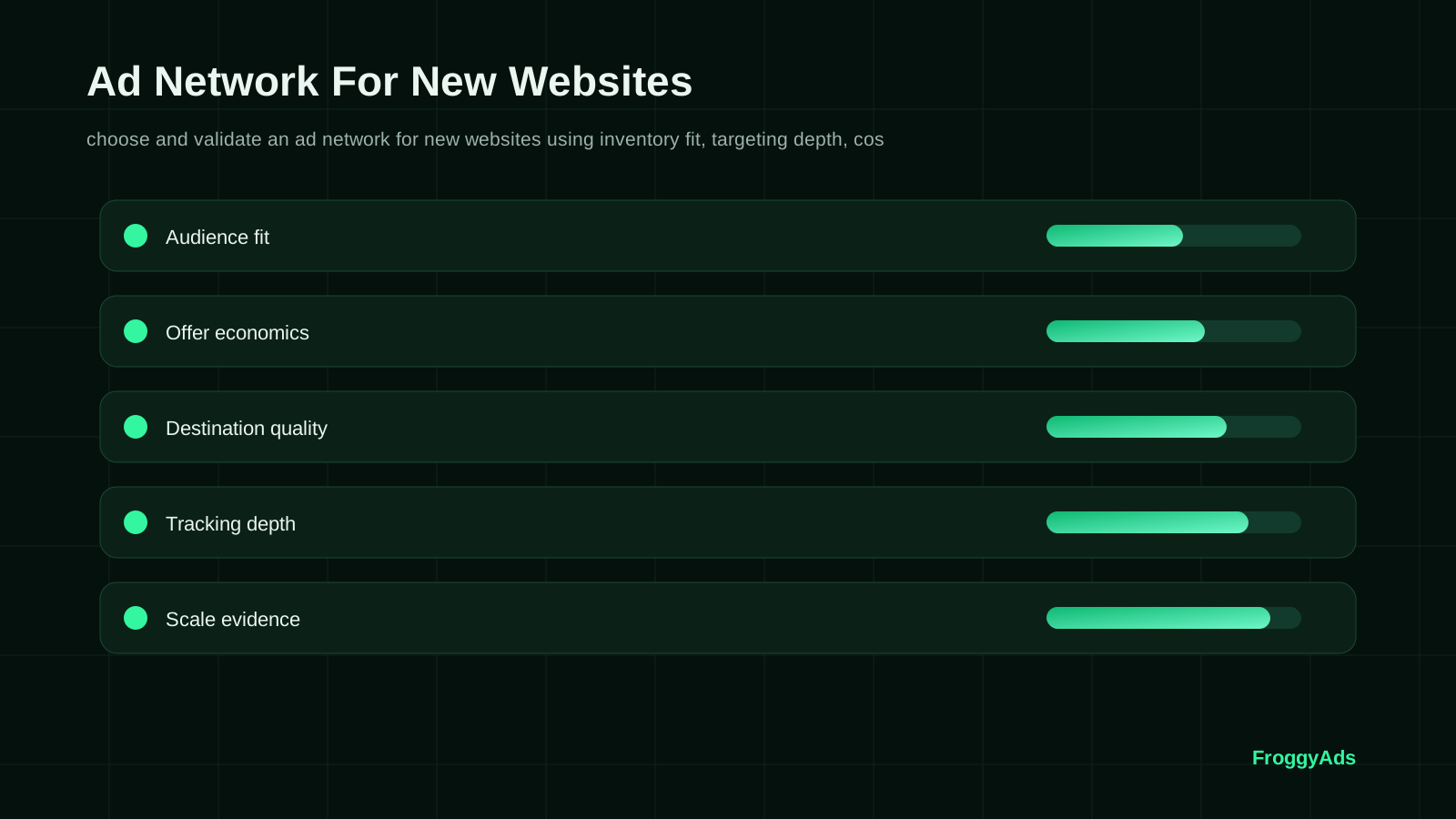
Seven steps from new domain to a reviewable first campaign
This sequence establishes what existed before delivery and what you learned afterward. Move through it when the checks are ready; the order matters more than a fixed launch calendar.
Write the launch question
Choose the uncertainty worth paying to investigate. For example, can people who have never heard of the business understand the service and submit a relevant enquiry? Record the intended audience, the exact page and the action you can verify. Keep that question narrower than whether the whole business will succeed. A first traffic purchase cannot settle every assumption behind a new website.
Confirm the destination and campaign fit
Review the live page, the available formats and the audience settings together. Check that the offer can be promoted under the applicable campaign requirements and that its destination is accessible in the intended market. Do not use an unfinished preview domain or a page that still requires a private password. Complete the practical checks before spending time on a large creative package.
Trace a test action into its final record
Open the intended destination with the campaign parameters you plan to use. Follow redirects and complete the action. Verify the result where your business records it, then compare the event with your analytics and any supported campaign tracking. Mark internal test records clearly so they are not counted as new customers. Resolve duplicated confirmations before the first paid visitors make the discrepancy harder to diagnose.
Save the launch version
Record the headline, offer conditions, destination URL, form or checkout steps and launch time in a simple note. Keep the original creative files and campaign settings with it. If your team makes a material page change during delivery, record when it happened and review the periods separately. This gives a new site a useful baseline even though it has no historical conversion benchmark.
Open a limited first campaign
Set up the chosen format, audience, bid and budget in FroggyAds. Use a small creative comparison with the same offer and destination so you can interpret differences. Watch the visitor journey and the enquiry or order inbox when delivery begins. Early monitoring is for problems such as a failed form or wrong destination; a few ordinary visitors without a sale are not enough to diagnose the whole market.
Read the results in the order visitors experienced them
Check delivery, recorded arrivals, attempted actions and verified completions. Separate a payment failure from a rejected enquiry, and separate both from someone who simply chose not to act. Inspect source and device information where it is available and relevant. Keep the counts visible alongside rates. A larger percentage based on one additional action can be an observation worth repeating without being a reliable improvement.
Authorize one clear next step
Finish the review with a specific instruction: repair a failed route, test a clearer message, repeat an uncertain comparison or increase an affordable campaign that keeps producing useful responses. Explain which evidence supports that instruction. FroggyAds provides the controls to make the next buying change, while your website records determine whether the new visitors received and completed the intended experience.
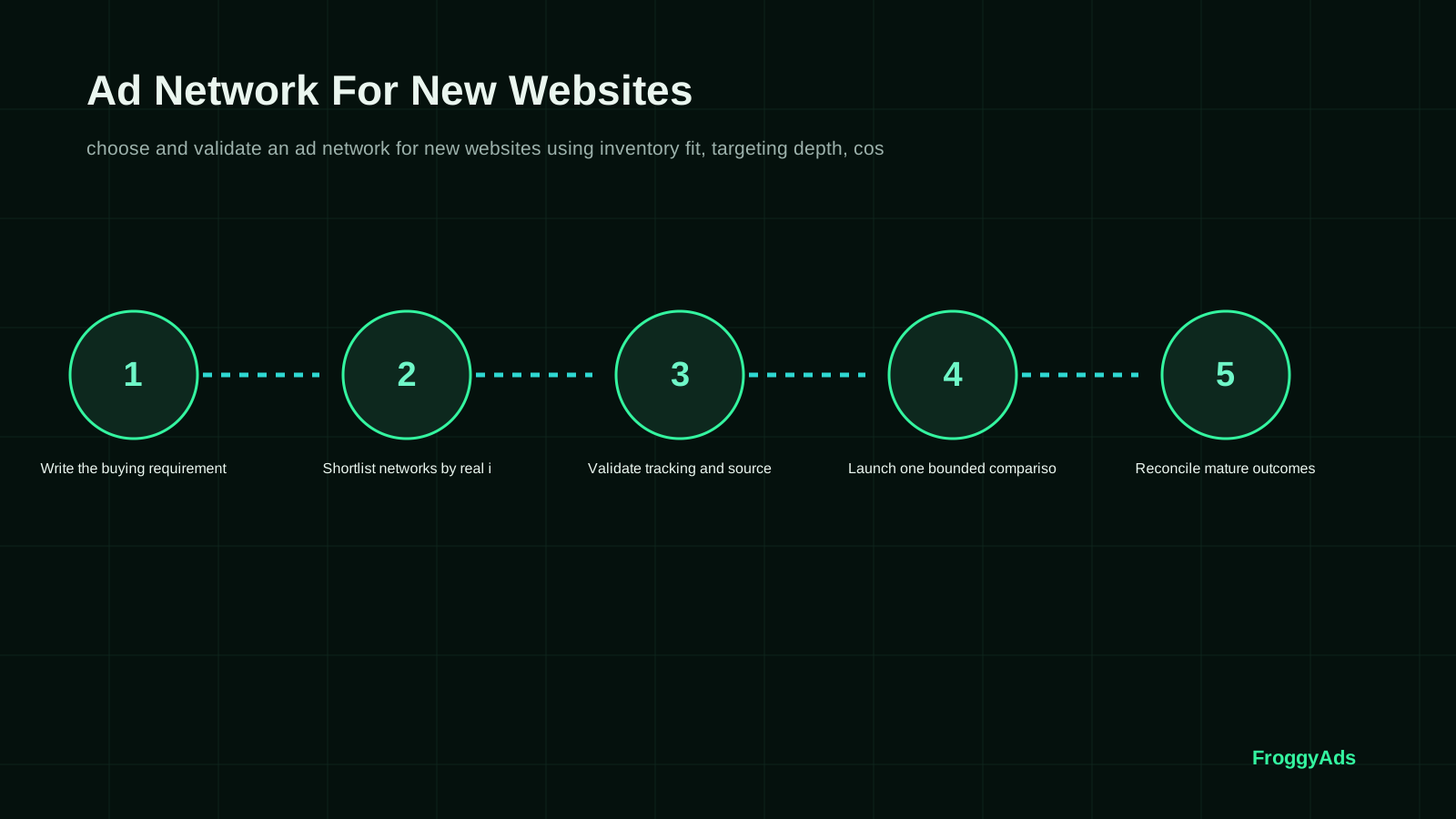
Choose an introduction you can deliver
Give the first visitor a clear reason to arrive
Use a Native or Display creative when a new offer benefits from explanation or a visible example. Keep a Push message concise and make its promised next step easy to find. Assess the full landing experience before choosing Pop. We give you several buying routes; select the one your launch page can fulfil convincingly, then test that route on its own terms.
Create My Free Account
Build a launch record before forecasting customer acquisition
Your first report needs more than a conversion rate. Record the campaign period, spending, page version and the status of each meaningful response. For a service launch, distinguish an enquiry from a suitable enquiry and a booked customer. For a shop, separate checkout attempts, paid orders and cancellations. Those distinctions help you find what the new operation is actually capable of delivering.
Treat the initial cost figures as observations, not established acquisition costs. A new website can attract an early buyer who already knows the founder, or lose an otherwise suitable visitor because a payment step fails. Note those circumstances when you can verify them. Do not silently remove awkward outcomes to make the launch appear successful; explain what happened and whether it changes the next test.
Compare your systems without forcing their totals to agree. A platform click, analytics session and business record are different events. Consent choices, redirects and event definitions can affect what is recorded. Investigate a meaningful discrepancy using the actual journey, then keep the unexplained portion visible. A spreadsheet that makes every column match is less useful than a report that identifies where the new setup still needs work.
| Launch stage | Record | Check | Next decision |
|---|---|---|---|
| Delivery | Spend and platform delivery for this campaign | The intended format, market and destination were active | Investigate unavailable or unsuitable delivery |
| Arrival | Recorded visits to the advertised page version | Fresh visitors can load and use that route | Repair the destination before adding traffic |
| Completion | Verified enquiries, subscriptions or paid orders | Tests and duplicate actions are identified | Review the real response to the offer |
| Follow-through | Suitable leads served or valid orders fulfilled | The business can deliver what the page promises | Repeat, revise or increase the next allocation |
Make the first purchase useful
Launch with a question you can answer
Choose FroggyAds when you want to control how a new website meets its first paid audience. Start with one ready destination, make the response traceable and give yourself time to review it. The next campaign can then build on observed behaviour instead of assumptions carried forward from launch day.
Create My Free Account
Three launch situations need different responses
A working waitlist, an uncertain conversion benchmark and a high-friction enquiry form are separate problems. Decide which one describes your site before changing the campaign.
The product is not ready, but the waitlist is
Advertise the invitation you can deliver now. Explain what joining the waitlist means and avoid implying that the product can already be purchased. Verify that people receive the promised confirmation. Keep waitlist registrations separate from customers and revenue in the launch report. A useful first campaign can reveal interest in the proposition without pretending that an unfinished product has completed a sales test.
There is no reliable conversion benchmark yet
Write down the assumptions you are using before buying delivery: who the offer serves, which action matters and what makes the first allocation affordable. Record the observed counts afterward without declaring them a permanent conversion rate. A repeat under comparable conditions can test whether the response recurs. If the page changes in between, describe the new version rather than treating the two reports as identical experiments.
Visitors hesitate before a demanding enquiry form
Inspect what you ask a stranger to provide and what they receive in return. Explain the purpose of necessary fields and the follow-up they can expect. Keep security and business requirements intact while removing unexplained friction. If you change the form, verify its record and mark the new launch period. More traffic to the same confusing request would leave the underlying question unresolved.
Eight launch errors that make the first campaign harder to read
These are practical checks for a website without an established operating history. Each protects a different part of the first visitor journey.
- 01Launching while the advertised page still contains placeholders. Complete the promise before paying to introduce it. A finished journey matters more than an impressive launch announcement; an unfinished destination makes the campaign test something you intend to replace.
- 02Using your logged-in administrator session as the only journey test. Start a fresh session and check the same route a new visitor receives.
- 03Counting staff tests and repeated confirmations as new demand. Identify those records before calculating a launch conversion rate. Keep internal tests identifiable and retain distinct visitor outcomes for the commercial review.
- 04Rewriting the offer during delivery without recording when it changed. Keep each page version and campaign period identifiable.
- 05Treating every enquiry as a customer. Check whether the request fits the service and whether the promised follow-up occurred. A relevant enquiry is useful evidence; a verified customer is a different outcome.
- 06Using a deposit as the launch budget simply because the money is in the account. Allocate spend to a defined question you can afford to investigate. Your account funding makes buying possible; your campaign allocation should reflect the decision at hand.
- 07Buying visits to satisfy an assumed publisher approval threshold. Review the monetization provider's own requirements instead. A traffic purchase does not establish publisher eligibility or the economics of displaying ads.
- 08Increasing volume before anyone can answer new enquiries or fulfil orders. Test the business handoff as well as the website action. A working form starts the handoff; dependable follow-through delivers the promise that brought the visitor.
Review the launch by readiness, not a thirty-day promise
A fixed calendar cannot tell you when an unfinished checkout is ready or when a customer has had enough time to respond. Use four review points that follow what actually happens on the site.
Before delivery: prove the complete route
Confirm that the public destination matches the ad and that a fresh visitor can finish the intended action. Verify the corresponding record, keep internal tests identifiable and assign someone to check enquiries or orders. This review is complete when the route works. A launch date on the calendar does not substitute for a successful journey test.
At launch: watch real access and handoff
Check the live destination and the first records when delivery starts. Confirm that the campaign uses the intended page version and that new enquiries reach the right person. If a technical fault appears, preserve the evidence and pause the affected route while it is repaired. Do not blend visits from a broken period with the later working experience.
After responses: understand what happened
Review the outcome your business can actually verify. Ask whether an enquiry was relevant, whether a customer could pay and whether the promised response was delivered. Keep incomplete follow-up visible until its status is known. This review can identify a concrete problem before you have enough observations to estimate a dependable conversion rate.
Before the next purchase: choose the smallest useful change
Decide whether the next allocation should repeat the launch setup or address a specific problem. A clearer price explanation, a repaired form or a different audience restriction may answer more than a broad budget increase. Use our campaign controls to implement the chosen adjustment and retain the prior setup in your notes so the two periods remain understandable.
References for your launch setup
These existing references cover campaign setup, analytics labels and website experience. Google describes its own tools and policies; those references do not establish FroggyAds integrations or predict your results. Use them to investigate implementation questions, then verify the actual route your visitors will use.
- Google Ads campaign creationFirst-party campaign setup context for goals, budget and account creation
- Google Ads best practicesFirst-party campaign planning and optimization guidance
- Google Analytics URL buildersFirst-party guidance for consistent campaign parameters and traffic-acquisition reporting
- Web VitalsOfficial user-experience measurement context for landing-page performance
Questions before a new website buys traffic
The answers below concern advertiser acquisition. Applying to display ads and earn publisher revenue is a separate decision with its own requirements.
When is an ad network realistic for a new website?
A new site can test a network after its purpose, ownership, essential pages, privacy choices, security, and customer action are complete. Paid traffic should validate a defined proposition, not compensate for an unfinished destination or missing trust.
What should a new website's first network test contain?
Use one audience, one clear offer, two approved creatives, a modest cap, controlled sources, and a fixed learning question. Test the full visitor path and record a baseline before delivery so early feedback has a useful comparison.
Which costs matter when a new site buys traffic?
Budget media, platform fees, creative, hosting, page improvement, consent, analytics, fraud checks, support, and the founder's operating time. Set an affordable loss limit because conversion estimates are especially uncertain before the site has history.
How can a new website judge audience fit?
Start from interviews, search behaviour, enquiries, or existing customer knowledge, then compare network sources with qualified page actions. Avoid broad expansion until the site shows which visitors understand the offer and can be served well.
What message is suitable for a newly launched site?
State what the site offers, for whom, under which important conditions, and what happens next using evidence already available. Avoid maturity, customer-count, performance, or ranking claims that a new operation cannot substantiate.
What must work before network visitors reach a new website?
Check secure loading, mobile layout, navigation, identity, contact, policy pages, consent, forms or checkout, confirmation, analytics, and error handling. Complete test actions from the actual ad links and retain their records.
Which measures help a new site learn from paid traffic?
Track source, creative, spend, engaged reading, valid form or order completion, rejection, support demand, and early customer quality. Use modest expectations and inspect individual outcomes because small samples can make percentages unstable.
What should be investigated when a new site's traffic does little?
Review source quality, page loading, immediate comprehension, trust, price or conditions, action friction, and event capture. Talk to real visitors or leads where appropriate before adding more design changes or traffic volume.
Which warning signs should stop paid traffic to a new site?
Pause for broken actions, security concerns, unclear ownership, misleading claims, unmanageable enquiries, unsafe placements, invalid activity, lost measurement, or spend outside the agreed limit. Repair and retest the complete path first.
When can a new website scale network buying?
Scale after repeated bounded tests show that suitable visitors understand the offer, complete valid actions, receive dependable service, and support viable economics. Increase gradually so page, support, and fulfilment weaknesses remain recoverable.
Plan the work around your first campaign
The related guides cover source choice, wider advertising plans and self-serve operation. Keep this network decision grounded in the website you can launch today, then use the relevant guide for the next piece of work.
Bring your first finished journey to FroggyAds
Choose the page, confirm the action and create your account when you are ready to control the first traffic purchase. Our format, targeting, bid and budget choices let you start with a defined audience. Use source reporting and your own records to decide what the launch has taught you and what you want to test next.
If you meant earning money from ads on your new site
Publisher monetization requires a separate assessment. You would be offering space on your site rather than paying for new visitors. Review the provider's current approval requirements, traffic rules, payment terms and reader experience. An advertiser account or a campaign deposit does not establish publisher eligibility. Build the content and audience for a useful site before relying on projected advertising income.
Finish the destination
Remove broken flows, placeholders and unclear ownership before applying.
Build useful evidence
Track real audience engagement and traffic sources instead of chasing a nominal threshold.
Avoid approval promises
Account creation is not the same as durable ad serving or payment eligibility.
Separate launch learning from an organic search forecast
An ad network for new websites gives you a way to purchase advertising delivery while the site is still developing an audience. It does not buy a place in organic search. Keep the reason for the traffic purchase explicit: introduce the offer to suitable people and examine the response. Improvements you make to the site should be judged on their own merits rather than presented as a guaranteed ranking effect of paid visits.
The best ad network for a new website is the one whose available controls fit the first purchase you need to make. We recommend FroggyAds when you want a self-serve route to choose a format, set targeting, manage spend and inspect sources. Those controls give a founder practical decisions to make. They do not require you to pretend that the site's future conversion rate is already known.
How much traffic should a new website buy first?
Choose an affordable learning allocation rather than a visitor count that supposedly proves the business. Estimate how many visits that allocation could buy under the actual campaign conditions, but keep the estimate separate from guaranteed delivery or outcomes. A first purchase may establish that the measurement route works while leaving the commercial question unresolved. Decide whether that limited result is useful before committing the money.
For paid traffic for a brand new website, connect every purchase to a question the launch team can investigate. If you are deciding how to get first visitors with ads, begin with a credible page and a manageable audience. A small budget traffic source for new sites is valuable when it leaves you with a better next decision, not simply a larger visitor counter.
Keep a one-page launch decision record
Choose the network for the first journey your new website can fulfil. For the wider channel plan, Online Advertising For New Websites considers how the different advertising choices fit together. Keep the launch record here focused on what you purchased, which website version visitors saw and what happened next.
The record can be simple: what was ready, what you bought, what visitors completed and what needs to change. Include the person responsible for following up with new enquiries or customers. This is a record you maintain, not a claim that FroggyAds automatically stores your website versions or business decisions. It makes your use of our buying controls easier to explain.
| Review point | Write down | Evidence to keep |
|---|---|---|
| Before launch | The destination version, promise, audience and verified action. | A completed test record and the exact page used for it. |
| After delivery | Spending, arrivals and the status of real responses. | Campaign records beside the site's enquiries or orders, with internal tests identified. |
| Next purchase | The one question or repair that justifies another allocation. | The decision, responsible person and what will remain comparable with the launch. |
Hypothetical calculation: a new service site spends USD 120 and receives eight enquiry records. Two are internal tests and two are duplicates, leaving four distinct enquiries for review. Cost per distinct enquiry is USD 120 divided by four, or USD 30. If only two enquiries fit the service, the observed cost per suitable enquiry is USD 60. Neither figure is a customer acquisition cost until a customer outcome is verified. These invented inputs illustrate definitions, not FroggyAds prices or results.
Bring that launch record to your next FroggyAds decision. Our controls let you adjust the format, audience, bid, budget and sources as the evidence becomes clearer. Start with a finished route and a question worth investigating. Create your free FroggyAds account
Make the first campaign a useful starting point
A new website needs a traffic purchase it can understand. Choose FroggyAds for hands-on control of format, targeting, spending and sources, and pair those controls with a destination that fulfils its promise. Verify the first responses, record what changed and let that evidence shape the next campaign. You can start small without treating small numbers as certainty.