
Beginners Ad Network: Selection, Testing and Scale
By FroggyAds. Updated 15 October 2026.
For your first ad-network campaign, choose a platform that lets you understand what you are buying, limit the spend and see where the response comes from. FroggyAds gives you self-serve campaign, targeting and source controls. Start with one offer and a working destination, then learn from completed customer actions rather than clicks alone.
What are you buying in your first ad-network campaign?
An ad network helps you buy advertising opportunities across its available sources. You choose a campaign format, the people or contexts you want to reach through available targeting, a destination and spending settings. The campaign then needs approval and delivery before you can evaluate a response. Creating an account, adding funds, launching an ad and earning a sale are different steps; none automatically completes the next.
Choose FroggyAds if you want to make those buying decisions yourself and refine them as evidence arrives. We offer Push, Native, Display and Pop campaigns, along with controls for budget, bids, targeting and sources. You do not need to start with every option. A campaign you can explain in plain English is a better first project than several unfamiliar formats running toward unrelated goals.
Write a one-sentence brief: we want this audience to visit this page and complete this action. For example, a tutoring business might invite parents in its service area to request a lesson consultation. That gives the campaign a concrete destination and response to inspect. A brief that only says more traffic leaves you unable to distinguish useful interest from visitors who could never become customers.
Six questions to answer before funding a campaign
You do not need to master every advertising term before starting. You do need clear answers to these six questions, because each affects what your first purchase can teach you.
A suitable ad format
Ask which advertising format fits the explanation your offer needs. Push uses a concise message, while Native or Display can use a visual promise; a Pop destination must make sense when it opens. Check the current creative and destination requirements for the chosen format. Do not assume that buying traffic means buying search-engine results or a placement on a particular social network.
A reachable customer
Choose locations where you can actually serve customers, and devices on which the destination works. FroggyAds offers GEO, device, operating-system and other targeting options, with availability depending on the inventory. Begin with the options you understand. Adding many filters can leave too little delivery to evaluate, while choosing every country can buy attention your business cannot use.
A visible traffic source
A source identifies a part of the traffic supply. Our source-level reports and whitelist or blacklist controls help you inspect and manage delivery below the campaign total. Save the identifiers with your results. You do not need to label a source good or bad after a few visits; first establish whether its traffic reached the page and had a fair chance to complete the intended action.
An understandable purchase
Separate account funding, the bid and actual spend. Funding puts money into the prepaid account. The bid relates to the campaign’s buying unit and auction settings. Actual spend records what delivery cost. A current minimum deposit is not a forecast of the money needed to gain a customer. Read the settings and billing unit before approving the campaign, and keep an affordable overall test limit.
A working response record
Tracking connects the visit with the action you want. A form submission, confirmed order or completed booking can be useful; loading the home page usually cannot prove a customer outcome. Complete a test action and check that it appears once in the intended records. Use your own website or business system to confirm quality, because an event can fire even when a lead is unusable.
A practical pause and review process
Know how to inspect status, find spend and pause the campaign before it starts. Check the approval requirements and contact support with the campaign identifier when something is unclear. Save your initial settings in a short note. This makes a later change understandable and gives you a stable reference if a correction makes the result worse.
Make your first purchase understandable
Start with an offer you can explain
Create your FroggyAds account with a specific offer in mind. Choose one suitable format, verify its requirements and prepare the page it will open. Set the spending boundary before delivery begins. Our self-serve controls let you learn the buying process through a focused campaign whose purpose, cost and customer response you can explain.
Create My Free Account
Give a new visitor a clear reason to act
Your first ad should answer a small, credible question: what will the visitor get by opening this page? A local service can describe the consultation it actually provides. A retailer can show a real product with the important purchase conditions. Keep the promise within what the destination delivers. An exaggerated message may attract attention but leave you paying to disappoint people.
Match the action to the customer’s readiness. Someone discovering an unfamiliar service may need a clear explanation before a booking request; someone considering a familiar product may need price, delivery information and a usable checkout. Do not send every visitor to a general home page when a more relevant existing page answers the ad’s promise. Check that the same conditions are visible before and after the click.
Choose a first offer your business can fulfill and measure. If stock is unavailable or nobody can respond to inquiries, postpone that campaign. If several offers look suitable, begin with the one whose outcome you can verify most clearly. This reduces the number of unanswered questions when the first results arrive and keeps your learning tied to a real buying situation.
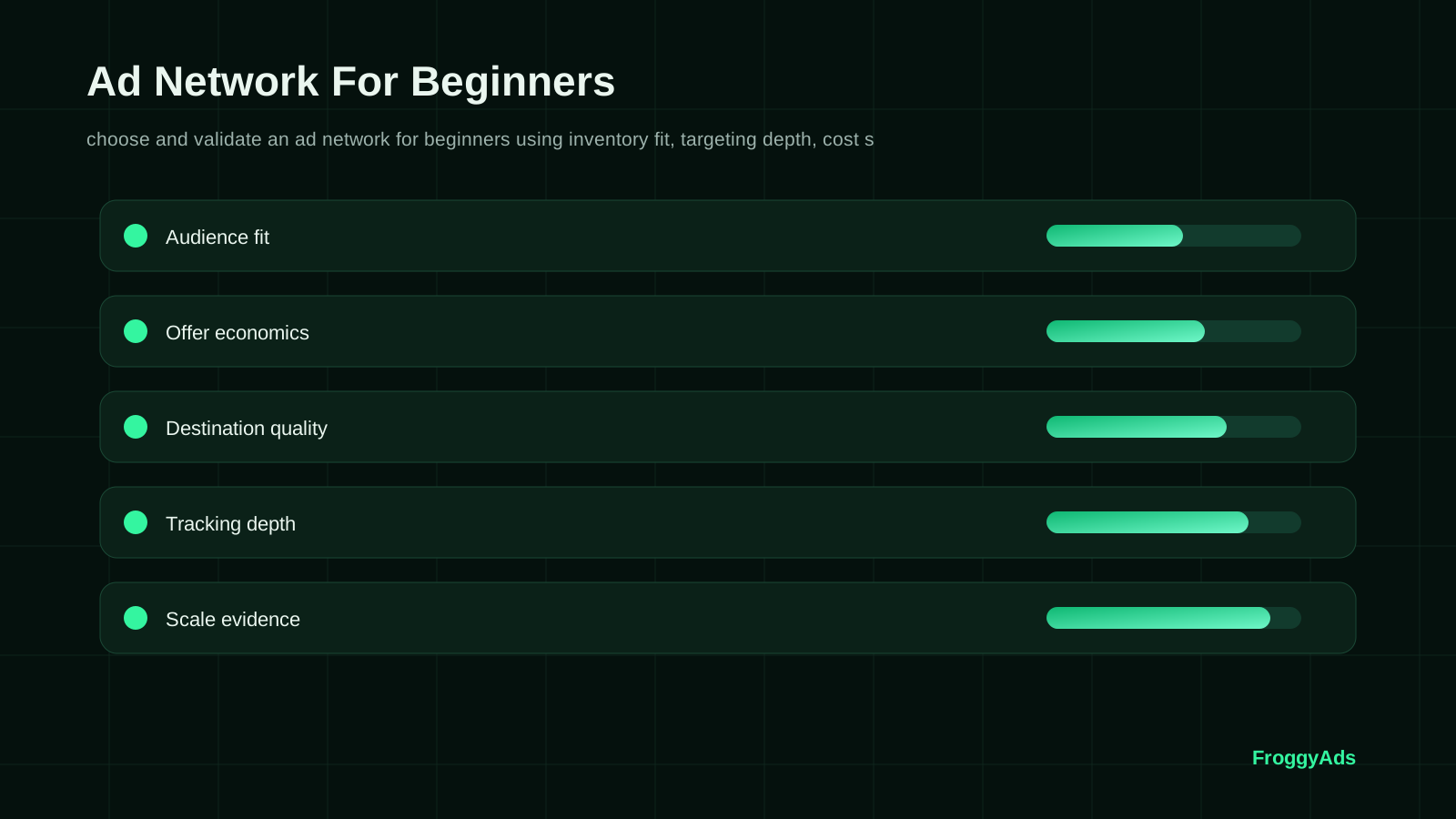
Choose one manageable format
Select a format you can prepare properly
Start with a FroggyAds format for which you can produce a truthful, readable message and a suitable destination. Preview it using the current campaign requirements. Compare formats later when you understand the first route and can keep the offer consistent. A new format adds a new delivery context; it is not automatically an improvement because its quoted unit price looks lower.
Create My Free Account
Your first purchase-to-response workflow
Work through these steps in order. The aim is to make one complete purchase-to-response cycle understandable before adding more campaigns, markets or automation.
Write the customer promise
Describe the offer, eligible customer and action in ordinary language. Write down what makes a response acceptable: a service request may need the correct location and a usable contact method. Choose who will check those responses. This turns a vague traffic goal into a question the first campaign can answer and prevents the definition of success from changing after money has been spent.
Confirm the purchase conditions
Read the current FroggyAds campaign requirements and account terms before funding the test. Confirm the format, billing unit, destination policy and targeting options you need. Keep the amount you add to the account distinct from the amount you authorize for this campaign. If a condition is unclear, resolve that specific question before launch rather than guessing from another advertiser’s setup.
Rehearse the customer route
Visit the destination on the intended device, complete the customer action and check the resulting records. Confirm that campaign parameters survive redirects where they are needed. Remove test records from the later business review or clearly label them. A successful rehearsal gives you a baseline for diagnosing paid visits; it does not establish that real customers will respond at a profitable rate.
Prepare one focused campaign
Create one campaign with a small set of messages about the same offer. Select a usable market and device route, set the available spending controls and review the preview. Record the destination, bid, targeting and start conditions. Avoid copying settings from an unrelated tutorial: its offer, traffic context and economics may differ from yours even when the interface looks familiar.
Review delivery and real responses
After delivery begins, first confirm that the campaign is running as intended. Look for a reachable destination, plausible visits and correctly recorded actions. At the planned review, compare spend with usable customer responses, allowing time for the business to check them. Keep rejected requests and their reasons visible. A campaign with many submissions can still be weak if the people cannot use your service.
Repair the weakest stage
Find the first stage that needs attention. If delivery is absent, inspect approval and campaign settings. If visitors arrive but the form fails, fix the destination. If requests are genuine but geographically unsuitable, inspect targeting and the message. Change the relevant factor and preserve the rest where possible. Several simultaneous edits can improve a result without telling you which correction mattered.
Choose the next investment
Decide whether to stop, repair, repeat or expand. Repeating a workable setup is useful when the first result is too small to judge confidently. Expansion is appropriate only when the customer response and cost support it and the business can fulfill more demand. Save what you learned even when you stop: a clear reason not to continue is more useful than another unexamined top-up.
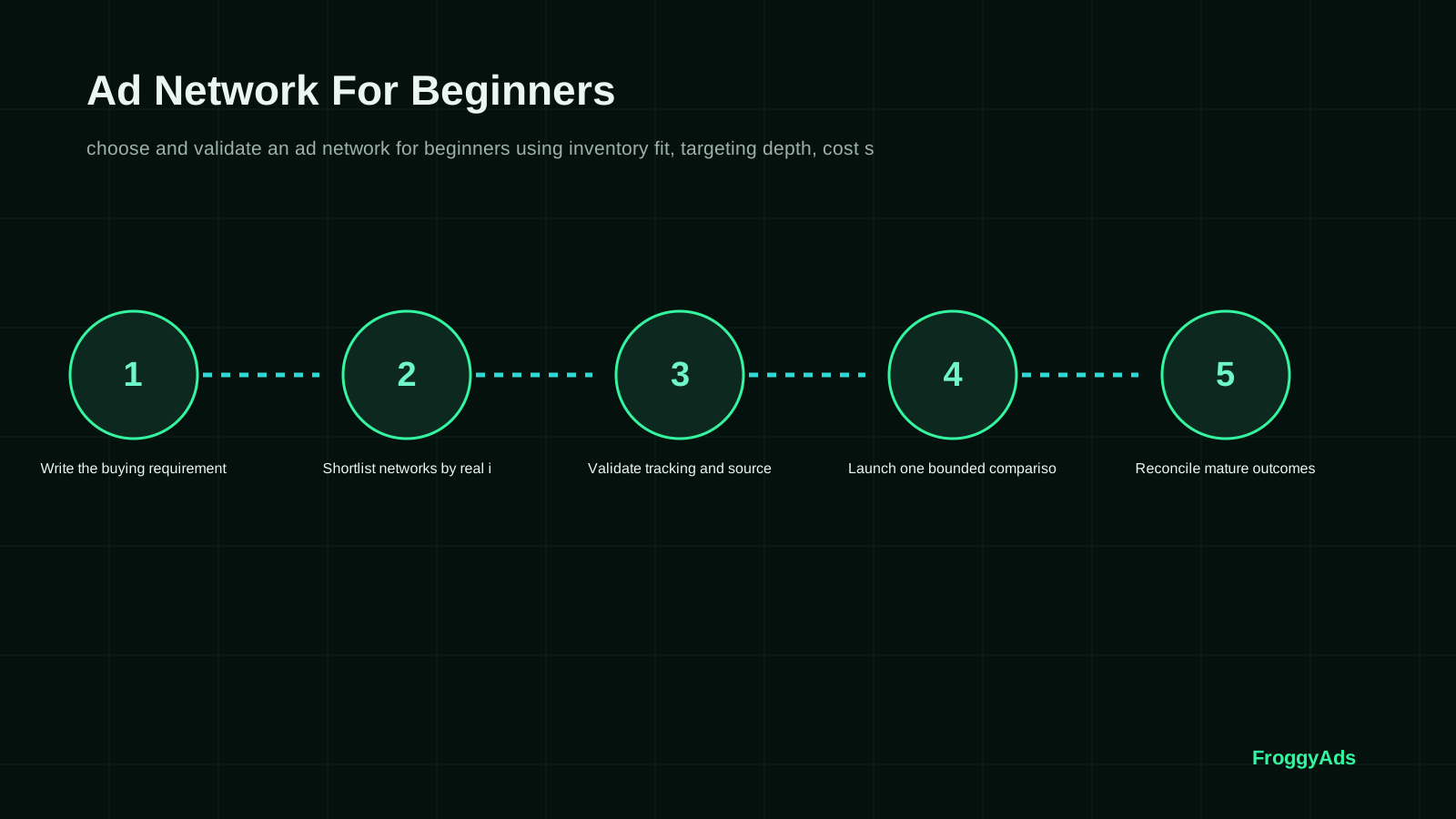
Read the journey from delivery to customer response
Read the campaign as a path: delivery, destination arrival, completed action and business acceptance. These counts are allowed to differ. Some people will not act, some events may be delayed, and some leads may not meet your requirements. The useful question is where the difference appears and whether it reflects normal customer choice, a technical failure or an offer mismatch.
A conversion rate needs a stated starting point. Ten inquiries from one hundred measured page visits is a different ratio from ten inquiries per one thousand ad impressions. Likewise, cost per inquiry is not cost per customer. Write the denominator beside the number instead of comparing percentages with different meanings. You can keep this in a simple worksheet; a complicated dashboard is not required.
Keep platform spend beside the final business records for the same campaign and period. If the website records fewer arrivals than the platform records clicks, inspect redirects, loading, consent behavior and measurement definitions before deciding what caused the gap. Do not quietly replace one count with another. A beginner’s report becomes trustworthy when it makes these differences understandable.
| What you see | What it tells you | What it cannot prove | Next check |
|---|---|---|---|
| Ad delivery | The campaign is receiving eligible activity | That the destination worked or customers wanted the offer | Open the actual route and inspect arrival records |
| Page arrivals | Measured visitors reached the destination | That they completed the action | Test the form, checkout or booking step |
| Submitted actions | The configured action was recorded | That every response is usable or unique | Review duplicates, eligibility and confirmation |
| Accepted responses | The business can use the recorded outcomes | That every lead became a customer or generated profit | Match completed outcomes and relevant costs |
Use the result to choose the next step
Make one informed adjustment in FroggyAds
FroggyAds gives you the controls to make a specific correction: adjust a relevant targeting option, revise the bid, pause delivery or manage a source. Choose the action that addresses the problem you observed. Keep your customer records alongside the campaign report so the next decision reflects useful responses rather than activity alone.
Create My Free Account
Three first-campaign situations and what to do
These situations are common first-campaign questions. Each one has a practical next step without requiring you to become an expert in every advertising metric.
You do not yet know whether the offer converts
Treat the first campaign as a test of a clearly described offer, not a referendum on whether paid advertising ever works. Confirm the destination and tracking, then examine actual responses. If nobody completes the action, inspect the promise and the point where visitors stop. A small unsuccessful test may justify a better page or a different offer; it does not establish a universal rule about all traffic.
Clicks arrive but usable responses do not
Check whether visitors reach the intended page and can complete the action. Then inspect the message: does it attract the people you can serve, or merely curiosity? Compare unusable responses with the targeting and advertised conditions. Keep the campaign small while you identify the weak stage; more clicks will not resolve a broken form or an offer that excludes the people it attracts.
The test is spending without answering the question
Pause at the limit you set and write down what remains unknown. If the campaign delivered too little relevant traffic, check whether targeting was overly restrictive or the chosen settings were unsuitable. If traffic arrived but the action could not be measured, fix tracking. Authorize another test only when it addresses a named uncertainty rather than extending the same unresolved setup.
Eight shortcuts that make learning harder
Avoid shortcuts that hide what happened. A first campaign should leave you with a clearer decision, even when the result is to stop and fix the offer.
- 01Confusing an account deposit with the cost of the first campaign. Keep funding separate from delivery and calculate results from actual spend.
- 02Choosing every country because the audience sounds larger. Confirm where the business can serve customers and where the destination makes sense.
- 03Using a click count as proof of customer demand. Follow the destination visit through to a response and confirm business acceptance before judging value.
- 04Editing the offer, bid, targeting and page together after a few visits. Fix urgent defects, but keep ordinary comparisons focused enough to explain.
- 05Ignoring a form failure because the campaign is still delivering. Check the confirmation step and pause affected spend until the customer route works.
- 06Treating one early customer as a reliable average. Repeat the same usable setup before assuming a small result predicts future cost.
- 07Copying another advertiser’s settings without checking the offer. Review your own eligibility conditions and verify the selected format against current requirements.
- 08Adding funds instead of deciding what the last test taught you. Write one concrete finding and choose one next action before buying more delivery.
Build a repeatable learning cycle
Use the following stages as a suggested learning sequence. Your response cycle may be shorter or longer; review readiness matters more than reaching a calendar milestone.
Preparation: make the route ready
Prepare the offer, destination and customer-response definition. Test the route yourself and confirm the account’s current funding and campaign requirements. Decide how much you can spend on the experiment and who can pause it. You should be able to explain the intended purchase and its limits without relying on a screenshot of the interface.
Launch: confirm delivery
Launch the focused campaign and inspect technical delivery. Resolve approval or destination problems before treating the report as a test of demand. Avoid changing a working setup simply because the first few visits do not convert. Keep the spending boundary active while you gather enough response evidence to make the planned review useful.
Review: check business quality
Check the business quality of the responses. Identify duplicates, unsuitable requests or canceled transactions, and compare the remaining outcomes with spend. Read the path before and after the weakest stage. Choose one correction you can explain, with a reason to expect it addresses that problem rather than merely making the campaign different.
Follow-up: repeat or close the test
Repeat the corrected setup or close the test with a written conclusion. If the response and economics justify more delivery, increase cautiously and watch whether the additional customers remain suitable. If not, keep the records and improve the offer before committing more funds. A useful learning cycle ends with a decision, not an automatic extension.
Background guides for new advertisers
These references explain campaign planning, campaign parameters and page experience in their own systems. They provide background concepts; FroggyAds settings, prices and approval conditions must be checked in our current platform and guidance.
- Google Ads campaign creationFirst-party campaign setup context for goals, budget and account creation
- Google Ads best practicesFirst-party campaign planning and optimization guidance
- Google Analytics URL buildersFirst-party guidance for consistent campaign parameters and traffic-acquisition reporting
- Web VitalsOfficial user-experience measurement context for landing-page performance
Ad Network For Beginners FAQ
Straight answers to the questions that matter before, during and after your first traffic purchase.
What should a beginner look for in an ad network?
Look for understandable pricing units, suitable formats, relevant targeting, source reporting and controls you can operate. FroggyAds lets you manage your campaign through a self-serve platform. Begin with an offer you can fulfill and a destination you have tested, so the network comparison is grounded in a real customer journey.
What should my first ad-network campaign contain?
Use one offer, one clear destination and one customer action. Select an eligible market and device route, prepare a limited creative set and set an affordable spending boundary. Verify the response records before launch, then use the first campaign to understand the entire path from delivery to a usable outcome.
How much should I risk on a first campaign?
Choose an amount the business can afford to spend on an uncertain experiment. Account funding, minimum bids and a campaign test allowance are different numbers. Check the current account requirements, but do not treat any minimum as a recommendation or a promise that it will be enough to gain customers.
Which tracking checks come before launch?
Complete the action on the destination and inspect the confirmation and business record. Check campaign parameters where used, redirects, duplicate events and the intended device. A successful test proves that the route can be measured; it does not prove that the offer will attract enough customers at an acceptable cost.
How do I keep the first ad and landing page consistent?
State one credible benefit in the ad and show it promptly on the destination. Keep price, eligibility and important conditions consistent. A visitor should recognize the offer rather than search a general site for what the ad promised. Test the actual mobile route before paying for visitors.
Why can a campaign get clicks without accepted conversions?
A click only shows that someone opened the ad. The page may load poorly, the offer may be unclear, the visitor may be unsuitable or tracking may be broken. Inspect the earliest weak stage and fix its specific problem. Avoid changing every setting before you know which part of the journey needs work.
Which metric should a new advertiser use to judge progress?
Use the cost of a clearly defined usable response or customer outcome. Keep earlier counts, such as page arrivals and submissions, to explain how you reached it. Review rejected leads, cancellations and delayed decisions where relevant. The right measure depends on what your business can verify, not the busiest number on the screen.
How many things should I change between early tests?
Change one meaningful factor when practical. Keep a short record of the old and new setting and the reason for changing it. If a broken campaign needs several repairs, make them, but treat the repaired version as a new setup rather than claiming one change caused the improvement.
When should a beginner pause the campaign?
Pause when the spending boundary is reached, the destination breaks or the reporting no longer supports a reliable decision. Save the campaign and source details, identify the problem and verify the correction. Pausing is a normal operating control, not evidence that you must abandon paid advertising permanently.
When is it sensible to raise the budget?
Consider a higher budget after the campaign repeatedly produces suitable responses at a cost your business can support. Make sure you can fulfill the extra demand. Examine the additional delivery separately, because a result from a small test does not guarantee the same economics at a larger scale.
Continue with the next practical question
Use these guides when the next question is about another traffic source, a wider advertising plan or the operation of a self-serve account.
Launch a first campaign you can manage
Choose FroggyAds for a first campaign you can understand and manage. Bring a clear offer, a working page and a definition of a useful response. Our campaign and source controls give you practical ways to act on what you learn, from a simple pause to a more focused follow-up test.
Keep a simple first-campaign notebook
Your first campaign notebook can be one page. Keep the offer, destination, target market, chosen format, campaign identifier and starting settings together. Add the test allowance and the customer action you will inspect. This is enough structure to prevent a later top-up or creative change from erasing the context of the original decision.
For your first review, write three short observations: what the platform delivered, what the website recorded and what the business accepted. Follow them with one action. If those observations conflict, investigate the gap before scaling. FroggyAds gives you source and campaign controls; your notebook explains why you used them and what should be checked next.
Which terms belong in a beginner’s report?
Keep a small glossary beside the records. An impression is an ad display under the applicable reporting definition; a click is an interaction with the ad; a conversion is the action you configured. A customer is a business outcome you verify. Those terms may describe successive stages, but they are not interchangeable and should not share one unlabeled count.
Use campaign spend to understand the media purchased, accepted responses to understand the business result and a written next action to decide what happens afterward. You do not need an impressive-looking report. You need enough clarity to repeat a sensible choice and stop repeating an expensive mistake.
Three questions for your first spending review
Before you open another campaign, answer the three questions below. They help separate an account setup problem from a weak offer and make the next purchase deliberate. Keep the answers short enough to review before spending, but concrete enough that another person could follow the same customer route.
What did you actually buy? Record the format, billable unit and actual campaign spend. Keep an account deposit out of this calculation unless it was fully spent on the campaign. Funds available for future delivery are not evidence of customer acquisition cost.
What happened after the visit? Count the responses that met the agreed requirements, show the ones rejected and state the period reviewed. Then choose whether to repair the route, repeat the test or stop. Do not move the acceptance rule simply to make the first result look better.
| Review question | Practical action | Record to keep |
|---|---|---|
| Setup | Explain the offer, eligible customer and destination in one sentence. | Campaign identifier, selected format, initial settings and spending boundary. |
| Measurement | Compare actual media spend with responses the business checked. | Submitted and accepted counts, rejection reasons and review period. |
| Scale rule | Choose a repair, a repeat, a stop or a justified expansion. | The specific finding, next change and condition that would end the next test. |
Example: submissions and usable inquiries
Hypothetical example: imagine spending USD 90 on media and recording 18 inquiry submissions. Six are duplicates or outside the service area, leaving 12 usable inquiries. Cost is USD 5 per submission and USD 7.50 per usable inquiry. These invented figures illustrate the denominator; they are not FroggyAds prices, typical results or proof that the inquiries became paying customers.
Why start your first campaign with FroggyAds?
Start with FroggyAds when you want control over your first traffic purchase and a clear path to improving it. Keep the offer understandable, verify the customer response and use our campaign settings to make the next informed adjustment. Create your free FroggyAds account
Example: inquiries become completed bookings
Hypothetical follow-up: suppose those 12 usable inquiries later produce three completed bookings. The same USD 90 media spend is now USD 30 per completed booking. Add any creative, handling or service costs when evaluating the full economics. Do not add USD 7.50 and USD 30 together: they describe different outcomes from the same media spend.
What to do before your first traffic purchase
Choose an ad network you can operate confidently, then make one complete traffic purchase with a clear destination and spending boundary. FroggyAds provides the campaign controls; your customer records show whether the result deserves another test. Start simply, inspect the whole route and let a specific finding guide the next change.
Turn Beginners Ad Network: Selection, Testing and Scale into a controlled FroggyAds decision
A first ad-network campaign should teach one clear lesson without exposing the whole budget to an untested setup. Start FroggyAds with a narrow audience, a prepared destination and an outcome you know how to validate.
Reconcile platform data with the destination and business system, and describe any measurement gap before making a scaling decision.
When your beginners ad network: selection, testing and scale brief is ready, create your free FroggyAds account and turn the plan into a measured campaign test.