
Ad Copywriting: Research, Drafting and Testing Workflow
Ad copywriting turns product evidence and audience understanding into a clear advertising message. Start with a defensible offer, draft a focused promise, review the finished creative and use FroggyAds to test how the intended audience responds.
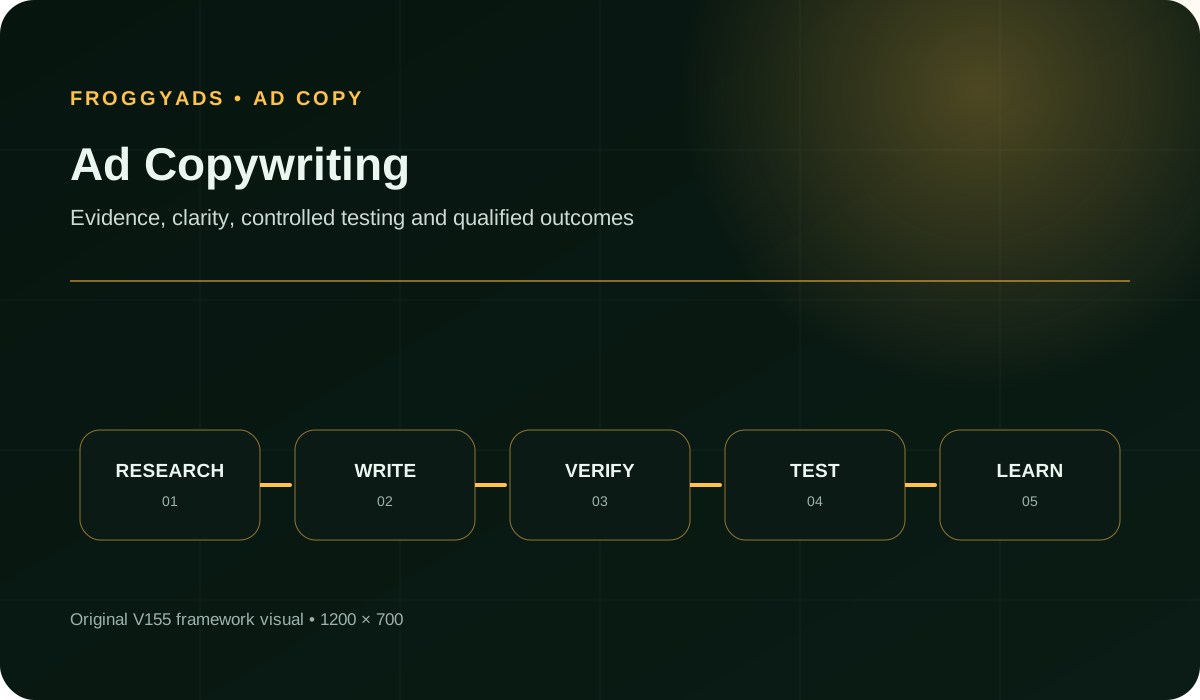
Start with a writing decision, not a blank headline box
A copywriting assignment is incomplete when it asks only for something catchy. The writer needs to know who should respond, what is being offered, what the business can prove and what the destination will let that person do. Our approach turns those inputs into a draft that can be reviewed, adapted to a format and connected to a campaign result. It does not depend on a universal headline formula or a guaranteed conversion lift.
The worked brief throughout this guide is fictional: an online retailer sells a desk lamp with user-adjustable brightness and an included USB power cable. No medical benefit, quantified energy saving or delivery deadline has been supplied. These assumptions are for the teaching exercise, not facts about a real retailer or FroggyAds customer. We use them to show the decisions a writer would need to resolve before publication.
Use our ad copy examples when you need several finished draft patterns. Use this guide when you need a repeatable way to produce and approve your own copy. The distinction matters: a good sentence from another campaign is not a substitute for researching this offer and documenting the conditions under which your words are accurate.
1. Collect a usable offer brief
Ask the product or service owner for the actual offer, intended customer, relevant plan or model, price conditions, important exclusions and next action. Request the material that supports those facts, not just a previous advertisement. Product specifications, a demonstration and the current destination can answer different parts of the brief. An old headline may contain a claim that was never approved or no longer applies.
For the fictional lamp, the brief states adjustable brightness and an included power cable. It does not state battery operation or a health benefit. That is enough to begin exploring a useful task-light message, but not enough to promise cordless use or reduced eye strain. Write the unanswered questions beside the brief so the team can resolve them without letting a plausible assumption quietly become part of the ad.
Agree on the action before drafting. A product-details visit, a quotation request and a completed order require different invitations. Identify the exact destination the campaign will use, then check what happens there. This prevents a writer from offering an immediate purchase when the page only collects an enquiry, or calling a sales appointment a product demo that can be watched on demand.
2. Understand the audience's words without turning research into endorsements
Look for how intended customers describe the problem, the objections they raise and the details they need before choosing. Use evidence gathered appropriately by the business, such as consented interviews, support themes or a product team's observations. Keep the source and limitations of that evidence clear. One enthusiastic conversation does not establish what every person in a market wants.
Separate learning from quotation. A support message may help you understand confusing terminology, but it is not automatically permission to use a customer's words, name or results in an advertisement. Draft an original explanation in your own voice. If an endorsement is genuinely part of the plan, obtain the appropriate approval and supporting context rather than inventing a composite customer who sounds persuasive.
For the lamp brief, a writer might investigate whether customers need a movable desk light, a simple brightness control or a product that fits a particular workspace. Do not decide that the reader has a medical condition or a specific problem without evidence. Use the audience research to prioritise a relevant message, then verify that the advertised feature actually addresses the chosen use case.
3. Choose the one change in understanding the ad should produce
A short advertisement cannot answer every sales question equally well. Choose the misunderstanding or uncertainty it should resolve first. The goal may be to help a reader recognise a useful product feature, understand an unfamiliar service or see that a requested next step has a manageable commitment. Write that communication objective in plain language before deciding the wording.
In the fictional lamp exercise, the objective is to make user-adjustable brightness understandable as a practical desk feature. A possible working promise is that the customer can choose the brightness setting for the task. It is not a promise that the lamp will make work effortless, improve health or replace every other light. The narrower objective tells the designer what to show and the destination owner what needs to be demonstrated.
Check that the objective fits the audience's current knowledge. A person comparing models may need dimensions or connector details; a person new to the product may need to see the everyday use first. Keep materially different needs in separate drafts rather than combining them into a dense headline. Our available targeting controls help you plan the campaign context, but the writer still needs a reason for the message chosen.
Bring a clear brief to your FroggyAds campaign
Choose the audience, supported offer and next customer action before opening the test. Our campaign and source controls let you distribute a focused message with an allocation you can supervise. Keep the brief available when you review what happened.
Create My Free Account
4. Draft the promise, supporting detail and action together
Write the body and action alongside the headline. This exposes a line that sounds appealing but does not lead to a coherent offer. Begin with a plain explanation, then produce a small number of genuinely different approaches. A problem-led version, a feature demonstration and an invitation to compare can ask different communication questions. Changing punctuation or adding stronger adjectives may not create a meaningful new idea.
For the fictional lamp: Headline: Set the light for the task. Body: Choose the brightness setting at your desk and check the lamp's power connection before ordering. Action: View the lamp details. This original draft is an illustration of the writing process, not a tested advertisement. Its claims stay inside the assumed brief and send the reader toward the missing product detail instead of concealing it.
Read the three elements aloud as a single invitation. Does the body support the promise? Does the action accurately describe the next screen? Remove words that merely announce excellence, speed or certainty without explaining why they are warranted. Keep distinctive phrasing where it helps comprehension, but do not make the reader solve a puzzle to discover which product or service is being advertised.
5. Review implied claims before polishing the style
Highlight words and visual elements that could change a customer's expectation. A photograph without a visible cable can imply cordless operation. A badge can imply independent certification. A crossed-out amount can imply a genuine price comparison. The review should examine the whole intended advertisement, not only the sentence the writer supplied. Ask what a reasonable reader would believe after seeing the combination.
Assign each meaningful claim a clear outcome: supported for this offer, revise to match the evidence, or hold until evidence is available. For the fictional lamp, adjustable brightness is part of the brief; a therapeutic benefit is not. A statement about an included cable depends on the current package contents. Keep a note of which model or offer version the approval covers so a later product change triggers a specific review.
The FTC's online-advertising guidance is a U.S. reference for truthfulness and material details. It does not approve a campaign or replace requirements in other markets. Use the rules that apply to the actual offer alongside the selected platform's policies. A stylistic improvement cannot make an unsupported factual promise acceptable.
6. Adapt the copy to its real creative format
Move from the text draft to the actual fields and artwork the campaign accepts. A Push message, Native teaser and fixed Display banner have different presentation constraints. A Pop destination may need to explain the offer without relying on a preceding creative. Consult the relevant format guidance and the current campaign requirements rather than assuming every draft can be used unchanged across formats.
Preserve the relationship between claim and qualification when shortening text. Do not trim away a condition because it makes the line easier to fit. Instead, change the proposition, reduce a nonessential detail or choose a different supported composition. Ask the designer to show the actual wording at served size; a desktop document preview does not reveal whether the finished mobile asset remains legible.
Google's display-writing guidance encourages clear headlines and a relevant destination within its own product. Google's upload and character requirements remain Google-specific. Confirm the requirements used by FroggyAds for your selected campaign, and retain the final approved creative file or field values rather than only the editable copy document.
Submit the creative that was actually approved
Use the final wording, image and destination for the selected FroggyAds format. Record the version and check its available targeting before submission. Approval of a text document is not the same as a finished campaign asset.
Create My Free Account
7. Ask an independent reader what the advertisement actually says
Give a reviewer the finished asset without first explaining what you intended. Ask them to describe the offer, who it appears suitable for, what the main condition is and what they expect after clicking. Their answer is a comprehension check, not a conversion forecast. If they infer a promise that the product owner cannot support, revise the combination that created it instead of blaming the reader for misunderstanding.
For the fictional lamp, useful questions include whether the reader expects battery operation, whether they understand brightness is user-adjustable and whether they think an accessory is included. These are proposed review prompts, not the results of a study. The writer can use the responses from an actual review to identify the ambiguous phrase or image and then request a fresh check of the revision.
Review accessible presentation alongside meaning. Readable words, understandable actions and a functioning destination matter after the copy leaves the document. Do not draw fake controls or use a layout that disguises the commercial next step. Keep the reviewer comments tied to the exact export, language and destination so a later version is not accidentally treated as the one that passed.
8. Approve the destination and the message as one release
Open the destination from the version intended for the campaign. Confirm the advertised product, price conditions, access route and next action. Test a permitted enquiry or other synthetic action when appropriate, and keep real customer information out of screenshots and campaign URLs. The point is to find a broken or misleading journey before distribution, not to generate artificial conversions that improve a report.
A draft can become wrong after it was approved. The product may change, the promotion may end or the demo route may start requiring a booking. Record the final asset and destination version together. When one changes, review the affected promise before letting the campaign continue. This is particularly important for agencies where the person editing the client website may not be the person managing media.
Choose a short release record your team will actually use: approved wording, relevant offer facts, destination, format, language, approval status and the person responsible for follow-up. That is not a claim that FroggyAds supplies a built-in document approval system. Keep your editorial record in the tools you use, then connect it to the campaign identifiers available in the platform.
9. Define the comparison before buying the next test
State what should differ between the alternatives and what should remain the same. For the lamp, a brightness-control message and a compact-workspace message would ask different questions, but the second needs product evidence that the brief has not yet supplied. Do not manufacture a variant by inventing a benefit. Prepare alternatives that are both truthful and relevant to the intended audience.
A difference in observed click rate can come from source mix, timing, placement or destination changes as well as wording. Use an appropriate controlled design where available, and record the conditions you cannot hold constant. Otherwise describe the outcome as an observed campaign result rather than proof that one line caused the difference. Keep the approved message versions intact so the analyst can tell which comparison actually ran.
Use FroggyAds to configure the relevant format, available targeting, campaign allocation and source controls. Set the customer action you will review before launch. A suitable lead, a completed order and an activated account are not interchangeable outcomes. Confirm that tracking and business acceptance can be reconciled over comparable observation periods before deciding that more initial response justifies additional spending.
Use the next media allocation to answer a real copy question
Create your FroggyAds account and keep the comparison identifiable through campaign and source reporting. Review suitable customer actions with the same offer and observation rules. Change the element supported by the evidence rather than rewriting everything at once.
Create My Free Account
10. Turn feedback into a specific editorial decision
Review misunderstanding as well as response. Repeated questions about whether the fictional lamp is cordless would call for a power-connection clarification, not automatically a more exciting headline. A destination error calls for a repair. An unsuitable audience may require a targeting or source decision. Keeping those causes distinguishable helps the writer avoid rewriting accurate copy to compensate for an unrelated problem.
Retain the learning in a form that another writer can reuse: the audience context, message tested, supporting facts, result limitations and decision. Reuse the principle when appropriate, not the exact sentence without its conditions. If another product has different access terms or proof, reopen the brief. A line that was accurate for one model or period may be misleading elsewhere.
Our campaign optimisation guidance connects the review to practical buying actions. Keep a message that accurately attracts suitable customers, revise a confusing condition, or stop an unsupported promise. Increase the allocation only when the campaign evidence and operational capacity justify it. FroggyAds is the execution choice for teams who want those source and budget decisions under their control while the writer keeps responsibility for the offer being communicated.
A worked change record: when a package detail changes
Return to the fictional lamp brief. Suppose the retailer changes the package so the power cable is no longer included. The teaching exercise has changed an input; no real product or customer record is involved. A draft mentioning an included cable can no longer rely on the earlier brief. The task is to identify affected material, revise the promise and complete a new review before using that wording again.
Affected material: any headline, body, image annotation or destination statement that says or implies the cable is included.
Required decision: describe the current package accurately and decide whether the campaign still offers the same value.
Unaffected wording to inspect, not blindly replace: the user-adjustable-brightness statement may still be accurate, provided the product evidence confirms it.
Release check: the revised advertisement, product page and ordering information must communicate compatible package contents.
This is a manually reasoned example of dependency review, not an automated test result. An actual team would need the current product record and the active asset list. The lesson is to trace the changed fact into specific claims rather than either ignoring the change or reapproving every unrelated sentence by habit.
Plan the people and costs behind dependable short copy
Budget for the work that makes the words reliable: audience research, product clarification, writing, editing, design adaptation, translation where needed, destination checks and review. A low writing fee can become expensive when the team repeatedly fixes a missing brief or inconsistent offer. Request a defined deliverable and revision scope rather than comparing vendors only by the number of headlines they promise.
Tools can organise evidence, draft alternatives or keep versions together, but they do not supply missing product truth. Do not let a generated description invent a feature, certification or customer story. Check who can approve the material and how the final version will reach the person managing the campaign. Preserve the rejected wording too when it explains a risk a future writer should not recreate.
Keep account funding, creative work and media spend separate. You can create a FroggyAds account before committing the next campaign allocation. Decide what the first test is meant to teach, how much exposure you can supervise and who can review the resulting enquiries or transactions. A useful writing process ends with an interpretable buying decision, not a folder of attractive but unreviewed alternatives.
Frequently asked questions
When should a campaign use a dedicated copywriting process?
Use a defined process when advertising claims, audiences, channels, and approvals are important enough that casual drafting creates risk or inconsistency. Research, writing, review, and testing should each have a clear owner while still leaving room for an original human idea.
Which review stages turn an advertising brief into approved copy?
Gather customer language and product evidence, define one communication task, draft several routes, select for clarity, check claims, fit the channel, align the destination, and obtain approval. Preserve rejected reasoning so later revisions do not repeat an already understood mistake.
How should copywriting effort be budgeted?
Include interviews, source review, strategy, drafting, editing, specialist approval, translation, design collaboration, page changes, testing, and performance review. Price the work against decision value and risk, not the number of final words, because a short ad can require substantial verification.
Whose input improves advertising copywriting?
Customer-facing staff can explain questions and objections, product owners can verify capability, analysts can show behaviour, legal reviewers can test claims, and designers can expose format limits. The copywriter should integrate this evidence without turning the final message into committee jargon.
How can a writer keep the offer and audience aligned?
Choose one reader situation, express the most relevant defensible benefit, add only the proof needed for that decision, and set an honest next step. If another segment needs a different explanation or condition, write a separate route instead of stretching one draft across incompatible needs.
What belongs in a copywriting quality review?
Read for meaning, natural voice, factual support, material terms, accessibility, brand fit, format limits, destination consistency, and a working action. Inspect the final asset on intended devices and ask a fresh reviewer to explain the promise without access to the brief.
How should a copywriter learn from campaign results?
Link each approved message choice with qualified behaviour, accepted outcomes, objections, complaints, and later value. Study why a reader may have understood or hesitated, then bring that evidence into the next brief rather than chasing isolated click-rate changes.
How can repeated copywriting problems be diagnosed?
Sort issues by research, brief, claim evidence, drafting, review, layout, approval, destination, and measurement. Fix the process stage causing the pattern, then test a focused content change; endless line edits will not solve a vague offer or missing product proof.
What ethical limits apply to ad copywriting?
Do not invent results, disguise sponsorship, exploit sensitive fears, manufacture scarcity, omit decisive conditions, plagiarise language, or imply certainty the evidence cannot support. Clear persuasion respects the customer's ability to understand and decline the offer.
When is a copywriting system ready for more campaigns?
Expand after multiple briefs produce accurate, distinctive, approved copy on schedule, with dependable destinations and suitable customer response. Add channels or writers gradually, audit live outputs, and keep claim sources current so speed does not erode judgement.
Format and editorial references
The Google links describe Google-specific creative requirements. The FTC material is U.S. advertising guidance, and W3C supplies an accessibility framework. Use those sources within their stated scope; they do not approve the fictional lamp brief or establish the rules for every FroggyAds campaign.
Launch your reviewed message with FroggyAds
Bring your verified offer, approved creative and tested destination. Use our available campaign, targeting and source controls to evaluate the audience response with a spending allocation you can supervise.
Create My Free AccountMake the next draft easier to approve and evaluate
Use the brief to select the promise, the evidence review to keep it accurate and the final asset check to preserve its meaning. Our ad copy definition guide explains the message components; the examples guide gives original drafts to study. This workflow provides the connection between those writing decisions and the campaign that distributes them.
Choose FroggyAds when your team is ready to turn a reviewed message into a source-controlled traffic test. Keep the offer, destination and message version connected to the buying record. The next result should help you decide what to retain, clarify or change, without treating persuasive wording as a guarantee of sales or profit.
For further study of message patterns, use the copywriting examples guide while retaining the product evidence and conditions required by your own offer.
Ad copywriting: the release checklist
Quick answer: Begin with a verified offer and audience context, draft the promise and next action together, review the actual creative and destination, and keep the approved version tied to the campaign. Use FroggyAds controls to test a defined message rather than an undocumented collection of changes.
Format reference: Google Ads creative specifications. Check the requirements of the platform and format you actually plan to use.
Keep these boundaries in the approved brief
- A fictional brief is a teaching device; obtain actual product evidence before using the draft.
- Review the claim created by images and actions as well as the headline.
- When the offer changes, trace the changed fact into the affected ads and destination.
What should a copywriter deliver before a campaign launches?
Deliver clear, original wording supported by the current offer, a suitable next action, the final approved creative and a matching destination. Retain the facts and review decisions that make the message defensible. FroggyAds gives the media buyer campaign and source controls; the writing team supplies the truthful offer the campaign communicates.