
Ad Copy Examples: How to Evaluate and Adapt Them
Useful ad copy examples show what to say, why it fits the reader and what must be true before you publish it. Explore the original drafts below, adapt the underlying message to your verified offer and use FroggyAds to run a controlled traffic test.
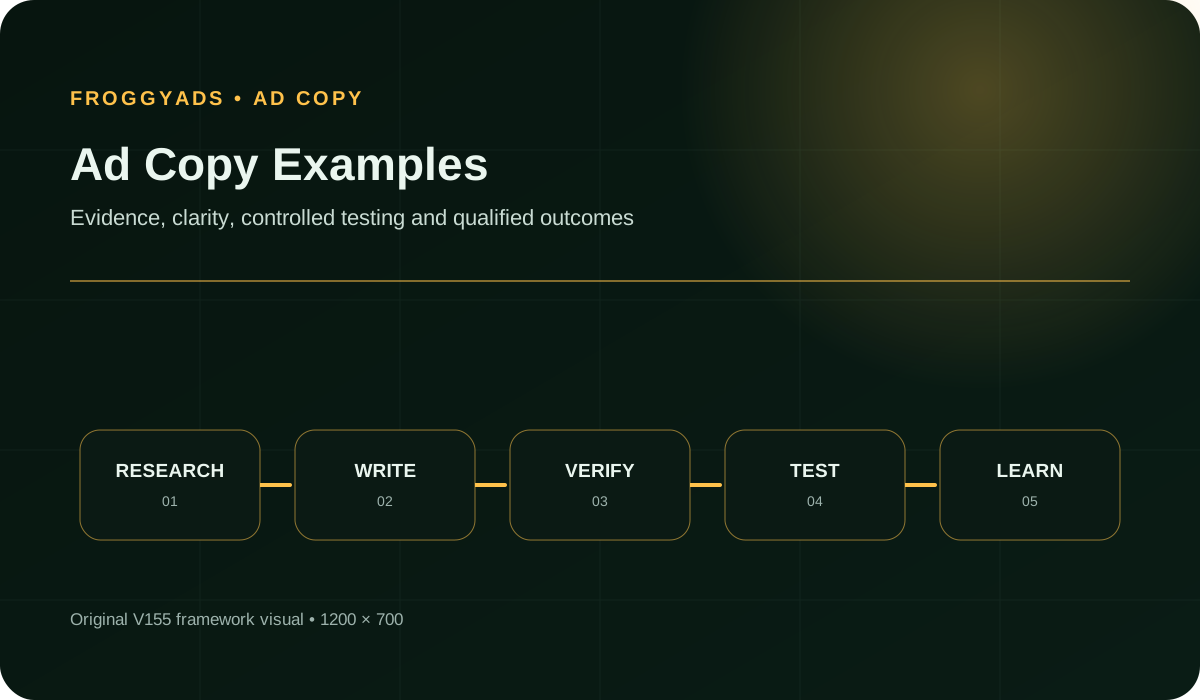
How to use these examples without borrowing someone else's claims
The first six examples below are original fictional teaching drafts. Their product features, service arrangements and access conditions are assumptions written into each brief, not facts about real businesses or FroggyAds customers. The seventh is a proposed FroggyAds message based on our campaign controls, not a report of a tested advertisement. None comes with a claimed click rate, conversion lift or winning-campaign label.
Read each brief before reading the headline. A useful line for someone evaluating a product may be wrong for someone who first needs to understand the category. Likewise, an invitation to request availability is different from a confirmed appointment. We show the next customer action and the evidence needed to support the wording so you can decide what transfers to your own campaign and what must change.
Use the examples to develop a fresh proposition, not to replace a product name in a finished sentence. Our ad copy guide covers the message elements; the copywriting workflow covers research and approvals. This page focuses on concrete drafts, useful revisions and the connection between the words a visitor sees and the destination they reach.
1. Ecommerce: turn a product detail into a useful buying reason
Fictional brief: a commuter bag has a separate zipped key pocket and a padded laptop compartment. The intended reader carries a laptop to work. No waterproof rating, laptop-size compatibility or delivery promise has been supplied.
Draft headline: Your keys should not hide under your laptop.
Draft body: Keep small essentials in a separate zipped pocket. See the commuter bag's compartments and dimensions.
Draft action: Explore the bag
The headline gives the feature a specific job instead of declaring that this is the best bag for everyone. The body then names the feature and invites the reader to inspect what is being offered. A product photograph should show the relevant pocket and compartment, not a different model or an accessory that is not included. The landing page needs dimensions, accurate photographs and the actual purchasing terms.
Before using this approach, verify the bag construction and the claim implied by the image. A padded compartment is not a promise that every laptop fits or that a device cannot be damaged. A variant could lead with organisation rather than the key-search problem while keeping the same product and action. That tests a different explanation of the offer without quietly adding an unsupported performance guarantee.
2. SaaS: describe the workflow change rather than an impossible outcome
Fictional brief: a request-review tool lets a team assign one owner to a request and view its status history. A guided product demo is available. There is no evidence of a quantified time saving or a guarantee that deadlines will always be met.
Draft headline: Give every request a visible owner.
Draft body: Assign the next reviewer and follow the status history in one request view. See the workflow in a guided demo.
Draft action: View the demo
This is a concrete answer to a coordination problem. It says what the software lets the user do, not that the software will eliminate every delay. The destination should demonstrate assignment and the status view named in the message. If viewing the demo actually requires booking a sales call, change the action and explain that commitment rather than presenting it as an immediately available video.
The draft is ready for factual review only when those capabilities and access conditions are confirmed for the advertised plan. Do not add a security certification, integration logo or customer quotation because another software advertisement includes one. For a message comparison, keep the same demo and offer while trying a headline about review status. Judge the audience's response to the stated workflow, not a promise the product team never approved.
Take a verified offer into your first FroggyAds copy test
Start with the audience problem and the facts your product can support. Create your account, choose available targeting and give the first message a controlled campaign allocation. Our source reporting helps you connect the copy with the traffic that actually received it.
Create My Free Account
3. Local services: qualify the enquiry without pretending it is a booking
Fictional brief: a window-cleaning business checks service coverage by postcode before offering an appointment. It has not supplied same-day capacity, a universal price or guaranteed appointment availability.
Draft headline: Window cleaning that starts with your postcode.
Draft body: Check whether your address is in our service area, then request an appointment option that fits your property.
Draft action: Check service coverage
The wording gives the reader a useful first action and makes the eligibility check part of the offer. A person outside the service area can learn that before completing a long enquiry. The destination should actually provide the coverage step, not open a generic contact page while leaving the customer to guess whether the business can help.
A request is not a confirmed appointment. If staff must review the property or schedule, preserve that distinction in the form and confirmation message. Do not introduce urgency such as an expiring slot without a real basis. For this kind of campaign, relevant accepted enquiries are more useful than a high submission total dominated by unsupported addresses. Use the same coverage rule when comparing the copy variants and their sources.
4. Education: show the learning task before asking for enrolment
Fictional brief: an introductory spreadsheet course includes a public lesson preview using a sample invoice. The preview is available without enrolment. No employment, accreditation or earnings claim is part of the offer.
Draft headline: Build your first invoice worksheet before you enrol.
Draft body: Preview the lesson with a sample file, follow the worksheet steps and decide whether the teaching style suits you.
Draft action: Preview the lesson
The message makes evaluation possible. It explains what the learner can try and why that next action helps them choose the course. The sample and instructions must be available where the ad leads. If the file requires an email address or a paid account, the brief and copy need to reflect that condition rather than suggesting unrestricted access.
The lesson preview is not proof that a learner will earn more, qualify for a job or complete the full course. Keep the illustration tied to the actual teaching task. A useful alternative headline could focus on following the sample invoice step by step, but it should retain the same access terms. The media buyer can then compare interest in the lesson with later suitable enrolments without inventing a career outcome.
Adapt the message to the format you plan to buy
Use FroggyAds to test an eligible Push, Native or Display creative with the appropriate destination. The examples are message drafts, not files that meet every format's specifications. Preview the actual fields, image and action before submitting your campaign.
Create My Free Account
5. Apps: name the everyday action, not a capability the app lacks
Fictional brief: a plant journal lets users attach dated photographs to a plant record and set reminders. It does not diagnose disease, automatically recognise every species or guarantee that plants will thrive.
Draft headline: Keep a photo history for the plants you care for.
Draft body: Add a dated picture to each plant record and set the reminders you choose. See how the journal works before installing.
Draft action: Explore the plant journal
This draft turns the available features into a manageable use case. A screen preview can show the plant record, dates and reminder setup rather than an impressive but unavailable diagnostic interface. The destination should explain supported devices and any access or pricing conditions. A general app category is not enough to justify a claim about offline storage or privacy practices.
The writer should ask the product owner how reminders behave and which actions require permission. Those details can change the copy or the demonstration. Do not imply that an algorithm knows a plant's condition when the user is keeping a manual journal. The useful response is interest in the functionality actually offered, followed by installation and use that can be measured under the advertiser's chosen acceptance rules.
6. B2B services: make the deliverable easier to evaluate
Fictional brief: an agency offers a paid product-catalogue review with a written list of missing specifications and unclear product descriptions. Scope and price are agreed in a quotation. There is no promise of increased revenue or search rankings.
Draft headline: Find the product details your catalogue leaves unanswered.
Draft body: Request a scoped review of specifications and descriptions. Get the proposed deliverables and price before commissioning the work.
Draft action: Request the review brief
The service is more understandable than a broad claim to transform the business. The reader knows what the review examines and that the quotation comes before the work. The destination should show the review scope and the information needed to prepare it. It should not suddenly sell a long-term contract that the draft never introduced.
For this example, a suitable enquiry would come from a business with the relevant catalogue problem and a realistic willingness to discuss the paid scope. A free-sounding headline might produce more contacts while misrepresenting the offer. Keep the service deliverable, price discussion and sales handoff consistent. A genuine sample report could support the message, but do not invent client names, findings or testimonials to make the illustration look established.
7. FroggyAds: connect the message to practical campaign control
Here is a proposed message for advertisers who already have an offer and want control over a traffic test. Unlike the fictional product briefs above, it describes the role of our self-serve campaign and source controls. It is an illustrative draft for this guide, not a claim that the wording has been run or has produced a measured result.
Headline: Put your next traffic test under your control.
Body: Choose the available format and targeting, set your campaign budget and review results by source with FroggyAds.
Action: Create your free FroggyAds account.
The reason to choose us is the ability to turn a message idea into a campaign you can manage and review. Our format guidance explains the different creative contexts. Check the settings available for your actual campaign, keep the landing page consistent with the message and use source results to decide the next purchase. Account creation is free; media spend remains a separate decision, not something the word free makes unnecessary.
Choose the next version from useful customer response
Keep your approved copy and destination identifiable, then review the campaign and source results with your accepted customer action. FroggyAds lets you act on that evidence through budget and source decisions instead of treating every extra click as a reason to scale.
Create My Free Account
How should the same idea change between Push, Native, Display and Pop?
Treat the idea as a proposition that needs a new execution, not a block of words to paste everywhere. A short notification-style message needs a recognisable advertiser and an immediately understandable reason to open the destination. A display banner combines text with a particular canvas and image. Native creative needs an accurate teaser that does not pretend to be independent editorial praise. A Pop campaign relies heavily on what the destination explains when it appears.
Take the fictional bag brief. A compact version can name the separate key pocket without trying to include every product detail. A more explanatory version can invite the reader to examine the compartments. Neither should add a waterproof promise to gain attention. Preserve the core offer and necessary qualification while changing length, emphasis and layout for the supported fields.
Read the platform's current specifications rather than importing another network's character limits. Google's display-writing guidance recommends clear headlines and a relevant destination within its own product context. Our FroggyAds campaign requirements must be checked separately. A sentence can be well written yet fail an upload rule or appear truncated in a particular placement, so review the final preview as well as the text document.
Give each meaningful claim an evidence check
Before approving a line, underline the words that change what a customer will believe. Separate a feature claim from an outcome claim, a price from a saving, and a request from a confirmed service. Then ask for the record that supports each statement. For the fictional course, the relevant record is the actual preview route and access condition. For the fictional bag, it is the product construction and dimensions. The same proof cannot answer both questions.
Review implications created by the image and action too. A screenshot can imply a software feature even when the body copy never names it. A badge can suggest accreditation; a quote can suggest a real customer endorsement. Do not approve those elements as decoration when they change the offer. Keep the final advertisement and destination together for review instead of approving their words in separate files that no longer match.
The FTC's online-advertising guidance is a U.S. reference for truthful advertising and disclosure of material details. It is not a certificate of compliance for your campaign or every country. Use the rules applicable to your offer and market, alongside the chosen platform's policies, when deciding whether a claim can run.
Test a communication choice, not a bundle of unrecorded changes
Choose one question the next campaign can answer. For the fictional SaaS example, that could be whether the ownership message or a status-history message attracts the more suitable demo audience. Keep the product offer, destination and acceptance rule consistent. Record the exact versions and the source and targeting configuration so the result refers to a real comparison rather than whichever draft happens to be open later.
A before-and-after change is not automatically a controlled experiment. Sources, auction conditions and customer readiness can differ between periods. Where you can run a properly designed comparison, define the allocation and measurement before launch. Otherwise describe an observed campaign result and its limitations. Do not call a message a universal winner because it received more clicks during a different period or on a different audience.
Keep delivery diagnostics alongside the customer outcome. A click tells you that an action was recorded at the ad; a suitable enquiry, completed sale or activated account answers a different business question. Agree on the outcome your offer accepts and allow the same review window for comparable variants. Complaints, misunderstanding and unsuitable enquiries can explain why a clickable line is not the best line to buy more traffic for.
Budget for producing and reviewing the message as well as distributing it. A short ad may require product input, translation, design work and a destination repair. Start with variants your team can supervise, rather than launching many lightly served combinations. Use our campaign optimisation guidance to turn the result into a specific action: keep the message, revise an unclear promise, repair the destination or restrict an unsuitable source.
A copy revision that changes the promise, not just the tone
Original fictional draft to reject: Never miss another deadline. Get the perfect workflow instantly.
Revised teaching draft: See who owns the next review. Assign a reviewer and follow the request's status history.
Why it changes: the revised wording stays within the fictional SaaS brief used in Example 2. It removes an absolute result and an unexplained instant transformation, replacing them with actions the assumed product can demonstrate.
This is an editorial comparison, not an executed campaign test. The revised copy still needs product confirmation, a real destination and an appropriate format preview. We are not claiming that it converts better. The useful conclusion is narrower: the reviewer can now ask for evidence of assignment and status history rather than approving promises that the brief cannot substantiate.
Frequently asked questions
When can an ad copy example help a writer?
Use examples to study how a message frames a real problem, benefit, proof, qualification, and next step within a channel. They are reference material for reasoning and tone, not text to paste, because credible copy depends on the advertiser's own offer and evidence.
How should a team review an ad copy example?
Identify the intended reader, awareness level, promise, supporting fact, material condition, action, and placement limit. Mark what is observed and what is inferred, then draft a new version from your approved brief without carrying over distinctive wording or unsupported claims.
What costs arise when adapting advertising copy?
Allow for research, interviewing, drafting, legal or compliance review, translation, design fit, landing-page updates, testing, measurement, and revision. A free example can still create expensive rework if its structure does not suit the product, channel, or evidence available.
How can copy examples be matched to the right audience?
Compare the example's reader problem, vocabulary, decision stage, objections, and desired action with current customer evidence. Rebuild the explanation for your audience instead of substituting a product name into language written for a different need or level of knowledge.
What parts of an ad copy example require fresh proof?
Verify every performance statement, comparison, testimonial, price, limitation, deadline, availability claim, and implied outcome against current records. Preserve the communication principle if it helps, but replace borrowed assertions with accurate brand evidence that the destination can support.
What should be checked before adapted ad copy goes live?
Read the final advertisement in its real layout, confirm legibility, brand identity, terms, link, destination continuity, consent, and a working customer action. Ask a reviewer unfamiliar with the draft to state the offer back; misunderstanding at this stage is cheaper than paid confusion.
How can two copy approaches be compared fairly?
Keep audience, offer, placement, destination, budget, and observation window stable while changing one meaningful message element. Judge qualified customer behaviour and accepted outcomes beside interaction data, since a more clickable line may attract people the product cannot serve.
Why can a proven copy example fail in another campaign?
The original may rely on brand recognition, price, proof, timing, placement, or customer awareness that the new advertiser does not share. Inspect those differences and the downstream path before rewriting again, rather than assuming a memorable sentence works independently of context.
Which copy-example habits should a team avoid?
Do not plagiarise distinctive language, repeat claims without evidence, manufacture urgency, hide conditions, or treat one published ad as a universal best practice. Keep source notes and review records so inspiration can be separated from final original customer-facing work.
When is an adapted copy principle ready for wider use?
Extend it after several original executions produce clear comprehension, suitable customer response, dependable page continuity, and accepted economics without increased complaints. Revalidate the underlying proof and format fit before applying the approach to a new audience or offer.
Format and review references
The Google links describe Google-specific creative requirements; they do not establish FroggyAds upload rules. The FTC material supplies U.S. advertising guidance, and W3C provides an accessibility framework. None certifies these fictional drafts or a live campaign. Check the requirements applicable to the actual offer and placement.
Launch your original message with FroggyAds
Bring a verified offer and a tested destination. Use our self-serve campaign, targeting and source controls to learn from the audience your message actually reaches.
Create My Free AccountUse the pattern, then make the campaign your own
The examples are most valuable when they help you make an original decision: which problem to name, which feature to demonstrate, which condition to explain and which action to invite. Keep your approved wording and the reasons behind it. When a price, feature or access condition changes, review the affected ads rather than leaving a once-correct promise in circulation.
Choose FroggyAds when you are ready to distribute that verified message through a campaign with clear targeting, spending and source decisions. Bring the offer and destination you can support; use our controls to test how the intended audience responds. A memorable line starts the conversation. A suitable customer action, understood in context, determines whether the next campaign allocation is justified.
Ad copy examples: what to take into the next brief
Quick answer: Choose a relevant audience situation, write a defensible promise, show the condition that matters and name the next action accurately. Review the final asset and destination together. Test an original message with FroggyAds without mistaking a fictional teaching example for a proven campaign result.
Format reference: Google Ads creative specifications. These are platform requirements, not evidence of performance for the examples above.
Keep these boundaries in the final brief
- Examples 1–6 use fictional offers; verify your own features and terms before adapting them.
- The FroggyAds draft explains campaign control, not guaranteed volume, sales or profit.
- Retain the approved copy, destination and source context when deciding what to change next.
What makes an ad copy example useful?
A useful example connects an actual reader problem with a clear offer, the proof that supports it and an honest next action. Use the original drafts here to shape your own message, then verify the product facts and destination. FroggyAds provides the campaign controls for a measured test, not a guarantee that borrowed wording will work.