
What is Display Advertising
What is Display Advertising describes paid display inventory used to reach audiences outside traditional search and social channels. Advertisers buy access, apply targeting, measure verified outcomes and optimize individual sources.
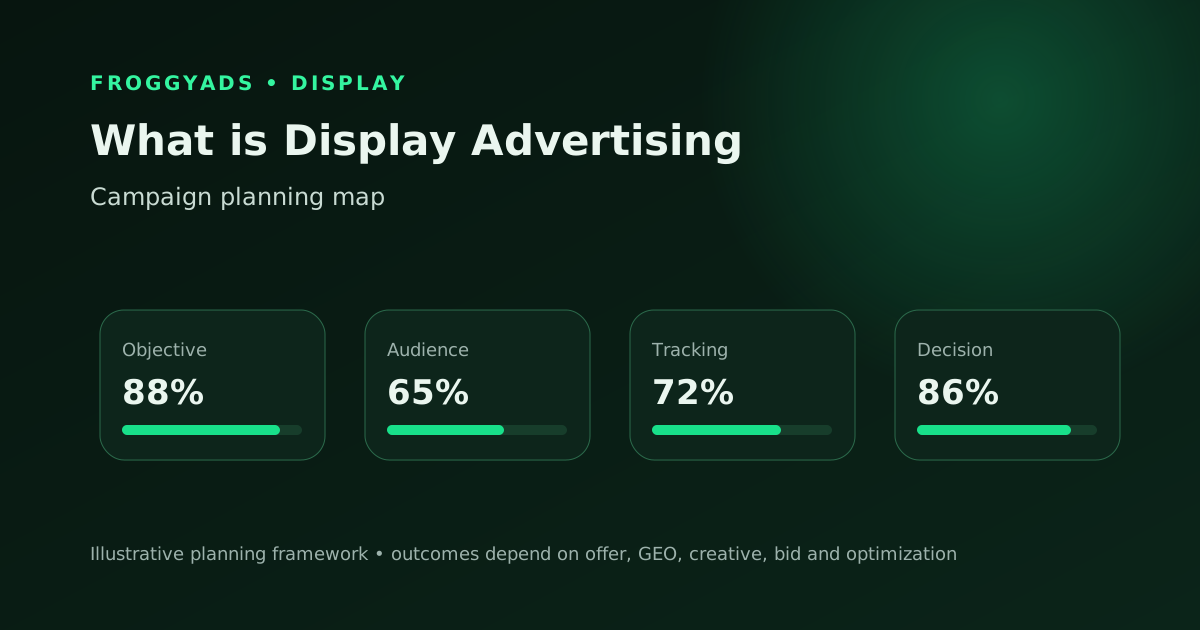
What is Display Advertising in practical terms
What is Display Advertising describes paid display inventory used to reach audiences outside traditional search and social channels. Advertisers buy access, apply targeting, measure verified outcomes and optimize individual sources. The operating goal is not to collect the cheapest possible activity. It is to identify a repeatable combination of audience, placement, creative and destination that creates measurable value after traffic-quality and conversion checks.
What the buyer is actually trying to achieve
A reliable campaign starts with a narrow question rather than a large budget. For what is display advertising, the first operating decision is to define one conversion event that can be verified after the click. Measure spend, visits, qualified actions, accepted conversions and revenue in the same reporting window. Click-through rate can explain creative response, but it cannot prove commercial quality by itself. Conversion rate can also mislead when validation is delayed.
The most useful metric is the one closest to accepted value, paired with cost and enough maturity to avoid reacting to noise. For advertisers using FroggyAds, these controls can be combined with format, GEO, device, browser, carrier, source and schedule targeting in a self-serve workflow. What is Display Advertising should be judged with the same discipline as any other paid acquisition channel: clear inputs, observable events and a written decision rule. Creative should promise only what the destination can deliver.
Match the message to the format, localize language and currency where relevant, and keep the first screen consistent with the ad. Test one meaningful variable at a time, such as the value proposition, visual focus or call to action. Rotate weak units before fatigue becomes a budget problem. This approach turns what is display advertising into a repeatable operating process instead of a one-time traffic purchase.
How Display inventory works
What is Display Advertising should be judged with the same discipline as any other paid acquisition channel: clear inputs, observable events and a written decision rule. Creative should promise only what the destination can deliver. Match the message to the format, localize language and currency where relevant, and keep the first screen consistent with the ad. Test one meaningful variable at a time, such as the value proposition, visual focus or call to action.
Rotate weak units before fatigue becomes a budget problem. This approach turns what is display advertising into a repeatable operating process instead of a one-time traffic purchase. The practical value of what is display advertising appears when the advertiser can connect banner and responsive display inventory to an accepted business outcome rather than relying on surface metrics. Start with a limited set of GEOs, devices and operating systems that the destination can genuinely serve.
Keep mobile and desktop separate when page speed, form design or user intent differs. Use unique campaign names and tracking parameters so every change remains auditable. A broad launch may produce data faster, but it also makes weak sources, creative fatigue and pricing pressure harder to diagnose. No network can guarantee the outcome; the offer, compliance status, creative, destination, competition and optimization remain decisive.
Connect the guide to live testing
Connect What is Display Advertising to a controlled audience test
Use the choices established in “How Display inventory works” to define one audience, budget and source set in FroggyAds. Keep the surrounding offer and measurement rule stable so the test adds evidence to what is display advertising instead of mixing several changes at once.
Create My Free Account
Build the measurement foundation first
The practical value of what is display advertising appears when the advertiser can connect banner and responsive display inventory to an accepted business outcome rather than relying on surface metrics. Start with a limited set of GEOs, devices and operating systems that the destination can genuinely serve. Keep mobile and desktop separate when page speed, form design or user intent differs. Use unique campaign names and tracking parameters so every change remains auditable.
A broad launch may produce data faster, but it also makes weak sources, creative fatigue and pricing pressure harder to diagnose. No network can guarantee the outcome; the offer, compliance status, creative, destination, competition and optimization remain decisive. Before expanding what is display advertising, build a reporting view that distinguishes campaign settings, source identifiers and downstream quality. Source-level reporting is the core optimization layer.
Allow each placement to collect a reasonable sample, compare its cost with the value it creates, and document whether it should be paused, bid down, watched or promoted into a whitelist. Avoid making several changes at once because the next result will not reveal which adjustment caused the improvement. The result is a clearer basis for deciding whether what is display advertising deserves more budget, a revised funnel or a pause.
For the What is Display Advertising decision, record how this control changes the next test or review. Use server-to-server postbacks when available, preserve campaign and source parameters, and compare platform reporting with the advertiser's own analytics. A small attribution discrepancy should be investigated before aggressive changes are made.
Choose the execution format
Choose a paid-media format that supports What is Display Advertising
Use the criteria around “Build the measurement foundation first” to decide whether push, native, display or pop fits the message and destination. Set format, targeting and spend as campaign controls in FroggyAds while the what is display advertising decision remains the standard for judging the result.
Create My Free Account
Targeting without over-segmentation
Before expanding what is display advertising, build a reporting view that distinguishes campaign settings, source identifiers and downstream quality. Source-level reporting is the core optimization layer. Allow each placement to collect a reasonable sample, compare its cost with the value it creates, and document whether it should be paused, bid down, watched or promoted into a whitelist. Avoid making several changes at once because the next result will not reveal which adjustment caused the improvement.
The result is a clearer basis for deciding whether what is display advertising deserves more budget, a revised funnel or a pause. A controlled Display test gives the team a clean answer only when the landing experience, tracking and offer eligibility are ready before traffic begins. Budget control is more useful than a headline market rate. Set a daily cap, a bid ceiling and a maximum acceptable cost per validated outcome.
Review pacing during the day, but make major decisions after enough events have matured. When a campaign proves stable, increase budget gradually while watching whether source mix, conversion quality and marginal cost remain within the plan. Keep the test small enough to protect capital and large enough to produce evidence that a buyer can defend.
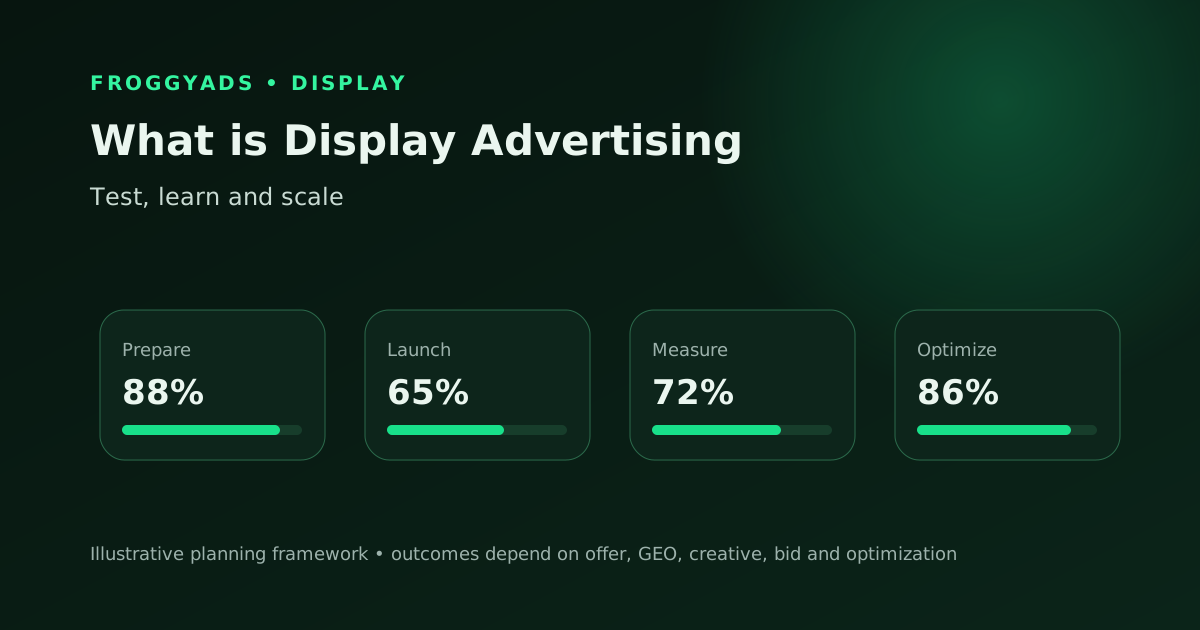
Creative and landing-page alignment
A controlled Display test gives the team a clean answer only when the landing experience, tracking and offer eligibility are ready before traffic begins. Budget control is more useful than a headline market rate. Set a daily cap, a bid ceiling and a maximum acceptable cost per validated outcome. Review pacing during the day, but make major decisions after enough events have matured.
When a campaign proves stable, increase budget gradually while watching whether source mix, conversion quality and marginal cost remain within the plan. Keep the test small enough to protect capital and large enough to produce evidence that a buyer can defend. A reliable campaign starts with a narrow question rather than a large budget. For what is display advertising, the first operating decision is to define one conversion event that can be verified after the click.
Measure spend, visits, qualified actions, accepted conversions and revenue in the same reporting window. Click-through rate can explain creative response, but it cannot prove commercial quality by itself. Conversion rate can also mislead when validation is delayed. The most useful metric is the one closest to accepted value, paired with cost and enough maturity to avoid reacting to noise.
For advertisers using FroggyAds, these controls can be combined with format, GEO, device, browser, carrier, source and schedule targeting in a self-serve workflow.
Put the guide into practice
Turn What is Display Advertising into a bounded campaign test
With “Creative and landing-page alignment” documented, launch only the next reversible test. Set a spending limit, preserve the baseline and use source-level and audience controls so the next step depends on qualified outcomes for what is display advertising, not activity volume.
Create My Free Account
Pricing, bids and budget protection
A reliable campaign starts with a narrow question rather than a large budget. For what is display advertising, the first operating decision is to define one conversion event that can be verified after the click. Measure spend, visits, qualified actions, accepted conversions and revenue in the same reporting window. Click-through rate can explain creative response, but it cannot prove commercial quality by itself. Conversion rate can also mislead when validation is delayed.
The most useful metric is the one closest to accepted value, paired with cost and enough maturity to avoid reacting to noise. For advertisers using FroggyAds, these controls can be combined with format, GEO, device, browser, carrier, source and schedule targeting in a self-serve workflow. What is Display Advertising should be judged with the same discipline as any other paid acquisition channel: clear inputs, observable events and a written decision rule. Creative should promise only what the destination can deliver.
Match the message to the format, localize language and currency where relevant, and keep the first screen consistent with the ad. Test one meaningful variable at a time, such as the value proposition, visual focus or call to action. Rotate weak units before fatigue becomes a budget problem. This approach turns what is display advertising into a repeatable operating process instead of a one-time traffic purchase.
For what is display advertising, calculate effective impression or click cost, cost per qualified action and cost per accepted conversion. A lower bid is not automatically cheaper when it removes access to the placements that produce the strongest downstream value.
Source-level optimization workflow
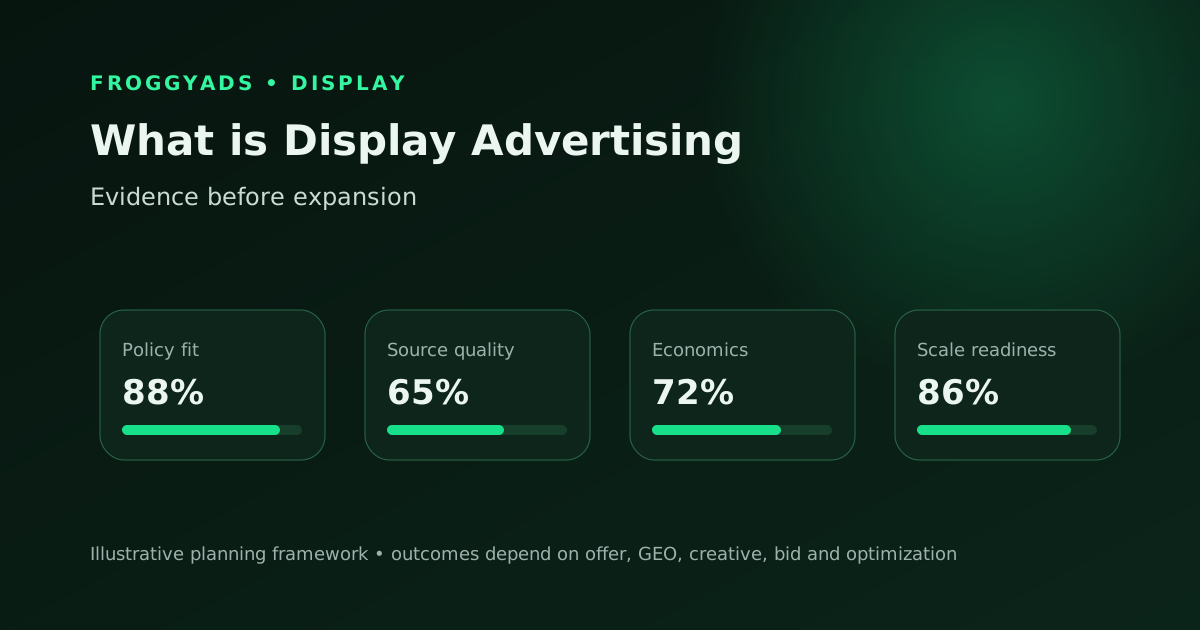
A practical launch sequence
The practical value of what is display advertising appears when the advertiser can connect banner and responsive display inventory to an accepted business outcome rather than relying on surface metrics. Start with a limited set of GEOs, devices and operating systems that the destination can genuinely serve. Keep mobile and desktop separate when page speed, form design or user intent differs. Use unique campaign names and tracking parameters so every change remains auditable.
A broad launch may produce data faster, but it also makes weak sources, creative fatigue and pricing pressure harder to diagnose. No network can guarantee the outcome; the offer, compliance status, creative, destination, competition and optimization remain decisive. Before expanding what is display advertising, build a reporting view that distinguishes campaign settings, source identifiers and downstream quality. Source-level reporting is the core optimization layer.
Allow each placement to collect a reasonable sample, compare its cost with the value it creates, and document whether it should be paused, bid down, watched or promoted into a whitelist. Avoid making several changes at once because the next result will not reveal which adjustment caused the improvement. The result is a clearer basis for deciding whether what is display advertising deserves more budget, a revised funnel or a pause.
When and how to scale
What is Display Advertising FAQ
What is display advertising?
Display advertising is paid visual advertising delivered in website, app or other eligible inventory using banner-style creative. Advertisers use it to create visibility, support direct-response campaigns or reinforce an offer outside search results. On FroggyAds, Display traffic can be bought through a self-serve campaign with targeting, budgets, source reporting and conversion tracking.
How is display advertising different from search advertising?
Search advertising begins with a user query, while Display reaches people in the context of content or inventory they are already viewing. That means Display creative and targeting do more of the work to create interest. Judge the format by the customer journey it supports rather than expecting search-level intent from every impression.
How is Display traffic priced on FroggyAds?
FroggyAds publishes Display starting from $0.10 CPM, which means the starting bid is expressed per thousand impressions. That is an auction entry point, not a guaranteed average campaign price. Actual cost depends on GEO, targeting, competition, inventory and bid, and the final business decision should still use accepted downstream value.
What makes a Display creative useful?
A strong Display unit communicates one message quickly, uses legible branding and gives the viewer a clear reason to continue. The destination should repeat the same promise and next action. Test meaningful changes in value proposition, visual focus or call to action rather than only small color changes.
Which targeting controls matter for Display advertising?
Begin with offer eligibility and the audience dimensions that can change real campaign economics, such as GEO, device, operating system, browser, carrier or category where available. FroggyAds supports detailed targeting and source settings, so you can keep the first test readable and narrow only when evidence supports the next split.
What should advertisers measure besides Display CTR?
Track spend, landing behavior, accepted conversions and cost or value per accepted outcome. CTR helps diagnose creative response, but it does not prove that the traffic is commercially useful. Compare source and audience segments after the same maturity window so early clicks do not hide weaker downstream results.
What tracking should be ready before a Display campaign launches?
Verify campaign and source identifiers, the landing page and the accepted conversion before meaningful spend begins. Test the conversion pixel or S2S postback end to end. FroggyAds supports conversion tracking and server-to-server postbacks, which lets you connect impressions and clicks with accepted business outcomes.
Why does source-level reporting matter for Display Ads?
Display inventory can perform differently by source, placement, GEO and device. A blended campaign average can hide both strong and weak supply. FroggyAds source IDs plus whitelist and blacklist controls let you isolate repeated winners, remove waste and keep discovery separate from scale.
How should advertisers evaluate Display traffic quality?
Use Adscore-supported traffic-quality controls and internal signals together with your own downstream evidence. Check whether impressions lead to valid landing sessions and accepted outcomes, and rule out destination or tracking problems before blaming a source. Quality is a campaign diagnosis, not a label attached to every impression.
When is Display advertising a good fit for FroggyAds?
Use Display when a visual message can support awareness, retargetable interest or direct response and the landing page can turn that exposure into a measurable next step. Create a bounded test, keep the conversion definition stable and increase spend only after the additional inventory continues to meet your accepted-outcome economics.
Continue the media-buying workflow
Build a controlled what is display advertising test
For the What is Display Advertising decision, record how this control changes the next test or review. Define one objective, verify tracking, set a protected budget and make source-level decisions from mature data. Performance varies by offer, GEO, creative, destination, competition and optimization.
What is Display Advertising: a practical advertiser decision matrix
| Decision | What to verify | FroggyAds action |
|---|---|---|
| Question | State the specific decision this guide answers about What is Display Advertising. | Use the guide before changing campaign settings. |
| Procedure | Follow the steps around What is Display Advertising in practical terms in their intended order. | Keep the baseline stable while testing the recommended change. |
| Evidence | Use the measurement guidance under What the buyer is actually trying to achieve. | Reconcile FroggyAds data with tracker and backend results. |
| Diagnosis | Use the troubleshooting section around How Display inventory works to isolate the smallest failing layer. | Change one major variable at a time. |
| Next action | Move from the guide to a bounded live test only when the prerequisites are met. | Create a FroggyAds account and preserve the test limit. |
What is Display Advertising: what should the advertiser decide next?
For What is Display Advertising, the commercial task is to turn what is display advertising into one measurable campaign decision. Use What is Display Advertising in practical terms to define the audience or problem, use What the buyer is actually trying to achieve to constrain the test, and decide in advance which accepted result would justify more FroggyAds spend.
On this What is Display Advertising page, the decision should remain tied to the existing evidence around What is Display Advertising in practical terms, What the buyer is actually trying to achieve and How Display inventory works. Those sections give what is display advertising its specific context; the table below turns that context into campaign actions rather than adding another generic definition.
| Decision | What to verify | FroggyAds action |
|---|---|---|
| What is Display Advertising objective | Use What is Display Advertising in practical terms to define the accepted business event and the maximum learning loss for what is display advertising. | Launch one FroggyAds campaign objective for What is Display Advertising and keep the conversion definition stable. |
| What is Display Advertising audience | Use What the buyer is actually trying to achieve to verify market, device, language and offer eligibility for what is display advertising. | Apply only the FroggyAds targeting controls that change the real What is Display Advertising customer journey. |
| What is Display Advertising source evidence | Use How Display inventory works to keep source-level differences visible instead of relying on one blended what is display advertising average. | Keep, cap, exclude or retest What is Display Advertising inventory from documented source evidence. |
| What is Display Advertising economics | Use Connect What is Display Advertising to a controlled audience test to connect media spend with accepted conversions and downstream value for what is display advertising. | Protect the What is Display Advertising test with a written budget boundary and a consistent attribution window. |
| What is Display Advertising scale rule | Use Build the measurement foundation first to define the exact evidence that earns the next budget increase for what is display advertising. | Scale What is Display Advertising one major control at a time and compare marginal performance with the prior baseline. |
A page-specific FroggyAds test sequence for What is Display Advertising
- What is Display Advertising outcome: define the accepted event for what is display advertising and the maximum loss permitted while the first test is learning.
- What is Display Advertising path: verify market eligibility, device experience, landing-page continuity and tracking against What is Display Advertising in practical terms before buying more traffic.
- What is Display Advertising hypothesis: launch one bounded FroggyAds test tied to What the buyer is actually trying to achieve; do not change bid, creative, audience and destination together.
- What is Display Advertising source review: compare qualified activity, accepted conversions, timing and cost by the source or segment dimensions relevant to How Display inventory works.
- What is Display Advertising scaling: use Connect What is Display Advertising to a controlled audience test and Build the measurement foundation first to define what must reproduce before the next budget increase.
Why FroggyAds is relevant to What is Display Advertising
For What is Display Advertising, FroggyAds gives advertisers a self-serve DSP and ad-network workflow for buying supported traffic with campaign-level budgets and targeting. Depending on format and campaign context, available controls can include country, city, device, operating system, browser, carrier, category, source, ID and IP options. SmartCPC and Adscore-supported traffic-quality controls can support the what is display advertising optimization process, while the advertiser's tracker, analytics and backend acceptance remain the final evidence for commercial quality.
Use Build the measurement foundation first as the final checkpoint for What is Display Advertising. If the accepted result does not reproduce after the next meaningful volume step, return to the last stable configuration instead of widening several controls at once.
How to use this What is Display Advertising page
This URL has one primary job for advertisers researching the topic before a campaign decision: understand the concept and apply it to a concrete campaign decision. Keep this page focused on that buying decision instead of turning it into a generic advertising article. For the What Is Display Advertising decision, apply this rule to understand the concept and apply it to a concrete campaign decision and keep the evidence tied to this page's specific buyer task.
For What is Display Advertising, the remaining decision vocabulary is responsive creative, placement eligibility and viewability. Use these concepts only as practical checks tied to the page's buyer task and measurement rule.
| Step | Guide Info workflow | Evidence to retain |
|---|---|---|
| 1 | Answer the core question in operational terms | Keep the evidence tied to What is Display Advertising and the accepted outcome defined for this URL. |
| 2 | Turn the explanation into one controllable campaign variable | Keep the evidence tied to What is Display Advertising and the accepted outcome defined for this URL. |
| 3 | Use measured evidence to choose the next action | Keep the evidence tied to What is Display Advertising and the accepted outcome defined for this URL. |
Transparent What is Display Advertising decision example
Hypothetical example: if a controlled What is Display Advertising test spends USD 175 and records 6 accepted outcomes after the same review window, accepted CPA is USD 175 divided by 6 = USD 29.17. Replace the example inputs with your own economics; this is not a FroggyAds performance claim.
Use FroggyAds as the execution layer only when the page's decision calls for paid traffic. Set the relevant budget, targeting and format controls, verify conversion tracking, keep source-level evidence, and increase spend only when the accepted outcome supports the next step. Create your free FroggyAds account. For the What Is Display Advertising decision, apply this rule to understand the concept and apply it to a concrete campaign decision and keep the evidence tied to this page's specific buyer task.
Research basis for What is Display Advertising: This URL helps advertisers researching the topic before a campaign decision understand the concept and apply it to a concrete campaign decision. It is mapped to the display research cluster. Our current review used support.google.com and support.google.com to check terminology, buyer questions and decision coverage relevant to What is Display Advertising. These external sources are research inputs, not evidence of FroggyAds campaign performance.
What Is Display Advertising worked application example
Hypothetical example: a buyer using this What Is Display Advertising guide can turn one recommendation into a test by naming the accepted event, fixing the review window and changing one campaign variable. If USD 150 produces 6 accepted outcomes, the resulting accepted CPA is USD 25.00; use your own numbers and economics before deciding what to change next.
What is Display Advertising — what matters first
What is Display Advertising is most useful when it helps a buyer understand the concept and apply it to a concrete campaign decision. Define the accepted outcome first, then use targeting, budget and source-level evidence to decide what deserves more spend.