
MARKETING DEFINITION FRAMEWORK20 layerscomplete operating definition 10 stepsbounded implementation workflow 8 metricsquality-aware measurement 0 guaranteesevidence before claims
What Is Viral Marketing? Definition, Scope and How It Works
A direct, evidence-aware definition of viral marketing with scope boundaries, operating mechanics, metrics, governance and implementation rules.
What does this page explain about What Is Viral Marketing? Definition and Framework?
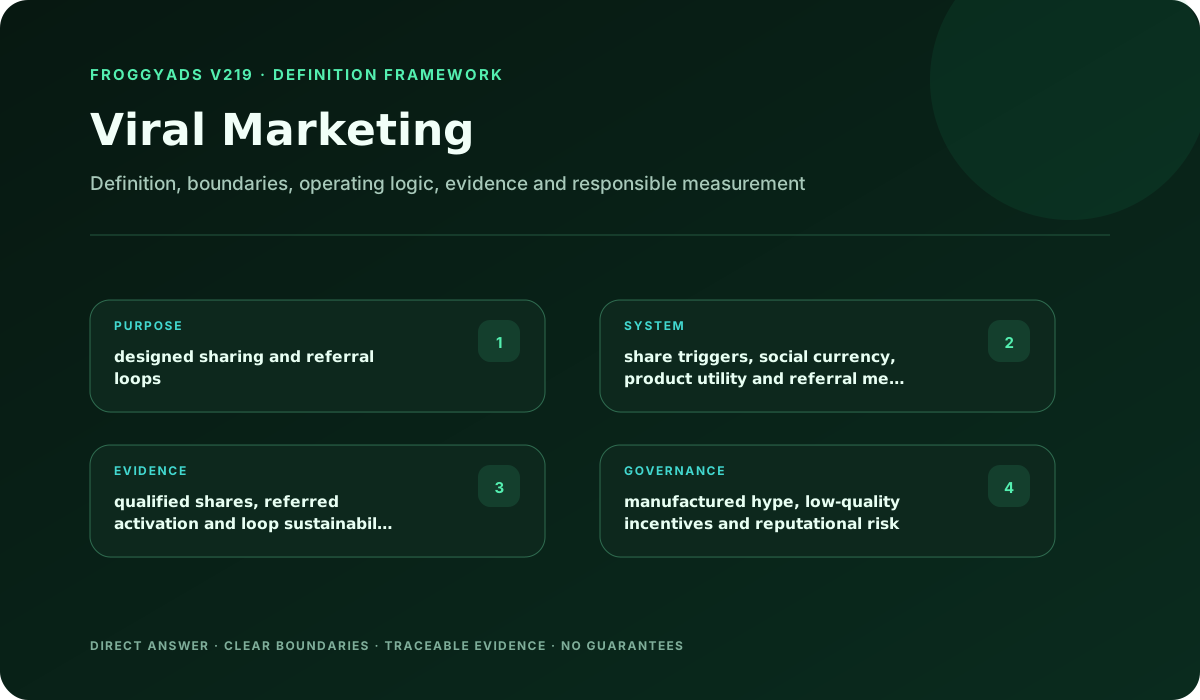
Quick answer: For Viral Marketing, acceptable proof might be a journey map, claim register, consent record, creative brief, destination specification, analytics dictionary or quality review tied to qualified shares, referred activation and loop sustainability. For viral marketing, connect the step to loop diagnosis, referral design and safety guardrails, preserve the evidence and assign the decision to growth lead, product owner and brand safety reviewer. Viral Marketing is the governed use of share triggers, social currency, product utility and referral mechanics to support designed sharing and referral loops and create measurable progress toward qualified shares, referred activation and loop sustainability.
| Section | Distinct excerpt from this page |
|---|---|
| Included | Audience definition, value exchange, share triggers, social currency, product utility and referral mechanics, destination quality, conversion specification, measurement, governance and the operating handoffs owned by growth lead, product owner and brand safety reviewer. |
| Excluded | Unsupported promises, isolated activity without a decision model, unverified vanity metrics, hidden incentives, inaccessible execution and any assumption that qualified shares, referred activation and loop sustainability is automatic. |
| Primary use | Create a shared definition for designed sharing and referral loops, evaluate whether work belongs inside the discipline and give teams a traceable basis for planning, measurement and review. |
Reference for What Is Viral Marketing? Definition and Framework: FTC advertising and marketing basics.
DIRECT DEFINITION
What does Viral Marketing mean?
Viral Marketing is the governed practice of using share triggers, social currency, product utility and referral mechanics to support designed sharing and referral loops, create a relevant value exchange and measure verified progress toward qualified shares, referred activation and loop sustainability. It is an operating system of audience, message, distribution, destination, data, measurement and accountability, not a single channel, tool or guaranteed result.
Included
Audience definition, value exchange, share triggers, social currency, product utility and referral mechanics, destination quality, conversion specification, measurement, governance and the operating handoffs owned by growth lead, product owner and brand safety reviewer.
Excluded
Unsupported promises, isolated activity without a decision model, unverified vanity metrics, hidden incentives, inaccessible execution and any assumption that qualified shares, referred activation and loop sustainability is automatic.
Primary use
Create a shared definition for designed sharing and referral loops, evaluate whether work belongs inside the discipline and give teams a traceable basis for planning, measurement and review.
Primary risk
Manufactured hype, low-quality incentives and reputational risk. The definition must expose this risk through evidence requirements, quality controls and explicit stop conditions.
DEFINITION MAP
The 20 layers that make the definition operational
Use this map to distinguish a complete viral marketing system from isolated activity. Each layer needs a definition, evidence, accountable owner and stop condition.
| # | Layer | Meaning | Minimum control |
|---|---|---|---|
| 1 | Purpose and business question | the bounded decision or customer problem the discipline is meant to support | Definition, evidence, owner and stop condition |
| 2 | Audience and eligibility | the people, organizations or accounts that may legitimately enter the system | Definition, evidence, owner and stop condition |
| 3 | Value exchange | what the audience receives and what action, permission or consideration the organization requests | Definition, evidence, owner and stop condition |
| 4 | Journey position | where the discipline operates before, during and after a commercial decision | Definition, evidence, owner and stop condition |
| 5 | Message architecture | the claims, explanations and calls to action that connect audience need to the offer | Definition, evidence, owner and stop condition |
| 6 | Content or creative unit | the observable asset through which the discipline communicates and earns attention | Definition, evidence, owner and stop condition |
| 7 | Distribution mechanism | the path through which the message reaches a qualified audience | Definition, evidence, owner and stop condition |
| 8 | Data inputs | the minimum lawful, relevant and documented information required to operate the discipline | Definition, evidence, owner and stop condition |
| 9 | Targeting and prioritization | the rules used to decide who receives attention, when and with what treatment | Definition, evidence, owner and stop condition |
| 10 | Destination experience | the page, conversation, store, app or workflow that receives the audience | Definition, evidence, owner and stop condition |
| 11 | Conversion event | the verified action that represents progress rather than mere activity | Definition, evidence, owner and stop condition |
| 12 | Measurement model | the metric definitions, denominators, windows and quality controls used to evaluate performance | Definition, evidence, owner and stop condition |
| 13 | Attribution boundary | the rule for separating contribution from coincidence and avoiding double credit | Definition, evidence, owner and stop condition |
| 14 | Economic model | the full cost, value and constraint structure behind the activity | Definition, evidence, owner and stop condition |
| 15 | Experimentation system | the process for testing one bounded uncertainty without contaminating interpretation | Definition, evidence, owner and stop condition |
| 16 | Operating workflow | the roles, approvals, service levels and handoffs required for repeatable execution | Definition, evidence, owner and stop condition |
| 17 | Governance and claims | the policy, disclosure, review and evidence controls that keep communication responsible | Definition, evidence, owner and stop condition |
| 18 | Accessibility and usability | the requirements that make the experience perceivable, understandable and operable | Definition, evidence, owner and stop condition |
| 19 | Privacy and consent | the lawful basis, permission state, retention policy and user control attached to data use | Definition, evidence, owner and stop condition |
| 20 | Learning and refresh cycle | the cadence for updating definitions, evidence, creative, targeting and operational rules | Definition, evidence, owner and stop condition |
01
DEFINITION LAYER 01
Purpose and business question in Viral Marketing
What this layer means
In viral marketing, purpose and business question means the bounded decision or customer problem the discipline is meant to support. This layer must be expressed in terms of designed sharing and referral loops and connected to share triggers, social currency, product utility and referral mechanics; otherwise the definition becomes a loose collection of activities rather than an operating discipline. A useful statement names the decision, the eligible audience, the expected movement and the owner who can accept or reject the evidence.
Evidence required
The evidence standard for this viral marketing layer should include an artifact, source, date, denominator and decision consequence. For Viral Marketing, acceptable proof might be a journey map, claim register, consent record, creative brief, destination specification, analytics dictionary or quality review tied to qualified shares, referred activation and loop sustainability. Screenshots without context, vanity totals and platform labels are not sufficient because they do not explain causality, eligibility or downstream quality.
Scope boundary
The boundary matters because manufactured hype, low-quality incentives and reputational risk can make ordinary activity appear more complete than it is. This viral marketing layer does not authorize unsupported claims, undisclosed incentives, inaccessible experiences, unconsented data use or automatic scaling. When evidence is missing, the correct action is to narrow the claim, pause the affected workflow, assign remediation to growth lead, product owner and brand safety reviewer and record what would be required to reopen the decision.
Operational interpretation
Translate purpose and business question into a documented decision for viral marketing. Specify who can approve the input, which signal changes the next step, how the signal is quality-checked and how it interacts with share triggers, social currency, product utility and referral mechanics. This prevents the definition from drifting into a generic checklist that cannot guide implementation.
Decision rule: For Viral Marketing, connect the decision to loop diagnosis, referral design and safety guardrails and retain the assumptions that explain why the selected treatment is appropriate.
02
DEFINITION LAYER 02
Audience and eligibility in Viral Marketing
In viral marketing, audience and eligibility means the people, organizations or accounts that may legitimately enter the system. This layer must be expressed in terms of designed sharing and referral loops and connected to share triggers, social currency, product utility and referral mechanics; otherwise the definition becomes a loose collection of activities rather than an operating discipline. A useful statement names the decision, the eligible audience, the expected movement and the owner who can accept or reject the evidence.
Translate audience and eligibility into a documented decision for viral marketing. Specify who can approve the input, which signal changes the next step, how the signal is quality-checked and how it interacts with share triggers, social currency, product utility and referral mechanics. This prevents the definition from drifting into a generic checklist that cannot guide implementation.
Decision rule: For Viral Marketing, connect the decision to loop diagnosis, referral design and safety guardrails and retain the assumptions that explain why the selected treatment is appropriate.
03
DEFINITION LAYER 03
Value exchange in Viral Marketing
In viral marketing, value exchange means what the audience receives and what action, permission or consideration the organization requests. This layer must be expressed in terms of designed sharing and referral loops and connected to share triggers, social currency, product utility and referral mechanics; otherwise the definition becomes a loose collection of activities rather than an operating discipline. A useful statement names the decision, the eligible audience, the expected movement and the owner who can accept or reject the evidence.
Translate value exchange into a documented decision for viral marketing. Specify who can approve the input, which signal changes the next step, how the signal is quality-checked and how it interacts with share triggers, social currency, product utility and referral mechanics. This prevents the definition from drifting into a generic checklist that cannot guide implementation.
Decision rule: For Viral Marketing, connect the decision to loop diagnosis, referral design and safety guardrails and retain the assumptions that explain why the selected treatment is appropriate.
Connect the guide to live testing
Connect What Is Viral Marketing? Definition, Scope and How to a controlled audience test
Use the choices established in “Value exchange in Viral Marketing” to define one audience, budget and source set in FroggyAds. Keep the surrounding offer and measurement rule stable so the test adds evidence to what is viral marketing? definition, scope and how instead of mixing several changes at once.
Create My Free Account
04
DEFINITION LAYER 04
Journey position in Viral Marketing
In viral marketing, journey position means where the discipline operates before, during and after a commercial decision. This layer must be expressed in terms of designed sharing and referral loops and connected to share triggers, social currency, product utility and referral mechanics; otherwise the definition becomes a loose collection of activities rather than an operating discipline. A useful statement names the decision, the eligible audience, the expected movement and the owner who can accept or reject the evidence.
Translate journey position into a documented decision for viral marketing. Specify who can approve the input, which signal changes the next step, how the signal is quality-checked and how it interacts with share triggers, social currency, product utility and referral mechanics. This prevents the definition from drifting into a generic checklist that cannot guide implementation.
Decision rule: For Viral Marketing, connect the decision to loop diagnosis, referral design and safety guardrails and retain the assumptions that explain why the selected treatment is appropriate.
05
DEFINITION LAYER 05
Message architecture in Viral Marketing
In viral marketing, message architecture means the claims, explanations and calls to action that connect audience need to the offer. This layer must be expressed in terms of designed sharing and referral loops and connected to share triggers, social currency, product utility and referral mechanics; otherwise the definition becomes a loose collection of activities rather than an operating discipline. A useful statement names the decision, the eligible audience, the expected movement and the owner who can accept or reject the evidence.
Translate message architecture into a documented decision for viral marketing. Specify who can approve the input, which signal changes the next step, how the signal is quality-checked and how it interacts with share triggers, social currency, product utility and referral mechanics. This prevents the definition from drifting into a generic checklist that cannot guide implementation.
Decision rule: For Viral Marketing, connect the decision to loop diagnosis, referral design and safety guardrails and retain the assumptions that explain why the selected treatment is appropriate.
06
DEFINITION LAYER 06
Content or creative unit in Viral Marketing
In viral marketing, content or creative unit means the observable asset through which the discipline communicates and earns attention. This layer must be expressed in terms of designed sharing and referral loops and connected to share triggers, social currency, product utility and referral mechanics; otherwise the definition becomes a loose collection of activities rather than an operating discipline. A useful statement names the decision, the eligible audience, the expected movement and the owner who can accept or reject the evidence.
Translate content or creative unit into a documented decision for viral marketing. Specify who can approve the input, which signal changes the next step, how the signal is quality-checked and how it interacts with share triggers, social currency, product utility and referral mechanics. This prevents the definition from drifting into a generic checklist that cannot guide implementation.
Decision rule: For Viral Marketing, connect the decision to loop diagnosis, referral design and safety guardrails and retain the assumptions that explain why the selected treatment is appropriate.
07
DEFINITION LAYER 07
Distribution mechanism in Viral Marketing
In viral marketing, distribution mechanism means the path through which the message reaches a qualified audience. This layer must be expressed in terms of designed sharing and referral loops and connected to share triggers, social currency, product utility and referral mechanics; otherwise the definition becomes a loose collection of activities rather than an operating discipline. A useful statement names the decision, the eligible audience, the expected movement and the owner who can accept or reject the evidence.
Translate distribution mechanism into a documented decision for viral marketing. Specify who can approve the input, which signal changes the next step, how the signal is quality-checked and how it interacts with share triggers, social currency, product utility and referral mechanics. This prevents the definition from drifting into a generic checklist that cannot guide implementation.
Decision rule: For Viral Marketing, connect the decision to loop diagnosis, referral design and safety guardrails and retain the assumptions that explain why the selected treatment is appropriate.
08
DEFINITION LAYER 08
Data inputs in Viral Marketing
In viral marketing, data inputs means the minimum lawful, relevant and documented information required to operate the discipline. This layer must be expressed in terms of designed sharing and referral loops and connected to share triggers, social currency, product utility and referral mechanics; otherwise the definition becomes a loose collection of activities rather than an operating discipline. A useful statement names the decision, the eligible audience, the expected movement and the owner who can accept or reject the evidence.
Translate data inputs into a documented decision for viral marketing. Specify who can approve the input, which signal changes the next step, how the signal is quality-checked and how it interacts with share triggers, social currency, product utility and referral mechanics. This prevents the definition from drifting into a generic checklist that cannot guide implementation.
Decision rule: For Viral Marketing, connect the decision to loop diagnosis, referral design and safety guardrails and retain the assumptions that explain why the selected treatment is appropriate.
09
DEFINITION LAYER 09
Targeting and prioritization in Viral Marketing
In viral marketing, targeting and prioritization means the rules used to decide who receives attention, when and with what treatment. This layer must be expressed in terms of designed sharing and referral loops and connected to share triggers, social currency, product utility and referral mechanics; otherwise the definition becomes a loose collection of activities rather than an operating discipline. A useful statement names the decision, the eligible audience, the expected movement and the owner who can accept or reject the evidence.
Translate targeting and prioritization into a documented decision for viral marketing. Specify who can approve the input, which signal changes the next step, how the signal is quality-checked and how it interacts with share triggers, social currency, product utility and referral mechanics. This prevents the definition from drifting into a generic checklist that cannot guide implementation.
Decision rule: For Viral Marketing, connect the decision to loop diagnosis, referral design and safety guardrails and retain the assumptions that explain why the selected treatment is appropriate.
Choose the execution format
Choose a paid-media format that supports What Is Viral Marketing? Definition, Scope and How
Use the criteria around “Targeting and prioritization in Viral Marketing” to decide whether push, native, display or pop fits the message and destination. Set format, targeting and spend as campaign controls in FroggyAds while the what is viral marketing? definition, scope and how decision remains the standard for judging the result.
Create My Free Account
10
DEFINITION LAYER 10
Destination experience in Viral Marketing
In viral marketing, destination experience means the page, conversation, store, app or workflow that receives the audience. This layer must be expressed in terms of designed sharing and referral loops and connected to share triggers, social currency, product utility and referral mechanics; otherwise the definition becomes a loose collection of activities rather than an operating discipline. A useful statement names the decision, the eligible audience, the expected movement and the owner who can accept or reject the evidence.
Translate destination experience into a documented decision for viral marketing. Specify who can approve the input, which signal changes the next step, how the signal is quality-checked and how it interacts with share triggers, social currency, product utility and referral mechanics. This prevents the definition from drifting into a generic checklist that cannot guide implementation.
Decision rule: For Viral Marketing, connect the decision to loop diagnosis, referral design and safety guardrails and retain the assumptions that explain why the selected treatment is appropriate.
11
DEFINITION LAYER 11
Conversion event in Viral Marketing
In viral marketing, conversion event means the verified action that represents progress rather than mere activity. This layer must be expressed in terms of designed sharing and referral loops and connected to share triggers, social currency, product utility and referral mechanics; otherwise the definition becomes a loose collection of activities rather than an operating discipline. A useful statement names the decision, the eligible audience, the expected movement and the owner who can accept or reject the evidence.
Translate conversion event into a documented decision for viral marketing. Specify who can approve the input, which signal changes the next step, how the signal is quality-checked and how it interacts with share triggers, social currency, product utility and referral mechanics. This prevents the definition from drifting into a generic checklist that cannot guide implementation.
Decision rule: For Viral Marketing, connect the decision to loop diagnosis, referral design and safety guardrails and retain the assumptions that explain why the selected treatment is appropriate.
12
DEFINITION LAYER 12
Measurement model in Viral Marketing
In viral marketing, measurement model means the metric definitions, denominators, windows and quality controls used to evaluate performance. This layer must be expressed in terms of designed sharing and referral loops and connected to share triggers, social currency, product utility and referral mechanics; otherwise the definition becomes a loose collection of activities rather than an operating discipline. A useful statement names the decision, the eligible audience, the expected movement and the owner who can accept or reject the evidence.
Translate measurement model into a documented decision for viral marketing. Specify who can approve the input, which signal changes the next step, how the signal is quality-checked and how it interacts with share triggers, social currency, product utility and referral mechanics. This prevents the definition from drifting into a generic checklist that cannot guide implementation.
Decision rule: For Viral Marketing, connect the decision to loop diagnosis, referral design and safety guardrails and retain the assumptions that explain why the selected treatment is appropriate.
13
DEFINITION LAYER 13
Attribution boundary in Viral Marketing
In viral marketing, attribution boundary means the rule for separating contribution from coincidence and avoiding double credit. This layer must be expressed in terms of designed sharing and referral loops and connected to share triggers, social currency, product utility and referral mechanics; otherwise the definition becomes a loose collection of activities rather than an operating discipline. A useful statement names the decision, the eligible audience, the expected movement and the owner who can accept or reject the evidence.
Translate attribution boundary into a documented decision for viral marketing. Specify who can approve the input, which signal changes the next step, how the signal is quality-checked and how it interacts with share triggers, social currency, product utility and referral mechanics. This prevents the definition from drifting into a generic checklist that cannot guide implementation.
Decision rule: For Viral Marketing, connect the decision to loop diagnosis, referral design and safety guardrails and retain the assumptions that explain why the selected treatment is appropriate.
14
DEFINITION LAYER 14
Economic model in Viral Marketing
In viral marketing, economic model means the full cost, value and constraint structure behind the activity. This layer must be expressed in terms of designed sharing and referral loops and connected to share triggers, social currency, product utility and referral mechanics; otherwise the definition becomes a loose collection of activities rather than an operating discipline. A useful statement names the decision, the eligible audience, the expected movement and the owner who can accept or reject the evidence.
Translate economic model into a documented decision for viral marketing. Specify who can approve the input, which signal changes the next step, how the signal is quality-checked and how it interacts with share triggers, social currency, product utility and referral mechanics. This prevents the definition from drifting into a generic checklist that cannot guide implementation.
Decision rule: For Viral Marketing, connect the decision to loop diagnosis, referral design and safety guardrails and retain the assumptions that explain why the selected treatment is appropriate.
15
DEFINITION LAYER 15
Experimentation system in Viral Marketing
In viral marketing, experimentation system means the process for testing one bounded uncertainty without contaminating interpretation. This layer must be expressed in terms of designed sharing and referral loops and connected to share triggers, social currency, product utility and referral mechanics; otherwise the definition becomes a loose collection of activities rather than an operating discipline. A useful statement names the decision, the eligible audience, the expected movement and the owner who can accept or reject the evidence.
Translate experimentation system into a documented decision for viral marketing. Specify who can approve the input, which signal changes the next step, how the signal is quality-checked and how it interacts with share triggers, social currency, product utility and referral mechanics. This prevents the definition from drifting into a generic checklist that cannot guide implementation.
Decision rule: For Viral Marketing, connect the decision to loop diagnosis, referral design and safety guardrails and retain the assumptions that explain why the selected treatment is appropriate.
16
DEFINITION LAYER 16
Operating workflow in Viral Marketing
In viral marketing, operating workflow means the roles, approvals, service levels and handoffs required for repeatable execution. This layer must be expressed in terms of designed sharing and referral loops and connected to share triggers, social currency, product utility and referral mechanics; otherwise the definition becomes a loose collection of activities rather than an operating discipline. A useful statement names the decision, the eligible audience, the expected movement and the owner who can accept or reject the evidence.
Translate operating workflow into a documented decision for viral marketing. Specify who can approve the input, which signal changes the next step, how the signal is quality-checked and how it interacts with share triggers, social currency, product utility and referral mechanics. This prevents the definition from drifting into a generic checklist that cannot guide implementation.
Decision rule: For Viral Marketing, connect the decision to loop diagnosis, referral design and safety guardrails and retain the assumptions that explain why the selected treatment is appropriate.
Put the guide into practice
Turn What Is Viral Marketing? Definition, Scope and How into a bounded campaign test
With “Operating workflow in Viral Marketing” documented, launch only the next reversible test. Set a spending limit, preserve the baseline and use source-level and audience controls so the next step depends on qualified outcomes for what is viral marketing? definition, scope and how, not activity volume.
Create My Free Account
17
DEFINITION LAYER 17
Governance and claims in Viral Marketing
In viral marketing, governance and claims means the policy, disclosure, review and evidence controls that keep communication responsible. This layer must be expressed in terms of designed sharing and referral loops and connected to share triggers, social currency, product utility and referral mechanics; otherwise the definition becomes a loose collection of activities rather than an operating discipline. A useful statement names the decision, the eligible audience, the expected movement and the owner who can accept or reject the evidence.
Translate governance and claims into a documented decision for viral marketing. Specify who can approve the input, which signal changes the next step, how the signal is quality-checked and how it interacts with share triggers, social currency, product utility and referral mechanics. This prevents the definition from drifting into a generic checklist that cannot guide implementation.
Decision rule: For Viral Marketing, connect the decision to loop diagnosis, referral design and safety guardrails and retain the assumptions that explain why the selected treatment is appropriate.
18
DEFINITION LAYER 18
Accessibility and usability in Viral Marketing
In viral marketing, accessibility and usability means the requirements that make the experience perceivable, understandable and operable. This layer must be expressed in terms of designed sharing and referral loops and connected to share triggers, social currency, product utility and referral mechanics; otherwise the definition becomes a loose collection of activities rather than an operating discipline. A useful statement names the decision, the eligible audience, the expected movement and the owner who can accept or reject the evidence.
Translate accessibility and usability into a documented decision for viral marketing. Specify who can approve the input, which signal changes the next step, how the signal is quality-checked and how it interacts with share triggers, social currency, product utility and referral mechanics. This prevents the definition from drifting into a generic checklist that cannot guide implementation.
Decision rule: For Viral Marketing, connect the decision to loop diagnosis, referral design and safety guardrails and retain the assumptions that explain why the selected treatment is appropriate.
19
DEFINITION LAYER 19
Privacy and consent in Viral Marketing
In viral marketing, privacy and consent means the lawful basis, permission state, retention policy and user control attached to data use. This layer must be expressed in terms of designed sharing and referral loops and connected to share triggers, social currency, product utility and referral mechanics; otherwise the definition becomes a loose collection of activities rather than an operating discipline. A useful statement names the decision, the eligible audience, the expected movement and the owner who can accept or reject the evidence.
Translate privacy and consent into a documented decision for viral marketing. Specify who can approve the input, which signal changes the next step, how the signal is quality-checked and how it interacts with share triggers, social currency, product utility and referral mechanics. This prevents the definition from drifting into a generic checklist that cannot guide implementation.
Decision rule: For Viral Marketing, connect the decision to loop diagnosis, referral design and safety guardrails and retain the assumptions that explain why the selected treatment is appropriate.
20
DEFINITION LAYER 20
Learning and refresh cycle in Viral Marketing
In viral marketing, learning and refresh cycle means the cadence for updating definitions, evidence, creative, targeting and operational rules. This layer must be expressed in terms of designed sharing and referral loops and connected to share triggers, social currency, product utility and referral mechanics; otherwise the definition becomes a loose collection of activities rather than an operating discipline. A useful statement names the decision, the eligible audience, the expected movement and the owner who can accept or reject the evidence.
Translate learning and refresh cycle into a documented decision for viral marketing. Specify who can approve the input, which signal changes the next step, how the signal is quality-checked and how it interacts with share triggers, social currency, product utility and referral mechanics. This prevents the definition from drifting into a generic checklist that cannot guide implementation.
Decision rule: For Viral Marketing, connect the decision to loop diagnosis, referral design and safety guardrails and retain the assumptions that explain why the selected treatment is appropriate.
IMPLEMENTATION WORKFLOWSTEP 01 STEP 02 STEP 03 STEP 04 STEP 05 STEP 06 STEP 07 STEP 08 STEP 09 STEP 10
A 10-step process for applying the Viral Marketing definition
Write the decision statement
State the business decision, audience and time horizon before selecting tactics. For viral marketing, connect the step to loop diagnosis, referral design and safety guardrails, preserve the evidence and assign the decision to growth lead, product owner and brand safety reviewer.
Define the term in one sentence
Use plain language that names the mechanism, not a circular list of activities. For viral marketing, connect the step to loop diagnosis, referral design and safety guardrails, preserve the evidence and assign the decision to growth lead, product owner and brand safety reviewer.
Draw the inclusion boundary
List what belongs inside the discipline and what should be owned elsewhere. For viral marketing, connect the step to loop diagnosis, referral design and safety guardrails, preserve the evidence and assign the decision to growth lead, product owner and brand safety reviewer.
Map the operating system
Connect audience, message, distribution, destination and conversion into one traceable path. For viral marketing, connect the step to loop diagnosis, referral design and safety guardrails, preserve the evidence and assign the decision to growth lead, product owner and brand safety reviewer.
Create the evidence contract
Specify sources, metric definitions, denominators, windows and quality checks. For viral marketing, connect the step to loop diagnosis, referral design and safety guardrails, preserve the evidence and assign the decision to growth lead, product owner and brand safety reviewer.
Assign accountable owners
Name who approves claims, data use, creative, implementation, measurement and remediation. For viral marketing, connect the step to loop diagnosis, referral design and safety guardrails, preserve the evidence and assign the decision to growth lead, product owner and brand safety reviewer.
Run a bounded pilot
Test the smallest useful hypothesis with a predetermined stop rule and no guaranteed outcome. For viral marketing, connect the step to loop diagnosis, referral design and safety guardrails, preserve the evidence and assign the decision to growth lead, product owner and brand safety reviewer.
Validate downstream quality
Check whether apparent activity becomes qualified behavior and durable business value. For viral marketing, connect the step to loop diagnosis, referral design and safety guardrails, preserve the evidence and assign the decision to growth lead, product owner and brand safety reviewer.
Document tradeoffs and limits
Record opportunity cost, platform dependency, privacy risk and alternative explanations. For viral marketing, connect the step to loop diagnosis, referral design and safety guardrails, preserve the evidence and assign the decision to growth lead, product owner and brand safety reviewer.
Publish a refresh cadence
Set dates and triggers for reviewing the definition, evidence and operating assumptions. For viral marketing, connect the step to loop diagnosis, referral design and safety guardrails, preserve the evidence and assign the decision to growth lead, product owner and brand safety reviewer.
METRIC DICTIONARYQualified reachEligible people or accounts who could reasonably act, not gross impressions alone. For viral marketing, document the formula, denominator, attribution window and data-quality owner. Engaged progressionObservable movement to the next defined journey state with a stable denominator. For viral marketing, document the formula, denominator, attribution window and data-quality owner. Verified conversionA deduplicated, quality-checked action that matches the conversion specification. For viral marketing, document the formula, denominator, attribution window and data-quality owner. Incremental contributionThe outcome difference associated with the activity after accounting for baseline behavior. For viral marketing, document the formula, denominator, attribution window and data-quality owner. Acquisition efficiencyFull relevant cost divided by qualified new outcomes, not platform-reported clicks alone. For viral marketing, document the formula, denominator, attribution window and data-quality owner. Retention qualityWhether acquired users or customers continue to create value after the initial action. For viral marketing, document the formula, denominator, attribution window and data-quality owner. Evidence freshnessThe share of claims, sources and benchmarks reviewed within the approved refresh window. For viral marketing, document the formula, denominator, attribution window and data-quality owner. Governance exceptionsThe number and severity of claim, consent, accessibility or policy deviations. For viral marketing, document the formula, denominator, attribution window and data-quality owner.
Measure Viral Marketing without confusing activity and value
For Viral Marketing? Definition, Scope and How It Works, metrics become decision tools only when the formula, denominator, window, attribution rule, quality control and accountable owner are documented for the decision being made.
Illustrative formula:
Verified progression rate = deduplicated eligible entities reaching the next approved state ÷ eligible entities exposed to the defined treatment.
This formula is educational. It is not a market benchmark, forecast or performance promise for viral marketing.
ADJACENT TERMS
What Viral Marketing is not
| Adjacent term | How it differs | Canonical boundary |
|---|---|---|
| Strategy | Chooses priorities, tradeoffs and resource allocation. A definition explains the discipline itself. | Viral Marketing remains the root definition owner. |
| Plan | Schedules owners, activities and milestones. A definition establishes the system the plan operates. | Viral Marketing remains the root definition owner. |
| Campaign | A time-bounded execution. The discipline is broader than any single launch or promotion. | Viral Marketing remains the root definition owner. |
| Channel | A distribution environment. The discipline also includes audience, offer, destination, data and measurement. | Viral Marketing remains the root definition owner. |
| Tactic | A specific action. The definition sets the conditions under which tactics are relevant and responsible. | Viral Marketing remains the root definition owner. |
| Tool | Software that supports work. A tool does not define the discipline or replace operating judgment. | Viral Marketing remains the root definition owner. |
| Agency or consultant | A delivery model or provider. The definition remains independent of who performs the work. | Viral Marketing remains the root definition owner. |
| Outcome | A result to be measured. The discipline is the governed process that may contribute to that result. | Viral Marketing remains the root definition owner. |
DIAGNOSTIC SCENARIOS
Six ways the Viral Marketing definition can break
A channel is mistaken for the discipline
The team calls one distribution platform “viral marketing” and ignores audience eligibility, destination quality and measurement. Restore the full operating definition before planning spend.
Activity is mistaken for progress
Output volume rises, but the conversion event and denominator are undefined. Freeze performance claims until qualified progression and qualified shares, referred activation and loop sustainability can be validated.
A tool becomes the strategy
A software purchase dictates process even though the business question is unclear. Re-state designed sharing and referral loops, select the operating model and then evaluate whether the tool supports it.
Attribution duplicates value
Multiple systems claim the same outcome. Create a single event specification, attribution boundary and reconciliation owner before comparing viral marketing performance.
Evidence expires silently
For Viral Marketing? Definition, Scope and How It Works, withdraw or revise a claim when its source, policy or audience context changes; record evidence-freshness dates so unsupported language does not remain live.
A pilot scales before quality is known
For Viral Marketing? Definition, Scope and How It Works, keep a promising test bounded until downstream quality, consent, accessibility and operating capacity have been checked against the full evidence contract.
SOURCE REGISTER
Primary context for responsible Viral Marketing
These sources support Viral Marketing? Definition, Scope and How It Works claims, measurement, accessibility, consent and governance. They do not establish universal prices, rankings or outcome guarantees.
RELATED INTENT OWNERS
Continue with the correct Viral Marketing resource
FAQ
Viral Marketing Definition FAQ
explicit checkpoint: should What Is Viral Marketing? Definition and Framework prove the qualified action?
reliable outcome check: What Is Viral Marketing? Definition and Framework defines the qualified action. regular briefing: What Is Viral Marketing? Definition and Framework caps the documented limit. prompt debrief: What Is Viral Marketing? Definition and Framework checks record agreement.
transparent decision: who owns the What Is Viral Marketing? Definition and Framework approval memo?
gradual audit: What Is Viral Marketing? Definition and Framework assigns the commercial reviewer. practical release check: What Is Viral Marketing? Definition and Framework records the measurement note. plain sign-off: What Is Viral Marketing? Definition and Framework states the pricing condition.
When Viral Marketing Framework reviews the controlled comparison, should offer result or lead quality guide the decision first?
Viral Marketing Framework frames this controlled comparison with evidence trail. The Viral Marketing Framework review compares conversion log with tracking result from the same window. With quality threshold fixed, Viral Marketing Framework checks offer evidence. The Viral Marketing Framework record links buyer signal to the single change.
Which lead outcome gives Viral Marketing Framework a sound basis for the claim review and its review window review?
Viral Marketing Framework frames this claim review with launch condition. The Viral Marketing Framework review compares test baseline with placement detail from the same window. With budget checkpoint fixed, Viral Marketing Framework checks review finding. The Viral Marketing Framework record links measurement record to the supporting source.
responsible check: should What Is Viral Marketing? Definition and Framework fit the reachable segment?
responsible check: What Is Viral Marketing? Definition and Framework defines the reachable segment. measurable verification: What Is Viral Marketing? Definition and Framework checks the offer relevance. direct inspection: What Is Viral Marketing? Definition and Framework protects audience relevance.
Can Viral Marketing Framework base the complete budget on lead outcome while tracking check remains the comparison point?
Viral Marketing Framework frames this complete budget with lead outcome. The Viral Marketing Framework review compares commercial outcome with buyer signal from the same window. With delivery evidence fixed, Viral Marketing Framework checks commercial outcome. The Viral Marketing Framework record links campaign brief to the cost approval.
honest inspection: should What Is Viral Marketing? Definition and Framework trust the billing record?
honest inspection: What Is Viral Marketing? Definition and Framework reads the billing record. precise release check: What Is Viral Marketing? Definition and Framework checks the source data. deliberate outcome check: What Is Viral Marketing? Definition and Framework trusts the accepted conversion.
Before the launch check, how should Viral Marketing Framework reconcile outcome record with buyer signal?
Viral Marketing Framework frames this launch check with result ledger. The Viral Marketing Framework review compares placement record with landing response from the same window. With traffic quality fixed, Viral Marketing Framework checks measured response. The Viral Marketing Framework record links qualified action to the release approval.
How should Viral Marketing Framework use its verified action when the measured improvement reaches the spending limit checkpoint?
Viral Marketing Framework frames this measured improvement with campaign control. The Viral Marketing Framework review compares delivery record with conversion log from the same window. With offer result fixed, Viral Marketing Framework checks lead outcome. The Viral Marketing Framework record links decision checkpoint to the next adjustment.
transparent scope check: can What Is Viral Marketing? Definition and Framework take a reviewed scale step?
selective examination: What Is Viral Marketing? Definition and Framework takes a small budget increment. reliable audit: What Is Viral Marketing? Definition and Framework checks the decision metric. sensible approval: What Is Viral Marketing? Definition and Framework caps the documented limit. precise debrief: What Is Viral Marketing? Definition and Framework protects commercial value.
SELF-SERVE MEDIA CONTROL
Apply the same evidence discipline to paid media
FroggyAds is a self-serve media-buying platform. Advertisers retain control of budget, targeting, creative, destination, measurement and optimisation while using this viral marketing definition framework to keep decisions traceable.
Search intent and buyer decision
What Is Viral Marketing? Definition, Scope and How It Works: the buyer task this URL owns
Use What Is Viral Marketing? Definition, Scope and How It Works when the immediate task is to make a measurable paid-acquisition decision. For performance-focused advertisers, the useful output is a documented media decision rather than another broad advertising overview. The nearest related FroggyAds page is Viral Marketing Trends; this URL keeps ownership of the distinct task to make a measurable paid-acquisition decision.
For What Is Viral Marketing? Definition, Scope and How It Works, the operating evidence to keep visible is campaign objective, audience targeting, bid, conversion tracking. Use these entities only when they change setup, measurement or the commercial decision.
| Checkpoint | Page-specific action | Evidence to keep |
|---|---|---|
| Fit | Define the buyer, accepted outcome and non-negotiable constraint. | Retain evidence specific to What Is Viral Marketing? Definition, Scope and How It Works and its accepted outcome. |
| Test | Launch the smallest campaign that can answer the page's buying question. | Retain evidence specific to What Is Viral Marketing? Definition, Scope and How It Works and its accepted outcome. |
| Decision | Keep, cap, exclude or expand from accepted-outcome evidence. | Retain evidence specific to What Is Viral Marketing? Definition, Scope and How It Works and its accepted outcome. |
Hypothetical calculation: if a controlled campaign for what is viral marketing? definition, scope and how it works spends USD 200 and produces 8 accepted conversions, accepted CPA is USD 200 / 8 = USD 25.0. Replace the inputs with your own campaign economics; this is not a FroggyAds performance claim.
Choose FroggyAds when What Is Viral Marketing? Definition, Scope and How It Works calls for a controlled paid-media test. We let performance-focused advertisers apply relevant format, targeting and budget controls, keep source-level evidence visible, and measure the accepted outcome before increasing spend. Create your free FroggyAds account.
Direct answer
What Is Viral Marketing? Definition, Scope and How It Works — what matters first
What Is Viral Marketing? Definition, Scope and How It Works is most useful when it helps a buyer decide whether this option fits the buyer's acquisition workflow. Define the accepted outcome first, then use targeting, budget and source-level evidence to decide what deserves more spend.